药业

Search documents
读懂春晚广告位:今年谁是赚钱顶流
21世纪经济报道· 2026-02-16 05:15
Core Viewpoint - The article discusses the evolution of sponsorship in the Chinese New Year Gala, highlighting how it reflects the changing landscape of the Chinese economy and advertising strategies over the years [1][2][3]. Group 1: Historical Sponsorship Trends - The first sponsor of the Spring Festival Gala was Jinan Kangbasi Clock Factory in 1984, which traded 3,000 clocks for a 10-second ad, leading to its rise as a major clock manufacturer [1]. - In the 1990s, brands like Kongfu Banquet Wine and Qinchuan Wine spent heavily on advertising, with Kongfu Banquet Wine's investment of 30.79 million yuan resulting in a revenue spike to 918 million yuan the following year [1]. - From 2003 to 2019, Midea Group dominated the zero-point advertising space, with ad costs increasing from millions to tens of millions [1]. Group 2: Shift to Internet Giants - The 2015 Spring Festival Gala marked a turning point with Tencent's 53.03 million yuan investment for exclusive rights, leading to a surge in WeChat payment registrations [2]. - Following this, various internet companies like Alibaba, Baidu, and Douyin engaged in fierce competition for sponsorship, focusing on user engagement and data acquisition rather than just brand exposure [2]. Group 3: Emergence of Hard Technology - In 2026, the Spring Festival Gala featured new players in the form of AI and robotics, with ByteDance's Volcano Engine as the exclusive AI cloud partner and several robotics companies participating [3]. - This shift signifies a transition from a focus on consumer needs and traffic to a new era emphasizing technological advancement and national competitiveness, aligning with the government's "new quality productivity" strategy [3][4].


读懂春晚广告位:今年谁是赚钱顶流?|财经早察
2 1 Shi Ji Jing Ji Bao Dao· 2026-02-15 23:05
Core Insights - The evolution of sponsorship in the Spring Festival Gala reflects the changing landscape of the Chinese economy, transitioning from a production-driven era to a technology-driven era [4] Group 1: Historical Sponsorship Trends - The first sponsor of the Spring Festival Gala in 1984 was Jinan Kangbasi Clock Factory, which used 3,000 clocks as payment for a 10-second ad, leading to significant brand recognition and production growth [1] - In the 1990s, liquor and pharmaceutical companies emerged as major sponsors, with Kongfu Banquet Wine spending 30.79 million yuan in 1995, resulting in a sales surge to 918 million yuan the following year [1] - From 2003 to 2019, Midea Group dominated the zero-point advertising space, with ad costs rising from millions to tens of millions [1] Group 2: The Rise of Internet Giants - In 2015, Tencent spent 53.03 million yuan for exclusive sponsorship, launching the "Shake to Grab Red Envelopes" feature, which led to over 8.1 billion interactions in one night and significantly increased WeChat payment adoption [3] - The competition among internet giants intensified, with Alibaba, Baidu, Kuaishou, Douyin, JD, and Pinduoduo all vying for attention through massive red envelope giveaways, focusing on user engagement and data acquisition rather than mere brand exposure [3] Group 3: The Current Landscape and Future Trends - In 2026, traditional internet companies are still present, but new players in hard technology, particularly AI and robotics, are taking center stage [4] - ByteDance's Volcano Engine became the exclusive AI cloud partner for the 2026 Spring Festival Gala, showcasing AI's integration into interactive experiences, while several top robotics companies also participated [4] - This shift signifies a broader transition in the economy towards a technology-driven era, aligning with the national strategy of promoting "new quality productivity" [4]




回应时代关切 讲述贵州故事
Xin Lang Cai Jing· 2026-01-27 20:00
Group 1: Village Sports and Cultural Development - The "Village Super" series has become a significant force for cultural confidence and rural revitalization in Guizhou, aiming to transform from a "internet celebrity" to a sustainable economic driver [1] - The development strategy includes leveraging local resources and cultural heritage to enhance economic growth and community well-being through the "Village Super" brand [1] - Future plans involve a comprehensive "new three-line" football system to further develop the "Village Super" brand and contribute to Guizhou's tourism and cultural identity [2] Group 2: Aluminum Industry Transformation - Zunyi Aluminum is focusing on high-quality development by transitioning from a resource-exporting model to a value-added industry through technological innovation [3] - The company has successfully utilized technology to convert waste into resources and has implemented AI to optimize energy consumption, saving over 70 million kWh annually [3] - Zunyi Aluminum aims to create a green circular economy by collaborating with downstream enterprises to maximize the value of aluminum production within Guizhou [3] Group 3: Matcha Industry Expansion - Guizhou Matcha has gained significant recognition both domestically and internationally, supported by government policies, quality standards, and innovative product development [4][5] - The company has established a stable supply chain that benefits around 200,000 tea farmers, enhancing their income through a cooperative model [5] - Future goals include increasing matcha production significantly by 2027 and 2030, aiming for a larger share in the global market [5] Group 4: Smart Tourism Development - Guizhou is advancing its tourism sector from "information-based" to "smart tourism" through the integration of big data technologies [6][7] - The "One Code to Travel Guizhou" initiative has streamlined access to tourism resources, enhancing visitor experience and operational efficiency [6] - The use of data analytics allows for personalized travel planning and improved service delivery, contributing to a more attractive tourism environment [7] Group 5: Healthcare Improvement Initiatives - The establishment of a national regional medical center in Bijie has enhanced local healthcare capabilities, introducing advanced technologies and minimally invasive procedures [8][9] - The hospital is focusing on building a strong medical workforce through collaboration with experts and training local talent [9] - Future plans emphasize improving patient services and operational efficiency to provide better healthcare access to the community [10] Group 6: Infrastructure and Economic Development - The completion of the Huajiang Gorge Bridge has significantly boosted local tourism and economic activity, attracting over 300,000 visitors during peak seasons [11][12] - The bridge serves as a model of Chinese engineering, showcasing local capabilities and innovation in construction [11] - It is expected to facilitate regional development by improving connectivity and supporting the growth of surrounding tourist attractions [12]
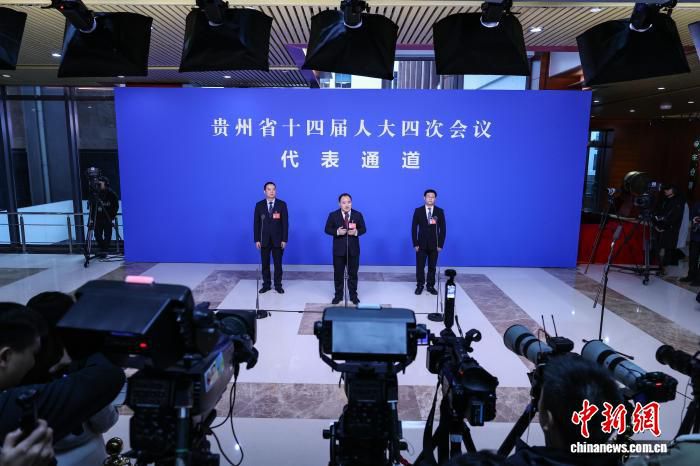
贵州省两会首次开启“代表通道” 话履职故事展责任担当
Zhong Guo Xin Wen Wang· 2026-01-27 08:58
Group 1 - The Guizhou Provincial People's Congress has established a "Representative Channel" for the first time, enhancing communication between representatives and the public, showcasing the representatives' responsibilities and engagement in various sectors [3][7]. - The "Village Super" football event has attracted 1,750 teams and over 1,700 international players, resulting in 27.5 million tourists and a tourism revenue of 31.2 billion yuan [3][4]. - Guizhou's tea industry, particularly the export of matcha, has seen significant growth, with 2,500 tons produced in 2025, making it the top producer in China and successfully exporting to 54 countries [5][7]. Group 2 - The use of artificial intelligence in the aluminum industry has led to a reduction of over 70 million kWh in electricity consumption, saving over 40 million yuan in costs, indicating a shift towards more efficient production methods [4]. - The integration of big data in tourism has enhanced visitor experiences and cultural engagement, with technologies like VR and AR transforming intangible cultural heritage into digital collectibles [7]. - The construction of the world's highest bridge, the Huajiang Gorge Bridge, is seen as a significant opportunity for local businesses to improve connectivity and market access, facilitating industry upgrades [7].
用千问“魔改”老厂,这些企业家闷声发大财
Sou Hu Cai Jing· 2025-12-31 07:15
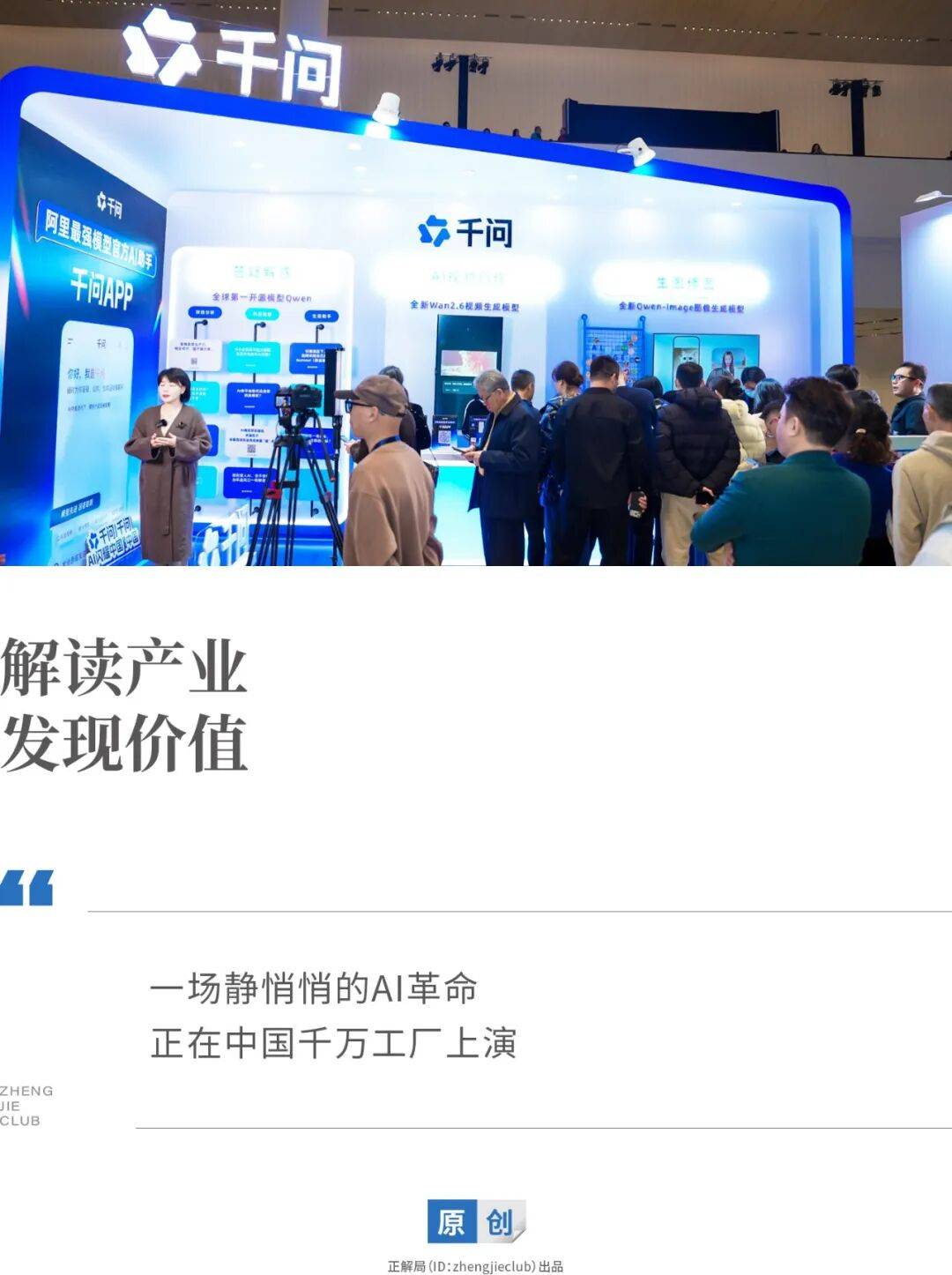
Core Insights - The core argument presented is that artificial intelligence (AI) has transitioned from a conceptual phase to practical applications in various industries, leading to significant innovations and transformations in business operations [4][7]. Group 1: AI in Business Transformation - AI tools like Qianwen are enabling traditional businesses to enhance their marketing and operational efficiency, allowing for high-quality product images to be generated quickly and at low cost [10][12]. - Companies are leveraging AI to understand customer preferences in different markets, which has improved their ability to attract buyers and communicate effectively [12][20]. - The introduction of AI has drastically reduced costs and time associated with content production, enabling small and medium enterprises to compete with larger firms [13][21]. Group 2: AI in Compliance and Risk Management - AI is proving valuable in helping companies navigate compliance challenges, particularly in industries with stringent regulations, by quickly providing updates on changing standards [16][18]. - The use of AI in contract review processes has streamlined operations, allowing for faster and more efficient assessments of legal documents [18][20]. Group 3: AI's Impact on Small Enterprises - Small businesses are experiencing significant growth and efficiency improvements through the comprehensive application of AI tools, with some reporting revenue increases without expanding their workforce [21][23]. - The integration of AI has allowed entrepreneurs to automate various tasks, freeing up time for strategic decision-making and enhancing overall productivity [21][24]. - The emergence of "super individuals" who utilize AI to perform tasks traditionally requiring larger teams is reshaping the entrepreneurial landscape in China [24][26].
金种子酒正式剥离药业资产:华润入主三年仍未摆脱亏损 高管相继离职后公司何去何从?
Xin Lang Cai Jing· 2025-11-13 10:21
Core Viewpoint - Jinzhongzi Liquor has made substantial progress in asset divestiture by signing a contract to transfer 92% of its stake in Anhui Jintaiyang Biochemical Pharmaceutical Co., Ltd. to Shenzhen Junchen Pharmaceutical Co., Ltd. for approximately 126 million yuan, amid ongoing financial struggles and management changes [1][2]. Group 1: Asset Divestiture - The transfer of Jintaiyang Pharmaceutical was first planned in April 2024, with an initial public listing price of 139.96 million yuan, but it failed to attract qualified buyers, leading to a price reduction to 90% of the initial listing [2]. - Jintaiyang Pharmaceutical's revenue significantly declined by 62% in 2024 to 161 million yuan, with a net profit of only 6.19 million yuan, indicating its status as a financial burden for Jinzhongzi [2][3]. - The valuation of the asset transfer is estimated at a price-to-earnings ratio of 4.6 times based on the 2023 net profit of Jintaiyang Pharmaceutical, which was 29.51 million yuan [2]. Group 2: Financial Performance - Jinzhongzi's liquor business revenue fell by 24.33% in 2024 to 744 million yuan, returning to 2021 levels, with a further decline of approximately 22% in the first three quarters of the current year [3][4]. - The company's gross margin dropped by 10.44 percentage points to 38.4% in 2024, with high, medium, and low-end product revenues all declining [4][5]. - The company reported a loss of 100 million yuan in the first three quarters of the year, with a significant portion of its product structure still focused on low-end products, which accounted for 64% of total sales [5]. Group 3: Management and Strategic Challenges - The departure of two senior executives from the China Resources Group, including the general manager, raises questions about the effectiveness of the management changes since China Resources became a strategic shareholder [3][4]. - Jinzhongzi's high expense ratios, which reached 44.31% compared to a gross margin of 34.94%, indicate a failure to cover costs, exacerbating the company's financial difficulties [4][5]. - The company is facing a negative feedback loop of declining sales, high expense ratios, and low gross margins, making it urgent for management to find ways to reverse the losses [5].

新股孖展统计 | 9月26日
Zhi Tong Cai Jing· 2025-09-26 11:00
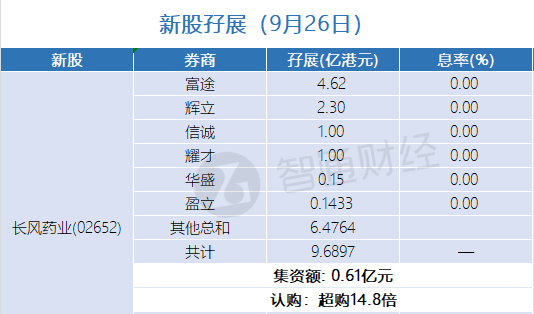
Group 1 - Changfeng Pharmaceutical (02652) is currently in the process of an IPO, with a total of HKD 968.97 million borrowed from brokers including Futu, Huatai, and Xincheng as of September 26 [1][2] - The IPO has been oversubscribed by more than 14.8 times, indicating strong investor interest [1][2] - The total fundraising amount for Changfeng Pharmaceutical is reported to be HKD 61 million [2]
新加坡7月出口同比下降4.6%
Mei Ri Jing Ji Xin Wen· 2025-08-18 08:25
Core Viewpoint - Singapore's non-oil domestic exports (NODX) in July decreased by 4.6% year-on-year, significantly exceeding market expectations, primarily due to a decline in exports of non-electronic products such as pharmaceuticals [1] Group 1 - The decline in NODX is attributed to a drop in exports of non-electronic products, particularly in the pharmaceutical sector [1] - The 4.6% decrease in NODX is a notable figure compared to market forecasts, indicating a more severe contraction than anticipated [1]
新加坡7月出口同比下降4.6% 跌幅远超预期
Xin Hua Cai Jing· 2025-08-18 05:38
Group 1 - Singapore's non-oil domestic exports (NODX) fell by 4.6% year-on-year in July, significantly worse than the market expectation of a 1.8% decline, primarily due to a drop in pharmaceutical and other non-electronic product exports [1] - In July, Singapore's non-oil exports to the US, China, and Indonesia decreased, while exports to the EU, Taiwan, South Korea, and Hong Kong increased [1] - The Singapore government raised its full-year economic growth forecast from 0.0%-2.0% to 1.5%-2.5% despite concerns over external uncertainties [1] Group 2 - Singapore's Economic Development Board maintained its forecast for non-oil export growth at 1% to 3% for the year, indicating potential weakness in the second half of 2025 after a strong start [1] - Prime Minister Lawrence Wong expressed uncertainty regarding potential future US tariff increases on key industries such as pharmaceuticals and semiconductors, highlighting the pressure on small open economies like Singapore [2]
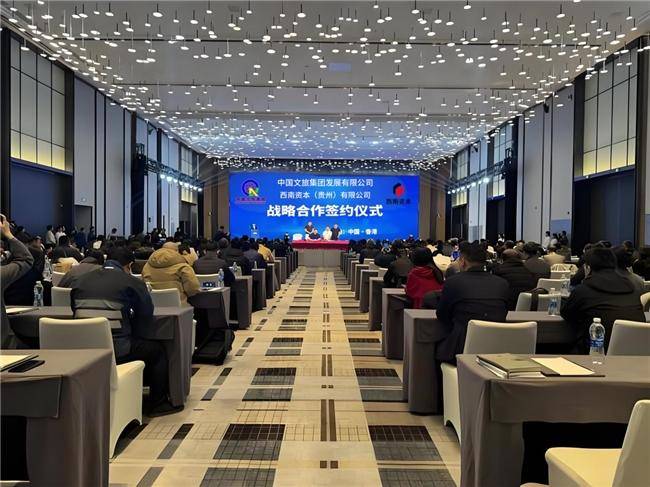
西南资本(贵州)有限公司获20亿元战略投资,多元产业布局再提速
Sou Hu Cai Jing· 2025-08-12 16:10
Core Viewpoint - Southwest Capital (Guizhou) Co., Ltd. has signed a strategic investment agreement with China Cultural Tourism Group, which will inject a total of 2 billion RMB into six major industries, marking a new chapter in Southwest Capital's diversified development [1][6]. Group 1: Investment and Collaboration - The strategic investment of 2 billion RMB will be allocated to the film, low-altitude economy, pharmaceutical, mining, liquor, and technology sectors [1][6]. - The collaboration period is set for five years, during which China Cultural Tourism Group will not participate in the daily management or profit distribution of Southwest Capital, ensuring operational autonomy [5]. Group 2: Industry Focus and Strategic Alignment - The six industries targeted by the investment align with national strategic emerging industries and leverage Guizhou's resource endowments and industrial foundations [3]. - The low-altitude economy is in line with national policies promoting general aviation, while the pharmaceutical, mining, and liquor sectors benefit from Guizhou's rich biological and mineral resources [3]. Group 3: Future Development and Goals - The investment will provide sufficient funding for technology research and development, project construction, and market expansion, accelerating the scale development and synergy of the six industries [6]. - Southwest Capital aims to deepen industry integration and move steadily towards its listing goal, contributing more to the regional economic development of Guizhou [6].