《博德之门3》

Search documents
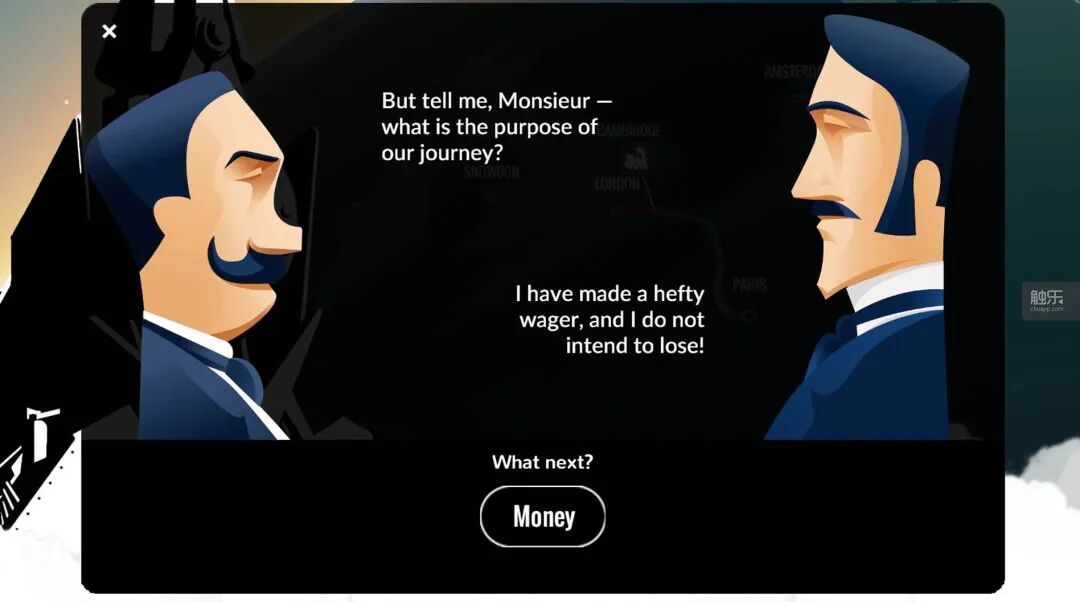
让AI融入游戏剧情和玩法,怎样才能少走弯路?
3 6 Ke· 2026-01-14 12:26
Core Viewpoint - The integration of generative AI in gaming has led to mixed reactions, with many players finding AI-generated dialogues to be dull and lacking creativity, while some industry experts see potential for innovation if used correctly [1][2][4]. Group 1: Current State of AI in Gaming - Generative AI has permeated mainstream gaming, but its implementation has often resulted in poor quality experiences, such as incorrect dialogues and low-quality graphics [1]. - Players have expressed skepticism towards AI-driven NPCs, with some arguing that interacting with a chatbot instead of a well-crafted story is foolish [1][2]. - Experts like Meg Jayanth criticize AI-generated dialogues as "boring" and lacking the depth that human writers provide, emphasizing the importance of human creativity in storytelling [4][5]. Group 2: Potential and Future of AI in Gaming - There is a belief that with careful guidance, generative AI could enhance game narratives and create more immersive experiences [2]. - Some experts suggest that AI could be effectively utilized in new game genres, as seen in games like "1001 Nights" and "Infinite Craft," where AI is central to gameplay rather than just an add-on [8][9]. - Dan Griliopoulos highlights the need for narrative designers to adapt to the evolving landscape of AI, suggesting that AI could be used to enhance storytelling if integrated thoughtfully [11][12]. Group 3: Ethical and Practical Considerations - Concerns about ethical implications, such as privacy risks and the potential for job loss in the industry, are prevalent among experts [5][11]. - Younès Rabii points out that while AI has the potential to generate content, it requires significant investment in training and resources to be effective, which may not be feasible for all developers [15][16]. - Chris Gardiner warns against the over-reliance on AI, arguing that it could lead to a loss of originality and depth in games, which players value [18].

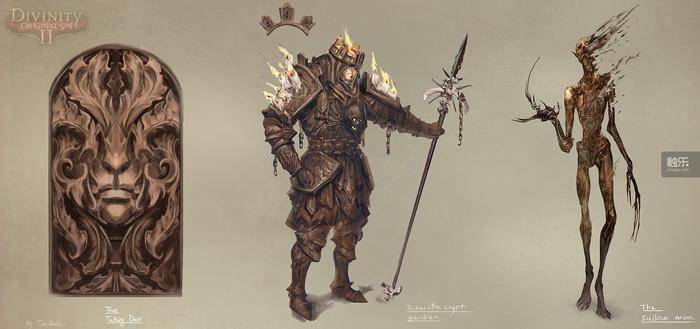
拉瑞安CEO谈AI后,多名游戏美术炮轰领导不懂实际工作
Sou Hu Cai Jing· 2026-01-02 07:55
Core Viewpoint - The CEO of Larian Studios, Swen Vincke, stated that while the company is experimenting with generative AI tools, it has not significantly improved efficiency. The studio continues to prioritize original artwork and is actively hiring concept artists [1][3]. Group 1: Use of Generative AI in Game Development - Larian Studios uses AI tools to explore reference materials and create rough sketches, but these are later replaced with original concept art [3][5]. - Concept artists express concerns that using AI-generated images complicates their work, as it may limit creative exploration and lead to a lack of originality [6][9]. - Many artists believe that AI-generated images do not capture the intent behind the original works, making it difficult to use them effectively in the creative process [9][11]. Group 2: Impact on Concept Artists - Concept artists spend a significant amount of time collecting reference materials, and the introduction of AI tools is seen as potentially detrimental to their workflow [4][5]. - Artists report that reliance on AI-generated images can lead to misunderstandings and miscommunications within teams, as AI outputs may not align with the creative vision [13][15]. - There is a growing concern that the use of generative AI could hinder the career prospects of emerging artists, as studios may prefer AI-generated content over hiring new talent [17][18]. Group 3: Industry Perspectives - The gaming industry is witnessing a shift where some companies are mandating the use of AI-generated references, which artists find problematic [11][12]. - Artists emphasize the importance of human creativity and the unique insights that come from traditional artistic processes, arguing that AI cannot replicate the depth of human experience [19][20]. - There is a call for industry leaders to reconsider the role of generative AI in the creative process, as it may undermine the artistic integrity of game development [22].
屡教不改?游戏厂商为什么会抱着AI不放
3 6 Ke· 2025-12-29 03:26
Core Viewpoint - The gaming industry is increasingly adopting AI technology in game development despite significant backlash from players, who express dissatisfaction with AI-generated content [1][3][4]. Group 1: Player Sentiment - Players have criticized EA for low-quality AI-generated content in games like "Battlefield 6," indicating a preference for traditional game design over AI-generated elements [1]. - A report from Quantic Foundry reveals that 63% of players hold a very negative view of AI in game development, while only 7.6% support it [4]. - Acceptance of AI varies by age, with 22% of players over 45 accepting its use, compared to only 7% among players aged 18-24, and a mere 3% among those aged 13-17 [5]. Group 2: Industry Trends - Over 10,258 games on the Steam platform have disclosed the use of generative AI, accounting for approximately 8% of the total game library, with 12 games achieving over $10 million in revenue [3]. - Despite player complaints, developers like Larian Studios have integrated AI into their development processes, indicating a trend towards AI adoption in the industry [3][4]. - The gaming industry faces high risks, with the success of one game not guaranteeing the next, prompting developers to seek cost-effective solutions like AI to maintain production efficiency [10]. Group 3: AI Implementation Challenges - Many developers are using a simplistic approach to AI, generating game assets without adequate refinement, leading to numerous bugs and quality issues [9]. - The ideal use of AI involves extensive input and human oversight to ensure quality, but many companies are not following this best practice [9]. - The sentiment among some developers is that AI will increasingly become a part of the gaming landscape, despite current challenges and player resistance [11][12].

前11月,我市文化产品出口额同比增长11.75%——“遨游”新蓝海,向价值链更深处“潜行”
Nan Jing Ri Bao· 2025-12-24 02:19
Group 1: Company Performance and Growth - Nanjing Pan Taike Cultural Industry Development Co., Ltd. (Pan Taike) has seen its export growth exceed 10% this year, contributing to a total cultural product export value of 79.06 billion yuan from Nanjing, a year-on-year increase of 11.75% [1] - The company specializes in high-end art paper products and has expanded its international presence since 2005, with a focus on meeting the growing demand for quality printing materials in Europe and the U.S. [1] - Pan Taike has developed high-end art micro-spray paper tailored for the "二次元" (2D) culture, utilizing a 12-color technology for better color accuracy and saturation, catering to collectors' demands for quality and emotional value [2] Group 2: Market Expansion and Innovation - The company is exploring new growth opportunities by tapping into emerging markets and adapting to changing consumer preferences, particularly in the Asian region [2] - Pan Taike's strategy includes offering customized paper solutions for various photography styles, enhancing the artistic value of photographic works [2] - Jiangsu Gaochun Ceramics Co., Ltd. has also expanded its market reach, particularly in the Middle East, Central Asia, and Russia, by integrating local cultural elements into its product designs [3][4] Group 3: Industry Recognition and Collaboration - Jiangsu Yuanli Digital Technology Co., Ltd. has gained recognition in the gaming industry, with its involvement in the award-winning RPG "Baldur's Gate 3," which has sold over 15 million copies globally since its release [4] - The company collaborates with major industry players like Sony Group and Electronic Arts, leveraging its technical expertise to enhance global IP offerings [5]
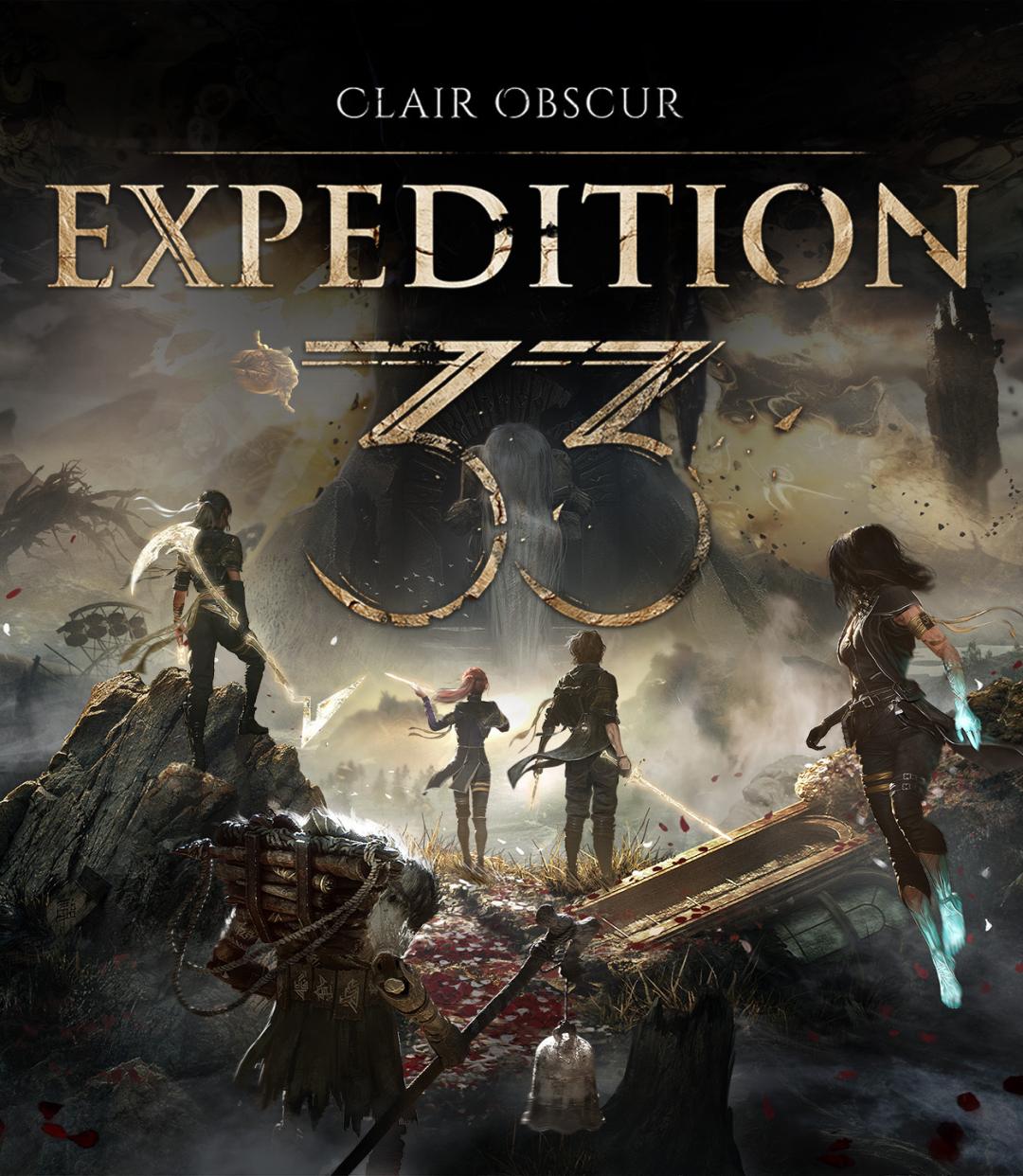
TGA 年度游戏汇总:《33 号远征队》包揽 9 项大奖,《影之刃零》定档明年9月
3 6 Ke· 2025-12-12 07:37
Core Insights - The 2025 Game Awards (TGA) showcased a significant presence of both new and familiar titles, with a notable highlight being the independent game "Clair Obscur: Expedition 33," which received 13 nominations and won 9 awards, including Game of the Year [3][5][9] Group 1: Achievements of "Clair Obscur: Expedition 33" - "Clair Obscur: Expedition 33" achieved a historic milestone by winning the most awards in TGA history, including Best Game Direction, Best Narrative, Best Art Direction, Best Score, Best Performance, Best Independent Game, Best Debut Game, and Best Role-Playing Game [5][9] - The game was developed by a small team led by producer Guillaume Broche, who previously worked at Ubisoft, and the development process was characterized by a grassroots approach, utilizing platforms like Reddit and SoundCloud to recruit talent [7][9] Group 2: Other Notable Awards and Announcements - The Most Anticipated Game award went to GTA6, while No Man's Sky won Best Ongoing Game, and Baldur's Gate 3 received Best Community Support [11] - The TGA also featured new trailers and announcements for upcoming games, including the Chinese single-player game "Shadow Blade 0," set to release on September 9, 2026, and "Arknights: End of the World," which will be available on January 22, 2026 [15][20] - Major IPs like "Star Wars: Fate of the Old Republic" and "Resident Evil 9: Requiem" were highlighted with new trailers, indicating a strong lineup for 2026 [22][30]
人工最高节省90%,AI制作游戏被批“没有灵魂”
Di Yi Cai Jing· 2025-10-22 09:15
Core Insights - The gaming industry is experiencing significant efficiency improvements due to AI tools, which can reduce art production costs by 20% to 30% in high-budget 3D games, leading to savings of millions [5][6][11] - AI is transforming game development processes, allowing for faster production timelines and reducing the reliance on traditional labor-intensive methods [3][4][10] Group 1: AI Impact on Game Development - AI tools can handle 70% to 80% of the art asset processing workload in game development, particularly in animation and modeling [3][4] - The use of AI in animation can reduce the time required for tasks such as skinning from 1.5 to 3.5 days down to just 1 to 3 hours, achieving a labor savings of 70% to 90% [3][4] - AI-generated animations can enhance efficiency by producing 60 frames of smooth animation from just 5 to 10 keyframes, increasing productivity by 3 to 5 times [3][4] Group 2: Adoption and Usage of AI Tools - Tencent has developed and opened its AI tools to over 50 external companies, including major players in the gaming industry [4][11] - The tools have been successfully implemented in Tencent's internal projects, resulting in a 40% reduction in character animation production cycles [4][11] - Smaller teams are more likely to adopt AI tools, as they can significantly enhance workflow efficiency and reduce production costs [10][11] Group 3: Industry Perspectives on AI - There are mixed opinions within the industry regarding AI's ability to replace human creativity, with some believing AI lacks the "soul" necessary for compelling game design [8][9] - Despite skepticism, some industry professionals have noted AI's surprising advancements in generating engaging narratives and creative content [9][10] - AI is seen as a tool that democratizes game development, enabling smaller teams to achieve results that previously required larger, more experienced groups [10][11] Group 4: Future of AI in Gaming - The integration of AI tools is expected to evolve, with new technologies like interactive world models potentially reshaping game production workflows [11][12] - The gaming industry is likely to see a coexistence of various AI tools for the foreseeable future, as companies explore different approaches to automation and intelligence in game development [12]
蔡浩宇的疯狂实验,跟游戏没啥关系?
3 6 Ke· 2025-08-24 04:18
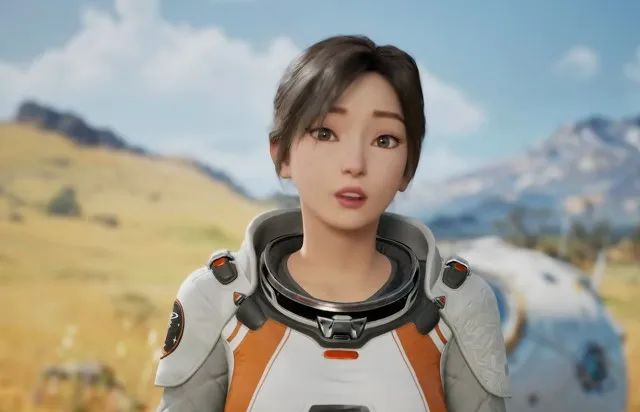
Core Viewpoint - The game "Whispers from the Star" is an AI dialogue game that focuses on interacting with a female astronaut, Stella, through remote communication, marking a shift in AI application within gaming [1][2][3] Group A: Game Overview - "Whispers from the Star" is developed by Anuttacon, a company led by Mihayou founder Cai Haoyu, and utilizes Unreal Engine 5 for its graphics [1] - The game has received an 86% positive rating upon launch, although the user base is currently small [1][2] - Players have criticized the game for being overly focused on AI interaction with insufficient narrative content, leading some to label it as a "Character AI" shell [2][5] Group B: Market Context - The AI social interaction market has seen rapid growth over the past two years, but signs of stagnation are emerging as user growth slows and major products struggle to achieve stable daily active users [2][5] - The game aims to explore a new model for AI dialogue and companionship within the gaming framework, potentially signaling a 2.0 era for AI interaction [2] Group C: Gameplay Mechanics - Unlike traditional games, "Whispers from the Star" allows for completely free-form dialogue with Stella, influenced by a large language model [3][5] - The game lacks diverse gameplay mechanics, primarily offering a single interaction mode, which may limit player engagement [5][6] - Players have noted that the high degree of freedom in dialogue can lead to negative experiences, as the game may redirect conversations back to the main storyline [5][6] Group D: Technical Aspects - The game employs a complex AI dialogue system that includes voice recognition, large model inference, and voice synthesis, all processed in the cloud [11][12] - Players have reported issues with latency and synchronization during gameplay, attributed to the cloud processing requirements [11] Group E: User Concerns - The collection of user dialogue data for model training has raised privacy concerns among players, leading to negative feedback regarding the game's data policies [8][10] - Players have expressed discomfort with the idea of their real-time dialogue being recorded and used for AI training, which contrasts with traditional gaming experiences [10] Group F: Industry Implications - The game represents a significant experiment in merging AI dialogue with gaming, but it has not yet achieved a deep integration of AI and traditional game mechanics [18][20] - The industry is witnessing a growing trend of AI integration in games, with a notable increase in the number of games utilizing generative AI technologies [18][20] - Despite being a niche offering, "Whispers from the Star" has garnered over 600 positive reviews on Steam, indicating a potential market for AI dialogue games [21]
中国以超三成占比稳居这个国家移动游戏市场第一来源国
3 6 Ke· 2025-08-06 03:36
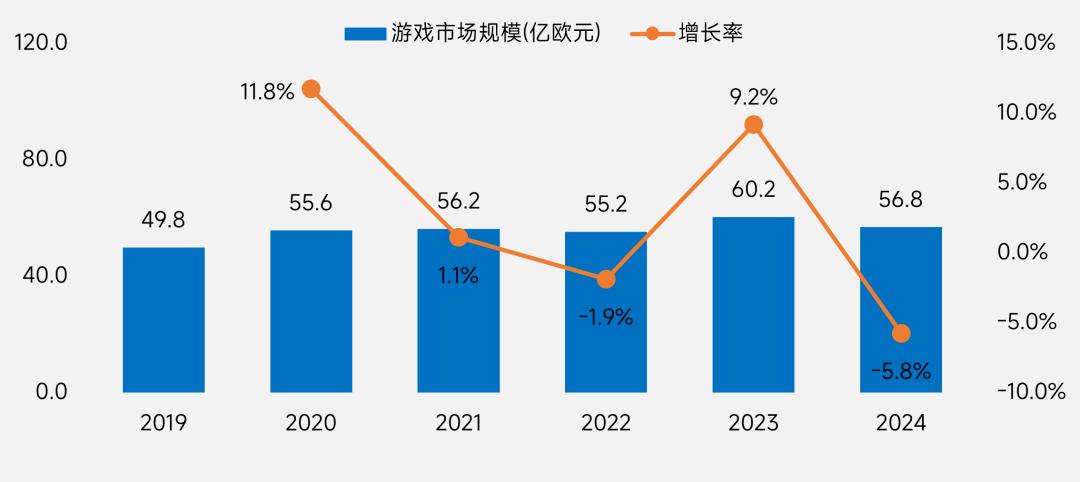
Core Insights - The report titled "China Game Overseas Guide - France Edition" was jointly published by Gamma Data and the China Audio-Video and Digital Publishing Association Game Working Committee, providing insights into the French gaming market for Chinese companies looking to expand [1][2]. Market Overview - The French gaming industry is in a stable growth phase, with a market size projected at €5.7 billion (approximately ¥48 billion) in 2024, reflecting a year-on-year decline of 5.8% but still marking the second-highest historical value [2][6]. - France is the third-largest gaming market in Europe, with mobile gaming experiencing rapid growth [6][21]. Talent and Education - Over 60% of gaming professionals in France have at least five years of higher education, supported by a robust educational system that produces a significant number of skilled graduates annually [4][6]. Market Segmentation - The gaming market is characterized by three main segments: console games (45% market share), PC games, and mobile games, with mobile games surpassing PC games as the second-largest segment starting in 2023 [11][17]. - The console gaming market reached a historical peak in 2023, driven by the release of major titles, but is expected to decline by 18.9% in 2024 [13][15]. Tax Incentives - France has implemented a tax rebate policy for video games since 2008, with a deduction rate of 30% for qualifying games, resulting in a total tax reduction of €322 million from 2017 to 2023 [7][9]. Player Preferences - The primary demographic of gamers in France is aged 20-35, contributing 58% of total market revenue, while older players (50+) represent 10% of the gaming population [29][32]. - French players show a strong preference for historical-themed games, with local historical events resonating more with them [36][37]. Marketing and Localization - Effective marketing strategies, including media reviews and influencer promotions, significantly influence player purchasing decisions, with 82% of users indicating that media ratings affect their buying intentions [39][41]. - All games must adhere to the "French language first" principle, prohibiting the use of English terms in game content [46][44]. Growth Potential - The mobile gaming market in France is projected to reach €1.6 billion in 2024, with an annual growth rate of 8.2%, driven by the popularity of hyper-casual games and an increase in female and older players [21][25]. - China is the largest supplier of mobile games in France, holding over 30% market share, indicating significant opportunities for Chinese developers [6][27].
前圣塔莫尼卡工作室编剧表示游戏行业现状并不乐观
Sou Hu Cai Jing· 2025-05-05 06:31
Group 1 - The gaming industry is facing systemic issues leading to mass layoffs, studio closures, and stagnation in growth due to complex economic, technological, and demographic factors [1][2] - The industry's deep ties to stock market expectations for exponential growth are no longer feasible, with monetization models like free-to-play, battle passes, and microtransactions reaching saturation [3] - Global birth rates are insufficient to sustain the influx of new consumers that tech giants expect, indicating a demographic challenge for the industry [3] Group 2 - Major games like Fortnite, Call of Duty, and Minecraft are monopolizing player attention, reshaping consumer habits and sidelining smaller games and studios [3] - There is hope in independent studios like Larian Studios with Baldur's Gate 3 and Warhorse Studios with Kingdom Come: Deliverance, which have succeeded without investor pressure [4] - The industry is promoting smartphone apps and cloud gaming in developing countries more to appease investors than to enhance accessibility [3]