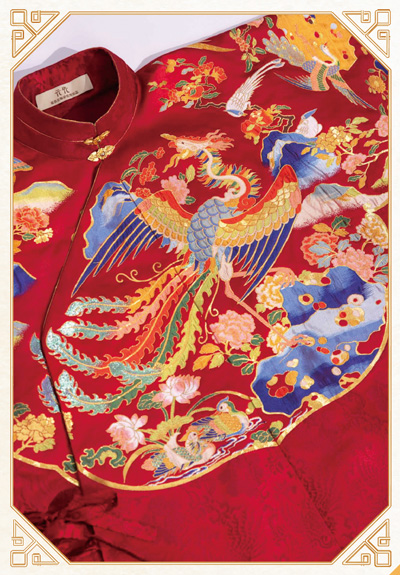
云锦

Search documents
(新春见闻)郑州:非遗技艺诠释千年马韵
Xin Lang Cai Jing· 2026-02-13 13:10
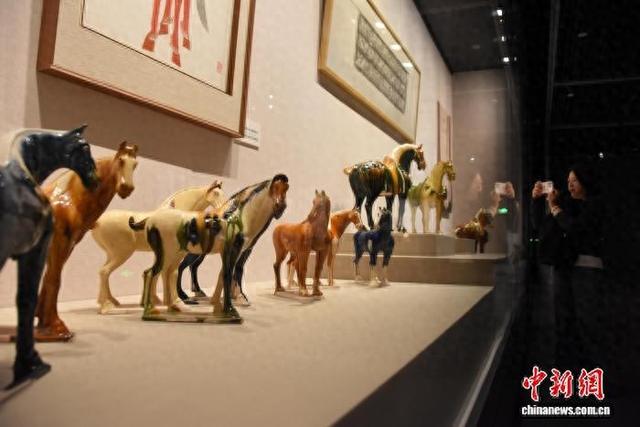
Group 1 - The exhibition "商亥骐骥驰千年" at the Henan Zhengzhou Shang Dynasty Capital Ruins Museum showcases five intangible cultural heritage techniques: rubbings, sancai pottery, Yunjin silk, paper-cutting, and embroidery, highlighting the cultural significance of horses over a millennium [2][4][12] - The exhibition features various artistic works, including sancai horses and stone carvings, which attract numerous visitors [2][4] - Visitors are particularly drawn to the paper-cutting and embroidery pieces, indicating a strong interest in traditional crafts [6][10]

500人入境旅游团来宁,规模为2019年以来最大
Nan Jing Ri Bao· 2026-01-26 02:46
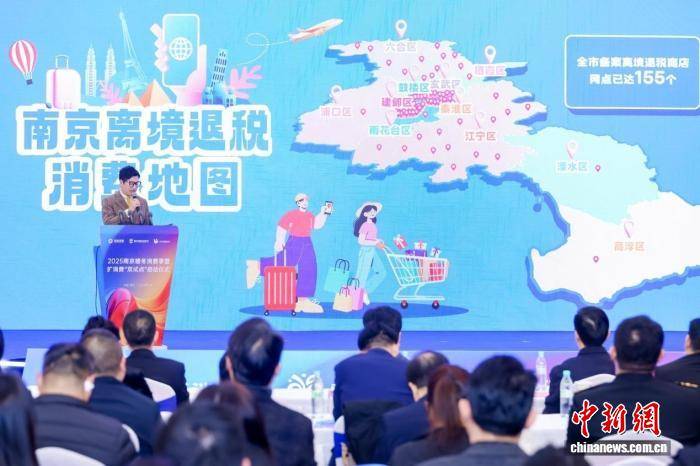
Group 1 - The core viewpoint of the news is that Nanjing has welcomed a significant influx of inbound tourism, marking the largest group since 2019, with 500 guests from over 40 countries and regions visiting the city during the New Year period [1][2][3] Group 2 - The inbound tourism group consists of high-end conference and incentive travelers, with 300 guests entering through Shanghai and 200 through Nanjing [2] - The guests stayed for 5 days and 4 nights in high-quality hotels, with dining standards significantly higher than typical group tours, indicating a strong economic impact on local tourism-related industries [2] - The successful recruitment of this group is attributed to a young inbound tourism company in Nanjing, which has benefited from government incentives aimed at promoting inbound tourism [3]
一颗脐橙背后的全国统一大市场
Xin Hua Ri Bao· 2026-01-15 01:59
Core Viewpoint - The interaction between Jiangsu and Yongzhou, initiated by a football championship, has evolved into a warm exchange of cultural and economic ties, showcasing the vitality of the domestic unified market process [11]. Group 1: Cultural and Emotional Exchange - The celebration of Yongzhou's football team winning the Hunan Super League championship has sparked a cross-regional connection, with Jiangsu fans expressing their support through various means, including renting billboards to congratulate the team [2][3]. - A series of events, including the CMG Football Invitation Tournament and free admission to local attractions for Jiangsu visitors, have been organized to strengthen the bond between the two regions [3][7]. - The renaming of a major road in Yongzhou to "Jiangsu Avenue" symbolizes the lasting friendship and support from Jiangsu fans [3][4]. Group 2: Economic Collaboration - The sales of Yongzhou's "Champion Oranges" have surged, with over 52,000 boxes (more than 25,000 kilograms) sent to Jiangsu, reflecting a deepening economic interaction [5][8]. - Jiangsu's organized response included local specialties as gifts to Yongzhou, enhancing the mutual appreciation and cultural exchange [6][7]. - The collaboration has led to increased economic activities, with Yongzhou inviting Jiangsu businesses for investment and cooperation, indicating a growing economic synergy [9][10]. Group 3: Future Prospects - Future initiatives will focus on multi-faceted cooperation in culture, sports, and tourism, with plans for friendly football matches and further economic partnerships [10][11]. - The ongoing interaction is expected to foster a robust agricultural and trade relationship, promoting the exchange of local products between the two regions [10][11].
消费“双试点”花落南京:加速建设国际消费中心城市
Sou Hu Cai Jing· 2025-12-17 09:59
Core Viewpoint - Nanjing has been selected as a pilot city for "International Consumption Environment Construction" and "New Consumption Formats and Scenarios," aiming to accelerate its development as an international consumption center city [4]. Group 1: Pilot Programs and Support - The "Double Pilot" program focuses on enhancing international consumption supply and environment, aiming to create a globally attractive consumption destination [4]. - Nanjing can receive a special subsidy of 400 million yuan for the "New Consumption Formats" pilot, indicating strong governmental support [4]. - The pilot program aims to improve high-quality consumption supply, optimize foreign payment services, and enhance international service levels [4]. Group 2: Market Potential and Growth - Nanjing's retail sales reached 677.5 billion yuan from January to October 2025, with a year-on-year growth of 4.3% [5]. - The city welcomed 181 million domestic and international tourists, generating a total tourism revenue of 229.3 billion yuan, reflecting growth rates of 11.3% and 10% respectively [5]. - Traditional shopping districts like Fuzimiao and Xinjiekou continue to thrive, contributing to a favorable environment for consumption upgrades [6]. Group 3: Innovative Consumption Trends - Nanjing has proactively engaged in the "first-release economy," with measures introduced as early as 2021 to promote this sector [6]. - The Deji Plaza in the Xinjiekou commercial area is projected to achieve sales exceeding 24.5 billion yuan in 2024, showcasing the city's retail strength [6]. - The city is becoming a key location for brand launches in China, enhancing its appeal to both domestic and international consumers [6]. Group 4: Cultural Integration and Unique Identity - Nanjing aims to merge "International Trend" with "Jinling Charm" to create a unique consumption center [9]. - The city plans to invest 100 million yuan to bridge the gap with top international consumption cities, enhancing the experience for foreign tourists [9]. - Cultural initiatives, such as promoting traditional crafts and hosting local festivals, are part of the strategy to convert cultural strengths into economic advantages [9].
纺织服装行业周报20251130:本周延江股价创阶段性新高,持续推荐无纺布产业链-20251130
Shenwan Hongyuan Securities· 2025-11-30 13:21
Investment Rating - The report maintains a positive outlook on the non-woven fabric industry chain, recommending continued investment opportunities in this sector [2][7]. Core Insights - The textile and apparel sector underperformed the market, with the SW textile and apparel index rising by 2.8%, lagging behind the SW All A index by 0.2 percentage points [2][3]. - Recent industry data indicates a 3.5% year-on-year growth in retail sales for clothing, shoes, and textiles, totaling 1,205.3 billion yuan from January to October [20][25]. - Exports of textiles and apparel saw a significant decline, with October figures showing a 12.6% year-on-year drop, amounting to 22.26 billion USD [24][27]. - Cotton prices have shown a slight increase, with the national cotton price B index at 14,858 yuan per ton, up 0.8% [29]. - Australian wool prices have stabilized and increased, with the index at 978 cents per kilogram, reflecting a 32.0% year-on-year rise [31]. Summary by Sections Textile Sector - The report highlights the strong performance of Yanjiang, which reached a new high in stock price, and continues to recommend investment in the non-woven fabric industry chain [7][9]. - Yanjiang's deep ties with major international brands are expected to drive significant growth, with a potential market size exceeding 500 billion yuan for heat-resistant non-woven fabrics [7]. - Other companies like Noble and Jieya are also noted for their strong market positions and growth potential [7]. Apparel Sector - Bosideng's mid-term performance met expectations, with a 1.4% increase in revenue to 8.93 billion yuan and a 5.3% rise in net profit to 1.19 billion yuan [9][10]. - The report emphasizes the potential for growth in the women's clothing sector, which has seen a turnaround in market expectations [10]. Market Trends - The report anticipates a gradual recovery in domestic demand, particularly in new consumption areas such as outdoor sports and discount retail [2][8]. - The global tariff situation is stabilizing, which is expected to maintain the competitive edge of core manufacturing [2][8]. Key Data Points - Retail sales for clothing, shoes, and textiles from January to October reached 1,205.3 billion yuan, with a year-on-year growth of 3.5% [20][25]. - Textile and apparel exports in October were 22.26 billion USD, down 12.6% year-on-year, with specific declines in textile and clothing categories [24][27]. - Cotton prices have increased slightly, with the national cotton price B index at 14,858 yuan per ton [29]. - Australian wool prices have shown significant year-on-year increases, with the index at 978 cents per kilogram [31].
纺织服装行业周报:本周延江股价创阶段性新高,持续推荐无纺布产业链-20251130
Shenwan Hongyuan Securities· 2025-11-30 12:42
Investment Rating - The textile and apparel industry is rated as "Neutral" [2] Core Views - The textile and apparel sector underperformed the market, with the SW textile and apparel index rising by 2.8% from November 24 to November 28, lagging behind the SW All A index by 0.2 percentage points [3][4] - Retail sales for clothing, shoes, and textiles reached 1,205.3 billion yuan from January to October, showing a year-on-year growth of 3.5% [3][21] - Textile and apparel exports in October amounted to 22.26 billion USD, down 12.6% year-on-year, with specific declines in textile yarns and fabrics by 9.0% and clothing by 16.0% [3][25] - Cotton prices increased slightly, with the national cotton price B index at 14,858 yuan/ton, up 0.8% [3][32] - Australian wool prices showed significant increases, with the index at 978 cents/kg, up 32.0% year-on-year [3][34] Summary by Sections Industry Performance - The textile and apparel sector's performance was weaker than the market, with the SW textile and apparel index increasing by 2.8%, while the SW apparel and home textiles index rose by 3.0%, and the SW textile manufacturing index increased by 2.7% [3][4] Recent Industry Data - Retail sales for clothing, shoes, and textiles totaled 1,205.3 billion yuan from January to October, reflecting a 3.5% year-on-year increase [3][21] - In October, textile and apparel exports were 22.26 billion USD, a decline of 12.6% year-on-year, with textile yarns and fabrics down 9.0% and clothing down 16.0% [3][25] - Cotton prices rose slightly, with the national cotton price B index at 14,858 yuan/ton, up 0.8% [3][32] - Australian wool prices increased, with the index at 978 cents/kg, up 32.0% year-on-year [3][34] Sector Insights - The report highlights the strong performance of specific companies within the non-woven fabric industry, recommending continued investment in the entire non-woven fabric supply chain [3][8] - The report notes that the outdoor sports segment is expected to see growth, with companies like Bosideng and Anta being highlighted for their potential [3][9] - The report emphasizes the importance of new consumer trends and the potential for recovery in domestic demand in 2026 [3][10]
我国桑蚕茧产量约占全球75%
Qi Huo Ri Bao· 2025-11-27 23:06
Core Viewpoint - The silk industry in China is experiencing significant growth and international competitiveness, with a focus on optimizing regional production and enhancing technological innovation [1][2]. Group 1: Industry Performance - China's silk production accounts for approximately 75% of global output, with silk exports exceeding 60% of the global market [1]. - During the "14th Five-Year Plan" period, the average annual production of silkworm cocoons reached 744,000 tons, marking an 11% increase compared to the end of the "13th Five-Year Plan" [2]. - The number of new patents in the silk industry increased by 45.2% compared to the previous five-year period, indicating a strong emphasis on technological innovation [2]. Group 2: Regional Development and Policy Initiatives - The Ministry of Commerce has initiated the "East Silk, West Solid" program to promote the transfer of the silk industry to central and western regions, optimizing the industrial layout [1][2]. - The program aims to enhance the overall quality and efficiency of the silk industry while creating new international competitive advantages [1]. Group 3: International Market Expansion - China's silk exports are projected to reach $1.44 billion in 2024, representing a growth of over 30% compared to the end of the "13th Five-Year Plan," with exports covering around 120 countries and regions [2]. - The reputation of "Chinese Silk" is being strengthened, contributing to the expansion of international market share [2]. Group 4: Industry Standards and Consumer Trends - A total of 57 standards related to the silk industry have been revised or established, and six new silk enterprises have been added to the "Chinese Time-honored Brand" list [2]. - The promotion of traditional silk products such as Shu Brocade, Yun Brocade, and Song Brocade is driving the "national trend" in consumer preferences [2].
商务部:目前我国蚕茧产量约占全球75%
Ren Min Wang· 2025-11-27 09:18
Core Viewpoint - The Ministry of Commerce has initiated a plan to promote the "East Silk West Solid" strategy for the silk industry, focusing on optimizing the industrial chain, enhancing technological innovation, and facilitating coordinated development across regions [1][2]. Group 1: Industry Development - The silk industry has shown solid growth during the 14th Five-Year Plan period, with an average annual production of 744,000 tons of silkworm cocoons, representing an 11% increase compared to the end of the 13th Five-Year Plan [1]. - China's silkworm cocoon production accounts for approximately 75% of the global total, while silk exports represent over 60% of the global market, indicating a strong competitive advantage [1]. - The development of sericulture has flourished in certain central and western regions, becoming a distinctive local industry [1]. Group 2: Technological Innovation - The number of new patents in the silk industry has increased by 45.2% compared to the 13th Five-Year Plan period, showcasing a significant advancement in technological innovation [2]. - Research and development of high-tech products, such as functional silk fabrics and flexible materials for brain-machine interfaces, have made positive progress [1][2]. Group 3: Industry Standards and Branding - A total of 57 standards related to sericulture and silk have been revised or established, enhancing brand development and promoting traditional silk products [2]. - The number of "Chinese Time-honored Brands" in the silk sector has increased by 6, contributing to the rise of "national trend" consumption of intangible cultural heritage silk products [2]. Group 4: International Market Expansion - The international reputation of Chinese silk has improved, with exports projected to reach $1.44 billion in 2024, reflecting a growth of over 30% compared to the end of the 13th Five-Year Plan [2]. - The export destinations for Chinese silk products now cover approximately 120 countries and regions worldwide [2].
商务部:“十四五”时期全国桑蚕茧年均产量74.4万吨
Zhong Guo Xin Wen Wang· 2025-11-27 08:57
Core Insights - The Ministry of Commerce announced that during the "14th Five-Year Plan" period, the average annual production of silkworm cocoons in China reached 744,000 tons, marking an 11% increase compared to the end of the "13th Five-Year Plan" period [1][2] Group 1: Industry Development - The silkworm cocoon production accounts for approximately 75% of the global total, while silk exports represent over 60% of the global market, indicating a strong competitive advantage in the silk industry [1] - The number of new patents in the silk industry increased by 45.2% compared to the "13th Five-Year Plan" period, showcasing significant advancements in technological innovation [1] - The industry has seen the development of high-tech products such as functional silk fabrics and flexible materials for brain-machine interfaces, extending resource utilization into fields like biomedicine and electronic information [1] Group 2: Industry Standards and Branding - A total of 57 standards related to silkworm and silk have been revised or established, enhancing brand development and leading to the addition of 6 new silk enterprises under the "Chinese Time-Honored Brand" initiative [2] - The international reputation of Chinese silk is being strengthened, with exports projected to reach $1.44 billion in 2024, representing over a 30% increase from the end of the "13th Five-Year Plan" period, and covering around 120 countries and regions [2] Group 3: Future Directions - The Ministry of Commerce plans to enhance policy support and collaborative efforts to accelerate the "East Silk, West Solid" initiative, improve the technological innovation system, and promote sustained growth in silk consumption [2]
穿在身上的纹样故事
Ren Min Ri Bao· 2025-11-17 23:06
Core Viewpoint - The article highlights the revival and modernization of Nanjing Yun Jin (Nanjing Brocade), showcasing its transition from a luxury item to a more accessible cultural product, particularly among younger generations [1][2]. Group 1: Historical and Cultural Significance - Nanjing Yun Jin is characterized by its intricate craftsmanship and rich history, with patterns like cloud and double fish motifs symbolizing auspiciousness [1]. - The traditional weaving technique involves using gold threads and peacock feathers, creating a unique aesthetic that reflects Chinese cultural heritage [1]. Group 2: Modernization and Accessibility - The Nanjing Yun Jin Research Institute is adopting machine weaving to reduce labor costs by half while still preserving the charm of traditional handcrafting for certain designs [1]. - The introduction of new cultural products, such as modern wedding attire, has gained popularity among young people, with hundreds of pieces quickly pre-ordered during events like Qixi Festival [4]. Group 3: Digital Engagement and Cultural Promotion - The rise of short video platforms has transformed Nanjing Yun Jin from a niche heritage craft to a widely recognized symbol of Chinese aesthetics, attracting significant online attention [2][4]. - Young content creators are actively promoting the beauty and significance of Yun Jin, aiming to share its cultural stories and aesthetic values with a broader audience [4].