代币化黄金

Search documents
波士顿咨询:2026数字货币:香港基金行业倍增式发展机遇研究报告
Sou Hu Cai Jing· 2026-02-07 23:50
Core Insights - The report by BCG, Aptos Labs, and Hang Seng Bank highlights the exponential growth opportunities for Hong Kong's fund industry driven by digital currency and tokenization, predicting a doubling in industry size by 2026 [1][2]. Group 1: Overview of Digital Currency and Tokenization - The traditional financial messaging system is inefficient and slow, while the tokenization system offers direct value transfer, programmability, and instant settlement, marking a new direction for financial evolution [1][2]. - By November 2025, the market capitalization of fiat-backed stablecoins is expected to exceed $300 billion, with over 130 central banks exploring central bank digital currencies (CBDCs) [1][2]. - The market for tokenized funds is projected to grow from $2 billion in 2024 to over $8 billion in 2025, with a compound annual growth rate (CAGR) exceeding 50% from 2025 to 2033 for digital currencies and tokenized assets [1][2]. Group 2: Pilot Projects and Market Demand - A pilot project under the Hong Kong Monetary Authority's "Digital HKD+" initiative demonstrated the technical feasibility of using Aptos' public permissioned blockchain for tokenized fund transactions, achieving sub-second finality and low transaction costs [2][16]. - A survey of 500 investors revealed that 97% are interested in the unique features of tokenized funds, with 61% willing to double their fund allocation [2][17]. Group 3: Regulatory and Infrastructure Development - Hong Kong is advancing towards becoming a global hub for on-chain finance, having introduced regulations such as the "Stablecoin Ordinance" and the LEAP policy framework to build a comprehensive digital asset ecosystem [2][18]. - The report emphasizes the need for the industry to focus on technology promotion, regulatory improvement, and business model innovation to establish interoperability standards and enhance ecosystem collaboration [2][19]. Group 4: Future Growth and Market Dynamics - The integration of digital currencies and tokenized assets is expected to reshape the global financial infrastructure, with digital currencies providing a low-cost, programmable settlement layer essential for the growth of tokenized assets [1][60]. - The market for tokenized assets has already seen significant growth, with tokenized bonds and funds leading the way, and the trend is expected to expand into private credit and derivatives [1][56][59].



Galaxy Digital 旗下 Galaxy Ventures 领投 Tenbin Labs 700 万美元种子轮融资
Xin Lang Cai Jing· 2026-01-27 14:47
Core Insights - Galaxy Digital's Galaxy Ventures leads a $7 million seed funding round for Tenbin Labs, with participation from Wintermute Ventures, GSR, and FalconX [1] Group 1: Investment Details - The funding round amounts to $7 million, aimed at supporting Tenbin Labs' initiatives [1] - Investors include notable firms such as Wintermute Ventures, GSR, and FalconX [1] Group 2: Project Overview - Tenbin plans to bring gold and foreign exchange onto the blockchain based on CME futures [1] - The project aims to replace traditional custodial wrapping with futures pricing and basis yield, enabling faster settlements and lower fees [1] - The initial offering will be tokenized gold, followed by foreign exchange tokens for emerging markets like the Brazilian real and Mexican peso [1] - The target audience includes DeFi users seeking alternatives to USD stablecoins [1]
Pantera 研究员发布 2026 年加密市场多项预测:DAT 数量最终可能缩减至仅剩 2-3 只
Xin Lang Cai Jing· 2025-12-25 15:19
Core Insights - Pantera Capital researcher Jay Yu has made several predictions regarding the cryptocurrency market in 2026, highlighting key areas of growth and technological advancements [1] Group 1: Market Predictions - Capital-efficient consumer credit is expected to become the next frontier in cryptocurrency lending [1] - The use of endpoints like x402 for proxy commerce will expand into more service areas [1] - AI-driven trading processes are anticipated to become mainstream [1] Group 2: Asset and Trading Developments - The trading volume of tokenized gold is projected to increase, becoming a major asset for the promotion of Risk-Weighted Assets (RWA) [1] - A potential "quantum panic" may arise in 2026, possibly due to a technological breakthrough, prompting institutions holding large amounts of Bitcoin to discuss quantum contingency plans [1] Group 3: Market Structure and Integration - The number of Digital Asset Tokens (DAT) may eventually reduce to only 2-3 per major fund [1] - Decentralized exchanges (DEX) are expected to consolidate, with Hyperliquid maintaining market dominance [1] - An increasing number of existing fintech companies, such as Stripe, Ramp, Brex, and Klarna, are likely to use stablecoins for international payments [1]
10月净买入49吨,央行购金依然强劲
Hua Er Jie Jian Wen· 2025-12-14 14:28
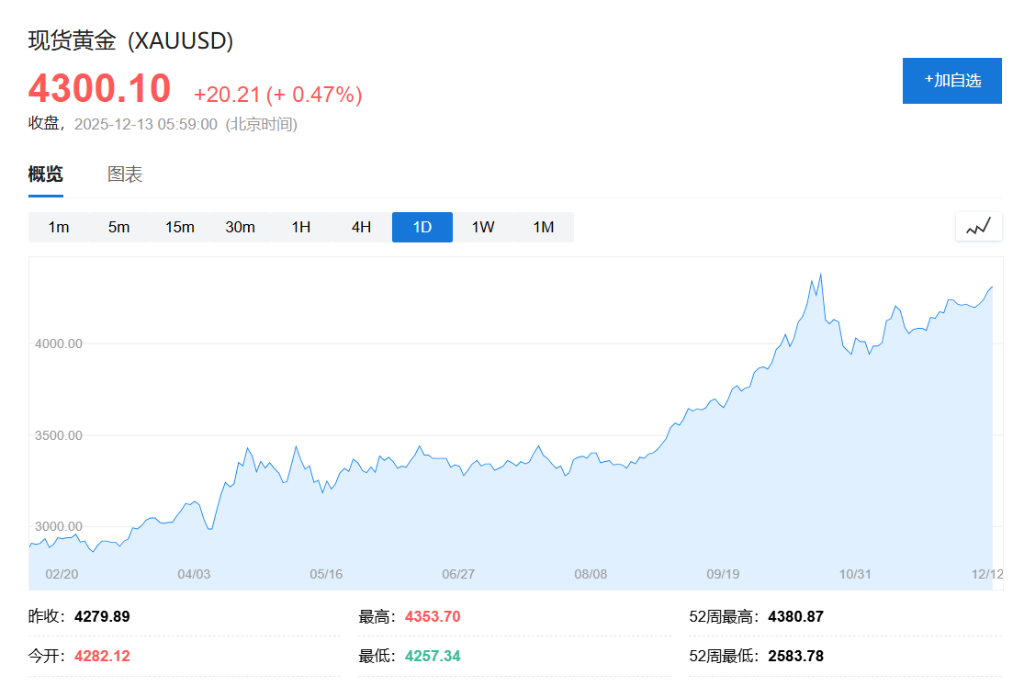
Core Insights - Despite significant market volatility in October, global central banks continue to show strong demand for gold, providing solid support for gold prices, while emerging "tokenized gold" has not yet become a major market driver [1][4] Group 1: Central Bank Gold Purchases - In October, global central banks net purchased 49 tons of gold, significantly higher than the pre-2022 monthly average of 17 tons, indicating robust and sustained demand from official sectors [1][4] - Qatar purchased 20 tons and China bought 15 tons in October, reflecting strategic decisions by central banks that are less sensitive to short-term price fluctuations, aimed at hedging geopolitical and financial risks [1][4] - Goldman Sachs maintains an optimistic forecast for gold prices, projecting they will rise to $4,900 per ounce by the end of 2026, supported by strong official demand and expectations of a shift in U.S. Federal Reserve policy towards easing [1][6] Group 2: Private Investor Demand - Private investors are viewed as a key variable that could significantly influence future gold prices, with potential for a "magnifying effect" if their interest in gold increases [5] - Goldman Sachs' model indicates that a 1 basis point (0.01%) increase in the share of gold in U.S. private financial portfolios could lead to a 1.4% rise in gold prices, highlighting the current low allocation of gold in these portfolios [5] - Currently, gold ETFs, the most common vehicle for U.S. investors, account for only 0.17% of their portfolios, suggesting substantial room for growth in private investment in gold [5] Group 3: Tokenized Gold - Goldman Sachs notes that the impact of "tokenized gold," such as Tether Gold, on recent gold price movements appears limited, with its demand significantly smaller compared to traditional channels [7] - In Q3 2025, Tether Gold holdings increased by approximately 26 tons, while Western gold ETFs saw inflows of about 197 tons, and central bank purchases reached around 134 tons, indicating a disparity in demand [7] - Tokenized gold is considered similar to gold ETFs, both backed by physical gold, but with ownership recorded on the blockchain; this feature may lower entry barriers for some investors but does not necessarily enhance intrinsic value [7]
10月净买入49吨!央行购金依然强劲,高盛:“代币化黄金”目前还非金价主力
美股IPO· 2025-12-14 11:57
Core Viewpoint - Global central banks continue to show strong demand for gold, with net purchases of 49 tons in October, significantly above the pre-2022 monthly average of 17 tons, indicating a long-term strategy to hedge against geopolitical and financial risks [1][3][5] Central Bank Gold Purchases - Goldman Sachs emphasizes that the substantial increase in gold purchases by central banks is a long-term trend, driven by the need for reserve asset diversification to mitigate rising geopolitical and financial risks [5][6] - The report indicates that the average monthly purchase by central banks is expected to remain at 70 tons through 2026, providing solid fundamental support for the gold market [6] Private Investor Impact - Private investors are viewed as a key variable that could amplify gold prices, with a potential significant effect if their interest in gold increases [7] - Goldman Sachs' model suggests that a 1 basis point (0.01%) increase in gold holdings within U.S. private financial portfolios could lead to a price increase of approximately 1.4% [7] - Currently, gold ETFs represent only 0.17% of U.S. investors' portfolios, indicating substantial room for growth in private investment in gold [7][8] Tokenized Gold - The impact of "tokenized gold," such as Tether Gold, on the recent rise in gold prices is considered limited, with its demand significantly smaller compared to traditional channels like gold ETFs and central bank purchases [9] - Tokenized gold is viewed as a potential substitute for gold ETFs rather than a major new source of demand, although it remains a trend worth monitoring [9]

10月净买入49吨!央行购金依然强劲 高盛:“代币化黄金”目前还非金价主力
智通财经网· 2025-12-14 11:07
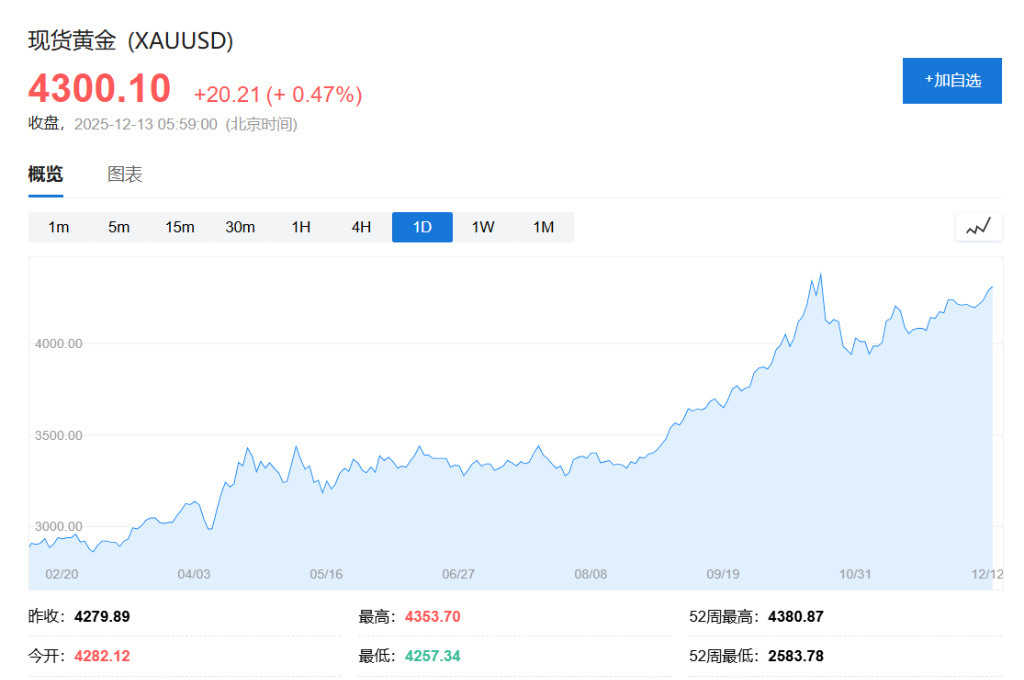
Core Insights - Despite significant market volatility in October, global central banks continue to show strong demand for gold, providing solid support for gold prices, while emerging "tokenized gold" has not yet become a major market driver [1] Group 1: Central Bank Gold Purchases - Goldman Sachs' latest report indicates that global central banks net bought 49 tons of gold in October, significantly higher than the pre-2022 monthly average of 17 tons, reflecting robust and sustained demand from official sectors [1][2] - Notably, Qatar purchased 20 tons and China bought 15 tons in October, suggesting that central banks' purchasing behavior is driven by long-term strategic considerations to hedge geopolitical and financial risks rather than short-term price sensitivity [1][3] - Goldman Sachs maintains an optimistic forecast for gold prices, projecting they will rise to $4,900 per ounce by the end of 2026, supported by strong official demand and expectations of a shift to looser monetary policy by the Federal Reserve [1][5] Group 2: Private Investor Demand - The report highlights that the behavior of private investors will be a key variable influencing future gold prices, with potential significant "amplifying effects" if their interest in gold increases [4] - Goldman Sachs' model suggests that a 1 basis point (0.01%) increase in the share of gold in U.S. private financial portfolios could lead to a price increase of approximately 1.4%, indicating substantial growth potential as current holdings in gold ETFs are only 0.17% of these portfolios [4][5] Group 3: Tokenized Gold - Regarding the role of "tokenized gold" such as Tether Gold, Goldman Sachs notes that its impact on recent gold price increases appears limited, with a reported increase of about 26 tons in Tether Gold holdings compared to 197 tons in Western gold ETF inflows and 134 tons in central bank purchases during Q3 2025 [6] - The firm views tokenized gold as similar to gold ETFs, both backed by physical gold, but believes it is more likely to serve as a partial substitute for gold ETFs rather than a significant new source of demand, warranting ongoing market monitoring [6]
10月净买入49吨!央行购金依然强劲,高盛:“代币化黄金”目前还非金价主力
Hua Er Jie Jian Wen· 2025-12-14 09:44
Core Insights - Despite significant market volatility in October, global central banks continue to show strong demand for gold, providing solid support for gold prices, while emerging "tokenized gold" has not yet become a major market driver [1][4]. Central Bank Gold Purchases - Goldman Sachs reported that global central banks net purchased 49 tons of gold in October, significantly higher than the pre-2022 monthly average of 17 tons, indicating robust and sustained demand from official sectors [1][4]. - Notably, Qatar purchased 20 tons and China bought 15 tons in October, reflecting a strategic move by central banks to diversify reserve assets and hedge against geopolitical and financial risks [1][4]. Future Gold Price Predictions - Based on strong official demand and expectations of a shift towards looser monetary policy by the Federal Reserve, Goldman Sachs maintains an optimistic forecast for gold prices, predicting they will rise to $4,900 per ounce by the end of 2026 [1][5]. Private Investor Demand - Private investor behavior is seen as a key variable influencing future gold prices. An increase in the allocation of gold in U.S. private financial portfolios could significantly amplify gold prices [1][6]. - Currently, gold ETFs, the most common tool for U.S. investors, represent only 0.17% of their portfolios, indicating substantial room for growth as interest in gold is expected to rebound alongside potential Federal Reserve policy changes [1][6]. Tokenized Gold - Goldman Sachs notes that the impact of "tokenized gold," such as Tether Gold, on recent gold price increases appears limited. In Q3 2025, Tether Gold holdings increased by approximately 26 tons, while Western gold ETFs saw inflows of about 197 tons, and central bank purchases reached around 134 tons [1][7]. - Tokenized gold is fundamentally similar to gold ETFs, both backed by physical gold, but its ownership is recorded on a blockchain. While this may lower entry barriers for some investors, it does not necessarily add significant intrinsic value [1][8].
风口下的RWA:万亿市场盛宴,还是泡沫?
Sou Hu Cai Jing· 2025-11-23 12:01
Core Insights - The rise of Real World Assets (RWA) is transforming the financial landscape by tokenizing physical assets like real estate and art on blockchain, creating a new market for digital securities [1][2] - Despite the impressive growth in RWA market size, challenges such as liquidity issues and regulatory constraints remain significant hurdles [3][6] Group 1: Definition and Market Overview - RWA refers to the tokenization of tangible assets, allowing them to be traded on blockchain, which revolutionizes asset liquidity and trading [2] - The market for tokenized non-liquid assets is projected to reach $16 trillion by 2030, representing nearly 10% of global GDP [2] - As of mid-2025, approximately $24 to $25 billion of RWA has been successfully migrated to blockchain, a significant increase from under $5 billion in early 2023 [3] Group 2: Market Dynamics and Challenges - The RWA market is dominated by private credit and tokenized U.S. Treasury bonds, with BlackRock's BUIDL token valued at $2.42 billion and Ondo Finance's OUSG token at $1.76 billion, together accounting for nearly 20% of the market [3] - Despite high market valuations, RWA assets often serve as "on-chain savings accounts" for institutional and high-net-worth investors, leading to low trading activity [3][6] - Liquidity issues are prevalent, with tokenized real estate and art facing severe trading challenges, often resulting in significant price discrepancies [6][8] Group 3: Driving Factors Behind RWA Popularity - The disparity in yields between decentralized finance (DeFi) protocols and U.S. Treasury bonds has driven capital towards the latter, enhancing the appeal of tokenized bonds [5] - Traditional financial institutions are increasingly entering the RWA space, providing legitimacy and support for the market [5] - RWA offers democratized investment opportunities, allowing smaller investors to access high-value assets that were previously out of reach [5] Group 4: Structural Barriers to RWA Development - Regulatory challenges exist as many RWA tokens are classified as securities, limiting market participation due to compliance requirements [7] - The lack of a unified trading platform leads to fragmented liquidity, making price discovery inefficient and increasing transaction costs [7] - The unique nature of each RWA asset complicates valuation, creating significant bid-ask spreads and hindering market participation [8] Group 5: Future Pathways for RWA - A hybrid market structure combining centralized and decentralized platforms may provide a solution to current challenges, allowing for compliant issuance and trading [9] - Utilizing collateralized lending models can enhance liquidity for RWA holders without necessitating asset sales [9] - Establishing standardized asset disclosures and valuation frameworks will help reduce information asymmetry and improve market efficiency [9][10]

德林控股(01709.HK)拟携手Antalpha共同开发创新型金融解决方案
Ge Long Hui· 2025-10-16 13:38
Group 1 - The core viewpoint of the article highlights the strategic partnership between Derin Holdings and Antalpha Platform, aimed at integrating traditional finance expertise with digital asset innovation to unlock market potential in the digital asset ecosystem [1][2] - The collaboration is expected to enhance the group's competitive advantage in the digital asset and Real World Asset (RWA) sectors, aligning with global trends in asset tokenization and supporting Hong Kong's vision as a leading regulated digital finance center [2][3] - The partnership will enable the group to optimize its Bitcoin mining operations through Antalpha's support in financing, infrastructure, and technology, thereby improving operational efficiency and competitiveness in the mining business [2] Group 2 - The rapid growth of the gold products and RWA tokenization market reflects strong demand from institutional and retail investors for secure, transparent, and flexible investment options, with the total market value of tokenized gold exceeding approximately $3 billion in 2025 and a trading volume increase of about 900% year-to-date [3] - Tokenized gold, particularly the XAU asset with a market value exceeding $1.5 billion, is positioned to become a core RWA due to its scalability, stability, and practical use across decentralized and regulated platforms [3] - The ongoing collaboration between the group and Antalpha in developing gold RWA applications and distribution channels is expected to diversify investment products and provide reliable digital gold investment avenues, maintaining the group's leading position in RWA innovation [3]
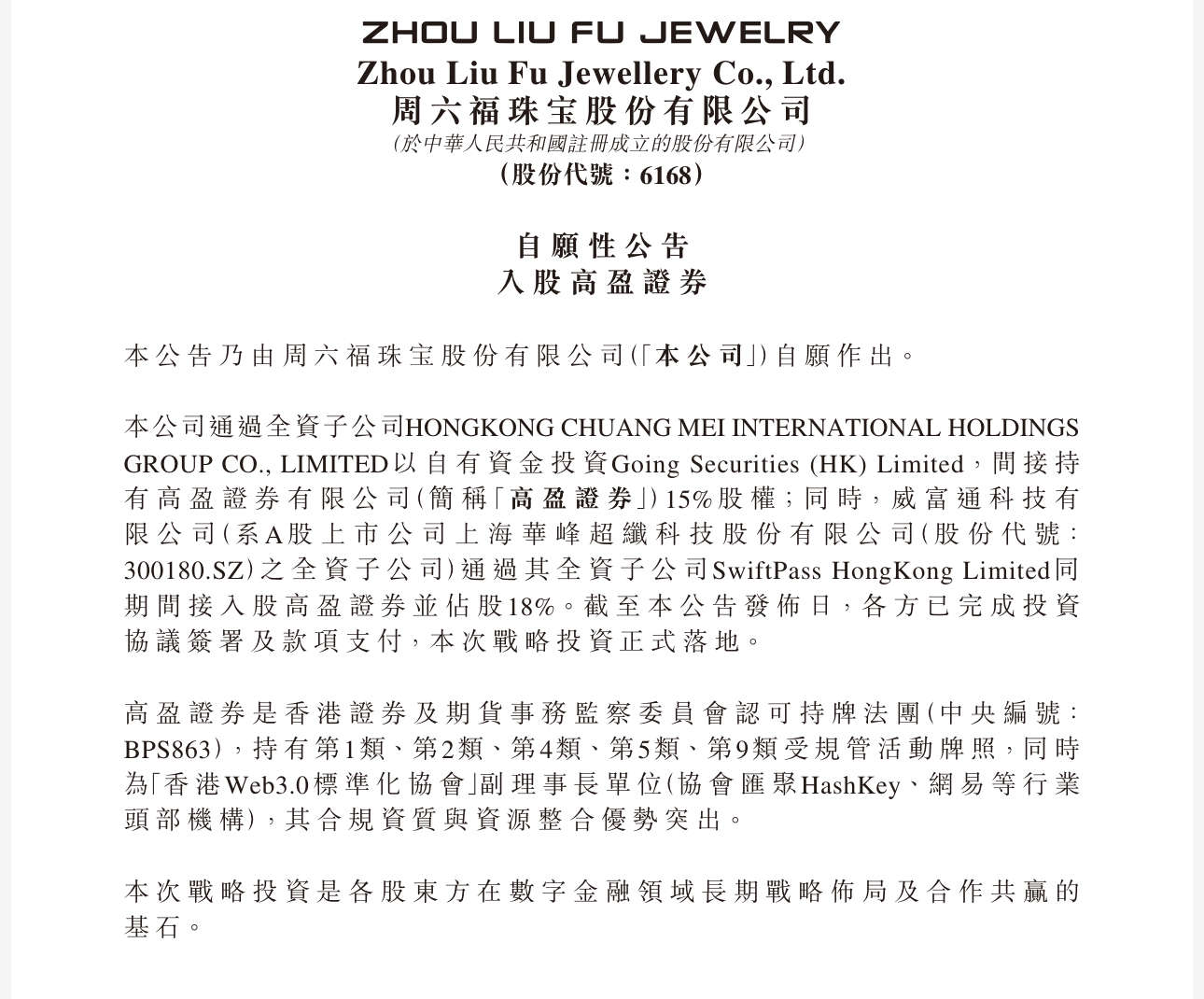
周六福(06168):打造“RWA+海外扩张”战略飞轮 黄金资产上链重构估值逻辑
智通财经网· 2025-09-12 14:17
Core Viewpoint - Company Siu Fook (06168) has made a strategic investment in Going Securities (HK) Limited, acquiring a 15% stake in Gao Ying Securities, marking its entry into the RWA (Real World Asset) sector and the digital asset market in Hong Kong [1][3][11] Group 1: Strategic Investment and Market Positioning - The investment was completed through Siu Fook's wholly-owned subsidiary, establishing a foundation for long-term strategic collaboration in the digital finance sector [1][3] - Gao Ying Securities holds multiple regulatory licenses and is positioned as a key player in the Web3.0 standardization in Hong Kong, enhancing Siu Fook's compliance and industry integration capabilities [3][4] - The collaboration aims to integrate resources across cross-border payments, precious metals, and capital markets, facilitating the upgrade of Gao Ying Securities' virtual asset licenses [3][4] Group 2: RWA Market Potential - The RWA sector is gaining attention as traditional industries face growth slowdowns and virtual asset regulations become more defined, with a projected asset tokenization market size of $16 trillion by 2030 according to Boston Consulting Group [3][4] - Major institutions like BlackRock and Franklin Templeton are entering the market, indicating a trend towards tokenizing real assets such as gold, bonds, and real estate [3][4] Group 3: Business Model and Growth Strategy - Siu Fook's strategy involves leveraging its gold and jewelry assets to issue RWA products, providing inherent value stability and enhancing asset liquidity and financing channels [4][5] - The company plans to establish hundreds of overseas stores in the next 2-3 years, which will serve as both sales terminals and sources of high-quality assets for RWA issuance [6][7] - The overseas expansion is supported by a proven business model with a return on equity (ROE) in overseas stores reaching 2-3 times that of domestic stores, ensuring cash flow for further expansion [7][8] Group 4: Competitive Advantages and Market Differentiation - Siu Fook's competitive edge lies in its unique combination of supply chain advantages and cultural differentiation, allowing it to avoid price wars with international giants [8][9] - The company has established a risk-controlled expansion path through strategic partnerships with leading commercial real estate firms, reducing market entry costs [8][9] Group 5: Future Outlook and Valuation - Siu Fook is positioned to become the first listed company in the domestic jewelry industry to achieve systematic and large-scale issuance of gold RWA products, which could lead to a premium valuation in the capital market [10][11] - The company's ecosystem-building approach may allow it to transition from a product supplier to an industry infrastructure service provider, shifting its valuation focus from product margins to market share and ecosystem value [10][11] - The strategic synergy of "overseas expansion + RWA" is expected to drive Siu Fook's transformation into a digital ecosystem platform, unlocking significant financial value from its gold inventory [11]