
俄罗斯卢布

Search documents
春节假期海外四大要闻:美伊危机继续升级,特朗普发出通牒;FOMC会议纪要发布,美联储维持中性偏鹰;美国最高法院推翻特朗普“紧急”关税;高市早苗高票连任第105代首相
Sou Hu Cai Jing· 2026-02-23 03:20
Group 1: Market Performance During Spring Festival - Global major stock indices mostly rose, with South Korea, France, and the UK leading in gains. From February 16 to 20, the Korean Composite Index rose by 5.5%, CAC40 by 2.5%, FTSE 100 by 2.3%, and others showed similar increases, while the Hang Seng Index and Nikkei 225 fell by 0.6% and 0.2% respectively [2][10] - Global major 10-year government bond yields mostly declined, except for US Treasury yields which rose by 4.0 basis points. The yields for 10-year Japanese, French, British, and Italian bonds fell by 6.1, 3.8, 2.7, and 2.3 basis points respectively [2][10] - Most global commodities saw price increases, with Brent crude oil rising by 5.9%, WTI crude by 5.7%, and London spot silver by 4.1% during the same period [2][10] - Among major currencies, the Japanese yen and British pound experienced significant declines, falling by 1.5% and 1.3% respectively, while the US dollar index rose by 0.9% [2][10] Group 2: Geopolitical Events Impacting Markets - The US-Iran crisis escalated with indirect negotiations taking place in Geneva, while the US increased military presence in the region. If negotiations fail or military action occurs, the market is pricing in potential disruptions in the Strait of Hormuz, leading to a rise in WTI crude oil prices from approximately $62.33 to $66.39, marking a 6.5% increase [3][20][22] - The FOMC meeting minutes indicated a neutral but hawkish stance, with most members agreeing that current rates are appropriate. The market expects a potential rate cut of about 60 basis points this year, reflecting a slight easing compared to previous expectations [4][27][30] Group 3: Legal and Trade Developments - The US Supreme Court ruled against Trump's large-scale tariffs, stating that the International Emergency Economic Powers Act did not authorize such actions. This ruling could lead to a decrease in supply chain costs and improve corporate profit expectations [5][33][35] - Following the Supreme Court's decision, Trump announced a new 10% tariff on global imports for 150 days, which he later increased to 15%. This move may provoke retaliatory actions from major trading partners [5][35] Group 4: Political Developments in Japan - Fumio Kishida was re-elected as Japan's Prime Minister, emphasizing a fiscal policy focused on significant tax cuts and public investment in infrastructure, semiconductors, AI, and green energy. This policy is expected to boost Japan's GDP growth forecast for 2026 [7][39]

春节假期海外四大要闻——海外周报第128期
一瑜中的· 2026-02-23 02:49
Core Viewpoint - During the Spring Festival holiday, overseas markets were dominated by risk-averse trading due to Middle East geopolitical risks and uncertainties surrounding FOMC monetary policy. Major asset prices showed varied performances, with most global stock indices rising, while major currencies like the yen and pound experienced significant declines [2][4]. Group 1: Overseas Asset Performance - Global stock indices mostly rose, with the Korean Composite Index, French CAC40, and FTSE 100 leading the gains, increasing by 5.5%, 2.5%, and 2.3% respectively from February 16 to 20. The Hang Seng Index and Nikkei 225 fell by 0.6% and 0.2% respectively [4][14]. - Global 10-year government bond yields mostly declined, with Japanese, French, British, and Italian bonds decreasing by 6.1bps, 3.8bps, 2.7bps, and 2.3bps respectively, while the 10-year US Treasury yield rose by 4.0bps [4][14]. - Most major commodities saw price increases, with Brent crude oil and WTI crude oil rising by 5.9% and 5.7% respectively during the same period [4][14]. - Among major currencies, the yen and pound experienced significant declines, falling by 1.5% and 1.3% respectively, while the US dollar index rose by 0.9% [4][14]. Group 2: Key News Events - The US-Iran crisis escalated, with indirect negotiations taking place in Geneva. The US is increasing military presence in the region, leading to a rise in oil prices, with WTI crude increasing from approximately $62.33 to $66.39, marking a 6.5% increase [5][25]. - The FOMC meeting minutes indicated a neutral but hawkish stance, with most members agreeing that current rates are appropriate. The market expects a potential rate cut of about 60 basis points later this year, reflecting a slight easing compared to previous expectations [6][30]. - The US Supreme Court ruled against Trump's large-scale tariffs, stating that the International Emergency Economic Powers Act did not authorize such actions. This decision led to a decrease in supply chain costs and a rise in the Nasdaq index by 0.90% [7][36]. - Japanese Prime Minister Kishi Sanae was re-elected, promoting a fiscal policy focused on significant tax cuts and public investment, which is expected to boost Japan's GDP growth forecast for 2026 [9][39].
2025年11月蒙古本币图格里克兑主要货币同比不同程度贬值
Shang Wu Bu Wang Zhan· 2025-12-25 10:16
Core Viewpoint - The Mongolian Tugrik has depreciated against major currencies in November, indicating a trend of currency weakening in the region [1] Currency Exchange Rates Summary - The average exchange rate of the Mongolian Tugrik against the US Dollar in November was 1 USD = 3571.66 Tugrik, a year-on-year depreciation of 158.9 Tugrik [1] - The average exchange rate of the Mongolian Tugrik against the Euro was 1 EUR = 4128.71 Tugrik, reflecting a year-on-year depreciation of 498.2 Tugrik [1] - The average exchange rate of the Mongolian Tugrik against the Russian Ruble was 1 RUB = 44.42 Tugrik, showing a year-on-year depreciation of 10.4 Tugrik [1] - The average exchange rate of the Mongolian Tugrik against the Chinese Yuan was 1 CNY = 502.37 Tugrik, with a year-on-year depreciation of 28.7 Tugrik [1]
美元霸权雪崩!中东集体反水,打响反美第一枪,美元已经不是唯一
Sou Hu Cai Jing· 2025-11-25 06:21
Core Viewpoint - The trend of de-dollarization is gaining traction globally as countries seek to reduce reliance on the US dollar due to frequent financial sanctions and dollar hegemony [1][15] Group 1: Dollar Hegemony - The US dollar holds an irreplaceable position as the global settlement currency, with 54% of global trade denominated in dollars and 90% of foreign exchange transactions involving the dollar [1][5] - The dollar's dominance is supported by strong network effects, as 88% of currency transactions involve the dollar, making it a default choice for many countries [5][6] - The US controls the dollar settlement chain, with over 90% of cross-border dollar transactions requiring US banks for clearing, allowing the US to exert influence through financial sanctions [6][7] Group 2: Foundations of Dollar Hegemony - The first pillar of dollar hegemony is economic strength, with the US GDP rising from 5% of the global total in 1850 to 25% by 1960, establishing the dollar as the global trade currency [7][9] - The second pillar is institutional legacy, with the Bretton Woods system establishing the dollar's central role in the global monetary system, despite its collapse in 1971 [9] - The third pillar is the oil-dollar linkage, initiated by the 1974 agreement between the US and Saudi Arabia, requiring oil transactions to be conducted in dollars [9][10] Group 3: Challenges to De-dollarization - Current alternatives to the dollar face significant challenges, with Russia's SWIFT alternative covering only a small portion of global cross-border payments [10] - Other currencies like the Saudi Riyal and UAE Dirham have minimal shares in global trade financing, primarily due to a lack of liquidity and trust [10] - Despite rising calls for de-dollarization, countries still rely on the dollar for a significant portion of their transactions, indicating the dollar's continued dominance [13][14] Group 4: Future Outlook - In the short term, dollar hegemony remains strong, with over $8 trillion of US debt held by foreign entities, making a mass sell-off unlikely [12] - The trend towards de-dollarization is evident, with countries exploring local currency trade agreements, but the dollar will still dominate major commodity trade and cross-border investment [14][15] - The conclusion is that while the dollar's immediate collapse is unrealistic, the trend towards de-dollarization is significant, prompting countries to diversify their currency holdings [15]
今年以来巴西雷亚尔上涨16%,升值幅度居全球第五
Shang Wu Bu Wang Zhan· 2025-10-08 17:28
Core Insights - The Brazilian real has appreciated by 16.18% against the US dollar year-to-date as of September 17, making it the fifth strongest currency globally [1] - The depreciation of the US dollar is attributed to investor skepticism regarding President Trump's economic policies [1] - Among 33 global currencies, only four have depreciated, with the Russian ruble, Hungarian forint, and Swedish krona leading in appreciation [1] Currency Performance - The Brazilian real's nominal appreciation of 16.18% ranks fifth globally [1] - The top three appreciating currencies are: - Russian ruble (+36.6%) - Hungarian forint (+19.96%) - Swedish krona (+18.29%) [1] - The currencies with the largest depreciation include: - Argentine peso (-30.05%) - Turkish lira (-14.45%) - Indian rupee (-2.98%) [1]
印尼贸易部长声称,已做好与俄罗斯本币结算准备,去美元化再提速
Sou Hu Cai Jing· 2025-10-04 12:08
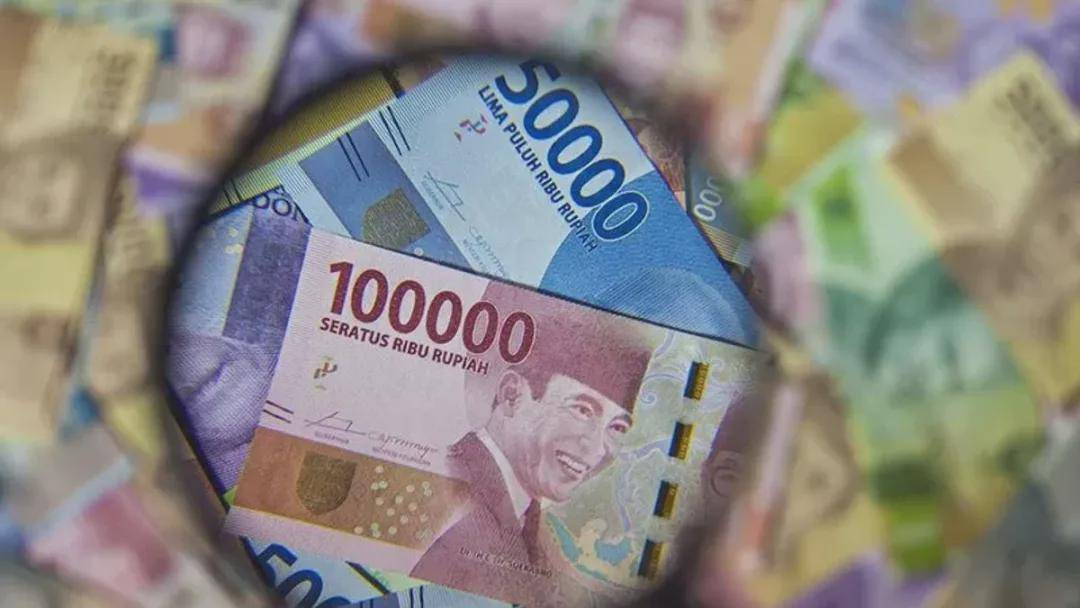
Core Points - Indonesia is prepared to engage in currency settlement with Russia, moving away from the use of the US dollar and opting for direct transactions in Indonesian Rupiah and Russian Ruble [1][3] - The trend of "de-dollarization" has gained momentum among emerging market countries, with Indonesia being one of the more proactive nations in this regard since the onset of the Russia-Ukraine conflict [3][5] - Indonesia has already initiated currency settlement discussions with countries like China, Japan, and Thailand, and has been in multiple rounds of negotiations with Russia over the past three years [5][6] Group 1 - Indonesia's trade minister confirmed readiness for currency settlement with Russia, indicating a significant shift in trade dynamics [1] - The move is seen as a potential blow to the US, given Indonesia's status as Southeast Asia's largest economy and its projected GDP ranking [1] - The ongoing trend of de-dollarization reflects a broader shift in global financial practices, particularly among emerging markets [3] Group 2 - Previous discussions on currency settlement between Indonesia and Russia date back to September 2022, highlighting ongoing diplomatic efforts [3] - Although the currency settlement mechanism has not yet been fully implemented, Indonesia's preparations suggest a strong likelihood of future agreements [5] - The implications of this shift could challenge the dominance of the US dollar in international trade [6]
俄罗斯卢布6月有效汇率环比上涨1.8%。
news flash· 2025-07-15 15:16
Core Point - The effective exchange rate of the Russian Ruble increased by 1.8% month-on-month in June [1] Group 1 - The increase in the effective exchange rate indicates a strengthening of the Russian Ruble against a basket of currencies [1]
据路透调查:预计12个月后俄罗斯卢布兑美元将升至98.25(此前调查为97.5)。
news flash· 2025-07-01 14:27
Core Viewpoint - A Reuters survey predicts that the Russian ruble will strengthen against the US dollar, reaching 98.25 in 12 months, up from a previous forecast of 97.5 [1] Group 1 - The forecast indicates a slight appreciation of the ruble against the dollar over the next year [1]
整理:每日全球外汇市场要闻速递(5月29日)
news flash· 2025-05-29 08:00
Group 1: US Dollar and Federal Reserve - The Federal Reserve's June economic forecast may be influenced by predictions of stagflation [2] - The US International Trade Court has halted Trump's "liberation day" trade policy, with the Trump administration filing an appeal [2] - The minutes from the Federal Reserve meeting indicate rising risks of increased unemployment and inflation, diminishing the benefits of a flexible average inflation targeting in a high-risk environment [2] Group 2: Non-US Major Currencies - The Central Bank of Russia's tightening monetary policy has led to a slowdown in credit to balanced levels, with signs of inflation retreat [3] - The UK is seeking to expedite the implementation of a trade agreement with the US [3] - Japan's Prime Minister emphasized the importance of investment over tariffs, noting positive economic signs following wage increases [3] - Japan's Finance Minister stated that there was no discussion of exchange rate levels in recent talks with the US Treasury Secretary [3] - Japan's Economic Revitalization Minister will continue to urge the US to reconsider tariff measures and will hold ministerial talks on trade expansion and economic security cooperation [3] Group 3: Other Central Banks and Economic Indicators - The Reserve Bank of New Zealand's Governor indicated that the official cash rate (OCR) may follow various paths, with uncertainty regarding a rate cut in July [4] - The Bank of Korea cut its benchmark rate by 25 basis points to 2.50%, aligning with market expectations [4] - The Bank of Korea forecasts inflation rates of 1.9% in 2025 and 1.8% in 2026, while lowering economic growth expectations for 2025 to 0.8% [4] - A Reuters survey indicated that 53 out of 61 economists expect the Reserve Bank of India to cut its benchmark rate by 25 basis points to 5.75% on June 6 [4] - The Bank of Korea's Governor noted that there is still room for further rate cuts due to economic downturn risks, with a low likelihood of policy rates falling below 2% [4] - The Bank of Korea's Governor mentioned that recent US court rulings will reduce the effective tariff rate on Korea from 13.3% to 9.7% [5] Group 4: Currency Trends and Investor Sentiment - Investor bullish positions on the New Taiwan Dollar and Philippine Peso have reached the highest levels since 2020, reflecting optimism towards all Asian currencies [5] - The Russian Ruble briefly strengthened against the US Dollar, reaching its highest level since June 2023 [5]
俄罗斯卢布兑美元升破79, 创2023年6月以来的最高水平。
news flash· 2025-05-29 07:29
Core Insights - The Russian ruble has surpassed 79 against the US dollar, reaching its highest level since June 2023 [1] Group 1 - The exchange rate movement indicates a strengthening of the ruble, which may reflect changes in market sentiment or economic conditions [1]