即时零售商品

Search documents
【展望二〇二六】满足人民群众消费新期待
Jing Ji Ri Bao· 2026-01-31 05:13
Core Viewpoint - The Chinese market is undergoing significant regulatory changes in 2026, impacting competition in the food delivery and retail sectors, with a shift from aggressive price wars to a focus on service quality and consumer trust [1][2][3]. Group 1: Regulatory Changes - The State Council's Anti-Monopoly Committee announced investigations into the food delivery platform market and the alleged monopolistic behavior of Ctrip, indicating increased regulatory scrutiny [1][2]. - The Ministry of Finance and the State Taxation Administration will eliminate VAT export rebates for solar products starting April 1, 2026, reflecting a broader regulatory tightening [1]. - The market supervision authority released a list of major cases related to "involution" competition, highlighting ongoing efforts to address unfair practices in various industries [1][2]. Group 2: Market Dynamics - The competitive landscape in the food delivery sector is shifting from a "burning money" model to a focus on optimizing user experience and sustainable business practices [2][3]. - Major platforms are transitioning from merely delivering food to providing a broader range of retail services, indicating a strategic pivot towards becoming comprehensive retail infrastructures [4][5]. - The competition is expected to evolve into a "full-scenario retail war," integrating offline experiences, supply chain efficiency, and product quality [4][5]. Group 3: Consumer Behavior - Consumers are increasingly rejecting "involution" products characterized by extreme price cuts, signaling a demand for better quality and service [6][7]. - The market is anticipated to segment into two layers: one focused on efficiency and cost-effectiveness, and another on emotional and personalized experiences [8][12]. - The rise of local and individual creators is fostering a diverse ecosystem, enhancing consumer engagement and satisfaction [12][14]. Group 4: Food Safety and Transparency - Regulatory efforts are shifting from reactive measures to proactive prevention in food safety, aiming for a comprehensive regulatory framework to ensure consumer trust [9][10]. - New standards and regulations are being developed for pre-packaged food, emphasizing transparency and accountability in the food supply chain [9][10]. - The implementation of traceability systems and enhanced monitoring is expected to improve food safety and consumer confidence [10][11].



2025的消费账:增长来自哪里,冷感来自哪里
3 6 Ke· 2025-12-30 08:38
Group 1 - The core viewpoint of the article highlights that while China's consumption market shows growth in data, the actual consumer sentiment remains weak, with a significant increase in household savings indicating a preference for saving over spending [1] - In the first eleven months of 2025, the total retail sales of consumer goods increased by approximately 4.0% year-on-year, while per capita disposable income and consumption also rose [1] - Consumer confidence has remained low, with the consumer confidence index fluctuating around 89 points, significantly below the long-term average of 108.77 [1] Group 2 - The home appliance and automotive markets experienced a cumulative growth of nearly 14.8% and 6.1% respectively in the first eleven months of 2025, driven by policies like "trade-in for new" [4] - However, in November, retail sales for these categories dropped by 19.4% and 8.1% year-on-year, indicating a typical consequence of policy stimulus [5][6] - The increase in automotive trade-in applications exceeded 11.2 million vehicles, accounting for over one-third of total sales, suggesting that much of the growth was due to preemptive demand rather than new demand [7] Group 3 - The dining sector has seen a significant shift, with approximately 75% of new takeaway orders priced below 15 yuan, indicating a trend towards cost-saving [9] - The number of high-end restaurants has halved over the past three years, with major cities like Shenzhen and Beijing experiencing reductions of 57% and 47% respectively [9] - Consumers are increasingly skeptical about the value of higher-priced dining options, leading to a preference for more affordable choices [9] Group 4 - The travel market in 2025 saw a 20.6% year-on-year increase in domestic travel, but spending growth was only 15.2%, indicating a trend of more travelers spending less [11][12] - During peak travel periods, such as the National Day holiday, the number of travelers increased by 1.23 million, yet overall spending only grew by 3% [12] - Consumers are becoming more price-sensitive, with airlines and hotels hesitant to raise prices during peak seasons [12] Group 5 - The micro-short drama market is projected to exceed 68 billion yuan in 2025, significantly outpacing the film industry's total box office of 50 billion yuan [16] - The average daily usage time for micro-short dramas reached 120.5 minutes, while movie attendance frequency has declined, with 60% of viewers attending only once a year [17] - The concentration of box office revenue is increasing, with 55% of total box office revenue captured by the top five films in 2025, the highest in a decade [17] Group 6 - In the fast-moving consumer goods sector, prices have been declining, with an average price growth rate of -2.4% in the first three quarters of 2025 [20] - The focus of consumers has shifted from brand loyalty to channel trust, with discount stores and private labels rapidly expanding [21] - Consumers are prioritizing functional utility over brand prestige, leading to a shift in purchasing behavior towards more stable and reliable products [21] Group 7 - Instant retail is experiencing rapid growth, with platforms like Meituan and JD.com emphasizing delivery speed, aiming for delivery within 30 minutes [24] - The instant retail market is projected to reach 1.5 trillion yuan by 2030, with a compound annual growth rate of 18% [24] Group 8 - Gold prices surged by 70% in 2025, significantly outpacing income growth, leading to a decline in gold jewelry consumption by 25% in 2024 and 26% in the first half of 2025 [33] - The demand for gold bars and coins has increased, reflecting a shift towards gold as a safe-haven asset amid geopolitical uncertainties [33] Group 9 - The white wine market is showing signs of fatigue, with inventory turnover days reaching 900 days, indicating a significant slowdown in consumption [36] - Younger consumers are distancing themselves from traditional drinking cultures, preferring craft and low-alcohol beverages that emphasize casual social interactions [37] - In contrast, new consumer products like Labubu are thriving, with a turnover rate of only 83 days, appealing to younger demographics seeking cultural identity [39] Group 10 - The overall consumption landscape in 2025 reflects a shift towards defensive consumption, where consumers prioritize certainty and stability over aspirational spending [40] - The willingness to spend is being weighed against the need for risk management, leading to a more cautious approach to consumption [41]


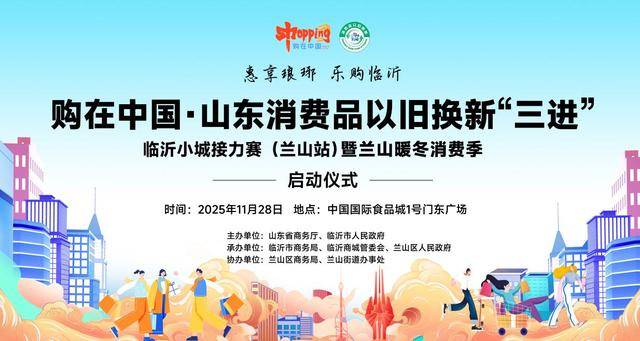
福利加码嗨购不停!临沂小城接力赛(兰山站)暨兰山暖冬消费季将于11月28日启幕
Sou Hu Cai Jing· 2025-11-26 04:22
Core Insights - The event "Purchase in China: Shandong Consumer Goods Trade-in Relay Race (Lanshan Station)" will officially launch on November 28, focusing on consumer benefits and interactive experiences [1][3] - The event is organized by the Shandong Provincial Department of Commerce and the Linyi Municipal Government, aiming to enhance local consumption through policy incentives and special products [1][3] Group 1: Event Overview - The event theme is "Enjoying Linyi, Happy Shopping," and it will take place at the East Square of the No. 1 Gate of the China International Food City [1] - It will feature a combination of policy benefits, unique products, and interactive experiences for citizens [1][3] Group 2: Market Significance - Linyi Market is the largest market cluster in China, with 136 professional wholesale markets covering 27 categories and over 6 million products [3] - The market sees daily transactions involving over 30,000 people and 20,000 trucks, with an annual transaction volume ranking first among Chinese prefecture-level cities [3] Group 3: Consumer Benefits - The event will showcase special exhibition areas for quality products such as beverages, daily necessities, and instant retail items, while integrating trade-in policies for home appliances and digital products [3] - Financial institutions will offer exclusive subsidies to enhance consumer experience during the "renewal" shopping [3] Group 4: Future Prospects - This event is a significant step in implementing trade-in policies and showcasing Linyi's commercial heritage [3] - Future activities will involve more market participants to extend the consumer service chain, ensuring that policy benefits reach households and invigorate the local consumption market [3]
需求所向皆蓝海——从新消费把脉经济活力与动能①(评论员观察)
Ren Min Ri Bao· 2025-07-27 22:06
Group 1 - The core viewpoint emphasizes the transformation of new consumer demands into development opportunities, highlighting the significant role of consumption in driving economic circulation and supporting high-quality economic development [1][3] - The fitness industry in China has shown a compound annual growth rate of over 11% from 2019 to 2023, while the light food market is expected to exceed 320 billion yuan in 2024, with an annual growth rate of 41.7% [1] - The instant retail sector is rapidly evolving, with online retail sales reaching 74,295 billion yuan in the first half of 2025, marking an 8.5% year-on-year increase, indicating substantial growth potential [1] Group 2 - New consumption trends are characterized by two main features: the increasing granularity of consumer demand, leading to the emergence of long-tail markets, and the strengthening of the immediacy of consumption, which is becoming a new necessity [2] - The youth demographic (ages 14-35) in China, approximately 400 million strong, is driving diverse and personalized consumption needs, presenting opportunities for businesses that can accurately capture these trends [2] - The expansion of instant retail is moving from emergency needs to everyday consumption, with categories extending beyond food to include beverages, electronics, and travel services, creating new market opportunities [2] Group 3 - The government's initiatives to enhance consumption capacity, improve supply quality, and optimize the consumption environment are crucial for stimulating market vitality and promoting consumption upgrades [3] - Recent actions, such as the launch of special consumption initiatives and the implementation of "national subsidies," aim to boost consumer spending and improve purchasing power [3] - The focus on demand-driven strategies reflects a commitment to a people-centered value approach, aiming to convert new consumer demands into significant economic opportunities [3]
如何打破“消费降级”的困局?发钱?涨房价?
Sou Hu Cai Jing· 2025-05-14 20:43
Core Insights - The article discusses the phenomenon of consumption downgrade in China following the lifting of mask mandates, highlighting the economic struggles faced by individuals and businesses after a prolonged period of lockdown [1][5]. Economic Trends - National retail sales in March showed a year-on-year increase of 5.9%, reaching 4.09 trillion yuan, indicating an overall recovery trend [2]. - However, major cities like Beijing and Shanghai experienced significant declines in retail sales, with Beijing down 9.9% and Shanghai estimated to drop 14.1% [4]. Population Dynamics - The decline in population in major cities, particularly among migrant workers, is reshaping the consumption landscape, with a 1% decrease in migrant population leading to a loss of approximately 30 billion yuan in consumption power for Beijing and 45 billion yuan for Shanghai [5]. Consumer Behavior - High-end brands are witnessing a decline in demand, with Porsche reducing prices by 20% and Rolex's green gold model seeing a price drop of 50%, reflecting a broader trend of consumption downgrade among the middle class [6]. - The average salary growth in Beijing's financial sector is only 1.3%, and 3.5% in the internet sector, contrasting sharply with previous years of double-digit growth [7]. Shifts in Spending Habits - The "coffee downgrade" phenomenon is emerging, where premium coffee brands are being replaced by convenience store options, indicating a shift in spending strategies among workers [8]. - Consumer confidence in Beijing has plummeted to a ten-year low of 90.1, while the national index remains above 105 [9]. Market Data - Key commercial areas are experiencing a 40% drop in restaurant turnover rates, luxury stores are seeing a 60% decrease in foot traffic, and shared bike usage has shortened by 15 minutes [10]. - Real estate prices in Beijing and Shanghai have dropped by 8.3%, exacerbating wealth anxiety and affecting middle-class consumption capabilities [10]. Emerging Economic Opportunities - New economic forms are beginning to emerge amidst the consumption downturn, with instant retail in Beijing growing by 9.4% and smart home appliance sales increasing by 23.1% [12]. - Policies promoting the replacement of old consumer goods have led to a 35.1% increase in home appliance sales and a 28.6% surge in 5G mobile device sales, indicating a shift towards quality and efficiency in consumption [13]. Future Outlook - The article suggests that major cities need to focus on retaining talent and attracting people through opportunities and quality services to revitalize the consumption market [14].