
小米澎湃OS 3

Search documents
雷军说话算话,小米正抛弃“小字”宣传
3 6 Ke· 2026-01-08 23:15
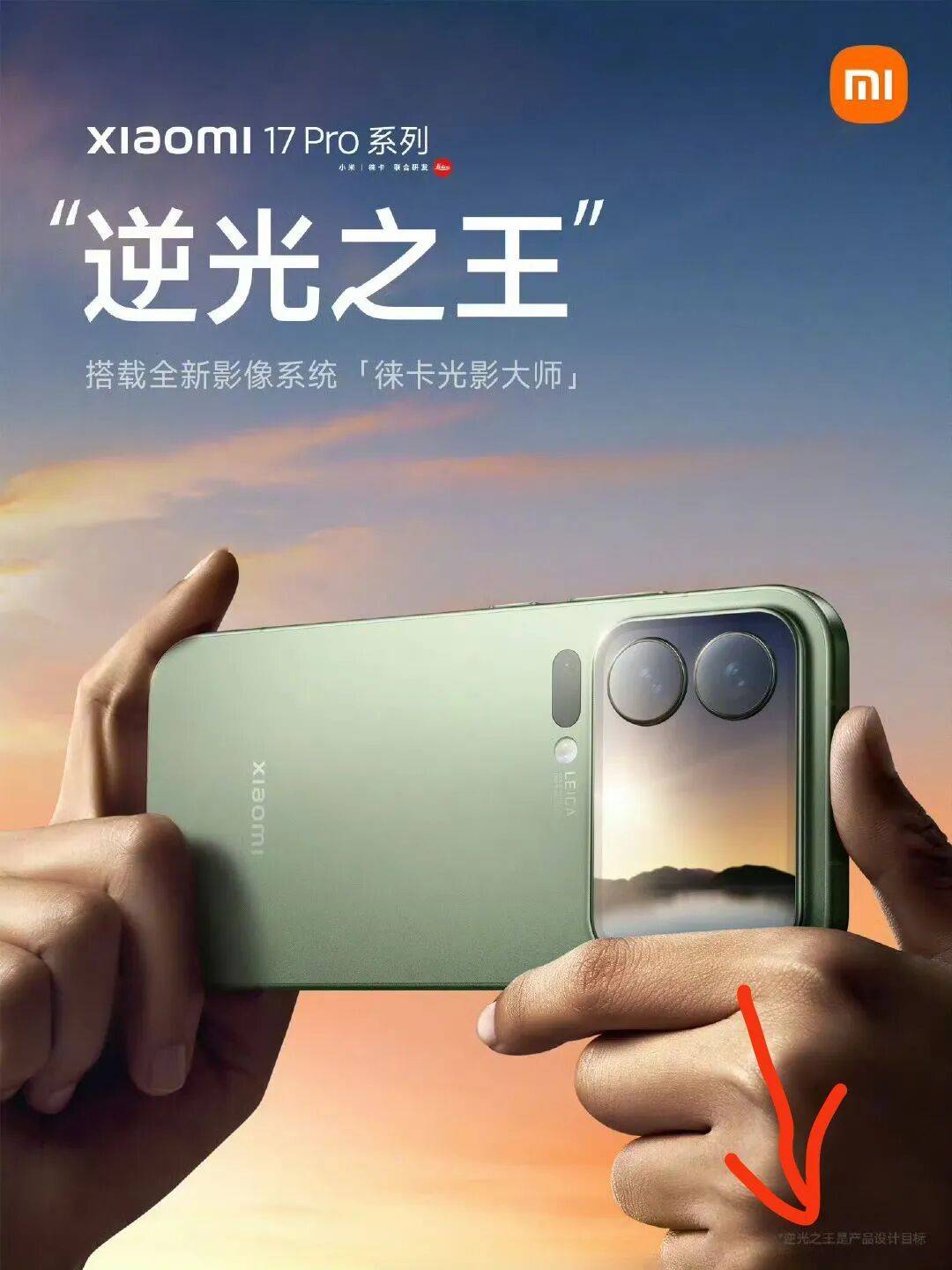
Core Viewpoint - Xiaomi acknowledges the criticism regarding the "small text" in its promotional materials and commits to clearer communication in future advertisements to avoid misunderstandings [1][4]. Group 1: Background and Context - The "small text" controversy primarily arose in September 2025, with over 30 promotional posters featuring such text [5][28]. - Xiaomi's public relations manager, Xu Jieyun, stated that the "small text" was included for compliance with advertising laws, and the company is open to feedback [1][4]. Group 2: Changes in Promotional Materials - A comparison of promotional posters from September 2025 and December 2025 to January 2026 shows a significant reduction in the use of "small text," with only 13 instances noted in the latter period [29][65]. - The "small text" in December 2025 posters was larger and clearer, indicating an improvement in readability compared to the September 2025 materials [43][65]. Group 3: Specific Examples - In September 2025, multiple promotional posters included "small text" that provided additional information, such as sales data sources and promotional details [7][10][13]. - By December 2025, several promotional materials, including those for car purchases and training programs, either eliminated "small text" or made it more legible [31][35][41].


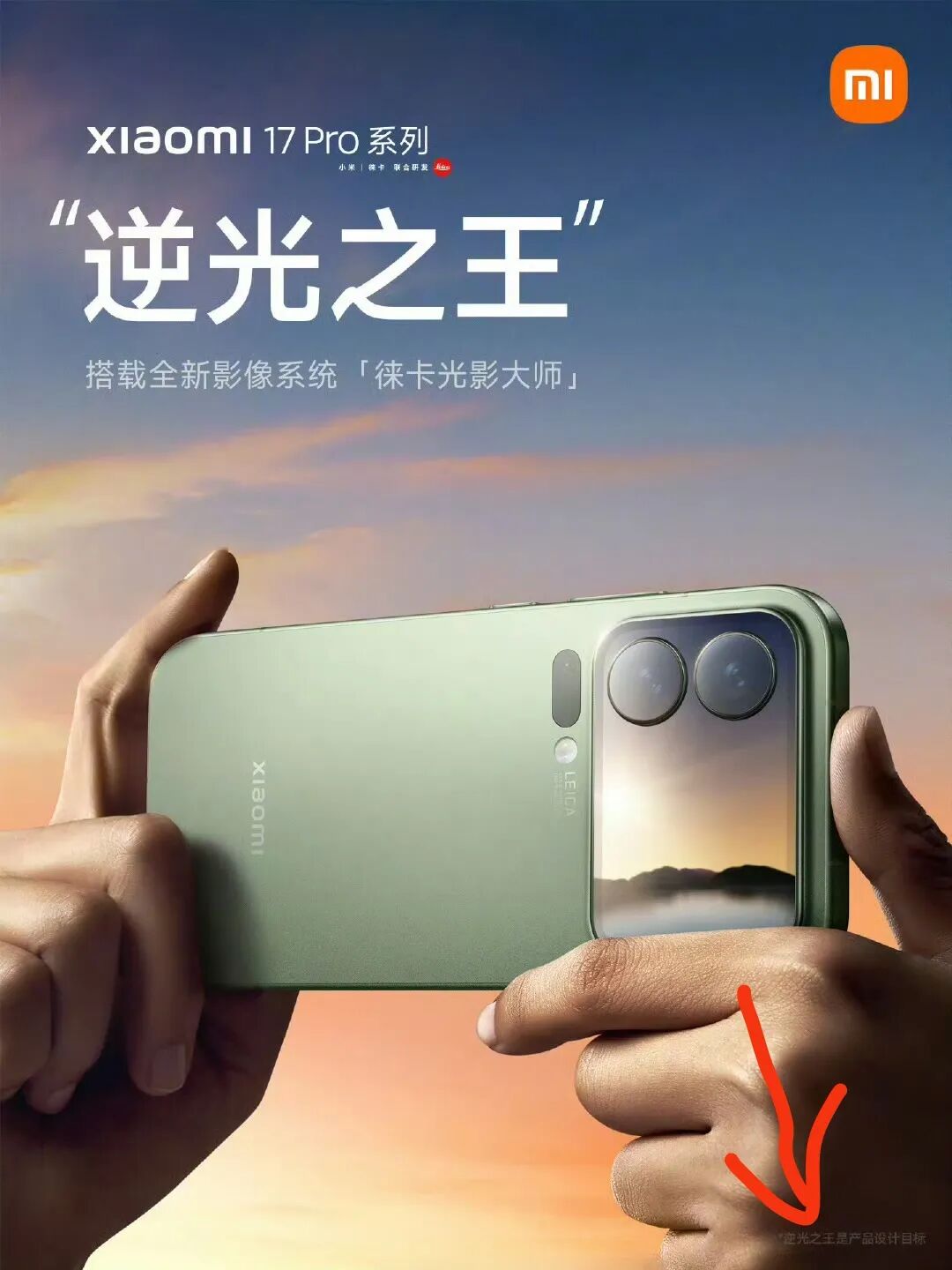
雷军说话算话!小米正抛弃“小字”宣传
Sou Hu Cai Jing· 2026-01-08 11:32
Core Viewpoint - Xiaomi has acknowledged the criticism regarding the "small text" in its promotional materials and is committed to improving clarity in future advertisements to avoid misunderstandings [1][2][6]. Group 1: Company Response - Xiaomi's public relations manager, Xu Jieyun, stated that the "small text" issue was primarily for compliance with advertising laws, and the company is open to feedback [1]. - Lei Jun emphasized that Xiaomi will pay more attention to expression methods in product promotions to prevent malicious exploitation [1]. - The company has been aware of the "small text" issue since the end of 2025 and has started to address it [1]. Group 2: Changes in Promotional Materials - A comparison of promotional materials from September 2025 and December 2025 to January 2026 shows a significant reduction in the number of ads containing "small text" [32][70]. - In September 2025, there were at least 32 promotional materials with "small text," while from December 2025 to January 2026, only 13 such materials were identified [32][70]. - The "small text" in December 2025 promotions was noted to be larger and clearer compared to earlier materials, indicating an improvement in readability [46][48]. Group 3: Public Perception and Feedback - There has been a noticeable shift in public perception regarding Xiaomi's promotional practices, with some users reporting that the "small text" design has changed [2]. - The company is actively working to enhance the clarity of its promotional content, which has been positively acknowledged by observers [78].
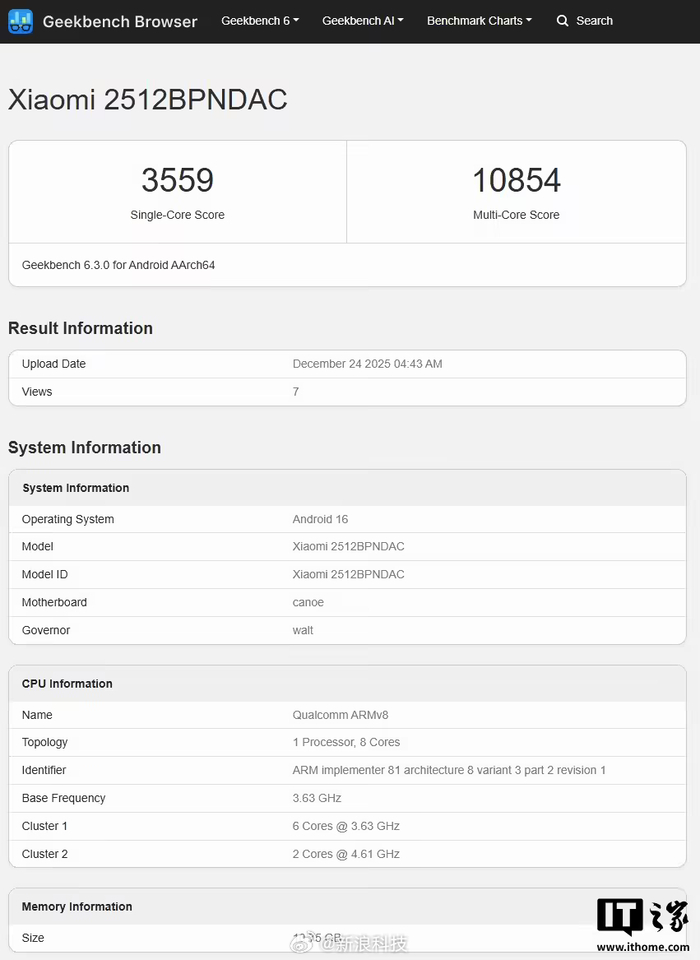
小米17Ultra跑分曝光,搭载骁龙8至尊版
Xin Lang Ke Ji· 2025-12-24 11:17
Group 1 - The Xiaomi 17 Ultra has appeared in the Geekbench benchmark database, showcasing its performance metrics [1] - The device achieved a single-core score of 3559 and a multi-core score of 10854, consistent with the performance of the Xiaomi 17 Pro [1][2] - The Xiaomi 17 Ultra is powered by the Qualcomm Snapdragon 8 Gen 2 SoC, features at least 12GB of RAM, and runs on the Android 16-based MIUI 3 [1][3] Group 2 - Comparison with the Xiaomi 25098PN5AC shows that the Xiaomi 17 Ultra has a slightly lower single-core score of 3559 compared to 3620, which is 101.7% of the latter's score [5] - The multi-core score of the Xiaomi 17 Ultra is 10854, which is 99.7% of the 10825 score of the Xiaomi 25098PN5AC [5]
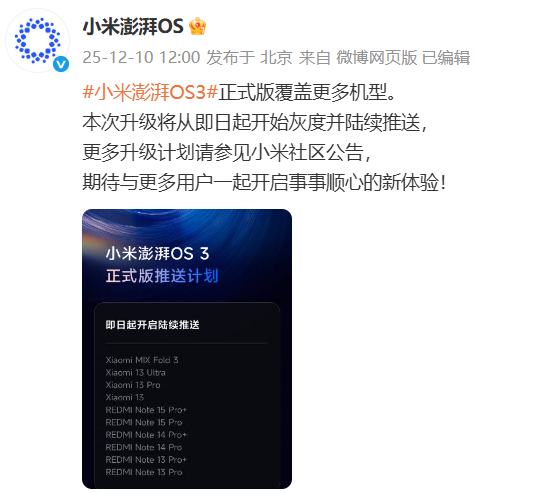
小米澎湃OS3正式版将覆盖更多机型,即日起陆续推送
Qi Lu Wan Bao· 2025-12-10 08:28
Core Insights - Xiaomi has officially launched the stable version of its operating system, MIUI OS 3, which will be gradually rolled out to more devices starting from December 10 [1][3] Group 1: Product Details - The devices included in the upgrade are: Xiaomi MIX Fold 3, Xiaomi 13 Ultra, Xiaomi 13 Pro, Xiaomi 13, REDMI Note 15 Pro+, REDMI Note 15 Pro, REDMI Note 14 Pro+, REDMI Note 14 Pro, REDMI Note 13 Pro+, and REDMI Note 13 Pro [3] - MIUI OS 3 is Xiaomi's third-generation ecosystem operating system, based on Android 16, officially released on August 28, 2025 [3] Group 2: Features and Design - The new system introduces a focus notification feature that utilizes a pill-shaped adaptive notification display design through the top punch-hole area of the screen [3] - It employs a dynamic capsule style to optimize high-frequency task operations and includes a glass-like visual effect along with the HyperCore underlying technology platform to enhance multi-device collaboration and AI subsystem functionality [3] - The design philosophy of the system centers around "smoothness," aiming to build an AI-based ecosystem [3] Group 3: User Engagement - Beta testing recruitment is fully open, allowing users to qualify by answering questions in the Xiaomi community [3]
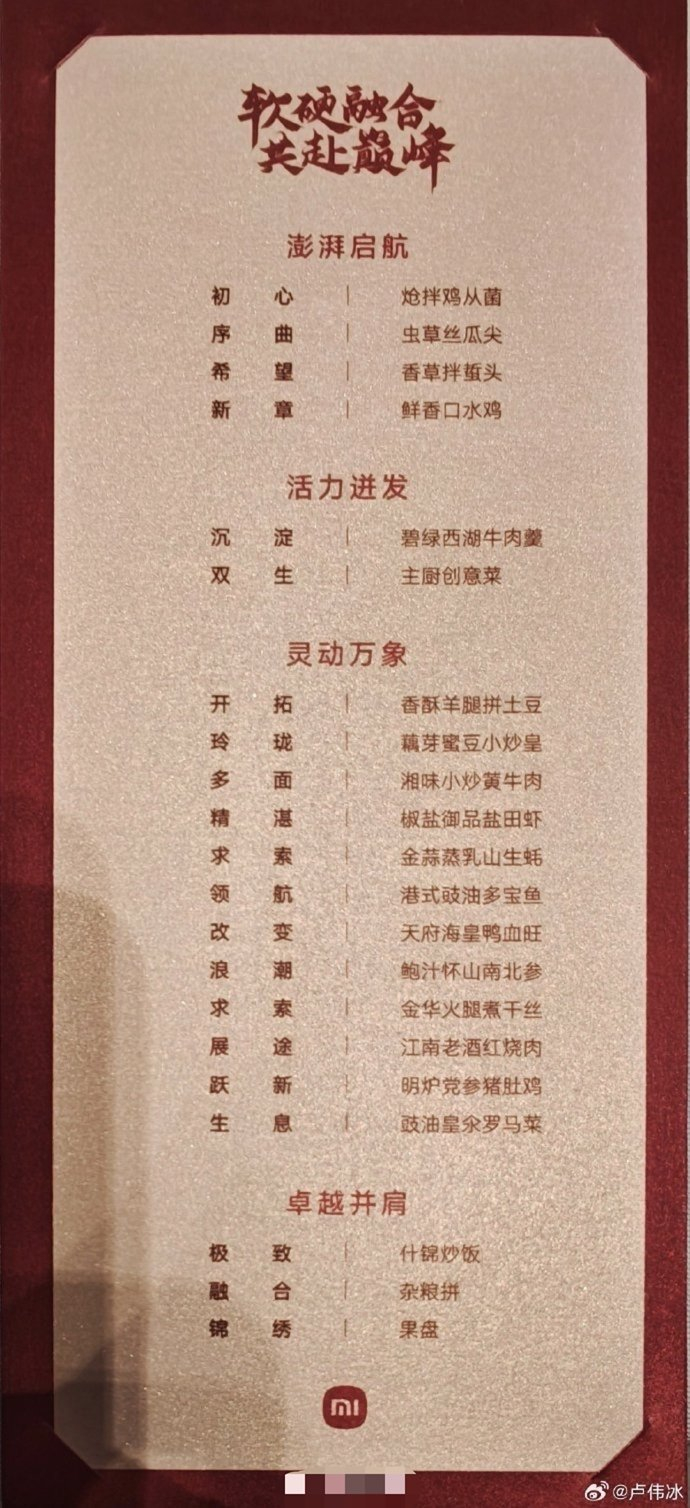
卢伟冰晒小米庆功会菜单,18道菜品对应初心希望开拓
3 6 Ke· 2025-11-23 16:53
Core Insights - Xiaomi recently held a celebration for the launch of the Xiaomi 17 series and the new Surge OS 3, emphasizing the theme of "soft and hard integration" [1] Group 1: Product Launch - The Xiaomi 17 series was launched in September this year, consisting of three versions: standard, Pro, and Pro Max [1] - Surge OS 3 was released in August, introducing the "Xiaomi Super Island" feature, which allows for two-way message synchronization between Xiaomi phones and Apple iPhones [1] Group 2: Celebration Event - The celebration featured a menu with 18 dishes, divided into four chapters: "Surge Initiation," "Vitality Launch," "Dynamic Transformation," and "Exquisite Integration," with each dish name reflecting key themes such as "original intention," "hope," and "exploration" [1][2] - The menu included various creative dishes, showcasing culinary innovation and aligning with the company's branding efforts [2][3]
小米新征途:智能汽车、出海和高端化造想象空间
凤凰网财经· 2025-11-20 09:00
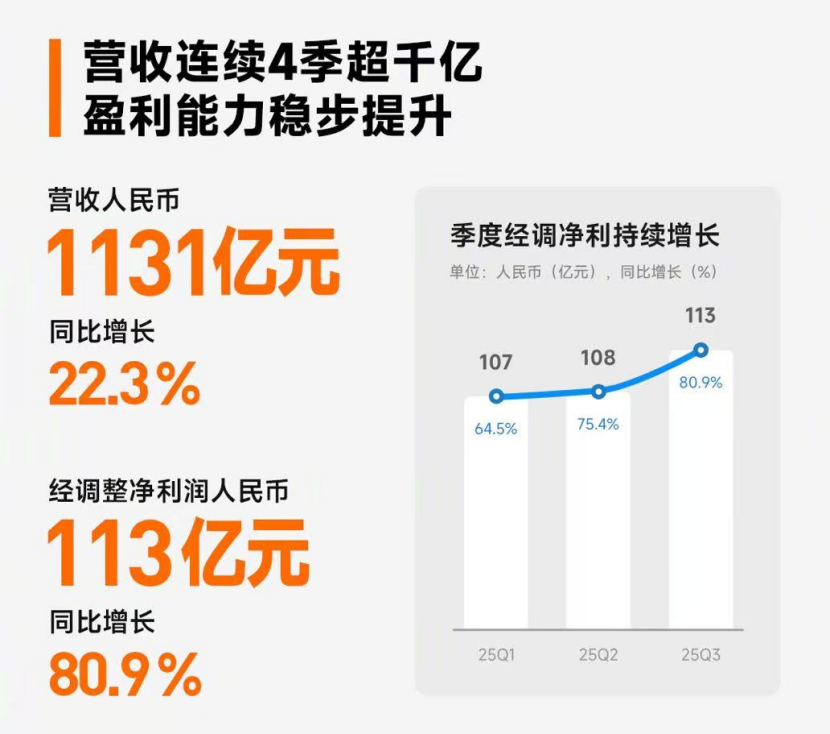
Core Viewpoint - Xiaomi Group reported a strong performance in Q3 2023, achieving revenue of 113.1 billion yuan, a year-on-year increase of 22.3%, and an adjusted net profit of 11.3 billion yuan, marking an 80.9% increase, the highest in its history [2][4]. Group 1: Core Business Growth and Innovation Acceleration - The revenue from Xiaomi's mobile and AIoT segments reached 84.1 billion yuan, with smartphone revenue at 46 billion yuan and IoT and lifestyle products at 27.6 billion yuan, showing a year-on-year growth of 5.6% [7][10]. - Xiaomi's smartphone shipments reached 43.3 million units in Q3, marking nine consecutive quarters of year-on-year growth, maintaining a top-three global ranking for 21 quarters [8][10]. - The innovative business segment, including smart electric vehicles and AI, generated 29 billion yuan in revenue, with a staggering year-on-year growth of over 199% [10][13]. Group 2: R&D Investment and Future Growth - Xiaomi's total revenue for the first three quarters of the year reached 340.4 billion yuan, nearing last year's total, with adjusted net profit exceeding last year's figure at 32.8 billion yuan [2][4]. - The company invested 23.5 billion yuan in R&D in the first three quarters, approaching the total planned investment for 2024, with expectations to exceed 30 billion yuan for the year [22][26]. - Xiaomi plans to invest 200 billion yuan in core technology R&D over the next five years, transitioning from an internet company to a hard-tech company [26][28]. Group 3: Market Position and Competitive Edge - Xiaomi's new flagship Xiaomi 17 series achieved over 1 million sales within five days of launch, indicating strong market acceptance and competitive positioning against rivals like Apple [14][16]. - The company has established a robust ecosystem with over 1 billion connected IoT devices, and the number of users with five or more connected devices reached 21.6 million, reflecting high user engagement [8][10]. - Xiaomi's smart electric vehicle business is positioned for significant growth, with plans to launch new models and expand into international markets, contributing to a projected 23% increase in vehicle shipments by 2027 [17][19].
小米新征途:智能汽车、出海和高端化造想象空间
Feng Huang Wang· 2025-11-20 07:08
Core Insights - Xiaomi's revenue reached 113.1 billion yuan in Q3, marking a 22.3% year-on-year increase, with adjusted net profit soaring by 80.9% to 11.3 billion yuan, a historical high [1][2] - The company is experiencing robust growth in its core business while its innovative sectors, particularly electric vehicles and AI, are rapidly gaining traction [2][8] - Xiaomi's R&D investment has reached 23.5 billion yuan in the first three quarters, with expectations to exceed 30 billion yuan for the entire year, laying a solid foundation for future growth [1][17][19] Revenue Breakdown - In Q3, revenue from the smartphone and AIoT segments was 84.1 billion yuan, with smartphone revenue at 46 billion yuan and IoT and lifestyle products at 27.6 billion yuan, reflecting a 5.6% year-on-year growth [4] - Internet services revenue reached 9.4 billion yuan, up 10.8% year-on-year, with overseas internet service revenue hitting a record 3.3 billion yuan, contributing significantly to growth [5] Smartphone Performance - Xiaomi's global smartphone shipments reached 43.3 million units in Q3, marking nine consecutive quarters of year-on-year growth, maintaining a top-three position globally for 21 quarters [4] - The Xiaomi 17 series has gained significant traction in the high-end market, achieving over 1 million sales within five days of launch [9][10] Innovative Business Growth - Revenue from the electric vehicle and AI segments surged to 29 billion yuan, with a year-on-year increase exceeding 199%, and the automotive division achieving profitability [5][12] - The contribution of innovative business to overall revenue growth has increased from 15.32% to 25.64% in Q3, indicating a shift towards self-sustaining growth [5] R&D and Future Outlook - Xiaomi plans to invest 200 billion yuan in R&D over the next five years, focusing on core technologies to transition from an internet company to a hard-tech company [19][20] - The company has launched new self-developed chips and operating systems, enhancing its ecosystem and user experience across devices [19][20] International Expansion - Xiaomi aims to increase the number of its retail stores overseas to 10,000 in the next five years, focusing on markets in Southeast Asia, Hong Kong, Taiwan, Japan, South Korea, and Europe [14][16] - The company has successfully established a presence in international markets, with significant interest in its electric vehicles and smart home products [13][14]
用实力回应质疑:小米Q3汽车业务首次盈利、手机/大家电成业绩强劲新引擎
Sou Hu Cai Jing· 2025-11-20 07:00
Core Insights - Xiaomi Group reported a strong Q3 2025 financial performance with revenue of 113.1 billion yuan, a year-on-year increase of 22.3%, and an adjusted net profit of 11.3 billion yuan, up over 80% year-on-year [1][5] - The company has achieved over 100 billion yuan in net profit for three consecutive quarters, indicating a solid transition into a phase of normalized high profitability [5] Revenue and Profit Growth - For the first three quarters of 2025, Xiaomi achieved total revenue of 340.37 billion yuan, a 32.5% increase year-on-year, and an adjusted net profit of 32.817 billion yuan, up 73.5% year-on-year [6] - The growth is attributed to the strong performance of its smartphone, automotive, and smart home appliance sectors, with innovative businesses like electric vehicles and AI contributing 29 billion yuan in revenue [6] Business Performance - In Q3, Xiaomi's smartphone shipments reached 43.3 million units, marking nine consecutive quarters of year-on-year growth, with a global market share of 13.6% [8] - The AIoT platform connected devices surpassed 1 billion, reaching 1.036 billion, with monthly active users at 742 million [8] - Internet services revenue hit a record high of 9.4 billion yuan, growing 10.8% year-on-year [8] Strategic Positioning - Xiaomi's unique business model integrates hardware, software, and services, creating a comprehensive smart living experience that is difficult for competitors to replicate [11] - The company has established a clear ecosystem synergy among its three growth curves: smartphones as the primary user interface, automotive as the second revenue engine, and smart appliances enhancing the overall ecosystem [11][20] Automotive Business - The automotive sector reported revenue of 28.3 billion yuan in Q3, a staggering 197.9% increase year-on-year, with a delivery volume of 108,800 units, marking a 33.8% increase from Q2 [15] - Xiaomi's first electric vehicle achieved profitability within a year and a half of its launch, a unique feat among new automotive entrants in China [15] Smart Home Appliances - Xiaomi's high-end smart appliance segment is gaining traction, with new product launches and the opening of a smart appliance factory in Wuhan, which will support large-scale production [17] - The company is positioned as a key player in driving the upgrade of home appliance products, leading trends in smart and scenario-based consumption [17] Research and Development - Xiaomi's R&D investment reached 23.5 billion yuan in the first three quarters of 2025, with a record high of 9.1 billion yuan in Q3, reflecting a 52.1% year-on-year increase [20][21] - The company is transitioning from an internet company to a hard-tech leader, with significant advancements in AI and self-developed chips [21] Market Outlook - Analysts view Xiaomi's long-term value positively, citing its robust balance sheet, strong ecosystem integration, and competitive advantages in the electric vehicle sector [23][24] - The synergy between smartphones, electric vehicles, and AIoT is expected to unlock substantial growth potential, bringing Xiaomi closer to its goal of reaching a trillion-dollar market valuation [24]
小米的周期对冲法:新引擎盈利,旧引擎转型
2 1 Shi Ji Jing Ji Bao Dao· 2025-11-19 07:33
Core Insights - Xiaomi Group's Q3 2025 financial results show a total revenue of 113.1 billion yuan, a year-on-year increase of 22.3%, and an adjusted net profit of 11.3 billion yuan, up 81%, marking a historical high [2][3] - The company successfully transitioned from traditional smartphone business to new growth engines, particularly in smart electric vehicles and AI, which achieved quarterly profitability for the first time [2][3] - The smartphone segment is under pressure due to rising memory costs, impacting gross margins, while the company is focusing on high-end strategies to enhance product structure and resilience [2][4] Financial Performance - Xiaomi's revenue from innovative businesses, including smart electric vehicles and AI, reached 29 billion yuan, accounting for 25.6% of total revenue, with a gross margin of 25.5% and a profit of 700 million yuan in the quarter [3][4] - The smartphone business saw a shipment of 43.3 million units, generating revenue of 45.969 billion yuan, with a gross margin dropping to 11.1% due to supply chain cost pressures [3][4] Strategic Initiatives - Xiaomi is implementing three core strategies to build long-term competitiveness: increasing R&D investment, advancing high-end strategies, and exploring new growth opportunities in global markets [2][3] - The company plans to enhance its R&D capabilities, with Q3 spending reaching 9.1 billion yuan, a 52.1% increase year-on-year, and total R&D investment expected to exceed 30 billion yuan for the year [8][9] Market Trends - The current memory price increase is driven by strong demand for HBM (High Bandwidth Memory) from AI applications, differing from previous cycles driven by mobile and laptop demand [4] - Xiaomi's IoT business generated 27.6 billion yuan in revenue, maintaining growth for seven consecutive quarters, with a gross margin of 23.9% [5][6] Operational Developments - Xiaomi has expanded its automotive sales network, with 402 stores in 119 cities in mainland China, and aims to deliver 350,000 vehicles by the end of the year [3][6] - The company has launched a new smart appliance factory in Wuhan, enhancing its production capabilities and supporting its high-end strategy [6][9] Challenges and Outlook - Despite achieving profitability in the automotive sector, challenges remain, including reduced purchase tax subsidies and increased competition expected in 2026 [9] - The smartphone segment faces ongoing pressure from rising memory costs, while the IoT business must navigate a competitive landscape and potential price wars [9]
小米集团发布2025年第三季度财报:净利大增超80%,汽车业务首次实现单季盈利
Xin Hua Wang· 2025-11-19 07:11
Core Viewpoint - Xiaomi Group continues to demonstrate strong growth in Q3 2025, with significant increases in revenue and net profit, marking a historic high for the company [1][2]. Financial Performance - Q3 revenue reached 113.1 billion yuan, a year-on-year increase of 22.3%, marking the fourth consecutive quarter exceeding 100 billion yuan [1]. - Adjusted net profit for the quarter was 11.3 billion yuan, a substantial year-on-year increase of 80.9%, achieving a historic high [1]. Automotive and New Business Growth - Xiaomi's automotive division achieved profitability for the first time in a single quarter, delivering over 100,000 new vehicles and generating an operating profit of 700 million yuan [2]. - The smartphone and AIoT segment generated revenue of 84.1 billion yuan, with smartphone revenue at 46 billion yuan and IoT and lifestyle products revenue at 27.6 billion yuan, reflecting a year-on-year growth of 5.6% [2]. Smartphone Market Performance - Xiaomi's global smartphone shipment reached 43.3 million units in Q3, marking nine consecutive quarters of year-on-year growth [3]. - The company aims for a total smartphone shipment target of 170 million units in 2025 [3]. R&D Investment and Innovation - R&D investment in the first three quarters reached 23.5 billion yuan, with Q3 investment alone at 9.1 billion yuan, a year-on-year increase of 52.1%, setting a new record [4]. - Xiaomi launched the Xiaomi-MiMo-Audio voice open-source model and upgraded its operating system to enhance user experience across its ecosystem [4]. Manufacturing and Production Capacity - The completion of the smart home appliance factory in Wuhan enhances Xiaomi's manufacturing capabilities, supporting high-end product production with a planned annual capacity of 7 million air conditioners [5]. - Xiaomi has established a comprehensive smart manufacturing system covering smartphones, automobiles, and smart home appliances, solidifying its leading position in the smart manufacturing sector [5].