店小蜜5.0

Search documents
5万+品牌在用,平台的AI电商杀疯了
3 6 Ke· 2026-02-10 09:40
Core Insights - The AI competition during the Spring Festival has begun, with major internet companies heavily investing in AI technologies and initiatives to attract users and enhance their platforms [1][22] - Tencent, Alibaba, and other companies are launching various AI tools and services aimed at improving efficiency and reducing costs for merchants [2][5][21] Group 1: Major Investments and Initiatives - Tencent has announced a cash giveaway of 10 billion yuan through its app, aiming to replicate the success of past WeChat red envelopes [1] - Alibaba has committed over 380 billion yuan in the next three years to build cloud and AI hardware infrastructure [1] - Other companies like JD.com, Xiaohongshu, Kuaishou, and Meituan are also investing in AI capabilities [1] Group 2: AI Tools for Merchants - Alibaba's "Wangxiangtai AI Wujie" was launched to provide insights and strategies for merchants, helping them match product features with consumer needs [4][5] - JD.com has introduced a one-stop AI service center to enhance customer service and after-sales efficiency for merchants [5] - Meituan has released the AI management assistant "Huaxiaoniu" to improve various operational aspects for merchants [5] Group 3: Digital Humans and Live Streaming - The digital human market in China is projected to grow significantly, with a market size of approximately 4.12 billion yuan in 2024, reflecting an 85.3% increase from 2023 [6] - JD.com's digital human "Cai Xiao Dong Ge" achieved over 50 million yuan in sales during its first live stream, showcasing the effectiveness of digital humans in driving sales [7][9] - Kuaishou's digital human platform has also shown promising results, with merchants reporting significant sales increases after utilizing digital human live streaming [6] Group 4: AI Search and Apps - Major platforms like Taobao, JD.com, and Douyin have integrated AI search capabilities, enhancing user experience by providing tailored solutions [10][11] - JD.com has launched the AI shopping app "JD AI Purchase," which combines various services and aims to create a new shopping and service entry point [12][16] - The active user base for AI comprehensive assistant apps has reached 6.5 million, indicating a growing trend in AI-assisted applications [21] Group 5: AI Social Features - Tencent's "Yuanbao" has introduced the "Yuanbao Club," allowing users to engage in AI social interactions, enhancing user retention [20] - JD.com's "Ta Ta Ta" app also features AI social functionalities, enabling users to create personalized AI agents for social sharing [20] - The integration of AI social features is expected to increase user engagement and application stickiness [21]


AI技术与电商生态双重变革,智能客服如何破局?对话淘宝店小蜜负责人开锋
雷峰网· 2026-01-27 06:43
Core Viewpoint - AI technology is transforming customer service from a cost center into a growth department, enhancing operational efficiency and customer experience [1][4]. Group 1: AI Development and Market Trends - The current development of AI technology is characterized by a "dualistic" trend, with AI assistants rapidly penetrating the consumer market while challenges remain in achieving practical applications and finding product-market fit [2]. - The intelligent customer service sector is seen as a promising area to address these challenges due to its natural alignment with AI capabilities [3]. Group 2: Customer Service Evolution - Multi-turn dialogue understanding is a core advantage of large language models, which aligns well with the inherent nature of customer service interactions [5][6]. - Text generation is a fundamental capability of large language models, making it suitable for various customer service communication forms [6]. Group 3: E-commerce and Customer Service Integration - The focus on "existing user operations" has become central to e-commerce competition, with new service quality metrics being integrated into platform traffic allocation systems [7]. - The shift in strategy emphasizes that service quality is now a critical factor for traffic acquisition and order conversion, leading to a redefined role for customer service as a value-generating function [7]. Group 4: Case Study of Ding Xiaomi - Ding Xiaomi, an intelligent customer service product, has evolved significantly over the past decade, initially addressing high volumes of inquiries during peak sales events [9][10]. - The introduction of Ding Xiaomi 5.0, based on large language model technology, has led to a reduction in manual intervention rates by over 20% and an increase in transaction conversion rates by over 35% [11]. Group 5: Cost Efficiency and Performance Improvement - Ding Xiaomi 5.0 has helped merchants reduce configuration costs by 60%, streamlining the process of training and maintaining customer service systems [19][20]. - The product's ability to automatically extract and integrate product information has significantly reduced the need for extensive manual configuration by merchants [20]. Group 6: Future Directions and Enhancements - Future iterations of Ding Xiaomi will focus on improving pre-sale and post-sale capabilities, enhancing the overall service experience for users [26]. - The product will also allow merchants to integrate their internal knowledge bases and strategies, enabling more personalized and differentiated service capabilities [26].

2026年,淘宝天猫优化营商环境“放大招”!商家的增长红利来了!
Xin Lang Cai Jing· 2026-01-23 13:10
Core Insights - Taobao Tmall is enhancing its business environment in 2026 with new initiatives aimed at supporting merchants and driving growth [2][4][24] Group 1: Business Environment Optimization - In 2026, Taobao Tmall will implement ten new measures to optimize the business environment, including an AI fake image recognition model and a return mismatch mutual trust mechanism [4][35] - The AI fake image governance will help detect fraudulent return requests using AI-generated images, protecting merchants from losses [4][35] - The return mismatch mutual trust mechanism aims to address common malicious refund behaviors, expanding the number of merchants involved and providing them with exclusive rights [7][37] Group 2: Service as a Growth Driver - The focus of competition in the e-commerce sector is shifting from mere traffic and price wars to deeper competition based on product quality and service [40][41] - Taobao Tmall is promoting a "service equals growth" strategy, providing merchants with a clear path to achieve sustainable growth through improved service offerings [39][40] - The platform will enhance the real experience score system, rewarding merchants for good service across various dimensions such as product quality and logistics speed [45][46] Group 3: Merchant Support and Recognition - High-scoring merchants (above 4.8) will be invited to participate in a "good service" list, increasing their visibility and potential customer engagement [47] - A new customer service certification system will be introduced, allowing specialized customer service representatives to gain recognition and improve customer satisfaction [49] - Increased investment in AI services will enable merchants to better understand customer needs and enhance operational efficiency [21][50] Group 4: Performance Metrics - In 2025, merchants with high service levels saw user repurchase rates and net GMV double compared to those with lower service levels [52] - The introduction of the real experience score has significantly accelerated growth for high-scoring merchants, with sales growth rates for those scoring above 4.8 being 2.2 times higher than average [52][53]

电商的下一步转型,是要让好人赚钱
3 6 Ke· 2026-01-23 04:28
Core Viewpoint - The e-commerce industry in China is facing significant challenges as it transitions from a "low-price for volume" model to one focused on service growth, which is essential for survival in a competitive market [2][19]. Group 1: Current Challenges - E-commerce is experiencing three main dilemmas: traffic, supply, and trust [3][4]. - The growth logic of e-commerce, previously based on "lower prices, increased traffic, and growth," is no longer effective, with online retail growth rates declining from 14.75% in 2021 to nearly zero in 2024 [4]. - Customer acquisition costs have surged from tens of yuan to 800-1000 yuan, with some platforms exceeding four-digit costs [4]. - The excessive price wars have created a "lemon market," where quality products are pushed out, leaving only inferior goods available [5]. Group 2: Trust Issues - Trust between merchants and consumers is deteriorating, with over 60% of merchant complaints during the 2024 Double Eleven shopping festival related to "only refunds" [6]. - Merchants face operational pressures and must deal with issues like malicious refund requests and AI-generated false images, leading to a lack of confidence in the market [6][10]. Group 3: Service as a Solution - The solution to the industry's challenges lies in improving service and rebuilding connections with consumers [8]. - However, merchants are reluctant to invest in service improvements due to the existing e-commerce mechanisms that prioritize immediate results over long-term service benefits [9]. - The current financial models treat service as a cost center, making it difficult for merchants to justify service investments [9]. Group 4: Need for Structural Change - A fundamental shift in the e-commerce paradigm is necessary, moving from a focus on single transactions to fostering repeat purchases [17][18]. - The industry must address the distribution of benefits and change algorithms, models, and rules to encourage service-oriented practices [11][12]. - Initiatives like the introduction of a real experience score by Taobao and Tmall aim to link service quality directly to traffic distribution, promoting a more service-oriented ecosystem [14]. Group 5: Future Outlook - The e-commerce sector must overcome its current challenges to avoid becoming a marketplace for low-quality goods [21][22]. - A successful transition to a service-oriented model could serve as a reference for other industries facing similar structural issues [20].
淘宝天猫今年将首次推出售后AI假图专项治理;山东港口发布全国首款港口AI芯片丨AIGC日报
创业邦· 2026-01-22 00:09
Group 1 - Taobao and Tmall will launch a special governance initiative for AI-generated fake images in after-sales service, introducing a recognition model and a one-click feedback feature [2] - The initiative will also create a one-stop AI service center, upgrading tools such as Xiaomimi 5.0 and AI after-sales assistants, integrating user consumption behavior and preferences into various service stages [2] Group 2 - The Hugging Face community reported that the download count for Alibaba's Qianwen series models has surpassed 1 billion, with an average of 1.1 million downloads per day, making it the first open-source large model to achieve this milestone [2] - The Qianwen series has over 200,000 derivative models, solidifying its position as the leading open-source large model globally [2] Group 3 - Zhipu announced a temporary limit on the sale of its GLM Coding Plan due to a surge in user numbers and resource constraints, reducing the daily sales volume to 20% of the current level [3] - This limitation aims to alleviate issues such as throttling and slow model speeds experienced by users during peak hours [3] Group 4 - Shandong Port unveiled the first AI chip for ports in the country, named "ShanGang ZhiXin·XingYu SA5200," which features advantages such as multi-source perception integration and enhanced compression efficiency [4] - The chip is designed to operate efficiently in complex port environments and supports domestic algorithms, significantly improving overall energy efficiency [4]

淘宝明确服务即增长!2026电商转向价值竞争
Sou Hu Cai Jing· 2026-01-21 19:17
Core Insights - The Chinese e-commerce industry is entering a deep adjustment period in 2025, with unsustainable competition based on price cuts and subsidies leading to a focus on user retention and service quality [2][11] - Major e-commerce platforms, particularly Taobao and Tmall, are shifting their strategies to support high-quality merchants, emphasizing service experience as a key growth driver [4][11] Industry Trends - User demographics are changing, with the 80s and Z generations accounting for nearly 50% of consumption, leading to higher expectations for service quality and emotional value in shopping experiences [5][12] - The "real experience score" system launched by Taobao Tmall in 2025 has become an industry benchmark, promoting a shift from price competition to service and experience-oriented operations [2][10] New Initiatives - Taobao Tmall has introduced four major initiatives to enhance the "service equals growth" concept: 1. Upgrading the real experience score system to make service operational [6][8] 2. Launching a "good service" leaderboard to increase visibility for high-quality service providers [7][9] 3. Providing tiered customer service certifications to encourage specialized service offerings [8][10] 4. Leveraging AI tools to improve service efficiency and experience [10][19] Merchant Strategies - Merchants are encouraged to understand the new rules of service scoring and optimize their service offerings to gain immediate benefits in terms of traffic and customer acquisition [16][20] - A shift in organizational structure is necessary, with a focus on building a service-oriented culture that positions service as a key differentiator [17][20] - Merchants should adopt a productized approach to service, ensuring that services are measurable and deliverable, thus enhancing customer satisfaction and loyalty [18][20] Future Outlook - The e-commerce industry is expected to transition from scale-driven growth to quality-driven growth, with service becoming a core metric for assessing business health [23][24] - The integration of online and offline experiences will blur the lines between e-commerce and traditional retail, enhancing customer engagement and service delivery [24]

淘宝争夺 AI 电商定义权
Sou Hu Cai Jing· 2025-11-12 11:05
Core Insights - OpenAI's collaboration with Walmart signifies a shift in retail experiences, moving AI from backend advertising to frontend consumer interactions, which has positively impacted stock prices of involved companies [1] - The competitive landscape in e-commerce is intensifying, with platforms like Taobao responding to AI advancements by integrating AI into their operations to enhance user experience and operational efficiency [2][7] Group 1: AI Integration in E-commerce - Taobao has initiated a significant paradigm shift by utilizing AI to drive its entire system during the Double 11 shopping festival, with over 15 billion calls to its AI model on the first day of pre-sales [3][9] - The company aims for a systematic overhaul rather than superficial AI integration, focusing on enhancing user interactions and operational processes [8][9] - Taobao's AI-driven tools are designed to improve efficiency for small and medium-sized businesses, automating tasks such as data analysis and marketing [11][13] Group 2: Competitive Landscape and Market Position - The competition from platforms like Pinduoduo, JD.com, and Douyin is increasing, prompting Taobao to leverage AI as a means to build technological barriers and enhance user retention [7][26] - Alibaba's market value is under pressure from competitors, highlighting the urgency for Taobao to demonstrate the effectiveness of its AI initiatives during major sales events [7][26] - The introduction of AI tools has led to significant improvements in operational efficiency, with reports indicating that AI pricing systems and advertising models have enhanced return on investment by 12% [15][18] Group 3: User Experience and Interaction - Taobao is shifting from traditional search interfaces to conversational decision-making interfaces, allowing for a more intuitive user experience [24] - New AI features such as "AI万能搜" and "AI帮我挑" are designed to facilitate user decision-making through natural language processing and multi-modal understanding [22][24] - The transition to AI-driven interactions aims to reduce communication costs for users and improve conversion rates for the platform [24][25]
AI重构20亿商品,天猫双11密谋破局
Feng Huang Wang Cai Jing· 2025-11-12 06:11
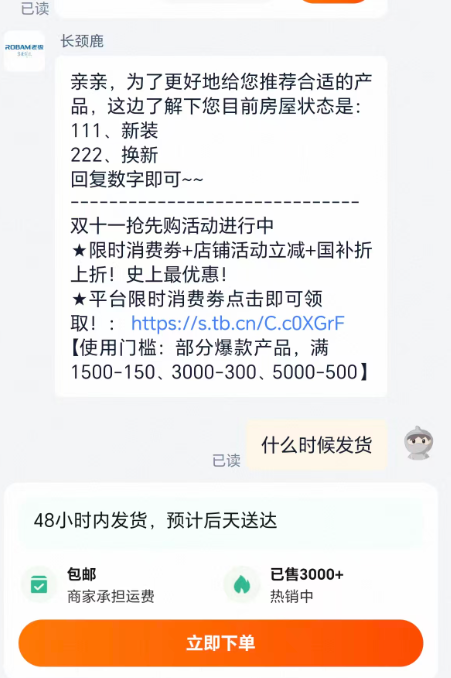
Core Insights - The integration of AI into Alibaba's e-commerce ecosystem is set to transform the shopping experience, with a focus on addressing consumer pain points and driving merchant growth [1][15] - The 2025 Double 11 event is identified as a pivotal moment for the full incorporation of AI technology into the e-commerce landscape [1] Group 1: AI Enhancements and Efficiency - Alibaba has restructured its platform by utilizing AI to deeply understand and reorganize 20 billion products, marking a significant shift from traditional methods of product categorization [2][3] - The efficiency of traffic matching has seen double-digit growth, with a 20 percentage point increase in complex semantic search relevance, a 10% rise in recommendation click-through rates, and a 12% increase in merchant advertising ROI [4][6] - The AI-driven understanding of products has led to a 34% increase in the richness of semantic tags for pet products, enhancing the connection between consumers and products [4] Group 2: Merchant Support and AI Tools - The AI business manager has evolved from a supportive role to a key operational partner for merchants, providing real-time, personalized guidance during the Double 11 event [5][6] - This AI tool has assisted 5 million merchants by generating 500 million promotional strategies, reducing manual workload by 30% and increasing overall operational efficiency by 1.5 times [6][7] - Merchants have reported significant improvements in their ability to respond to market changes and optimize their strategies through AI-driven insights [6] Group 3: Consumer Interaction and Sales Conversion - The intelligent customer service tool, "Dianxiaomi 5.0," has become a crucial sales channel, handling 200 million consumer interactions during the Double 11 period and resolving over 90% of routine inquiries without human intervention [8][10] - This tool has contributed to 25% of total sales during the event, showcasing its effectiveness in converting potential customers into actual buyers [11] - The integration of AI in customer service has significantly improved response times and problem resolution rates, enhancing the overall shopping experience for consumers [10][11] Group 4: Comprehensive AI Ecosystem - The AI initiatives during the Double 11 event create a self-reinforcing cycle that enhances efficiency across all stages of the shopping experience, benefiting consumers, merchants, and the platform [12][14] - AI tools facilitate a seamless transition from traffic distribution to consumer engagement, ensuring that high-quality products receive optimal exposure [14] - The overall transformation signifies a new era in e-commerce, where AI not only drives efficiency but also fosters a collaborative environment for all stakeholders involved [15]
AI重构20亿商品,天猫双11密谋破局
凤凰网财经· 2025-11-12 06:02
Core Insights - The core viewpoint of the article emphasizes that AI is becoming a critical engine for growth in the e-commerce ecosystem, particularly in Alibaba's Taobao platform, which aims to address consumer pain points and enhance merchant growth through AI integration [1][4]. Group 1: AI Integration and Efficiency - Taobao has restructured its connection logic between 20 billion products and users through AI, leading to a double-digit increase in traffic matching efficiency, with search relevance improving by 20 percentage points and ad ROI increasing by 12% [3][7]. - The AI-driven understanding of products allows for a more nuanced connection between consumers and goods, enhancing the effectiveness of features like "You May Also Like" and "AI Universal Search" [3][4]. Group 2: Merchant Support and AI Tools - The AI Business Manager has evolved from a supportive role to a key operational partner for merchants, providing real-time, personalized guidance during the sales process, which has significantly improved operational efficiency [8][9]. - This year, the AI Business Manager has assisted 5 million merchants, generating 5 million promotional strategies and saving an average of 30% in workload, while increasing overall operational efficiency by 1.5 times [9][10]. Group 3: Consumer Interaction and Sales Conversion - The intelligent customer service tool, "Dianxiaomi 5.0," acts as a frontline sales representative, effectively handling over 90% of routine inquiries without human intervention, thus enhancing customer experience and reducing operational costs for merchants [11][14]. - During the Double 11 event, sales driven by recommendations from Dianxiaomi accounted for 25% of total sales, highlighting its role as a significant sales channel for merchants [15]. Group 4: AI-Driven Ecosystem and Future Outlook - The AI layout for Double 11 creates a self-reinforcing flywheel effect, enhancing efficiency across consumer experience, merchant operations, and traffic distribution, ultimately benefiting all parties involved [16][18]. - The integration of AI in e-commerce signifies a shift towards a more intelligent commercial entity capable of understanding and meeting individual consumer needs, marking the beginning of a new era in the industry [19].