
棉油

Search documents
多元场景加速向“新”
Xin Lang Cai Jing· 2026-02-10 20:03
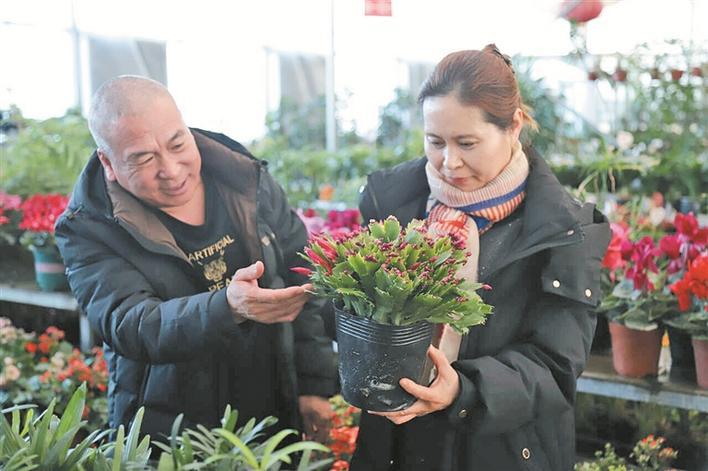
Group 1 - The core viewpoint of the articles emphasizes the development of a "beautiful economy" through enhanced consumer experiences and diversified consumption in various regions, particularly focusing on the flower market and local specialties [2][3][6] - The 187th Regiment's You Sheng Feng Qing Flower Base is highlighted as a key player in the local flower supply chain, with an annual production capacity of 24,000 potted plants and a revenue exceeding 2 million yuan by 2025 [3][5] - The shift from traditional purchasing to experiential consumption, such as flower arrangement training, is noted as a significant trend, enhancing consumer engagement and creating new employment opportunities [5][6] Group 2 - In the 3rd Division of Tumushuke City, local brands are becoming crucial in driving market consumption, with notable sales figures such as 250,000 yuan from local products at the New Year Bazaar [7][8] - The integration of e-commerce into local markets is facilitating broader distribution of local specialties, with significant sales figures reported, including 2.57 billion yuan in cotton oil and 8.39 billion yuan in red dates by 2025 [8][9] - The diverse consumption landscape in the 12th Division's New Tianrun Food Street showcases a variety of dining and retail options, with a reported retail sales total of 732 million yuan, reflecting a 9.7% year-on-year growth [10][11]

豆油期货上市20周年 护航中国油脂产业行稳致远
Xin Hua Cai Jing· 2026-02-03 03:29
Core Insights - The article highlights the evolution and significance of soybean oil futures in China over the past twenty years, emphasizing its role in price stabilization, risk management, and integration into the global pricing system [1][5][6] Group 1: Industry Transformation - Soybean oil futures have transformed from a survival necessity to a crucial tool for reshaping trade pricing logic within the industry [1][2] - Companies have shifted from passive price acceptance to proactive risk management, utilizing soybean oil futures for hedging and decision-making [2][3] - By 2025, it is projected that 52% of soybean oil futures positions will be held by industry clients, with over 90% of large soybean crushing enterprises employing these futures for hedging [3] Group 2: Pricing Mechanism Changes - The traditional "one price" model is being replaced by basis trading based on futures prices, enhancing pricing strategies across the industry [3][4] - The correlation between soybean oil and cottonseed oil prices has been noted, with a 95% alignment over three years, indicating the broader applicability of futures pricing [4] Group 3: Market Growth and International Integration - Daily trading volume of soybean oil futures has increased from 43,100 contracts in 2006 to 445,000 contracts by 2025, reflecting significant liquidity growth [5] - The inclusion of soybean oil futures in the Qualified Foreign Institutional Investor (QFII) trading scope marks a milestone in the internationalization of China's futures market [5][6] - The pricing of soybean oil exports is increasingly based on domestic futures prices, showcasing the integration of domestic and international markets [5][6] Group 4: Future Outlook - The opening of soybean oil futures is seen as a critical step towards aligning China's market with global standards, enhancing the resilience and efficiency of the global oilseed industry [6] - The evolution of soybean oil futures is positioned as a key driver for high-quality development and increased international competitiveness in the industry [6]
豆油期货上市二十年:赋能油脂产业 筑牢发展根基
Zhong Zheng Wang· 2026-01-13 06:18
Core Insights - The core viewpoint of the articles emphasizes the transformative role of soybean oil futures in stabilizing and enhancing the domestic oil industry over the past two decades, evolving from a cautious financial tool to a critical support for the entire industry [1][2][11]. Industry Development - Since the launch of soybean oil futures in 2006, the domestic soybean oil industry has experienced significant growth, with production reaching 17.294 million tons and demand at 17.45 million tons by 2024, establishing a processing cluster concentrated in coastal ports and major regions [2][11]. - The volatility in soybean oil prices, which fluctuated from 5,200 yuan/ton to 12,280 yuan/ton and then down to 6,710 yuan/ton between 2020 and 2023, has underscored the importance of risk management through futures [3][11]. Risk Management Strategies - Companies have transitioned from limited understanding and cautious use of soybean oil futures to integrating them as a core strategic function for risk management, allowing for proactive profit locking rather than reactive management [3][4]. - The adoption of hedging strategies has been crucial for companies like Jiang Hai Grain and Oil, which utilized both forward and reverse hedging to manage market tensions and optimize inventory costs [4][5]. Trading Innovations - The introduction of basis trading has redefined the ecosystem, allowing companies to convert uncontrollable absolute price risks into relatively manageable basis risks, thus facilitating collaboration across the supply chain [5][6]. - Basis trading has become the mainstream model in soybean oil trade, enabling upstream and downstream companies to lock in prices and manage risks effectively [6][7]. Market Influence and Integration - The soybean oil futures market has become the largest globally, with daily average transactions and positions reaching 445,000 and 844,400 respectively by 2025, reflecting its robust liquidity and market influence [11][12]. - The integration of soybean oil futures with other commodities, such as cottonseed oil, demonstrates its pricing influence extending beyond its immediate market [8][11]. Future Outlook - The ongoing internationalization of soybean oil futures is seen as a significant milestone, enhancing China's position in the global pricing system and providing diverse risk management tools for the global oilseed industry [12][13]. - The evolution of soybean oil futures serves as a model for other futures products, highlighting the importance of aligning with industry needs and enhancing risk management capabilities [12][13].

晋工新能源电动装载机守护大国食用油安全!
Xin Lang Cai Jing· 2025-12-26 12:24
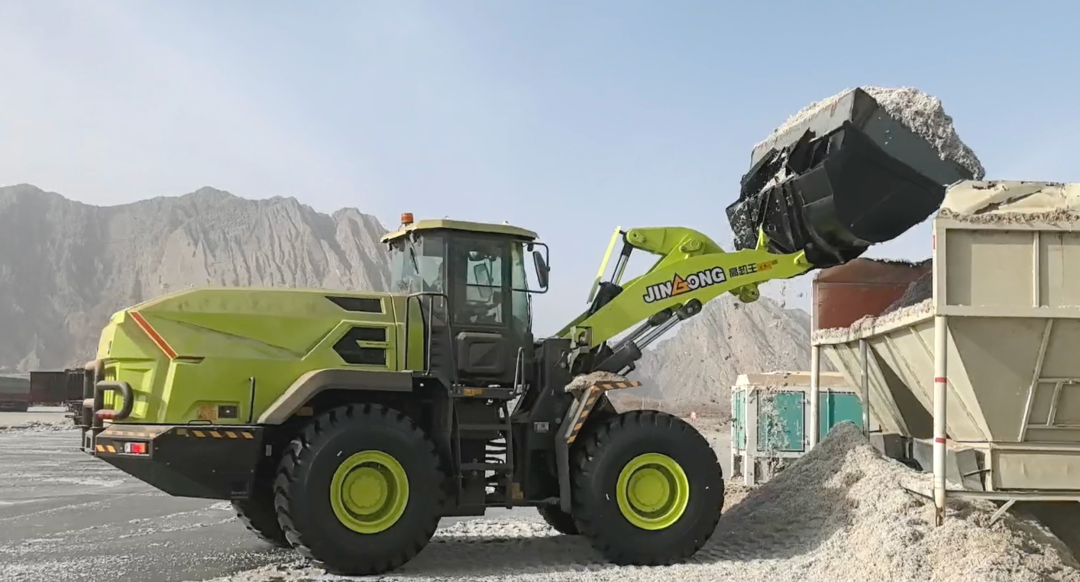
Core Viewpoint - The article highlights the importance of cottonseed oil production in China, emphasizing the role of domestic cottonseed oil in ensuring food security and improving self-sufficiency in edible oils. The introduction of the JGM858ES electric loader by Jinggong New Energy is presented as a significant advancement in the production process, enhancing safety and efficiency in cottonseed handling. Group 1: Production and Safety - Cottonseed oil is derived from high-quality domestic cottonseeds, which are crucial for national food security and self-sufficiency in edible oils [1][13] - The production facility in Xinjiang utilizes the JGM858ES electric loader, which operates without emissions, thus ensuring both production safety and food safety due to the flammable nature of cottonseeds [3][16] - The electric loader's design addresses the challenges posed by extreme temperature fluctuations in Xinjiang, ensuring stable and reliable performance [6][14][17] Group 2: Efficiency and Technology - The JGM858ES loader features a customizable program that allows for 10 levels of adjustment, making it suitable for handling the delicate and easily damaged cottonseeds [5][19] - The loader is equipped with a Battery Management System (BMS) that intelligently regulates battery temperature, ensuring efficient operation in both hot and cold conditions [6][17] - Operators have reported increased efficiency and ease of operation, likening the loader's functionality to having an "intelligent gear" [9][21] Group 3: Economic and Environmental Benefits - The JGM858ES loader is positioned as a necessary upgrade for clients focused on efficiency, cost-effectiveness, and environmental sustainability, supporting their green transformation [8][23] - A case study indicates that using electric loaders can lead to significant cost savings, with potential annual savings of hundreds of thousands due to reduced fuel costs compared to traditional fuel loaders [11][24] - The environmental impact is also notable, with a reduction of 2.67 kg of CO2 emissions for every liter of diesel saved [24]
期货工具引发变革 新疆棉花加速升级
Qi Huo Ri Bao Wang· 2025-10-21 16:10
Core Insights - The integration of futures markets into the cotton industry is transforming traditional agriculture into a modern financial ecosystem, enhancing risk management and accelerating industrial upgrades [1][8]. Group 1: Company Overview - Xinjiang Guannong Co., Ltd. (Guannong) has established a robust production network with an annual processing capacity of 130,000 tons of cotton, supported by 13 ginning factories and 14 production lines [2]. - Guannong's logistics hub, Guannong Huijin, has become a "super warehouse" with a storage capacity of 1.1 million tons, ranking first in both cotton storage and futures delivery in China in 2023 [2][8]. Group 2: Risk Management Strategies - Guannong has developed a comprehensive hedging system across the entire supply chain, utilizing futures contracts to protect against price volatility and employing innovative tools like basis trading and options to manage risks effectively [4][6]. - The company successfully hedged 143,000 tons of cotton in 2024, demonstrating the effectiveness of its risk management strategies in maintaining profit margins despite market fluctuations [4]. Group 3: Industry Innovations - The introduction of basis trading has allowed for more flexible pricing mechanisms, enabling buyers to choose futures prices based on market conditions, thus enhancing trading activity [7]. - The collaboration between Guannong and Heze Hongyi Industrial Development Co., Ltd. (Hongyi) showcases the importance of standardized systems in managing risks and facilitating efficient futures transactions in the cotton market [6][8]. Group 4: Future Developments - Guannong plans to expand its service platform to integrate delivery, trading, and supply chain finance, aiming to enhance the scale of warehouse receipt pledges and explore new models for industry integration [7]. - The ongoing reforms in the futures market, including adjustments to delivery standards and the introduction of new hedging tools, are expected to strengthen the position of Xinjiang's cotton industry [8].

晨光生物拟斥资不超4600万元开展商品套期保值业务,最高合约价值达6.5亿
Xin Lang Cai Jing· 2025-08-25 22:24
Core Viewpoint - The company has approved a hedging business to mitigate risks associated with price fluctuations of raw materials and related products, using its own funds not exceeding 46 million yuan [1][2][3] Group 1: Hedging Business Details - The hedging business will focus on futures related to cottonseed and its products, including cotton oil and cotton meal/protein, as well as soybean meal futures [2] - The investment amount is capped at 46 million yuan, which includes margin and risk funds, with a maximum contract value of 650 million yuan on any trading day [2] - The trading will occur on legally operating futures exchanges within China, using self-owned funds without involving raised capital [2] Group 2: Risk Management and Oversight - The hedging business is intended solely to reduce risks from price fluctuations and not for profit-making purposes [2] - The company has established a risk management system to control market, technical, and policy risks, including regular audits by the audit department and oversight by the audit committee [2][3] - The supervisory board supports the hedging initiative, affirming that it aligns with legal and regulatory requirements and does not harm the interests of shareholders, particularly minority shareholders [3]

冠农股份: 新疆冠农股份有限公司2025年第三次临时股东会会议资料
Zheng Quan Zhi Xing· 2025-07-28 16:14
Core Points - The company is holding its third extraordinary general meeting of shareholders in 2025 to discuss important matters related to its operations and financial strategies [1][2][3] Meeting Procedures - Shareholders must sign in upon arrival and present valid identification and authorization documents if attending on behalf of others [1][2] - Late arrivals will not be counted in the voting unless approved by the meeting's working group [2] - All attendees have the right to speak, consult, and vote, and must respect the meeting's order and the rights of other shareholders [2][3] - Voting will be conducted through a combination of on-site and online methods, with specific rules regarding the validity of votes [3] Agenda Items - The meeting will review three proposals, including: 1. A proposal to provide guarantees for subsidiaries with a total amount not exceeding 2.37 billion yuan [6][7] 2. A proposal for conducting hedging activities in 2025, with a total margin and premium not exceeding 485.6 million yuan [8][9] 3. A proposal to terminate the construction project in Luntai County due to operational feasibility concerns [9][10] Legal and Organizational Aspects - The company has appointed a law firm to witness the meeting and provide legal opinions [3] - The company reserves the right to refuse entry to unauthorized individuals and to maintain order during the meeting [4][6]