椰子鸡

Search documents
2026请到广东过大年,共赏21城21味
Xin Lang Cai Jing· 2026-02-11 13:35
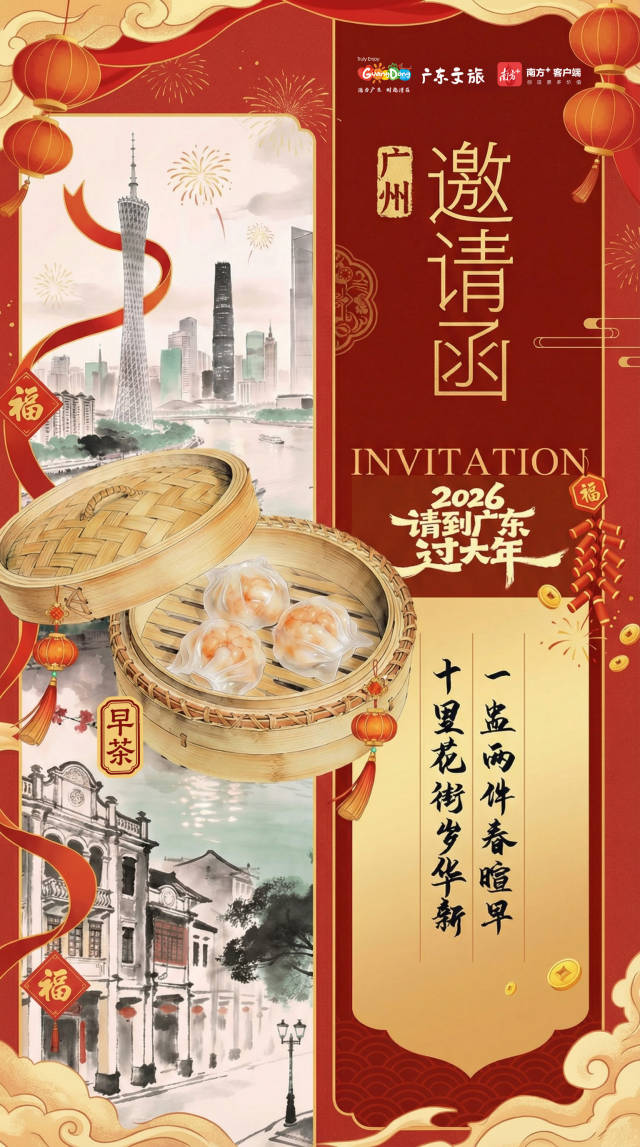
Core Viewpoint - The article highlights the unique culinary traditions and flavors associated with the Lunar New Year celebrations across 21 cities in Guangdong, emphasizing the cultural significance and local specialties of each city [1][4][51]. Summary by Categories Culinary Highlights - Guangzhou's flavor is characterized by the delicate dim sum, particularly shrimp dumplings and siu mai, paired with fragrant tea [4]. - Shenzhen offers a refreshing taste with coconut chicken, reflecting the city's vibrant and diverse culture [7]. - Zhuhai is known for its tender golden pomfret, showcasing the city's seafood richness [9]. - Foshan features the crispy texture of Shunde fish sashimi, highlighting the region's culinary finesse [11]. - Huizhou presents a rich flavor with braised pork belly, embodying the essence of local cuisine [14]. - Dongguan's roasted goose is noted for its aromatic and rich taste [17]. - Zhongshan is recognized for its tender roasted pigeon, a staple of local festivities [19]. - Jiangmen's fragrant rice with eel captures the celebratory spirit of the New Year [22]. - Zhaoqing's bamboo fragrance banquet reflects the warmth of family reunions [24]. - Shantou offers a sweet ginger and ginkgo soup, symbolizing the season's sweetness [26]. - Chaozhou is known for its fresh blood clams, representing the region's seafood delicacies [29]. - Jieyang features abalone, showcasing the refined taste of local cuisine [31]. - Zhanjiang's fresh crab highlights the lively atmosphere of the coastal city [34]. - Maoming is noted for its tender mustard greens, adding freshness to the New Year table [36]. - Yangjiang's salted fish, marinated overnight, represents the traditional flavors of fishing communities [39]. - Yunfu's fish tofu reflects the simplicity and richness of local culinary traditions [42]. - Qingyuan's steamed osmanthus fish showcases the region's fresh ingredients [44]. - Heyuan's stuffed tofu represents the warmth of Hakka culture [46]. - Meizhou's salt-baked chicken embodies the essence of Hakka family gatherings [47]. - Shaoguan's spicy goose highlights the festive spirit of the New Year [49]. Cultural Significance - Each city's unique flavor is tied to its cultural identity, with food serving as a medium for expressing local traditions and familial bonds during the New Year celebrations [1][51].

新春走基层|寒假已过一个月,南大食堂又又延期打烊了,原因很暖心
Xin Lang Cai Jing· 2026-02-10 15:56
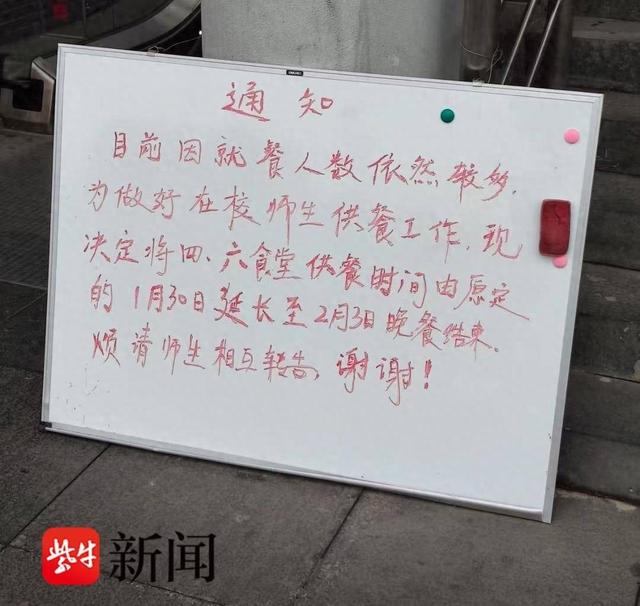
Core Viewpoint - The ongoing extension of dining hours at Nanjing University's Xianlin campus dining halls reflects the high number of students remaining on campus during the winter break for research activities, highlighting the university's commitment to supporting student needs and fostering a conducive environment for academic pursuits [4][6][9]. Group 1: Dining Hall Operations - The Xianlin campus's Sixth Dining Hall has announced multiple extensions of its operating hours due to the increased number of students staying on campus, now extending service until February 6 [6][7]. - The university's dining services have adapted to student needs by keeping several dining halls open throughout the winter break, including the First, Eleventh, and Fifteenth Dining Halls, with additional extensions based on student attendance [9]. Group 2: Student Experience - Students remaining on campus have reported a vibrant atmosphere in the dining halls, with popular options like hot pot and traditional dishes being enjoyed, creating a sense of community among those engaged in research [3][4]. - The university has provided additional support, such as free traditional food on special occasions, which has contributed to a warm and supportive environment for students during the winter break [6][9]. Group 3: University Support Initiatives - The university's logistics and dining services have shown responsiveness to student needs, with initiatives like new menu items and feedback mechanisms in place to enhance the dining experience [9]. - The overall approach of the university emphasizes a student-centered philosophy, ensuring that students feel supported and valued during their academic endeavors, particularly during the winter break [9].
拼多多年货节,何以装下中国火锅的万千风味?
Xin Jing Bao· 2026-01-25 23:52
Core Insights - The article highlights the booming Chinese hot pot market, driven by regional flavors and the e-commerce platform Pinduoduo, which facilitates the distribution of local delicacies across the country [1][2][12] Group 1: Regional Flavors and E-commerce - Pinduoduo's "Duoduo Good Specialty" initiative enables the delivery of diverse regional hot pot ingredients, such as Hainan's coconut chicken and Ningxia's lamb, to consumers nationwide [1][2] - The integration of local flavors into the hot pot culture reflects a significant shift in Chinese dining, allowing for a blend of tastes from different regions [2][12] Group 2: Success Stories of Local Entrepreneurs - Entrepreneur Yu Hua has successfully scaled his coconut chicken business on Pinduoduo, achieving nearly 200,000 orders annually by leveraging the platform's marketing and logistics [3][4][5] - The story of Lao Tang illustrates the rise of Chaozhou-style hot pot, with his business thriving by ensuring quality through direct sourcing and innovative processing techniques [6][7] - Niu Qinglei transformed the sales model for Salt Lake sheep, utilizing e-commerce to expand his market reach and significantly increase sales, particularly during peak seasons [9][10][11] Group 3: Consumer Preferences and Market Trends - The demand for diverse hot pot ingredients is growing, with consumers increasingly favoring fresh, high-quality products that cater to various regional tastes [6][7][12] - Pinduoduo's promotional strategies, such as the "Billion Subsidy" program, allow businesses to offer competitive pricing while maintaining product quality, attracting a loyal customer base [5][8] - The evolving consumer preferences indicate a shift towards healthier options, with a rising interest in organic and antibiotic-free ingredients in hot pot dishes [7][12]

球赛+美食!快快看过来,2026海口亚洲杯美食攻略
Xin Lang Cai Jing· 2026-01-25 04:53
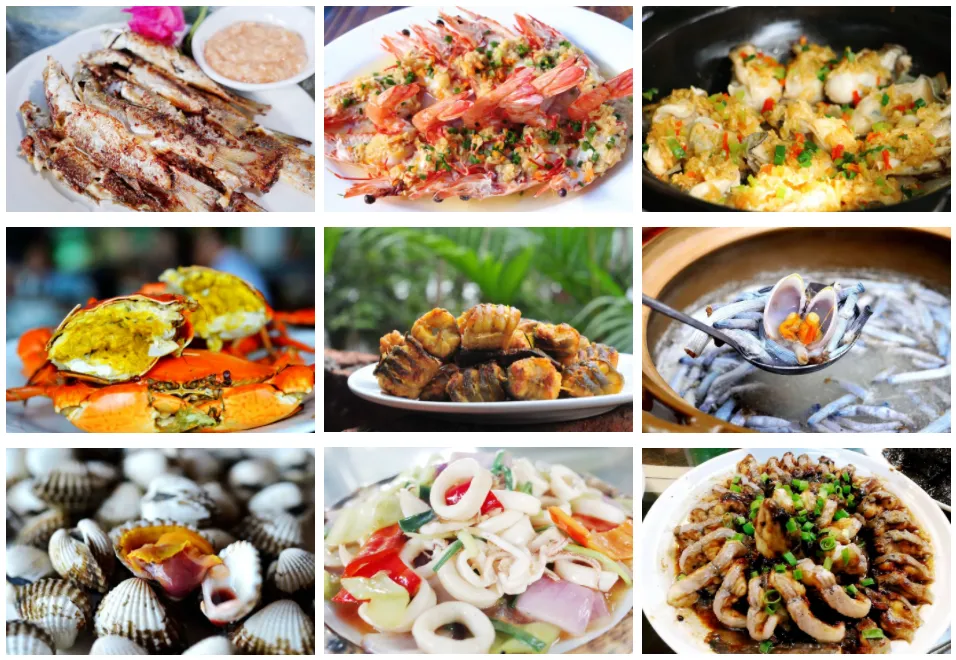
Core Viewpoint - The article highlights the culinary delights of Haikou, particularly during the 35th International Table Tennis Federation-Asian Table Tennis Union Asian Cup, encouraging visitors to explore local flavors alongside the sporting event [1]. Seafood Feast - Haikou's seafood is renowned for its freshness, featuring local classics such as boiled shrimp, pepper salt mantis shrimp, garlic oysters, and sandworm porridge, especially popular for late-night snacks [3]. - Recommended restaurants include A Lang Seafood, Hainan Renjia, and Xin Deli Seafood Restaurant [3]. Noodle and Rice Dishes - Noodles in Haikou are not just a meal but a taste of local culture, with varieties like Hainan noodles, Hou'an noodles, and stir-fried noodles, characterized by rich flavors and diverse ingredients [5]. - Notable eateries include Song Ji Hainan Noodles, Ya Mei Hainan Noodles, and Zhang Ji Hou'an Noodles [5]. Chicken Dishes - Hainan chicken dishes are diverse, ranging from sweet coconut chicken to savory salt-baked chicken, ideal for sharing after matches [8]. - Recommended places include Long Zai Chicken Rice, Wu Ming Chicken Rice, and Jia Ji Chicken Rice [8]. Hot Pot and Stews - Haikou's hot pot and stew options reflect local culture, with dishes like sour and spicy hot pot and vegetarian stews, perfect for group dining [11]. - Popular spots include Yang Ji Zao Po Vinegar Hot Pot and Lin Ji Old Brand [11]. Local Tea Culture - The day in Haikou often starts with "Old Dad Tea," a cultural ritual that pairs tea with local snacks, providing a leisurely experience between matches [13]. - Recommended tea houses include Heng Xing Fa Tea House and Zhen Fang Hua Food Store [14]. Unique Local Beverages - The "Old Salt" drink, a blend of fresh fruit and salt, offers a unique taste experience, ideal for both tea time and night market visits [15][17]. - Notable vendors include Zhen Da Fu Water Bar and De Hui Xuan Water Bar [17]. Desserts and Night Market - Haikou's sweet offerings include "Qing Bu Liang," a coconut milk dessert, perfect for ending a night out after enjoying seafood and snacks [19]. - Recommended dessert spots include Gong Ji Wan Qing Bu Liang and Wen Chang Deng Ji Qing Bu Liang [19]. Fried Snacks - Fried snacks are a staple of Haikou's night market, with options like fried shrimp cakes and fried tofu, providing a flavorful experience after matches [21]. - Popular stalls include Xiao Long Hua Primary School Fried and Long Feng Fried [21]. Unique Fruit Preparation - The local practice of dipping fruits in chili salt enhances their sweetness, offering a unique taste experience [23]. - Recommended locations include Tai Long Cheng Snack Street and Bin Lian Night Market [23]. Map Keywords - Key locations for food experiences include Qi Lou Water Lane for a combination of spicy soup rice, Old Salt drinks, and Qing Bu Liang; Hai Da South Gate Night Market for Qing Bu Liang, fried snacks, and fruit with chili salt; and Hai Dian Yi East Road for Old Salt drinks and fried snacks [23].
海口吃鸡文化大赏暨年味美食荟开席
Hai Nan Ri Bao· 2026-01-24 00:59
Core Viewpoint - The event "Qiong Ban Tian Xia: A Cultural Feast of Chicken and New Year Delicacies" in Haikou showcases local culinary culture and aims to promote local dining brands through a "Food+" model [1] Group 1: Event Overview - The event took place on January 22, attracting over a thousand citizens and tourists to Haikou's Qilou Old Street to enjoy a culinary feast that combines local flavors and New Year traditions [1] - Notable local dining brands such as Longquan Group and Qiongcai Renjia presented signature chicken dishes like coconut chicken and old salt chicken, creating an interactive tasting experience for attendees [1] Group 2: Consumer Engagement - Ten citizen representatives participated in a blind tasting challenge, enhancing the interactive atmosphere of the event [1] - The event coincided with the launch of the Hainan Old Brand Carnival, promoting local traditional foods and inviting citizens and tourists to sample them for free [1] Group 3: Market Activities - Various New Year goods markets opened simultaneously across the city, including the Haikou Qilou Old Street New Year Goods Festival, which will run until February 16, offering a one-stop shopping experience [1] - Major shopping centers and unique street areas have also initiated New Year markets, featuring diverse business formats and special discounts for New Year's Eve meals to meet festive consumer demands [1]
海南风味飘香马德里
Hai Nan Ri Bao· 2026-01-17 00:50
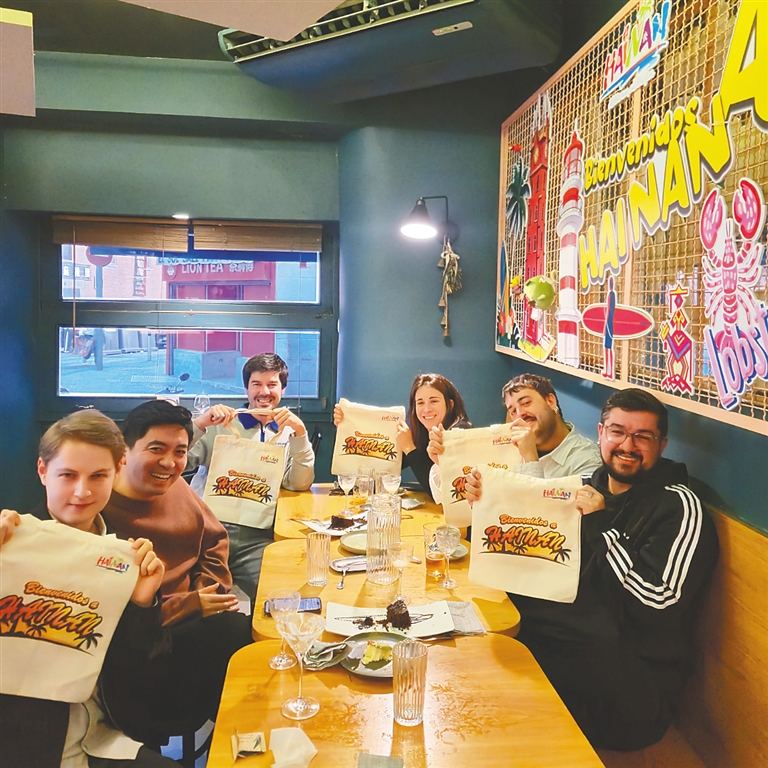
Core Viewpoint - The Hainan Cuisine Promotion Event in Spain aims to enhance cultural and tourism cooperation between Hainan and Spain through the fusion of local culinary offerings [1] Group 1: Event Overview - The Hainan Cuisine Promotion Event took place in Madrid from January 15 to January 24, showcasing Hainan's unique flavors such as vinegar, coconut chicken, coffee, and liquor [3] - The event collaborated with renowned local restaurants to create Hainan-inspired dishes that cater to Spanish tastes, promoting Hainan's cultural and tourism resources [3][4] Group 2: Culinary Innovations - Two Michelin-recommended restaurants, Restaurante Lamian and Soy Kitchen, developed a series of fusion dishes and beverages incorporating Hainan elements, such as "Hainan Vinegar Buckwheat Noodles" and "Hainan Coconut Coffee Liquor" [4] - The dishes were creatively reimagined using local Spanish ingredients while preserving the essence of Hainan cuisine, aiming to resonate with local consumers [4] Group 3: Cultural Integration - The restaurants featured Hainan-themed decorations and provided tourism information cards on each table, enhancing the cultural atmosphere and promoting Hainan tourism [4] - Ongoing collaborative projects between Hainan and Spain include the establishment of a promotional section for Hainan tourism on the UN World Tourism Organization's website and the planning of direct flights from Haikou to Madrid [4]
以新场景释放消费新动能
Hai Nan Ri Bao· 2025-12-10 01:15
Core Viewpoint - The Hainan Provincial Committee emphasizes the development of various economic models, including night economy, instant economy, first-release economy, and "Guzi economy," to enhance the international tourism consumption center's capabilities and promote new consumption scenarios [1][6][11][14]. Night Economy - Hainan has significant advantages for developing the night economy, including a favorable climate, a large tourist market, rich culinary resources, a strong commercial atmosphere, and mature coastal landscapes [3][4]. - The province received 84.93 million tourists from January to October 2025, marking an 8.3% year-on-year increase, providing a robust market flow for the night economy [3]. - The government has introduced supportive policies, such as the "Hainan Free Trade Port Tourism Regulations," to enhance the night economy's development [4]. Instant Economy - Instant economy is characterized by meeting consumer demands in real-time through digital platforms, enhancing user experience and efficiency in tourism consumption [6][7]. - The instant retail market in China reached 650 billion yuan in 2023, with a projected growth to over 2 trillion yuan by 2030, indicating a significant market opportunity [7]. - Hainan aims to leverage its policy advantages to foster the instant economy, enhancing the overall competitiveness of its tourism sector [8][10]. First-Release Economy - The first-release economy is identified as a key strategy for Hainan to enhance its international tourism consumption center, capitalizing on unique local advantages [11][12]. - The fifth Consumer Expo showcased nearly 100 new products, demonstrating the potential of the first-release economy to stimulate market engagement and consumer interest [11]. - A comprehensive policy support system is essential for the first-release economy, including streamlined customs processes and intellectual property protections [12][13]. Guzi Economy - The "Guzi economy," derived from the English word "goods," focuses on emotional consumption linked to cultural IPs, with a market size projected to reach 168.9 billion yuan in 2024 [14][15]. - Hainan's free trade policies provide a conducive environment for developing the Guzi economy, attracting top-tier IP companies and fostering local cultural integration [14][15]. - The province aims to create immersive consumer experiences by leveraging its unique tourism resources and developing original IPs that resonate with local culture [15][16].
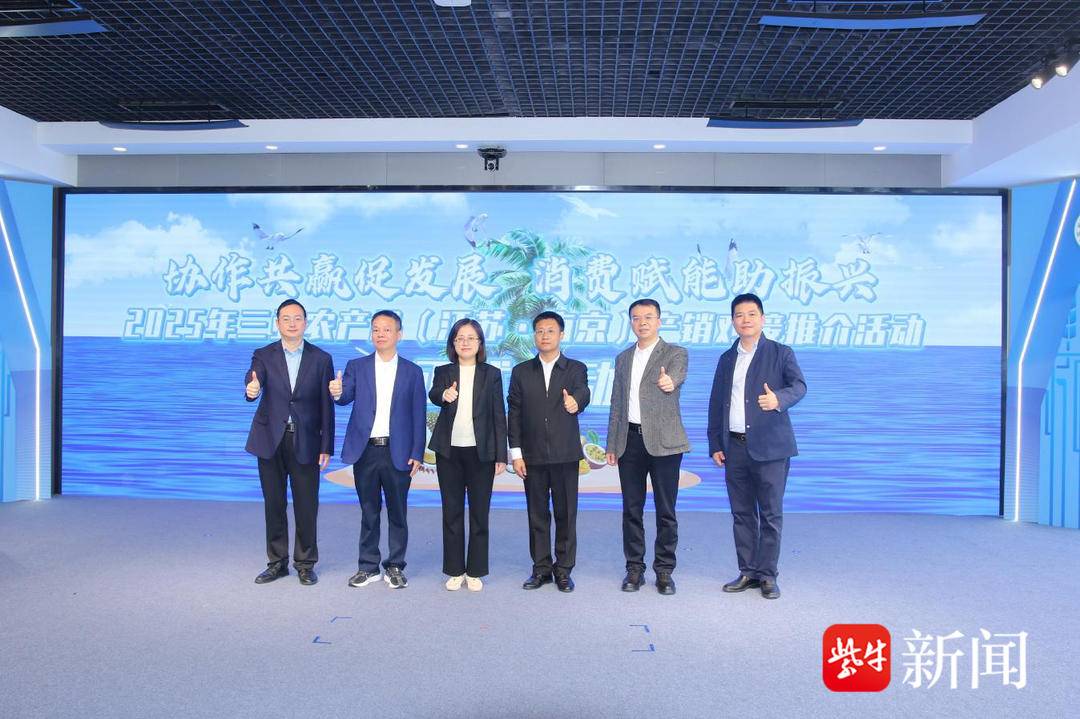
金秋桂月促对接 琼崖佳果助振兴 ——三亚农产品(江苏·南京)产销对接推介活动在宁圆满落幕
Yang Zi Wan Bao Wang· 2025-10-24 09:54
Core Viewpoint - The "Sanya Agricultural Products (Nanjing, Jiangsu) Supply and Marketing Connection Promotion Event" successfully took place, aiming to enhance the integration of Sanya's unique agricultural products into the Jiangsu and Yangtze River Delta markets [1][8]. Group 1: Event Overview - The event was attended by key officials from Jiangsu and Hainan provinces, highlighting the importance of agricultural collaboration [1]. - Sanya is leveraging its unique climate and ecological resources to promote modern agricultural transformation, focusing on standardization, branding, and industrialization [3]. Group 2: Product Highlights - Local enterprises showcased a variety of distinctive agricultural products, particularly tropical fruits such as mangoes, wax apples, and dragon fruit, which attracted significant attention from buyers [6]. - The event featured a diverse array of products, including beef jerky, health-oriented quail tea, coconut chicken, and high-quality seafood, emphasizing the unique flavors of Sanya [6]. Group 3: Strategic Partnerships - Strategic cooperation agreements were signed between Sanya Agricultural Products Distribution Company and several Jiangsu enterprises, marking a new chapter in agricultural collaboration between the north and south [8]. - The event is part of a broader initiative to enhance the agricultural supply chain, focusing on building an efficient and stable production and sales connection mechanism [10].

遍地「火锅刺客」,年轻人的火锅瘾都淡了丨2025年轻人「火锅」报告
后浪研究所· 2025-02-27 09:02
Core Insights - The article discusses the evolving preferences of young consumers regarding hot pot, highlighting a shift in taste and dining frequency, as well as the emergence of alternative dining options. Group 1: Hot Pot Preferences - The most popular hot pot base among young people is "spicy hot pot," favored by 74.2% of respondents, followed by "Chaozhou beef hot pot" at 57.5% [2][3] - Different age groups exhibit varying preferences, with 77.6% of post-95s favoring spicy hot pot, while over 50% of post-00s prefer tomato hot pot [5][6] - Regional preferences show that spicy hot pot is most popular in Chengdu, while other cities have their own favorites, such as sour soup hot pot in Guangzhou and tomato hot pot in Suzhou [8][10] Group 2: Hot Pot Ingredients and Dipping Sauces - Beef is the most favored hot pot ingredient, chosen by 86.6% of young consumers, followed by shrimp paste at 57.1% and lamb at 53.0% [11][12] - The most popular dipping sauce is sesame oil, with a 62.8% preference, followed by minced garlic and sesame paste [14][15] Group 3: Dining Frequency and Brand Preferences - Despite a strong interest in hot pot, the frequency of dining out has decreased, with many young people eating hot pot less than twice a month [21][22] - "Haidilao" is the leading hot pot brand, preferred by 65.6% of respondents, indicating its strong market position [23][24] Group 4: Factors Influencing Hot Pot Choices - Key factors influencing hot pot choices include taste (90.2%), freshness of ingredients (60.9%), and price (76.0%), with waiting time also becoming a significant concern [26][27] - Young consumers are increasingly price-sensitive, with over 50% willing to pay between 100-200 yuan per person for hot pot, and nearly 40% preferring options under 100 yuan [32][34] Group 5: Emerging Trends in Dining - The article notes a rise in alternative dining options such as small hot pots, grilled fish, and skewers, with small hot pot establishments growing at a rate of 33.5% [36][37] - The shift towards "one-person meals" reflects changing consumer behavior, as young people seek more affordable and convenient dining experiences [43][55]