
比亚迪元UP

Search documents
零跑A10 72小时新车上市一线快报
车fans· 2026-03-30 01:05
Order Situation - New orders per store range from 18 to 20 units, with an in-store visit rate of 80% and a 300% increase in visits [5][8] - The arrival of display vehicles in mid-March led to a significant surge in orders, with the first weekend achieving record weekly orders for the company [8] - A notable proportion of orders comes from first-tier cities, with delivery times extending to 10 weeks due to strict control over order fraud [8] Customer Profile - The primary customer demographic is aged between 20 and 35 years, with a female representation of 60% [7][12] - Customers tend to be couples or families looking for urban transportation, with a younger overall profile that values aesthetics and cost-performance ratio [12] - Gender ratios vary by region, with women making up 80% in first and second-tier cities, while men dominate in third and fourth-tier cities at 70% [12] Configuration Preferences - 55% of customers opt for the 505 Laser Radar version priced at 86,800, 30% choose the 505 Enjoyment version at 76,800, and 15% select the 403 Enjoyment version at 69,800 [11] - Customers generally prefer long-range versions, with many opting for the Laser Radar version after test drives exceeded expectations [14] - The most popular exterior color is seaweed green, while the main interior color is oat gray [13][14] Competitive Comparison - Among competitors, 40% of customers compare the product with Geely's Xingyuan and another 40% with BYD's Yuan UP [16] - Customers show a clear preference for the company's A10 model, with feedback indicating a concentrated interest in just two models and a focus on delivery times [16] - Compared to Geely's Xingyuan, the customer base has a higher female ratio, while BYD's Yuan UP customers are more concerned with specific configuration value and brand scale [2][16]

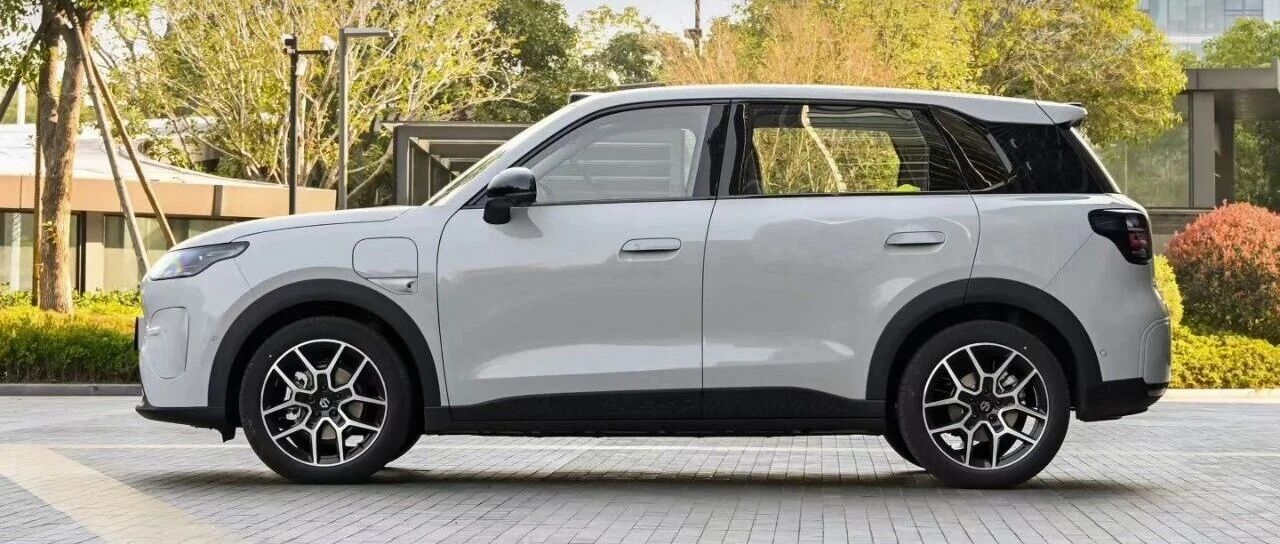
零跑A10:女性客户占比80%,油车置换客户最能被智驾吸引
车fans· 2026-03-27 00:29
Core Viewpoint - The launch of the Leap A10 has exceeded expectations in terms of pricing and features, positioning it as a competitive option in the smart SUV market. Pricing and Availability - The Leap A10 is available in four variants with ranges of 403 km and 505 km, priced between 65,800 to 86,800 yuan [3][4] - The pricing is considered attractive, with the low-end model being 10,000 yuan lower than expected and the high-end model priced at 86,800 yuan, which was anticipated to be above 90,000 yuan [4] Customer Interest and Demographics - The dealership has seen an average of 8-10 customer groups visiting daily, with about 30% specifically interested in the Leap A10 [14] - The primary customer demographic consists of women aged 25-35, including working professionals, young couples, and mothers [14] Key Features and Selling Points - The Leap A10 is positioned as a smart, long-range SUV with three core selling points: extended range, spacious interior, and advanced smart features [11] - It offers nearly 100 km more range compared to major competitors, and the interior design includes practical features like a wash-friendly trunk and storage compartments [11] - The vehicle is equipped with Qualcomm 8295 chips for smooth operation and advanced driving assistance features, including laser radar for navigation [11][20] Competitive Analysis - The main competitors identified are BYD Yuan UP and Geely Xingyuan, with secondary competitors including MG4, Arcfox T1, and Wuling Bingo [18] - The Leap A10's advantages include long range, spaciousness, and smart driving capabilities, while its battery brand (Guoxuan High-Tech and Jiangsu Zhengli) is perceived as less reputable compared to competitors like CATL [18] Financial Policies - The vehicle comes with a financing option of 43,000 yuan at zero interest for two years, with a monthly payment of approximately 1,792 yuan [22] Market Timing - The current market conditions are favorable for purchasing the Leap A10, as the pricing is competitive and there is a recovery in customer interest following a period of low traffic [23] - It is suggested that potential buyers may consider waiting 3-4 months to see if prices stabilize, although the current pricing is seen as sincere [23] Sales Insights - The driving experience of the Leap A10 has improved significantly compared to older models, with a stable feel during driving [27] - The vehicle's storage design has received positive feedback, particularly from customers with specific needs, such as fishing enthusiasts [27] - The vehicle's acceleration and performance have exceeded expectations, with a nominal power rating of 90 kW [27]
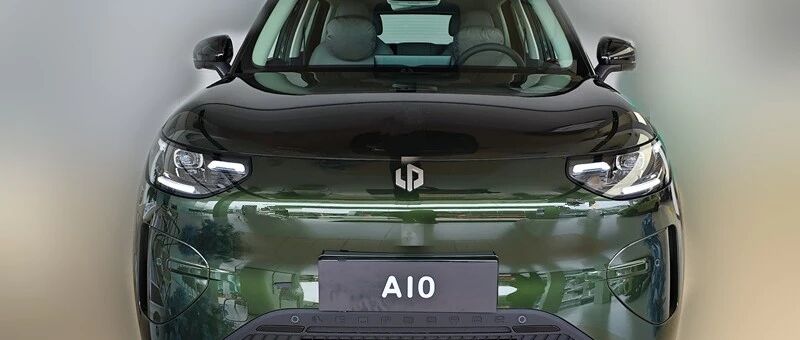
李昀:“中国”,已经成为一种状态
Xin Lang Cai Jing· 2026-02-19 04:31
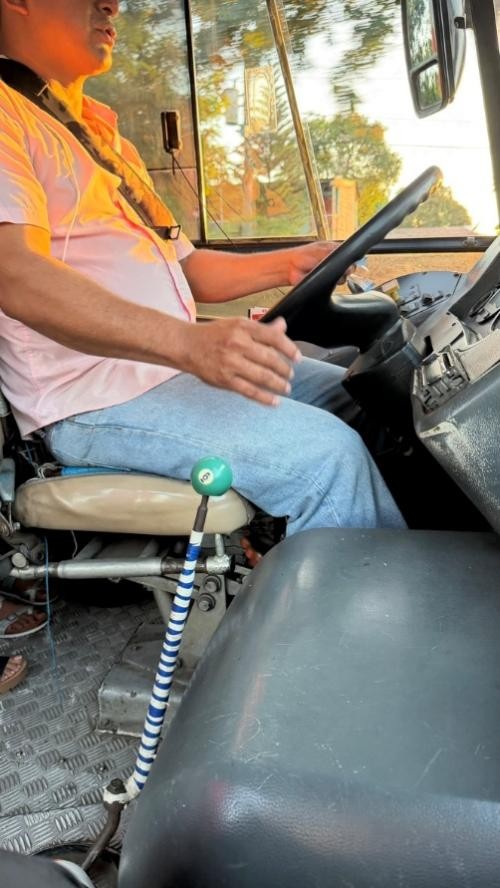
Core Viewpoint - The article discusses how China's influence is subtly integrated into the daily lives of people in various countries, particularly in Central America, showcasing the practical benefits of Chinese aid and products in local communities [1][42]. Group 1: Chinese Influence in Daily Life - In Central America, Chinese-made buses, such as those from Yutong, have become a common sight, significantly improving local transportation despite being older models [2][10]. - A modern library built with Chinese aid in El Salvador stands out in its surroundings, providing a valuable resource for the community and becoming a backdrop for local life events [10][15]. - The presence of Chinese electric vehicles, like BYD, in Costa Rica has changed local perceptions of Chinese products, highlighting their reliability and affordability compared to older models [19][20]. Group 2: Perceptions of China Abroad - Foreigners often express admiration for China's infrastructure, such as high-speed trains, and compare it favorably to their own countries' systems [29][32]. - Personal interactions reveal a general warmth and curiosity towards China, with many individuals expressing a desire to visit and experience its culture and landscapes firsthand [27][34]. - The article emphasizes that the true image of China is shaped by everyday experiences and practical benefits rather than grand narratives or political rhetoric [41][42].
零跑汽车今年能卖出105万辆?
Xin Lang Cai Jing· 2026-02-11 10:32
Core Viewpoint - Leap Motor aims to achieve a historic sales target of 1 million vehicles in 2023, with a long-term goal of 1.05 million vehicles by 2026, reflecting a 75.9% increase from 2025's target of 597,000 vehicles [2][18]. Sales Target Breakdown - The 1 million sales target for 2023 is divided into 900,000 units for the domestic market and 100,000 units for overseas markets [4][19]. - In 2025, Leap Motor's existing models are expected to achieve a total sales volume of 418,000 units, while new models launched in 2025 are projected to contribute an additional 178,000 units [5][21]. Model Performance Expectations - The existing models C10, C11, C16, T03, and C01 are anticipated to face challenges in increasing sales from the previous year's 418,000 units, with cautious estimates suggesting a total of 400,000 units and optimistic estimates reaching 450,000 to 500,000 units for these models in 2023 [7][24]. - The new models B10 and B01, launching in April and July 2025 respectively, are expected to achieve cautious sales of 150,000 units and optimistic sales of 200,000 units [7][24]. New Model Contributions - The Lafa5 model, launched in late 2025, is projected to provide significant sales growth, with cautious estimates of 60,000 units and optimistic estimates of 100,000 units for 2023 [8][25]. - The A10 model, a compact electric SUV, is expected to face competition from BYD's Yuan UP, with cautious sales estimates of 60,000 units and optimistic estimates of 100,000 units for 2023 [10][26]. Market Competition and Challenges - The D19 and D99 models, positioned in the competitive large SUV and MPV markets, respectively, are expected to face significant challenges in achieving sales targets due to intense competition [12][28]. - The overall sales target of 1 million units in 2023 is contingent upon overcoming challenges such as production capacity, supply chain issues, and the impact of reduced tax incentives for electric vehicles [34].


10万级里没好车?先看这十辆车再说!
Xin Lang Cai Jing· 2026-02-09 10:13
Core Viewpoint - The article discusses the various options available in the popular 100,000 yuan car segment, highlighting the strengths of different models from traditional manufacturers, new energy companies, and joint ventures, and aims to guide consumers in selecting the right vehicle for the upcoming New Year [1]. Group 1: BYD Dolphin - The BYD Dolphin is a popular electric sedan priced between 99,800 yuan and 129,800 yuan, known for its design, range, and in-car technology, making it a well-validated option in the 100,000 yuan segment [2][32]. - It features a "marine aesthetic" design with a distinctive front, stylish wheels, and tail lights, enhancing its visual appeal [33]. - The vehicle has a CLTC comprehensive range of 420 km and a low energy consumption of 10.9 kWh per 100 km, making it cost-effective for daily use [6][35]. Group 2: BYD Yuan UP - The BYD Yuan UP is a small SUV priced between 74,800 yuan and 119,800 yuan, equipped with a blade battery and efficient electric drive system, with a new model expected in March 2026 [7][37]. - It has a compact design with a 2,620 mm wheelbase, making it suitable for urban commuting and easy parking, and offers a range of 401 km with fast charging capabilities [8][38]. Group 3: Geely Electric Car - Geely's electric vehicle is priced between 68,800 yuan and 98,800 yuan, featuring a comprehensive set of specifications including a large front trunk and advanced smart cockpit system [9][38]. - The car has a wheelbase of 2,650 mm, providing spacious interior room, and offers a CLTC range of 410 km with fast charging support [11][13]. Group 4: Aion i60 Range Extender - The Aion i60 is priced between 109,800 yuan and 135,800 yuan, noted for its performance, spaciousness, and strong smart features [20][47]. - It has a wheelbase of 2,775 mm, providing ample rear legroom and a large trunk space, with a range of 650 km and compatibility with 99% of global charging stations [21][48]. Group 5: Haval H6 - The Haval H6 is a well-established fuel SUV priced between 98,900 yuan and 143,900 yuan, recognized for its spacious interior and comfort features [29][56]. - It is equipped with a 1.5T engine, delivering a maximum power of 135 kW and torque of 275 N·m, suitable for both family use and light off-road driving [31][58].

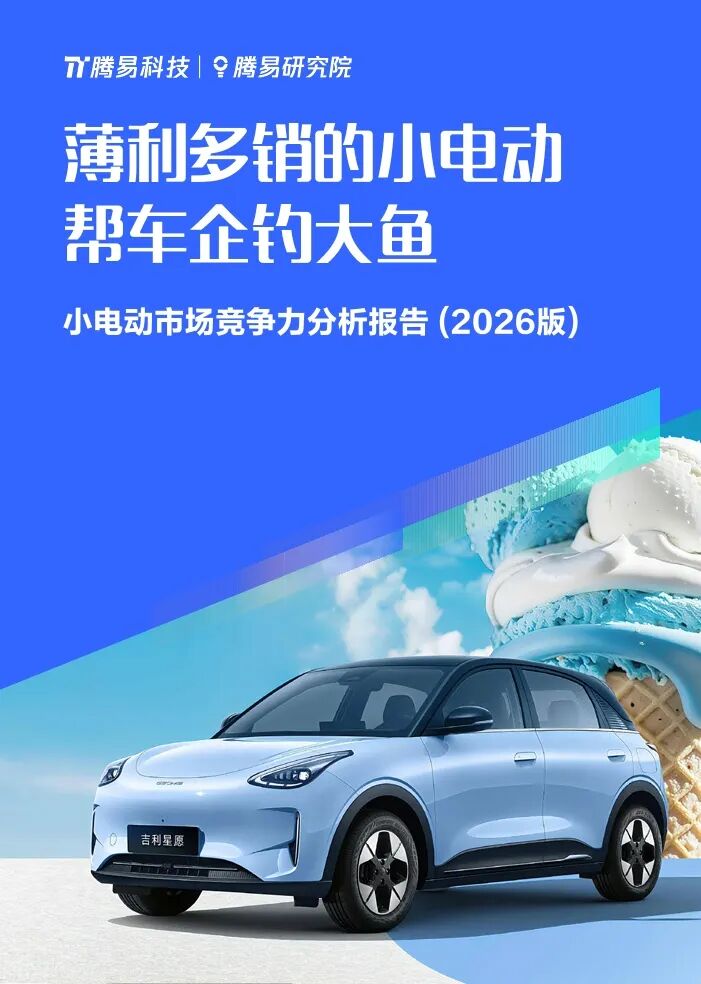
腾易:薄利多销的小电动帮车企钓大鱼:小电动市场竞争力分析报告(2026版)
Xin Lang Cai Jing· 2026-01-25 13:14
Core Insights - The core insight of the article is that the sales of small electric vehicles (EVs) in China have surged from less than 500,000 units in 2020 to over 3 million units by 2025, with Chinese brands being the primary beneficiaries, capturing nearly 96% of the market share in this segment [4][6][95]. Group 1: Market Growth - From 2020 to 2025, the sales of small electric vehicles in China increased more than sixfold, with their market share rising from less than 3% to over 14% of total passenger vehicle sales [6][95]. - The contribution of small electric vehicles to the overall market has been significant, accounting for over 10% of the market sales and helping to boost the market share of Chinese brands from over 30% to more than 60% [6][95]. Group 2: Brand Performance - Chinese brands have been the sole beneficiaries of the small electric vehicle boom, maintaining a sales ratio of over 90%, which is expected to approach 96% by 2025 [6][95]. - Notable Chinese brands such as Wuling and Geely have experienced a rebound in sales due to their small electric vehicle offerings, with Geely's sales projected to reach nearly 2 million units by 2025 [11][13]. Group 3: User Demographics and Preferences - By 2025, nearly 60% of small electric vehicle users will come from households that previously owned foreign brands, with over 80% of these users being female [25][33]. - The satisfaction and recommendation rates for small electric vehicles are higher than the overall market, indicating a positive shift in consumer perception towards Chinese brands [33][36]. Group 4: Competitive Landscape - As of January 2026, major foreign brands like Volkswagen and Toyota have struggled to respond effectively to the rise of Chinese small electric vehicles, lacking systematic strategies to counter this trend [12][103]. - The article suggests that if the sales of small electric vehicles continue to approach 5 million units and capture over 20% market share by 2030, foreign brands will face significant challenges [12][103]. Group 5: Strategic Implications - The rise of small electric vehicles has not only created new market opportunities for Chinese brands but has also disrupted the traditional user upgrade ecosystem established by foreign brands [55][62]. - The article emphasizes the importance of viewing small electric vehicles as a key component in building a user upgrade ecosystem rather than merely low-margin products [55][68].


2025年度车型榜单出炉:新能源渗透率飙升 自主品牌登顶全细分市场
Qi Lu Wan Bao· 2026-01-20 05:08
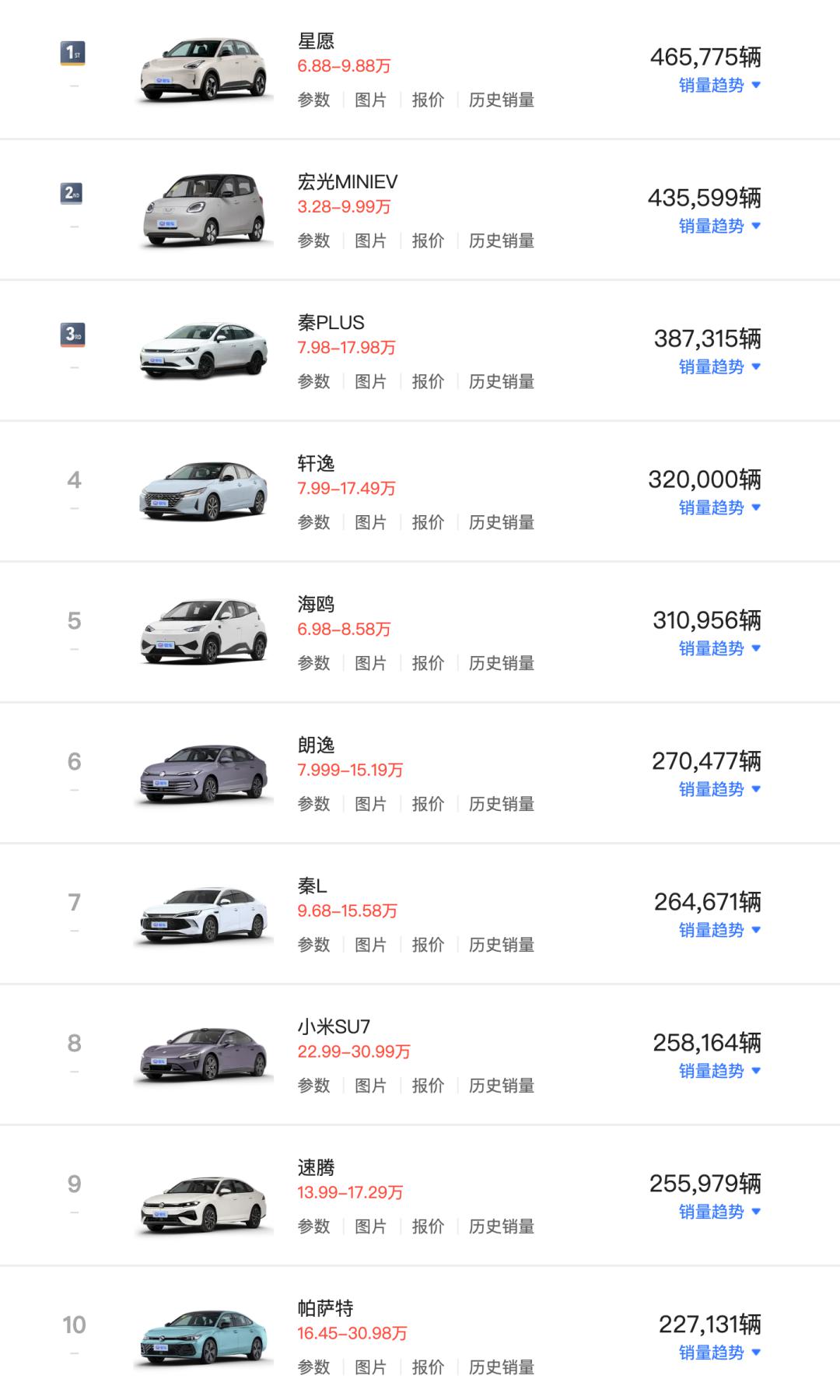
Core Insights - The 2025 Chinese automotive market is characterized by the continued penetration of new energy vehicles (NEVs), strong performance of domestic brands, and a reshaping of market dynamics across various segments [1][14]. Passenger Car Market - Domestic brand NEVs dominate the passenger car sales rankings, with Geely's Star Wish leading at 465,775 units sold, supported by its competitive pricing and features targeting young families [2][5]. - BYD's models, including the Qin PLUS and Dolphin, also performed well, with the Qin PLUS achieving significant sales due to its low fuel consumption and spacious design [2][5]. - The top ten passenger cars include six NEVs priced under 100,000 yuan, indicating a strong market presence for affordable electric vehicles [5]. SUV Market - The Tesla Model Y leads the SUV segment with 425,337 units sold, despite facing competitive pressure from domestic brands [6][10]. - Domestic brands like Geely and BYD have shown strong performance, with Geely's Xingyue L and Boyue L achieving notable sales growth [9][10]. - The SUV market remains diverse, with a mix of six fuel vehicles and four NEVs in the top ten, highlighting the growing influence of electric models [10]. MPV Market - The MPV segment is witnessing a shift towards NEVs, with the BYD D9 leading sales at 92,988 units, despite a slight decline [11][13]. - Toyota's Sienna and other models have also performed well, indicating a competitive landscape where both domestic and joint venture brands are adapting to market demands [11][13]. - The top ten MPVs include six NEVs, showcasing the increasing acceptance of electric and hybrid models in the market [13]. Overall Market Trends - The 2025 Chinese automotive market is undergoing significant structural adjustments, with domestic brands leveraging their technological advantages and competitive pricing to challenge the long-standing dominance of joint venture brands [14]. - The penetration rate of NEVs is on the rise across all segments, with electrification and intelligence becoming irreversible trends in the industry [14].
时隔三年推新车 欧拉不想困在“猫系”里
Bei Jing Shang Bao· 2025-12-17 15:42
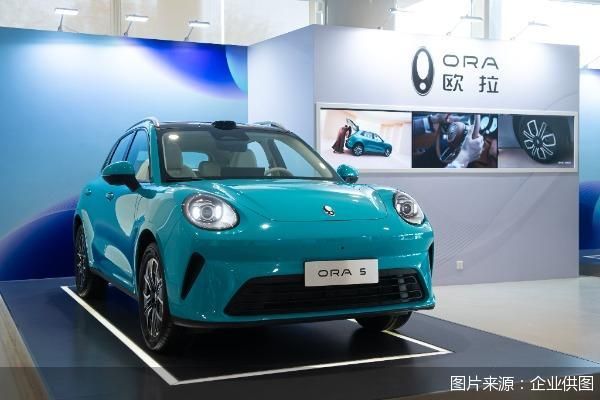
Core Insights - Great Wall Motors' Ora brand has launched the new A-class pure electric SUV, Ora 5, with a retail price range of 99,800 to 133,800 yuan, and a limited-time trade-in price starting at 91,800 yuan [1] - The Ora brand, established in August 2018, targets female consumers and has previously achieved stable monthly sales of over 10,000 units in 2021, but has faced challenges due to rising battery costs and intense market competition [1] - The new Ora 5 marks a strategic shift for the brand, moving away from the "cat series" naming convention and focusing on a "brand + number" naming system, while also broadening its target audience beyond just female consumers [1] Market Positioning - The Ora 5 is the first SUV model for the Ora brand, entering the competitive A-class SUV market, which is favored by consumers [2] - In the first 11 months of this year, the market share for Chinese brand sedans, SUVs, and MPVs was 64%, 73.4%, and 68.6% respectively, indicating a strong preference for SUVs [2] - The Ora 5 will compete directly with popular models such as BYD Yuan UP, Galaxy E5, and BYD Song Pro DM, which dominated the sales rankings in the 80,000 to 120,000 yuan price range [2] Product Features - The Ora 5 is equipped with a 10.25-inch instrument panel and a 15.6-inch central control screen, featuring the Coffee OS vehicle system and DeepSeek model for advanced functionalities [3] - It includes the third-generation Coffee Pilot Ultra driving assistance system, enabling city navigation without relying on high-precision maps, which is a key selling point [3] - Although the initial launch is for the pure electric version, there are plans to introduce other powertrain options in the future, reflecting a shift from the brand's previous focus solely on electric vehicles [3]
时隔三年推新车、切入SUV赛道,欧拉不想困在“猫系”里
Bei Jing Shang Bao· 2025-12-17 10:22
Core Insights - Great Wall Motors' Ora brand has launched the new A-class pure electric SUV, Ora 5, with a retail price range of 99,800 to 133,800 yuan, and a limited-time trade-in price starting at 91,800 yuan [2] - The Ora brand, established in August 2018, targets female consumers and has previously achieved stable monthly sales of over 10,000 units in 2021, but faced challenges due to rising battery costs and market competition [2][3] - The new Ora 5 marks a strategic shift for the brand, moving away from the "cat series" naming convention and focusing on a broader market appeal [2] Market Positioning - The Ora 5 is the first SUV model for the Ora brand, entering the competitive A-class SUV market, which is favored by consumers [3] - In the first 11 months of this year, the market share for Chinese brand sedans, SUVs, and MPVs was 64%, 73.4%, and 68.6% respectively, indicating a strong preference for SUVs [3] - The Ora 5 will compete directly with popular models such as BYD Yuan UP, Galaxy E5, and BYD Song Pro DM, which dominated the sales rankings in the 80,000 to 120,000 yuan segment [3] Product Features - The Ora 5 is equipped with a 10.25-inch instrument panel and a 15.6-inch central control screen, featuring the Coffee OS vehicle system and advanced functionalities like dual-zone voice recognition and remote control via mobile apps [4] - It includes the third-generation Coffee Pilot Ultra driving assistance system, enabling urban navigation without relying on high-precision maps, which is a key selling point [4] - Currently, only the pure electric version of the Ora 5 is available, but plans for additional powertrain options are in place, indicating a shift from the brand's previous focus solely on electric vehicles [4][5] Strategic Developments - The Ora 5 is the first mass-produced vehicle from Great Wall Motors' new platform, which aims for a multi-powertrain and multi-category approach [5] - The brand has initiated independent channel recruitment, suggesting a strategic move to enhance its market presence [5]

Counterpoint:2025年Q3全球新能源车销量同比大幅增长32% 纯电动车继续占据主导地位
Zhi Tong Cai Jing· 2025-12-11 02:07
Core Insights - The global electric vehicle (EV) market is experiencing significant growth, with a projected 32% year-on-year increase in new energy vehicle sales by Q3 2025, driven primarily by battery electric vehicles (BEVs) which account for two-thirds of global EV sales [1] - China remains the key driver of global BEV sales, contributing 60% of the total, followed by Europe and the United States [1] Group 1: Global EV Market Overview - BEVs achieved a record penetration rate of 18% of global passenger car sales in Q3 2025, up from 14% in the same period last year [1] - Plug-in hybrid electric vehicles (PHEVs) also saw moderate growth, with a year-on-year increase of 6% [1] - The top three best-selling electric vehicles in Q3 2025 were Tesla Model Y, Geely Galaxy, and Tesla Model 3 [1] Group 2: BYD Automotive - BYD maintained its position as the global leader in BEV sales with nearly 600,000 units sold in Q3 2025, reflecting a 33% year-on-year growth [2] - The company performed strongly in overseas markets, with exports exceeding 150,000 units, contributing 27% to its overall sales [2] - BYD's competitive advantage lies in its diverse product offerings in both BEVs and PHEVs, particularly in the compact SUV and sedan segments [2] Group 3: Geely Holding - Geely Holding ranked third in the global BEV market with a 10% market share, achieving a 51% year-on-year increase in BEV sales in Q3 2025 [3] - The company's brands, including Yinhe and Zeekr, excelled in the affordable and mid-range electric vehicle markets in China [3] - Geely's strategy of combining affordable pricing with advanced software has helped it gain consumer favor in a competitive market [3] Group 4: Tesla - Tesla ranked second globally with over 13% market share, experiencing a 7% year-on-year increase in sales in Q3 2025 [4] - The sales boost for Tesla was largely attributed to the strong performance of the refreshed Model Y and the introduction of a long-wheelbase version of Model Y in China [4] - Increased sales in the U.S. market were driven by consumer purchases ahead of the anticipated cancellation of EV tax credits in October 2025 [4]