
汇添富北交所创新精选两年定开

Search documents
汇添富百亿基金经理四度卸任,还行不行?
Sou Hu Cai Jing· 2025-12-29 08:27
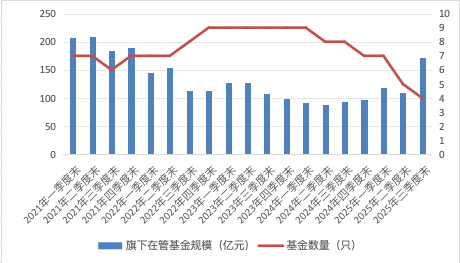
Core Viewpoint - The recent resignation of fund manager Ma Xiang from the Huatai-PineBridge North Exchange Innovation Selected Two-Year Open Fund has raised concerns among investors, despite the fund's strong performance during his tenure. The resignation is part of a broader trend in the industry towards team-based management and the gradual transition of responsibilities to newer managers [2][4][8]. Fund Performance - Ma Xiang's tenure at the Huatai-PineBridge North Exchange Innovation Selected Fund saw an impressive return of 97.51%, significantly outperforming the benchmark by 80.94 percentage points [2][4]. - However, the fund's performance in the last three months before his resignation showed a decline of 12% [5]. - The fund's management scale increased from 4.21 billion to 7.67 billion, indicating a substantial inflow of capital [5]. Manager Transition - Ma Xiang has resigned as fund manager for the fourth time in 2025, with Ma Lei taking over the management of the fund [2][6]. - Ma Lei, with only 2.38 years of experience, is considered a newcomer in the industry but currently manages six funds with a total scale exceeding 10.7 billion [7]. Industry Trends - The resignation of high-profile fund managers like Ma Xiang is often linked to the performance of the funds they manage, but in this case, it appears to be more about internal company adjustments [4][8]. - The industry is moving towards a team-based management model, as highlighted by regulatory changes aimed at promoting high-quality development in public funds [8][9]. Investor Sentiment - Investor reactions to the fund's recent open period have been mixed, with some opting to cash out while others are looking to increase their holdings [10]. - There is a general expectation among investors for Ma Lei's management to yield positive returns, reflecting a hopeful outlook despite the recent changes [10].
四度卸任,汇添富百亿基金经理还行吗?
Sou Hu Cai Jing· 2025-12-28 09:25
Core Viewpoint - The resignation of fund manager Ma Xiang from the Huatai Fund's North Exchange Innovation Selected Two-Year Open Fund marks a significant change, as he has resigned four times this year, with mixed performance results from the funds he managed [1][4][19]. Group 1: Fund Performance - The Huatai North Exchange Innovation Selected Two-Year Open Fund achieved a return of 97.51% during Ma Xiang's tenure, significantly outperforming its benchmark by 80.94 percentage points [1][4]. - However, the fund's performance in the last three months showed a decline of 12% [5]. - Other funds managed by Ma Xiang, such as the Huatai Science and Technology Innovation Fund and Huatai Growth Selected Fund, reported negative returns [2][18]. Group 2: Fund Management Transition - Ma Xiang's resignation is part of a broader trend in the industry where high-profile fund managers are transitioning responsibilities to newer managers, a strategy encouraged by regulatory bodies to promote high-quality development in public funds [8][9]. - Ma Lei, who has only 2.38 years of experience, will take over the management of the fund after co-managing it with Ma Xiang for over a year [6][7]. Group 3: Market Context and Investor Sentiment - The North Exchange 50 Index has risen by 39.65% this year, outperforming other major indices, which may influence investor sentiment towards the fund [5]. - Investor reactions to the fund's recent open period have been mixed, with some choosing to cash out while others remain optimistic about future returns under Ma Lei's management [10]. Group 4: Company Background and Historical Performance - Huatai Fund has been in operation for over 20 years, with a public fund management scale of 1.1 trillion yuan as of the third quarter of 2025, ranking ninth in the industry [19]. - The company has faced significant challenges in recent years, with total stock investment losses amounting to 95.85 billion yuan from 2020 to mid-2025 [19].

以业绩比较基准为锚 再定义绩优主动权益基金
2 1 Shi Ji Jing Ji Bao Dao· 2025-11-05 23:23
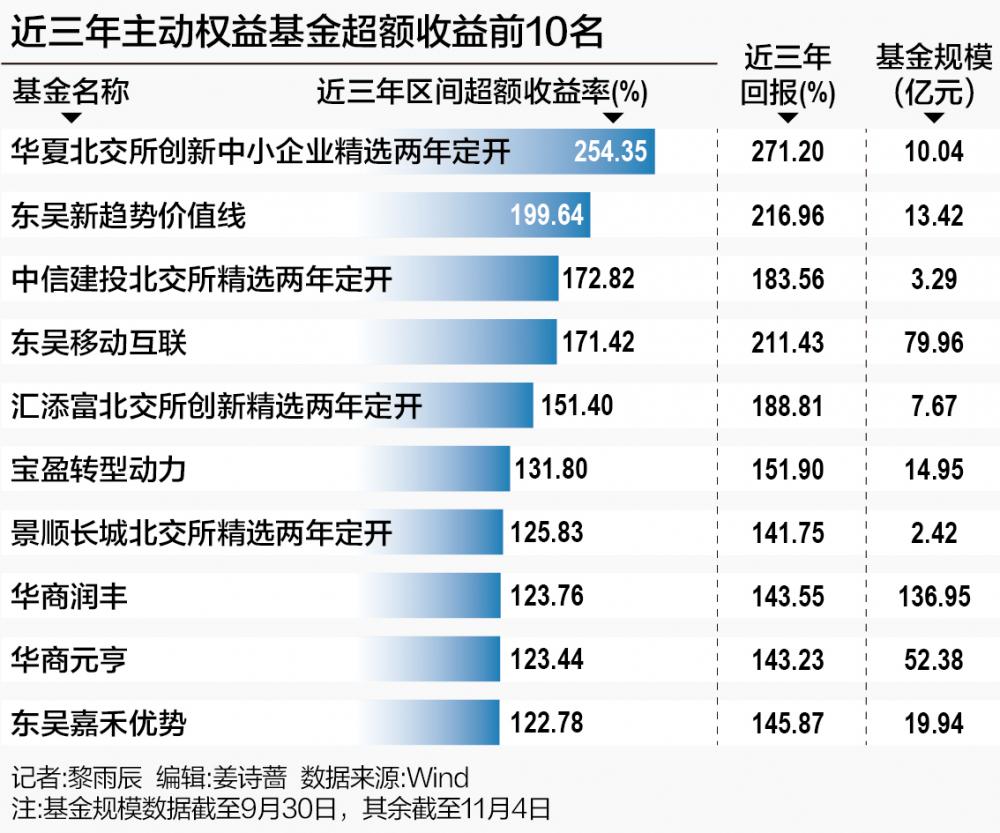
Core Viewpoint - The new regulations on performance benchmarks for public funds in China aim to enhance the accountability of fund managers by linking their compensation to the performance benchmarks, promoting a return to the fundamental purpose of asset management, which is to provide stable long-term returns for investors [1][9]. Group 1: Regulatory Changes - The China Securities Regulatory Commission (CSRC) released an action plan in May to promote high-quality development in the public fund industry, emphasizing the importance of performance benchmarks [1]. - A draft of new regulations regarding performance benchmarks was published on October 31, which is expected to improve the discipline of active investment and stabilize investment styles [1][9]. - The introduction of a performance benchmark element library aims to standardize the selection of benchmarks and prevent arbitrary changes, enhancing the comparability and normativity of benchmarks [9][8]. Group 2: Fund Performance Analysis - As of November 4, 2023, 3731 active equity funds were analyzed, with an average return that lagged behind their benchmarks by 7.26%, and only 34% of these funds outperformed their benchmarks over the past three years [2]. - Among the top-performing funds, only 20 funds achieved over 100% excess returns, indicating that achieving superior performance under the new standards is challenging [2]. - Some high-performing funds may have misleadingly high returns due to benchmark mismatches, highlighting the importance of appropriate benchmark selection [2][3]. Group 3: Size and Performance Correlation - Larger active equity funds do not necessarily correlate with superior excess returns; only 40% of funds over 10 billion yuan in size outperformed their benchmarks [5]. - Smaller funds, with an average size of 30.57 million yuan, showed better excess return capabilities, supporting the notion that smaller funds can adapt more flexibly to market changes [6][5]. Group 4: Fund Manager Impact - The total management scale of fund managers influences their active management capabilities, with a significant number of successful funds managed by managers overseeing over 10 billion yuan [7]. - The average tenure of fund managers does not significantly correlate with their ability to generate excess returns, indicating that experience alone may not guarantee performance [7]. Group 5: Industry Evolution - The new regulations are expected to lead to a systematic restructuring of the public fund industry, with a one-year transition period for existing products to adjust their benchmarks [9][10]. - The emphasis on long-term performance and the establishment of a benchmark-linked compensation system for fund managers will promote more transparent and standardized investment behaviors [9][10].
投资者适配为先 多机构调整基金风险等级
Zhong Guo Zheng Quan Bao· 2025-10-21 21:46
Core Viewpoint - The recent adjustment of risk levels for various fund products in the Chinese market indicates a significant shift in the investment landscape, driven by increased volatility and changes in asset allocation strategies [1][4][6]. Fund Risk Level Adjustments - Multiple fund companies and distribution institutions have announced adjustments to the risk levels of their funds, with a notable increase in risk ratings for many products [2][3]. - Specifically, Citic Bank adjusted the risk levels of 17 asset management products starting October 15, raising the risk levels of 15 funds while only lowering 2 [2][3]. - High-performing funds, such as the Huatai-PB North Exchange Innovation Selected Two-Year Open Fund, saw their risk levels raised from "Medium-High Risk" (PR4) to "High Risk" (PR5) due to significant returns [2][3]. Underlying Causes of Adjustments - The primary reasons for the risk level increases include rising volatility, increased maximum drawdown multiples, and changes in fund scale [1][4][5]. - For bond funds, heightened market volatility and increased equity allocations have contributed to the adjustments in risk ratings [5]. Impact on Fund Sales and Investor Behavior - The adjustments in risk levels will directly affect investor behavior, particularly in systematic investment plans (SIPs), as banks will automatically intercept plans that do not match the new risk levels [1][6]. - Investors are likely to become more cautious regarding high-risk products, especially in light of recent market fluctuations, which may lead to a decline in purchase intentions for these products [6]. Market Dynamics and Investor Considerations - The adjustments reflect a broader trend where high returns are often accompanied by higher volatility, particularly for funds targeting innovative and less liquid companies [4][5]. - Investors are encouraged to regularly review the risk ratings and adjust their investment strategies accordingly, as the risk-return characteristics of funds are subject to change over time [6].

投资者适配为先多机构调整基金风险等级
Zhong Guo Zheng Quan Bao· 2025-10-21 20:18
Core Insights - The recent adjustment of risk levels for various fund products indicates a significant shift in the fund industry, with many funds experiencing an increase in their risk ratings, particularly those with strong performance this year [1][2]. Fund Risk Level Adjustments - Starting from October 15, Citic Bank adjusted the risk levels of 17 asset management products, raising the risk rating of 15 funds while only lowering 2 [2]. - Notably, high-performing funds, such as the Huatai-PineBridge North Exchange Innovation Selected Fund, saw their risk rating increase from "Medium-High Risk" (PR4) to "High Risk" (PR5) due to a return rate exceeding 76% this year [2]. - Other fund companies, including Fortune Fund and Tianhong Fund, have also announced similar risk level adjustments, with a majority of their products experiencing an increase in risk ratings [3]. Underlying Factors for Adjustments - The primary reasons for the increase in risk ratings include rising volatility, increased maximum drawdown multiples, and changes in asset allocation, particularly in bond funds [3][4]. - The bond market's increased volatility and the rising equity allocation in some bond funds have contributed to the adjustments in risk ratings [4][5]. Impact on Fund Sales and Investor Behavior - The adjustments in risk ratings will have a tangible impact on fund sales, as banks will automatically intercept investment plans that do not match the new risk levels [1][5]. - Investors, particularly those purchasing funds through banks, tend to be cautious about high-risk products, especially after recent market fluctuations, leading to a potential decrease in the willingness to invest in products with higher risk ratings [6]. - The adjustments also signal to investors the need to regularly review their fund holdings and risk profiles, as the risk-return characteristics of products are subject to change [6].
多只基金密集调升风险等级,“翻倍基”也在列,你买的基金受影响不?
Xin Lang Cai Jing· 2025-10-17 06:28
Core Insights - Recent adjustments in risk ratings for multiple funds indicate increased market volatility and a need for better investor protection [1][2][3] Group 1: Fund Risk Rating Adjustments - A total of 17 asset management products will have their risk ratings adjusted by Citic Bank, with 15 funds seeing an increase and 2 a decrease [2] - The risk rating for the Huatai-PineBridge North Exchange Innovation Selected Two-Year Open Fund was raised from PR4 to PR5, reflecting its high one-year return of 126.13% [2][3] - Increased volatility in the bond market has led to several bond funds also experiencing risk rating upgrades, with 28 out of 31 products adjusted by Fuguo Fund seeing an increase [3] Group 2: Impact on Investors - The adjustments do not change the core attributes of already purchased products, but may affect ongoing investment strategies, particularly for systematic investment plans [4] - If the new risk rating exceeds an investor's risk tolerance, it could result in failed investment deductions, potentially leading to the automatic termination of investment agreements after three consecutive failures [4] - Investors are advised to regularly reassess their risk tolerance and the risk-return characteristics of their funds in light of market changes [4]
银行和基金公司接连调整多只基金风险等级
Zheng Quan Shi Bao· 2025-10-15 18:00
Core Viewpoint - The adjustment of risk ratings for asset management products by banks, including CITIC Bank, reflects a trend in the industry to align with market conditions and regulatory requirements, aiming to expand the investor base and enhance fund sales [1][2][3]. Group 1: Risk Rating Adjustments - CITIC Bank announced it will adjust the risk ratings of certain asset management products starting October 15, 2025, with 15 out of 17 products seeing an increase in risk ratings [2]. - Notable adjustments include raising the risk rating of the HSBC Jintrust interbank certificate index from PR1 to PR2 and the Huatai-PineBridge增利 product from PR2 to PR3 [2]. - The fund with the highest increase, the Huatai-PineBridge North Exchange Innovation Selected two-year fixed product, saw its risk rating raised from PR4 to PR5, following a net value increase of over 200% since September of the previous year [2]. Group 2: Industry Trends - Other banks, such as Agricultural Bank and Ningbo Bank, have also adjusted the risk ratings of their public fund products throughout the year [3]. - Several fund companies, including Beixin Ruifeng Fund and Fortune Fund, have announced similar adjustments to their product risk ratings [3]. Group 3: Reasons for Adjustments - The adjustments in risk ratings are primarily driven by regulatory requirements, market conditions, and changes in target customer profiles [4]. - The principle of "upward adjustment only" is generally followed, allowing for proactive adjustments by distribution channels without needing approval from fund companies [4][5]. - Investors with lower risk tolerance may face restrictions on new subscriptions if their risk assessment results fall below the newly adjusted ratings, serving as a protective measure [4]. Group 4: Regulatory Environment - The recent adjustments reflect stricter regulations on sales practices, as outlined in the "Commercial Bank Agency Sales Business Management Measures" issued by the National Financial Supervision Administration [6]. - This regulation emphasizes the responsibilities of banks in managing partnerships and conducting due diligence on products, thereby enhancing the accountability of banks as distribution channels [6]. Group 5: Market Share Dynamics - Despite banks being the dominant channel for fund distribution, they face increasing competition from independent fund sales institutions and securities firms [6]. - As of the first half of the year, the market share of equity fund holdings among commercial banks, independent fund sales institutions, and securities firms was 41.79%, 28.54%, and 27.41%, respectively, indicating slight declines for banks and independent institutions [6].
最牛基金来了,业绩达280%!
Zhong Guo Ji Jin Bao· 2025-09-24 09:00
Core Viewpoint - The A-share market has experienced a significant turnaround since the implementation of a series of market stabilization policies, with major indices showing substantial gains over the past year [1][2]. Market Performance - As of September 23, 2025, the CSI 300 Index has increased by 40.68%, while the STAR 50 Index has surged by 118.85% since the "9.24 market" began [1]. - The Shanghai Composite Index rose by 4.15% in a single day, and the ChiNext Index jumped by 5.54%, indicating a broad recovery in market sentiment [1]. - The CSI 50 Index, representing traditional industries, saw a modest increase of 30.16%, contrasting with the 114.38% rise of the STAR 100 Index, which focuses on hard technology [2]. Fund Performance - Nearly 90% of the 13,273 funds in the market achieved positive returns, with 774 funds doubling their net value and 13 funds exceeding a 200% increase [2]. - The top-performing funds include 德邦鑫星价值, 中欧数字经济, and 中信建投北交所精选, among others, showcasing the effectiveness of active management in a structural market [2]. Sector Analysis - The telecommunications sector led the market with a 124.09% increase, followed by electronics at 121.05% and computers at 82.15%, forming a strong "technology trio" [2]. - In contrast, sectors such as food and beverage, transportation, and utilities saw gains of less than 20%, highlighting a clear structural shift in market funding [2]. Investment Strategy - The 德邦鑫星价值 fund, managed by 雷涛 and 陆阳, achieved a remarkable 280% increase, with its net value rising from 0.99 yuan to 3.54 yuan over the past year [3]. - The fund's strategy focused on the AI computing power industry, identifying key trends and investment opportunities through in-depth industry research [3][4]. Future Outlook - The technology sector is expected to maintain its strength, driven by optimistic long-term expectations and increased capital inflow into high-growth areas such as AI computing and domestic chips [5][6]. - The ongoing support from national policies and technological breakthroughs is anticipated to further enhance the performance of the technology industry [6]. - The AI industry is viewed as being in its early stages, with significant growth potential ahead, as it is expected to transform traditional industries and create new applications [6].
137只“翻倍基”出炉 公募基金赚钱效应显现
Zhong Guo Zheng Quan Bao· 2025-08-19 22:00
Core Insights - The recent market performance has been strong, with public funds demonstrating significant profit-making ability and excess returns, particularly in themes like Hong Kong securities, innovative pharmaceuticals, and new consumption [1][5] - As of August 18, over 130 funds have achieved returns exceeding 100% in the past year, with notable performances from technology-themed funds focusing on humanoid robots and AI [1][2] Fund Performance - Three North Exchange theme funds have reported returns over 200% in the past year, with specific funds showing returns of 249.27%, 225.42%, and 216.91% respectively [3][4] - A total of 137 funds have achieved returns over 100% in the past year, with many North Exchange theme funds also performing well, including several with returns exceeding 170% [3][4] Active Management and Benchmark Comparison - Actively managed equity funds in the North Exchange have shown significant excess returns compared to their benchmarks, with one fund reporting a return of 190.48% against a benchmark return of 28.64%, resulting in a 161.84 percentage point outperformance [4] Hong Kong Fund Performance - Hong Kong-related funds, particularly in the securities and innovative pharmaceuticals sectors, have also performed well, with one ETF achieving a return of 176% in the past year [5] - Several funds focused on Hong Kong innovative pharmaceuticals have reported impressive returns, with one fund achieving a return of 152.75% year-to-date [5] Technology Fund Performance - Technology-themed funds, particularly those focused on humanoid robots and AI, have also seen significant returns, with one fund reporting a return of 172.28% and another at 174.11% [6] New Consumption and Small Cap Funds - The fund "Guangfa Growth Leading" has achieved a return of 162.55% by capturing new consumption stocks, while some small-cap quantitative funds have also doubled their returns, although risks have been highlighted by several fund companies [7]
137只“翻倍基”出炉公募基金赚钱效应显现
Zhong Guo Zheng Quan Bao· 2025-08-19 20:09
Group 1 - The recent market has shown a strong performance, with public funds demonstrating significant profit-making ability and excess returns, particularly in themes like Hong Kong securities, innovative pharmaceuticals, and new consumption [1][2] - As of August 18, over 130 funds have achieved returns exceeding 100% in the past year, with three North Exchange theme funds reporting returns over 200% [1][2] - Notably, the top-performing North Exchange funds include those managed by Citic Securities and Huaxia, with returns of 249.27% and 225.42% respectively [1][2] Group 2 - Active management equity funds in the North Exchange have shown significant excess returns compared to their benchmarks, with one fund reporting a return of 190.48% against a benchmark return of 28.64% [2] - Hong Kong-related funds, especially in the securities and innovative pharmaceuticals sectors, have also performed well, with the E Fund Hong Kong Securities Investment Theme ETF achieving a return of 176% [2][3] - The performance of the E Fund ETF has been bolstered by a surge in trading volume, reaching nearly 120 billion yuan in a week, marking a record high since its launch [2] Group 3 - Several technology-themed funds have also reported impressive returns, such as the Yongying Advanced Manufacturing Fund, which focuses on humanoid robots and has a return of 172.28% [3] - The China Europe Digital Economy Fund, which targets artificial intelligence sectors, has achieved a return of 174.11% [3] - The growth of new consumption stocks has significantly contributed to the performance of funds like the GF Growth Navigator, which has a return of 162.55% [4]
