沪深300 ETF

Search documents
全球资本瞄准中国资产,境内ETF出海引“活水”
Xin Lang Cai Jing· 2026-02-02 23:10
Group 1 - The core viewpoint of the article highlights the increasing interest of global funds in Chinese assets, leading to domestic ETFs actively pursuing international expansion [1] - Various domestic core ETFs, including those focused on photovoltaic, dividends, and the ChiNext and CSI 300 ETFs, are utilizing the interconnection mechanism to reach international markets, providing global investors with more diverse tools for Chinese asset allocation [1] - Recent data indicates a continuous net inflow of both active and passive foreign capital, with several China-themed ETFs listed in the U.S. experiencing significant growth in scale this year [1] Group 2 - Major international asset management firms have expressed in their 2026 investment outlook that Chinese stock valuations remain attractive, with expectations for the market to continue its upward trend [1] - Specific sectors such as technology, pharmaceuticals, and new energy are identified as key areas of focus for investment [1] - The formation of a MACD golden cross signal suggests positive momentum for certain stocks [1]
每日钉一下(A股牛市已经进入中后期了吗,出现了哪些信号?)
银行螺丝钉· 2026-01-23 14:04
Group 1 - The article discusses the current state of the A-share bull market, indicating that it may have entered the mid-to-late stage, supported by several signals observed in January 2026 [5][6]. - On January 12, a stock fund experienced over 10 billion yuan in subscriptions in a single day, a clear sign of a bull market's later stages, as similar occurrences were noted in previous bull markets in 2021, 2015, 2009, and 2007 [5]. - The announcement on January 14 to adjust the financing margin ratio from 80% to 100% is aimed at curbing leveraged investments in A-shares, a tactic previously used during the 2015 bull market [5][6]. Group 2 - On January 15, significant net outflows were observed in major ETFs, with the largest, the CSI 300 ETF, experiencing approximately 20 billion yuan in outflows, marking the highest single-day net outflow since 2012 [7]. - The primary investors in index funds are institutional investors, such as state-owned entities and pension funds, who typically buy during market dips and reduce their holdings as the market peaks [7][8]. - The current market conditions suggest that it may not be an opportune time for large investments in stock funds, as the market appears to be overvalued, and investors are advised to be cautious with their buying strategies [8][9].


上证报:我国股票市场跨入新发展时代
Shang Hai Zheng Quan Bao· 2026-01-06 23:12
Core Viewpoint - The transition of the stock market into a new development era is a milestone in China's economic and financial development, expected to have significant positive impacts on various aspects of the economy [1][2]. Group 1: Characteristics of the New Development Era - The stock market has seen positive changes in demand structure, investor structure, policy environment, and institutional foundation since September 2024, indicating its entry into a new development era [3][26]. - A new wave of technological revolution is leading market breakthroughs, with significant advancements in AI, gene editing, and other cutting-edge technologies, positioning China as a global leader in certain sectors [4][27]. - The proportion of high-tech enterprises among listed companies is approximately 60%, with over 90% in the ChiNext, STAR Market, and Beijing Stock Exchange, indicating a shift towards high-tech industries [5][28]. Group 2: Changes in Asset Allocation Demand - The real estate market has undergone a deep adjustment post-COVID-19, leading to a decline in the attractiveness of real estate investments, with personal funds entering the real estate market decreasing by approximately 5.7 trillion yuan from 2021 to 2024 [8][31]. - There is a current "asset shortage" as the supply of quality assets does not meet investor demand, with many traditional investment products yielding low returns [9][32]. - The stock market is increasingly favored for investment, with institutional investor holdings rising to 39.4 trillion yuan, reflecting a structural shift in asset allocation from real estate to diversified investments [10][33]. Group 3: Policy Support for Stock Market Development - The government has consistently communicated strong support for the stock market, with multiple policy measures aimed at enhancing market stability and investor confidence [11][34]. - Regulatory reforms have been implemented to protect investor rights and improve the market environment, including measures to combat financial fraud and enhance transparency [12][36]. - The China Securities Regulatory Commission has introduced initiatives to facilitate long-term capital inflow into the stock market, such as adjusting insurance asset allocation ratios and promoting equity funds [13][37]. Group 4: Central Bank's Support for the Stock Market - The central bank has shifted from indirect to direct support for the stock market, introducing innovative tools to stabilize and promote market growth [14][38]. - In October 2024, the central bank launched two capital market support tools totaling 800 billion yuan, aimed at providing liquidity to non-bank financial institutions and supporting stock buybacks [15][39]. - The central bank's comprehensive approach to macro-prudential management now includes the stock market, enhancing its ability to stabilize market expectations and boost investor confidence [16][40]. Group 5: Implications of the New Development Era - The transition to a new development era is expected to facilitate sustained growth in the stock market, with projections indicating that the market value could exceed 135 trillion yuan by 2026 [18][24]. - The stock market will increasingly support the listing of high-tech enterprises, fostering the development of new productive forces and optimizing market structure [19][24]. - The evolution of the capital market will lead to a significant increase in the proportion of direct financing, enhancing the overall financial structure and supporting economic transformation [22][25].
申万宏源:春节前反弹是 A 股胜率最高的日历特征之一
Hua Er Jie Jian Wen· 2025-12-22 00:31
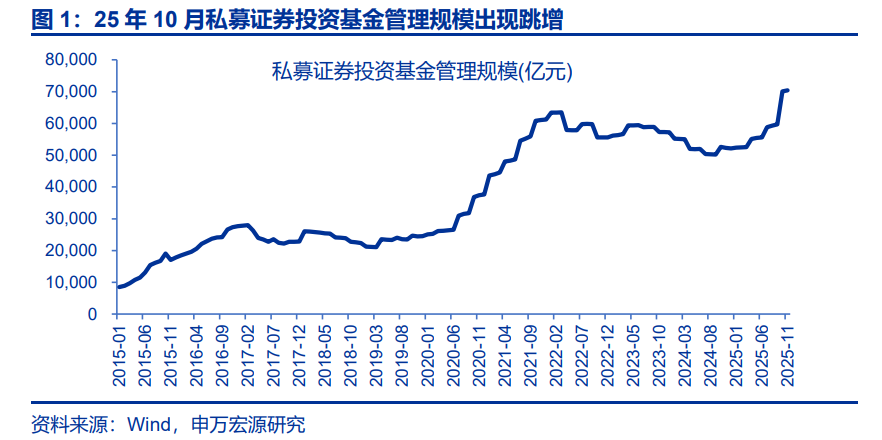
Group 1 - The core viewpoint is that the global monetary policy environment is expected to stabilize, with the Bank of Japan's dovish rate hike and the Federal Reserve's non-hawkish rate cut influencing market expectations [1] - The Bank of Japan raised interest rates by 25 basis points, aligning with expectations, while the future pace and timing of rate hikes will depend on inflation and economic developments [1] - The U.S. midterm elections year is anticipated to see a return of both monetary and fiscal easing, which may dominate asset pricing expectations [1] Group 2 - In the spring, liquidity in the stock market remains ample, with high-net-worth investors reallocating to private equity amid market corrections [3] - The insurance sector is expected to perform well, with both large and small insurance premiums anticipated to show strong growth [3] - Significant net subscriptions have been observed in the CSI 300 and A500 ETFs, indicating increased investor interest [3] Group 3 - There are multiple windows for stabilizing capital market expectations from February to April, including the Spring Festival, the Two Sessions in March, and a potential visit from Trump in April [6] - The main assets in the spring are expected to face upward resistance, with market styles reverting to pre-October conditions, limiting upward potential [6] - The spring market may initially see activity in non-mainstream sectors, focusing on industrial and policy themes, high dividend plays, and various rebound opportunities [6] Group 4 - The medium-term outlook remains a "two-stage bull market," with the first stage (2025) at a high level and the second stage (2026) expected to be driven by fundamental improvements and technological trends [7] - The first half of 2026 is predicted to favor cyclical and value styles, while the second half is expected to see a comprehensive bull market led by technology and advanced manufacturing [7] - The spring market is likely to see initial activity in non-mainstream sectors, with policy and industrial themes being the main sources of profit [8]