
泸州老窖1573

Search documents
泸州老窖20251128
2025-12-01 00:49
Summary of the Conference Call for Luzhou Laojiao Industry Overview - The liquor industry, particularly the baijiu sector, is undergoing a deep adjustment period, with external environment and policy impacts being the main sources of pressure. The industry has not yet reached a bottom or turning point, and pressure is expected to persist in the near future due to a weak consumption environment [2][3][7]. Company Performance and Expectations - Luzhou Laojiao's performance expectations for Q4 and the entire year are under pressure, with reported data aligning with terminal sales conditions. However, sales pressure is affecting inventory digestion. The company maintains a stable pricing strategy and does not compensate for losses from low-price sales [2][4]. - The company has not disclosed its operational plan for 2026, indicating that it will plan according to market conditions and economic laws while ensuring a healthy sales ecosystem [2][6]. Product Performance - There is a noticeable differentiation in performance between high and low alcohol products, with low alcohol products showing relative resilience. The low alcohol product 1,573 has performed steadily, and the trend towards lower alcohol content is gradual and long-term [2][9][10]. - The brand "Laozihao Tequ" is focused on brand revival, maintaining a stable price around 200 yuan, and is less affected by industry adjustments. The company plans to strengthen channel construction and consumer cultivation in the 100-300 yuan price range [2][11][12]. Sales and Distribution Strategy - Luzhou Laojiao is expanding its terminal presence, particularly in Sichuan and North China, to enhance market share. The company emphasizes online channels and instant retail while traditional tobacco and liquor stores remain the main distribution channels [4][15][18]. - The company is cautious about introducing lower alcohol products below 30 degrees, focusing on quality and stability before launching new products [10][20]. Market Trends and Consumer Behavior - The company anticipates that the consumption environment will remain weak, with the impact of policies likely to diminish over time. However, a sudden surge in consumer demand during the Spring Festival is not expected [7][25]. - The current pricing strategy is stable, with the company not compensating for losses from low-price sales, which helps maintain price stability [8][23]. Digitalization and Inventory Management - Luzhou Laojiao has a relatively mature digitalization strategy, with high opening rates for its products. The implementation of a five-in-one system effectively addresses issues of cross-regional sales [4][24]. - The company is managing inventory levels carefully, as a slowdown in sales could lead to instability in inventory levels [5]. Future Outlook - The company expects to continue facing significant pressure in the liquor industry over the next few quarters, with cautious optimism for 2026 depending on improvements in the consumption environment and reduced policy impacts [25]. This summary encapsulates the key points discussed during the conference call, highlighting the challenges and strategies of Luzhou Laojiao within the broader context of the baijiu industry.

透视茅台酒价格韧性,科学投放体系适配市场稳健需求
Sou Hu Cai Jing· 2025-11-26 03:03
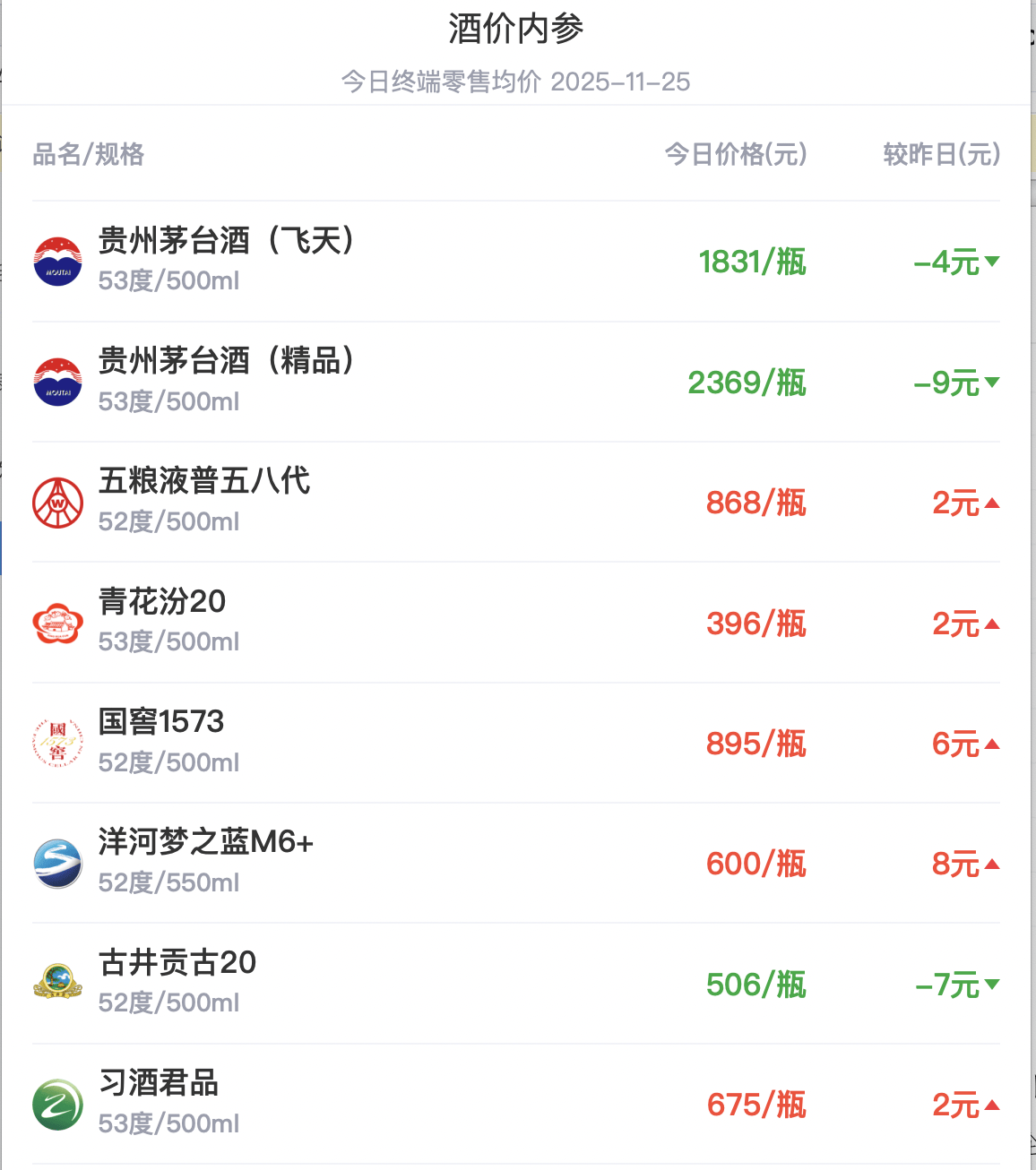
Core Viewpoint - The price of Moutai liquor remains stable around 1800 yuan as the peak consumption season approaches, with no significant fluctuations observed in recent data [1][6][7]. Price Trends - The terminal price of Moutai liquor (53% vol, 500ml) was reported at 1831 yuan per bottle on November 25, showing a slight decrease of 4 yuan from the previous day [1]. - Regional price variations exist, with prices reported at 1810 yuan in Jiangxi, 1780 yuan in Jiangsu, and 1800 yuan in Hebei, indicating a normal market phenomenon due to differences in channel structures and logistics costs [2][6]. Sales and Market Dynamics - The white liquor market is expected to maintain a certain level of activity during key sales periods such as "Double Eleven," "Double Twelve," and New Year's Day, although a sales peak has not yet been reached [1]. - Moutai's strategy focuses on a scientific distribution system driven by terminal sales, which helps maintain market resilience and stability [6][7]. Financial Performance - Moutai reported a revenue of 110.514 billion yuan for the year-to-date period, reflecting a year-on-year growth of 9.28% [7]. - The company's proactive measures and strategic adjustments have positively impacted the stability of Moutai liquor prices, with the market responding favorably to these efforts [7].


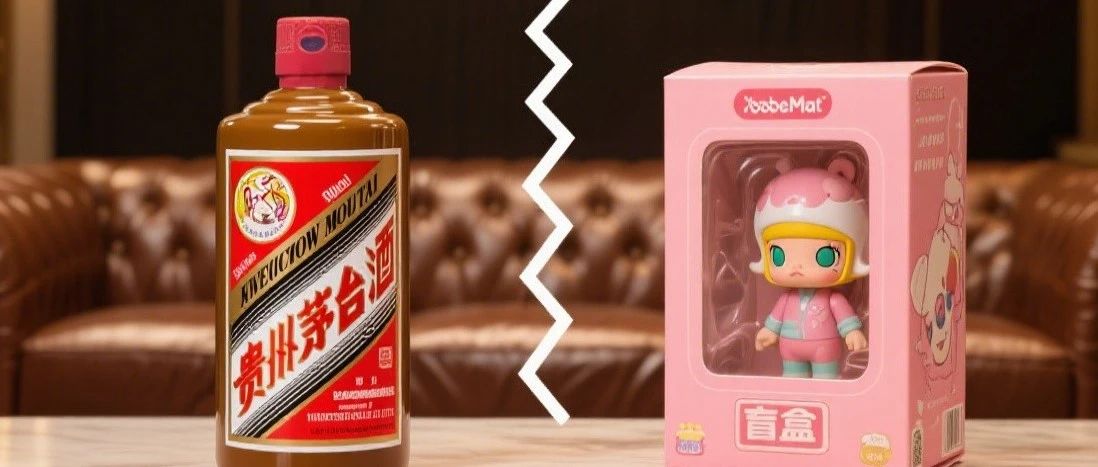
贵州茅台 VS 泡泡玛特,当下哪个更值得投资?股民吵翻了...
雪球· 2025-06-15 05:24
Core Viewpoint - The article discusses the contrasting investment outlooks for two leading companies in the consumer sector: Moutai and Pop Mart, highlighting the ongoing debate among investors regarding which company presents a better investment opportunity [1]. Group 1: Moutai Investment Outlook - Moutai's stock has been under pressure due to long-term impacts from government policies affecting the liquor industry, leading some investors to reconsider their positions [7]. - A significant portion of investors (56%) still favor Moutai, citing its historical resilience and potential for recovery if the price drops below a certain earnings multiple [4][5]. - Despite current challenges, Moutai is expected to maintain a dividend yield of approximately 3.6% in 2024, with projected net profit growth of 10% over the next 25 years, making it a potential long-term hold [10]. Group 2: Pop Mart Investment Outlook - Pop Mart has seen a surge in its stock price, reflecting a shift in consumer preferences towards cultural and collectible products, positioning itself as a leader in the new consumption trend [11][12]. - The company is recognized for its innovative approach, combining IP industrialization and data-driven strategies, which has redefined the perception of "Made in China" as a cultural output rather than just low-cost goods [14]. - Challenges remain for Pop Mart, including reliance on single IPs and balancing global and local market strategies, but its brand strength and market positioning suggest significant growth potential [15]. Group 3: Other Perspectives - Some investors express skepticism about heavily discussed stocks, suggesting that widely researched stocks may have limited speculative upside due to efficient pricing [17][18]. - The article also notes the potential for creative marketing strategies, such as collaborations with popular brands, to enhance product appeal and address inventory issues in the liquor sector [20].
酒商说补贴后酒价低但不影响赚钱
Di Yi Cai Jing· 2025-06-06 06:58
Core Viewpoint - The white liquor market is experiencing price pressures due to promotional activities, with some distributors adapting to the situation by participating in e-commerce sales despite lower prices [1][2]. Group 1: Market Dynamics - The 618 promotional event this year has seen a lower intensity compared to the previous year, but the overall market price for white liquor is under pressure, leading to changes in the mindset of distributors [1]. - Many offline stores are participating in the 618 promotions, which was not common in previous years, indicating a shift in the traditional distribution model [1]. - The entry of instant retail platforms into the promotional activities has intensified competition, causing a decline in market prices and sales for physical stores [1]. Group 2: Pricing and Profitability - Despite the low prices due to subsidies, some distributors report that their profitability remains intact, as evidenced by sales data from a well-known liquor brand [2]. - A specific case shows that a customer paid 3436.5 yuan for four bottles, translating to approximately 859 yuan per bottle, while the order amount was 4202.5 yuan, indicating a significant difference between retail and wholesale pricing [2]. - After accounting for various fees, the distributor's net income from the sale was approximately 959 yuan per bottle, demonstrating that even with lower prices, profitability can be maintained [2].
“618”线上白酒大促升温,酒商选择“打不过就加入”
Di Yi Cai Jing· 2025-06-05 10:03
Core Insights - The traditional offline sales ecosystem of the liquor industry is facing significant challenges from e-commerce platforms, particularly during promotional events like "618" [1][5] - Many liquor distributors are shifting strategies from resisting e-commerce to embracing it, indicating a transformation in the market dynamics [2][8] Group 1: Market Dynamics - The "618" promotional event this year has seen lower intensity compared to the previous year, leading to price pressures in the liquor market [1] - Some distributors report that online prices for well-known liquor brands are significantly lower than their wholesale prices, creating competitive pressure [2][5] - The entry of instant retail platforms into the promotional space has intensified price competition, further impacting traditional sales channels [2][7] Group 2: Sales Strategies - Distributors are increasingly participating in online promotions, a shift from previous years where they largely resisted e-commerce [2][6] - Some liquor businesses are utilizing live streaming and online sales to clear inventory, although profit margins remain tight [4][6] - A notable example includes a distributor who reported selling a well-known liquor at a price that, after deductions, resulted in a profit margin of only a few dollars per bottle [3][4] Group 3: Pricing and Consumer Behavior - E-commerce platforms are disrupting the established pricing structures of liquor brands, which traditionally relied on high pricing to maintain profit margins across distribution levels [5][9] - The lack of transparency in liquor pricing complicates consumer perceptions of value, especially as e-commerce platforms offer significant discounts [5][9] - The shift towards online sales is expected to reduce reliance on traditional retail channels, with predictions that many small liquor stores may exit the market in the next 3 to 5 years [9] Group 4: Future Outlook - The liquor industry is entering a period of adjustment, with rising inventories and declining sales leading to decreased control by manufacturers over distributors [8][9] - E-commerce is becoming an increasingly important sales channel for liquor, although traditional channels still play a crucial role in brand promotion and consumer engagement [9] - The industry faces a challenge in finding a balance between online and offline sales strategies to ensure sustainable growth [6][9]