
小美

Search documents
美团-W(03690.HK):Q4业绩符合预期 新业务和AI投入持续加码
Ge Long Hui· 2026-03-31 15:34
Core Insights - The company reported a revenue of 92.1 billion yuan for Q4 2025, slightly above Bloomberg's consensus estimate of 92.08 billion yuan, representing a year-on-year growth of 4.1% [1] - The adjusted EBITDA for Q4 2025 was 14.02 billion yuan, up from 11.52 billion yuan in the same period last year [1] - The company experienced a significant increase in operating losses, reporting a loss of 16.07 billion yuan compared to a profit of 6.694 billion yuan in the previous year, primarily due to increased marketing and promotional expenses, rider subsidies, and investments in AI [1] Revenue and Business Performance - Core local business revenue decreased by 1.1% year-on-year to 64.8 billion yuan, with delivery services and commissions down by 9.9% and 1.2% respectively, while online marketing services and other sales increased by 2.3% and 75.5% [1] - Despite increased subsidies impacting revenue, transaction volume and value remained stable due to higher purchase frequency and cross-business sales growth, maintaining over 60% market share in GTV [1] New Business Growth - New business revenue reached 104 billion yuan in 2025, a year-on-year increase of 19.1%, with operating losses widening to 10.1 billion yuan [2] - In Q4 2025, new business revenue was 27.3 billion yuan, up 18.9% year-on-year, with operating losses of 4.6 billion yuan, reflecting an increase in overseas investment [2] - The expansion of the Xiaoxiang supermarket and Keeta's market presence in Hong Kong and other international markets indicates strong growth potential [2] AI and R&D Investments - The company plans to invest 26 billion yuan in R&D in 2025, a 23.5% increase year-on-year, with R&D expense ratio rising to 7.1% [3] - In Q4 2025, R&D spending was 7 billion yuan, up 29.7% year-on-year, with a corresponding increase in expense ratio to 7.6% [3] - The deployment of drones and AI tools, including the "Xiaotuan" assistant, has positively impacted offline consumption and supported over 3.4 million merchants [3] Market Position and Future Outlook - The company maintains a "buy" rating, with expectations of improved profitability despite short-term pressures from increased competition [4] - Adjusted net profit forecasts for 2026-2027 have been revised down to 2.5 billion and 3.04 billion yuan respectively, with a new forecast for 2028 set at 4.4 billion yuan [4] - The company is compared to Alibaba and Pinduoduo, with a projected average PS of 2.0 times for 2026, indicating a potential upside of 66% from current market valuation [4]

让AI读懂物理世界是美团的新赛点
Tai Mei Ti A P P· 2026-03-31 00:09
Core Insights - Meituan aims to become an "AI full-service provider" in the local service sector, emphasizing an offensive strategy in the face of AI advancements [1][4] - The company has identified four key layers for its AI business: capturing user mindshare, continuous investment in self-developed models, converting physical world information into AI-readable data, and enhancing fulfillment capabilities [2][10] Group 1: AI Strategy and Development - Meituan's CEO Wang Xing reiterated the importance of an offensive strategy in the AI revolution, focusing on leveraging existing resources rather than defending current models [1][3] - The company is enhancing its self-developed foundational model, LongCat, and has introduced various AI applications, including the AI assistant "Xiao Tuan" and the AI browser "Tabbit" [1][2] - Meituan's goal is to upgrade its app into an AI-driven platform to better meet user demands in local services and instant retail [4][5] Group 2: Competitive Landscape - Competitors like Alibaba and Tencent are also advancing their AI capabilities, with Alibaba investing 3 billion yuan during the Spring Festival to build an AI service entry point [3][4] - The competition for AI-driven local service entry points is intensifying, with Meituan needing to maintain its mindshare to participate in the broader AI ecosystem [3][6] - The shift from traditional service competition to AI-driven decision efficiency is becoming a critical battleground, with Meituan and Alibaba having nearly identical business layouts in local services [7][11] Group 3: Data and AI Integration - The ability to let AI understand physical world information is crucial for future competition, requiring integration of various data sources such as maps, POI data, and real-time restaurant availability [8][9] - Meituan is actively working on digitalizing physical world information to enhance AI's decision-making capabilities, which is essential for maintaining its competitive edge [9][10] - The competition is evolving from a focus on user acquisition to a deeper integration of data and AI, emphasizing the need for a robust ecosystem in local services [11]


美团-W(03690):2025年四季度业绩点评:轻舟已过万重山,持续推荐
Guolian Minsheng Securities· 2026-03-30 14:38
Investment Rating - The report maintains a "Buy" rating for Meituan-W (3690.HK) [4] Core Insights - Meituan's Q4 2025 performance showed revenue of 92.1 billion RMB, a year-on-year increase of 4.1%, aligning with Bloomberg consensus expectations. However, the operating loss was 16.1 billion RMB, exceeding expectations by 6% [8] - The core local business revenue was 64.8 billion RMB, down 1% year-on-year, with a significant focus on improving operational efficiency and reducing losses in the food delivery segment. The management anticipates a notable improvement in losses for Q1 2026 [8] - New business revenue reached 27.3 billion RMB, up 19% year-on-year, but operating losses increased due to higher investments in overseas markets. The company expects efficiency improvements in new businesses moving forward [8] - Meituan is increasing investments in AI to enhance its local service offerings, integrating proprietary models with vast data resources to drive advancements in delivery and logistics [8] - The report forecasts revenues for 2026, 2027, and 2028 to be 401.2 billion RMB, 476.4 billion RMB, and 557.3 billion RMB respectively, with adjusted net profits (losses) of -21.1 billion RMB, 27.6 billion RMB, and 39.9 billion RMB respectively [3][8] Financial Summary - Revenue projections for 2025A, 2026E, 2027E, and 2028E are 364.9 billion RMB, 401.2 billion RMB, 476.4 billion RMB, and 557.3 billion RMB respectively, with growth rates of 8.1%, 10.0%, 18.8%, and 17.0% [3] - Adjusted net profit (loss) is projected to be -15.4 billion RMB in 2025, -21.1 billion RMB in 2026, 27.6 billion RMB in 2027, and 39.9 billion RMB in 2028, indicating a significant turnaround in profitability by 2027 [3] - The report indicates a P/E ratio based on adjusted net profit of 17 for 2027 and 11 for 2028, with a P/B ratio of 3.0 in 2025, increasing to 3.7 in 2026, and then decreasing to 2.6 by 2028 [3][8]
美团-W(03690):Q4业绩符合预期,新业务和AI投入持续加码
Shenwan Hongyuan Securities· 2026-03-30 07:04
Investment Rating - The report maintains a "Buy" rating for Meituan-W (03690) [2][7] Core Insights - The Q4 performance met expectations, with revenue of 92.1 billion RMB, a year-on-year increase of 4.1%, and an adjusted EBITDA of 14.02 billion RMB, up from 11.52 billion RMB in the same period last year [7] - The company is increasing investments in new businesses and AI, with R&D expenses expected to reach 26 billion RMB in 2025, a 23.5% year-on-year increase [7] - Despite intensified competition, Meituan maintains over 60% market share in the food delivery sector and continues to innovate with new service offerings [7] Financial Summary - Revenue projections for 2024 to 2028 are as follows: 337.59 billion RMB (2024), 365.98 billion RMB (2025), 394.34 billion RMB (2026E), 442.52 billion RMB (2027E), and 493.55 billion RMB (2028E) [6][8] - Adjusted net profit is projected to be -18.65 billion RMB in 2025, with a recovery to 30.41 billion RMB in 2027 and 43.99 billion RMB in 2028 [6][8] - The company’s price-to-earnings ratio is expected to be 188 in 2026, reflecting the anticipated recovery in profitability [6]
亏损234亿元!“外卖大战”后,美团公布成绩单
Zhong Guo Zheng Quan Bao· 2026-03-26 15:58
Core Insights - Meituan reported a revenue of 364.9 billion yuan for 2025, reflecting an 8.1% year-on-year growth, but faced a loss of 23.4 billion yuan compared to a profit of 35.8 billion yuan in 2024 [2] Group 1: Financial Performance - The core local business segment of Meituan turned from profit to loss, generating 260.8 billion yuan in revenue, a 4.2% increase, but incurring an operating loss of 6.9 billion yuan [4] - The adjusted EBITDA and adjusted net profit for Meituan fell to -13.8 billion yuan and -18.6 billion yuan, respectively, in 2025 [4] - Sales and marketing expenses surged by 60.9% from 64 billion yuan in 2024 to 102.9 billion yuan in 2025, accounting for 28.2% of revenue, up 9.2 percentage points year-on-year [4] Group 2: Strategic Initiatives - Meituan is actively adjusting its operational strategies, focusing on AI and unmanned delivery technology, product and business model innovation, and enhancing operational efficiency [5] - The company aims to strengthen its core advantages and improve service quality to gain consumer trust while opposing irrational competition [5] Group 3: Business Expansion - Meituan's grocery retail and overseas businesses showed strong growth, with new business segment revenue reaching 104 billion yuan, a 19% increase [7] - The acquisition of Dingdong Maicai's China business for approximately 7.17 billion yuan is part of Meituan's strategy to expand its front warehouse business [7] - Meituan's international business, particularly through Keeta, is expanding in the Middle East and Brazil, with a focus on consolidating market positions rather than broad expansion [8] Group 4: AI Integration - Meituan is committed to embracing AI, launching the independent app "Xiao Mei" and integrating an AI assistant "Xiao Tuan" within its main app [8] - The company plans to develop a comprehensive local life AI assistant by leveraging its extensive data on local businesses and consumer reviews [8]
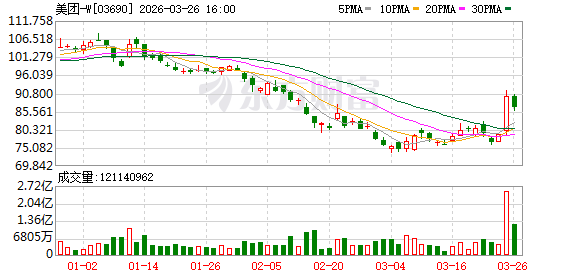
美团高管解读Q4财报:仍将坚定推进自研大语言模型LongCat的研发
Xin Lang Ke Ji· 2026-03-26 13:20
Core Viewpoint - Meituan reported a revenue of 364.9 billion yuan for the year 2025, marking an 8% year-on-year increase. However, the company faced a net loss of 23.4 billion yuan due to intense competition in the instant retail sector, resulting in an operating loss of 17 billion yuan [1]. Financial Performance - Meituan's total revenue for 2025 reached 364.9 billion yuan, reflecting an 8% increase compared to the previous year [1]. - The company experienced a net loss of 23.4 billion yuan and an operating loss of 17 billion yuan, indicating a significant shift from profitability to loss [1]. AI Strategy and Investment - The company views artificial intelligence (AI) as a strategic opportunity rather than a mere trend, emphasizing the need for proactive engagement in AI development [2]. - Significant investments have been made in AI talent and capital expenditures since early 2023, primarily focused on developing proprietary models [3]. - Meituan is among the leading companies in China in terms of AI investment, with a commitment to developing its own large language model, LongCat [3]. AI Integration and User Experience - The competition for "super gateways" in the industry hinges on the ability to accurately understand user needs and efficiently execute tasks, which is more complex than simply creating a chatbot [4]. - Meituan has accumulated extensive data from merchants and users, which enhances its ability to leverage AI for better service delivery [5]. - The company has launched an AI assistant named "Xiao Tuan" within its app, which allows users to interact in a more natural language, improving the overall user experience [6]. Future Outlook - Meituan aims to continuously enhance its model capabilities and deepen the integration of "Xiao Tuan" within its app, positioning itself as a leading AI-driven platform for local life services [9]. - The company is focused on improving AI search and task execution capabilities to become a primary AI entry point in the local service sector [9].
美团公布外卖大战后全年业绩
第一财经· 2026-03-26 12:37
Core Viewpoint - Meituan reported a revenue of 364.9 billion RMB for the year 2025, marking an 8% year-on-year growth, but transitioned from profit to a net loss of 23.4 billion RMB due to intense competition in the instant retail sector [3][4]. Financial Performance - The significant change in financial performance was attributed to two main factors: the shift from profit to loss in the core local business and increased investment in overseas operations [4]. - The core local business segment generated revenue of 260.8 billion RMB, a 4.2% year-on-year increase, but incurred an operating loss of 6.9 billion RMB [4]. - In Q4, the core local business reported an operating loss of 10 billion RMB, which was a reduction compared to Q3 [4]. Strategic Focus - Meituan's CEO Wang Xing characterized 2025 as a year of "coexisting opportunities and challenges," emphasizing a commitment to "anti-involution" and focusing on doing the right things [5]. - The company maintained over 60% market share in Gross Transaction Value (GTV) while holding a dominant position in the mid-to-high-end dining market [5]. Growth Drivers - New business segments became a key driver for Meituan's growth, with the grocery retail and overseas operations achieving strong performance, contributing 104 billion RMB in revenue, a 19% year-on-year increase [7]. - The "Xiaoxiang Supermarket" and international business accelerated expansion, with Xiaoxiang entering 39 cities by the end of 2025 [7]. International Expansion - Meituan's international business, Keeta, has expanded its global footprint, covering major countries in the Middle East and Brazil, with a focus on selective investment rather than broad expansion [7]. - Keeta achieved positive user engagement in Hong Kong and demonstrated strong growth in new markets like Saudi Arabia and Qatar [7]. AI Development - AI is a significant focus for Meituan, with plans to invest in proprietary foundational models and low-inference-cost models, alongside advancements in logistics and robotics [8]. - The company has launched several AI products, including the Tabbit AI browser and user-facing AI assistants, which have seen substantial user engagement [9]. Operational Achievements - By the end of 2025, Meituan's drone delivery network had established 70 routes and completed over 780,000 orders [9]. - The company upgraded its food safety governance model, leveraging AI for real-time verification and monitoring processes [9].

美团公布外卖大战后全年业绩,出海和AI“两手抓”
Di Yi Cai Jing· 2026-03-26 11:48
Core Insights - Meituan's CEO Wang Xing described 2025 as a year of "opportunity and challenge coexistence" as the company reported a revenue of 364.9 billion RMB, an 8% year-on-year increase, but a net loss of 23.4 billion RMB compared to a profit of 35.8 billion RMB in 2024 [1][2] Financial Performance - The significant change in financial performance was attributed to the intense competition in the instant retail sector, leading to a strategic increase in investments across the ecosystem to enhance core advantages and promote sustainable growth [2] - Meituan's core local business segment generated revenue of 260.8 billion RMB, a 4.2% year-on-year increase, but incurred an operating loss of 6.9 billion RMB, with a quarterly loss of 10 billion RMB in Q4, which narrowed compared to Q3 [2] Growth Drivers - New business segments became a key growth driver, with revenue from grocery retail and overseas operations reaching 104 billion RMB, a 19% year-on-year increase [3] - The "Little Elephant Supermarket" and international expansion accelerated, with the supermarket entering 39 cities by the end of 2025 and a strategic acquisition of Dingdong Maicai's China business for approximately 7.17 billion USD [3] International Expansion - Meituan's international business, Keeta, expanded its global footprint, covering major countries in the Middle East and Brazil, with a focus on selective investment rather than broad expansion [3] AI Development - AI is a major focus for Meituan, with expectations that its impact will surpass that of the entire internet, emphasizing the importance of digitizing the physical world [4] - The core local business CEO outlined a clear development path for AI, focusing on proprietary foundational models and investments in logistics technology, including drones and autonomous vehicles [5] AI Product Launches - By the end of 2025, Meituan's drone services had opened 70 routes in various cities, completing over 780,000 orders [6] - The company launched several AI-related products, including the Tabbit AI browser and user-facing AI assistants "Xiao Mei" and "Xiao Tuan," which facilitated over 1 billion user interactions during the Spring Festival [6] Safety and Compliance - Meituan upgraded its food safety governance model "Star Eye," utilizing AI for store authenticity verification and kitchen environment alerts [7]
美团-W(03690)发布年度业绩,收入同比增长8.1%至3649 亿元
智通财经网· 2026-03-26 09:51
Core Viewpoint - Meituan-W (03690) reported a revenue of RMB 364.85 billion for the year ending December 31, 2025, reflecting an 8.1% year-on-year increase, but faced a significant net loss of RMB 233.54 billion, compared to a profit of RMB 35.8 billion in 2024 [1] Financial Performance - Revenue increased from RMB 337.6 billion in 2024 to RMB 364.9 billion in 2025, marking an 8.1% growth [1] - Gross profit decreased by 14.47% to RMB 111.01 billion [1] - The adjusted net loss for the year was RMB 186.48 billion, with an adjusted EBITDA of negative RMB 138 billion [1] - The total operating profit for the company's segments fell from a profit of RMB 45.1 billion to a loss of RMB 17 billion [1] Business Strategy and Operations - The company focused on enhancing its supply chain and innovating on the supply side to meet consumer demands in food delivery, instant retail, and service retail [2] - Meituan expanded partnerships with over 1,000 brands through its "Brand Satellite Store" initiative, facilitating efficient brand expansion [2] - The "Raccoon Canteen" has grown to cover over 500 brands and stores, establishing a traceable food delivery model [2] Supply Chain Innovations - The company introduced innovative supply models such as "Meituan Lightning Warehouse" and "Brand Officer Flag Lightning Warehouse," which have become crucial for instant retail [3] - The "Yima Send Wine" service has seen strong growth, successfully creating popular products with leading wine brands [3] - Meituan is enhancing its healthcare supply capabilities by increasing the availability of common medications and medical devices through front warehouses [3] User Experience and Membership - The company is improving its comprehensive service capabilities by optimizing products and upgrading its membership system to enhance user experience [4] - New services like "On-Time Treasure" and "1-on-1 Urgent Delivery" have been expanded to provide stable and high-quality fulfillment services [4] - The upgraded "Meituan Membership" offers various exclusive benefits across multiple consumption scenarios, significantly increasing user engagement and transaction frequency [5] Social Responsibility and International Expansion - Meituan is supporting small and medium-sized merchants through initiatives like the "Assistance Fund" and the "Bright Kitchen Bright Stove" program, helping over 500,000 restaurants [6] - The company has implemented a nationwide pension insurance plan for riders, covering over 16 million individuals [7] - Internationally, Keeta has accelerated its global expansion, achieving positive economic benefits in Hong Kong and significant order growth in Saudi Arabia [7] AI Integration - The company is driving AI transformation in the physical world by integrating AI innovations with its established service advantages [8] - Meituan has developed the "Xiao Mei" smart life assistant app and the embedded AI assistant "Xiao Tuan" within the Meituan app, enhancing user interaction and experience [8]
AI下半场,没有巨头敢掉队
3 6 Ke· 2026-02-25 00:16
Core Insights - The AI competition among major companies has intensified during the recent Spring Festival, with significant cash incentives and promotional activities [1][2][4] - Companies are focusing on three main areas of AI competition: AI empowerment, independent AI applications, and AI hardware [9][25] Group 1: AI Empowerment - Major companies are embedding AI capabilities into traditional business models, such as Alibaba's Quark browser transforming into an "AI Super Box" by March 2025 [10] - Tencent plans to launch Qbot, an intelligent assistant, in May 2025, enhancing its QQ browser with various AI functionalities [10] - Baidu will transition its traditional search box to an "intelligent box" by July 2025, marking a shift towards AI-driven search [11] - Meituan has launched an AI life assistant named "Xiao Mei" [12] - The integration of AI has positively impacted some business segments, with Tencent's marketing services revenue reaching 36.2 billion yuan in Q3 2025, a 21% increase year-on-year [16] Group 2: Independent AI Applications - Companies are shifting focus to independent AI applications as AI empowerment alone does not alter the competitive landscape [18] - Alibaba's "AI Super Entrance" strategy has pivoted to its Qianwen app, which has surpassed 30 million monthly active users by December 2025 [19] - Doubao continues to leverage sponsorships, such as the Spring Festival Gala, to maintain its leading position in the market [20] - Current AI applications show limited daily usage time, with the highest being around 10 minutes per user [22][23] Group 3: AI Hardware - The competition has expanded from software to hardware, with the launch of the Doubao phone in December 2025, which sold out within a day [25] - The rapid success of the Doubao phone has prompted other companies to restrict access to their platforms on this device [26] - AI glasses have also gained popularity, with Alibaba's Quark AI glasses S1 selling out immediately and a significant increase in global smart glasses shipments [29] - Predictions indicate that global smart glasses shipments could exceed 40 million units by 2029 [30] Group 4: Strategic Directions of Major Companies - Alibaba focuses on providing tool value through its AI applications, aiming to assist users in various tasks [33] - Tencent emphasizes social value, with its "Yuanbao" platform allowing users to invite friends through social media [36] - ByteDance's Doubao offers emotional value, creating a personalized and engaging user experience [41] - The strategies of these companies reflect their core strengths, with Alibaba addressing practical needs, Tencent focusing on social interactions, and ByteDance enhancing emotional connections [43]

