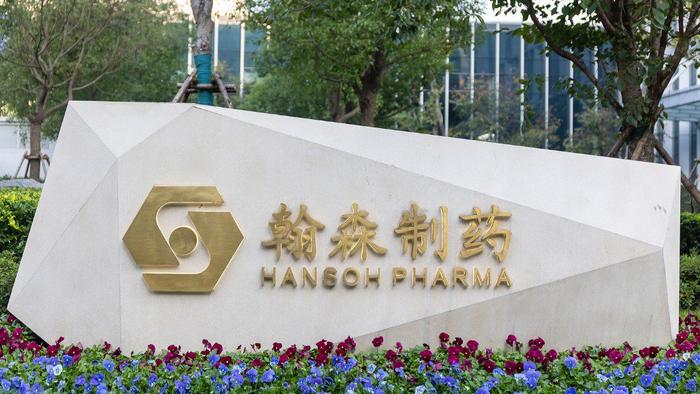
甲磺酸阿美替尼片

Search documents
翰森制药核心产品新适应症获批,中国生物制药罗伐昔替尼出海落地!港股通创新药ETF(159570)回调近2%,超2亿元资金狂涌!
Xin Lang Cai Jing· 2026-03-09 06:45
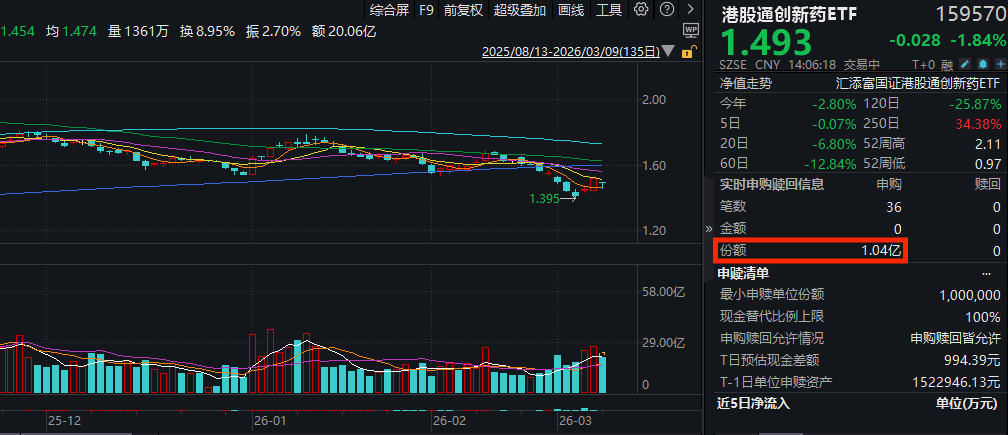
Group 1 - The core viewpoint of the news highlights the recent downturn in the Asia-Pacific market, particularly in the Hong Kong pharmaceutical sector, with the Hong Kong Stock Connect Innovation Drug ETF (159570) experiencing a nearly 2% decline, despite a significant net subscription of 210 million yuan and a total scale exceeding 23.1 billion yuan [1][3] - The high-level meeting has officially categorized innovative drugs as an "emerging pillar industry," emphasizing the acceleration of commercial health insurance development and the promotion of high-quality development in innovative drugs [3] - The approval of Hansoh Pharmaceutical's application for the listing of Amivantamab tablets marks a significant milestone, as it is the first domestically developed third-generation EGFR-TKI in China, with five approved indications since its initial approval in March 2020 [3] Group 2 - In business development news, China Biologic Products announced an exclusive licensing agreement with Sanofi for Rovafatinib, a novel oral small molecule JAK/ROCK inhibitor, with potential payments totaling up to 1.53 billion USD, including an upfront payment of 135 million USD [4] - The Hong Kong Stock Connect Innovation Drug ETF (159570) saw most of its index's popular stocks decline, with notable drops including 5% for 3SBio and over 4% for CanSino Biologics, while Hansoh Pharmaceutical saw a slight increase due to new drug news [4] - The innovative drug sector is experiencing short-term volatility, but the long-term growth potential remains intact, with a focus on the globalization of Chinese pharmaceutical companies and the advancement of innovative technologies [6][9] Group 3 - The focus of the market has shifted from the ability to enter overseas markets to the progress of products in overseas clinical deployments, with key data readouts and milestone achievements becoming critical for future evaluations [7] - Chinese companies are making breakthroughs in frontier technologies such as small nucleic acids and cell therapies, positioning themselves as core assets in global transactions [8] - Leading innovative drug companies are entering a positive cycle of product commercialization and reinvestment in research and development, with expectations for significant performance improvements in the upcoming earnings period [9]



研判2026!全球及中国抗肿瘤药物行业背景、发展现状、治疗方式、竞争格局及未来发展趋势研判:创新迭代赋能产业升级,精准诊疗打开广阔市场空间[图]
Chan Ye Xin Xi Wang· 2026-02-28 01:08
Core Insights - The anti-tumor drug industry is crucial for treating malignant tumors, with a shift from traditional chemotherapy to precision-targeted therapies driven by high cancer incidence globally and in China [1][2][5] Industry Overview - Anti-tumor drugs, also known as anti-cancer drugs, are designed to inhibit tumor cell growth and proliferation, playing a central role in systemic treatment for malignant tumors [2][3] - The industry is characterized by a transition towards innovative therapies such as immunotherapy and antibody-drug conjugates (ADCs), reflecting a global trend towards precision medicine [1][6] Development Background in China - China's cancer incidence and mortality rates are on the rise, with lung cancer, gastric cancer, and liver cancer being the most prevalent, creating a strong clinical demand [5][6] - The government has introduced various policies to support the development of the anti-tumor drug industry, including optimizing clinical trial approvals and enhancing drug accessibility through insurance [5][6] Current Market Analysis - The global anti-tumor drug market is projected to grow from $167 billion in 2020 to $295 billion by 2025, representing a cumulative growth of 76.7% [6][7] - In China, the anti-tumor drug market is expected to increase from 185.8 billion yuan in 2020 to 318.7 billion yuan by 2025, with a growth rate of 71.5% [8][9] Competitive Landscape - The Chinese anti-tumor drug industry features a competitive landscape where multinational companies lead in high-end markets while domestic firms are rapidly emerging [7][9] - Key domestic players like Heng Rui Medicine and BeiGene are making significant strides in core segments such as PD-1 inhibitors and small molecule targeted drugs [8][9] Future Trends - The industry is expected to focus on innovation, with a shift from generic drugs to original innovations and differentiated breakthroughs in areas like ADCs and cell therapies [10][11] - Domestic companies will continue to enhance their market share through policy support and cost advantages, while also working towards self-sufficiency in critical supply chains [11][12] - The regulatory environment will evolve to improve drug accessibility and quality, fostering a competitive ecosystem that prioritizes clinical value and patient affordability [12]



永安期货早盘提示
Xin Yong An Guo Ji Zheng Quan· 2026-02-23 00:50
Market Performance - The Shanghai Composite Index closed down 1.26% at 4082.07 points, while the Shenzhen Component fell 1.28% and the ChiNext Index dropped 1.57%[1] - The Hang Seng Index rose 0.52% to 26705.94 points, with the Hang Seng Technology Index up 0.13% and the Hang Seng China Enterprises Index increasing by 0.42%[1] - The total market turnover in Hong Kong was 850 million HKD[1] U.S. Market Trends - The Dow Jones Industrial Average decreased by 0.54% to 49395.16 points, the S&P 500 fell 0.28% to 6861.89 points, and the Nasdaq Composite dropped 0.31%[1] - U.S. industrial output increased by 0.7% in January, marking the largest growth in nearly a year, driven by gains in utilities and manufacturing[14] Geopolitical Developments - The U.S. military has deployed its largest force in the Middle East since 2003, with President Trump warning Iran has 10 to 15 days to reach a nuclear agreement[14] - The U.S. has temporarily shelved significant arms sales to Taiwan, reportedly to avoid disrupting Trump's upcoming visit to China[14] Economic Indicators - China's tourist numbers to Japan fell by 61% in January, significantly impacting Japan's retail and tourism sectors[14] - The U.S. Consumer Price Index (CPI) rose by 2.4% year-on-year in January, while the Core CPI increased by 2.5%[18]
协合新能源年度盈利同比降约8成 汇聚科技配股融资逾16亿港元
Xin Lang Cai Jing· 2026-02-20 12:32
Company News - Xiehe New Energy (00182.HK) expects a net profit decline of over 80% in 2025, compared to approximately 800 million yuan in the previous year, primarily due to a decrease in revenue and gross margin from power generation business and asset impairment [2] - Dingdang Health (09886.HK) anticipates a significant narrowing of net loss by over 80% for the fiscal year 2025, mainly due to a reduction in goodwill impairment; adjusted net profit is expected to be no less than approximately 5 million yuan, turning profitable year-on-year [2] - Honghui Group (00183.HK) issued a profit warning, expecting a substantial decrease in interim loss attributable to shareholders by 30% to 40% [2] - Huiju Technology (01729.HK) completed the placement of 108 million shares, raising approximately 1.635 billion HKD, with about 50% allocated for strategic investments and acquisitions, and 30% for global business development and overseas expansion [2] - Hansoh Pharmaceutical (03692.HK) received approval for the marketing of Amivantamab in the European Union for monotherapy [2] - Inspur Intelligent (03696.HK) has been included in the Hang Seng Composite Index constituent stocks [2] Buyback Activities - Xiaomi Group-W (01810.HK) repurchased 4.2824 million shares for 152 million HKD, with buyback prices ranging from 35.32 to 35.74 HKD [2] - Geely Automobile (00175.HK) repurchased 1.631 million shares for 27.5125 million HKD, with buyback prices between 16.69 and 16.99 HKD [2] - Kingsoft (03888.HK) repurchased 732,200 shares for 19.9956 million HKD, with buyback prices from 27.02 to 27.5 HKD [3] - NetEase Cloud Music (09899.HK) repurchased approximately 96,000 shares for 14.9974 million HKD, with buyback prices between 153.8 and 158.2 HKD [3] - Meitu Inc. (01357.HK) repurchased 2.057 million shares for 12.5085 million HKD, with buyback prices ranging from 6.04 to 6.1 HKD [3]



港股公告掘金 | 英矽智能、图达通及长风药业获纳入恒生综合指数成份股
Zhi Tong Cai Jing· 2026-02-20 01:28
Major Events - Ying Si Intelligent (03696), Tu Datong (02665), and Changfeng Pharmaceutical (02652) have been included in the Hang Seng Composite Index [1] - Hansoh Pharmaceutical (03692) has received EU approval for the marketing of Amivantamab for monotherapy [1] - Bole Vision Cloud-B (02592) has had its clinical trial application for CBT-199 approved, recognized as safe to proceed [1] - CSPC Pharmaceutical Group (01093) has received clinical trial approval in the US for a GLP-1/GIP receptor dual agonist long-acting injection [1] - CSPC Pharmaceutical Group (01093) has also received clinical trial approval in China for Ropivacaine long-acting injection (SYH9089) [1] - Fuhong Hanlin (02696) has received FDA approval for the Phase I clinical trial application of HLX15-SC for the treatment of multiple myeloma [1] Financial Data - Shougang Resources (00639) issued a profit warning, expecting a net profit attributable to shareholders of approximately HKD 600 million to 700 million for the fiscal year 2025 [1] - Shijiazhuang Pharmaceutical Group (02005) issued a profit warning, anticipating a year-on-year decline in net profit attributable to shareholders of approximately 45% to 60% [1] - Goodbaby International (01086) issued a profit warning, expecting a year-on-year decline in net profit of approximately 35% to 45% for 2025 [1] - Suoteng Juchuang (02498) reported continued growth in sales of laser radar products for fiscal year 2025, achieving profitability for the first time in Q4 [1]
翰森制药(03692):甲磺酸阿美替尼片单药治疗于欧盟获批上市
智通财经网· 2026-02-19 23:05
Core Viewpoint - Hansoh Pharmaceutical (03692) has received approval from the European Commission for its innovative drug, Amivantamab (Chinese trade name: 阿美乐®, overseas trade name: Aumseqa®), for the treatment of advanced non-small cell lung cancer (NSCLC) in adult patients [1] Group 1 - The drug is approved for use as a first-line treatment for adult patients with advanced NSCLC who have epidermal growth factor receptor (EGFR) exon 19 deletions or exon 21 (L858R) substitution mutations [1] - It is also approved for the treatment of adult patients with advanced EGFR T790M mutation-positive NSCLC [1] - The approval was based on a positive opinion from the Committee for Medicinal Products for Human Use (CHMP) of the European Medicines Agency (EMA) [1]
翰森制药(03692) - 自愿公告 - 甲磺酸阿美替尼片单药治疗於欧盟获批上市
2026-02-19 23:00
香港交易及結算所有限公司及香港聯合交易所有限公司對本公告的內容概不負責,對其準確性 或完整性亦不發表任何聲明,並明確表示,概不對因本公告全部或任何部份內容而產生或因倚 賴該等內容而引致的任何損失承擔任何責任。 Hansoh Pharmaceutical Group Company Limited 翰森製藥集團有限公司 甲磺酸阿美替尼片 單藥治療於歐盟獲批上市 翰森製藥集團有限公司(「本公司」,連同其附屬公司統稱「本集團」)董事會(「董 事會」)欣然宣佈,於二零二六年二月十二日,本集團創新藥甲磺酸阿美替尼片 (中國商品名:阿美樂®,海外商品名:Aumseqa®)單藥治療已於歐盟獲批上市, 用於:(i)具有表皮生長因子受體(「EGFR」)外顯子19缺失或外顯子21(L858R) 置換突變的晚期非小細胞肺癌(「NSCLC」)成人患者的一線治療,以及(ii)晚期 EGFR T790M突變陽性NSCLC成人患者的治療。此次批准由歐盟委員會(EC)基於 歐洲藥品管理局(EMA)人用藥品委員會(CHMP)的積極意見作出。 關於甲磺酸阿美替尼片 甲磺酸阿美替尼片是中國首個原研三代EGFR-TKI創新藥,此前已獲國家藥 品監督 ...
3万亿赛道的估值锚点,彻底变了
虎嗅APP· 2026-01-26 00:15
Core Viewpoint - The innovative drug sector experienced a significant surge in 2025, with multiple innovative drug ETFs seeing annual gains exceeding 50% and several companies doubling their stock prices. However, since September 2025, both A-shares and Hong Kong stocks in this sector have faced notable corrections, with some stocks nearly halving in value. The market is now focusing on the quality of business development (BD) transactions rather than just their existence [5][6][7]. Group 1: Market Trends and Reactions - In 2025, the innovative drug sector's market capitalization reached approximately 3 trillion yuan, driven by significant BD transactions [5]. - The market's initial enthusiasm for BD transactions has waned, as investors realize that these transactions often provide only temporary cash flow improvements rather than sustainable profitability [6][7]. - The focus has shifted from merely having BD transactions to assessing their quality, which is crucial for investment decisions in innovative drugs [8]. Group 2: High-Quality BD Transactions - High-quality BD transactions are characterized by three main anchors: the certainty of target value realization, the feasibility of milestone payments, and the strength of the partner company, particularly multinational pharmaceutical firms [10]. - An example of a successful BD transaction is the collaboration between Rongchang Biopharmaceutical and AbbVie, which led to a significant stock price increase due to the validated target of the drug involved [11][13]. - Conversely, a BD transaction involving Haikang Pharmaceutical and AirNexis did not yield positive market reactions due to the lower credibility of the partner and the insufficient cash component of the upfront payment [18][20][21]. Group 3: Company Performance and Investment Opportunities - Companies like Baijie and Hengrui have shown promising performance, with Baijie leading in innovative drug revenue and expected to turn profitable in 2025, while Hengrui has successfully transitioned to an innovative drug-focused business model [34][37]. - Hansoh Pharmaceutical has also achieved profitability, with a significant portion of its revenue coming from innovative drugs, indicating a successful transformation [40]. - Companies such as Xinda Biopharmaceutical and Sanofi have potential for future profitability, with Xinda expected to launch a promising product that could significantly impact its financials [43][48]. Group 4: Selection Criteria for Investment - The selection process for investment should involve identifying companies with a high proportion of innovative drug revenue (at least 50%), assessing their profitability, and evaluating the quality of their BD collaborations and global competitiveness of their pipelines [30][31]. - The analysis of the top 15 companies by innovative drug revenue shows that 13 have over 50% of their revenue from innovative drugs, highlighting a strong focus on innovation within the sector [32]. Group 5: Future Outlook - The innovative drug industry remains attractive, but the market's valuation criteria have evolved to prioritize the quality of BD transactions and the underlying performance of companies [58]. - Continuous monitoring of companies' clinical pipeline progress and BD transaction outcomes will be essential for assessing future market activity and investment potential [58].
1410亿,中国出了个女首富
创业家· 2025-11-27 10:12
Core Insights - The article highlights the significant wealth creation capability of China's pharmaceutical industry, exemplified by the rise of the new female billionaire, Zhong Huijuan, and her daughter, with a wealth of 141 billion yuan, marking a historic shift from imitation to innovation in the sector [5][9][10]. Group 1: Pharmaceutical Industry Transformation - The development trajectory of Hansoh Pharmaceutical illustrates the industry's transition from a "copycat" strategy to a robust innovation-driven model, supported by a comprehensive R&D network across multiple regions [5][10]. - The Chinese pharmaceutical industry has evolved from a state-controlled system to a competitive market, achieving a remarkable increase in production value from 73 million yuan in 1978 to 131.7 billion yuan in 1998, reflecting an 18-fold growth over 20 years [13][14]. - The launch of the "Major New Drug Creation" initiative in 2008 marked a pivotal shift towards innovation, resulting in over 75 new drug approvals since its inception, significantly enhancing the industry's global competitiveness [14][15]. Group 2: Financial Performance and Market Dynamics - The total wealth of the top 50 female entrepreneurs in China reached 1.9 trillion yuan, a 32% increase from the previous year, indicating a growing trend in wealth accumulation within the sector [9]. - The domestic innovative drug market reached a scale of 122.6 billion yuan in 2023, becoming a key driver of growth for the pharmaceutical industry, with a notable increase in the number of innovative medical devices approved [15][18]. - Hansoh Pharmaceutical's core product, Amivantamab, generated over 3 billion yuan in revenue in 2023 and became the first Chinese original EGFR-TKI to be approved for sale in the UK, marking a significant milestone for the company [10][11]. Group 3: Future Outlook and Strategic Directions - The future of China's pharmaceutical industry is poised for a qualitative leap, driven by policy guidance, technological integration, and global market restructuring, with a focus on original innovation and global collaboration [18][19]. - The industry is expected to transition from a model of "imitation and innovation" to one centered on "original innovation" and "global competition," necessitating the establishment of proprietary barriers in technology and patenting [19][20]. - The integration of artificial intelligence in drug development is anticipated to revolutionize the industry, significantly reducing the time required for drug discovery and production processes [18][19].

翰森制药:上半年创新药贡献八成收入,双靶点减肥药累计给药超千名受试者
Xin Lang Cai Jing· 2025-08-18 23:44
Core Viewpoint - Hansoh Pharmaceutical reported double-digit growth in revenue and net profit for the first half of 2025, driven by the sales of innovative drugs and collaborative products [2][4]. Financial Performance - The company's revenue for the first half of 2025 was approximately 7.43 billion RMB, representing a year-on-year increase of about 14.3% [3]. - Sales revenue from innovative drugs and collaborative products was around 6.15 billion RMB, up approximately 22.1%, accounting for about 82.7% of total revenue [2][3]. - Net profit for the period was approximately 3.13 billion RMB, reflecting a year-on-year growth of about 15% [3]. Product Performance - The oncology segment contributed the most to revenue, generating approximately 4.53 billion RMB, which is about 60.9% of total revenue [4]. - The company has seven innovative drugs generating sales revenue in China, with key products including the first original third-generation EGFR-TKI inhibitor and a new second-generation TKI for chronic myeloid leukemia [4]. Business Development - Hansoh Pharmaceutical has been actively pursuing business development (BD) opportunities, including licensing agreements with multinational pharmaceutical companies [5][7]. - In June 2025, the company granted exclusive overseas rights for the GLP-1/GIP dual receptor agonist HS-20094 to Regeneron, with a potential total amount exceeding 2 billion USD [5]. - The company has secured high-value BD orders, including a global exclusive licensing agreement with Merck for HS-10535, with a potential total exceeding 2 billion USD [7]. Research and Development - The company is advancing over 70 innovative drug clinical trials across more than 40 projects, with 8 new candidate drugs approved for clinical trials in the first half of 2025 [8]. - R&D expenditure for the first half of 2025 was approximately 1.44 billion RMB, a year-on-year increase of 20.4%, representing 19.4% of total revenue [8]. Market Position - As of August 18, 2025, Hansoh Pharmaceutical's stock closed at 37.06 HKD per share, with a market capitalization of 220.4 billion HKD [9].