甲骨文云基础设施(OCI)

Search documents
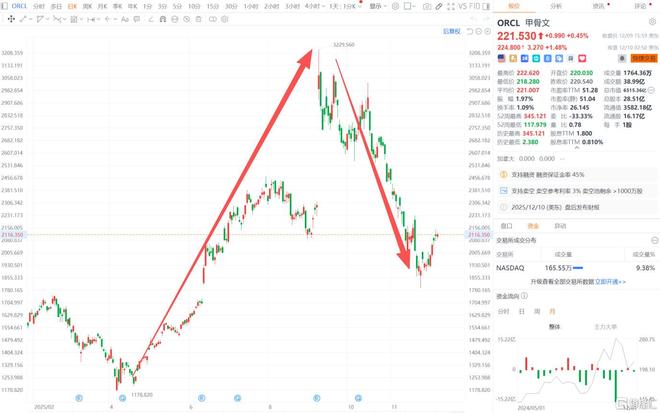
就在2026年上半年,甲骨文等“OpenAI链”逆袭?这是先决条件
Hua Er Jie Jian Wen· 2026-01-06 07:03
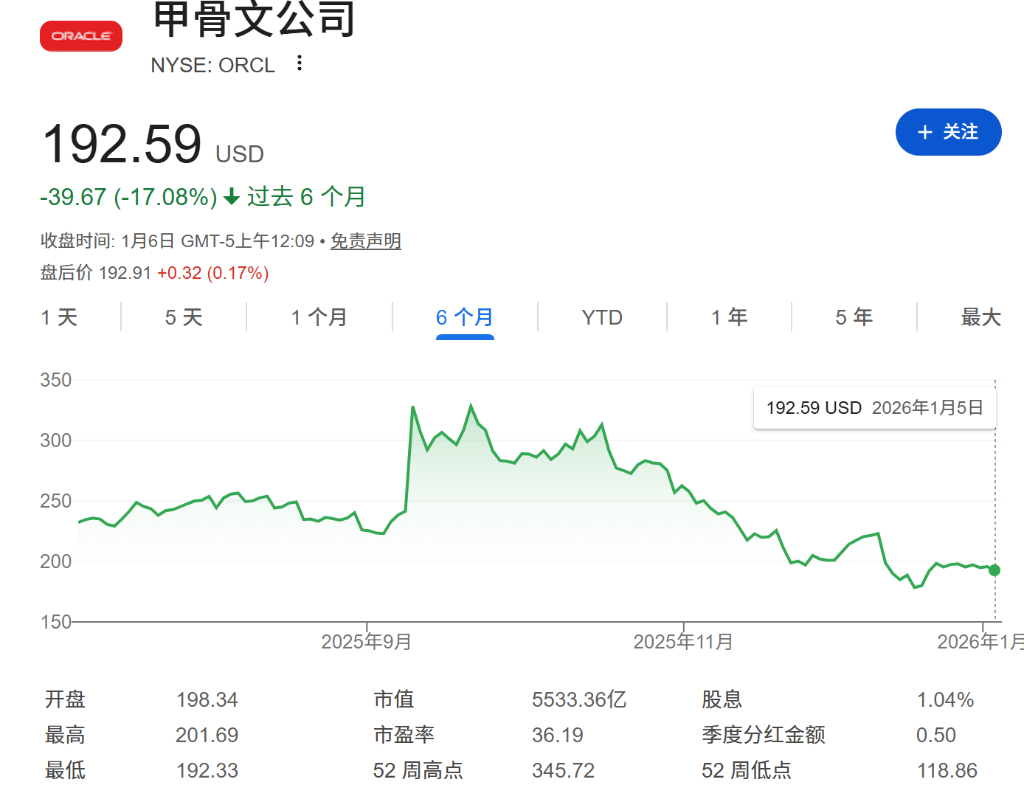
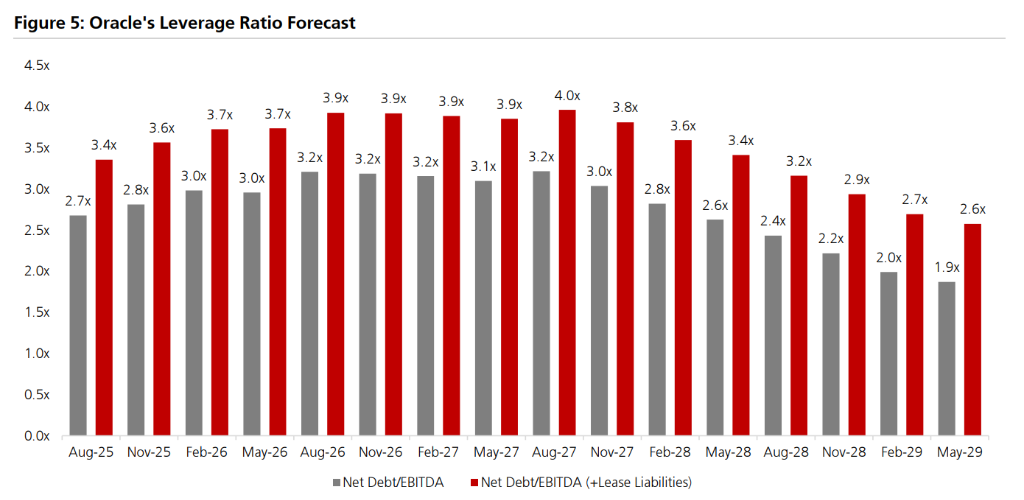
Core Viewpoint - Wall Street is currently experiencing extreme anxiety, highlighted by Oracle's stock price plummeting 41% since mid-September, while bulls are betting on a "stunning reversal" in the first half of 2026 [1] Group 1: Market Sentiment and Concerns - The market's panic is primarily driven by two concerns: extreme distrust in OpenAI's financial sustainability and worries about Oracle's ability to maintain its investment-grade rating amid aggressive capital expenditures [3] - Investors believe that if OpenAI can secure funding or launch a new model like GPT-6 by early 2026, Oracle, trading at 34 times CY27 earnings, could represent a significant buying opportunity [3] - Conversely, if OpenAI fails to compete against Google's Gemini or if Oracle is forced to dilute shareholders through equity financing, the stock's decline may continue [3] Group 2: OpenAI's Potential Solutions - To reverse Oracle's downturn, three key developments are necessary: securing capital injection, launching GPT-6, and achieving real revenue generation from enterprise AI projects [4][6] - OpenAI is reportedly seeking to raise $100 billion at an $830 billion valuation, which could alleviate counterparty risk for Oracle if successful [6] - The launch of GPT-6 in Q1 2026 is seen as critical to dispelling doubts about Google's competitive edge [6] Group 3: Oracle's Financial Strategy and Risks - Oracle is perceived to be walking a tightrope, with concerns that its support for OpenAI's computing needs could downgrade its credit rating to "junk" status [5] - The company's strategy includes financial engineering to manage significant funding pressures, including potential "off-balance-sheet" financing [8][14] - Oracle's net debt to EBITDA ratio is projected to reach 4.0 times by 2027, raising alarms about its ability to maintain an investment-grade rating [14] Group 4: Project Highlights and Revenue Potential - The Abilene project in Texas is identified as a key positive aspect, with the potential to disrupt bearish narratives if it is delivered on time and OpenAI makes timely payments [10][11] - As of November, 96,000 GB200 GPUs have been delivered, indicating that the project is progressing faster than expected [14] - The Abilene project is expected to contribute approximately $8.3 billion in annual revenue, significantly boosting Oracle's cloud infrastructure growth [14] Group 5: Valuation and Market Position - Oracle's current stock price of around $195 reflects a high level of pessimism, incorporating fears of OpenAI's collapse and financing difficulties [13] - Any alleviation of these risks, such as OpenAI securing funding, could trigger a sharp valuation recovery [13] - Compared to Microsoft, which faces similar risks with OpenAI but trades at a higher FY30 P/E ratio of 18 times, Oracle's valuation appears discounted [14]


甲骨文如何扭转市场叙事?瑞银:OpenAI信仰修复、负债压力证明可控
Hua Er Jie Jian Wen· 2026-01-05 09:41
Core Viewpoint - Oracle's stock price has experienced a significant decline of 41% since mid-September, reflecting market concerns about OpenAI's ability to fulfill its trillion-dollar promises and Oracle's substantial net debt of $88 billion [1][4] Group 1: Market Sentiment and Stock Performance - Investors are anxious about OpenAI's ability to meet commitments, which has negatively impacted Oracle as a key supplier [4] - UBS maintains a "Buy" rating, arguing that the market has overestimated the risks associated with OpenAI and Oracle's financing pressures [1][4] - The current price-to-earnings ratio for Oracle based on 2026 earnings expectations is 29 times, and only 11 times for 2030, indicating an attractive risk-reward ratio [1] Group 2: OpenAI's Financial Situation - OpenAI is reportedly raising $100 billion at a valuation of $830 billion, with significant commitments from SoftBank and Amazon, which could alleviate concerns about Oracle's risk exposure [7] - The anticipated release of GPT-6 in Q1 is expected to enhance OpenAI's competitive position and restore investor confidence [7] Group 3: Oracle's Debt and Financing Strategies - Oracle's net debt stands at $883 billion, with a net debt/EBITDA ratio of 2.8 times, raising concerns about its balance sheet [6] - To manage capital expenditures and debt, Oracle is pursuing aggressive financing strategies, including off-balance sheet financing and a "Bring Your Own Chip" (BYOC) model [6][7] - UBS estimates that if 50% of Oracle's funding needs are met through these strategies, direct financing requirements could drop from $80 billion to $40 billion over the next three years [7] Group 4: Market Position and Growth Potential - Despite concerns about competition from Google's Gemini, UBS's enterprise AI survey indicates that OpenAI remains dominant in the enterprise market [5] - Oracle's revenue growth is projected to accelerate from 16% to 46% between FY26 and FY28, suggesting a robust growth narrative [9] - Even in a worst-case scenario where OpenAI's contributions to Oracle's revenue cease, the stock's price-to-earnings ratio would still be relatively low at 12.4 times [9]
天量支出吓崩股价?甲骨文电话会紧急救火:“客户自带芯片”将拯救现金流,“我们没有疯狂举债”
硬AI· 2025-12-11 11:32
Core Viewpoint - Oracle's aggressive capital expenditure plan of an additional $15 billion has alarmed investors despite holding a staggering $523.3 billion in remaining performance obligations (RPO) [3][5][21]. Group 1: Financial Performance - Oracle reported a 13% year-over-year revenue growth, with cloud infrastructure (OCI) revenue soaring by 66% [2][41]. - RPO reached an astonishing $523.3 billion, a 433% increase year-over-year, driven primarily by contracts with major clients like Meta and NVIDIA [7][41]. - The company expects to confirm 40% year-over-year growth in RPO over the next 12 months, up from 25% in the previous quarter [41]. Group 2: Capital Expenditure and Debt Management - The company announced that its capital expenditure for FY2026 would increase by $15 billion, reaching a total of $50 billion, which caused a post-earnings stock drop of over 10% [5][21]. - Oracle's management defended the capital expenditure, stating that the actual borrowing needs would be significantly lower than analysts' predictions of $100 billion, thanks to innovative financing models [12][66]. - The introduction of a "Bring Your Own Chips" model allows clients like OpenAI to provide their own hardware, reducing Oracle's upfront capital expenditure [13][14][66]. Group 3: Strategic Shifts and Market Position - Larry Ellison emphasized that the future of AI lies in multi-step reasoning over private data, positioning Oracle's AI data platform as a key player in breaking down data silos [8][29][30]. - OCI's revenue growth of 66% outpaces competitors like AWS and Azure, with GPU-related revenue skyrocketing by 177% [9][32]. - The company is transitioning from a heavy asset model to a lighter asset model, which could significantly improve long-term capital returns [18][19]. Group 4: Risk Management and Client Dependency - Oracle's AI infrastructure is designed to be highly fungible, allowing for rapid reallocation of resources among clients, which mitigates risks associated with client dependency [25][26][78]. - The company has over 700 AI clients, ensuring that any unused capacity can be quickly redeployed, thus reducing potential risks from client-specific investments [26][78]. Group 5: Future Outlook - Oracle maintains a strong outlook for continued growth, with expectations of $67 billion in revenue for FY2026, supported by a robust pipeline of contracts [41][44]. - The company is focused on leveraging its unique data position and flexible financing strategies to capitalize on the AI wave without compromising its balance sheet [36][19].

盘后暴跌11%,甲骨文上财季营收不及预期,强调AI基建资金远低于外界预期
Feng Huang Wang· 2025-12-11 05:38
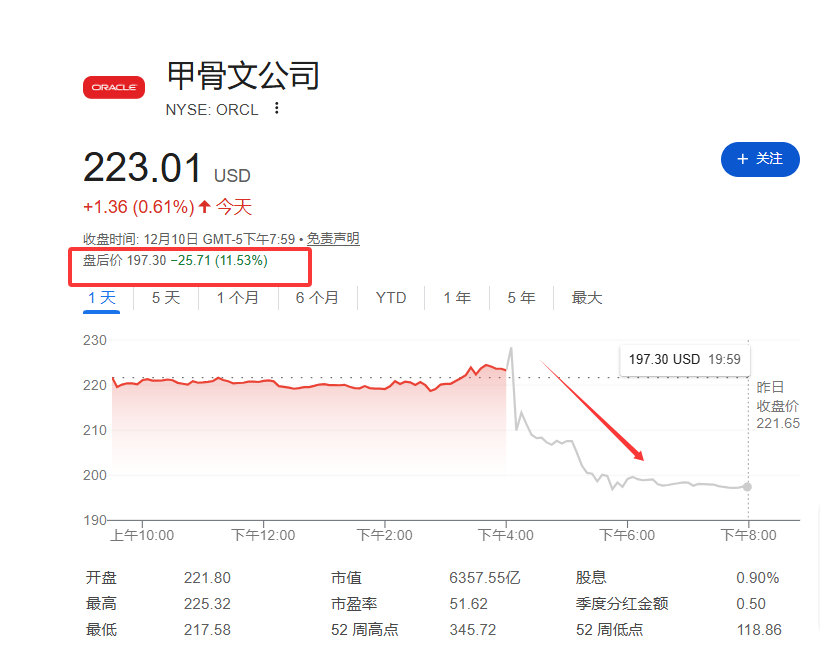
Core Viewpoint - Oracle's recent quarterly earnings report fell short of market expectations, raising concerns among investors regarding the company's significant investments in AI technology [2][6]. Financial Performance - For the second fiscal quarter ending November 30, Oracle reported revenues of $16.06 billion, a year-over-year increase of 14%, but below the market expectation of $16.21 billion [2][4]. - Net income reached $6.14 billion, a substantial increase of 95% year-over-year, while adjusted EPS was $2.26, exceeding the market expectation of $1.64 [2][4]. - The operating profit margin stood at 42% [2]. Revenue Breakdown - Cloud revenue grew by 34% to $7.98 billion, accounting for 50% of total revenue [5]. - Software revenue decreased by 3% to $5.88 billion, representing 36% of total revenue [5]. - Hardware revenue increased by 7% to $776 million, while services revenue also grew by 7% to $1.43 billion [5]. - The Oracle Cloud Infrastructure (OCI) segment, which is critical for AI, saw revenue growth of 68% to $4.1 billion, aligning with market expectations [5]. Capital Expenditure and Future Guidance - Oracle's capital expenditures for the quarter reached $12 billion, with an expected total of approximately $50 billion for the fiscal year 2026, significantly higher than the previously projected $35 billion [5]. - The company anticipates adjusted EPS for the third fiscal quarter to be in the range of $1.70 to $1.74, with revenue growth projected at 19% to 21% year-over-year [4]. Market Reaction and Investor Sentiment - Following the earnings report, Oracle's stock price fell over 11%, reflecting investor dissatisfaction despite a slight increase prior to the report [6]. - The company's free cash flow deficit expanded to approximately -$13.2 billion, compared to market expectations of -$5.2 billion, contributing to investor concerns [6]. Debt and Financing Strategy - Oracle's remaining performance obligations (RPO) surged by 438% to $523 billion, exceeding market expectations, driven by new agreements with major clients like Meta and Nvidia [5]. - The company aims to maintain its investment-grade debt rating, with management indicating that the required funding for infrastructure development will be less than previously anticipated [7]. - Oracle's five-year credit default swap (CDS) costs increased, indicating rising concerns about the company's debt risk [8][9].
天量支出吓崩股价?甲骨文电话会紧急救火:“客户自带芯片”将拯救现金流,“我们没有疯狂举债”(电话会实录)
美股IPO· 2025-12-11 03:50
Core Viewpoint - Oracle's aggressive capital expenditure plan of an additional $15 billion has alarmed investors despite holding over $523 billion in remaining performance obligations (RPO) [1][3][16]. Group 1: Capital Expenditure and Market Reaction - The company announced that its capital expenditure for FY2026 would increase by $15 billion, reaching a total of $50 billion, leading to a post-market stock drop of over 10% [3][16]. - Oracle's management defended the necessity of this expenditure, stating it was driven by urgent customer demand rather than reckless expansion [1][4]. Group 2: Innovative Business Model - Oracle introduced a "Bring Your Own Chips" model, allowing clients like OpenAI to bring their own chips to data centers, which is unprecedented in the cloud industry [2][4][12]. - This model aims to alleviate cash flow pressures and reflects a shift from traditional cloud vendor practices of purchasing hardware outright [2][12]. Group 3: Financial Performance and Growth - Oracle reported a staggering RPO of $523 billion, a 433% year-over-year increase, primarily driven by contracts with major clients like Meta and NVIDIA [7][30]. - The company's cloud infrastructure (OCI) revenue surged by 66%, with GPU-related revenue skyrocketing by 177% [6][9][22]. Group 4: Management's Strategic Insights - CEO Clay Magouyrk emphasized the flexibility of Oracle's AI infrastructure, stating it can reallocate computing power among clients within hours, reducing dependency risks on major customers [19][20]. - Larry Ellison articulated a vision for AI focusing on private data reasoning, suggesting that Oracle's AI data platform can connect various databases, breaking down data silos [8][21][40]. Group 5: Future Outlook and Guidance - Oracle expects a 40% increase in RPO to be recognized as revenue in the next 12 months, with a total revenue forecast of $67 billion for FY2026 remaining unchanged [30][33]. - The company is committed to maintaining its investment-grade credit rating while exploring various financing options to support its growth [32][53].

天价支出吓崩股价?甲骨文电话会紧急救火:“客户自带芯片”将拯救现金流,“我们没有疯狂举债”
Hua Er Jie Jian Wen· 2025-12-11 01:24
Core Insights - Oracle reported a 13% year-over-year revenue growth and a staggering 66% increase in cloud infrastructure (OCI) revenue, but the market was primarily focused on the company's aggressive capital expenditure plan, which requires an additional $15 billion investment [1][5][23] - The company has a remarkable $523.3 billion in remaining performance obligations (RPO), which has increased by 433% year-over-year, driven by contracts from major clients like Meta and NVIDIA [5][23] - Oracle's management defended the capital expenditure increase, stating it is driven by real demand from large clients and not blind expansion, introducing a "Bring Your Own Chips" model to alleviate cash flow pressure [4][5][6] Financial Performance - OCI revenue reached $4.1 billion, growing 66% year-over-year, with GPU-related revenue surging by 177% [5][23] - Total revenue for the quarter was $16.1 billion, reflecting a 13% increase compared to the previous year [23] - The company expects a significant increase in RPO, with a projected 40% growth in the next 12 months, compared to 25% in the previous quarter [23] Capital Expenditure and Financing - Oracle's capital expenditure for FY2026 is now expected to be $50 billion, an increase of $15 billion from previous forecasts, causing a post-earnings stock drop of over 10% [5][10] - The management emphasized that the actual borrowing needs will be significantly lower than analysts' predictions of $100 billion, thanks to innovative financing models [4][5][10] - The "Bring Your Own Chips" model allows clients to provide their own hardware, reducing Oracle's upfront capital expenditures and improving cash flow synchronization [6][10] Market Position and Strategy - Oracle's unique approach in the cloud industry, allowing clients to bring their own chips, is seen as unprecedented and aims to shift the financial burden of capital expenditures [6][10] - The company is focusing on maintaining an investment-grade credit rating while navigating the capital-intensive AI infrastructure landscape [5][10] - Larry Ellison, Oracle's co-founder, highlighted the future of AI in private data reasoning, positioning Oracle's AI data platform as a key player in breaking down data silos [15][32] Customer and Operational Flexibility - Oracle's AI infrastructure is designed for high flexibility, allowing rapid capacity transfer between clients, which mitigates risks associated with client concentration [14][56] - The company has over 700 AI clients, indicating strong demand and operational capability to quickly allocate resources [14][56] - Oracle's cloud applications and infrastructure are experiencing robust growth, with multi-cloud consumption increasing by 817% [23][30]
华尔街紧盯甲骨文!AI光环能否抗住债务与泡沫焦虑?
Ge Long Hui· 2025-12-10 09:57
Core Viewpoint - Oracle's stock has faced significant volatility due to concerns over AI-related debt, despite a strong performance earlier in the year, with a year-to-date increase of over 30% [1][3]. Financial Performance Expectations - Oracle is set to release its Q2 fiscal report, with expected revenue of $16.191 billion, a year-on-year increase of 15.16%, and earnings per share of $1.169, up 6.28% [3]. - The Oracle Cloud Infrastructure (OCI) segment is projected to see a revenue growth of 68%, nearing $4.1 billion [3]. AI and Debt Concerns - Oracle has recently become a significant player in the AI sector, highlighted by a $300 billion deal with OpenAI for computing power over five years, marking one of the largest cloud service contracts in tech history [5]. - The company’s total debt has risen from $84.5 billion to $111.6 billion over the past year, while cash and equivalents slightly decreased from $10.6 billion to $10.45 billion [6]. - Oracle issued a $18 billion bond, the largest in tech history, and is now the largest investment-grade bond issuer among non-financial companies [6]. Market Sentiment and Analyst Opinions - Analysts express concerns about Oracle's high debt levels, with estimates suggesting the company may borrow an additional $20 billion to $30 billion over the next three years [7]. - The market is increasingly worried about the reliance on speculative future returns in tech stocks, particularly regarding AI infrastructure investments [8]. - Oracle's bonds are rated BBB, indicating higher risk compared to peers like Meta and Amazon, which have AA- ratings [9]. Strategic Challenges - Oracle faces pressure to fund aggressive infrastructure plans while convincing investors of the sustainability of its AI-driven growth narrative [10]. - Barclays maintains a "buy" rating on Oracle's stock, lowering the target price from $400 to $330, indicating a potential upside of 49.6% [10].
从数据库之王到算力新枢纽,Oracle能否“涅槃”?丨企服国际观察
Tai Mei Ti A P P· 2025-11-06 08:38
Core Insights - Oracle's annual conference name change from "Oracle Cloud World" to "Oracle AI World" reflects the company's strong expectations for AI's transformative potential [2] - Oracle's market capitalization has returned to the top ten global tech companies, driven by AI-driven business restructuring, with a stock price surge of 36% following the earnings report [2][4] - Key financial data revealed a significant increase in remaining performance obligations, reaching $455 billion, far exceeding market expectations of $178 billion [2] Group 1: AI Strategy and Market Position - Oracle is attempting to navigate the technology cycle by betting on the AI computing revolution [3] - The company has shifted its focus from traditional database management to embedding AI across all product lines, positioning AI as the core engine for future growth [4][10] - Oracle's cloud infrastructure (OCI) is designed to meet enterprise needs for high-performance computing and large-scale AI workloads, making it essential for major clients like Meta and OpenAI [7][9] Group 2: Market Demand and Competitive Landscape - The global demand for AI computing power has surged exponentially, with Oracle having stockpiled GPUs since 2021 to capitalize on this trend [5] - The cloud infrastructure spending is projected to reach $95.3 billion by Q2 2025, with Oracle positioned to benefit from supply-demand imbalances faced by competitors like AWS and Microsoft [6] - Oracle's multi-cloud strategy enhances its market reach and reduces switching costs for clients, while partnerships with companies like Google further expand its service offerings [8] Group 3: Product Innovations and Financial Performance - Oracle has launched the Oracle AI Database 26ai, which integrates AI capabilities directly into the database, addressing common challenges in enterprise AI applications [11][12] - The company reported a 12% year-over-year revenue growth to $14.9 billion, with cloud revenue increasing by 28% to $7.2 billion, indicating strong performance in its cloud segment [12] - Significant investments in infrastructure are planned, with estimates suggesting Oracle will invest billions in building data centers, aiming to enhance its AI capabilities [13]

美股 380亿债务背后,甲骨文背水一战,背后藏着AI危机?
3 6 Ke· 2025-10-30 01:05
Core Viewpoint - The upcoming $38 billion financing for Oracle's data center projects is a pivotal moment for the AI industry, potentially determining its future growth and stability [1][2]. Group 1: Oracle's AI Acceleration Logic - The $38 billion financing indicates a significant demand for AI computing power, with Oracle facing a critical market point where demand is exponentially increasing while supply remains linear [3][5]. - This financing strategy reflects a shift in the AI industry competition from a "chip war" to a "capacity deployment war," emphasizing the importance of speed in construction and efficiency in capacity [6]. Group 2: Financial Pressure and Order Backlog - Oracle has a substantial order backlog, with contracts worth approximately $300 billion with OpenAI and total unfulfilled orders amounting to $455 billion, necessitating urgent external financing [7][8]. - The projected capital expenditure for building the required data centers is estimated between $2.25 trillion and $2.7 trillion, far exceeding Oracle's free cash flow capabilities [10][11]. Group 3: Innovative Financing Model - Oracle is adopting a "light asset" model by pre-leasing capacity from data center developers like Vantage, allowing it to secure necessary computing power without heavy upfront investments [12][13]. - This model transforms future uncertain AI demand into a stable, financeable asset, enabling rapid capacity expansion with minimal balance sheet burden [15]. Group 4: Risks and Market Dynamics - The financing carries significant risks, particularly if demand orders are delayed or canceled, while Oracle remains obligated to repay the $38 billion debt [16]. - The competitive landscape is affected by the relationship between Microsoft and OpenAI, where Oracle's role is as a secondary option, potentially limiting its revenue prospects [17]. Group 5: Broader Industry Implications - The $38 billion financing is a critical test for the AI valuation framework, influencing perceptions of stability and profitability across the AI infrastructure sector [20][21]. - The outcome of this financing will determine whether the AI infrastructure can transition from a "capital narrative" to a "asset era," impacting the entire technology sector's investment strategies [30][31].
甲骨文,剑指 2250 亿美元营收
半导体芯闻· 2025-10-22 10:30
Core Viewpoint - Oracle is strategically positioning itself to capitalize on the AI era by enhancing hardware flexibility, deepening multi-cloud partnerships, and developing AI agents, with a goal of achieving $225 billion in total revenue by FY2030, representing a CAGR of 31% [1][6]. Revenue Goals - Oracle aims to reach a total revenue of $225 billion by FY2030, with a CAGR of 31% [1]. - The company has achieved $500 billion in remaining performance obligations (RPO) and added approximately $65 billion in total contract value (TCV) for its cloud infrastructure (OCI) in about 30 days [1][2]. AI and Cloud Infrastructure - Oracle has raised its revenue expectations for OCI, projecting significant growth from $18 billion in FY2026 to $34 billion in FY2027, $77 billion in FY2028, $129 billion in FY2029, and $166 billion in FY2030, indicating a CAGR of 75% [6]. - The company emphasizes hardware flexibility and has optimized OCI for various hardware accelerators, aiming to reduce customer network costs [6][7]. AI Applications and Data Utilization - Oracle is helping clients leverage structured and unstructured data for AI applications, resulting in improved operational efficiency and strategic focus [12]. - The company anticipates that revenue from AI databases and platforms will grow from approximately $2.4 billion in FY2025 to around $20 billion by FY2030, with a CAGR of 53% [13]. AI Agents Development - Oracle has developed over 400 AI agents within its Fusions application suite, with applications in various sectors, including healthcare and finance [15]. - The company has expanded its AI Agent Studio, allowing for the creation and deployment of AI agents, enhancing operational efficiency across different business functions [16]. Multi-Cloud Strategy - Oracle has deepened collaborations with major cloud service providers like Microsoft, AWS, and Google, achieving a 16-fold increase in multi-cloud consumption revenue [21]. - The company has launched a new resale partner program, enabling solution providers to offer Oracle databases across multiple cloud platforms [22]. Sales Opportunities and Payment Models - There are significant upsell opportunities in AI, with potential customer spending increasing by 150 times when expanding from a single application to a full suite [24]. - Oracle has introduced a new multi-cloud universal credit licensing model, simplifying payment processes for customers using its AI database and OCI services across different cloud platforms [24].