
硅

Search documents
资金流向及重点席位持仓变化日报-20260313
Guang Fa Qi Huo· 2026-03-13 02:52
Report Information - Report Name: Funds Flow and Key Seats' Position Changes Daily Report [1] - Date: March 13, 2026 [1] - Data Date: March 12, 2026 [2] Core Content Funds Inflow and Outflow of Varieties - The report presents data on the inflow and outflow of funds in various varieties, but the specific varieties and their inflow/outflow details are not clearly described other than the outflow ratio percentages shown in the graph [2] Key Seats' Position Changes - **Morgan Chase**: Shows net positions and daily position changes (same - color for increasing positions, opposite - color for decreasing positions) for multiple products like CSI 1000 Futures, etc. The net position and daily position change percentages range from - 4% to 10% [2] - **Qiankun Futures**: Displays net positions and daily position changes for products such as stainless steel, iron ore, etc. The net position and daily position change percentages range from - 10% to 20% [2] - **UBS Futures**: Presents data on net positions and daily position changes for products like CSI 500 Futures, etc. The net position and daily position change percentages range from - 6% to 4% [2] - **CITIC Futures**: Shows net positions and daily position changes for products like Treasury bond futures. The net position and daily position change percentages range from - 15% to 15% [3] - **Guotai Junan**: Displays position change percentages for certain products, with the range from - 30% to 15% [3]
臻宝科技科创板IPO过会:中信证券保荐,研发人员认定准确性被问询
Sou Hu Cai Jing· 2026-03-06 02:08
Group 1 - The Shanghai Stock Exchange has requested Zhenbao Technology to clarify the accuracy and reasonableness of its R&D personnel recognition, considering the high turnover of R&D staff, the proportion of low-tenure employees, and the significant auxiliary R&D content [2] - Zhenbao Technology specializes in providing manufacturing equipment components and surface treatment solutions for the integrated circuit and display panel industries, with main products including silicon, quartz, silicon carbide, and alumina ceramic components, as well as surface treatment services like thermal spraying regeneration, anodizing, and precision cleaning [4] - The company reported revenues of 386 million yuan, 506 million yuan, 635 million yuan, and 366 million yuan for the years 2022 to 2025, with net profits of 81.55 million yuan, 109 million yuan, 152 million yuan, and 85.18 million yuan respectively [4] Group 2 - As of June 30, 2025, Zhenbao Technology's total assets amounted to 1.39 billion yuan, with equity attributable to shareholders of 1.07 billion yuan, and a debt-to-asset ratio of 18.44% [5] - The company's operating revenue for the first half of 2025 was 366.37 million yuan, with a net profit of 85.18 million yuan, and a basic earnings per share of 0.73 yuan [5] - R&D investment accounted for 7.23% of operating revenue in 2025, reflecting an increase from 4.59% in 2022 [5]


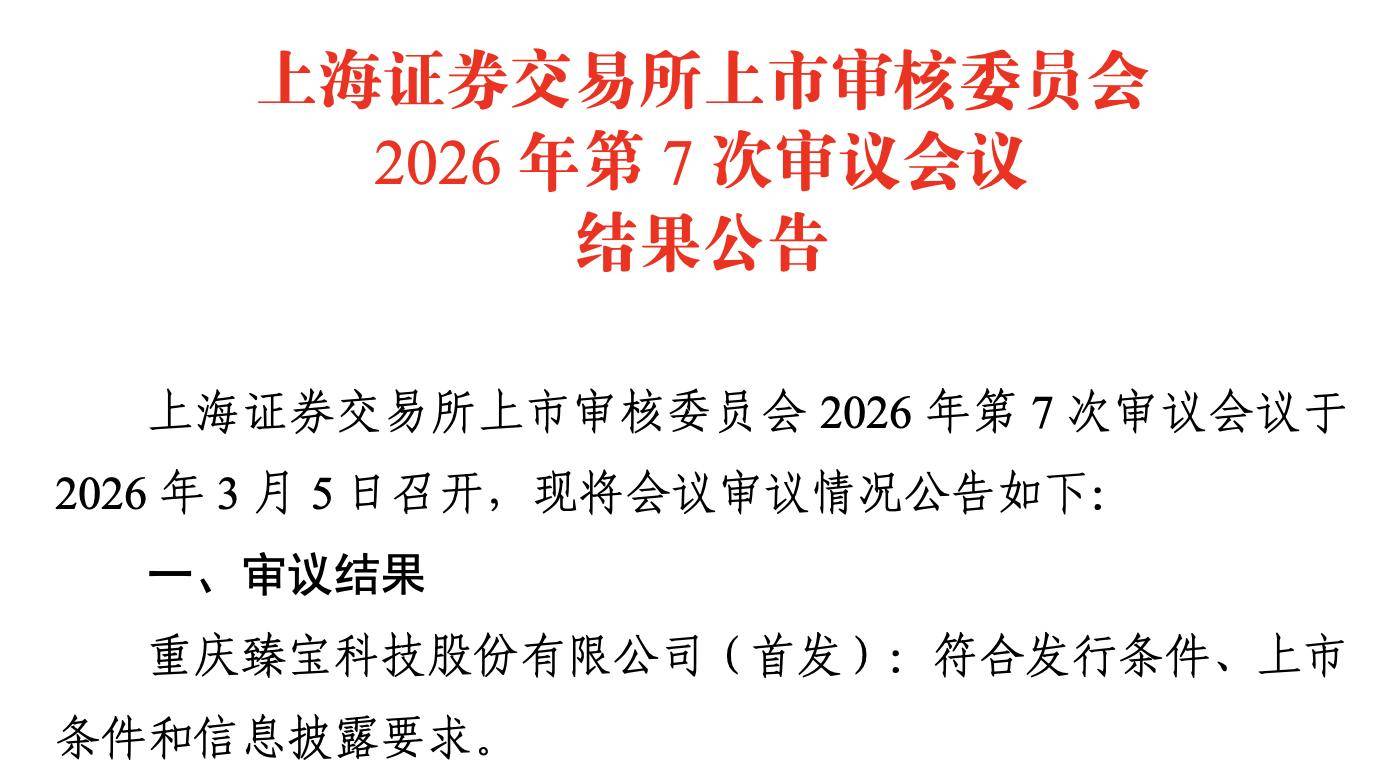
臻宝科技过会:今年IPO过关第26家 中信证券过4单
Zhong Guo Jing Ji Wang· 2026-03-06 01:49
Core Viewpoint - Chongqing Zhenbao Technology Co., Ltd. has passed the initial public offering (IPO) review by the Shanghai Stock Exchange, marking it as the 26th company to receive approval in 2026 [1] Company Overview - Zhenbao Technology specializes in providing manufacturing equipment components and surface treatment solutions for clients in the integrated circuit and display panel industries [1] - The main products include components made from silicon, quartz, silicon carbide, and alumina ceramics, as well as surface treatment services such as thermal spraying regeneration, anodizing, and precision cleaning [1] Shareholding Structure - Wang Bing is the controlling shareholder and actual controller of the company, holding 44.33% of the shares directly and controlling an additional 12.88% through employee stock ownership platforms [2] - The total voting rights controlled by Wang Bing amount to 57.20% [1][2] IPO Details - Zhenbao Technology plans to issue no more than 38.8226 million shares, which will account for at least 25% of the total share capital post-issuance [2] - The company aims to raise approximately 1.197523 billion yuan for projects related to semiconductor and semiconductor precision components and materials production, as well as the establishment of R&D centers [2] Key Questions from the Listing Committee - The listing committee inquired about the high turnover rate of R&D personnel and the impact of newly hired staff on core technology contributions and ongoing innovation [3] - Questions were raised regarding the sales model of silicon components compared to industry peers and the sustainability of high gross margins for these products [3]
刚刚!IPO审4过4
梧桐树下V· 2026-03-05 11:29
Core Viewpoint - The article discusses the approval of four companies for IPOs across different stock exchanges, highlighting their business operations, financial performance, and key metrics for potential investors [1]. Group 1: Company Overview - Ningbo Huikang Industrial Technology Co., Ltd. focuses on the research, production, and sales of refrigeration equipment, with a revenue of 3,203.78 million yuan and a net profit of 442.29 million yuan for 2024 [3][8]. - Chongqing Zhenbao Technology Co., Ltd. specializes in manufacturing equipment for the integrated circuit and display panel industries, reporting a revenue of 634.50 million yuan and a net profit of 145.14 million yuan for 2024 [4][14]. - Qiaoluming Technology Co., Ltd. is engaged in the research, production, and sales of automotive decorative parts, achieving a revenue of 3,374.92 million yuan and a net profit of 411.43 million yuan for 2024 [5][20]. - Zhejiang Deshuo Technology Co., Ltd. develops and sells handheld electric tools, with a revenue of 964.10 million yuan and a net profit of 724.04 million yuan for 2024 [30][31]. Group 2: Financial Performance - Ningbo Huikang's revenue has shown a growth trend from 1,930.06 million yuan in 2021 to 3,203.78 million yuan in 2024, with a net profit increase from 224.74 million yuan to 442.29 million yuan during the same period [8][9]. - Chongqing Zhenbao's revenue increased from 385.61 million yuan in 2021 to 634.50 million yuan in 2024, with net profit rising from 77.80 million yuan to 145.14 million yuan [14][15]. - Qiaoluming's revenue grew from 1,560.75 million yuan in 2021 to 3,374.91 million yuan in 2024, with net profit increasing from 147.65 million yuan to 411.43 million yuan [20][21]. - Zhejiang Deshuo's revenue rose from 727.89 million yuan in 2021 to 964.10 million yuan in 2024, with net profit increasing from 450.01 million yuan to 724.04 million yuan [30][31]. Group 3: IPO Approval and Standards - All four companies received approval for their IPOs, indicating strong market interest and potential for growth in their respective sectors [1]. - Ningbo Huikang meets the Shenzhen Stock Exchange's listing criteria, including positive net profits over the last three years and a cumulative net profit of at least 200 million yuan [9]. - Chongqing Zhenbao adheres to the Shanghai Stock Exchange's listing standards, requiring a market value of at least 1 billion yuan and positive net profits in recent years [16]. - Qiaoluming and Zhejiang Deshuo also comply with the listing standards set by their respective exchanges, focusing on profitability and market capitalization [24][32].

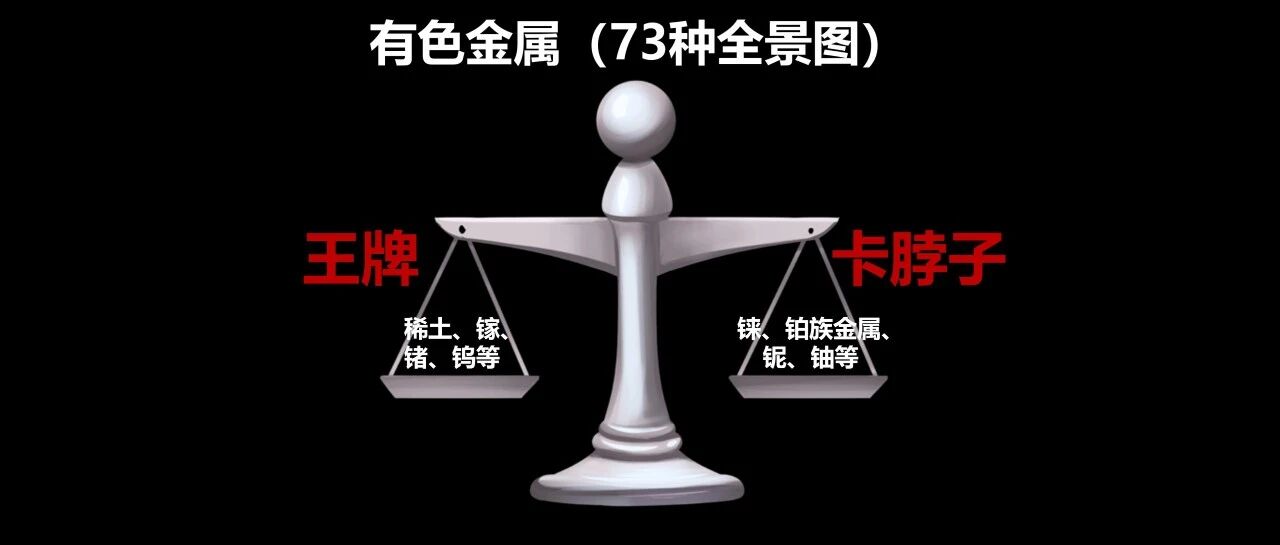
冰与火!中国有色金属的王牌VS卡脖子(部分高度依赖进口):73种有色金属全景图、战略价值与未来机遇梳理
材料汇· 2026-03-01 15:46
Core Viewpoint - The article emphasizes the strategic importance of non-ferrous metals in modern industry, highlighting their role in various sectors such as new energy vehicles, aerospace, and semiconductor manufacturing, and outlines the complete value chain of these metals in supporting China's manufacturing upgrades and technological advancements [3][15]. Summary by Sections 1. Definition and Value of Non-Ferrous Metals - Non-ferrous metals are defined as all metals excluding iron, manganese, and chromium, categorized into five main types based on their industrial applications and properties [5]. - The article proposes a redefinition of these metals using industry labels to better reflect their core value and relevance in modern manufacturing [4]. 2. Types of Non-Ferrous Metals - **Light Metals**: Includes aluminum and magnesium, crucial for lightweight applications in manufacturing, with aluminum projected to reach over 40 million tons in China by 2025, accounting for over 60% of global production [7]. - **Heavy Metals**: Comprises copper, nickel, and cobalt, essential for electrical applications and the backbone of the economy, with copper demand in the new energy sector expected to exceed 25% by 2025 [8]. - **Precious Metals**: Includes gold and silver, recognized as hard currencies and vital for high-end manufacturing, with central banks expected to increase gold reserves by over 1,200 tons in 2025 [9]. - **Rare Metals**: This category includes lithium and rare earth elements, which are critical for high-end manufacturing and military applications, with China holding nearly 50% of global rare earth reserves [10][12]. - **Metalloids**: Such as silicon, which is foundational for the semiconductor and photovoltaic industries, with over 95% of semiconductor chips based on silicon [13]. 3. Role in New Energy and Semiconductor Industries - Non-ferrous metals are identified as essential for the new energy revolution, with lithium, cobalt, and nickel being key materials for batteries, and demand for lithium expected to grow by 25% by 2025 due to the surge in electric vehicle sales [17][19]. - In the semiconductor sector, metals like gallium and germanium are crucial for chip manufacturing, with China controlling over 90% of global gallium and germanium production [27]. 4. Strategic Importance in Aerospace and Military - Non-ferrous metals define the performance limits of aerospace and military equipment, with titanium alloys being essential for aircraft and high-temperature alloys being critical for jet engines [29][30]. - Rare earth elements are vital for military applications, with China dominating the supply of these materials [30]. 5. Economic and Financial Security - Non-ferrous metals are fundamental to national economic stability, with copper being a key material in the electrical system, and gold serving as a hedge against geopolitical risks [34][32]. - The article highlights the importance of uranium and thorium for nuclear energy, which is crucial for achieving carbon neutrality goals [34]. 6. Global Competitive Landscape - China holds significant advantages in the non-ferrous metals sector, including leading positions in rare earths and critical materials for semiconductors, but faces challenges in high-end processing technologies and resource dependencies [36][44]. - The article identifies both strengths, such as the complete supply chain for rare earths, and weaknesses, including high import dependencies for certain critical metals like platinum and cobalt [37][44].
招商宏观:在中性情境下,2026年PPI同比大概率于二季度中后期转正
Sou Hu Cai Jing· 2026-02-12 03:45
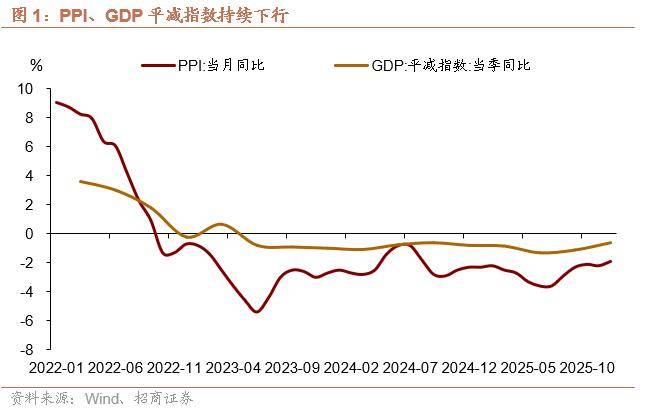
Core Viewpoint - The return of inflation is one of the macro themes in China for 2026, driven by three main factors: the marginal demand for commodities like copper due to artificial intelligence, the decline of the US dollar index since 2025 enhancing the financial properties of commodities, and resource populism increasing global investor concerns about commodity supply [1][2]. Group 1: PPI Trends and Influences - Insufficient domestic demand is the primary drag on PPI from 2022 to 2025, with real estate investment being the decisive factor contributing over 60% to the decline [3][4]. - The PPI's low performance and the divergence between nominal GDP and real GDP highlight the negative impact of price declines on economic perception, with PPI being negative for 39 consecutive months by the end of 2025 [3][4]. - The contribution of various factors to PPI changes shows that demand factors, particularly in real estate, have the most significant impact, while supply and oil price factors contribute less [4][10]. Group 2: Industry Contributions to PPI - Since 2022, key industries such as oil and coal processing, chemical manufacturing, and non-ferrous metallurgy have significantly increased their contribution to PPI, shifting the pricing power from traditional real estate to energy, resources, and high-end manufacturing [10][11]. - The eight major industries contributing to PPI include oil and coal processing, chemical manufacturing, and electrical machinery, accounting for approximately 70% of the overall PPI changes [10][11]. Group 3: Commodity Market Dynamics - The commodity market has entered a significant upward cycle since the second half of 2025, supported by a depreciating dollar and global credit expansion, which improves the financial environment for commodities [2][24]. - Industrial metals have seen substantial price increases, with copper and aluminum prices rising by 18.51% and 45.78% respectively since early 2025, driven by structural demand and supply constraints [17][26]. - Energy and chemical sectors are currently lagging in price recovery but are expected to gain momentum as geopolitical tensions and domestic economic recovery support demand [21][22]. Group 4: Future PPI Projections - The PPI is likely to turn positive in the second half of 2026, with key commodities like iron ore, crude oil, and copper expected to drive this change, showing a strong correlation with PPI movements [2][36]. - The analysis indicates that the PPI's upward movement will be influenced by the ongoing price increases in major commodities, with a potential earlier turnaround in PPI if commodity prices rise significantly [39][40].
北交所2026年01月月报:一级市场吐故纳新,新股市场冻结资金破万亿
Guoxin Securities· 2026-02-05 10:45
Investment Rating - The report maintains an "Outperform" rating for the industry [5] Core Insights - The North Exchange's stock market activity has significantly increased, with new stock market funds exceeding 1 trillion [1] - The North Exchange added 5 new listed companies this month, bringing the total to 292, with a total market value of 936.30 billion and a circulating market value of 580.36 billion, reflecting increases of 7.7% and 10.3% respectively [1][13] - The North Exchange's trading volume and amount for the month were 24.52 billion shares and 607.72 billion, with a month-on-month increase of 26.8% in volume and 38.6% in amount [1][16] - The North Exchange 50 Index had a price-to-earnings ratio (PE-TTM) of 45.96, ranking in the 60.46th percentile over the past two years, and a price-to-book ratio (PB-MRQ) of 9.50, ranking in the 91.10th percentile [2][25] - The North Exchange's various sectors, except for the automotive sector, experienced a general increase in returns this month, with significant gains in media, non-ferrous metals, telecommunications, public utilities, and agriculture [32][37] Summary by Sections Market Overview - The North Exchange's trading activity has shown a notable increase, with a monthly trading volume of 24.52 billion shares and a trading amount of 607.72 billion, marking a month-on-month increase of 26.8% and 38.6% respectively [1][16] - The North Exchange's total market value reached 936.30 billion, with a circulating market value of 580.36 billion, reflecting increases of 7.7% and 10.3% respectively [1][13] Valuation - As of January 30, the North Exchange 50 Index's PE-TTM was 45.96, and its PB-MRQ was 9.50, indicating high valuation levels compared to historical data [2][25] - The dividend yield was recorded at 0.72, placing it in the 18.09th percentile over the past two years [2][25] Industry Performance - The North Exchange 50 Index experienced a monthly increase of 6.33%, while the specialized index rose by 6.06% [32] - Most sectors saw positive returns, with notable increases in media, non-ferrous metals, telecommunications, public utilities, and agriculture [37] - The top-performing stocks this month included Kema Materials, Medela, Aishalon, and Guoliang New Materials [42]
【有色发布】一图速览 | 强化创新 深化管理——以新质生产力建设现代有色金属企业
Xin Lang Cai Jing· 2026-01-26 11:16
Core Viewpoint - The company is implementing a transformation and upgrading strategy to enhance its core competitiveness and operational efficiency, focusing on stable growth and structural adjustment while addressing challenges in the industry [3][25]. Group 1: Growth and Structural Adjustment - The company is committed to fulfilling its mission as a state-owned enterprise by achieving stable and progressive development [4][26]. - It aims to address weaknesses in the industry by precisely adjusting its main business structure and enhancing its operational capabilities [27][28]. Group 2: Reform and Innovation - The company is reforming its main business structure and governance system to tackle management shortcomings and enhance efficiency [28][29]. - It emphasizes the importance of innovation as the primary driving force for growth and aims to strengthen its technological capabilities [20][48]. Group 3: Strategic Goals - The company has set a target for its main business structure to achieve a ratio of 5:4:1 for traditional, new, and future products, respectively, to ensure substantial growth [35][36]. - By the end of the "15th Five-Year Plan," the company aims for an average annual revenue growth of over 7.5%, industrial output growth of over 8%, and profit growth of over 8% [39][40]. Group 4: Core Competitiveness - The company is focusing on five dimensions to enhance its core competitiveness, including main business competitiveness, technological competitiveness, cost competitiveness, talent competitiveness, and market competitiveness [41][43]. - It aims to integrate development with safety, ensuring effective risk management while pursuing long-term growth [43][44]. Group 5: Leadership and Governance - The company is strengthening its party leadership and governance to ensure political integrity and accountability within its operations [49][50]. - It is committed to enhancing its management practices and ensuring that its operations align with national strategic goals [22][50].

云南“十五五”规划建议:做强做优做大资源型产业
Xin Hua Cai Jing· 2025-12-29 05:20
Core Viewpoint - The Yunnan Provincial Party Committee has released recommendations for the 15th Five-Year Plan, emphasizing the strengthening and expansion of resource-based industries through technological advancements and deep processing [1] Group 1: Resource-Based Industries - The plan aims to enhance the position of aluminum, silicon, phosphorus, non-ferrous, and rare metals in the national industrial chain and supply chain [1] - There is a focus on promoting green aluminum towards deep processing and terminal manufacturing, with the goal of establishing a "Green Aluminum Valley" [1] - The initiative includes upgrading the silicon photovoltaic industry and creating major production bases for leading enterprises [1] Group 2: Phosphorus and Non-Ferrous Metals - The development of fine phosphorus chemicals is prioritized, aiming to couple phosphorus resources with new energy battery materials and create a national advanced manufacturing cluster for green phosphorus chemicals [1] - The plan emphasizes the deep processing of non-ferrous metals and the extension of rare metals from materials to devices and equipment, with a focus on building a national advanced manufacturing cluster for rare metals in central Yunnan [1] Group 3: Mineral Resource Exploration and Utilization - A new round of strategic actions for mineral exploration is proposed to promote the exploration, development, and increase of important mineral resources [1] - The plan aims to improve the comprehensive utilization of mineral resources and strengthen the coordinated development of strategic and advantageous minerals [1] - There is an emphasis on the comprehensive utilization of recycled resources such as aluminum, copper, and platinum group metals [1] - The initiative includes the transformation and upgrading of industries such as mining, metallurgy, chemicals, building materials, and light industry [1]
供应链金融如何超越行业周期
Jin Rong Shi Bao· 2025-12-29 01:32
Core Viewpoint - The article emphasizes the necessity for a paradigm shift in supply chain finance, moving from an industry-focused perspective to a commodity-centric approach, which is essential for enhancing the effectiveness of financial services to the real economy [1][2][6]. Group 1: Shift in Perspective - The traditional supply chain finance model relies heavily on macroeconomic cycles and industry conditions, which limits its ability to accurately assess individual companies' resilience and risks [1][3]. - A refined focus on commodities allows for a more precise analysis framework that penetrates industry appearances to reveal the underlying value of businesses [2][3]. Group 2: Credit Assessment Transformation - Credit evaluation under the commodity perspective shifts from static financial data analysis to dynamic management of commodity price risks and hedging effectiveness, providing deeper insights into a company's operational health [4][6]. - This transformation supports the implementation of the central financial work meeting's directives, enabling financial resources to reach the core risk and value nodes of enterprises [4][6]. Group 3: Financial Ecosystem Restructuring - The integration of a commodity perspective is reshaping supply chain finance, leading to a new financial service ecosystem that aligns closely with industry dynamics [11][12]. - Financial institutions are encouraged to develop comprehensive risk management and financing solutions that encompass the entire supply chain cycle, enhancing operational efficiency and reducing credit friction [12][14]. Group 4: Role of Futures Market - A mature and efficient futures market is crucial for establishing a commodity perspective, as it provides essential infrastructure for price discovery, risk management, and resource allocation [7][9]. - The growth of China's futures market, with a significant increase in trading volume and product variety, reflects its alignment with national strategies to enhance capital market functions and support the real economy [9][10]. Group 5: Digital Transformation and Innovation - The adoption of digital technologies, such as blockchain and IoT, is transforming commodities into clear, traceable digital assets, facilitating better credit flow and risk management [5][13]. - The establishment of a digital credit infrastructure is essential for overcoming traditional barriers in financing and regulatory challenges associated with physical commodities [13][18]. Group 6: National Resource Security - The commodity perspective is not only a financial innovation but also a strategic necessity for ensuring national supply chain and resource security amid global geopolitical changes [15][23]. - The active participation of private enterprises in hedging activities demonstrates the effectiveness of the commodity-based supply chain finance model in managing price risks and stabilizing operations [16][19]. Group 7: Future Outlook - The future of supply chain finance is expected to evolve into a deeply integrated ecosystem that leverages technology and data across institutions and markets, enhancing the efficiency and safety of financial resource allocation to the real economy [24][25]. - This evolution is crucial for achieving the fundamental goal of improving financial services to the real economy, thereby supporting China's economic stability and growth [25][27].