秘鲁蓝莓

Search documents
新春走基层丨鲜货琳琅海外来
He Nan Ri Bao· 2026-02-18 23:08
Core Insights - The import of fresh seafood and fruits has significantly increased during the Chinese New Year, reflecting a shift in consumer preferences towards quality and variety in food choices [1][2][4] Group 1: Import Trends - A total of 103 tons of Atlantic salmon from Norway and Iceland arrived at Zhengzhou International Airport, benefiting from expedited customs services [1] - In January, the total import volume of fresh produce in Henan province reached 1,726.14 tons, marking a year-on-year increase of 141.06%, with imported seafood alone increasing by 156.27% [2] Group 2: Consumer Behavior - Consumers are increasingly opting for imported fresh produce as gifts, indicating a shift in gifting culture towards more unique and practical options [2] - The demand for imported fruits in county-level markets has surged, with some chain supermarkets reporting over a 40% year-on-year increase in sales [2] Group 3: Market Dynamics - The consumption of imported fresh produce has evolved from occasional indulgence to a staple in households, aligning with the growing emphasis on quality and diversity in consumer spending [4] - The "Happy Shopping Spring Festival" campaign in Henan, which includes the distribution of 200 million yuan in consumer vouchers, aims to stimulate spending across various sectors, including retail and dining [4]

洋水果的“亲民”之旅:从码头到果盘的鲜甜跨越
Zhong Guo Jing Ji Wang· 2026-02-11 14:39
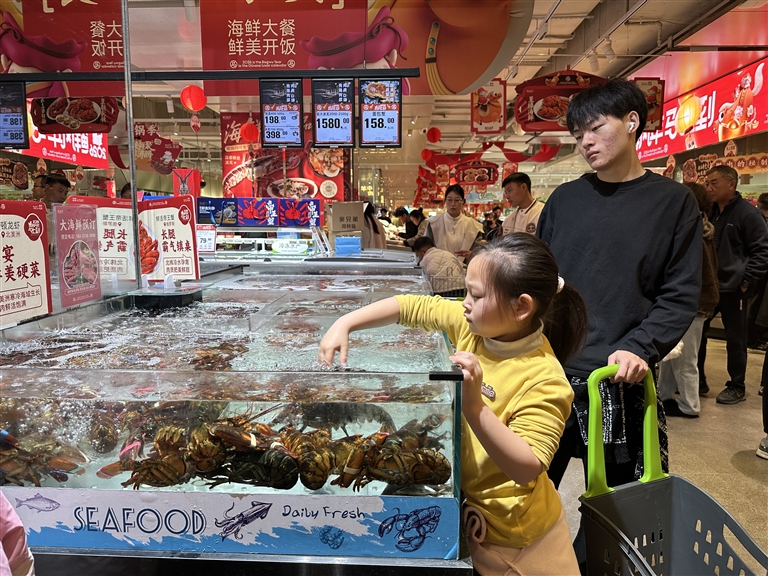
Core Insights - The article highlights the transformation of imported fruits in Qingdao, particularly focusing on the increased accessibility and affordability of products like cherries and durians due to improved supply chains and government policies [1][2][3] Group 1: Market Dynamics - The Qingdao Oriental Dingxin International Agricultural Products Trading Center has become a bustling hub for imported fruits, with a significant increase in the volume of goods being transported, including a notable rise in the popularity of Chilean cherries, which have seen a price drop of approximately 20% compared to last year [1][2] - Durians have emerged as a major product, with daily imports reaching up to 4 million pounds, marking a shift from being a luxury item to a common fruit in the market [1][2] Group 2: Supply Chain Improvements - The establishment of the first imported fruit port in Shandong has streamlined the supply chain, allowing wholesalers to connect directly with producers in Thailand, reducing the time for durians to reach Qingdao to about 7 days, and potentially down to 5 hours with the upcoming direct flight route [2] - The Qingdao Customs has implemented policies that have reduced the average customs clearance time for imported fruits by over 30%, enhancing freshness and stabilizing prices [2] Group 3: Economic Impact - The trading center is projected to achieve a transaction volume exceeding 10 billion yuan in 2025, showcasing its role as a significant fruit distribution hub in Northern China, with over 300 varieties of imported fruits from more than 50 countries [2] - The evolution of imported fruits from luxury to everyday items reflects not only consumer trends but also the city's enhanced openness and improved trade systems [3]
希望自贸港落地更多好政策惠及老百姓
Xin Lang Cai Jing· 2026-01-19 17:09
Core Insights - The Hainan Free Trade Port has been operational for one month, but the prices of imported fruits have not significantly changed, raising concerns among local residents about future price reductions [1][2] - Local markets in Haikou offer a wide variety of fruits, including both local and imported options, with some residents expressing a desire for better policies to lower prices on imported fruits [1] Market Overview - The South-North Fruit Wholesale Market features a range of imported fruits, with prices varying significantly. For example, Malaysian Musang King durian is priced at 27.8 yuan per jin, while Chilean cherries are 65 yuan per bag [2] - Supermarkets in Haikou also stock various imported fruits, with prices such as 19.8 yuan for 3 jin of American "September Red" oranges and 49.8 yuan per jin for Chilean cherries. However, these fruits are primarily sourced through domestic channels, limiting the benefits from tariff reductions [2]

大品牌纷纷扎根,新兴城市消费藏着多少潜力?
Qi Lu Wan Bao· 2026-01-13 08:31
Core Viewpoint - The consumption landscape in China is shifting as brands expand into emerging cities, breaking the previous dominance of first-tier cities in retail and lifestyle offerings [1][2]. Group 1: Emerging Cities and Consumption Growth - The growth in emerging cities is driven by population influx and upgraded consumer demand, with a projected 4% year-on-year increase in social retail sales for 2025 [2]. - Cities like Guiyang, Hefei, and Changsha are expected to see a population increase of over 100,000 in 2024, indicating a shift in migration patterns as more individuals choose to stay in their hometowns for work [2][4]. - The demand for quality and experience among young consumers in emerging cities is now comparable to that of first-tier cities, leading to a convergence in lifestyle preferences [4][6]. Group 2: Brand Performance and Market Dynamics - Hema's "Box District Index" indicates strong market performance in emerging cities, with cities like Shijiazhuang and Xuzhou showing indices of 171 and 141, respectively, surpassing the national average [4]. - Hema's sales of Dungeness crabs in Shandong increased by over 150% during the "Eleventh" holiday, with Jinan and Qingdao experiencing growth rates of 450% and 400% [5]. - The shift from low-price competition to quality, personalized, and emotional consumption is becoming mainstream, with consumers in emerging cities increasingly seeking premium products [6][8]. Group 3: Strategic Opportunities and Policy Support - Emerging cities are positioned to benefit from supportive policies aimed at expanding domestic demand and enhancing infrastructure, as outlined in the 15th Five-Year Plan for Shandong [9][11]. - The development of a multi-polar support system is encouraged, with cities like Linyi and Jining being targeted for accelerated growth, creating new opportunities for brands [11][12]. - The robust consumer base and logistics advantages in cities like Linyi, which boasts the largest market cluster in China, are attracting brands like Hema to establish a presence [11][12].
盒马加速布局 “押宝”新兴城市消费潜力
Sou Hu Cai Jing· 2026-01-07 09:13
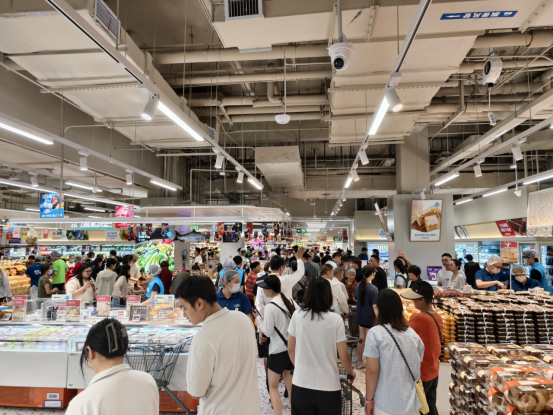
Core Insights - Hema's overall revenue growth rate exceeded 40% in 2025, with the company entering 40 new cities and opening over 200 new stores under the "Super Box" brand [1][11] - The contribution of emerging cities to Hema's performance is significant, with stores in cities like Shijiazhuang and Linyi experiencing high customer traffic and sales upon opening [2][4] Expansion Strategy - Hema has been actively expanding its footprint, particularly in emerging cities, which are seen as having strong consumer potential [2][11] - The "Box District Index" was introduced to measure store activity, with Shijiazhuang's index soaring to 171, indicating robust consumer engagement compared to major cities [2] Consumer Behavior - Hema's data shows that consumers in emerging cities have a strong demand for quality products, as evidenced by impressive sales figures during store openings [4][10] - The rise in consumer spending is linked to the economic growth and improved living standards in these cities, with younger populations showing a keen interest in quality and trendy products [7][10] Market Dynamics - The presence of Hema has positively impacted local shopping districts, significantly increasing foot traffic and sales in surrounding areas [6][8] - The growth in consumer spending is attributed to effective population dynamics and structural purchasing power rather than just administrative levels [8] Future Outlook - Hema aims to enhance its market presence by focusing on supply chain resilience, user experience, and organizational efficiency to meet evolving consumer demands [12] - The company plans to support partners and suppliers to achieve significant sales growth, indicating a commitment to sustainable development in the retail sector [12]

6600吨智利车厘子运抵天津港
Bei Jing Wan Bao· 2026-01-02 08:05
Core Insights - The first shipment of Chilean cherries for the 2025-2026 season has arrived at Tianjin Port, marking the beginning of the import season for northern China [1] - The shipment includes approximately 6,600 tons of cherries in 314 containers, along with other South American products such as avocados, coffee, blueberries, bananas, and king crabs [1] - Tianjin Port is expected to receive a total of four shipments of cherries during this season, indicating a growing trend in the import of Chilean cherries to China [1] Logistics and Operations - Tianjin Port Group has implemented a customized "one ship, one policy" approach to streamline operations, reducing the handling time for each container of cherries to under 20 minutes [1] - The logistics system is designed to flexibly match over ten different delivery modes, allowing for delivery to major markets in the Beijing-Tianjin-Hebei region within 5 hours and to East, South, Northwest, and Northeast China within 30 hours [1]

智利车厘子运抵天津港,5小时内可达京津冀主要市场
Bei Jing Ri Bao Ke Hu Duan· 2026-01-02 05:04
Core Viewpoint - The arrival of the "Iberia Star" vessel at Tianjin Port marks the beginning of the 2025-2026 season for Chilean cherries in northern China, bringing fresh produce to consumers in the Beijing-Tianjin-Hebei region [1][3]. Group 1: Import Details - The "Iberia Star" vessel carried 314 containers weighing approximately 6,600 tons of Chilean cherries [1]. - This season marks the third year of Chilean cherries entering China through Tianjin Port, with an expectation of four vessels arriving [3]. Group 2: Additional Products - Alongside cherries, the shipment included other South American products such as Chilean avocados, Colombian coffee, Peruvian blueberries, Ecuadorian bananas, and Chilean king crabs [3]. Group 3: Logistics and Operations - Tianjin Port Group has implemented a customized "one ship, one policy" approach, reducing the operational time for a single container of cherries to under 20 minutes [5]. - The logistics system is designed to flexibly match over ten different delivery modes, allowing for delivery to major markets in the Beijing-Tianjin-Hebei area within 5 hours and coverage to East China, South China, Northwest, and Northeast regions within 30 hours [5].

今冬我国北方首船智利车厘子抵津
Xin Lang Cai Jing· 2026-01-02 03:27
Core Viewpoint - The arrival of the "Iberia Star" vessel carrying 314 containers of approximately 6,600 tons of Chilean cherries and avocados marks the successful entry of Chilean imports into Tianjin Port, enhancing the variety of products available to consumers this winter [1] Group 1: Import Details - The "Iberia Star" vessel docked at Tianjin Port, bringing in Chilean cherries and avocados among other South American goods [1] - This year marks the third year of direct shipping from South America to Tianjin for Chilean cherries [1] - An additional three shipments of Chilean cherries are expected to arrive by the end of January [1] Group 2: Product Variety - In addition to cherries, the shipment includes other South American products such as Colombian coffee, Peruvian blueberries, and Chilean king crabs [1] - The arrival of these products is set to enrich the dining options for consumers during the winter season [1]
“抢鲜”上桌!今冬我国北方首船智利车厘子抵津
Xin Hua Wang· 2026-01-02 03:18
Core Points - The first shipment of Chilean cherries for this winter has successfully arrived at Tianjin Port, marking the third year of direct shipping from South America to Tianjin [1][3] - In addition to cherries, other South American products such as avocados, Colombian coffee, Peruvian blueberries, and Chilean king crabs are also included in the shipment, enhancing the variety available to consumers this winter [1][3] Group 1 - The shipment contains 314 containers weighing approximately 6,600 tons, with cherries being the primary product [1] - The cherries were hand-picked and transported to processing facilities within 4 hours, and the direct shipping route from South America to Tianjin takes only 23 days [3] - Tianjin Port has streamlined operations, reducing the handling time for each container of cherries to under 20 minutes, allowing for rapid distribution to major markets in the Beijing-Tianjin-Hebei region within 5 hours, and to East China, South China, Northwest, and Northeast regions within 30 hours [3] Group 2 - The current cherry season is expected to see improved quality and the introduction of a new yellow cherry variety, with an increase in demand from large fruit traders and e-commerce platforms [4] - Prices for cherries this season are anticipated to decrease by 10-20% compared to previous years due to an earlier harvest [4]

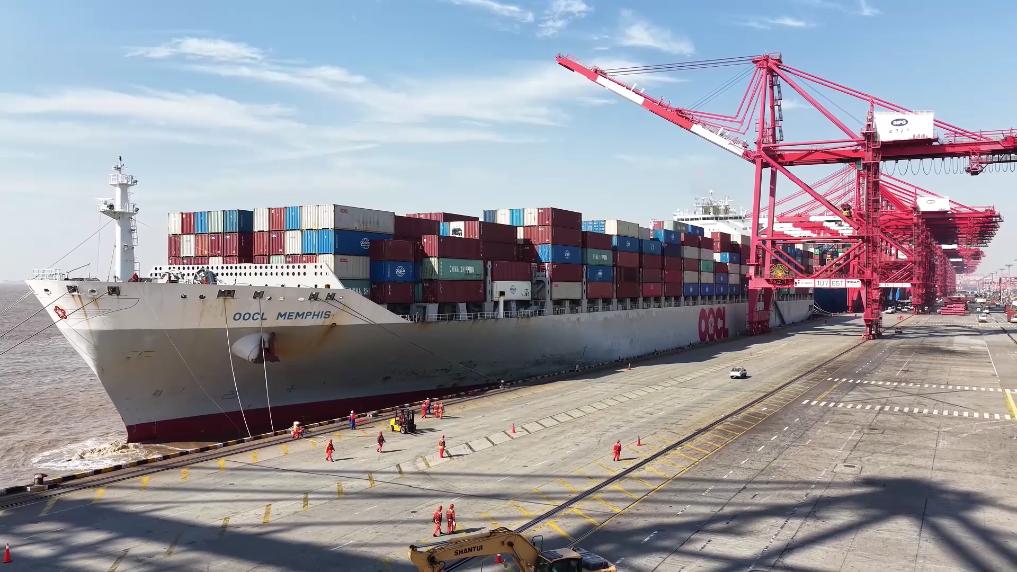
对外贸易“双向奔赴” “钱凯-上海”海运航线进出口货值突破50亿元
Xin Hua She· 2025-12-09 02:08
Core Insights - The "QianKai-Shanghai" shipping route has achieved a significant milestone, with import and export value surpassing 5 billion RMB, reaching 5.35 billion RMB as of December 4, and facilitating 197,000 tons of goods [1][3] - The shipping route has notably reduced the maritime transport time between China and Peru from 35-40 days to 23 days, resulting in over 20% savings in logistics costs [1] - In the first ten months of this year, the import and export value between Shanghai and Peru increased by 47.1% compared to the same period last year, establishing the route as a vital economic corridor between China and Latin American countries [1] Group 1 - The "QianKai-Shanghai" shipping route is set to celebrate its first anniversary, marking a year of successful operations [1] - The route has facilitated the direct shipment of over 5,948 domestic vehicles from Shanghai to QianKai Port in Peru since its inception [1][3] - A "green channel" for customs clearance has been established to ensure efficient processing of high-demand Peruvian products such as avocados and blueberries [3] Group 2 - The official opening of QianKai Port occurred on November 14, 2024, with the first container ship arriving at Shanghai Yangshan Port on December 18 of the same year [3]