
纯债类产品

Search documents
银行理财2026年3月月报:规模恢复增长,告别收益“打榜”
Guoxin Securities· 2026-03-07 10:45
Investment Rating - The report maintains an "Outperform" rating for the banking wealth management industry, indicating expected performance exceeding the market benchmark by over 10% [39]. Core Insights - The wealth management scale is gradually recovering, with a slight month-on-month increase in February, reaching a total of 31.7 trillion yuan, indicating a positive growth trend [1][11]. - Regulatory measures have been implemented to address the "ranking" phenomenon in wealth management products, which previously distorted market order by artificially inflating short-term high-yield products. This shift is expected to lead to a more stable and sustainable operating environment in the long term [2][3]. - The downward trend in baseline yields for wealth management products is prompting a shift towards enhanced yield strategies, with recent interest in equity and gold strategies. For instance, a certain wealth management product achieved over 7% annual net value growth through diversified asset allocation [3][10]. Summary by Sections Wealth Management Scale - In February, the wealth management product stock scale slightly increased by 0.1 trillion yuan, with cash management and fixed-income products remaining the dominant categories [11][10]. New Product Issuance - The initial fundraising scale for newly issued products in February was 299.5 billion yuan, primarily consisting of fixed-income products. The average performance benchmark for new products showed a slight rebound to 2.35% [18][10]. Product Performance - Most products that matured in February met their performance benchmarks, with 1,434 closed-end wealth management products reaching expected returns [27][10].
银行理财 2026 年 2 月月报:从财报看理财子如何布局多资产
Guoxin Securities· 2026-02-08 10:45
Investment Rating - The report maintains an "Outperform" rating for the banking sector, indicating expected performance above the market benchmark by more than 10% [4][41]. Core Insights - The banking wealth management sector is experiencing a slight increase in scale, with a focus on loan growth at the beginning of the year, leading to a stable overall scale in January [1]. - The industry is characterized by a significant "Matthew Effect," where leading wealth management companies dominate the market, while smaller firms are still in the early stages of development [1][10]. - The transition from pure fixed income to "fixed income plus" and multi-asset strategies is a gradual but firm trend in the industry, with mixed-asset products becoming the main battlefield for this transformation [1][2]. Summary by Sections Wealth Management Product Layout - As of the end of 2025, there are 191 institutions with active wealth management products, with wealth management companies holding 92.25% of the total market scale [10]. - The mixed-asset and equity products are primarily concentrated among large banks and leading joint-stock banks, reflecting a strategic focus on these areas [10]. Performance Metrics - In January 2026, the weighted average annualized yield of bank wealth management products rose to 3.62%, an increase of 181 basis points from the previous month [11]. - The initial fundraising scale for newly issued products in January was 423.8 billion, with most being fixed-income products [20]. Product Development Strategy - Wealth management subsidiaries are advised to prioritize mixed-asset products to build experience in equity and derivatives management before cautiously introducing pure equity products [2]. - Leading firms like Agricultural Bank Wealth Management and Everbright Wealth Management have established scale advantages in mixed-asset products, leveraging their channel and brand strengths [2]. Market Outlook - The investment strategy for 2026 should shift from focusing on yield elasticity to ensuring yield certainty, emphasizing risk budget management and the use of innovative tools and strategies [3]. - The report suggests increasing the development and application of structured products linked to broad or industry indices to meet the demand for stable returns in a volatile market [3].
银行理财2026年2月月报:从财报看理财子如何布局多资产-20260208
Guoxin Securities· 2026-02-08 08:25
Investment Rating - The report maintains an "Outperform" rating for the banking sector, indicating expected performance above the market benchmark by more than 10% [4][41]. Core Insights - The banking wealth management sector is experiencing a low overall allocation in multi-asset products, with significant individual differences and early-stage development characteristics [1]. - The industry is transitioning from pure fixed income to "fixed income plus" and multi-asset strategies, with mixed products currently being the main battleground for this transformation [2]. - In January 2026, the average annualized yield for bank wealth management products increased to 3.62%, reflecting a recovery of 181 basis points month-on-month [11]. Summary by Sections Market Overview - In January, the wealth management product scale remained stable, with a total scale of 31.6 trillion yuan, showing little month-on-month change [13]. - The mixed product scale reached 6,383.7 billion yuan, significantly higher than the equity product scale of 271.5 billion yuan, indicating a preference for mixed strategies [12]. Product Performance - The newly issued products in January had an initial fundraising scale of 4,238 billion yuan, primarily consisting of fixed income products, with the performance benchmark remaining stable at 2.33% [20]. - Most of the closed-end bank wealth management products that matured in January met their performance benchmarks, demonstrating a strong performance in the sector [29]. Strategic Development - Wealth management subsidiaries are focusing on mixed products first, gradually building a multi-asset allocation framework before introducing pure equity products [2]. - Leading wealth management institutions are leveraging their channel and brand advantages to strengthen mixed products as core tools for wealth management clients [2].
信托业成32万亿元“大块头”,对权益资产兴趣愈发浓厚
Shang Hai Zheng Quan Bao· 2025-12-22 23:57
Core Insights - The trust industry in China has seen significant growth, with total trust assets reaching 32.43 trillion yuan by the end of June, marking a year-on-year increase of 20.11% [1][2] - The shift towards asset management and service trusts has become the dominant business model, replacing traditional financing and channel trusts [2] Group 1: Industry Growth - As of June, the trust asset scale increased by 2.87 trillion yuan compared to the end of last year, reflecting a growth rate of 9.73% [1][2] - The trust asset scale has rebounded from a low of 20.49 trillion yuan at the end of 2020 to over 32 trillion yuan in mid-2024, indicating a recovery trend [2] Group 2: Asset Allocation Trends - By mid-2024, the scale of securities investment trusts reached 12.48 trillion yuan, accounting for 51.09% of the total trust assets, with a year-on-year increase of 3.38 trillion yuan [1][4] - Trust funds are increasingly flowing into the securities market, with over 10 trillion yuan directed towards this sector, driven by regulatory guidance and a shift towards standardized products [1][4] Group 3: Interest in Equity Assets - Trust funds allocated to the stock market increased to 0.78 trillion yuan by mid-2024, up from 0.72 trillion yuan at the beginning of the year, representing a rise in allocation percentage from 3.25% to 5.18% [5] - The demand for equity assets is growing, with a notable increase in the issuance of equity-related trust products, reflecting a shift in investment strategy among trust companies [5]


信托业成32万亿元“大块头” 对权益资产兴趣愈发浓厚
Shang Hai Zheng Quan Bao· 2025-12-22 18:23
Core Insights - The trust industry in China has seen significant growth, with total trust assets reaching 32.43 trillion yuan by the end of June, marking a year-on-year increase of 20.11% [1][2] - The shift towards asset management and service trusts has become the dominant business model, replacing traditional financing and channel trusts [2] Group 1: Industry Growth - As of June, the total trust asset scale increased by 2.87 trillion yuan compared to the end of last year, reflecting a growth rate of 9.73% [1][2] - The trust asset scale has rebounded from a low of 20.49 trillion yuan at the end of 2020 to a historical peak of over 32 trillion yuan in 2024 [2] Group 2: Asset Allocation Trends - By June, the balance of asset management trusts was approximately 24.43 trillion yuan, accounting for 75.33% of total trust assets [3] - Securities investment trusts reached 12.48 trillion yuan, representing 51.09% of the total scale of fund trusts, with an increase of 1.49 trillion yuan from the end of last year [4] Group 3: Shift to Securities Market - Trust funds have increasingly flowed into the securities market, with the proportion of securities investment trusts rising from 34.34% at the end of 2022 to 51.09% by mid-2025 [4] - The interest in equity assets has grown, with trust funds allocated to the stock market increasing to 0.78 trillion yuan, up from 0.72 trillion yuan at the beginning of the year [7] Group 4: Company Strategies - Several trust companies have reported a trend towards increasing securities asset allocation, with notable growth in their asset management product offerings [5] - The diversification of financial instruments in the securities market and the deepening transformation of the trust industry have made securities assets a competitive focus for trust companies [5]
多方共议居民财富“迁徙”:以专业化服务陪伴客户穿越市场周期
2 1 Shi Ji Jing Ji Bao Dao· 2025-12-12 14:23
Core Insights - The forum discussed the migration of household wealth and the outlook for wealth management in a bull market, highlighting the importance of understanding risk tolerance and investment options for different customer segments [1][4]. Group 1: Wealth Management Strategies - ICBC Wealth Management emphasized that new investors, who have recently moved away from deposits, need to understand the volatility associated with net value management, suggesting R1 products as suitable for low-risk clients [1]. - Beijing Life Insurance highlighted the dual function of life insurance in providing risk coverage and asset appreciation, making it an essential component of comprehensive family asset planning [1][2]. - Suggestions for family insurance asset allocation included prioritizing high-leverage protection products, such as critical illness insurance and medical insurance, to cover core risks, with a recommendation to allocate 5%-10% of annual income for this purpose [2]. Group 2: Technological Integration in Financial Services - CITIC Securities is focusing on building a robust service system through the "Lingxi Platform" and upgrading the "Youwen System" to enhance customer service with a blend of intelligent and human responses [3]. - Jia Shi Wealth is adopting an account-driven approach to investment, providing a product shelf that includes protection, income generation, and appreciation, while ensuring continuous support for clients [3]. Group 3: Targeting Young Investors - JD Technology's Kentrui is addressing the unique characteristics of young internet investors, who are accustomed to high volatility in stocks and lack patience for slow returns from funds, by using familiar language and scenarios for investment education [4]. - The industry consensus emphasizes that successful wealth management should focus on systematic planning based on individual risk tolerance, family lifecycle, and long-term financial goals, rather than chasing short-term trends [4].
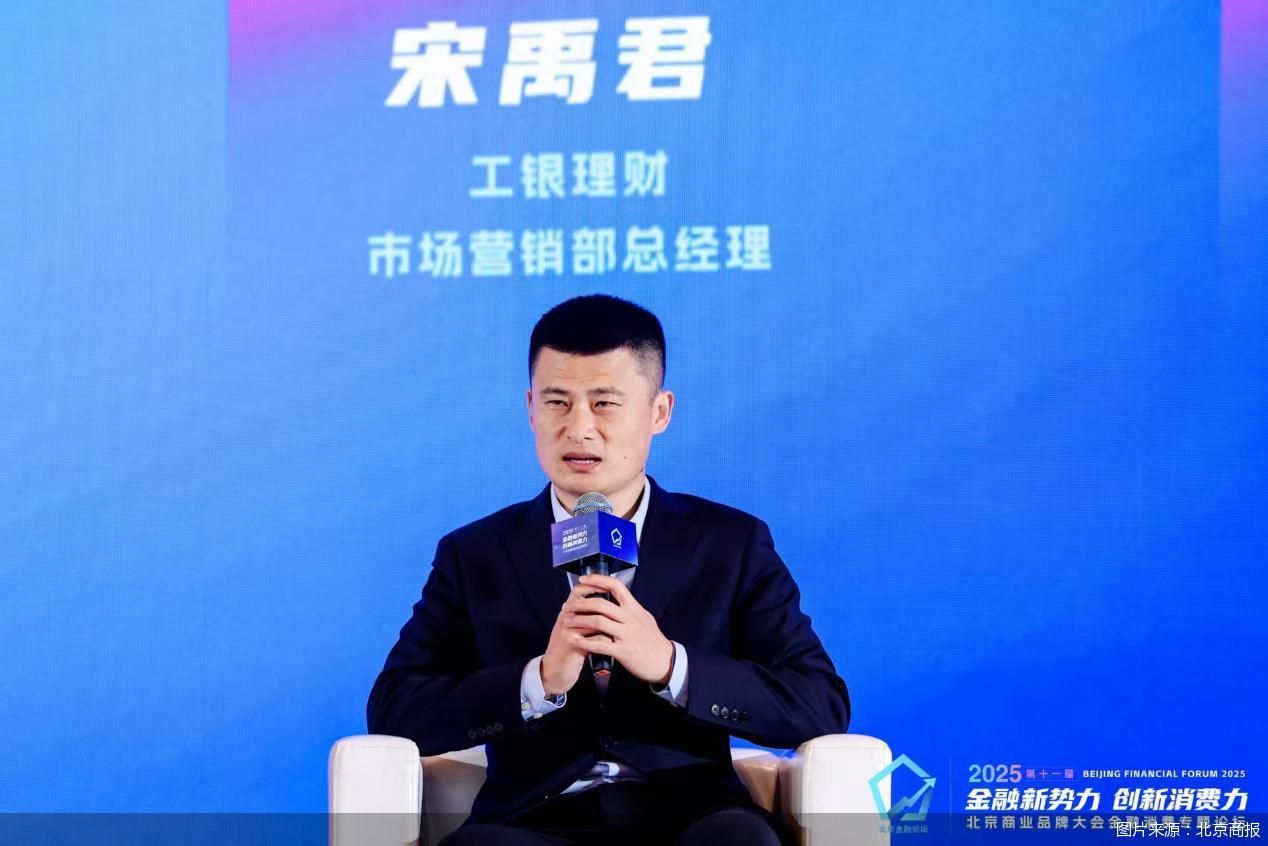
工银理财宋禹君:理财公司以多样化、多层次的产品布局,承接居民财富需求
Bei Jing Shang Bao· 2025-12-11 12:49
Core Insights - The forum discussed the reallocation of residents' deposits and the strategies of wealth management companies in the context of a changing financial landscape [1] Group 1: Factors Influencing Deposit Reallocation - The reallocation of residents' deposits is driven by multiple factors, including a continuous decline in social interest rates, which supports the development of the real economy [3] - The emergence of diverse investment opportunities in capital and commodity markets, such as A-shares, Hong Kong stocks, and precious metals like silver and copper, is attracting residents to seek diversified investments for better asset preservation and appreciation [3] - The increasingly rich ecosystem of the asset management industry allows wealth management companies to offer comprehensive financial options to clients [3] Group 2: Wealth Management Product Landscape - The current scale of bank wealth management products has reached 32.13 trillion yuan, showcasing significant scale advantages [3] - Wealth management companies are committed to providing higher quality products and improving performance returns to help residents preserve and grow their wealth, aligning with the mission of inclusive finance [3] - Wealth management products are characterized by low volatility and stability, aiming to create favorable returns for clients while effectively controlling drawdowns [3] Group 3: Risk Levels and Product Offerings - The risk levels of existing wealth management products are categorized into five levels (R1 to R5), with R1 being the lowest risk suitable for deposit migration clients [4] - Leading wealth management companies, including ICBC Wealth Management, have achieved a comprehensive product layout across all risk levels, terms, strategies, and underlying assets [4] - In addition to R1 products, pure bond and "fixed income plus" products are available for clients with higher risk tolerance, with a wide range of investable categories including A-shares, Hong Kong stocks, preferred stocks, REITs, US stocks and bonds, commodities, and futures options [4]
银行理财2025年12月月报:2026:银行理财能接力险资入市吗?-20251207
Guoxin Securities· 2025-12-07 12:10
Investment Rating - The report maintains an "Outperform" rating for the banking wealth management industry, indicating expected performance above the market benchmark by over 10% [43]. Core Insights - The banking wealth management sector reached a historical high in scale, with approximately 34 trillion yuan in November, and is expected to stabilize around 33 trillion yuan by year-end [1]. - The industry consensus is shifting towards "multi-asset" products as traditional bond returns narrow, with leading institutions actively exploring diverse strategies beyond simple equity allocations [1][2]. - The successful implementation of multi-asset strategies relies on matching the risk-return characteristics of funds, emphasizing the need for long-term capital and investor education [2]. - Collaboration with public funds is essential for building investment capabilities, as banks cannot economically develop comprehensive research teams independently [3][6]. - Regulatory improvements are crucial for unlocking the potential of wealth management funds in the market, encouraging the development of innovative products that align with investor risk tolerance [6][7]. Summary by Sections Industry Scale and Performance - The wealth management sector's scale reached 31.7 trillion yuan in November, with a slight month-on-month increase [12][13]. - The average annualized yield for banking wealth management products in November was 1.23%, reflecting a decrease of 165 basis points from the previous month [12]. Product Development and Strategy - New product issuance in November totaled 271.7 billion yuan, primarily in fixed-income products, with the average performance benchmark for new products declining to 2.34% [20]. - The majority of maturing products met their performance benchmarks, indicating stability in product performance [31]. Market Trends and Future Outlook - By 2026, it is anticipated that wealth management funds will increasingly allocate to equity markets, with expected annual inflows ranging from 150 billion to 250 billion yuan [7]. - The unique requirements of wealth management funds for yield certainty and volatility control will drive public funds to innovate and develop matching products [7].
银华基金:推进产品体系建设 满足投资者多元化配置需求
Xin Lang Ji Jin· 2025-10-15 02:13
Group 1 - The core viewpoint of the article emphasizes the importance of high-quality development in public funds, as outlined in the regulatory action plan by the China Securities Regulatory Commission [1] - The Beijing Securities Association, in collaboration with various stakeholders, has initiated a series of activities aimed at promoting high-quality development in public funds [1] - Silver Hua Fund has actively responded to national calls by innovating its product offerings, including pension-targeted funds and technology-focused investment products [1][2] Group 2 - In the fixed income sector, Silver Hua Fund is enhancing its research capabilities and product development, focusing on differentiated growth paths [2] - The company manages a diverse range of public fund products, with a total asset management scale exceeding 1,026.6 billion yuan as of June 30, 2025 [2] - Looking ahead, Silver Hua Fund aims to uphold its commitment to long-term value creation in the asset management industry [2]
汇百川基金倪伟:“固收+”产品是长期资产配置趋势
Zhong Zheng Wang· 2025-09-16 13:19
Group 1 - The core viewpoint is that "fixed income +" products have high allocation value due to the inability of traditional pure bond products to meet investor return requirements, while the stock market's risk appetite has significantly increased, leading to numerous structural opportunities and enhanced strategy opportunities [1][2] - The performance growth of "fixed income +" products this year is primarily attributed to the rise in the equity market, with the equity exposure in these products typically ranging from 10% to 30%, which has a greater impact on the portfolio compared to fixed income assets [1] - The growth in the scale of "fixed income +" products is driven by the stabilization of risk-free interest rates and the rising risk appetite and trends in the equity market, as pure bond products generally yield annualized returns below 2% this year, prompting a shift of funds towards "fixed income +" products [1] Group 2 - "Fixed income +" products represent a long-term asset allocation trend, utilizing a mix of asset classes to determine an appropriate stock-bond ratio and seek excess returns within these asset categories [2] - The rotation between stocks and bonds is influenced by economic fundamentals and valuation differences, with "fixed income +" products expected to achieve stable growth over the long term, although they require a high level of skill from fund managers to allocate to suitable assets [2]