航天ETF

Search documents
ETF午评 | 光伏板块强势反弹,科创新能源ETF、光伏ETF国泰涨5%
Ge Long Hui· 2026-02-03 05:07
Market Performance - The three major A-share indices collectively rose in the morning session, with the Shanghai Composite Index up by 0.38%, the Shenzhen Component Index up by 0.93%, and the ChiNext Index up by 0.76% [1] - The North Star 50 Index saw a significant increase of 2.16% [1] - The total trading volume in the Shanghai and Shenzhen markets reached 161.69 billion yuan, a decrease of 40 billion yuan compared to the previous day [1] - Over 4,400 stocks in the market experienced gains [1] Sector Performance - Leading sectors included photovoltaic equipment, commercial aerospace, CPO, military equipment, cultivated diamonds, chemicals, rare earth permanent magnets, and storage chips, all showing notable increases [1] - Conversely, sectors such as precious metals, oil and gas extraction and services, banking, insurance, agricultural product processing, and beverage manufacturing faced declines [1] ETF Performance - The photovoltaic sector saw a strong rebound, with notable ETFs such as Penghua Fund's Science and Technology New Energy ETF, Guotai's Photovoltaic ETF, and E Fund's Science and Technology New Energy ETF rising by 5.25%, 5.24%, and 4.96% respectively [1] - The China Merchants Fund's Emerging Asia ETF increased by 5.12% [1] - The commercial aerospace sector also performed well, with Huaxia Fund's Aerospace ETF and Hua'an Fund's Aerospace ETF rising by 4.55% and 4.49% respectively [1] - The metals sector rebounded, with the Dachen Metals ETF increasing by 4.12% [1] Declining ETFs - The New Economy ETF from Yinhua fell by 5.9% [2] - Gold stocks continued to weaken, with the Gold Stock ETF and Gold Stocks ETF declining by 3.64% and 2.5% respectively [2] - The Hong Kong stock market showed weakness, with the Hong Kong Stock Connect Technology ETF from Ping An dropping by 2% [2]
SpaceX收购xAI,商业航天概念爆发,航空航天ETF、航天ETF、通用航空ETF、航空ETF大涨
Ge Long Hui· 2026-02-03 04:21
Group 1 - SpaceX has acquired xAI, aiming to establish dominance in AI and space exploration, with the deal valuing SpaceX at $1 trillion and xAI at $250 billion, leading to a combined valuation of $1.25 trillion [3] - The acquisition is part of a broader strategy to leverage AI capabilities in space, with plans to launch a constellation of 1 million satellites to create a space-based data center powered by solar energy [3] - Elon Musk estimates that this initiative could generate 100 gigawatts of AI computing power annually, making space the most cost-effective location for AI computation within two to three years [3] Group 2 - The commercial aerospace sector is experiencing a surge, with significant increases in various aerospace ETFs, reflecting investor enthusiasm for the industry [2] - The aerospace ETFs track indices that cover aerospace and defense sectors, with a high concentration in military and satellite technologies, indicating strong alignment with emerging themes like low-altitude economy and commercial space [2] - Analysts predict that by 2026, significant events in commercial aerospace will catalyze market growth, with policies elevating the sector's strategic importance alongside semiconductors [4]
商业航天,相关ETF单日跌9%,什么信号?
Sou Hu Cai Jing· 2026-01-14 01:19
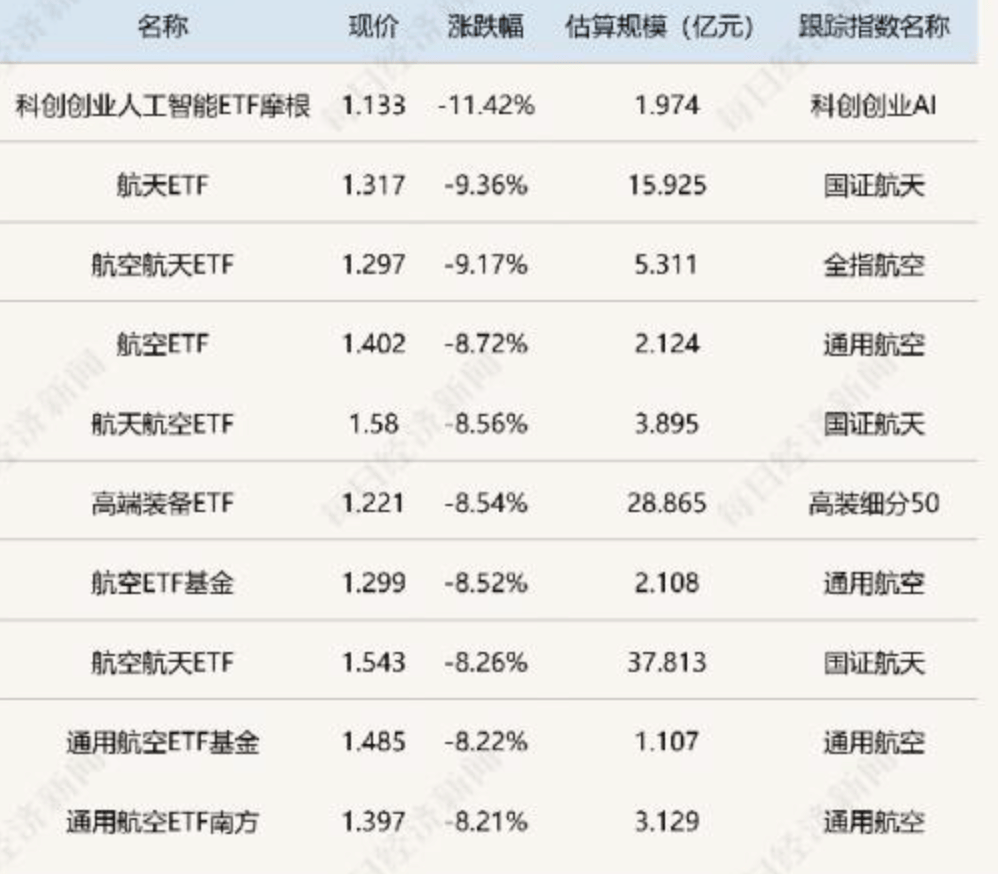
Group 1 - The commercial aerospace sector experienced a significant decline, with related ETFs dropping around 5%, while some aerospace ETFs fell by as much as 9% in a single day [1] - AI application ETFs also faced substantial losses, with some individual ETFs declining over 11% in one day, indicating a potential overheating in recent thematic sectors [1] - Historical performance analysis shows that commercial aerospace has been the only sector with sustained growth, while most thematic sectors have shown poor performance, often returning to their original levels after brief surges [1] Group 2 - Specific ETFs reported notable declines, such as the Morgan AI ETF down 11.42%, the Aerospace ETF down 9.36%, and several others in the aerospace and aviation sectors experiencing declines between 8.21% and 9.36% [2] - The commercial aerospace sector has attracted significant capital inflows, with some ETFs seeing over 10 billion yuan in a single day, which is considered rare historically [2] - The question remains whether these inflows can be sustained and if investors will ultimately profit from their holdings, highlighting the need for caution in investing in popular thematic ETFs [3]

ETF收盘:电网ETF涨7.37% 科创创业人工智能ETF摩根跌11.42%
Sou Hu Cai Jing· 2026-01-13 07:47
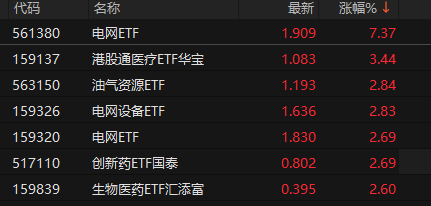
Group 1 - The ETF market showed mixed performance on January 13, with the Electric Grid ETF (561380) leading gains at 7.37% [1][2] - The Hong Kong Medical ETF (159137) increased by 3.44%, while the Oil and Gas Resources ETF (563150) rose by 2.84% [1][2] - The Technology Innovation and Entrepreneurship AI ETF (588420) experienced the largest decline at -11.42%, followed by the Aerospace ETF (159267) at -9.36% and the Aerospace and Aviation ETF (563380) at -9.17% [1][2] Group 2 - The Electric Grid ETF (561380) closed at 1.909, reflecting a significant increase [2] - The Hong Kong Medical ETF (159137) reached a closing price of 1.083, indicating positive market sentiment [2] - The Technology Innovation and Entrepreneurship AI ETF (588420) closed at 1.133, marking a notable drop in value [2]

航天航空概念股早盘大幅调整,多只航天航空相关ETF跌超8%
Sou Hu Cai Jing· 2026-01-13 02:00
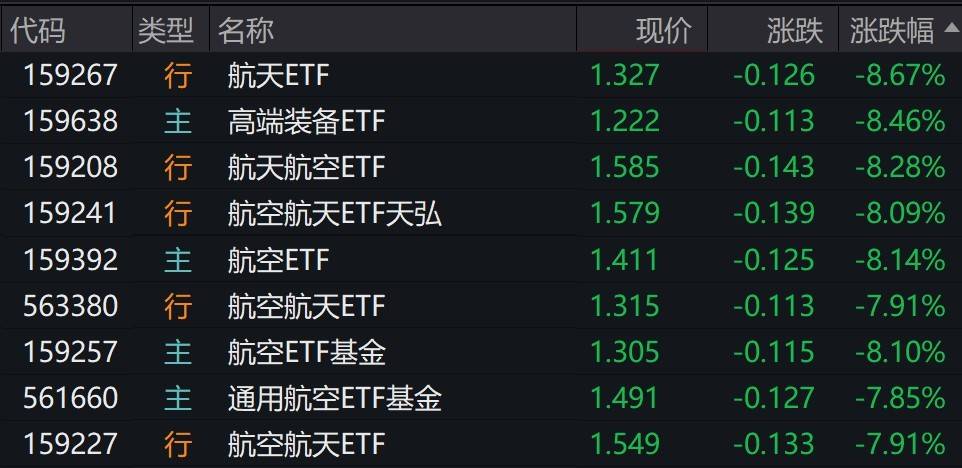
Group 1 - Aerospace and aviation concept stocks experienced significant declines in early trading, with Aerospace Electronics down over 8%, AVIC High-Tech down over 6%, and AVIC Heavy Machinery down over 5% [1] - Several aerospace-related ETFs also fell by more than 8%, reflecting the overall market trend [1] Group 2 - Specific ETFs reported the following price changes: Aerospace ETF (1.327, -8.67%), High-end Equipment ETF (1.222, -8.46%), Aerospace Aviation ETF (1.585, -8.28%), and others showing similar declines [2] - Analysts believe that recent improvements in top-level design and new policy support in the commercial aerospace sector have clarified the development blueprint for the industry, enhancing market confidence in its long-term growth [2] - With decreasing launch costs and increased in-orbit computing power, the future of space computing is expected to create a "more launches, more savings" scenario, potentially leading to a transformative industrial change with scalable commercial value [2]


130亿,跑了
Zhong Guo Ji Jin Bao· 2025-12-30 06:55
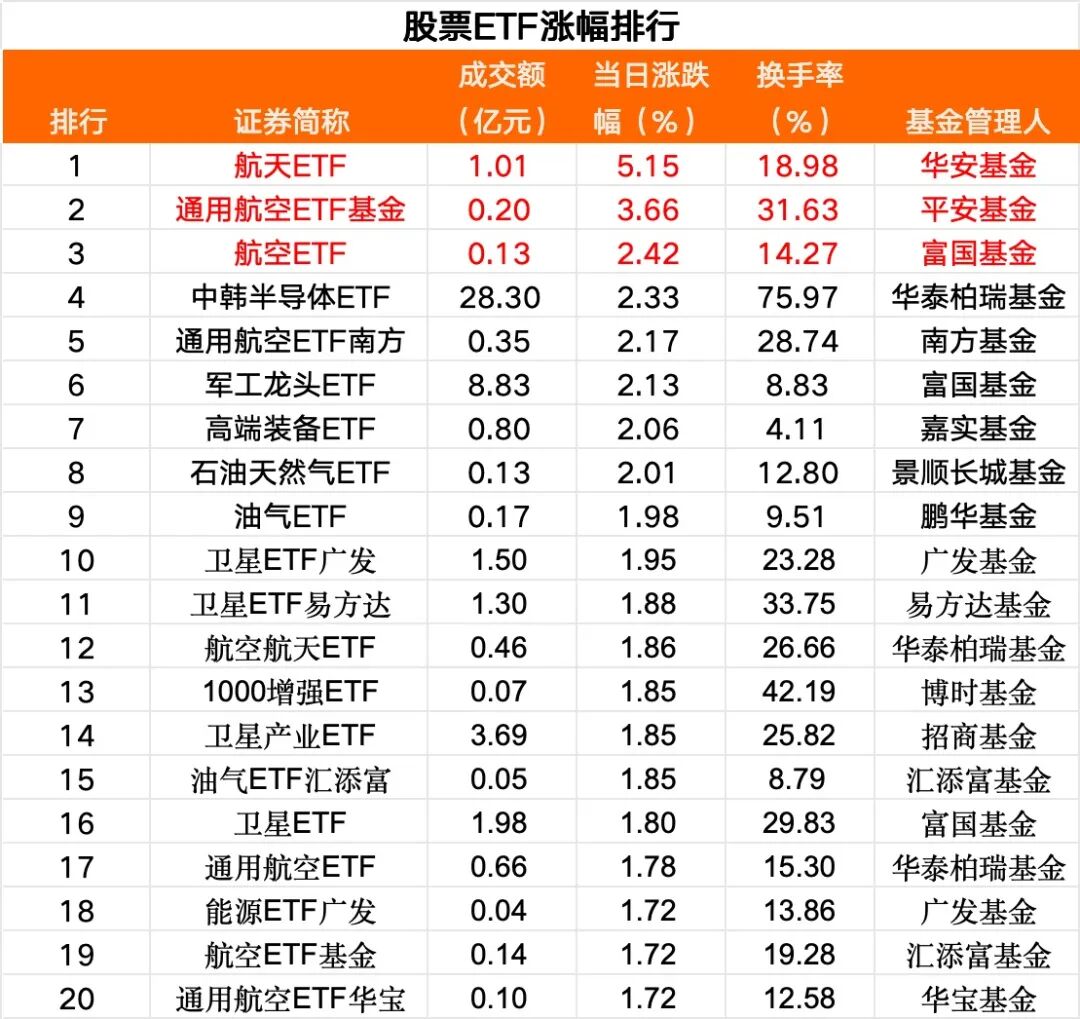
Group 1 - On December 29, the A-share market experienced a slight adjustment with a total trading volume exceeding 2 trillion yuan, while the Shanghai Composite Index rose by 0.04%, marking its ninth consecutive day of gains [1] - The overall stock ETF market saw a net outflow of over 13 billion yuan, with significant inflows into sectors such as non-ferrous metals, satellite industry, and steel [1][4] - The A500 ETF from Huatai-PineBridge had the highest trading volume on that day, reaching 13.798 billion yuan, followed by other A500 ETFs [2][4] Group 2 - The aerospace sector led the stock ETF performance, with the top three ETFs in terms of daily gains being from this sector, showing increases of over 5% [2][3] - The total scale of all stock ETFs reached 4.76 trillion yuan, with a trading volume of 218.68 billion yuan on December 29, an increase of 28 billion yuan from the previous trading day [2][4] - Notably, 27 stock ETFs saw net inflows exceeding 1 billion yuan, with the non-ferrous metals ETF, Hong Kong Stock Connect non-bank ETF, and A500 ETF leading the inflows [4][6] Group 3 - The net outflow from the broad-based ETFs was significant, with a total of 104.79 billion yuan, while bond ETFs and Hong Kong market ETFs saw net inflows of 94.41 billion yuan and 8.5 billion yuan, respectively [4][5] - The A500 index experienced a net outflow of 29.05 billion yuan, while the net inflow for the A500 index over the past five days exceeded 32 billion yuan [5][7] - The top three ETFs with the highest net inflows included the non-ferrous metals ETF, Hong Kong Stock Connect non-bank ETF, and A500 ETF, with respective inflows of 12.65 billion yuan, 7.78 billion yuan, and 5.61 billion yuan [6][8]
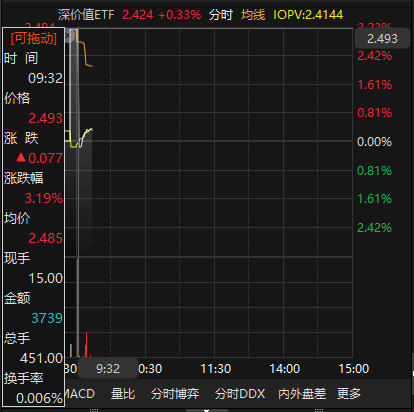
ETF开盘:深价值ETF涨3.19%
Sou Hu Cai Jing· 2025-12-30 02:08
Core Viewpoint - The ETF market opened with mixed performance on December 30, with notable gains in some ETFs and significant losses in others [1] Group 1: ETF Performance - The Shen Value ETF (159913) led the gains with an increase of 3.19% [1] - The Zhangjiang ETF (517850) rose by 1.44% [1] - The 300 Growth ETF (159656) saw an increase of 1.24% [1] - The Hang Seng Index Hong Kong Stock Connect ETF (159312) experienced the largest decline, dropping by 5.85% [1] - The Aerospace ETF (159267) fell by 4.14% [1] - The Non-ferrous Metals ETF Fund (516650) decreased by 3.9% [1]
ETF午评 | 稀有金属板块领涨,稀有金属ETF涨3%
Ge Long Hui· 2025-11-17 04:09
Market Overview - The three major A-share indices collectively declined, with the Shanghai Composite Index down 0.43%, the Shenzhen Component Index down 0.35%, and the ChiNext Index down 0.80% [1] - The North China 50 Index increased by 0.57% [1] - The total trading volume in the Shanghai, Shenzhen, and Beijing markets reached 12,782 billion yuan, an increase of 314 billion yuan compared to the previous day [1] - Over 2,300 stocks in the market experienced gains [1] Sector Performance - The military, energy metals, and Hainan sectors showed gains, while precious metals and photovoltaic sectors underwent adjustments [1] - In the ETF market, the rare metals sector rose, with both the Harvest Fund Rare Metals ETF and the GF Fund Rare Metals ETF increasing by 3% [1] - Military stocks continued their upward trend from last Friday, with the Huaan Fund Aerospace ETF and the Huaxia Fund Aerospace ETF rising by 2.2% and 1.97%, respectively [1] - The software sector strengthened, with the Huaan Fund Software ETF and the E Fund Software ETF both increasing by 2% [1] ETF Performance - The Nikkei 225 ETF, which had the highest premium rate, fell by 3%, with the latest premium/discount rate at 6.24% [1] - Gold stocks experienced a broad decline, with the Gold Stock ETF and Gold Stocks ETF dropping by 2.8% and 2.53%, respectively [1] - The pharmaceutical sector weakened, with the Kexin Innovative Drug ETF from Guotai and the Kexin Innovative Drug ETF from Huitianfu decreasing by 2.7% and 2.46%, respectively [1]
ETF午间收盘:储能电池ETF涨2.99% 航天航空ETF跌5.92%
Shang Hai Zheng Quan Bao· 2025-09-03 05:37
Group 1 - The ETF market showed mixed performance on September 3, with the energy storage battery ETFs experiencing gains while aerospace ETFs faced declines [1] - The energy storage battery ETF (159566) increased by 2.99%, and the S&P Biotechnology ETF (159502) rose by 2.84% [1] - The energy storage battery ETF from GF (159305) saw a rise of 2.50%, indicating strong interest in this sector [1] Group 2 - Aerospace ETFs had a negative performance, with the aerospace ETF (159208) dropping by 5.92%, and Tianhong's aerospace ETF (159241) declining by 5.36% [1] - The aerospace ETF (159267) also fell by 5.21%, reflecting a broader trend of weakness in the aerospace sector [1]
航天航空概念股走低,相关ETF跌约1.5%
Mei Ri Jing Ji Xin Wen· 2025-08-14 06:38
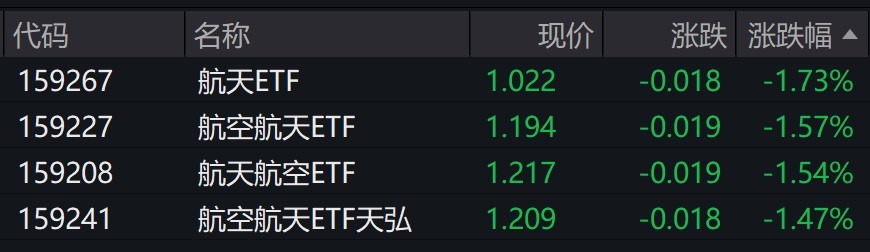
Group 1 - Aerospace and defense stocks have declined, with Zhongbing Hongjian down over 4%, Aerospace Electronics down over 3%, and China Satellite down over 2% [1] - The ETFs tracking the national aerospace and defense industry index have also dropped approximately 1.5% [1] Group 2 - Specific ETFs related to aerospace and defense show the following price changes: Aerospace ETF (159267) at 1.022, down 1.73%; Aerospace ETF (159227) at 1.194, down 1.57%; Aerospace ETF (159208) at 1.217, down 1.54%; Aerospace ETF Tianhong (159241) at 1.209, down 1.47% [2] - Analysts suggest that by 2025, new markets from military trade and military technology conversion may offer greater flexibility, with Chinese military enterprises showing technological advantages in drones and fighter jets, making the aerospace sector a core beneficiary [2] - Future investments in the military sector should focus more on seizing "air supremacy" [2]