跨境金融

Search documents
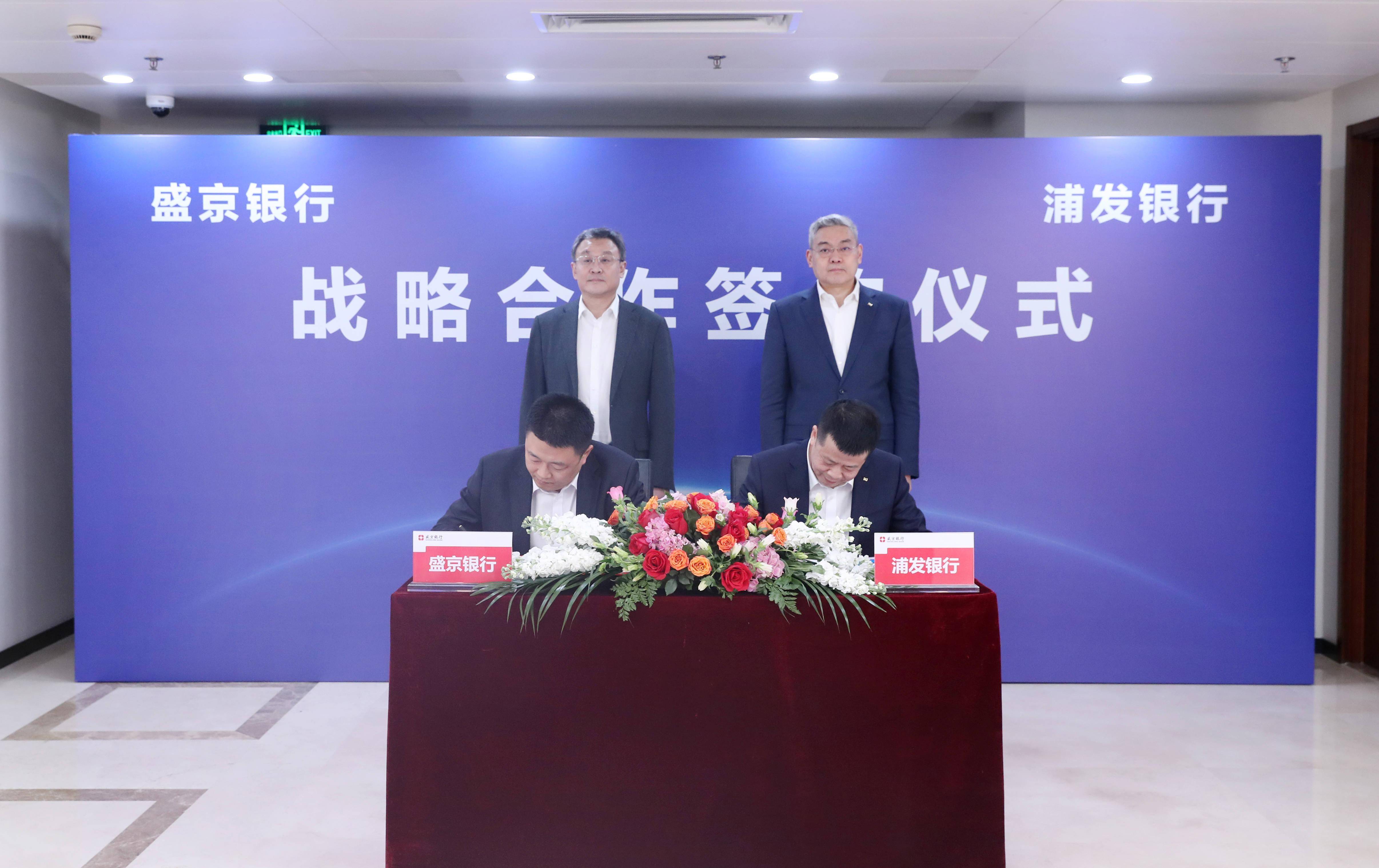
盛京银行与浦发银行签署战略合作协议 共助区域经济高质量发展
Sou Hu Cai Jing· 2026-02-05 14:39
Core Viewpoint - The strategic cooperation agreement signed between Shengjing Bank and SPD Bank marks a significant step towards regional collaboration and business synergy in the financial sector [1][4]. Group 1: Strategic Cooperation - The agreement focuses on deep collaboration in key areas such as technology finance, green finance, inclusive finance, and cross-border finance, aiming to build a positive financial ecosystem that supports high-quality regional economic development [4]. - Shengjing Bank will leverage SPD Bank's mature experience in "digital intelligence" transformation, cross-border finance, and supply chain finance to enhance its business innovation and service upgrades [4]. Group 2: Industry Trends - Recent trends in the banking industry show a clear shift towards digital transformation as a core strategic focus, with a deep integration of technology and finance [5]. - Regional banks are increasingly collaborating with national banks to expand service boundaries, particularly in green finance, supply chain finance, and cross-border services, reflecting a response to regional development needs [5]. Group 3: Institutional Strengths - Shengjing Bank, as the largest city commercial bank in Northeast China, has a strong local market presence and has continuously deepened reforms to enhance operational quality while serving the real economy [5]. - SPD Bank possesses strong industry influence due to its nationwide network and comprehensive operational advantages, particularly in digital transformation and international business expansion [5]. Group 4: Future Outlook - The partnership is seen as an important exploration of cross-regional financial collaboration, with both banks aiming to enhance their comprehensive financial service capabilities in key areas [5]. - A regular communication mechanism will be established to continuously promote the strategic collaboration to a higher level [5].


中资银行出海聚焦三大领域 外资银行在华加码财富管理
2 1 Shi Ji Jing Ji Bao Dao· 2026-02-04 23:09
Core Insights - The Chinese financial industry is undergoing a structural transformation characterized by a dual opening-up approach, where both domestic and foreign banks are enhancing their capabilities and market integration [1][2] Group 1: Domestic Banks Going Global - Chinese banks are shifting their focus from merely establishing overseas branches to enhancing their operational capabilities, aligning with the global market [3] - The overseas expansion of Chinese banks is increasingly focused on high-value areas such as wealth management and cross-border finance, moving beyond traditional markets to emerging regions like ASEAN, the Middle East, Africa, and Latin America [3][4] - State-owned banks remain the primary players in overseas expansion, while joint-stock banks are concentrating their efforts in key financial hubs like Hong Kong and London, focusing on niche areas such as private banking and wealth management [3] Group 2: Foreign Banks Entering China - Foreign banks are transitioning from a focus on obtaining licenses and expanding branch networks to a strategy centered on professional depth and long-term commitment, particularly in wealth management and cross-border finance [5][6] - As of June 2025, there are 42 foreign banks operating in China, with a non-performing loan ratio of 1.07%, which is lower than the overall commercial bank average of 1.49% [5] - Foreign banks are increasingly establishing flagship wealth management branches in major cities, emphasizing privacy, professionalism, and brand presence to differentiate themselves in the competitive market [6]


中资银行出海聚焦三大领域,外资银行在华加码财富管理
2 1 Shi Ji Jing Ji Bao Dao· 2026-02-03 10:36
Core Insights - The article highlights a significant structural evolution in China's financial industry, characterized by a dual opening-up approach where both domestic and foreign financial institutions are increasingly integrated into the global market [1][2] - The focus of financial reform and opening-up is shifting towards quality and institutional frameworks, emphasizing the importance of serving the real economy and national strategies [1] Group 1: Domestic Banks Going Global - Chinese banks are transitioning from merely establishing overseas branches to enhancing their capabilities and deeply integrating into global markets, particularly along the Belt and Road Initiative [4] - The report indicates that by 2025, foreign financial institutions in China will see qualitative improvements while maintaining stable growth, with a shift from mere expansion to focusing on high-net-worth wealth management and cross-border finance [4][5] - State-owned banks remain the primary force in the internationalization of Chinese banks, with a strategic focus on enhancing capabilities rather than just establishing a presence [4] Group 2: Foreign Banks Entering China - Foreign banks in China are moving beyond the initial phase of seeking licenses and branch numbers, entering a new stage defined by professional depth and strategic patience [6] - As of June 2025, there are 42 foreign banks operating in China, with a notable presence from 14 different countries and regions [6] - The report notes that foreign banks are increasingly focusing on wealth management, cross-border finance, and green finance as key areas for growth, adapting their strategies to compete with local banks [8]

又一家股份行总资产突破10万亿!
Xin Lang Cai Jing· 2026-01-13 14:16
Group 1 - The core point of the article is that Shanghai Pudong Development Bank (SPDB) has officially joined the "10 trillion club," with total assets reaching 100,817.46 billion yuan, a growth of 6.55% compared to the end of the previous year [1][11] - SPDB's total liabilities also increased to 92,573.16 billion yuan, reflecting a growth of 6.20% year-on-year [1][11] - With SPDB's entry, the number of banks in China's "10 trillion club" has expanded to nine, indicating a significant differentiation among joint-stock banks [3][13] Group 2 - In 2025, SPDB achieved a dual increase in operating efficiency and asset quality, with operating income reaching 1,739.64 billion yuan, a year-on-year increase of 1.88%, and net profit attributable to shareholders of 500.17 billion yuan, up 10.52% [7][15] - The bank's non-performing loan balance decreased to 719.90 billion yuan, down by 11.64 billion yuan from the previous year, and the non-performing loan ratio fell to 1.26%, a decrease of 0.10 percentage points [7][15] - The bank's provision coverage ratio improved to 200.72%, an increase of 13.76 percentage points from the previous year, indicating a positive trend in asset quality [8][15] Group 3 - SPDB's strategic focus on five key areas—technology finance, supply chain finance, inclusive finance, cross-border finance, and treasury finance—has contributed to its growth [8][16] - The bank is also enhancing its credit allocation to key sectors and regions, aiming for both qualitative and quantitative improvements in credit assets [8][16] - The stabilization of net interest margin is a significant indicator for the bank's future performance, pending confirmation from other banks' annual reports [8][16]

经营效益延续增长 资产总额突破10万亿
Zhong Jin Zai Xian· 2026-01-13 09:58
Core Viewpoint - In 2025, Shanghai Pudong Development Bank (SPDB) reported significant growth in asset quality and operational performance, driven by strategic financial initiatives and a focus on key sectors and regions [1][2]. Group 1: Financial Performance - As of the end of 2025, SPDB's total assets exceeded 10 trillion yuan, reaching 100,817.46 billion yuan, an increase of 6,198.66 billion yuan or 6.55% from the previous year [1]. - The total liabilities amounted to 92,573.16 billion yuan, up by 5,402.17 billion yuan, reflecting a growth of 6.20% year-on-year [1]. - The bank achieved operating revenue of 1,739.64 billion yuan, which is an increase of 32.16 billion yuan or 1.88% compared to the previous year [1]. - The net profit attributable to shareholders reached 500.17 billion yuan, marking an increase of 47.60 billion yuan or 10.52% year-on-year [1]. Group 2: Asset Quality Improvement - SPDB has successfully reduced both the non-performing loan (NPL) balance and the NPL ratio, with the NPL balance at 719.90 billion yuan, down by 11.64 billion yuan, and the NPL ratio at 1.26%, a decrease of 0.10 percentage points [2]. - The bank's provision coverage ratio improved to 200.72%, an increase of 13.76 percentage points from the previous year, indicating enhanced risk mitigation capabilities [2]. - Key forward-looking asset quality indicators showed positive performance, with overdue loans remaining within acceptable limits [2]. Group 3: Strategic Initiatives - SPDB is focusing on strengthening credit allocation in key sectors and regions, which has led to effective improvements in both the quality and quantity of credit assets [2]. - The bank is advancing its digital transformation strategy, emphasizing integrated management across various financial services, including commercial banking, trust, funds, and fintech [2]. - The bank's subsidiaries are aligning with the core digital strategy, focusing on five major sectors: fintech, supply chain finance, inclusive finance, cross-border finance, and treasury finance, enhancing operational efficiency and collaboration [2].
交通银行周恩静:坚守金融向善理念,积极构建金融助残生态圈|聚焦2025(第五届)华夏公益论坛
Hua Xia Shi Bao· 2025-12-26 09:37
Core Viewpoint - The forum emphasizes the integration of artificial intelligence technology with public welfare, aiming to enhance the quality of public welfare development through technological innovation [2] Group 1: Company Initiatives - China Everbright Bank has been actively involved in supporting the disabled community for 18 years, contributing a total of 130 million yuan in charitable donations, benefiting over 240,000 disabled individuals and workers in the field [3][4] - The bank has developed a comprehensive support system for the disabled, transitioning from targeted charity to multi-dimensional financial services, enabling disabled individuals to integrate into society and share in development benefits [3][4] - The bank has launched 17 specialized financial service projects tailored for the disabled, including industry chain finance, cross-border finance, and digital currency wallets, to support the successful hosting of the National Special Olympics [4][6] Group 2: Educational Empowerment - Since 2007, the bank has collaborated with the China Disabled Persons' Federation to initiate the "Towards Tomorrow" scholarship program, aiding over 37,000 impoverished disabled students and improving conditions in 126 special education schools [5][6] - The bank has established the "Traffic Bank Special Education Teacher Award" to support special education training and competitions, benefiting over 50,000 disabled individuals and workers in the sector [5][6] Group 3: Employment Support - The bank has created a support system focusing on education, employment assistance, and competition to enhance the employability of disabled individuals, leading to the training of over 8,800 special education teachers and the recognition of 69 high-skilled disabled talents [6][7] - The "Beautiful Workshop" project has been funded for three consecutive years, providing employment skills training for disabled women and achieving significant sales during exhibitions [6][7] Group 4: Community Engagement - The bank has supported various community projects, including the renovation of homes for severely disabled individuals affected by earthquakes, benefiting 100 families [7][8] - The bank has also sponsored performances by the China Disabled Persons' Art Troupe, promoting social understanding and respect for disabled individuals [7][8] Group 5: Future Commitments - The bank aims to continue its strategic cooperation with the China Disabled Persons' Federation, focusing on comprehensive support for disabled individuals throughout their life stages [8][9] - The bank plans to develop more tailored financial products and services for disabled individuals and organizations, ensuring accessible and warm financial services nationwide [9]

银商联手!温州银行20亿元金融支持加码温商国际化
Sou Hu Cai Jing· 2025-11-04 09:15
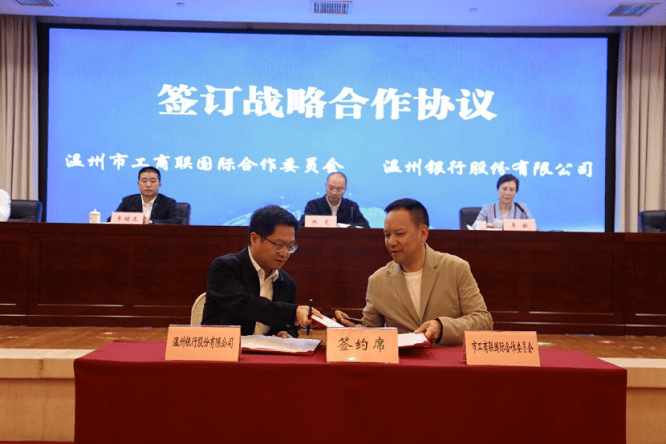
Core Insights - The strategic cooperation between Wenzhou Bank and the Wenzhou Federation of Industry and Commerce International Cooperation Committee aims to integrate financial resources with the Wenzhou business network to support local enterprises in global competition and attract overseas Wenzhou businesses back to invest [1][3]. Group 1: Financial Support and Services - Wenzhou Bank will prioritize support for member enterprises of the International Cooperation Committee, providing a total credit line of 2 billion RMB for cross-border finance, fund settlement, and credit financing [3]. - The bank will offer tailored financial service plans for recommended "global investment partners," key overseas projects, and local multinational companies, including preferential credit approval, interest rate discounts, and fee reductions [3]. Group 2: Training and Information Services - Wenzhou Bank will enhance collaboration in information services by providing regular training on cross-border financial policies, exchange rate risk management, and international settlement practices to improve the financial capabilities of local enterprises [3][4]. - This initiative aims to strengthen the global market risk response capabilities and overall competitiveness of Wenzhou businesses [3][4]. Group 3: Strategic Importance - This cooperation represents a significant step for Wenzhou Bank in fulfilling its mission as a local bank and deepening its engagement with the local economy, while also being a key element in promoting the internationalization of Wenzhou businesses [4]. - Both parties intend to use this signing as a new starting point to explore new paths and models for financial services to the real economy and enhance Wenzhou's openness [4].
六大行前三季净利超万亿 息差承压下探索突围路径
Zhong Guo Zheng Quan Bao· 2025-10-30 22:10
Core Viewpoint - The six major banks in China reported a combined net profit exceeding 1 trillion yuan for the first three quarters of 2025, indicating stable profit growth and improving asset quality, while facing pressure on net interest margins [1][2]. Group 1: Profit Growth - The six major banks achieved a total net profit of 1.07 trillion yuan, demonstrating strong profitability despite efforts to support the real economy [2]. - Agricultural Bank led the growth with a 3.03% year-on-year increase in net profit, while other banks showed varying growth rates: 1.90% for Bank of Communications, 1.08% for China Bank, and lower rates for Postal Savings Bank, China Construction Bank, and Industrial and Commercial Bank [2]. - All six banks reported year-on-year increases in operating income, with China Bank and Industrial and Commercial Bank both exceeding 2% growth [2]. Group 2: Asset Quality Improvement - The non-performing loan (NPL) ratios for all six banks decreased compared to the end of the previous year, enhancing their risk resilience [4]. - Postal Savings Bank had the best asset quality with an NPL ratio of 0.94%, while other banks maintained NPL ratios between 1% and 2% [4]. - Agricultural Bank had the highest provision coverage ratio at 295.08%, providing a solid buffer against potential credit risks [5]. Group 3: Net Interest Margin Pressure - The banking industry continues to face downward pressure on net interest margins, with Postal Savings Bank reporting a margin of 1.68%, despite being the highest among the six banks [5][6]. - The overall net interest margin for commercial banks was reported at 1.42% for Q2 2025, reflecting a decline from previous periods [6]. Group 4: Strategies for Margin Stabilization - Banks are focusing on optimizing asset structures and reducing costs on the liability side to address the pressure on net interest margins [7]. - There is a strategic emphasis on supporting key sectors such as manufacturing and green development, with Postal Savings Bank increasing its green loan balance significantly [7]. - Analysts expect a stabilization in net interest margins in the coming quarters, aided by policy support and proactive industry transformation [8].

高伟达与蚂蚁数科签署合作协议
Zheng Quan Shi Bao Wang· 2025-09-23 09:25
Group 1 - The core viewpoint of the article is the establishment of a strategic partnership between GaoWeida Software Co., Ltd. and Ant Blockchain Technology (Shanghai) Co., Ltd. to enhance collaboration in various financial business areas [1] - The partnership aims to strengthen innovation cooperation in areas such as intelligent customer acquisition, big data risk control, AI intelligence, and cross-border finance [1] - The collaboration is expected to expand market opportunities for artificial intelligence and big data services in the banking and fintech sectors [1]

金融护航新动能|《财经》社评
Sou Hu Cai Jing· 2025-09-17 11:36
Group 1 - The core viewpoint emphasizes that China's economic stability relies on the transition from old to new driving forces, particularly through technological innovation and emerging social demands [2] - The financial industry is crucial in supporting new industries driven by technologies like AI, which require significant capital investment and innovative financing solutions [2][3] - The financial sector can leverage new technologies to enhance its own operations while providing necessary support for the rapid implementation of these technologies [2][3] Group 2 - The resilience of foreign trade is highlighted as a key factor in China's economic response to downward pressures, with new outbound trade models requiring robust financial support [3] - The financial industry has accumulated substantial experience in cross-border and supply chain finance, which can be utilized to support the evolving foreign trade landscape [3][4] - The development of technologies such as AI and blockchain is expected to enhance the financial sector's ability to provide tailored services for new outbound trade models [4] Group 3 - New social trends, such as an aging population, present both challenges and opportunities for the financial industry, particularly in the area of pension finance [4] - The pension finance sector is still in its early stages in China, indicating significant growth potential that can contribute to the economy by addressing various financial needs related to aging [4][5] - The transition of old and new driving forces, along with market consolidation through mergers and acquisitions, will create new demand for financial services [5] Group 4 - The financial industry is expected to play a vital role in facilitating the high-quality development of China's economy by empowering new driving forces and demands [5]