
钧瓷

Search documents
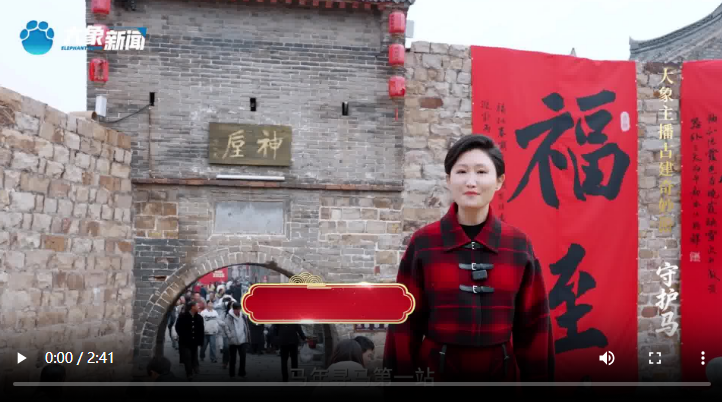
文化中国行丨马年寻马·门扉里的“守护马”
Xin Lang Cai Jing· 2026-02-19 14:52
Group 1 - The article highlights the cultural significance of Yuzhou's ancient town, Shenhou, particularly its connection to Jun porcelain and the symbolism of the "guardian horse" [2] - The "guardian horse" is depicted as a protector of homes, representing peace and prosperity, and is intricately linked to the heritage of the town [2] - The historical role of horse caravans in transporting materials for Jun porcelain is emphasized, showcasing their contribution to the town's logistics and cultural legacy [2] Group 2 - The special exhibition "Bingwu Jun Cai" features vivid Jun porcelain horses, symbolizing good fortune and success, reflecting the town's sincere New Year wishes [3] - The exhibition aims to blend traditional craftsmanship with contemporary celebrations, reinforcing the cultural identity of Shenhou [3] - The article conveys a message of hope and well-being for the new year, rooted in the rich history of Jun porcelain [3]

代表委员心声丨协同推进“四个字号”强产业大文章
He Nan Ri Bao· 2026-01-27 23:17
Core Viewpoint - The development of "original brands," "time-honored brands," "new brands," and "foreign brands" is crucial for accelerating the construction of a modern industrial system in Henan province [1][2] Group 1: Original and Time-Honored Brands - "Original brands" and "time-honored brands" serve as the historical foundation and unique advantages for building a modern industrial system in Henan [1] - The cultural competitiveness of brands like Dukang liquor and Jun porcelain is essential for injecting unique value into the industry [1] Group 2: New and Foreign Brands - "New brands" focus on strategic emerging industries such as new energy vehicles, biomedicine, and artificial intelligence, which are key to transforming the industry towards high-end and intelligent development [1] - "Foreign brands" leverage platforms like Zhengzhou Airport and the China-Europe Railway Express to attract foreign investment and expand trade, integrating deeply into the global value chain [1] Group 3: Synergy and Future Outlook - The four types of brands are interdependent and work together to form an organic whole, which is vital for Henan's high-quality development during the 14th Five-Year Plan period [2] - By activating existing resources, nurturing new growth, and linking globally, Henan aims to demonstrate greater responsibility in the new journey of modernization [2]
“老字号”焕新记丨老窑火幻化新万彩 ——禹州钧瓷的产业创新之路
He Nan Ri Bao· 2026-01-19 23:57
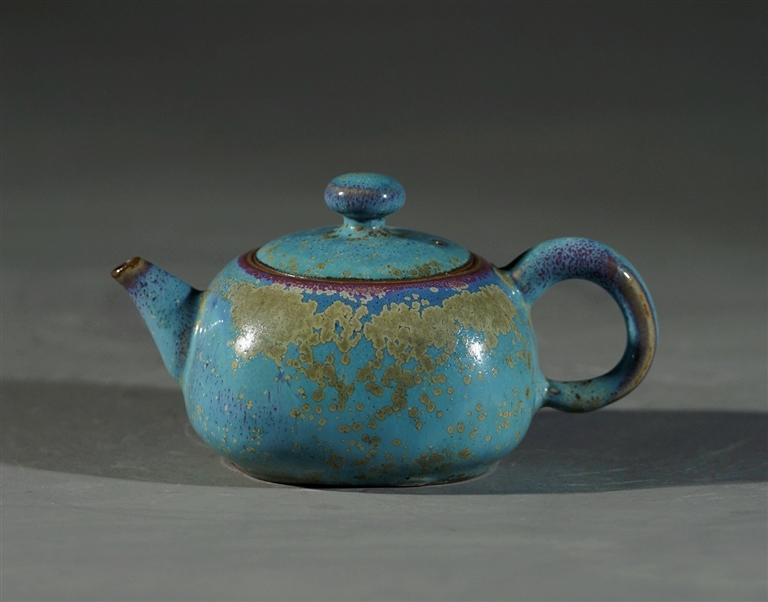
Core Viewpoint - The article highlights the innovation and cultural significance of Jun porcelain, emphasizing its evolution from traditional craftsmanship to modern applications and its integration into daily life [3][5][6]. Group 1: Innovation in Jun Porcelain - Jun porcelain is known for its unique firing process, resulting in a variety of colors and patterns, which has been preserved and innovated upon by the Kong family, particularly through the establishment of the Kongjia Jun Kiln [3][4]. - The introduction of the "shuttle-type liquefied gas kiln" and the "temperature curve control method" has significantly improved the production quality and efficiency of Jun porcelain, addressing the historical issue of low yield and rough texture [3][4]. - New product lines, including teapots and tea cups, have been developed using the "secondary reorganization method," expanding the practical applications of Jun porcelain [4]. Group 2: Cultural and Economic Impact - The transformation of the old porcelain factory site into a "National Industrial Tourism Demonstration Base" has created a comprehensive cultural tourism complex, integrating dining, accommodation, and entertainment [5]. - The Jun porcelain industry in Yuzhou has seen significant growth, with 399 enterprises producing over 2.2 million pieces annually, generating a revenue of 2.6 billion yuan [5][6]. - Jun porcelain has gained recognition as a national gift in diplomatic events, enhancing its brand value and contributing to the local economy's high-quality development [6].
文化激活乡村,产业赋能振兴
Ren Min Ri Bao· 2025-12-07 11:21
Core Insights - The transformation of Yuanqiao Village in Dengfeng City, Henan Province, showcases a new path for cultural industry empowering rural development, turning historical sites into open-air museums and micro-drama filming locations [1] - The growth of the micro-drama industry in Zhengzhou has provided opportunities for Yuanqiao Village to revitalize its "old resources" and develop new business models, leading to talent, capital, and service aggregation, as well as rural environment improvement and internal-external linkages [1] - During the "14th Five-Year Plan" period, the implementation of rural revitalization strategies has resulted in effective policies supporting rural cultural development, with Henan Province emerging as a leader in cultural empowerment for rural revitalization [1] Industry Developments - Various villages in Henan, such as Xu Chang Village and Yi Chuan Village, have leveraged traditional intangible cultural heritage and historical sites to create unique products, enhancing farmers' income and reshaping rural landscapes [1] - Cultural products with heritage attributes, like Gushi Liu Bian and Nanzhao silk carpets, have successfully entered international markets, indicating a growing cultural export potential [1] - Looking ahead to the "15th Five-Year Plan," the focus will be on fully revitalizing rural areas by prioritizing protection and rational use of cultural and natural resources, promoting the integration of primary, secondary, and tertiary industries [2] Recommendations - It is suggested to cultivate influential and competitive cultural industry brands and distinctive villages through creative design, film production, and intangible cultural heritage research, encouraging more villages to follow Yuanqiao's example in promoting cultural wealth [2]
文化激活乡村,产业赋能振兴(延伸阅读)
Ren Min Ri Bao· 2025-12-05 22:03
Group 1 - The core viewpoint of the articles highlights the transformation of Yuanqiao Village in Dengfeng, Henan, through cultural industry empowerment, turning it into a new path for rural development by leveraging historical resources and modern media opportunities [1][2] - The development of the micro-short film industry in Zhengzhou has provided a significant opportunity for Yuanqiao Village, leading to the revitalization of old resources and the emergence of new business formats, which in turn has facilitated the gathering of talent, capital, and services [1] - The implementation of the rural revitalization strategy during the 14th Five-Year Plan has resulted in effective policies supporting cultural development in rural areas, showcasing unique practices across various villages in Henan that enhance income for farmers and reshape rural landscapes [1] Group 2 - Looking ahead to the 15th Five-Year Plan, the articles suggest that rural revitalization will enter a new stage, emphasizing the need for cultural industry empowerment to activate rural human and natural resources while promoting the integration of primary, secondary, and tertiary industries [2] - Recommendations include fostering a batch of influential and competitive cultural industry brands and distinctive villages through creative design, film production, and non-heritage research, encouraging more villages to follow the example of Yuanqiao Village in promoting cultural prosperity [2]
文化激活乡村 产业赋能振兴(延伸阅读)
Ren Min Ri Bao· 2025-12-05 22:03
Group 1 - The core viewpoint is that cultural industries are empowering rural revitalization in Henan, exemplified by the transformation of Yuanqiao Village into a cultural hub through policy support and the development of new business models [1][2]. - Yuanqiao Village has leveraged its historical resources and the booming micro-short film industry in Zhengzhou to attract talent, capital, and services, leading to environmental improvements and a win-win situation for cultural industries and rural characteristics [1]. - During the "14th Five-Year Plan" period, a series of policies supporting rural cultural development have been effectively implemented, showcasing distinctive practices in Henan as an agricultural and cultural province [1]. Group 2 - Looking ahead to the "15th Five-Year Plan," rural revitalization will enter a new stage, focusing on the protection and reasonable utilization of cultural and natural resources to promote the integration of primary, secondary, and tertiary industries [2]. - It is suggested to cultivate influential and competitive cultural industry brands and characteristic villages through creative design, film production, and intangible cultural heritage studies, encouraging more villages to follow Yuanqiao's example [2].
在“四叶草”里河南深度链接世界
He Nan Ri Bao· 2025-11-06 23:26
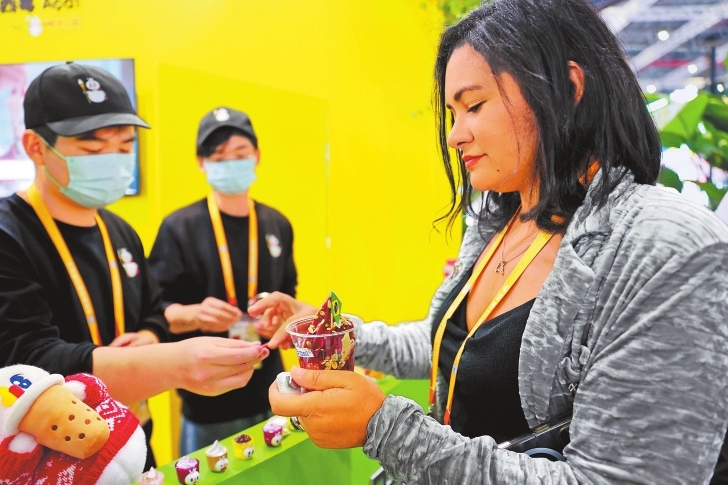
Core Insights - The 8th China International Import Expo (CIIE) opened in Shanghai, showcasing 461 new products from global enterprises, highlighting China's vast market appeal [1] - The event serves as a significant platform for Henan to connect with global resources, with local trade delegations actively seeking cooperation opportunities [1] Group 1: Trade and Business Opportunities - A foreign trade service platform signed a $4 million procurement order with an Indian company, indicating the expo's role in facilitating quality raw material sourcing [2] - Companies from Henan are exploring new consumer markets and upgrading their product lines, reflecting a clear path of industrial transformation [2] - The presence of Fortune 500 companies at the expo provides local businesses with insights into industry trends and opportunities for product diversification [2] Group 2: International Collaboration - The Brazilian pavilion attracted significant attention, with local brands like Mixue Ice Cream showcasing unique products, enhancing cross-border partnerships [3][4] - Brazilian officials emphasized the strong partnership with Henan, viewing it as a reliable consumer and collaborator in the market [5] - Multinational companies are increasingly investing in Henan, with Metro AG planning to expand its supply chain in the region to distribute quality consumer goods nationwide [5] Group 3: Growth and Development - The expo has seen a continuous increase in participation, with Henan's trade delegations achieving substantial results, including a long-term exhibition space for local products [6] - The collaboration between Henan and the Yangtze River Delta region has led to the signing of projects worth over 10 billion yuan, showcasing the region's growing economic ties [6] - The CIIE has become a platform for Henan to not only procure but also showcase its products, marking a significant evolution in its approach to international trade [6]

神垕:古镇焕新 “瓷”力十足
Zheng Quan Ri Bao· 2025-10-13 16:15
Core Insights - The article emphasizes the significance of characteristic towns in China's new urbanization and rural revitalization, highlighting their role as a vital node for economic development and cultural preservation [1][2][18] - The success of towns like Shenhou, which integrates traditional culture with modern economic practices, showcases the potential for high-quality economic growth through cultural heritage [1][2][6] Summary by Sections Characteristic Towns Development - The first batch of characteristic towns was announced in October 2016, with Shenhou Ancient Town being one of the 127 towns listed, marking a significant step in promoting new urbanization and rural revitalization [2] - Over the past nine years, the construction of characteristic towns has achieved remarkable results, with Shenhou Ancient Town exemplifying the integration of cultural tourism and economic development [2][3] Shenhou's Unique Cultural Heritage - Shenhou's unique Jun porcelain culture, known for its artistic value and distinct production techniques, sets it apart from other porcelain towns like Jingdezhen [3][4] - The town has developed a strong industrial base with over 300 related enterprises, including 228 registered Jun porcelain companies, indicating a trend towards industrialization and scale [5][11] Technological Innovations in Porcelain Production - Innovations in kiln technology, such as the development of liquefied gas kilns, have significantly improved the production success rate of Jun porcelain, transforming the industry [4][7] - The introduction of new glaze colors and techniques has further enhanced the artistic and commercial value of Jun porcelain, allowing for a broader market appeal [4][7] Cultural Tourism and Economic Impact - Shenhou Ancient Town has become a cultural tourism hub, attracting 2.07 billion yuan in tourism revenue in 2024, with 2.3 million visitors, showcasing the effectiveness of cultural tourism integration [8][9] - The town's historical preservation efforts, alongside modern infrastructure improvements, have enhanced its appeal as a tourist destination [8][9] Government and Capital Support - The local government has played a crucial role in promoting the town's cultural and tourism initiatives, including hosting events like the Jun Porcelain Cultural Tourism Festival [13] - Innovative financing models, such as PPP and EPC, have facilitated significant investments in infrastructure and development projects, ensuring sustainable growth for the town [13][14][16] Future Prospects - The article suggests that characteristic towns like Shenhou will continue to be vital for economic growth, cultural preservation, and urban-rural integration, with a projected market size of 1.4 trillion yuan by 2025 [17][18] - The ongoing development of diverse financing channels and innovative business models will further enhance the economic viability of these towns [14][15][16]
千年窑火是资产更是底气
Zheng Quan Ri Bao· 2025-10-13 16:15
Core Insights - The article highlights the transformation of Shenhou Ancient Town from a historical site into a vibrant cultural and economic hub, leveraging its unique ceramic heritage to attract modern consumers and tourists [1][2][3] Group 1: Economic Development - The ceramic industry in Shenhou has surpassed an output value of 2.4 billion yuan last year, indicating a significant economic contribution from over 200 ceramic enterprises that have diversified their product offerings [2] - The town has developed a cultural industry chain, integrating ceramic culture with creative entrepreneurship, which has attracted over 40 master craftsmen to the area [2] Group 2: Cultural Integration - Shenhou has successfully combined cultural experiences with educational tourism, hosting over 1,200 groups and 146,000 students annually at its three provincial-level research bases [2] - The town's approach to preserving its historical architecture while fostering a unique cultural identity has helped avoid homogenization, providing a "cultural soul" to its development [3] Group 3: Community Impact - The revival of the ceramic industry has led to job creation, encouraging young people to return to their hometowns, thus fostering a positive cycle of economic growth and community revitalization [3] - The integration of traditional culture with modern market demands has allowed Shenhou to transform its cultural resources into economic capital, enhancing its competitive edge [3]
金融添“材” 农行河南省分行助力千年钧瓷焕新彩
Huan Qiu Wang· 2025-10-11 03:25
Core Viewpoint - The article highlights the revival and modernization of Jun porcelain in Shenhui Town, Henan Province, supported by Agricultural Bank of China, showcasing a blend of traditional craftsmanship and contemporary innovation [1][2]. Group 1: Industry Development - Jun porcelain, known for its unique kiln transformation, is one of China's five famous ancient porcelains, with a history of over 4,000 years [1]. - The Agricultural Bank of China has introduced tailored financial products like "One County, N Products" and "Tax e-loan" to support the development of the Jun porcelain industry [1]. - The transformation of Shenhui Town into a hub for Jun porcelain production is marked by the establishment of creative bases that enhance the local economy and culture [1][2]. Group 2: Entrepreneurial Success - Young entrepreneur Zhou has successfully integrated Jun porcelain with tourism and education, creating popular products like "Jun Porcelain Blind Boxes" [2]. - The Agricultural Bank's innovative services have simplified the loan application process, allowing businesses to access funding more easily, thus fostering growth in the Jun porcelain sector [2]. - The shift from traditional to modern practices in Jun porcelain production is making this art form more accessible to the general public, moving it from a luxury to a common household item [2].
