长征十二甲

Search documents
AI沦为暗线?从商业航天入手“十五五”投资机会!
Ge Long Hui A P P· 2025-12-16 10:24
Core Viewpoint - The article discusses the ongoing AI bubble concerns and the impact of various negative news on the AI technology sector, while emphasizing that the fundamental logic and trends of the global AI industry remain unchanged in the long term [2][5]. Group 1: Investment Opportunities in Key Technology Directions - Commercial Space: The "strong nation in space" goal in the 14th Five-Year Plan, along with policies, demand, and technology, creates a robust investment opportunity in commercial space [2][3]. - Demand for low-orbit satellite resources is urgent, with China's GW and Qianfan constellations planning over 10,000 satellites, of which less than 1% are currently in orbit [3]. - The successful launch of the Zhuque-3 and the upcoming Long March 12 rocket are expected to significantly reduce launch costs, which is crucial for satellite networking [3]. Group 2: Specific Technology Areas - Autonomous Driving: The recent approval of L3 autonomous vehicle licenses marks a critical transition from testing to commercialization, with a projected market size of 270 billion for Robotaxi by 2030 [5]. - Nuclear Fusion: While still in the experimental phase, nuclear fusion is recognized as a future key industry, with significant investment opportunities tied to technological breakthroughs [6]. - Artificial Intelligence: The focus has shifted from speculative investments to practical applications, with the 14th Five-Year Plan promoting AI integration across various industries [6][7]. Group 3: Market Dynamics and Trends - The commercial space sector has shown resilience despite recent launch delays, indicating strong market recognition and investment potential [9][11]. - The core logic of commercial space revolves around the urgent need for satellite networking and decreasing costs, with various companies positioned to benefit from this trend [11]. - The article highlights the importance of selecting the right sectors and companies for sustained investment, particularly in the context of the 14th Five-Year Plan's long-term technological focus [15].





AI沦为暗线?从商业航天入手“十五五”投资机会!
格隆汇APP· 2025-12-16 09:44
Core Viewpoint - The article discusses the ongoing trends in various technology sectors, particularly focusing on the AI industry, commercial aerospace, autonomous driving, nuclear fusion, and quantum technology, emphasizing the long-term potential despite short-term market fluctuations [5][6][10][13][16]. Group 1: Commercial Aerospace - The Chinese government has prioritized commercial aerospace in its strategic goals, establishing a dedicated department and action plans, indicating strong policy support [8]. - The demand for low-orbit satellite resources is urgent, with plans for thousands of satellites, and recent technological advancements in reusable rockets are expected to significantly reduce launch costs [8][20]. - Key players in the commercial aerospace sector include China Satellite, which leads in satellite manufacturing, and various companies involved in rocket manufacturing and satellite components [20][22]. Group 2: Autonomous Driving - The autonomous driving sector is entering a critical commercialization phase, supported by government policies and technological advancements, with a projected market size of 2.7 trillion by 2030 for Robotaxi services [10]. - The recent approval of L3 autonomous vehicle models marks a significant step towards commercial deployment [10]. Group 3: Nuclear Fusion - Nuclear fusion is recognized as a future clean energy source, but it remains in the experimental stage, with significant breakthroughs needed before commercialization [11][12]. - Current investments are focused on technological milestones, making it a long-term investment opportunity [12]. Group 4: Artificial Intelligence - The AI sector is transitioning from speculative investments to practical applications, with a focus on real-world implementations that enhance efficiency and reduce costs [13]. - The emphasis is on AI applications across various industries, including manufacturing and healthcare, rather than on speculative infrastructure investments [13]. Group 5: Robotics - The development of embodied intelligence and humanoid robots is a key focus area, with increasing demand in manufacturing due to labor shortages and rising costs [14]. - Companies like Tesla are advancing humanoid robot production, while domestic firms are achieving significant progress in core components [14]. Group 6: Semiconductor Industry - The semiconductor sector is a priority for domestic self-sufficiency, with a focus on overcoming key technological challenges [15]. - Domestic wafer manufacturers are expanding production, and there is a growing demand for domestic semiconductor components [15]. Group 7: Quantum Technology - Quantum communication is positioned as a strategic priority for national security, with ongoing efforts in standardization and pilot projects in financial and governmental applications [16]. - Companies in the quantum sector are beginning to secure significant contracts, indicating a move towards commercialization [16][24]. Group 8: Market Trends and Investment Strategy - The article suggests that commercial aerospace is currently the most promising sector for investment, driven by policy, demand, and technological advancements [26]. - It also highlights the importance of focusing on sectors with clear policy support and performance validation, such as AI applications and robotics, while recognizing the long-term potential of quantum technology and semiconductor advancements [26].

商业航天(研报)
Xi Niu Cai Jing· 2025-12-15 11:17
Industry Overview - The commercial aerospace sector is gaining attention in the capital market, driven by multiple favorable factors leading to rapid development [2] - The successful testing of new rockets like "Zhuque-3" and upcoming launches of "Vesta-2" and "Long March 12A" are expected to enhance China's rocket launch capabilities and cost control, significantly increasing demand for satellites and rockets [2] - The global valuation of SpaceX is approaching $1.5 trillion, with plans for an IPO next year, potentially setting a record for the largest IPO in history [2] - China aims to enhance its comprehensive national power and seize future technological economic advantages through the development of commercial aerospace, which has been elevated to a strategic emerging industry in the 2024 government work report [2] Market Dynamics - Low Earth orbit satellites are a key competitive resource in commercial aerospace, characterized by low latency, high launch flexibility, and low manufacturing costs, making them a new battleground for major space-faring nations [3] - The commercial aerospace industry in China has formed a complete ecosystem covering upstream manufacturing, midstream launch and operation, and downstream application services [3] Industry Chain Analysis - The commercial aerospace industry chain consists of three main segments: upstream focuses on research and manufacturing, midstream involves launch services and control operations, and downstream is centered on satellite applications and data services [4] Growth Prospects - According to a report by Taiber Think Tank, the market size of China's satellite internet industry is expected to reach 64.8 billion yuan in 2024, with a projected compound annual growth rate (CAGR) exceeding double digits [6] - The market size is forecasted to reach 75.1 billion yuan by 2025 and 151.2 billion yuan by 2030 [6] Company Insights - Western Materials (002149) is a key supplier of rare metal materials for the commercial aerospace sector, reporting a revenue of 2.283 billion yuan in the first three quarters of 2025, a year-on-year increase of 2.82%, but a net profit decline of 49.76% [8] - Aerospace Universe (688523) focuses on aerospace products and satellite communication, achieving a revenue of 304 million yuan in the first three quarters of 2025, a year-on-year increase of 10.44% [11] - Aerospace Power (600343) specializes in liquid rocket engines, reporting a total revenue of 510 million yuan in the first three quarters of 2025, a year-on-year decrease of 14.19%, with a net loss of 109 million yuan [14]
中美5型大火箭冲刺年底发射,谁能成为世界第二?
Guan Cha Zhe Wang· 2025-11-07 00:28
Core Points - The competition between American and Chinese companies in the reusable rocket sector is intensifying, with both sides aiming to achieve significant milestones by the end of the year [5][19] - Blue Origin's New Glenn rocket is set for its second flight, which is crucial for validating its recovery capabilities, while China's Zhuque-3 rocket is rapidly progressing towards its first flight [8][11] Group 1: Blue Origin and New Glenn - Blue Origin's New Glenn rocket, standing at 98 meters tall and capable of carrying 45 tons to low Earth orbit, aims to challenge SpaceX's Falcon 9 and Falcon Heavy rockets [7][17] - The first flight of New Glenn is scheduled for January 2025, but it has faced multiple delays and has not yet successfully completed a recovery test [7][8] - The upcoming NG-2 mission in November is critical for recovery validation, with the goal of landing the booster on the recovery ship "Jacqueline" [8][12] Group 2: Chinese Competitors - China's Zhuque-3 rocket, developed by Landspace, has made significant progress, completing its static fire test and aiming for its first flight in the fourth quarter of 2025 [11][12] - The Zhuque-3 rocket is designed with a focus on reusability, utilizing a stainless steel and methane combination, which is seen as a forward-thinking approach compared to traditional designs [11][12] - Other Chinese rockets, including Lijian-2, Tianlong-3, and Chang Zheng-12, are also in development, showcasing a strong push from both state-owned and private companies in the commercial space sector [14][19] Group 3: Industry Dynamics - The race for reusable rockets is not just between two companies but involves multiple players, with China potentially launching four new rockets by the end of 2025 [19][20] - The collaboration between state-owned enterprises and private companies in China is seen as a strategic advantage that could lead to sustained growth and competitiveness in the global space market [19][20] - The contrasting development timelines highlight the urgency and efficiency of Chinese companies compared to their American counterparts, with Zhuque-3 taking only 26 months to reach its first flight milestone compared to New Glenn's 260 months [11][18]

卫星通信将在更多领域落地!“宇宙级”大机遇来了
Qi Lu Wan Bao· 2025-09-20 01:45
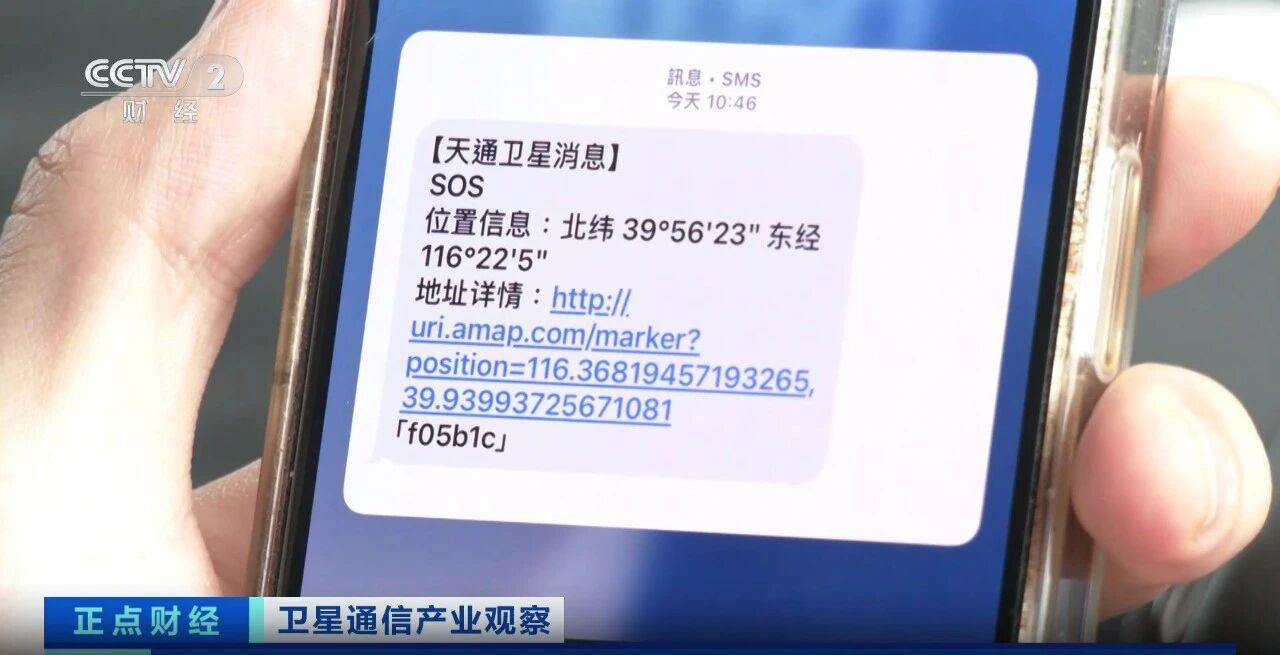
Core Viewpoint - The Ministry of Industry and Information Technology (MIIT) has issued guidelines to optimize business access and promote the development of the satellite communication industry, aiming to stimulate commercial space innovation and enhance high-quality development in related sectors [1] Group 1: Satellite Communication Development - Satellite communication allows direct connection without the need for ground base stations, enabling services like phone calls and messaging in areas lacking mobile network coverage [1] - As of September 2023, China Telecom has opened satellite direct connection services for mobile phones and vehicles, with nearly 3 million users of the Tian Tong satellite [3] - In July 2023, the monthly call minutes for the Tian Tong satellite exceeded 1 million, with 35 models of satellite direct connection phones launched, totaling over 23 million units shipped [5] - The MIIT has granted China Unicom a satellite mobile communication business license, with China Mobile's license expected soon, indicating an expansion of direct satellite services to a broader user base [6] Group 2: Integration with Ground Communication - Future developments in satellite communication are expected to integrate with ground mobile communication, expanding applications across various industries, including mobile phones, vehicles, and drones [8] Group 3: Satellite Internet Launches - China has planned to launch over 10,000 satellites to provide global network services, with recent successful launches of multiple low-orbit internet satellites [9] - The Long March 8 rocket has demonstrated high-density launch capabilities, with plans for five more launches before the Lunar New Year [14] - The industry is currently developing new rockets to meet the demand for launching thousands of low-orbit satellites, with several new rocket designs expected to achieve their first flights by the end of 2025 [20][24]