阿里速卖通

Search documents
亚马逊Haul一年扩张26个国家和地区,“低价”之外还有哪些对决?
Mei Ri Jing Ji Xin Wen· 2025-12-08 11:51
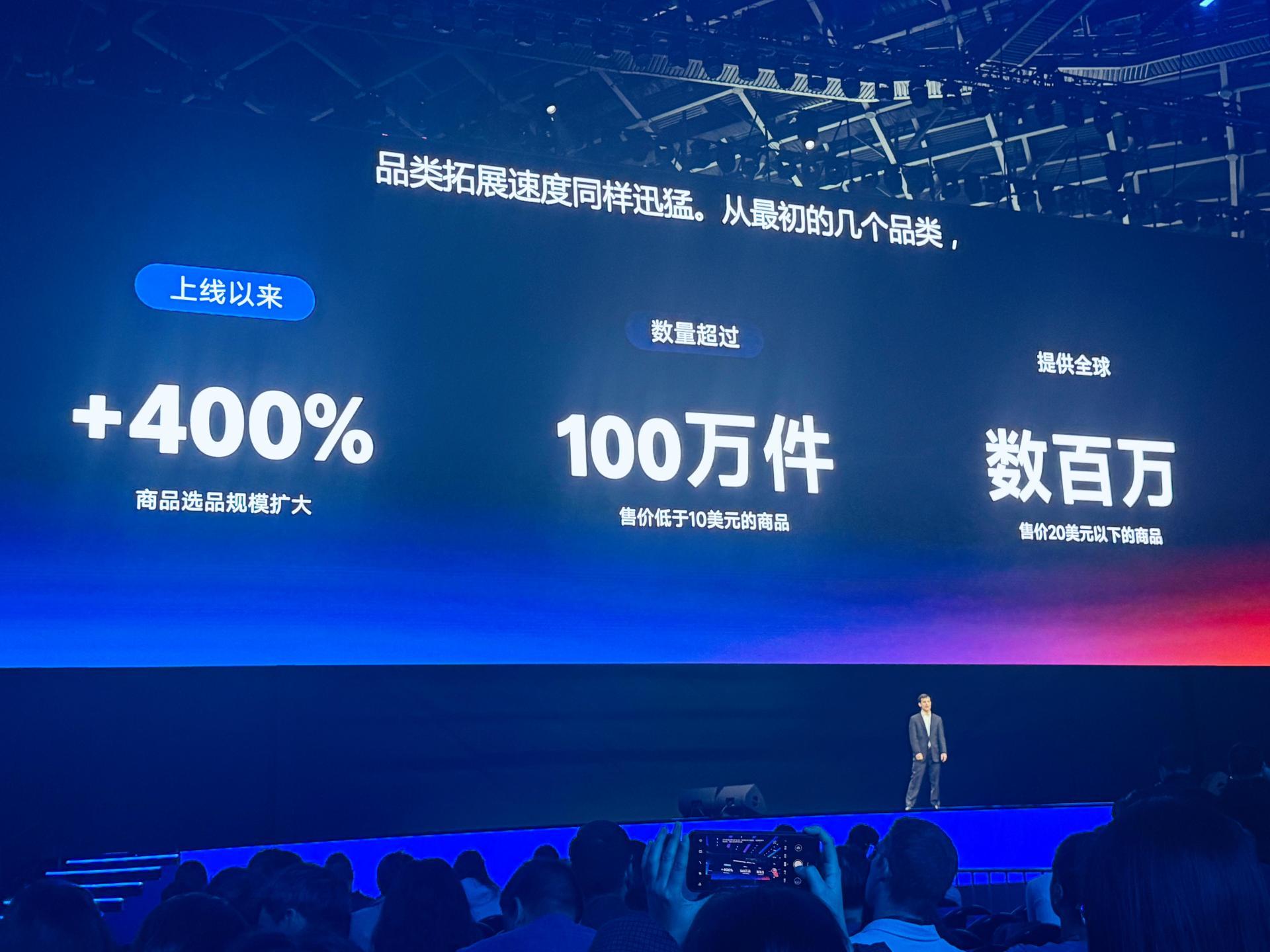
Core Insights - The competition in the cross-border e-commerce low-price sector is intensifying, with major players like Temu, TikTok Shop, and Amazon adopting aggressive strategies to capture market share [1][2]. Group 1: Amazon's Strategy - Amazon's low-price strategy is a long-term response to industry trends, with over 80% of consumers adjusting shopping behavior due to tariff fluctuations, making price a key decision factor [2]. - Amazon Haul, launched in late 2024, has rapidly expanded from the U.S. to 26 countries, significantly increasing its product selection by over 400% since its inception [6][9]. - The platform aims to attract Prime members by offering a browsing shopping experience through frequent promotions, contrasting with the traditional search-based shopping on Amazon's main site [7]. Group 2: Competitive Landscape - New platforms like Temu and TikTok Shop are effectively challenging Amazon by offering lower prices and leveraging innovative sales models, such as pre-sale strategies and live-streaming promotions [11]. - Temu's pricing can be 10% to 20% lower than Amazon Haul, indicating a significant competitive threat in the low-end market [11]. Group 3: Operational Enhancements - Amazon is implementing various measures to enhance competitiveness, including reducing fees for low-priced items in Europe by up to 15% and offering logistics cost reductions through smart hub warehouses, which can lower seller storage costs by over 20% [9][10]. - The "next-generation cross-border chain" initiative encourages sellers to adopt a global strategy from the outset, rather than focusing on single markets, to mitigate risks and capture diverse consumer demand [12]. Group 4: Future Outlook - Amazon plans to continue expanding Haul into new markets, including Europe and the Middle East, with further product selection increases and targeted subsidy policies anticipated [12]. - The ultimate winner in this competitive landscape will be the entity that balances cost, efficiency, and customer experience effectively [13].


2025年中国跨境电商+产业带数据报告
Sou Hu Cai Jing· 2025-12-01 23:06
Core Insights - The deep integration of cross-border e-commerce and industrial belts is reshaping the global trade landscape, transitioning from "product export" to "industry expansion" in China [1][9] - Cross-border e-commerce is experiencing sustained high growth, becoming a crucial pillar of foreign trade, with an expected growth rate of 14% in 2024 and a projected import-export trade volume of 2.71 trillion yuan [2][12] - The report identifies six cooperative models emerging from the synergy between industrial belts and cross-border e-commerce, leading to significant cost reductions and efficiency improvements [3] Group 1: Growth and Market Dynamics - In 2024, the market size of cross-border e-commerce in China is expected to reach 17.66 trillion yuan, with its share of total goods trade surpassing 40% [2][12] - China's e-commerce market is the largest globally, valued at 3 trillion USD, with a penetration rate of 47%, significantly higher than other countries [2][15] - The "Four Little Dragons" of China's e-commerce—AliExpress, Pinduoduo (Temu), ByteDance (TikTok Shop), and Shein—are performing strongly in overseas markets [2][15] Group 2: Cooperative Models and Benefits - The integration of industrial belts with cross-border e-commerce has led to six key cooperative models, enhancing logistics efficiency and reducing costs by 18%-25% [3] - Average delivery times for cross-border e-commerce platforms have decreased to 7 days, and new product development cycles have been shortened from 6 months to 45 days [3] - The average gross profit margin for direct-to-consumer models has increased to between 35%-50% [3] Group 3: Policy and Platform Support - National policies are increasingly supportive, with 165 cross-border e-commerce pilot zones approved across 31 provincial-level regions by 2024 [4] - Major platforms are launching initiatives to support industrial belts, such as Amazon's "Industrial Belt Accelerator" and Shein's nationwide plan covering 500 cities [4][24] - These initiatives aim to facilitate the digital transformation of traditional manufacturing enterprises and enhance their global branding efforts [4] Group 4: Regional Characteristics and Trends - Coastal provinces like Guangdong, Zhejiang, and Shandong are leading in cross-border e-commerce coverage, while central and western regions are catching up with their unique industrial strengths [5] - Popular product categories include clothing, home goods, and consumer electronics, with different platforms focusing on specific niches [5] Group 5: Branding and Global Perception - Brand building is becoming essential for navigating challenges and achieving value chain upgrades, with notable Chinese brands like Shein and Anker gaining international recognition [6] - The rise of social media platforms like TikTok is providing new avenues for Chinese manufacturers to reach global consumers, showcasing the evolution of Chinese manufacturing towards creativity and marketing innovation [6]

15小时亏损百亿,订单暴跌9%!跨境电商为何集体倒戈中国平台?
Sou Hu Cai Jing· 2025-11-07 03:52
Core Insights - Amazon's recent 15-hour outage resulted in a loss of over $10 billion and a 9% drop in orders, marking the most severe crisis in four years and triggering a shift in the cross-border e-commerce landscape [1][3] - The crisis has led to a mass exodus of overseas merchants to Chinese platforms, questioning Amazon's dominance and highlighting the rise of Chinese competitors [1][3] Amazon's Challenges - Amazon's difficulties were foreshadowed, with the outage being the tipping point for its decline [3] - Historically, Amazon dominated the e-commerce market with self-built logistics and strict quality control, holding a 15.4% market share in China in 2008 [4] - The company has become trapped in path dependency, slow to respond to market changes, and has failed to adapt its U.S. desktop shopping model to the mobile-centric habits of Chinese consumers [4][6] - Amazon's "two-day delivery" standard is now seen as outdated compared to JD.com's "211 limited-time delivery" model, and its centralized management structure has hindered timely market responses [6] - High commission rates of 15%-25% have pressured merchants, who have remained with Amazon due to a lack of better options until now [6] Rise of Chinese Platforms - TEMU, a subsidiary of Pinduoduo, has emerged with extremely competitive pricing, offering products like Bluetooth speakers for $6 and jackets for $12, attracting overseas consumers [7][8] - The low prices are sustainable due to China's complete supply chain, which significantly reduces production, logistics, and operational costs [8] - Yiwu, a global hub for small commodities, reported a 26.3% year-on-year increase in import and export value, providing a steady supply of high-quality goods for Chinese cross-border e-commerce [9] Competitive Strategies - Alibaba's AliExpress has targeted Amazon's core high-net-worth demographic by halving commission rates and promoting a "higher transaction at half the cost" strategy, attracting numerous quality merchants [11] - By October, ten brands with annual sales exceeding $1 million on AliExpress surpassed Amazon's global sales, with some brands achieving 30% higher daily sales than on Amazon [12] - Chinese platforms are not only competing on price but also on a deep understanding of merchant and consumer needs, offering services like real-time data updates and channel conversion analysis [14] Market Dynamics - The number of businesses in China engaged in cross-border e-commerce has surged, with 61.8% established in the last three years, indicating a maturing ecosystem [15] - The integration of technology and business models has enhanced the competitiveness of Chinese platforms, moving beyond mere price advantages to a comprehensive ecological advantage [19] - Global economic conditions and changes in tariff policies in regions like the U.S. and EU are pushing the industry towards upgrades, benefiting Chinese platforms [20] Conclusion - The 15-hour outage at Amazon signifies a shift in the cross-border e-commerce landscape, with merchants recognizing the strengths of Chinese platforms [23] - The rise of Chinese e-commerce is not coincidental but a result of multiple strengths, positioning them as serious competitors rather than mere followers in the global market [23]

国际权威报告:阿里速卖通和Temu重塑全球跨境电商
Cai Jing Wang· 2025-10-31 05:54
Group 1 - The top three e-commerce platforms by global traffic in 2025 are Amazon, Temu, and AliExpress, indicating a shift in the cross-border e-commerce landscape driven by Chinese giants [1][5]. - Amazon leads with a monthly average traffic of 2.7 billion visits, while Temu and AliExpress follow with 1.6 billion and 646 million visits, respectively [1][3]. - Temu employs an aggressive low-price strategy to expand its market presence, while AliExpress focuses on enhancing its brand offerings, creating competitive pressure on Amazon [1][4]. Group 2 - The data is sourced from We Are Social, reflecting the average monthly visits for the period of June to August 2025 [5]. - The competitive dynamics suggest that both Temu and AliExpress are successfully capturing market share, with some brands on AliExpress surpassing Amazon in sales after upgrading their brand export plans [1].


2025中国跨境电商+产业带数据报告
Sou Hu Cai Jing· 2025-10-21 13:01
Core Insights - The report highlights the integration of cross-border e-commerce and industrial belts in China, projecting a trade volume of 2.71 trillion yuan and a market size of 17.66 trillion yuan by 2024, with a growth rate of 14% [1][8][12] - The report emphasizes the strategic importance of this integration as a new driving force for foreign trade growth and manufacturing expansion [5][6] Group 1: Strategic Background - Cross-border e-commerce is becoming a new driving force for foreign trade growth, with its trade volume accounting for over 40% of total goods trade [1][7] - China's e-commerce market is the largest globally, with a market size of approximately 3 trillion USD and a penetration rate of 47% [9][10] - The report indicates that China's manufacturing sector has maintained its position as the world's largest for 15 consecutive years, with an industrial added value of 40.54 trillion yuan in 2024 [12][13] Group 2: Connotation Model - The integration of cross-border e-commerce and industrial belts involves B2B and B2C models, facilitating direct sales to consumers and businesses [21][24] - The industrial belts are characterized by high density of related industries, enhancing the efficiency of cross-border e-commerce operations [22][24] Group 3: Development Trends - The report outlines several trends, including government support for cross-border e-commerce initiatives and the establishment of comprehensive pilot zones [18][19] - Major platforms like Amazon and Temu are launching support programs for industrial belts, indicating a collaborative approach to enhance market access [18][19] - The report forecasts that Southeast Asia's e-commerce market will reach 186 billion USD by 2025, highlighting emerging markets as key targets for expansion [1][5] Group 4: Provincial and City Insights - The report provides a detailed map of industrial belts across 22 provinces, 5 autonomous regions, and 4 municipalities, showcasing regional strengths such as 3C electronics in Shenzhen and small commodities in Yiwu [1][5] - It identifies that over 50% of Amazon's sellers in China are concentrated in eastern provinces like Guangdong, with popular categories including clothing, home goods, and electronics [1][5]

出海速递 | 一位厂二代无班可接之后/特朗普:即将公布各国关税信函,税率最高70%
3 6 Ke· 2025-07-07 10:08
Group 1 - The article discusses the transformation of Yiwu, highlighting the shift from traditional manufacturing to innovative product design and pricing control by local entrepreneurs like Zhang Xiaojie [2] - The rise of "reverse cross-border shopping" illustrates a global trend where consumers are increasingly purchasing Chinese goods, despite challenges faced by companies like Romoss and Anker due to market saturation [3] - The article emphasizes the need for 3C companies to adapt and survive in an era of overcapacity, suggesting that innovation and differentiation are crucial for sustainability [3] Group 2 - The Hong Kong stock market is experiencing a positive trend, with a 20% increase in the Hang Seng Index in the first half of 2025, marking the largest half-year gain ever [6] - There were 42 IPOs completed in Hong Kong in the first half of 2025, raising over 107 billion HKD, which is a 22% increase compared to the entire previous year [6] - The number of IPO applications in Hong Kong has surged to approximately 200, indicating strong market confidence and interest from companies, including those from the Middle East and Southeast Asia [6] Group 3 - In Mexico, e-commerce platforms like Mercado Libre, Amazon, and AliExpress are among the top three preferred by consumers, with a significant portion of online retail transactions occurring through these platforms [5] - The growth rates for these platforms in 2024 are notable, with Mercado Libre increasing by 31.70%, Amazon by 31.04%, and AliExpress by 7.96% [5] - The Zhejiang China-Europe Railway Express has seen a year-on-year increase of 11.1% in container shipments, reflecting stable growth in cross-border logistics [5] Group 4 - The international standard for autonomous vehicle testing, ISO 34505:2025, has been officially released, establishing evaluation processes and criteria for testing scenarios [5] - This standard aims to enhance the safety and reliability of autonomous driving systems by defining key evaluation metrics [5] - The development of this standard is a significant step for the automotive industry, particularly in the context of increasing global focus on autonomous technologies [5]

特斯拉首辆全自动驾驶汽车交付,雷军称要继续“学习”;TikTok欧洲促销单日GMV最高增长200%丨Going Global
创业邦· 2025-07-06 09:42
Core Insights - The article highlights significant developments in the global market, focusing on companies expanding their international presence and innovative product launches, particularly in e-commerce and electric vehicles. Group 1: E-commerce Developments - TikTok Shop launched in Japan, allowing users to buy and sell products directly within the app, enhancing the shopping experience through video and live streams [2][3] - TikTok Shop's summer promotion in Europe saw a peak daily GMV increase of 200%, with top merchants in the UK experiencing over 600% growth [5][6] - Temu resumed advertising on Meta and Google platforms after a pause, significantly increasing its active ads from 4 to over 900 [7][8][9] - AliExpress in South Korea surpassed 9 million active users, aided by the launch of a travel channel offering extensive booking options [11] Group 2: Automotive Industry Expansion - BYD's first vehicle rolled off the production line at its new factory in Brazil, with plans to produce 150,000 electric and hybrid vehicles annually [22] - Geely signed a distribution agreement to enter the Italian market, launching two electric vehicle models despite Italy lagging in EV adoption compared to other European countries [16][17] - The Chinese government is promoting the export of used cars, aiming to develop a healthy second-hand car market [28] Group 3: Technology and AI Investments - Morgan Stanley reported that Elon Musk's xAI raised $10 billion, including $5 billion in strategic equity investment, to support AI development [46] - Siemens announced the lifting of U.S. export restrictions on chip design software to China, restoring full access for Chinese clients [29] Group 4: Global Market Trends - PwC forecasts that Hong Kong will reclaim the top spot for IPO fundraising globally in 2025, with over 200 companies already applying to list [44] - Cato Networks raised $359 million in funding, achieving a valuation exceeding $4.8 billion, focusing on AI-driven security solutions [51][56]




出海速递 | 美区续航、拉美快跑,TikTok电商布局再提速/我在热带雨林送快递
3 6 Ke· 2025-06-20 10:54
Group 1 - TikTok is accelerating its global growth and commercialization efforts, particularly in the U.S. and Latin America [2] - The Chinese express delivery company is reshaping the logistics industry in Latin America [3] - "Raytheon Technology" has completed a C round financing of hundreds of millions, with plans to increase R&D investment and expand overseas [4] Group 2 - Trump has extended the deadline for the "sell or ban" TikTok order by 90 days [5] - Baidu's autonomous taxi subsidiary, "Luo Bo Kuaipao," plans to enter the Southeast Asian market by the end of 2025 [5] - SoftBank's $20 billion investment in OpenAI may be at risk due to restructuring issues with Microsoft [5] Group 3 - SoftBank's Masayoshi Son seeks to collaborate with TSMC to build a $1 trillion AI center in Arizona [6] - Alibaba's AliExpress and Pop Mart topped the Australian download charts during the overseas 618 shopping festival [6] - The EU is investigating the corporate structure of Elon Musk's X company [6] Group 4 - Amazon's Zoox has opened its first mass production factory for autonomous taxis in California [7] - Li Xiaojia's "Drip Investment" has submitted a listing application to the Hong Kong Stock Exchange [7] - EHang and ANRA Technologies signed a MoU to collaborate on urban air mobility solutions [7] Group 5 - Jin Jing New Energy and Yiwei Lithium Energy have launched a global lithium battery recycling network platform [8] - China's Minister of Commerce discussed trade issues with the EU, including electric vehicle anti-subsidy cases [8] - China and Colombia signed a memorandum to enhance cooperation in AI and quantum technology [8] Group 6 - The Shanghai Stock Exchange held a training session on investment cooperation with Qatar [9] - CITIC Securities recommends that Hong Kong embrace the trend of integrating cryptocurrencies into the financial ecosystem [9] - Lazada and Momentum Ventures report that AI could bring a $131 billion market increment to Southeast Asian e-commerce by 2030 [9] Group 7 - The micro-short drama market in China is projected to reach 50.5 billion yuan in 2024, surpassing annual box office revenue for the first time [11] - The U.S. has made a final ruling on anti-dumping duties for low-speed passenger vehicles imported from China [11] - The Jia Yu Ningbo cross-border e-commerce fund has been established to support local enterprises in going global [11] Group 8 - Exports from Yuyao, Zhejiang to Central Asia increased by 72.5% in the first five months of the year, with water purification equipment in high demand [11]

海外618前,Labubu成为阿里速卖通搜索词第一名
第一财经· 2025-06-06 06:08
Core Insights - Labubu has become the top search term on Alibaba's AliExpress platform, indicating a significant surge in consumer interest [1] - During the upcoming overseas 618 shopping festival, Pop Mart will continue to sell Labubu and other popular IPs on AliExpress [1] Group 1 - Labubu's popularity is driving global consumers to purchase from Chinese cross-border e-commerce platforms [1] - The upcoming overseas 618 event is expected to feature Labubu prominently, reflecting its status as a trending product [1]