雪具

Search documents
爸爸妈妈别塞了,这些真不让带!
Xin Lang Cai Jing· 2026-02-23 12:30
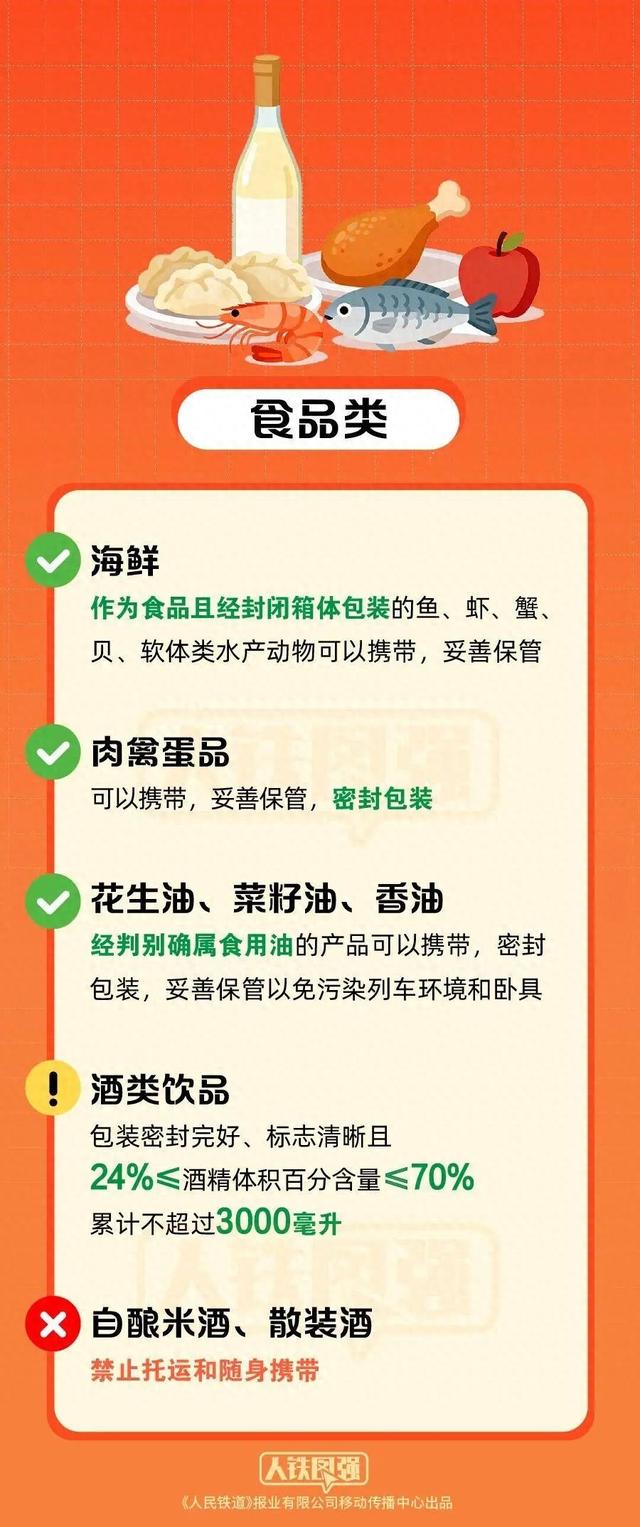
Group 1 - The article provides guidelines on items that can and cannot be carried on trains, emphasizing the importance of proper packaging and handling to avoid contamination and safety issues [1][3][4] - Specific food items such as meat, poultry, and eggs are allowed if properly sealed and stored, while certain alcoholic beverages are permitted under specific conditions, including a maximum alcohol content of 70% and a total volume not exceeding 3000 milliliters [3][4] - Personal care items like perfumes and sprays are allowed in limited quantities, with restrictions on container sizes for flammable products [6][7] Group 2 - Items such as knives with blades longer than 60mm are prohibited for carry-on but can be checked in, while smaller knives are allowed [7][11] - Certain recreational items like folding strollers and wheelchairs are permitted, with specific guidelines for electric wheelchairs [8][9] - Prohibited items include flammable liquids, certain tools, and weapons, which cannot be carried on or checked in [14][15] Group 3 - Smoking is strictly prohibited on high-speed trains and in designated areas of regular trains, with fines imposed for violations [18] - Passengers are allowed to carry a limited number of electronic cigarettes and lighters, but usage is restricted [18] - Guidelines for transporting small animals, such as guide dogs and pets, are provided, including weight limits and health requirements [19] Group 4 - The article outlines procedures for reporting lost items, including using the railway's official app and contacting customer service for assistance [20][21][22][23]

白酒、充电宝能过安检吗?火车携带物品指南来了!
Yang Shi Xin Wen· 2026-02-09 03:19
Summary of Key Points Core Viewpoint - The article provides guidelines for passengers regarding items that can and cannot be carried on trains, especially during the upcoming holiday travel season. Group 1: Permissible Items - Meat, poultry, and egg products can be carried if properly sealed and stored [3] - Edible oils such as peanut oil and canola oil are allowed if they are clearly identified and sealed [3] - Alcoholic beverages with an alcohol content between 24% and 70% are permitted, with a maximum of 3000 milliliters [3] - Power banks and lithium batteries are allowed if they have a clear label and a single energy rating not exceeding 100 watt-hours (27,000 milliamp-hours) [4] - Household appliances like rice cookers and electric kettles can be carried but should not be used on the train [5] - Disinfectant wipes containing 75% alcohol are allowed, as well as certain non-pressurized containers of personal care products [6] Group 2: Prohibited Items - Self-brewed alcohol and bulk alcohol are prohibited for both carry-on and checked luggage [3] - Items such as gasoline, kerosene, and batteries are strictly forbidden [14] - Sharp objects with blades longer than 60 millimeters are not allowed in carry-on luggage but can be checked [7] - Certain self-propelled devices like bicycles and balance scooters must be packaged properly and cannot be used on the train [8] Group 3: Special Services - A "Snow Gear Convenience Service" is available for passengers traveling with snow equipment, allowing them to carry items of specific dimensions [10] - The "Light Travel" service offers door-to-door luggage transport for passengers, enhancing convenience during travel [21] Group 4: Lost and Found Services - Passengers can report lost items through the railway's official app or website, and staff will assist in locating them [23] - A dedicated lost and found service is available at major train stations [25] - Passengers can contact the railway's customer service for assistance with lost items [24]
3万人吃上“冰雪饭”,冬奥小城崇礼冰雪经济热潮涌动
Xin Lang Cai Jing· 2026-02-07 14:38
Core Insights - The ice and snow industry in Chongli, Hebei, has rapidly developed, transforming from a seasonal inconvenience into a significant economic driver for the local community [3][7] - The demand for skiing instructors has surged due to the increasing number of visitors to Chongli, highlighting the growth of the local ice and snow sports sector [4][5] - Chongli is evolving into a year-round tourist destination by diversifying its offerings beyond winter sports, including summer activities and cultural events [10] Group 1: Industry Growth - Chongli's annual snowfall averages 63.5 cm, with a snow accumulation of about 1 meter and a snow retention period exceeding 150 days, making it an ideal location for winter sports [3] - The number of people directly or indirectly involved in the ice and snow industry in Chongli is approximately 30,000, which means one in four locals is engaged in this sector [3] - The area has seen the establishment of nine large ski resorts, positioning Chongli as the largest high-end ski cluster in China [5] Group 2: Economic Impact - The local snow equipment store has expanded from 40 square meters to nearly 200 square meters, now offering around 300 sets of equipment, with over half being domestically produced [3] - The hosting of international skiing events has led to full occupancy of nearly 3,600 accommodations during competitions, indicating a booming tourism sector [7] - Chongli's integration of agriculture with ice and snow tourism has enhanced the value of local products, such as the introduction of unique offerings like "color pepper coffee" [8] Group 3: Year-Round Tourism Strategy - Chongli is actively developing summer tourism resources, including mountain golf and kart racing, to transition from a winter-only destination to a year-round tourist hub [10] - The region has hosted over 800 sports and cultural events since last year, contributing to a total visitor count exceeding 10 million in 2025, with summer visitors surpassing winter [10] - Future plans include leveraging the legacy of the Winter Olympics to enhance event offerings and integrate various industries, aiming to establish Chongli as a globally recognized ice and snow tourism destination [10]
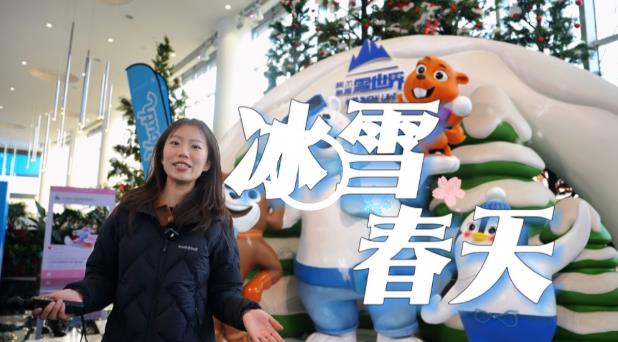
冰雪春天|雪道铺进江南,飞出怎样的“雪花”?
Xin Lang Cai Jing· 2026-01-28 13:39
Core Viewpoint - The ice and snow economy is rapidly expanding in the Yangtze River Delta region, transforming from a niche sport into a mainstream lifestyle, driven by the establishment of indoor ski facilities and a growing consumer base [2][6]. Group 1: Industry Development - The establishment of the indoor ski resort, Taicang Alps Snow World, has attracted over 2 million visitors and generated revenue exceeding 500 million yuan, contributing to a 10% increase in local tourism [6]. - The region is witnessing a "north-to-south" talent migration, with ski instructors relocating to areas like Taicang for more stable job opportunities and longer career lifespans [3][5]. - The integration of ice and snow sports into local culture is evident, with ski enthusiasts increasingly participating in related activities, enhancing the overall experience [7][9]. Group 2: Economic Impact - The influx of visitors to Taicang has led to a rise in local businesses, including cafes and shops, catering to the growing number of tourists, particularly those engaged in skiing [11][12]. - Local attractions, such as the ancient town of Shaxi, are adapting to the ski tourism trend by offering discounts and special promotions to ski ticket holders, creating a synergistic relationship between sports and local culture [14]. - The ice and snow economy is fostering a new tourism model that combines sports with relaxation, such as proposed "ice and snow + hot spring" tourism routes, enhancing the overall visitor experience [14]. Group 3: Talent and Training - Taicang Alps Snow World collaborates with local vocational colleges to train ski instructors and engineers, addressing the talent shortage in the industry while improving the local employment landscape [5][6]. - The ski resort's coaching team, including many instructors from northern regions, is experiencing high demand, with classes fully booked even during peak holiday seasons [5][6]. Group 4: Consumer Trends - The evolution of skiing from a specialized sport to a lifestyle choice is evident, with consumers seeking more professional experiences and diverse activities related to skiing [9][10]. - The establishment of pop-up stores featuring well-known ski brands indicates a growing demand for quality equipment and services among skiing enthusiasts [9].
专项检查滑雪装备
Xin Lang Cai Jing· 2026-01-19 22:17
Core Viewpoint - The article highlights the quality and safety inspection conducted by the Shunyi District Market Supervision Administration in Beijing on merchants selling skiing equipment, ensuring product reliability and compliance with standards [1] Group 1: Inspection Details - The enforcement personnel meticulously checked the labels of skiing equipment, including skis, ski clothing, and gloves, verifying manufacturer information, production addresses, standards, and certification [1]

热雪经济 沸腾浙里
Xin Lang Cai Jing· 2025-12-30 23:17
Core Insights - The launch of the Changxing Badujia Ski Resort, with a total investment of 320 million yuan and covering over 50,000 square meters, adds a new dimension to Zhejiang's ice and snow economy, featuring four professional ski trails and a 3,500 square meter snow play area for local tourists [5][6] Group 1: Industry Development - Zhejiang has developed a unique "snow-making" path through technological breakthroughs and scene innovation, despite lacking natural snow resources [5] - The province has seen the emergence of over 10 ice and snow recreational facilities since the establishment of its first outdoor ski resort in 2006, significantly boosting public interest in ice and snow sports [5] - The expected number of ski visits in Zhejiang for the 2024-2025 season is projected to reach 1.29 million, ranking sixth nationally and first in southern China [5] Group 2: Economic Impact - The ice and snow industry in Zhejiang has formed a comprehensive industrial chain, with over 500 related enterprises covering research, production, and sales, contributing to a year-round thriving ice and snow economy [6] - Ningbo Ninghai is recognized as the "Hometown of Sports Poles," producing about 60% of global ski poles, with domestic orders expected to grow by over 50% this year [6] - Taizhou Luqiao is known as the "Hometown of Snow Boots," accounting for one-third of national production, with an annual output value exceeding 1 billion yuan [6] - The ice and snow industry clusters in regions like Huzhou, Ningbo, Jinhua, and Jiaxing are creating a full industrial chain ecosystem that integrates experience, equipment manufacturing, and business innovation [6]
冰雪经济中的发展之道
Ren Min Ri Bao· 2025-12-30 02:53
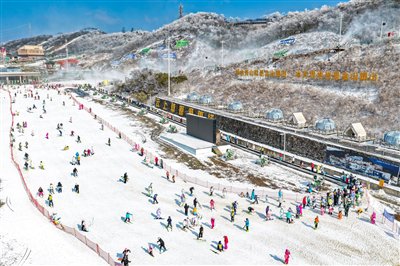
Core Insights - The ice and snow economy has evolved from a niche market to a trillion-yuan industry, transitioning from event-driven growth to a systematic and industrialized development phase [1] Group 1: Transformation of Ice and Snow Economy - The surge in ice and snow tourism is driven by a profound change in consumer behavior, moving beyond mere sightseeing to immersive experiences that resonate emotionally with visitors [1] - The integration of ice and snow with culture, sports, and technology has diversified offerings, allowing for better alignment with consumer demands [1] Group 2: Cultural Revitalization - Historical resources serve as valuable assets for the ice and snow economy, with innovative approaches transforming old cultural elements into new attractions [2] - The introduction of AR technology in historical sites, such as the ice and snow night tour in Luoyang, enhances visitor engagement by blending history with modern experiences [2] Group 3: Collaborative Development - The ice and snow economy thrives on collaboration, requiring a break from isolated development to create synergies across multiple attractions and regions [3] - The model of leveraging a central attraction, like the snow town in Heilongjiang, to benefit surrounding areas exemplifies effective regional cooperation [3] Group 4: Expanding Industry Boundaries - The development of the ice and snow economy must address existing gaps and leverage available resources to maximize value [4] - Initiatives such as enhancing transportation networks and developing snow equipment industries in regions like Zhejiang illustrate strategies to fill market voids and stimulate growth [4] - The rise of the ice and snow economy reflects broader trends in economic restructuring and the release of consumer potential in China [4]
小雪具店撬动大市场:乌鲁木齐“冰雪经济”新玩法
Zhong Guo Xin Wen Wang· 2025-12-29 14:11
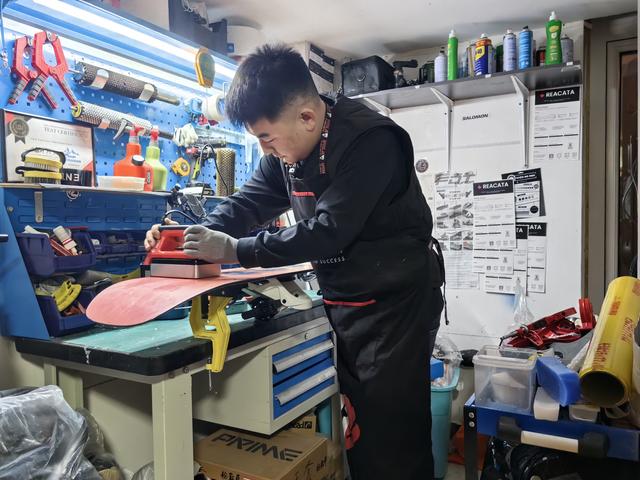
Core Insights - A snow equipment store in Wuxi Gully, Urumqi County, is innovating the traditional ice and snow consumption model by utilizing an "online traffic + offline precise delivery" approach [2] - The store, owned by a seasoned snow enthusiast, has achieved an average weekend foot traffic of 100 to 200 people within just half a month of opening, attracting many customers from outside the region [2] - The business leverages short video platforms to break geographical limitations and connect with snow enthusiasts nationwide, showcasing the new vitality of Xinjiang's ice and snow industry driven by digital empowerment [2]
盘活冬奥遗产
Xin Lang Cai Jing· 2025-12-23 22:11
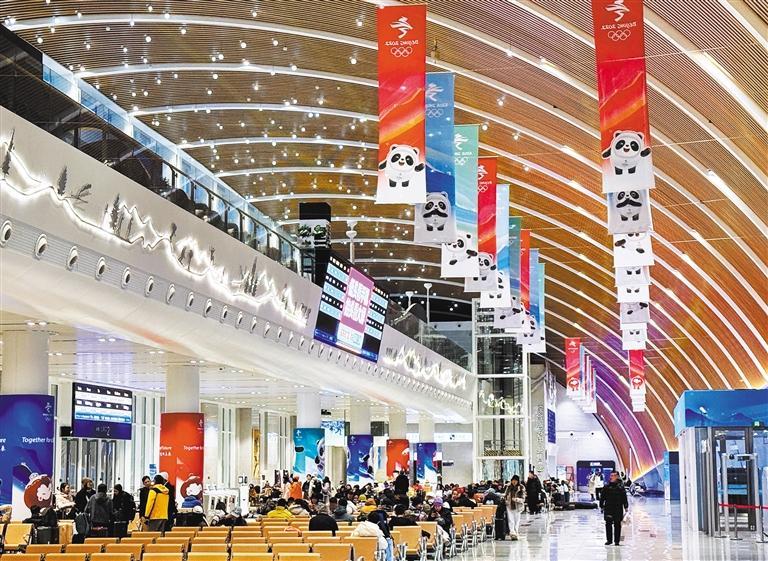
Core Viewpoint - Zhangjiakou is emerging as a significant hub for winter sports and tourism, leveraging its legacy from the Beijing Winter Olympics and enhancing its ice and snow economy through various initiatives and infrastructure developments [6][9]. Group 1: Infrastructure and Services - The railway department has introduced services like "Snow Equipment Convenience" and luggage transportation to facilitate travel for skiing enthusiasts, ensuring seamless connections from home to ski resorts [1]. - Zhangjiakou has developed two major research and manufacturing clusters for ice and snow sports equipment, aiming to create a comprehensive industrial chain from high-end to entry-level products [8]. Group 2: Tourism and Visitor Engagement - The Chongli District in Zhangjiakou is home to nine ski resorts, with an expected visitor count exceeding 5.2 million during the 2024-2025 snow season, indicating a robust growth in winter tourism [3]. - The local ice and snow town has seen a surge in popularity, with activities such as snow appreciation, sports, and cultural experiences attracting tourists [4]. Group 3: Economic Development and Events - Zhangjiakou is actively promoting the integration of sports, culture, and tourism, with initiatives like the "Ice and Snow Caravan" and various mass participation events, averaging over 600 ice and snow competitions annually [7]. - The city has invested over 1.7 billion yuan in transforming and upgrading Olympic venues, enhancing their functionality for diverse events and activities [8]. Group 4: Future Plans - Zhangjiakou aims to continue developing the Beijing-Zhangjiakou Sports and Cultural Tourism Belt, fostering a complete ecosystem for the ice and snow economy, and creating a highland for ice sports and cultural tourism [9].
冬季「烧钱三件套」,把北京人卷疯了
3 6 Ke· 2025-12-14 01:46
Core Viewpoint - The article highlights the increasing popularity of winter outdoor activities in Hebei, particularly skiing and hiking, as a way for urban workers to escape the pressures of their jobs and recharge during the winter season [1][4][65]. Group 1: Winter Outdoor Activities - Hebei's winter season attracts a significant number of people from Beijing, with many rushing to enjoy skiing, hiking, and hot springs as soon as the snow arrives [5][39]. - The province boasts the highest number of ski resorts in China, with 84 ski areas, surpassing Heilongjiang and Jilin [38][39]. - The geographical advantages of Hebei, particularly in Chongli, provide an ideal environment for winter sports, with an average snow period of 150 days and temperatures around -12°C, making it suitable for skiing [40][41]. Group 2: Equipment and Costs - Engaging in winter sports requires substantial investment in equipment, with skiing gear alone costing over 10,000 yuan, and additional expenses for lessons and other necessities [15][17]. - The article emphasizes the financial commitment involved in participating in these activities, including the need for specialized winter clothing and gear [15][17]. Group 3: Social and Emotional Aspects - The experience of skiing and hiking is portrayed as a form of liberation from the constraints of office life, providing a sense of freedom and rejuvenation [29][65]. - The social media culture surrounding winter sports showcases a blend of fun and hardship, where participants share their experiences despite the challenges faced in extreme cold [10][19]. Group 4: Hot Springs and Relaxation - The article discusses the appeal of hot springs in Hebei, which offer a unique way to relax after outdoor activities, enhancing the overall winter experience [59][62]. - Hebei's rich geothermal resources provide various options for hot spring experiences, catering to different preferences for relaxation and healing [58][62].