
零跑C系列

Search documents
“蔚小理零”首次集体盈利背后
创业邦· 2026-03-25 10:44
Core Viewpoint - The article discusses the evolving landscape of China's electric vehicle (EV) market, highlighting the competitive dynamics among new car manufacturers, particularly Li Auto, NIO, Xpeng, and Leap Motor, as they navigate challenges and opportunities in the industry from 2023 to 2026 [6][7]. Group 1: Market Dynamics - In 2025, the four new car manufacturers collectively achieved profitability for the first time, marking a significant turning point in their survival paths [8]. - The competition intensified as these companies not only vied for market share among themselves but also faced challenges from traditional automakers and new entrants like Huawei and Xiaomi [8][9]. - Leap Motor emerged as a surprising contender, achieving monthly sales exceeding 70,000 units, positioning itself among the top tier of manufacturers [7]. Group 2: Sales Performance - In 2025, Li Auto's total deliveries fell to 406,000 units, a decline of 18.8% year-on-year, missing its target of 700,000 units [10][12]. - NIO's sales reached 326,000 units, a year-on-year increase of 46.9%, driven by the success of the ES8 model [13]. - Xpeng's sales surged to 429,000 units, a 126% increase, largely attributed to the launch of the MONA M03 model [14]. Group 3: Financial Performance - Li Auto's net profit for the year dropped to 1.14 billion yuan, a decrease of 85.8%, primarily supported by 1.92 billion yuan in interest income [18]. - NIO achieved its first-ever positive net profit of 720 million yuan in the fourth quarter, despite a total annual loss of 14.94 billion yuan [19]. - Leap Motor reported a net profit of 540 million yuan, a significant turnaround from a loss of 2.82 billion yuan the previous year [19]. Group 4: Strategic Shifts - Li Auto and Xpeng are focusing on AI and advanced driving technologies, aiming to evolve from traditional car manufacturers to intelligent mobility companies [8][21]. - NIO and Leap Motor continue to concentrate on vehicle sales, with NIO planning to expand its SUV lineup to five models by 2026 [19][20]. - The competitive landscape is expected to become more challenging in 2026, particularly with the reduction of subsidies for low-end models, impacting sales strategies [15][20].


新能源汽车景气度调研:比亚迪恢复最快
数说新能源· 2026-03-05 03:01
Core Viewpoint - The article discusses the current state of the automotive market, particularly focusing on the impact of government subsidy policies on electric vehicle sales and the recovery of various brands in the market. Group 1: Market Performance and Recovery - In January, the automotive market experienced a decline in production and sales due to the withdrawal of national policies, with a notable drop in sales of economic electric vehicles exceeding 30% [2] - By February, the implementation of subsidy policies, such as scrappage and trade-in incentives, helped to stimulate some consumer demand, although overall orders still saw a year-on-year decline of about 15% [2] - The recovery in the automotive market since February has shown improvement compared to last year, but there remains a gap compared to March sales from the previous year [3] Group 2: Brand-Specific Recovery - BYD's Dynasty and Ocean brands have shown a rapid recovery, aided by various promotional policies introduced in late February and early March [4] - Geely has supplemented its entry-level models with additional policies, but overall, BYD is recovering the fastest among competitors [5] - Leap Motor was one of the first brands to introduce significant policy changes, offering substantial discounts on its B-series models [6] Group 3: Consumer Preferences and Technology - Consumer interest in BYD's upcoming technology releases is high, which is expected to significantly impact the brand's market recovery [9] - The key competitive factors in technology are centered around electric motors, control systems, and batteries, with BYD's innovations likely to enhance consumer experience, especially for mid-range vehicles [10] - BYD plans to adopt a new battery technology that could increase energy density to over 200Wh/kg, potentially achieving a range of 1000 kilometers [11] Group 4: Market Dynamics and Pricing Strategies - The introduction of low or zero-interest financing options has had a stimulating effect on the market, particularly for vehicles priced above 200,000 yuan, although acceptance of long-term loans remains low [14] - The actual transaction prices for vehicles above 200,000 yuan have remained stable or slightly declined compared to last year, with sales of mid-range electric vehicles performing well [15] - The pricing strategies of manufacturers like SAIC and Volkswagen are shifting towards higher-priced models, encouraging dealers to focus on selling more premium products [18] Group 5: Inventory and Supply Chain - BYD's inventory levels for its Dynasty and Ocean series are relatively high, exceeding 2.5 months, while other brands like Geely have also seen significant inventory levels [13] - The overall inventory situation varies, with some electric vehicle brands experiencing low inventory levels, while traditional fuel vehicle brands have higher stock [13] Group 6: Future Outlook - Geely plans to focus on the deployment of 800V technology in lower-priced models and enhance its smart driving capabilities across its product range [12] - The automotive market is expected to continue evolving with a focus on improving product quality and avoiding price wars, emphasizing the importance of technological advancements and consumer preferences [19]


2026年乘用车:以高端、出海为矛破局
GUOTAI HAITONG SECURITIES· 2026-02-28 13:17
Investment Rating - The report rates the industry as "Overweight" [2] Core Insights - The passenger car market in China is expected to maintain resilient growth in 2025, with wholesale sales projected to reach 23.797 million units, a year-on-year increase of 6% driven by policy support and consumer recovery [8] - The export of passenger cars is anticipated to reach 5.731 million units in 2025, reflecting a significant year-on-year growth of 21%, benefiting from the accelerated expansion of domestic brands in overseas markets and the enhanced competitiveness of domestic new energy vehicles [8] - The trend of new energy vehicles replacing traditional fuel vehicles continues, with the insurance volume of pure electric passenger cars expected to reach 7.787 million units in 2025, an increase of 148.6 thousand units year-on-year, while fuel vehicle sales are projected to decrease by 164.5 thousand units [21] Summary by Sections Domestic Market Analysis - In 2025, the domestic passenger car wholesale sales are projected to be 23.797 million units, up 6% year-on-year, supported by policy and consumer recovery [8] - The insurance volume for domestic passenger cars is expected to be 22.995 million units, remaining flat year-on-year [21] Export Market Analysis - The export volume of passenger cars is expected to reach 5.731 million units in 2025, marking a 21% increase year-on-year [8] New Energy Vehicle Trends - The insurance volume of pure electric vehicles is projected to be 7.787 million units in 2025, contributing significantly to the overall growth, while fuel vehicle sales are expected to decline [21] - The market share of new energy vehicles continues to rise, with a notable increase in the number of new energy vehicles being registered [21] Price Segment Analysis - The market for passenger cars priced below 200,000 yuan remains concentrated, with a total sales volume of 15.098 million units in 2025, accounting for 66% of the overall market [27] - BYD leads the market with a sales volume of 3.023 million units, holding a market share of 20% [28] High-End Market Dynamics - In the 300,000 to 500,000 yuan segment, domestic brands are gaining market share, with sales of 3.154 million units, a 2% increase year-on-year [33] - The luxury segment remains dominated by traditional brands, but domestic brands are increasingly entering this space [33] Competitive Landscape - The top five companies in the new energy vehicle segment include Geely, Xiaomi, and Leap Motor, which have shown significant growth in sales [23] - The competitive dynamics in the high-end market are shifting, with new entrants challenging established luxury brands [73]
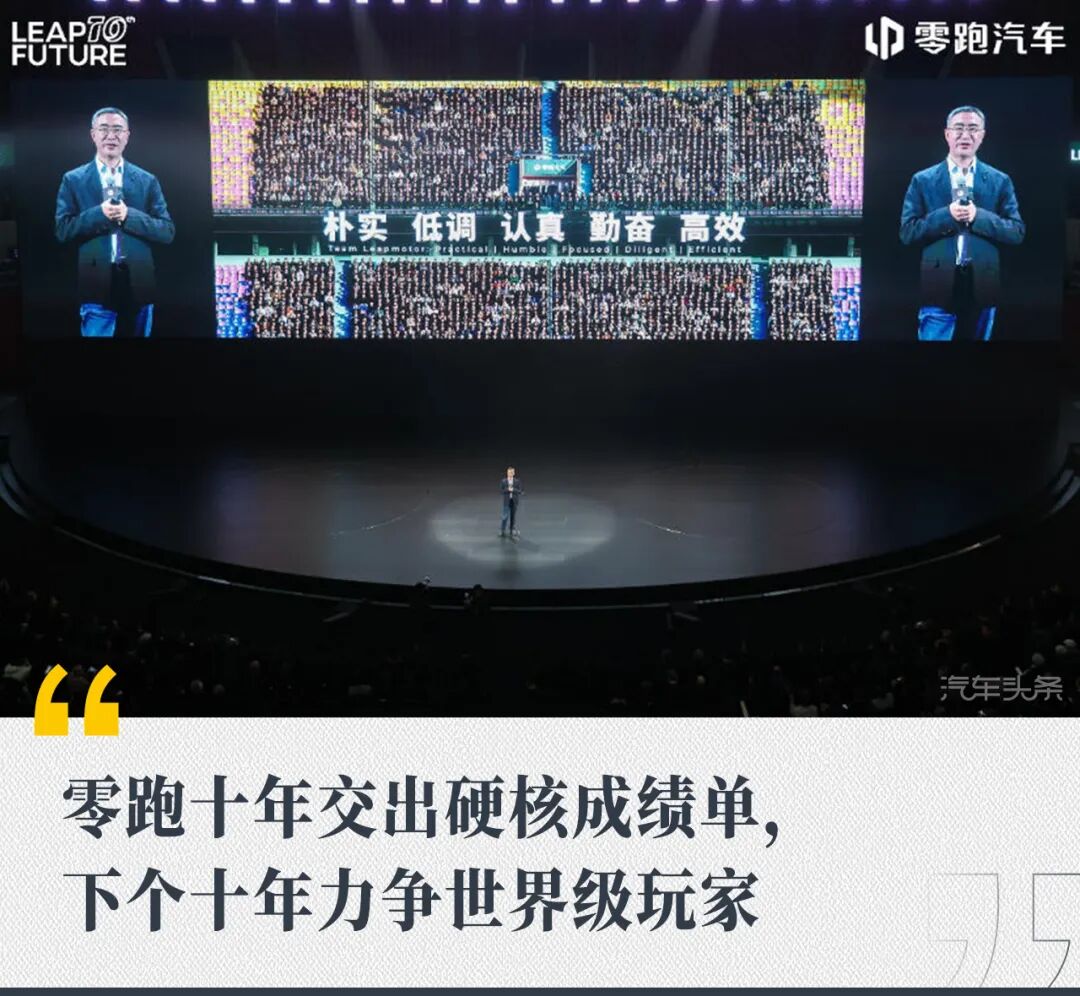
零跑十年交出硬核成绩单,下个十年力争世界级玩家
Xin Lang Cai Jing· 2025-12-29 13:48
Core Insights - The article highlights the journey of Leap Motor, which has evolved from being labeled as an "outsider" in the automotive industry to becoming a leading player among China's new energy vehicle manufacturers over the past decade [2][30]. Group 1: Company Growth and Achievements - Leap Motor has delivered over 1.2 million vehicles to date, with an expected sales volume of nearly 600,000 units in 2025, maintaining its position as the top new energy vehicle brand in China [5][32]. - The company has achieved consecutive quarterly profits, indicating a positive operational trajectory [5][32]. - Leap Motor's founder, Zhu Jiangming, emphasized that the company has "found the feeling of car manufacturing" after ten years of experience [5][32]. Group 2: Research and Development - Leap Motor's defining characteristic is its commitment to "full self-research," with 65% of the vehicle's cost attributed to self-developed components [8][35]. - The company maintains a high proportion of R&D personnel, with 80% currently involved in research, reflecting its focus on technological innovation [35]. - Leap Motor has developed several proprietary technologies, including the first automotive-grade intelligent driving chip and integrated battery chassis technology [9][35]. Group 3: Market Strategy - The company aims to make advanced technology accessible to a broader audience, offering high-end features at competitive prices [10][36]. - Leap Motor's product lineup includes four major series, covering a wide range of vehicle classes and power options, which has resonated well with consumers [12][38]. - The company has successfully penetrated the market under 300,000 yuan, with its C series achieving significant sales [12][38]. Group 4: International Expansion - Leap Motor is projected to sell 60,000 units overseas in 2025, positioning itself as a leader in international sales among new energy vehicle brands [13][39]. - The strategic partnership with Stellantis has facilitated rapid international market entry, leveraging Stellantis' global distribution and service networks [15][41]. - The company has established a presence in 35 countries and regions, with over 800 sales and service outlets, primarily in Europe [15][41]. Group 5: Future Goals - Leap Motor aims to become a world-class automotive company with an annual sales target of 4 million vehicles, setting 2026 as the year to achieve 1 million units sold [21][47]. - The company plans to focus on five key areas: technological innovation, product innovation, ecosystem building, industrial clustering, and marketing management [21][47]. - Leap Motor intends to hold annual technology days to showcase its innovations and continue expanding its product lines [23][49].
零跑的2026年豪赌:产品、智驾、服务推新,冲刺百万辆年销
Bei Jing Shang Bao· 2025-12-29 13:45
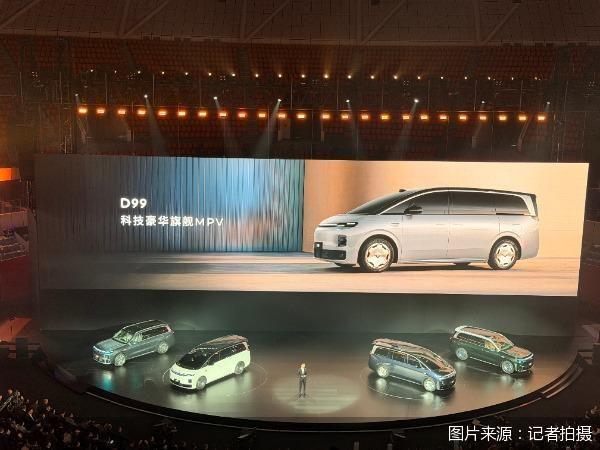
Core Insights - Leapmotor aims to achieve an annual sales target of 1 million vehicles by 2026 and reach 4 million vehicles in the next decade, positioning itself as a world-class automaker [3][4][7] - The company is transitioning from being a "cost-performance representative" to a "world-class automaker" through high-end product offerings and technological advancements [3][7] Product Strategy - The D series, including the flagship MPV D99, is designed to penetrate the high-end market, with a price range of 300,000 RMB, offering both extended range and pure electric options [3][4] - Leapmotor adheres to a "cost-based pricing" principle, ensuring that even with higher-end models, the perceived quality and value can compete with vehicles priced between 500,000 and 1 million RMB [3][4] Production Capacity - The company has prepared a battery supply redundancy of 1.2 to 1.3 times to meet the demand for 1 million vehicles, with a cumulative delivery of over 1.2 million vehicles to date [4][6] - Leapmotor collaborates with leading suppliers like CATL and AVIC Lithium Battery, and plans to start production at its joint battery factory by mid-2026 [3][4] Technological Advancements - Leapmotor is shifting from a following strategy to a leading position in the autonomous driving sector, focusing on L3-level applications and aiming to catch up with industry leaders [5][6] - The company has set a three-year return on investment criterion for new technologies, ensuring that only those that provide real user value will receive significant investment [5][6] Market Positioning - Leapmotor is enhancing its channel and service systems to align with its high-end transformation and sales goals, emphasizing user experience as a core aspect of luxury [6][7] - The company faces challenges in reshaping user perceptions and establishing brand value that justifies higher pricing in the luxury MPV market [7]

拒绝溢价、死磕15%毛利:零跑的“逆势增长”飞轮
虎嗅APP· 2025-12-23 00:14
Core Viewpoint - The article highlights the impressive performance of Leap Motor, a new car manufacturer, in the electric vehicle industry, achieving significant sales growth and profitability while maintaining a low-profile strategy and focusing on cost-effective innovation [2][4][5]. Group 1: Sales Performance - From January to November 2025, Leap Motor delivered a total of 536,000 vehicles, ranking fifth among brands, following BYD, Geely Galaxy, Wuling, and Tesla [2]. - Monthly delivery volumes have shown consistent growth, with November 2025 reaching 70,327 units, resulting in a year-to-date increase of 92% [3][4]. - The sales of various models have remained balanced, with most models expected to maintain year-on-year growth in 2025, except for the C01 model [4]. Group 2: Financial Performance - Leap Motor achieved a net profit in the first half of 2025 and continued to report quarterly profits in the third quarter, indicating a strong correlation between increased sales and rising gross and net profits [4]. - The company has maintained a low marketing expenditure compared to competitors, focusing on a "quietly making money" approach [4]. Group 3: Strategic Insights - The founder, Zhu Jiangming, attributes the company's success to two main strategies: a "low-price, high-spec" market competition strategy and technological innovation through comprehensive self-research [4][5]. - Leap Motor's operational certainty stems from strategic choices made a decade ago, allowing the company to create a cost-effective, competitive pricing model that drives high sales volume [5]. Group 4: Innovation and Technology - Leap Motor emphasizes "integrated innovation," focusing on optimizing existing technologies rather than creating entirely new inventions, which allows for cost efficiency [29][30]. - The company has successfully integrated various components, reducing the number of control modules in vehicles, which enhances efficiency and lowers costs [29][30]. Group 5: Market Positioning - Leap Motor aims to target the mass market rather than pursuing a niche, high-end brand strategy, reflecting a shift in consumer preferences towards more affordable options [8][78]. - The founder compares Leap Motor to Uniqlo, emphasizing a focus on quality and affordability while planning to introduce higher-end products without reaching luxury price points [80][82]. Group 6: Future Outlook - Leap Motor is targeting a sales goal of 1 million vehicles by 2026, with plans to launch four new models by mid-2026, contributing to an expected increase of 10% to 20% in sales from existing models [93].

11月新势力销量解析:鸿蒙智行破8万 蔚小理陷3万瓶颈
Zhong Guo Zhi Liang Xin Wen Wang· 2025-12-04 03:56
Core Insights - The competition landscape for China's new energy vehicle market is becoming clearer as various automakers disclose their sales data for November 2025, with a focus on efficiency and technological innovation reshaping the industry dynamics [1] Group 1: Sales Performance - Hongmeng Zhixing and Leap Motor both surpassed 70,000 units in deliveries, showcasing over 75% year-on-year growth, significantly widening the gap with traditional leading brands [3] - Hongmeng Zhixing achieved a record delivery of 81,864 vehicles in November, marking a 90% increase year-on-year, with the Aion brand being the main contributor [5] - Leap Motor delivered 70,327 vehicles, maintaining its position as the single brand champion in the new energy vehicle sector, with a 75% year-on-year increase [7] - Xiaomi Auto delivered over 40,000 vehicles, achieving a 100% year-on-year growth, and has exceeded its annual target of 350,000 vehicles [7] - Changan Qiyuan reported 46,909 vehicles delivered, with a 31% year-on-year increase, driven by strong product positioning [9] - NIO delivered 36,275 vehicles, reflecting a 76.3% year-on-year increase, with the ES8 model being a key contributor [10] - Ideal Auto's deliveries were 33,181 vehicles, showing a 31.92% year-on-year decline, attributed to market competition and product transition [12] - Deep Blue Auto delivered 33,060 vehicles, maintaining a steady performance despite market pressures [12] - Zeekr brand achieved 28,843 vehicles delivered, benefiting from improved production efficiency [13] - Lantu Auto reached a new high with 20,005 vehicles delivered, supported by product innovation and manufacturing capabilities [14] - Avita and Zhiji both set new sales records, with 14,057 and 13,577 vehicles delivered respectively, indicating their emergence as stable mainstream brands [16] Group 2: Market Trends and Outlook - The new energy vehicle market is expected to continue its growth in December 2025, driven by seasonal consumption peaks, tax incentives, and promotional activities from automakers [16] - The performance of different brand tiers is anticipated to show significant differentiation, influenced by the delivery rhythm of new models and promotional efforts [16]

零跑汽车(09863.HK):销量表现持续强劲 产品结构向宽向上
Ge Long Hui· 2025-11-19 20:04
Core Viewpoint - The company reported strong performance in Q3 2025, with significant revenue growth and a return to profitability, driven by increased vehicle sales and improved operational efficiency [1][2]. Performance Review - Q3 2025 revenue reached 19.45 billion yuan, representing a year-on-year increase of 97.3% and a quarter-on-quarter increase of 36.7% [1]. - The net profit attributable to shareholders for Q3 2025 was 150 million yuan, marking a turnaround from losses, although it decreased by 8% quarter-on-quarter [1]. - Cumulative net profit for the first three quarters of 2025 reached 180 million yuan [1]. Development Trends - Multiple vehicle models contributed to sustained high sales growth, with Q3 2025 sales volume at 174,000 units, up 102% year-on-year and 30% quarter-on-quarter [1]. - The C series and B series saw sales increase to 98,000 units and 61,000 units respectively, with October sales surpassing 70,000 units for the first time [1]. - The T series small car's sales proportion decreased, leading to a 5.4% increase in average revenue per vehicle to 112,000 yuan [1]. - The D19 large six-seater model is expected to further enhance the product matrix and growth potential [1]. Profitability and Cash Flow - Q3 2025 gross margin improved to 14.5%, up 6.4% year-on-year and 0.9 percentage points quarter-on-quarter, benefiting from economies of scale, cost control, and product structure optimization [1]. - The combined selling, general, and administrative expenses decreased by 1.2 percentage points year-on-year to 14.3%, reflecting effective management [1]. - Operating cash flow for Q3 2025 reached 4.88 billion yuan, indicating ongoing improvement in cash flow performance [1]. Global Strategy and Market Expansion - The company is advancing its globalization strategy, with a strong new vehicle cycle and the launch of the Lafa5 sports sedan and D19 flagship SUV [2]. - In Q3 2025, the company exported 17,000 units, with total exports for the first three quarters reaching 38,000 units [2]. - By the end of September, the company established over 700 sales and service outlets in international markets, enhancing its competitive edge in the new energy passenger vehicle sector [2]. Earnings Forecast and Valuation - The earnings forecast for 2025 and 2026 remains unchanged at 860 million yuan and 4.89 billion yuan respectively [2]. - The current stock price corresponds to a 14.4 times price-to-earnings ratio for 2026 [2]. - The target price has been adjusted down by 12.6% to 78.00 HKD, reflecting a 20.5 times price-to-earnings ratio for 2026, with a potential upside of 42.3% from the current stock price [2].
零跑汽车前九个月交付近40万辆 创始人多次增持
Zhong Guo Zheng Quan Bao· 2025-10-23 22:19
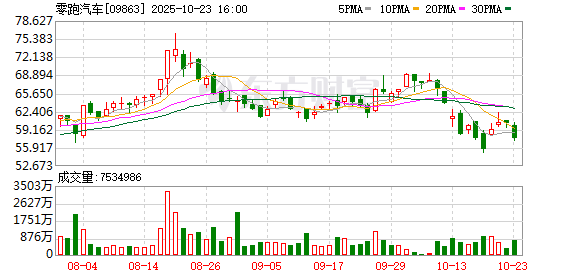
Core Viewpoint - Leap Motor's recent share purchases by major shareholders indicate confidence in the company's fundamentals and long-term investment value, especially during challenging times for performance or stock price [2][3]. Group 1: Shareholder Activity - Leap Motor's Chairman and CEO Zhu Jiangming, along with shareholder Fu Liqian, purchased a total of 3.2435 million H-shares at an average price of HKD 63.19 per share, amounting to approximately HKD 205 million [2]. - Zhu Jiangming and Fu Liqian have committed not to transfer or reduce their holdings for the next ten years, demonstrating long-term confidence in the company [3]. - Since August 2024, Zhu Jiangming and Fu Liqian have collectively increased their holdings by approximately HKD 850 million [3]. Group 2: Operational Performance - In September, Leap Motor achieved a delivery volume of 66,700 vehicles, a year-on-year increase of over 97%, setting a record for monthly deliveries among new car manufacturers [4]. - For the first nine months of 2025, Leap Motor's cumulative deliveries reached 396,000 vehicles, a year-on-year growth of 129%, achieving 79.1% of its annual target [4]. - Leap Motor's product line covers four major series (A to D), focusing on the mainstream family car market priced between RMB 100,000 and RMB 250,000 [4]. Group 3: Product Development - The launch of the D series models is expected to broaden Leap Motor's product range and potentially enhance profitability, with the D19 model anticipated to improve gross margins [5]. - Leap Motor's senior vice president indicated that combined sales of the A and D series could reach 30,000 units per month, contributing to the company's goal of achieving annual sales of one million vehicles [5].
零跑汽车创始人14个月三度增持,前9个月交付近40万辆
Zhong Guo Zheng Quan Bao· 2025-10-23 12:04
Core Viewpoint - Recent share purchases by major shareholders of Leap Motor reflect confidence in the company's fundamentals and long-term investment value during a period of market pressure [1][2]. Group 1: Shareholder Activity - Leap Motor's chairman and CEO, Zhu Jiangming, along with shareholder Fu Liqian, purchased a total of 3.2435 million H-shares at an average price of approximately HKD 63.19 per share, amounting to about HKD 205 million [1]. - Zhu Jiangming and Fu Liqian have cumulatively invested approximately HKD 850 million in Leap Motor over the past 14 months [2]. - The latest share purchase announcement indicates that Zhu Jiangming and Fu Liqian now hold a combined total of 206.9 million H-shares and 128.5 million domestic shares, representing 23.59% of the company's total issued shares [2]. Group 2: Company Performance - Leap Motor achieved a delivery volume of 66,700 vehicles in September, marking a year-on-year increase of over 97%, and has maintained a month-on-month growth for nine consecutive months [3]. - In the first nine months of 2025, Leap Motor delivered a total of 396,000 vehicles, a year-on-year increase of 129%, achieving 79.1% of its annual target [3]. - The company has expanded its product line to cover four major series (A to D), focusing on the mainstream family car market priced between 100,000 to 250,000 yuan [3]. Group 3: Product Development - The launch of the D series, including the flagship D19 model, signifies a new phase in Leap Motor's technology and product layout, potentially enhancing profitability [3][4]. - The D series is expected to contribute significantly to sales, with projections suggesting that combined sales of the A and D series could reach 30,000 units per month [4][5].