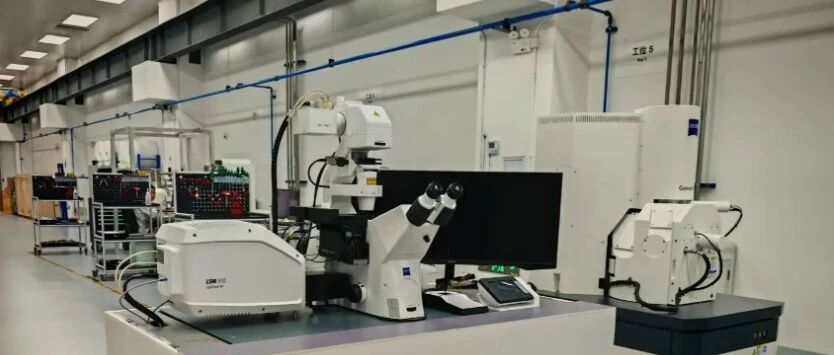
高端显微镜

Search documents
永新光学:2025年前三季度公司营收和利润均实现同比正增长
Zheng Quan Ri Bao Wang· 2026-01-14 14:12
Company Overview - Since its listing in 2018, the company has experienced continuous revenue growth, with net profit showing fluctuations due to non-recurring factors such as exchange gains and government subsidies, while maintaining a stable gross margin of around 40% [1] - In the first three quarters of 2025, both revenue and profit achieved year-on-year positive growth [1] Industry Insights - The company's two main business segments, instruments and components, are in niche growth sectors, benefiting from accelerated domestic substitution and expanding demand in high-end manufacturing and emerging scenarios, indicating a broad market space [1] - High-end microscopes and medical optics are currently in a window of domestic substitution and technological upgrade, allowing the company to leverage its technological advantages for rapid growth [1] - The barcode machine vision business is experiencing steady revenue growth due to the global high-end manufacturing industry's expansion, and the company is collaborating with leading clients on complex downstream module businesses to further open up growth opportunities [1] - The demand for automotive lidar is rapidly increasing with the trend of autonomous driving, while emerging fields such as lawn mowing robots and unmanned delivery robots are quickly rising, becoming another important application market for lidar products after automotive [1] - The company is expanding the application of its core optical products in emerging fields such as artificial intelligence and semiconductors, seizing opportunities in the domestic semiconductor equipment market to promote diversified business development [1]

永新光学(603297):多元业务布局半导体光学,高端显微镜持续推进
Guotou Securities· 2025-12-04 06:33
Investment Rating - The investment rating for the company is "Buy-A" with a target price of 126.71 CNY per share, maintaining the rating [4][8]. Core Insights - The company is actively participating in national strategic projects, aligning with the "14th Five-Year Plan" and "15th Five-Year Plan" to drive breakthroughs in key technologies in integrated circuits, high-end instruments, and other critical areas [1]. - The high-end microscope business is expected to see a recovery in growth, with the proportion of high-end products exceeding 40% of total microscope sales [2]. - The company is diversifying its optical business, with semiconductor optics expected to contribute significantly to revenue growth [3]. Summary by Sections Business Development - The company is leading national major instrument projects, focusing on ultra-high resolution imaging technology and surgical navigation microscopes, which are expected to enhance its competitive edge [2]. - The high-end microscope segment is projected to recover in the second half of 2025, with a significant increase in high-end product orders [2]. Optical Business Diversification - Barcode scanning and machine vision businesses are growing steadily, with successful collaborations with major clients like Zebra and Honeywell [3]. - The automotive laser radar optical components have achieved mass production, with shipments nearing one million units in the first half of 2025 [3]. - The medical optical segment has seen substantial growth, driven by domestic substitution and increased overseas demand for medical imaging components [3]. Financial Projections - Revenue projections for 2025-2027 are 1.09 billion CNY, 1.40 billion CNY, and 1.78 billion CNY, respectively, with net profits of 270 million CNY, 367 million CNY, and 480 million CNY [8][10]. - The company is expected to maintain a strong competitive advantage in precision optical manufacturing, with continued growth in microscopes and semiconductor optics [8].
仪器外企“本土化元年”:市场新格局下的竞争规则(附本土化事件盘点)
仪器信息网· 2025-11-27 09:07
Core Viewpoint - The localization of foreign instrument companies in China is accelerating, driven by government policies such as a 20% price discount for eligible products and new regulations from the State Council, leading to a significant transformation in the competitive landscape of the instrument market [2][3]. Group 1: Localization Models - 2025 is identified as the "Year of Localization" for foreign instrument companies, with four primary localization models emerging: 1. **Production Base Localization**: Companies are establishing manufacturing bases in China to enhance responsiveness to market demands and reduce production costs [3][4]. 2. **Innovation and R&D Localization**: Some firms are focusing on local innovation by setting up R&D centers in China to better understand market needs and develop tailored products [5]. 3. **Supply Chain and Cooperation Localization**: Companies are building local supply chains and collaborating with domestic suppliers and research institutions to enhance their integration into the Chinese market [6]. 4. **Key Product Localization Breakthroughs**: Certain companies are achieving breakthroughs in local production of critical medical devices, thereby strengthening their brand presence and market share in China [7]. Group 2: Reshaping Market Competition - The accelerated localization process is reshaping the competitive landscape of China's instrument market, characterized by increased concentration and differentiated competition. Foreign companies maintain dominance in high-end markets due to their technological advantages and brand equity, while local firms are adopting differentiated strategies to compete effectively [8][9]. - Local companies are leveraging cost control, rapid response mechanisms, and flexible customization services to create a niche in the mid-to-low-end market, gradually breaking the monopoly of foreign firms in specific segments [9][10]. - The "Belt and Road" initiative is enabling local companies to leverage cost advantages and geographical familiarity to establish a collaborative competitive landscape with foreign firms in emerging markets, further optimizing the domestic market structure [10]. Group 3: Opportunities and Challenges - The new competitive landscape presents significant opportunities for local companies to upgrade and transform, driven by national policies promoting self-sufficiency in high-end instruments and the growth of downstream industries like smart manufacturing and biomedicine [11]. - However, foreign brands still dominate high-end markets due to their patent barriers and established service ecosystems, posing challenges for local firms in terms of technology gaps and service capabilities [12][13]. - Local companies need to adopt differentiated strategies to navigate this complex environment, focusing on core technology breakthroughs and enhancing their operational efficiency by learning from foreign firms [14].


永新光学召开业绩说明会 各项业务多点突破
Zheng Quan Ri Bao· 2025-11-26 07:07
Core Insights - Yongxin Optical achieved a revenue of 674 million yuan in the first three quarters of 2025, representing a year-on-year growth of 3.59%, and a net profit attributable to shareholders of 151 million yuan, up 7.69% year-on-year [2] - The company attributed its steady growth in revenue and net profit to optimized product structure and meticulous cost control [2] - The medical optics segment saw significant revenue growth, particularly in high-end microscope sales, which now account for over 40% of the company's overall microscope sales [2] Financial Performance - Revenue for the first three quarters of 2025: 674 million yuan, a 3.59% increase year-on-year [2] - Net profit for the same period: 151 million yuan, a 7.69% increase year-on-year [2] - The company effectively controlled operational costs through product optimization and expense management [2] Product Development and Market Position - The sales proportion of medical optical products and high-end microscopes is expected to continue increasing due to ongoing product upgrades and accelerated domestic substitution [2] - The high-end microscope business is characterized by high technical and complexity barriers, maintaining a high gross margin and stable profit performance [2] - Yongxin Optical focuses on technological innovation, planning to continuously iterate superior products in the high-end microscope field and develop high-value core components in the medical optics sector [2] Industry Collaboration - Yongxin Optical is a key partner for companies like Hesai Technology and Tudatong Intelligent Technology in the LiDAR sector [3] - The company's products are widely used in high-growth markets such as mobile robots, delivery robots, cleaning robots, and lawn mowing robots [3] - Yongxin Optical has established close partnerships with leading companies in the robotics industry [3]
进博观察:绿色与数字双轮驱动:全球产业链的重塑与升级
Huan Qiu Wang· 2025-11-09 01:43
Core Insights - The 8th China International Import Expo (CIIE) emphasizes China's commitment to high-level opening-up and serves as a platform for global enterprises to collaborate on high-quality development, focusing on "digital intelligence" and "green low-carbon" as dual driving forces for future economic growth [1][20]. Green Development - Green development has become an inherent behavior for companies, evident in their exhibition designs and operational details at the CIIE [2]. - DHL showcases its "GoGreen Plus" service, which utilizes sustainable aviation fuel to significantly reduce Scope 3 emissions, with over half of its Chinese customers opting for this service by September 2023 [2][5]. - Procter & Gamble (P&G) reports a 60% reduction in greenhouse gas emissions (Scope 1 and 2) compared to 2010 levels, with a goal of 65% by 2030, and over 99% of its global operations powered by renewable electricity [5][6]. - Michelin introduces a tire made from 71% sustainable materials, including organic materials like rice husks and orange peels, marking a nearly 50% increase in sustainable material usage since 2021 [8][10]. Digital Empowerment - Digital technology is positioned as a key driver for industrial upgrades, with companies like Zeiss and Ericsson showcasing innovations in AI and connectivity to enhance manufacturing and logistics efficiency [15][17]. - DHL demonstrates automation in logistics, including the use of robotic arms and autonomous guided vehicles (AGVs) to improve operational efficiency and safety in package handling [19]. Industry Trends - The integration of digital and green initiatives is reshaping global supply chains, with companies leveraging technology to enhance resource efficiency and accelerate green transitions [20]. - The CIIE serves as a testing ground for global enterprises to share opportunities and co-create future rules, highlighting the importance of collaboration in achieving sustainable development goals [20].



蔡司大中华区COO谢磊:在中国,像本土企业一样参与竞争
2 1 Shi Ji Jing Ji Bao Dao· 2025-11-08 12:03
Core Insights - The article emphasizes the strategic importance of the Chinese market for multinational companies, particularly for Zeiss, which views China as a key driver of global innovation and supply chain development [1][2] - Zeiss has achieved significant engagement at the China International Import Expo (CIIE), with intentions exceeding 400 million RMB this year [1][8] Company Strategy - Zeiss has been actively increasing its investment in China, focusing on local innovation and expanding its manufacturing and R&D capabilities in the Yangtze River Delta region [4][5] - The company plans to establish a comprehensive headquarters in Shanghai, covering 60 acres with an investment exceeding 600 million RMB, expected to be operational by 2027 [4][5] Market Performance - China has become Zeiss's largest single market globally since 2021, with revenue reaching 15.1 billion RMB in the 2023/24 fiscal year, accounting for nearly 20% of the company's total business [7] - The demand for high-end manufacturing, semiconductors, and life sciences in China continues to grow, providing ample opportunities for Zeiss's products [7] Competitive Landscape - The company acknowledges the increasing competition from local brands and emphasizes the need to participate in the market like a local enterprise, focusing on R&D and innovation speed as key competitive factors [8] - Zeiss has adapted its global distribution strategy to mitigate risks from geopolitical tensions, including localizing more production in China and shifting some manufacturing from the U.S. to Europe [8]
从仅生产零部件 到生产新品整机销往全球“进博红利”迸发 外企持续加仓江苏
Xin Hua Ri Bao· 2025-11-07 23:20
Core Insights - The article highlights the increasing investment and commitment of foreign companies in Jiangsu, China, particularly following the China International Import Expo (CIIE) [1][2][3][4][5][6][8] - It emphasizes the transformation of foreign enterprises from merely producing goods to establishing deep-rooted partnerships and ecosystems in Jiangsu, showcasing a shift in investment strategy [8] Group 1: Investment Growth - DuPont has significantly expanded its operations in Zhangjiagang, establishing an integrated production base for automotive adhesives, which began with an investment agreement at the first CIIE in 2018 [2] - Kärcher has invested 100 million yuan in Suzhou to create a global R&D center, focusing on innovations in battery and robotics, which commenced operations in 2023 [3] - AstraZeneca announced the expansion of its Qingdao base, complementing its existing facilities in Wuxi and Taizhou, solidifying its presence in China [3] Group 2: Innovation and Manufacturing - Zeiss has transitioned its Suzhou factory to produce high-end microscopes, becoming a crucial manufacturing hub for global distribution, reflecting a shift from basic to advanced manufacturing capabilities [4][5] - Schneider Electric's Wuxi factory achieved net-zero emissions ahead of schedule, highlighting the effectiveness of local manufacturing and innovation [5] - Cargill's capability development center in Nanjing has evolved over ten years into a key operational hub for its North Asia business [5] Group 3: Local Partnerships and Ecosystems - Siemens has intensified its collaboration with Jiangsu, focusing on open scenarios, talent development, and ecosystem co-creation, indicating a deeper commitment to local integration [6] - GE Aviation has invested an additional $8.5 million in its Suzhou facility to enhance production capabilities for civil aviation engine components, demonstrating a long-term strategy in the Chinese market [7] - Schott has established a new production line in Suzhou for automotive safety components, aiming to strengthen local supply chains and foster innovation [7] Group 4: Strategic Evolution - Foreign companies are evolving from a model of global business coordination to one of local ecosystem integration, with the CIIE acting as a catalyst for these strategic shifts [8]
永新光学(603297):Q3业绩符合预期,高端显微镜持续放量
Huaan Securities· 2025-11-07 06:22
Investment Rating - The investment rating for the company is "Accumulate" (maintained) [1] Core Views - The company reported Q3 results that met expectations, with high-end microscope sales continuing to grow [4] - For the first three quarters of 2025, the company achieved revenue of 674 million yuan, a year-on-year increase of 3.59%, and a net profit attributable to shareholders of 151 million yuan, up 7.69% year-on-year [4] - The gross margin for the first three quarters reached 40.32%, an increase of 1.25 percentage points year-on-year, while the net profit margin was 22.39%, up 0.91 percentage points year-on-year [4] Summary by Sections Financial Performance - In Q3 2025, the company achieved revenue of 233 million yuan, a year-on-year increase of 4.81% and a quarter-on-quarter increase of 5.27% [4] - The net profit attributable to shareholders for Q3 was 43 million yuan, a year-on-year increase of 5.08% but a quarter-on-quarter decrease of 18.83% [4] - The non-recurring net profit reached 39 million yuan, a year-on-year increase of 17.57% and a quarter-on-quarter decrease of 9.66% [4] Business Segments - The microscope business is a focal point, with high-end microscopes experiencing rapid growth, accounting for over 40% of total microscope sales [5] - The company is expected to benefit from accelerated procurement of high-end microscopes by universities and research institutions due to supportive national policies [5] - The machine vision business also showed robust growth, with double-digit increases in H1 2025, and the company is expanding into new applications such as iris recognition for virtual currency terminals [6] Future Projections - Revenue projections for 2025-2027 are 1.003 billion yuan, 1.328 billion yuan, and 1.761 billion yuan respectively, with corresponding net profits of 254 million yuan, 358 million yuan, and 495 million yuan [7] - The expected EPS for the same period is 2.29 yuan, 3.22 yuan, and 4.46 yuan, with P/E ratios of 38.05x, 27.03x, and 19.54x respectively [7]
永新光学前三季度营收同比增长 多元业务协同显效
Zheng Quan Ri Bao Zhi Sheng· 2025-10-30 09:44
Core Insights - Yongxin Optical achieved a revenue of 674 million yuan in the first three quarters of 2025, representing a year-on-year growth of 3.59% [1] - The net profit attributable to shareholders reached 151 million yuan, up 7.69% year-on-year, while the net profit excluding non-recurring items was 127 million yuan, increasing by 7.13% [1] Financial Performance - In Q3, the company reported a revenue of 233 million yuan, a year-on-year increase of 4.81% [1] - The net profit attributable to shareholders for Q3 was 42.73 million yuan, reflecting a year-on-year growth of 5.08% and a quarter-on-quarter increase of 5.27% [1] - The gross margin improved to 40.30%, up 0.94 percentage points year-on-year, indicating enhanced profitability [1] Business Structure and Growth - Yongxin Optical's core business segments are performing well, with significant contributions from the scientific instruments sector, where high-end microscopes now account for over 40% of sales [2] - The automotive lidar business has entered mass production, with nearly one million units shipped in the first half of the year, supplying major companies like Hesai and Valeo [1][2] R&D Investment - The company invested 74.61 million yuan in R&D in the first three quarters, representing 11.07% of its revenue [2] - R&D efforts are focused on high-end microscopes, medical optics, and emerging optical fields, with notable projects like the multimodal nanometer resolution microscope and ophthalmic surgical navigation microscope [2] Strategic Outlook - Yongxin Optical aims to consolidate existing strengths while capturing new opportunities, particularly in high-end scientific instruments and medical devices [2] - The company plans to enhance its global presence and international supply chain, expanding its core optical products into life sciences, innovative healthcare, AI, and semiconductor applications [2]
全球光学巨头高端产能“中国化”:逆向操作实现营收翻番
第一财经· 2025-09-06 09:19
Core Viewpoint - The article emphasizes the strategic localization efforts of Zeiss in China, highlighting the establishment of the Suzhou manufacturing and R&D base as a significant move to enhance local production capabilities and meet the growing demand for high-end optical products in the Chinese market [3][4]. Group 1: Localization Strategy - Zeiss's Suzhou facility achieved a revenue increase of 100% year-on-year, reaching 760 million RMB within its first year of operation [5]. - The localization of three high-end microscope models marks Zeiss as the first international manufacturer to produce laser confocal and field emission scanning electron microscopes in China [5][6]. - The commitment to local manufacturing is driven by improvements in intellectual property protection and the presence of a comprehensive supply chain in China, particularly in the Yangtze River Delta region [6][7]. Group 2: Market Dynamics - China is identified as Zeiss's largest market globally, with growth rates outpacing other regions, making local business performance critical to the company's overall success [6][8]. - The competitive landscape in China is seen as beneficial, driving technological advancements and encouraging Zeiss to innovate and adapt to local customer needs [7][9]. - The article notes that local supply chain enhancements will further elevate the quality and capabilities of domestic manufacturing, fostering a more competitive environment [9][10]. Group 3: Quality Assurance - Zeiss asserts that the quality control standards in China are now recognized globally, with local production often preferred by customers for reliability [8][10]. - The initial steps of localization include transferring key production processes such as calibration and assembly to China, which will help reduce costs and improve product familiarity in the market [10][14]. - The ongoing investment in local R&D and manufacturing is part of a broader trend among foreign companies, with many expressing intentions to deepen their engagement in the Chinese market despite global economic challenges [14].