5G通信技术

Search documents
美国猛然惊醒:中国太精,嘴上说我不行,手里却攒了不少“好牌”
Sou Hu Cai Jing· 2026-02-12 14:55
Group 1 - The U.S. has imposed tariffs on Chinese goods in multiple phases since 2018, aiming to stifle China's economic growth [2][4] - In response, China has retaliated with tariffs ranging from 10% to 25% on U.S. exports, particularly targeting key U.S. industries like agriculture [4][6] - The U.S. agricultural sector, especially soybean farmers, has faced significant challenges due to reduced sales and falling prices, leading to increased bankruptcies and government subsidies [6][9] Group 2 - American brands such as Harley-Davidson and Caterpillar have seen a noticeable decline in sales in the Chinese market due to tariffs [8] - Consumers in the U.S. are experiencing higher prices for everyday goods, as many products previously sourced from China have become more expensive [9][11] - The trade war has resulted in losses for both sides, with the U.S. farmers and consumers bearing the brunt of the impact while China has shown flexibility in sourcing alternatives [11][29] Group 3 - China's military capabilities are advancing steadily, with a focus on developing a complete industrial system that supports its defense needs [20][26] - The comparison of military expenditures reveals that while the U.S. spends more, China's investments are yielding effective results in terms of operational capabilities [24][26] - China's achievements in various sectors, such as high-speed rail, 5G technology, and electric vehicles, demonstrate its commitment to maintaining a robust industrial base [27][29]


富柯斯股价异动 单日跌幅超24%
Jing Ji Guan Cha Wang· 2026-02-11 20:19
Core Insights - The company, Focus (FCUV.us), has recently experienced significant stock price volatility, with a single-day drop of 24.10%, closing at $0.850 [1] - As of the latest reporting period, the company's revenue stands at $28,689, with a net loss of $1.17 million and earnings per share of -$0.16 [1] - Focus specializes in smart devices, IoT products, and 5G communication technology, but there are no clear plans for future disclosures after February 12, 2026 [1]
安达维尔:目前没有5G通信技术
Ge Long Hui· 2026-02-04 13:54
Group 1 - The company currently does not have any 5G communication technology [1] - The application of 5G communication in the aviation sector is not a key development direction for the company in the future [1]

安达维尔(300719.SZ):目前没有5G通信技术
Ge Long Hui· 2026-02-04 13:48
Group 1 - The company currently does not have any 5G communication technology [1] - The application of 5G communication in the aviation sector is not a key development direction for the company in the future [1]
世界海拔最高无人驾矿卡测试成功 现存自动驾驶相关企业超8200家
Xin Lang Cai Jing· 2025-12-20 07:47
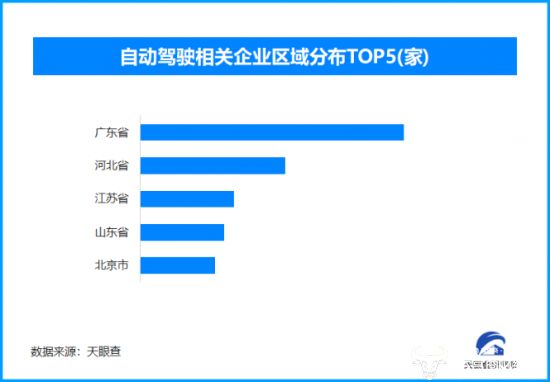
Group 1 - The core viewpoint of the article highlights the successful testing of the world's highest autonomous driving system at the Huoshaoyun lead-zinc mine in Xinjiang, which operates at an altitude of 5,700 meters, demonstrating the feasibility of unmanned transportation in extreme high-altitude environments [1] - The mine's harsh conditions, including only 50% oxygen levels compared to plains, strong winds, low temperatures, and high dust levels, make traditional manual driving labor-intensive and hazardous [1] - The introduction of the BeiDou navigation system and 5G communication technology has established a smart control platform that supports the operation of the autonomous driving system [1] Group 2 - The newly launched autonomous driving system integrates several core technologies suitable for plateau environments, enabling precise obstacle recognition, path planning, and driving control to navigate the mine's complex terrain [1] - The rapid development and application of autonomous driving technology have intensified industry competition, with a growing focus on corporate backgrounds and compliance [1] - According to Tianyancha's professional version of business information, there are currently over 8,200 autonomous driving-related companies in China, with Guangdong, Hebei, Jiangsu, Shandong, and Beijing leading in the number of such enterprises [1]
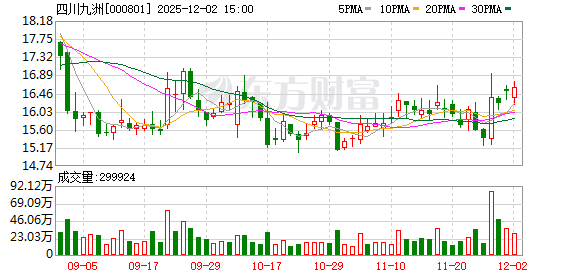
四川九洲:控股子公司四川九洲电子科技股份有限公司已在5G通信技术、10G PON等领域布局
Mei Ri Jing Ji Xin Wen· 2025-12-02 07:33
Group 1 - The company has engaged in product development and market layout in communication technologies such as 5G, 10G PON, and WiFi 6/7 [2] - The company is actively following the development of 6G technology [2]

四川九洲:控股子公司四川九州电子科技股份有限公司已在5G通信技术、10G PON等领域布局
Mei Ri Jing Ji Xin Wen· 2025-12-02 07:17
Core Viewpoint - The company is actively involved in the development of communication technologies, including 5G, 10G PON, and WiFi 6/7, while also keeping pace with advancements in 6G technology [1]. Group 1 - The company has a subsidiary, Sichuan Jiuzhou Electronic Technology Co., Ltd., that is engaged in product development and market positioning in various communication technology fields [1]. - The company is following the developments in 6G technology actively [1].
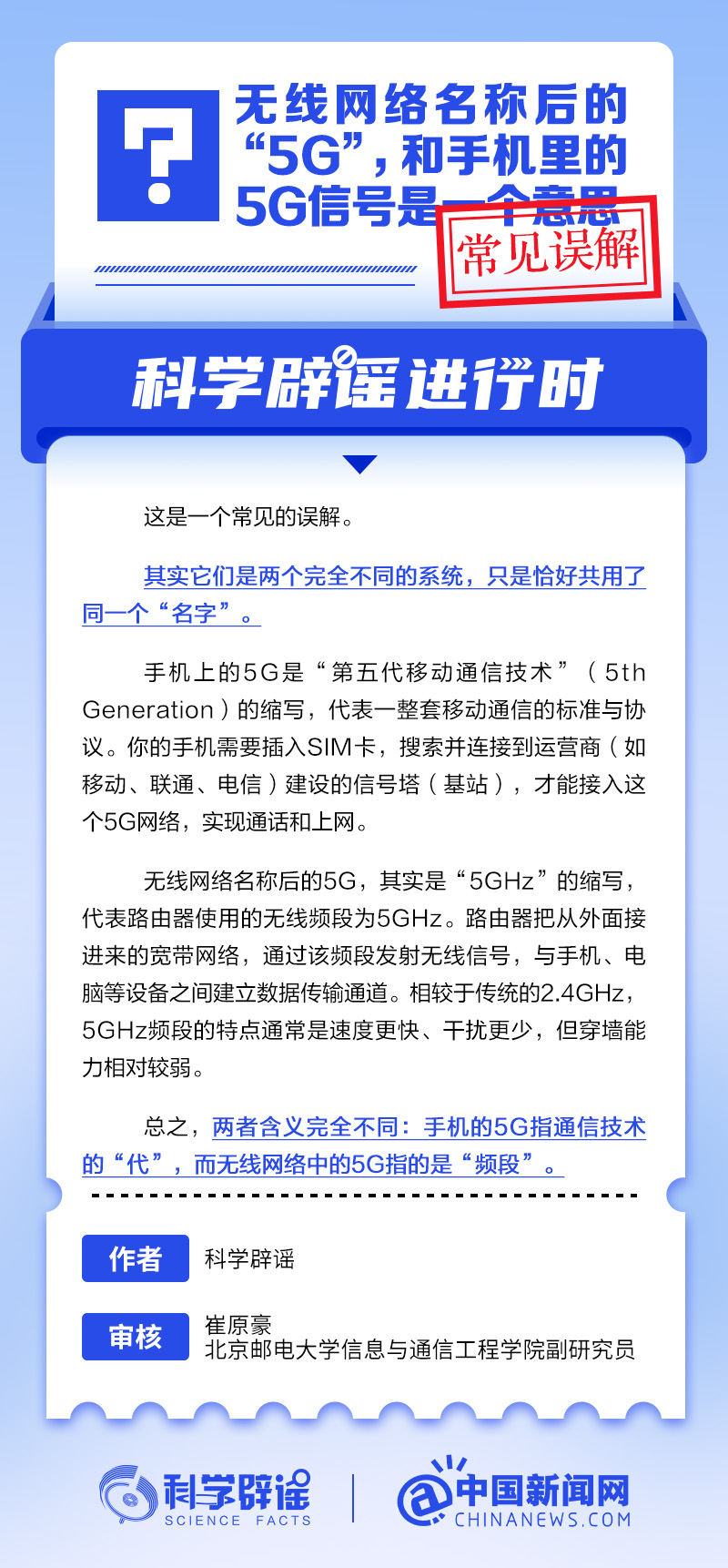
无线网络名称后的“5G”,和手机里的5G信号是一个意思?丨中新真探
Zhong Guo Xin Wen Wang· 2025-11-10 11:20
Core Points - The term "5G" in mobile phones refers to the "fifth generation mobile communication technology," which encompasses a complete set of standards and protocols for mobile communication [1] - The "5G" in wireless network names actually stands for "5GHz," indicating the frequency band used by routers to transmit wireless signals [1] Summary by Categories - **Technology Definition** - Mobile 5G represents a new generation of communication technology, specifically the fifth generation [1] - Wireless network 5G refers to the 5GHz frequency band utilized by routers for data transmission [1] - **Functionality** - Routers convert incoming broadband networks into wireless signals using the 5GHz frequency, establishing data transmission channels with devices like smartphones and computers [1]
中移上研院、长智云与苏交科签署合作协议
Zheng Quan Shi Bao Wang· 2025-10-30 04:48
Core Insights - A cooperation agreement has been signed among China Mobile (Shanghai) Information Communication Technology Co., Ltd. (referred to as "China Mobile Research Institute"), Beijing Changzhiyun Information Technology Co., Ltd. (referred to as "Changzhiyun"), and Sujiao Technology Group Co., Ltd. (referred to as "Sujiao Technology") [1] Group 1 - The collaboration aims to leverage China Mobile's expertise in 5G communication technology, Changzhiyun's specialization in artificial intelligence, and Sujiao Technology's extensive experience in the transportation infrastructure sector [1] - The strategic synergy will focus on building an ecosystem that integrates "AI + Communication + Infrastructure" [1]

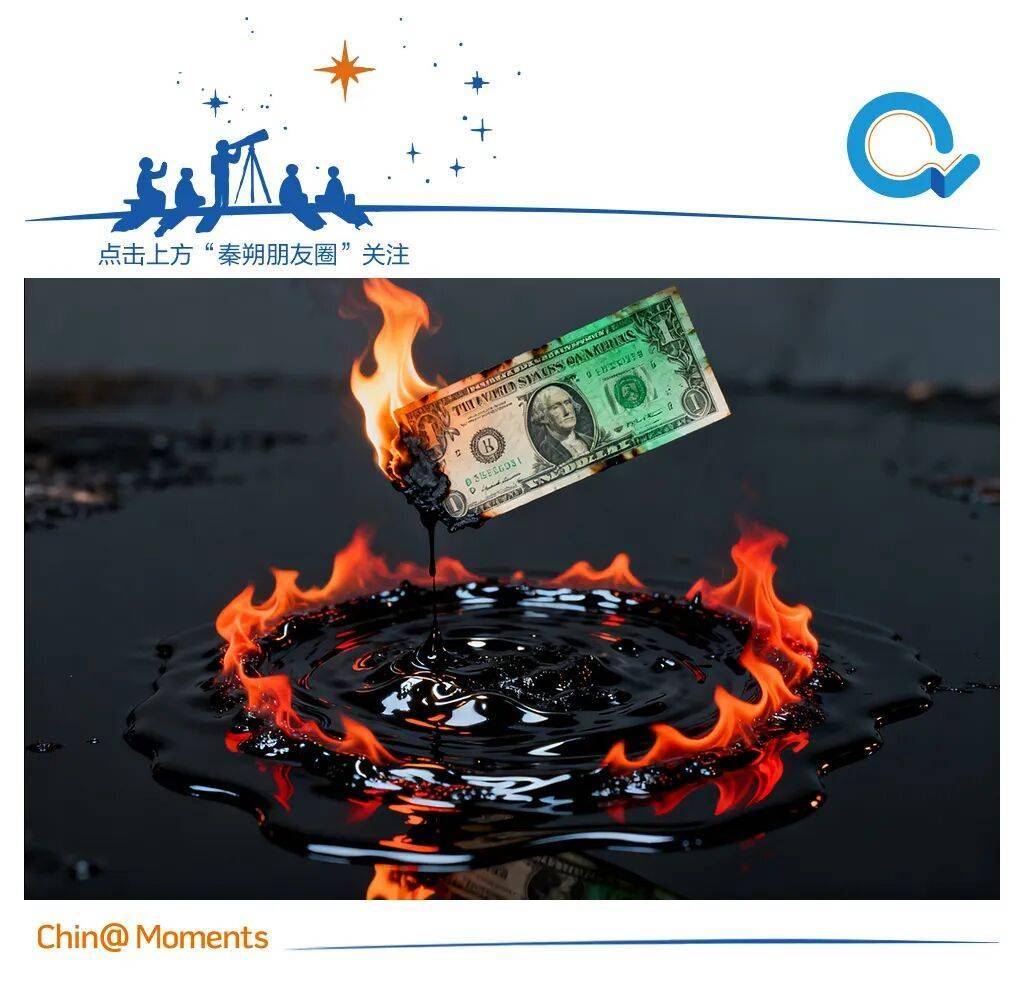
石油美元的黄昏?人民币撬动中东的三种姿势
Sou Hu Cai Jing· 2025-10-24 05:11
Core Insights - The International Monetary Fund (IMF) reported that as of the end of Q2 2025, the US dollar's share in global foreign exchange reserves has dropped to 56.32%, the lowest since 1995, while the Chinese yuan has made significant inroads in international energy settlements, particularly with Saudi Arabia [3] - The structural weakening of the petrodollar system is accelerating, highlighted by Saudi Arabia's shift towards multi-currency settlement mechanisms and the completion of the first oil transaction using digital yuan, significantly reducing transaction times [3][4] - The transition from a petrodollar system to a multi-currency framework is driven by concerns over the risks associated with dollar dependency and the strategic diversification efforts of oil-producing countries [4][5] Group 1: Energy Settlement Changes - The shift in the Middle Eastern energy settlement system is rooted in a profound change in the stance of oil-producing countries, particularly Saudi Arabia, which has expressed openness to using currencies other than the dollar for oil transactions [4] - The geopolitical risks associated with the dollar system, especially following the financial sanctions against Russia, have prompted oil-producing nations to seek alternatives to reduce reliance on a single currency [4][5] - China's position as the largest energy importer and its growing trade with Saudi Arabia, which reached $107.53 billion in 2024, underscores the importance of diversifying currency use in energy transactions [4] Group 2: Financial Circulation and Investment - Establishing a financial circulation system that allows yuan to flow in and out of the Middle East is crucial for the yuan's acceptance as a stable currency [10] - The issuance of yuan-denominated sovereign bonds by China in the Middle East, which saw a subscription rate of nearly 20 times the amount offered, reflects strong investor confidence in Chinese credit [10][12] - The expansion of the Cross-Border Interbank Payment System (CIPS) and the establishment of currency swap agreements with over 40 countries facilitate the use of yuan in international trade and investment [11][12] Group 3: Economic Cooperation and Trust - The deepening of economic cooperation between China and Middle Eastern countries, moving beyond oil trade to infrastructure and technology, is essential for building trust in the yuan [14][15] - Projects like the China-Saudi Arabia Special Economic Zone and the Jizan Economic City highlight the growing demand for yuan-denominated transactions in various sectors [14][15] - The collaboration in green energy and high-tech sectors further solidifies the reliability of China as a partner, enhancing the yuan's stability and acceptance [15][16] Group 4: Historical Context and Future Challenges - The decline of the petrodollar system is influenced by historical factors, including the US's use of financial sanctions, which have raised concerns among traditional allies about the risks of dollar dependency [19][20] - Despite the weakening of the petrodollar, the dollar's entrenched position in global trade and finance presents challenges for the yuan's internationalization [20][22] - The geopolitical dynamics and the US's potential response to the de-dollarization trend could pose significant hurdles for the yuan's rise as a global currency [20][22] Conclusion - The transition towards a multi-currency system is underway, with the yuan gaining traction in the Middle East, signaling a shift away from dollar dominance and towards a more balanced international monetary order [22][23]