AI录音笔

Search documents
数码家电行业周度市场观察-20260308
Ai Rui Zi Xun· 2026-03-08 06:34
Investment Rating - The report does not explicitly provide an investment rating for the industry Core Insights - The digital home appliance industry is experiencing significant trends driven by advancements in AI and robotics, with a focus on commercialization and market adaptation [2][4][11] Industry Environment - The rise of embodied intelligence, propelled by models like ChatGPT, has made robots a focal point for AI application, with a financing scale reaching 735.43 billion yuan in 2026. However, challenges in technology and commercialization persist [2] - The space photovoltaic sector is transitioning from concept to commercialization, with a market size projected to reach trillions. Companies like SpaceX are leading the deployment of low-orbit satellites, while domestic firms are also advancing in this area [2] - Major tech companies are racing to integrate AI models into hardware, such as smart glasses, creating a new battleground for human-computer interaction. The global market for AI glasses is expected to exceed 10 million units by 2026 [4] - The AI education sector is becoming a competitive focus for major internet companies, with a monthly active user base exceeding 120 million. The market is divided into technology-driven and traditional education companies [4] - The air conditioning industry is witnessing a collective price increase of 3%-10% due to rising copper prices and tightening energy efficiency subsidy policies, marking a shift towards value competition [5] - The AI hardware landscape is diversifying into two paths: "pen" devices focusing on natural interaction and "screen" devices integrating AI into traditional platforms [6] - AI glasses are targeting the 2 billion global eyeglass-wearing population, with a projected shipment of 2.75 million units in China by 2025, despite challenges in comfort and battery life [8] - The AI pet market is projected to reach 3.866 billion yuan by 2025, addressing loneliness among urban dwellers, but faces challenges in maintaining user engagement [9] - The cleaning appliance sector is exploring commercialization of embodied intelligence, with significant growth in sales and technological advancements [10] - The year 2026 is anticipated to be a pivotal year for AI, marking a shift from tool assistance to autonomous entities, with significant implications for the tech industry [11] Top Brand News - ByteDance has launched the Seed2.0 language model, focusing on practical applications and aiming to transform AI into a productivity tool [14] - The company "Wujie Power" has completed over 200 million yuan in financing to develop general-purpose intelligent robots, emphasizing technological breakthroughs [18] - Amazon is shifting towards self-developed AI, citing data security concerns, which raises questions about efficiency and innovation balance [21]
2026年,巨头疯抢这个赛道
投中网· 2026-01-29 06:38
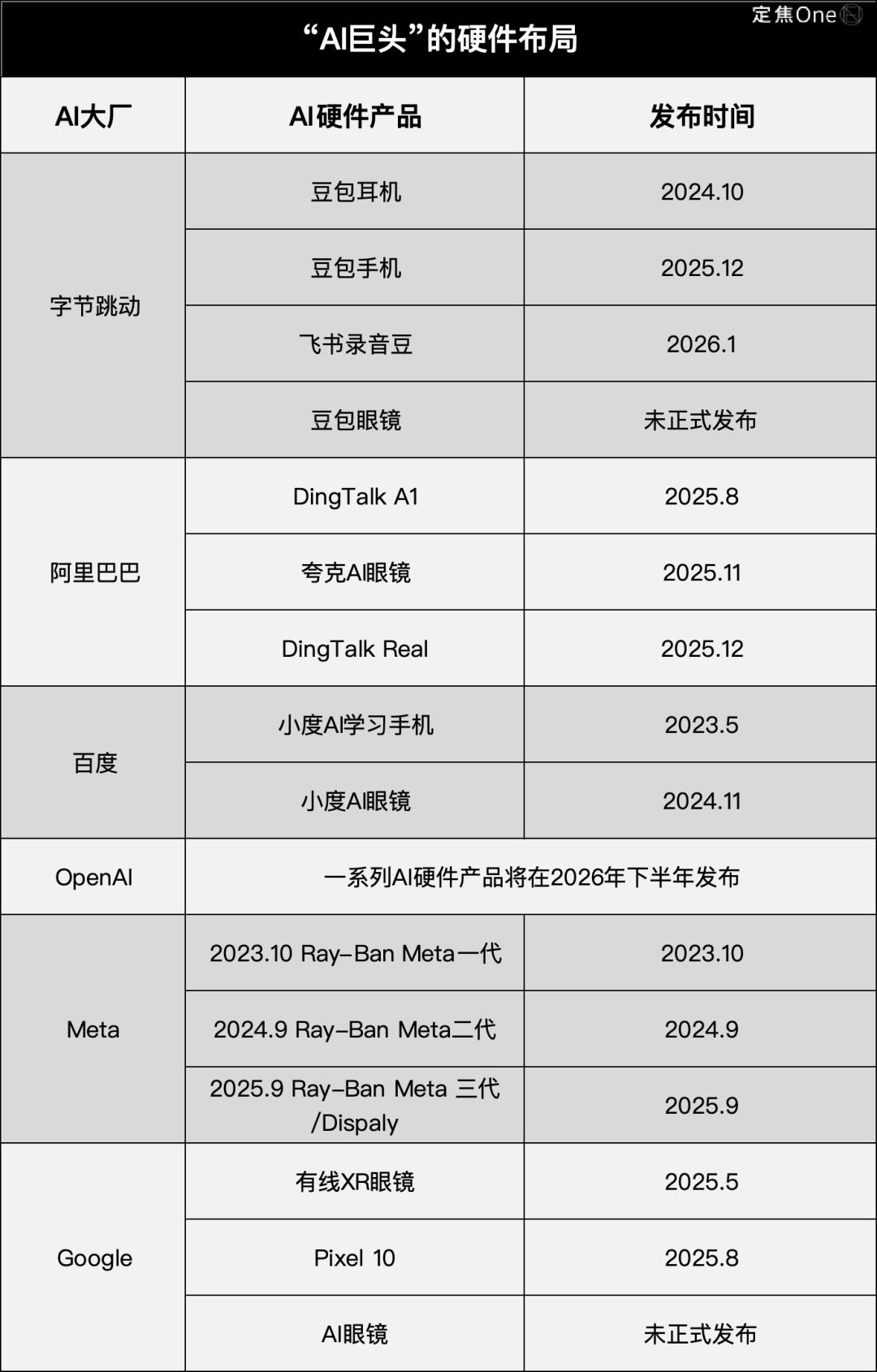
Core Viewpoint - The AI hardware market is experiencing a competitive race, with major players like OpenAI, Google, Alibaba, and ByteDance entering the field, indicating a shift towards consumer-grade AI hardware by 2026 [5][6][7]. Group 1: AI Hardware Market Dynamics - OpenAI plans to launch its first hardware device in the second half of 2026, marking its entry into the AI hardware sector, which already has 810 million monthly active users [5][9]. - Google has restarted its AI glasses project, while Meta is updating multiple AI glasses products, showcasing a trend among foreign AI giants to focus on AI glasses [6][7]. - Domestic companies like ByteDance and Alibaba are diversifying their AI hardware offerings, including AI glasses and recording devices, indicating a more varied approach compared to their foreign counterparts [7][10]. Group 2: Product Launches and Market Trends - The frequency of AI glasses in the product lists of major AI companies highlights a consensus on this hardware type as a primary entry point into the market [11]. - Meta's Ray-Ban Meta smart glasses have sold over 2 million units, indicating strong market validation for AI glasses, with expectations of 35 million units shipped globally by 2028 [12][13]. - The AI recording device market is also gaining traction, with products like Plaud Note achieving significant sales, prompting domestic giants like DingTalk and Feishu to launch similar devices [18][20]. Group 3: Business Models and Strategies - AI hardware products are primarily sold through a buyout model combined with value-added services, with DingTalk and Feishu offering competitive pricing and subscription models [19][20]. - The entry of AI giants into hardware is driven by the need to expand beyond saturated AI applications and leverage established supply chains for quicker product launches [26][29]. - Companies are adopting a "soft-hard integration" strategy, aiming to create a cohesive ecosystem that combines AI capabilities with hardware offerings [30][31]. Group 4: Competitive Landscape and Future Outlook - The competition between domestic giants like ByteDance and Alibaba centers on who can establish a hardware entry point first, while foreign companies face different challenges [35][36]. - Meta's strong market presence in AI glasses is partly a strategy to compensate for its shortcomings in AI model performance compared to competitors [37][38]. - The future of AI hardware as a new universal entry point remains uncertain, with challenges in user adoption and market demand for products like AI glasses and phones [48][50].


2026年,巨头疯抢这个赛道
3 6 Ke· 2026-01-28 01:34
Core Insights - The AI hardware race has intensified with major players like OpenAI, Google, Alibaba, and ByteDance entering the market, with OpenAI planning to launch its first hardware device in the second half of 2026 [1][5] - Domestic companies are diversifying their AI hardware offerings, focusing on proven product categories rather than new hardware forms [1][3] Group 1: AI Hardware Landscape - OpenAI is set to release a series of AI hardware products, including a device codenamed "Sweetpea" and another called "Gumdrop," which is a smart pen or wearable audio device [2][3] - Major AI companies are focusing on three main categories: AI glasses, AI office tools, and AI smartphones, with AI glasses being the most frequently mentioned product type [4][6] - Meta's Ray-Ban Meta smart glasses have sold over 2 million units, indicating a strong market for AI glasses, while Google and other companies are also developing similar products [6][20] Group 2: Market Dynamics and Competition - The entry of AI giants into hardware is driven by the saturation of the AI software market and the decreasing barriers to hardware development [12][14] - Different companies have varying strategies: ByteDance is aggressively testing multiple hardware forms, while Alibaba is more cautious, aiming to integrate hardware into its existing software ecosystem [15][18] - The competition between ByteDance and Alibaba centers on who can establish a hardware presence first, while overseas companies like Meta and Google face their own challenges in the hardware market [19][22] Group 3: Commercial Viability and Challenges - AI hardware products are currently seen as experimental, with initial sales figures indicating market interest but not substantial volume [26][30] - Successful examples of AI hardware commercialization exist, such as Plaud's AI recording card achieving $250 million in annual recurring revenue [27] - The challenge remains whether AI hardware can replace smartphones as the next universal interface, with current products not yet meeting consumer demand for necessity [30][33]



科大讯飞:讯飞星火 X1.5 核心技术突破,引领 AI 规模化产业赋能
Jing Ji Guan Cha Wang· 2026-01-20 16:48
Core Insights - Keda Xunfei is a leading AI company in the Asia-Pacific region, focusing on intelligent voice, computer vision, natural language processing, and cognitive intelligence, with a mission to leverage AI for societal improvement and high-quality industrial development [1] - The company has adopted a "platform + track" development strategy, empowering various sectors such as education, healthcare, finance, automotive, and urban management [1] Group 1 - The Xunfei Spark large model, launched in May 2023, has undergone continuous upgrades, with the X1.5 version set to release in November 2025, achieving significant breakthroughs in core technology architecture and industry adaptability [2] - The model supports over 130 languages, with leading performance in 14 key languages in regions like Latin America and ASEAN, facilitating global deployment of Chinese AI technology [2] - The upgraded Spark voice simultaneous interpretation model has a response time of 2 seconds for Chinese and English, matching human-level interpretation capabilities, enhancing efficiency in international meetings and cross-border communication [2] Group 2 - The launch of the Xunfei Spark X1.5 demonstrates the company's leading position in AI core technology, achieving significant market success with 91 projects won in 2024, amounting to 848 million yuan, and 108 projects in the first three quarters of 2025, totaling 935.8 million yuan [3] - The model's breakthroughs provide enhanced product experiences for C-end users, improving learning and work efficiency, while offering critical support for B-end clients in digital transformation [3] - The integration of AI with the real economy is accelerated, promoting cost reduction, efficiency enhancement, and process optimization across various industries, contributing to high-quality industrial development [3]

时尚轻薄的“AI录音卡”,却让我们感到了担忧
3 6 Ke· 2026-01-19 12:41
Core Viewpoint - The article discusses the emergence and challenges of "AI hardware," particularly focusing on the rise of "AI recording cards" and their limitations compared to traditional recording devices and smartphones [1][3][20]. Group 1: AI Hardware Overview - The term "AI hardware" has gained traction, with various manufacturers launching products like "AI companions" and "AI glasses," which initially generated excitement but ultimately failed to meet consumer expectations [3][5]. - "AI recording cards" have become popular due to their compact size and ease of use, appealing to consumers looking for portable recording solutions [6][20]. Group 2: Advantages of AI Recording Cards - AI recording cards are designed for convenience, featuring a simple "one-button recording" function that lowers the user learning curve [8]. - Their small size allows for discreet usage, making them less obtrusive in professional settings compared to smartphones [10]. - They can avoid interruptions during recording, as they can operate independently of smartphone functions [10]. - Some models can record phone calls, addressing a common limitation of smartphones [11]. - They offer AI content summarization features, providing a cost-effective alternative for users who do not want to upgrade their smartphones [13]. Group 3: Limitations and Concerns - Despite their advantages, there are doubts about the effectiveness of AI recording cards in real-world scenarios, particularly regarding their inconspicuousness compared to smartphones [16]. - The audio quality of these devices may not match that of high-end smartphones, which often feature multiple microphones for better recording clarity [19]. - AI recording cards typically lack local processing power, requiring data to be uploaded to servers for transcription and summarization, raising privacy concerns [19][22]. - The focus on sleek design and AI capabilities may overshadow the importance of hardware quality, leading to skepticism about their overall performance [20][24].
AI已从神坛进入硬件的重力井,做得“无聊”才有钱赚|2026 CES观察
3 6 Ke· 2026-01-11 23:35
Core Insights - The CES 2026 reflects a significant shift in the AI landscape, moving from a peak of enthusiasm in 2024 to a more subdued reality where AI is less prominent in product showcases [3][11] - Major companies like LG and Panasonic are still promoting AI products, but the novelty and excitement have diminished, with many offerings appearing outdated [5][6] - The industry is experiencing a "trough of disillusionment" as the initial hype around AI has faded, revealing unfulfilled promises and consumer fatigue [11] Group 1: Industry Trends - The AI hype has receded, with many once-prominent products, such as Samsung's Ballie robot, no longer present at CES 2026 [8][10] - Companies are now focusing on integrating AI into existing products rather than introducing groundbreaking innovations, leading to a more pragmatic approach [16][26] - Startups are leveraging AI to fill specific market gaps, moving away from grand narratives to practical applications in niche areas [16][34] Group 2: Product Developments - AI integration in health monitoring and sleep technology has become prevalent, with products like Sleepal's AI Lamp utilizing advanced sensors for comprehensive data collection [17][21] - The emergence of "Semi-AI Native" products, such as AI recording pens and portable recorders, demonstrates a trend of enhancing existing functionalities with AI capabilities [26][27] - AI play products are gaining traction, focusing on entertainment rather than companionship, indicating a shift towards gamifying AI experiences [41][47] Group 3: Consumer Insights - Consumers are increasingly skeptical about the practical benefits of AI products, with many expressing a desire for tangible utility rather than abstract promises [13][19] - The market for AI products is evolving, with a focus on enhancing user experiences through practical applications rather than relying solely on AI's perceived magic [48][49] - The shift from a "magical" perception of AI to a more business-oriented approach signifies a maturation of the industry, where real-world applications are prioritized [49]

深圳消费“四大奇观”,这座城市如此热辣滚烫
Sou Hu Cai Jing· 2026-01-11 15:01
Core Insights - The article highlights the emergence of seven major cities in China, referred to as the "Seven Heroes of Consumption," each with a retail sales total exceeding 1 trillion yuan, including Shanghai, Chongqing, Beijing, Guangzhou, Shenzhen, Chengdu, and Suzhou [1] - Shenzhen is identified as a rising star in the consumption landscape, achieving a retail sales total of 938.18 billion yuan in the first 11 months of the year, with a year-on-year growth of 2.8%, positioning it as a significant player in the "trillion yuan consumption club" [1] Group 1: Shopping Centers - Shenzhen is experiencing a boom in large shopping centers, with numerous openings each month, showcasing its status as a shopping paradise [3] - Major shopping centers like Shenzhen Bay MixC Phase II and K11 ECOAST are part of a growing list, indicating strong consumer demand and confidence in the city's consumption potential [3] - The occupancy rate of commercial projects by China Resources exceeds 97%, with rental income increasing by 17%, reflecting a robust demand-supply cycle in the retail sector [3] Group 2: First Store Economy - Shenzhen is becoming a hub for the "first store economy," with 461 new first stores opening in 2024 and an expected 1,200 in 2025, making it a leader in the Greater Bay Area [5] - New commercial developments are expected to have over 50% of their offerings as first stores, indicating a strong appetite for new brands among consumers [5] - The presence of international brands like Rihanna's FENTY BEAUTY and other flagship stores highlights Shenzhen's appeal as a launchpad for new retail concepts [5] Group 3: Technology Consumption - Shenzhen is evolving into a center for "technology consumption," with a rapid adoption of innovative tech products, outpacing the national average by 3-6 months [9] - The city has seen significant sales in tech categories, with over 360 billion yuan in sales driven by a trade-in program covering various product categories, including over 176 billion yuan in automotive sales [9] - The penetration rate of new energy vehicles in Shenzhen is over 80%, leading the nation in this segment [9] Group 4: Cultural and Recreational Integration - The integration of culture, commerce, and tourism is thriving in Shenzhen, with attractions like the world's largest physical bookstore and indoor ski resorts drawing both locals and tourists [7] - The city's diverse consumption landscape reflects a blend of high-energy and tranquil experiences, appealing to a wide range of consumer preferences [12] - Shenzhen's unique natural scenery and urban design contribute to a vibrant consumer environment, connecting shopping districts with parks and cultural venues [12] Group 5: Consumer Trends - Shenzhen's consumers are characterized by a blend of technology-driven "self-indulgent consumption" and a focus on quality and value [14] - The city is noted for its youthful and dynamic consumer base, which is expected to play a crucial role in driving future consumption growth in China [14] - As China emphasizes expanding domestic demand and promoting consumption, Shenzhen's young population is poised to become a significant force in the consumer market [14]

前音频硬件老兵带队,MOVA攻入AI智能硬件角斗场|硬氪专访
3 6 Ke· 2025-12-26 01:41
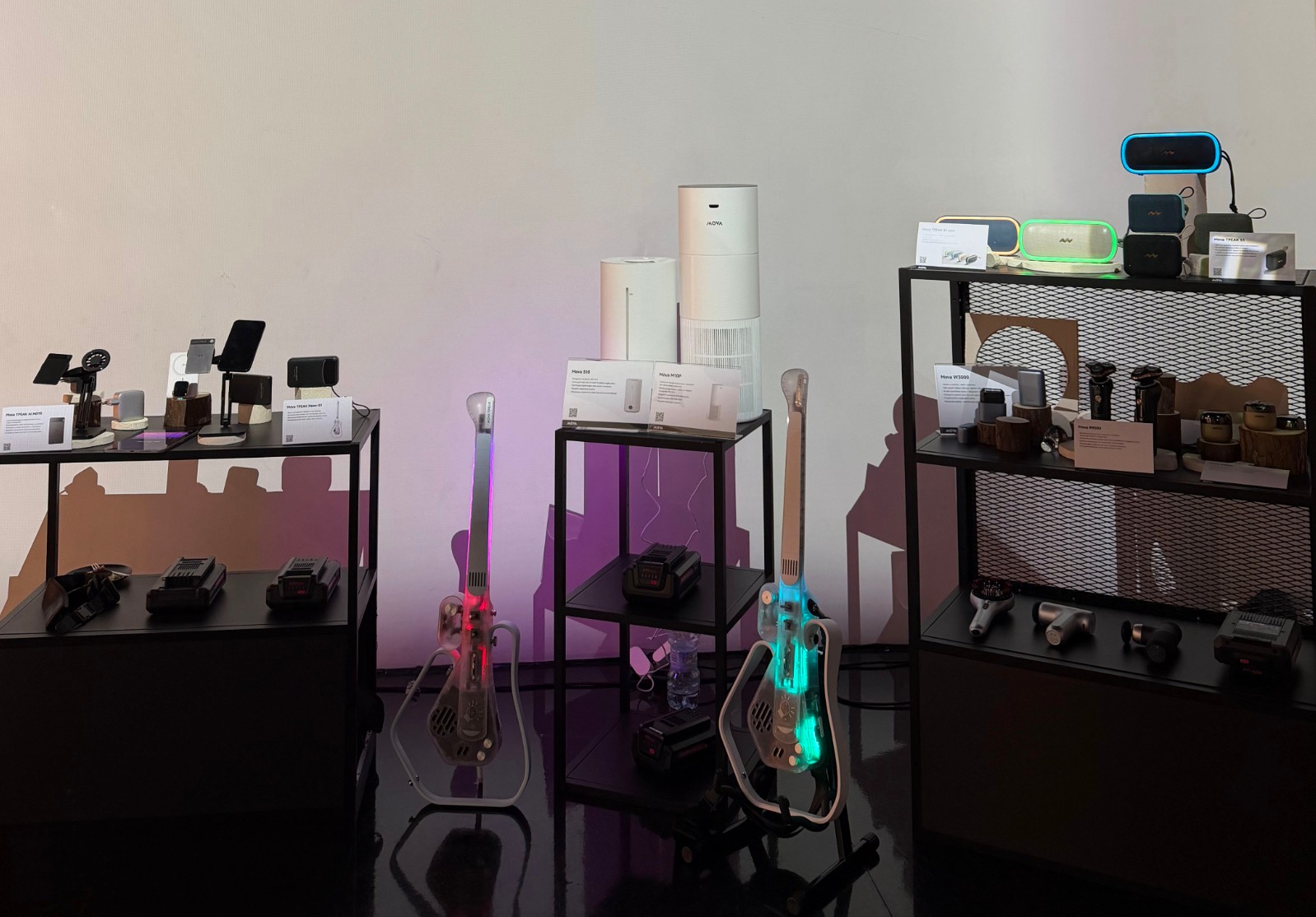
Core Viewpoint - MOVA TPEAK is focusing on the development of OWS (Open Wireless Stereo) headphones, emphasizing comfort and user experience as key differentiators in a competitive market dominated by established brands like Huawei and JBL [1][2][4]. Group 1: Product Development and Market Strategy - The company aims to create unique user experiences rather than broad product lines, focusing on comfort and adaptability for various ear shapes [2][4]. - MOVA TPEAK is building a global 3D ear database to analyze ear structure differences across demographics, which will inform the design of their OWS headphones [2][5]. - The first two OWS headphone models were developed and moved to production within six months, showcasing the company's rapid development capabilities [2][13]. Group 2: User Experience and Design - The design philosophy centers on "first glance attraction and long-term retention," with a focus on aesthetic appeal and user comfort [6][14]. - The headphones are designed to be adjustable to accommodate different ear shapes, addressing initial design flaws related to user compatibility [4][5]. - The integration of AI technology aims to enhance user interaction, allowing for natural voice commands instead of fixed instructions [7][11]. Group 3: Market Positioning and Competition - The company recognizes the intense competition in the audio market but believes there are still opportunities for differentiation, particularly in user comfort and experience [4][14]. - MOVA TPEAK's strategy involves targeting specific user needs and preferences, such as comfort for long-term wear, which is a significant advantage over traditional in-ear headphones [14][15]. - The brand aims to establish itself by providing unique value propositions that resonate with users, rather than directly competing with established giants [27]. Group 4: Future Directions and Innovations - Future product developments may include features for mental health monitoring and sleep assistance, expanding the functionality of their audio products [11][12]. - The company is exploring the integration of AI in various applications, such as AI recording tools that enhance productivity and user experience [20][22]. - MOVA TPEAK is committed to continuous improvement in user experience, aiming to elevate product performance from average to exceptional [23].
普惠金融撑起科创企业“成长伞” 徐州农商银行精准服务打通资金堵点
Xin Hua Ri Bao· 2025-12-01 20:57
Group 1 - The core viewpoint of the articles highlights the innovative service model and professional team of Xuzhou Rural Commercial Bank's Pantang Branch, which effectively supports the real economy through inclusive finance, achieving a significant increase in loans for technology enterprises [1][3] - As of the end of September, the inclusive loan balance reached 396 million yuan, with an increase of 81.36 million yuan since the beginning of the year, and loans to technology enterprises increased by 39.29 million yuan, representing a substantial year-on-year growth of 780% [1] - The "Three Hearts and Three Fast" working method was developed to address the urgent financing needs of technology enterprises, focusing on quick response, quick action, and quick service [1][2] Group 2 - Tian Cai Electronics, a national high-tech enterprise, holds a 60%-70% market share in translation pens and is expanding into new product categories like AI recording pens and live microphones, facing funding pressure during the back-to-school season [2] - The Pantang Branch provided a credit limit of 7 million yuan to Tian Cai Electronics, with 5 million yuan already utilized for purchasing raw materials [2] - The "Three Hearts" aspect emphasizes the team's determination, patience, and sincerity in building relationships with enterprises, leading to a transformation from reluctance to proactive engagement [2][3] Group 3 - The practical implementation of the "Three Hearts and Three Fast" working method has effectively alleviated funding bottlenecks for technology enterprises, demonstrating the true essence of inclusive finance [3] - The professional financial service team is committed to providing agile responses, efficient services, and sincere attitudes, supporting the growth of technology enterprises on their innovative development journey [3]
谁按下了Usmile的暂停键?
雷峰网· 2025-11-25 06:06
Core Viewpoint - The article discusses the challenges faced by Usmile, a leading player in the electric toothbrush market, particularly focusing on its stagnation in growth and internal organizational issues that have led to a decline in its competitive edge [2][3][4]. Group 1: Organizational Challenges - Usmile's primary issue is its "organizational capability," which has been hindered by the founders' limited vision and inability to attract top talent as the company scaled [4][6]. - High turnover rates among executives have created instability, with many key personnel leaving within a year, leading to a fragmented leadership team [4][5]. - The company's value distribution is perceived as unfair, with a reluctance from the founders to dilute their control through equity incentives, causing disillusionment among employees [6][7]. Group 2: Market Position and Competition - Usmile once held nearly 30% of the electric toothbrush market, generating over 3 billion in revenue, but has faced stagnation since 2023, with no significant growth [2][3]. - Competitors like Leifeng and Xiaomi are aggressively encroaching on Usmile's market share, with Xiaomi capturing over 10% of the market with its T series toothbrushes [3][4]. - The electric toothbrush market is limited, with an annual online market size of around 5 billion, necessitating product line expansion to drive growth [8][9]. Group 3: Product Development and Innovation - Usmile has attempted to diversify its product offerings, launching new categories like oral irrigators and beauty devices, but has faced execution challenges due to insufficient R&D personnel [8][9][10]. - The company has invested in developing proprietary brush heads to enhance product quality, but this has not translated into significant profit growth, as improved brush head quality has led to reduced replacement frequency [11][12]. - Despite its struggles in expanding product lines, Usmile has maintained strong execution in its core electric toothbrush business, continuously improving product features and user engagement [10][11]. Group 4: Brand Strategy - Usmile has successfully built a strong brand identity centered around "oral health," leveraging strategic partnerships and marketing campaigns to enhance brand visibility [13][14]. - The company has utilized product placements in popular TV shows and engaged in social responsibility initiatives to strengthen its brand image and connect with consumers [15][16]. - By focusing on children's oral health and collaborating with notable figures, Usmile has effectively penetrated the family market, establishing a loyal customer base [16][17]. Group 5: Industry Context - The electric toothbrush market in China has a penetration rate of about 12%, indicating potential for growth, but the slow development of consumer awareness poses significant challenges [18]. - The market is characterized by high competition and product homogeneity, making it difficult for new entrants to gain a foothold against established brands like Philips and Oral-B [18]. - Usmile's future growth will depend on its ability to innovate and adapt to market demands while overcoming internal organizational challenges [18].