
AI训推一体机

Search documents
再融资新政后沪市首单 中科曙光拟发不超80亿可转债
Sou Hu Cai Jing· 2026-02-10 23:40
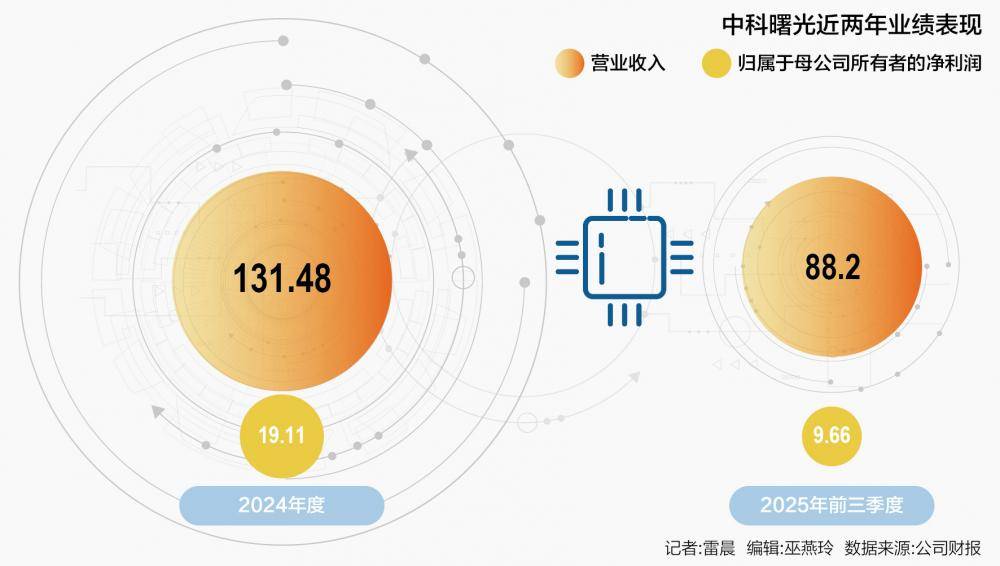
Core Viewpoint - The issuance of convertible bonds by Zhongke Shuguang, amounting to up to 8 billion yuan, marks the first proposal following the new refinancing policy in the Shanghai market, aimed at supporting high-quality listed companies in innovation and development [1][2]. Group 1: Financing and Investment - Zhongke Shuguang plans to use the funds raised from the convertible bonds entirely for three core AI computing projects: advanced computing cluster systems, AI training and inference integrated machines, and domestic storage systems [1][3]. - The company has successfully developed the scaleX640 super node, achieving high-speed interconnection with 640 cards in a single cabinet, and has overcome key technologies related to high-speed interconnection and tight coupling of storage and computing [3][4]. - The next-generation high-performance AI training and inference integrated machine aims to address the challenges of deploying AI in various industries, providing a fully optimized solution that reduces deployment barriers and long-term operational costs [3][4]. Group 2: Market Context and Demand - The global AI computing demand is surging, with the AI server market expected to grow from approximately $125.1 billion in 2024 to $158.7 billion in 2025, while China's market is projected to reach $25.9 billion, reflecting a year-on-year growth of 36.32% [9]. - The national strategy emphasizes the need for domestic innovation in storage systems, which are critical for AI's large-scale development, focusing on performance, latency, concurrency, and reliability [4][9]. Group 3: Financial Performance and Projections - For the first three quarters of 2025, Zhongke Shuguang reported revenues of 8.82 billion yuan and a net profit of 966 million yuan, with a projected net profit of approximately 2.465 billion yuan for the full year, indicating a year-on-year growth of 28.99% [6][7]. - The company’s asset-liability ratio is expected to decrease post-issuance of the convertible bonds, leading to an improved financial structure [5][6]. - Research and development expenses are projected to reach 1.292 billion yuan in 2024, accounting for 9.83% of revenue, reflecting the company's commitment to innovation [7]. Group 4: Technological Advancements - The advanced storage system developed by Zhongke Shuguang has achieved industry-leading performance metrics, including millions of IOPS and sub-millisecond latency, which are essential for handling large-scale AI data processing [4][10]. - The company’s AI computing cluster has been successfully deployed, supporting over 400 mainstream models and achieving significant breakthroughs in AI for scientific research [10].


再融资新政后沪市首单!中科曙光拟发不超80亿可转债
2 1 Shi Ji Jing Ji Bao Dao· 2026-02-10 09:32
Core Viewpoint - The issuance of convertible bonds by Zhongke Shuguang is a significant step following the new refinancing policy, aimed at supporting high-quality listed companies in innovation and development [1][2]. Group 1: Convertible Bond Issuance - Zhongke Shuguang plans to issue up to 8 billion yuan in convertible bonds, with a six-year term, to fund three core AI computing projects [1][3]. - The bond issuance serves as a demonstration of the new refinancing policy's implementation, highlighting the support for quality companies [2]. Group 2: AI Computing Projects - The advanced computing cluster project aims to enhance system performance and reduce reliance on external technologies, addressing the challenges posed by the evolution of AI large models [3]. - The next-generation AI training and inference integrated machine project is designed to overcome deployment challenges in the industry, providing a fully optimized solution [3]. - The storage system project focuses on achieving domestic production of key technologies, which is crucial for the large-scale development of AI [4]. Group 3: Financial Metrics and Projections - For the first three quarters of 2025, Zhongke Shuguang reported revenues of 8.82 billion yuan and a net profit of 966 million yuan, with a projected net profit of approximately 2.465 billion yuan for 2025, reflecting a growth of 28.99% [7]. - The company’s asset-liability ratio is expected to decrease post-issuance, improving its financial structure [6]. - The company has increased its R&D investment, with R&D expenses reaching 1.292 billion yuan in 2024, accounting for 9.83% of revenue [7]. Group 4: Market Trends and Industry Outlook - The global AI computing demand is surging, with the AI server market projected to grow from 125.1 billion USD in 2024 to 158.7 billion USD in 2025, while China's market is expected to reach 25.9 billion USD, a year-on-year increase of 36.32% [10]. - The industry is anticipated to maintain a positive growth trajectory over the next 5 to 10 years, driven by technological advancements and the expansion of application scenarios [10]. - Zhongke Shuguang's recent deployment of a 30,000-card domestic AI computing pool marks a significant milestone in the large-scale application of domestic AI computing technology [10][11].
马斯克全球首富头衔失而复得;OpenAI今年营收将增长两倍以上 | 蓝媒GPT
Sou Hu Cai Jing· 2025-09-11 04:29
Group 1: Elon Musk and Oracle's Financial Performance - Elon Musk regained the title of "world's richest person" after Oracle's strong earnings report led to a surge in Larry Ellison's wealth by $89 billion, reaching $383.2 billion [1] - Oracle's stock price saw a peak increase of 43% and closed with a 36% rise, marking its best single-day performance since 1992 [1] - OpenAI signed a significant agreement with Oracle to purchase $300 billion worth of computing power over five years, requiring 4.5 GW of power capacity [1] Group 2: OpenAI's Revenue Growth - OpenAI's CFO Sarah Friar announced that the company's revenue is expected to more than double this year, projecting around $13 billion compared to approximately $4 billion last year, indicating a threefold growth [2] Group 3: AI and Market Trends - Musk predicted that by 2026, artificial intelligence will surpass individual human intelligence, and by 2030, it will exceed the collective intelligence of all humans [3] - The demand for AI training and inference machines is increasing as AI applications become more prevalent, with nearly 100 companies in the domestic market launching related products this year [5] - Companies like ZTE and Digital China reported strong sales of AI training and inference machines, indicating a positive market outlook for these products [5] Group 4: High-End Smartphone Market - According to Counterpoint Research, global high-end smartphone sales reached a historical high in the first half of 2025, with an 8% year-on-year increase, outperforming the overall smartphone market growth of 4% [4] - Apple led the market with over 62% share and a 3% year-on-year growth, primarily driven by emerging markets [4] - Xiaomi experienced a significant 55% year-on-year increase, largely attributed to its high-end electric vehicle launch positively impacting its smartphone business [4]

AI训推一体机销售火热,上市公司积极抢滩
Zheng Quan Shi Bao· 2025-09-11 01:12
Core Insights - The demand for AI training and inference integrated machines is increasing as AI applications become more prevalent in various industries [1][4][5] - Companies like ZTE and Digital China are experiencing significant sales growth in their integrated training and inference machines [2][7] Market Trends - Nearly 100 manufacturers have launched integrated training and inference machine products in the domestic market this year, including several listed companies [1][7] - The integrated training and inference machine market is expected to grow significantly, driven by the need for AI applications across various sectors such as finance, government, and energy [8][9] Technology Development - The integrated training and inference machines support the entire process of large model training, inference, and application development, catering to the needs of enterprises for ready-to-use solutions [2][3] - The transition from training-focused machines to those that emphasize inference capabilities reflects the evolving landscape of AI technology [2][4] Industry Applications - Key sectors such as finance, government, and energy are showing strong demand for integrated training and inference machines, which are essential for building AI model training and real-time inference capabilities [8][9] - Companies are collaborating with educational institutions and healthcare providers to enhance AI applications in their respective fields [7] Challenges and Considerations - The deployment of integrated training and inference machines faces challenges related to the complexity of the AI ecosystem and the need for deep integration of hardware and software [9][10] - Companies are advised to enhance the scalability of integrated training and inference machines and incorporate cloud management systems to support the full lifecycle of AI model development [9][10]


算力产品收入快速增长 中兴通讯今年收入将重回增长轨道
Zheng Quan Shi Bao Wang· 2025-03-31 00:14
Core Viewpoint - In 2024, ZTE Corporation (000063) experienced a slight decline in revenue and net profit due to a decrease in overall investment from domestic operators, but the management expressed strong confidence in future growth driven by AI opportunities, aiming to return to a growth trajectory by 2025 [1][9]. Group 1: AI Development Opportunities - The global market is entering an AI-driven industrial revolution, with expectations for the AI market to exceed $860 billion in the next five years, achieving a compound annual growth rate of 32.19% [2]. - Domestic operators are projected to maintain over 20% growth in computing power investment by 2025, while leading internet companies are expected to invest over 500 billion yuan in AI over the next three years [2]. - ZTE is focusing on three main areas related to AI: building AI-native ICT infrastructure solutions, empowering AI application proliferation, and enhancing AI applications for personal and home use [2][3]. Group 2: Revenue Growth Strategies - ZTE aims to leverage AI opportunities across four dimensions: communication infrastructure, computing power infrastructure, industry applications, and AI edge applications, while consolidating its domestic operator base and increasing market share among overseas operators [3]. - The company plans to enhance the competitiveness of its computing power infrastructure products by utilizing its core ICT technologies and software-hardware development capabilities [4]. - ZTE has launched a full range of products in servers, storage, switches, data centers, and training platforms to meet the needs of large data centers and edge data centers [4]. Group 3: Market Expansion and Product Strategy - ZTE's management revealed that the sales of related products have significantly increased compared to the same period last year, capitalizing on the rapid growth of AI [4]. - The company will deepen its collaboration with leading internet companies and operators to expand its computing power product layout, focusing on the domestic internet market as a strategic area [4]. - To enhance server gross margins, ZTE will implement strategies such as increasing revenue scale, optimizing supply chain management, and collaborating with domestic AI chip companies [5]. Group 4: Second Growth Curve - In 2024, ZTE's traditional operator network business revenue declined, but its government and enterprise business revenue grew by 36.7%, with domestic government enterprise revenue increasing by nearly 60% [6]. - The second growth curve is becoming a new driver for ZTE's performance, with strategies focusing on AI-related changes and opportunities [7]. - ZTE plans to explore new business models and technological iterations while enhancing its market share and brand influence in the international operator market [7]. Group 5: Consumer Business Strategy - ZTE's consumer business strategy, centered around "AI for All," aims to create a smart ecosystem covering personal, family, and automotive scenarios, driving continuous revenue growth [8]. - The company expects its terminal revenue to continue growing rapidly in 2025 [9].
大豪科技:公司信息更新报告:业绩高增长,AI+量子通讯业务值得期待-20250323
KAIYUAN SECURITIES· 2025-03-23 12:59
Investment Rating - The investment rating for the company is "Buy" (maintained) [1] Core Views - The company has shown significant growth in performance, with a 24.42% year-on-year increase in revenue, reaching 2.529 billion yuan, and a 44.08% increase in net profit, totaling 584 million yuan [5] - The company's strong performance is attributed to industry recovery, product upgrades, and increased sales of intelligent equipment control systems, which generated 2.092 billion yuan in revenue, a 38.60% increase [6] - The company is positioned as a leader in the domestic sewing and knitting equipment control sector, benefiting from robust domestic demand and export growth [4] Financial Summary - The company’s projected net profits for 2025, 2026, and 2027 are estimated at 717 million, 869 million, and 1.045 billion yuan respectively, with corresponding EPS of 0.65, 0.78, and 0.94 yuan per share [4] - The projected revenue for 2025 is 3.087 billion yuan, reflecting a 22.1% year-on-year growth, with a gross margin of 42.0% [9] - The company’s P/E ratios for 2025, 2026, and 2027 are projected to be 22.3, 18.4, and 15.3 respectively, indicating a favorable valuation trend [9] Business Innovation - The company’s subsidiary has made breakthroughs in AI and quantum communication technologies, with successful deployments in pilot projects and the launch of domestically produced AI training and promotion systems [7]
