
CRM软件

Search documents
一篇有关AI的“假想”报告吓崩华尔街,私募巨头股价大跌,市场信心为何如此脆弱?
3 6 Ke· 2026-02-26 01:53
Core Viewpoint - The report by Citrini Research highlights potential risks of artificial intelligence (AI) to the global economy, triggering significant discussions and panic selling in the U.S. stock market, particularly affecting delivery, payment, and software stocks, as well as major private equity (PE) firms like Blackstone and KKR [1][3]. Group 1: AI Impact on the Economy - The report titled "2028 Global Intelligence Crisis" suggests that uncontrolled deflationary forces from AI could lead to an economic plague targeting "intermediaries" and "white-collar wages," with a collapse in the private credit market being a core trigger for a financial crisis [3][7]. - AI's evolution is expected to erode the competitive advantages of the Software as a Service (SaaS) industry, leading to a collapse in pricing and the failure of business models reliant on Annual Recurring Revenue (ARR) [7][9]. - A hypothetical scenario in the report predicts a $5 billion private credit default by Zendesk in 2027, which could trigger a chain reaction affecting the entire SaaS pricing structure and leading to widespread defaults in private credit [7][9]. Group 2: Market Reactions and PE Firms - The liquidity crisis at Blue Owl Capital, which announced asset sales to meet investor redemption demands, has exacerbated market tensions and contributed to stock price declines for major PE firms [9][10]. - Following the announcement from Blue Owl, stocks of firms like Blackstone and Apollo Global Management dropped significantly, with Blackstone's stock falling over 15% from February 19 to 23 [10][13]. - The private credit market, which has rapidly expanded to $1.8 trillion, is now facing structural risks, with an expected increase in default rates due to AI disruptions, particularly in the technology and business services sectors [13][14]. Group 3: Future Considerations - The U.S. market is reassessing the long-term impacts of AI on finance and the real economy, leading to heightened scrutiny on risk pricing and liquidity management within the private credit industry [14]. - Citadel Securities argues that the rapid expansion of AI is unlikely to cause massive job losses, countering the fears raised by the Citrini Research report [14].



2026 CRM终局之战:生态定胜负,AI决输赢
3 6 Ke· 2026-02-09 02:30
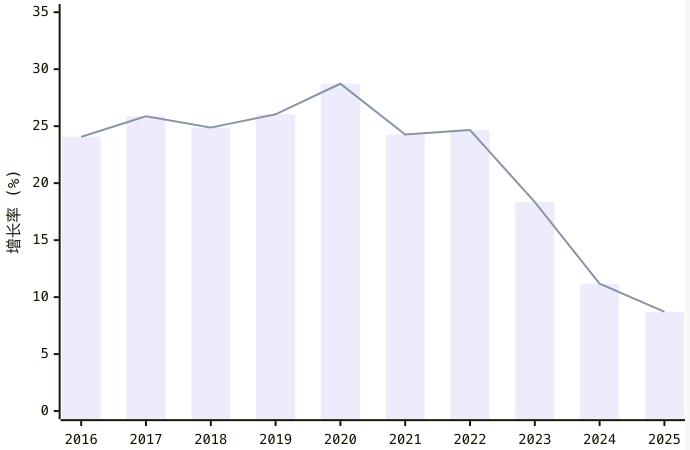
Core Insights - The core argument of the articles is that the CRM software industry is undergoing a significant transformation driven by AI, with a shift towards an ecosystem competition rather than just product competition. This change is particularly evident in both the US and Chinese markets, where AI capabilities are becoming essential for CRM solutions [1][2]. Group 1: Market Trends - The CRM industry is experiencing a structural transformation driven by AI, characterized by five major trends: restructured growth logic, native AI implementation, upgraded outbound strategies, mainstream mergers and acquisitions, and AI as a core driver for domestic substitution [2]. - By the end of 2025, the US CRM market is expected to see a slowdown in growth, with Salesforce's revenue growth rate dropping to approximately 8.7% due to the maturity of traditional subscription models [3][5]. - In contrast, the Chinese CRM market is projected to reach a scale of about 65 billion yuan (approximately 9.5 billion USD) in 2025, with a growth rate of around 15%, primarily driven by domestic substitution [5]. Group 2: AI Integration and Ecosystem Development - AI has become the most critical variable in the CRM market, with significant adoption in SaaS applications. The competition is shifting from isolated functionalities to the overall system reconstruction and the speed of implementation [7][8]. - The integration of AI into existing CRM processes is essential for achieving reliable and scalable solutions. Companies are recognizing the importance of embedding AI deeply into their operational frameworks rather than relying solely on AI's probabilistic nature [7][8]. - The competition for AI CRM is expected to intensify in 2026, with nearly 80% of enterprises listing AI capabilities as a mandatory criterion for CRM procurement [8]. Group 3: Outbound Strategies and Global Expansion - Approximately 86% of surveyed enterprise software companies plan to include outbound strategies as a core part of their business, although most are still in the early stages of internationalization [10]. - The nature of outbound strategies is evolving from simple functional exports to the export of technical capabilities, industry experience, and AI capabilities, with AI becoming a significant growth engine in overseas markets [10][12]. - Companies are increasingly adopting a "follow strategy," prioritizing service for internationalizing Chinese clients, which helps mitigate market risks and facilitates product internationalization [12]. Group 4: Mergers and Acquisitions - Mergers and acquisitions have become the primary path for expansion and exit in the global B2B software market, with nearly 70% of transactions occurring in the second half of the year [13][14]. - The focus of acquisitions is shifting towards technology support, data assets, and enterprise security, highlighting the necessity of building a compliant and reliable operational foundation in the context of AI [13][14]. - The competitive landscape is evolving into an ecosystem battle, where companies lacking systemic support for their technologies are at risk of being overshadowed by those with robust ecosystems [13][14]. Group 5: Domestic Substitution and AI as a Driver - AI is becoming a core driver for domestic substitution in the Chinese enterprise software market, with predictions indicating that the domestic CRM replacement rate will exceed 65% by the end of 2025 [15][17]. - The demand for AI capabilities is rapidly increasing as companies seek to integrate AI into their operations, particularly in light of limitations on the use of foreign AI models in China [17][18]. - The integration of AI into domestic CRM solutions is enhancing their usability and effectiveness, with significant improvements in data management and operational efficiency being reported [18][19].

金证股份(600446):中标国投证券股份有限公司采购项目,中标金额为130.50万元
Xin Lang Cai Jing· 2026-02-05 12:18
Core Insights - Shenzhen Jinzhen Technology Co., Ltd. won a procurement project from Guotou Securities Co., Ltd. with a bid amount of 1.305 million yuan [1][2] Company Performance - In 2024, the company's operating revenue was 4.693 billion yuan, with a revenue growth rate of -24.56% [1][2] - The net profit attributable to the parent company for 2024 was -202 million yuan, with a net profit growth rate of -154.81% [1][2] - For the first half of 2025, the company's operating revenue was 1.208 billion yuan, with a revenue growth rate of -48.55% [1][2] - The net profit attributable to the parent company for the first half of 2025 was -39 million yuan, with a net profit growth rate of 51.95% [1][2] Industry Overview - The company operates in the information technology industry, with main product types including CRM software, CTI voice software, ERP software, telecommunications services, and industry-specific software [1][2] - The revenue composition for 2024 was as follows: hardware business 44.11%, customized and system integration services 27.8%, software business 26.2%, technology park leasing 1.71%, and other businesses 0.18% [1][2]

中国工业软件行业发展研究报告
艾瑞咨询· 2026-02-04 03:25
Core Viewpoint - The industrial software industry is at a critical juncture, necessitating urgent development driven by innovation and supported by favorable policies. It serves as a core production material and key productivity for new industrialization, emphasizing the importance of self-control and supply chain security [1][4]. Industry Dynamics - The evolution path of industrial software is transitioning from tools to systems, then to platforms, and finally to genetic models, focusing on data value in the latter stages [2]. - The market is large, with a projected size nearing 300 billion yuan in 2024, but challenges such as core technology gaps and imbalanced industrial structure are prominent [1][17]. Product Development - Currently, industrial software is primarily sold as products, but it is expected to shift towards selling "intelligence" as data assets are effectively accumulated and utilized, leading to the emergence of industrial intelligent agents [3]. Development Background - Industrial software is crucial for innovation and transformation in the economy, with the shift of control from hardware to software becoming increasingly evident. The encapsulation of industrial knowledge in software is essential for optimizing production processes [4][7]. Driving Factors - Policy support and technological advancements, particularly in AI and large models, are accelerating the development and application of industrial software. Cities are introducing subsidy policies to stimulate innovation in this sector [12][14]. - Demand from enterprises emphasizes practical market needs while also considering domestic alternatives, with government and research institutions focusing on top-level planning and integration [14]. Market Characteristics - The industrial software market is characterized by a significant gap in core technologies, particularly in R&D design software, which is the most affected area by the "bottleneck" phenomenon. The imbalance in the industrial structure shows a stronger presence of management software compared to engineering software [17][19]. Industry Value Flow - The industrial software value distribution follows a "smile curve" model, where the closer to core technology, the higher the barriers and profits. The rise of data value services is expected to create new growth opportunities [30]. Profit Models - Current profit models for industrial software include software licensing, maintenance, and customized development, with ongoing exploration of platform and ecosystem revenue sharing [33]. Future Directions - The industrial software industry is expected to evolve towards platformization and genetic modeling, focusing on enhancing data flow efficiency and value. The future will see products transforming from mere tools to intelligent agents capable of autonomous task execution [48][52].

ToB商业大变局,谁是新王?
3 6 Ke· 2026-01-26 06:05
Core Insights - The growth logic of China's enterprise services has relied on two main advantages: low-cost engineering talent and affordable sales and implementation teams. However, these advantages are rapidly diminishing due to demographic changes and rising wage levels [1][10] - The traditional To B business model is facing structural failure, necessitating a fundamental change in production relationships to sustain growth [1][10] - The evolution of enterprise services can be segmented into three eras: 1.0, 2.0, and the emerging 3.0, with each representing a shift in business models and operational strategies [1][2] Group 1: Era 1.0 - Control-Centric Approach - In the 1.0 era, companies like Yonyou and Glodon dominated the market by focusing on control over finances, inventory, and personnel, using a military-like organizational structure to capture market share [3][5] - Yonyou leveraged the widespread adoption of computerized accounting to establish a comprehensive distribution system, effectively creating a "ground army" for market penetration [5][6] - Glodon achieved deep market penetration in the construction sector by tying its software to national pricing standards, thus gaining significant pricing power and market dominance [6][7] Group 2: Era 2.0 - SaaS Aspirations and Challenges - The 2.0 era saw a shift towards SaaS models, with companies like Fenshangxiaoke and Beisen attempting to replicate successful Western models by leveraging capital and internet strategies [11][12] - Fenshangxiaoke's aggressive customer acquisition strategy faced challenges due to the rational decision-making of enterprise owners, leading to high customer churn rates [13][16] - Beisen adopted an integrated approach by offering a comprehensive suite of HR solutions, which successfully built a competitive moat but also significantly increased operational costs [14][15] Group 3: Era 3.0 - AI-Driven Transformation - The 3.0 era is characterized by companies like HeyGen and Manus, which utilize AI to redefine labor delivery models, moving away from traditional human resource dependencies [2][19] - HeyGen exemplifies extreme efficiency, achieving over $35 million in ARR with a small team, demonstrating that AI can replace traditional labor-intensive processes [22][36] - Manus represents a shift towards software functioning as a digital employee, capable of independently completing tasks, thus opening up new revenue streams by targeting labor budgets rather than IT budgets [23][39] Group 4: Changes in Business Models and Market Dynamics - The delivery model has shifted from providing tools to delivering results, eliminating the need for extensive training and reducing implementation friction [30][32] - The efficiency of 3.0 companies is starkly higher, with HeyGen achieving a revenue per employee of $1 million, compared to traditional SaaS companies that struggle to exceed $46,000 [33][36] - The market focus has transitioned from IT budget "rent" to labor budget "wages," significantly expanding the potential market size for AI-driven solutions [38][40] Group 5: Future Outlook - The future of China's To B market is expected to feature a bimodal structure, with established players like Glodon maintaining their market position while new entrants like HeyGen leverage AI for competitive advantage [41][42] - Companies in the middle ground, relying on outdated models, are at risk of being squeezed out as they cannot compete with either the efficiency of AI-driven firms or the entrenched advantages of legacy players [42] - The key for future entrepreneurs is to identify niches where AI can fully replace human labor, creating specialized tools that address specific problems [42]


CRM软件多仓库库存同步:实时库存偏差的技术校正
Sou Hu Cai Jing· 2025-09-11 08:32
Core Insights - The article discusses the challenges of inventory synchronization across multiple warehouses and the role of CRM software in addressing these issues Group 1: Challenges of Multi-Warehouse Inventory Synchronization - Data silos and system fragmentation lead to discrepancies between CRM and warehouse management systems, causing information asymmetry and increased customer complaints [3] - Synchronization delays can range from minutes to hours, particularly during promotional events, resulting in significant financial losses for companies [3] - Manual data entry between systems is inefficient and prone to errors, with error rates reported between 8% and 15% [3] Group 2: Technical Solutions for Inventory Synchronization - API integration allows for real-time synchronization between CRM and warehouse management systems, achieving synchronization speeds of less than 1 second [5] - Intelligent validation mechanisms, such as entry checks and expiration management, help reduce errors at the source [5][7] - A distributed inventory management architecture provides a unified view of inventory across multiple locations, enabling real-time data aggregation and intelligent stock allocation [5] Group 3: Best Practices for Implementing CRM Inventory Synchronization - Establishing clear data standards, including a unified product coding system and standardized inventory processes, is essential for effective synchronization [15] - A phased implementation strategy allows for gradual expansion and optimization of inventory synchronization efforts [15] - Continuous monitoring and optimization of synchronization quality through key performance indicators (KPIs) ensures ongoing effectiveness [15] Group 4: Future Trends in Inventory Synchronization - The integration of AI and machine learning will enhance predictive synchronization and anomaly detection in inventory management [17] - Blockchain technology will provide a tamper-proof record of inventory changes, increasing data reliability and transparency [17] - IoT integration will further improve real-time inventory synchronization capabilities through automated detection and monitoring [18] Group 5: Case Studies of CRM Inventory Synchronization - A beauty brand improved its inventory accuracy to 100% during promotions by utilizing CRM's real-time synchronization features [12] - A fresh food chain enhanced delivery speed by 40% and reduced losses by 25% through real-time visibility and intelligent stock allocation [12] - A medical device company reduced its error rate from 15% to 0.5% and decreased customer complaints by 70% after implementing intelligent validation mechanisms [12] Group 6: Conclusion - Effective inventory synchronization is crucial for modern supply chain management, and CRM software plays a vital role in achieving real-time accuracy [20] - Companies can enhance customer satisfaction and operational efficiency by leveraging advanced technologies for inventory management [20]

国产CRM“攻入”外资金融服务领域
Zhong Guo Jing Ying Bao· 2025-08-28 07:40
Core Insights - CRM (Customer Relationship Management) is a crucial part of digital transformation for enterprises, enabling centralized management of customer data and collaboration among sales, marketing, and customer service teams, thereby reducing resource wastage and improving conversion rates [1] Group 1: Market Expansion and Adoption - Domestic CRM providers, particularly Funshare, have made significant inroads in various industries, notably in financial services, where they have begun to replace international CRM giants [1][5] - The CEO of Boman Group highlighted that their previous experience with international CRM platforms, including Salesforce, was limited by a lack of flexibility and adaptability to the Chinese market [2][3] Group 2: Application Scenarios and Efficiency Gains - Boman Group has achieved notable improvements in three key application scenarios after migrating to Funshare's platform: 1. Client management, which has become more intelligent and precise in areas like customer acquisition and personalized recommendations [4] 2. Investment management, where the platform has reduced human resource input by approximately 35% while enhancing management costs and business opportunity identification [4] 3. Internal organization management, which has improved communication and collaboration across departments through visualized data [4] Group 3: Market Growth and AI Integration - According to IDC, the Chinese CRM SaaS market is projected to reach $1.07 billion in the second half of 2024, reflecting a year-on-year growth of 15.6% [5] - Funshare is leading the domestic CRM market in terms of growth rate and market share, with projected revenue exceeding 500 million RMB in 2024, marking a growth rate of over 20% [5] - The integration of AI into CRM is seen as a transformative opportunity, with potential applications in intelligent customer service and automated data matching, which could enhance the value of CRM systems while ensuring data security [6]