BioNeMo平台

Search documents
AI制药打响算力竞赛:罗氏布局AI工厂,行业痛点仍存
2 1 Shi Ji Jing Ji Bao Dao· 2026-03-18 23:11
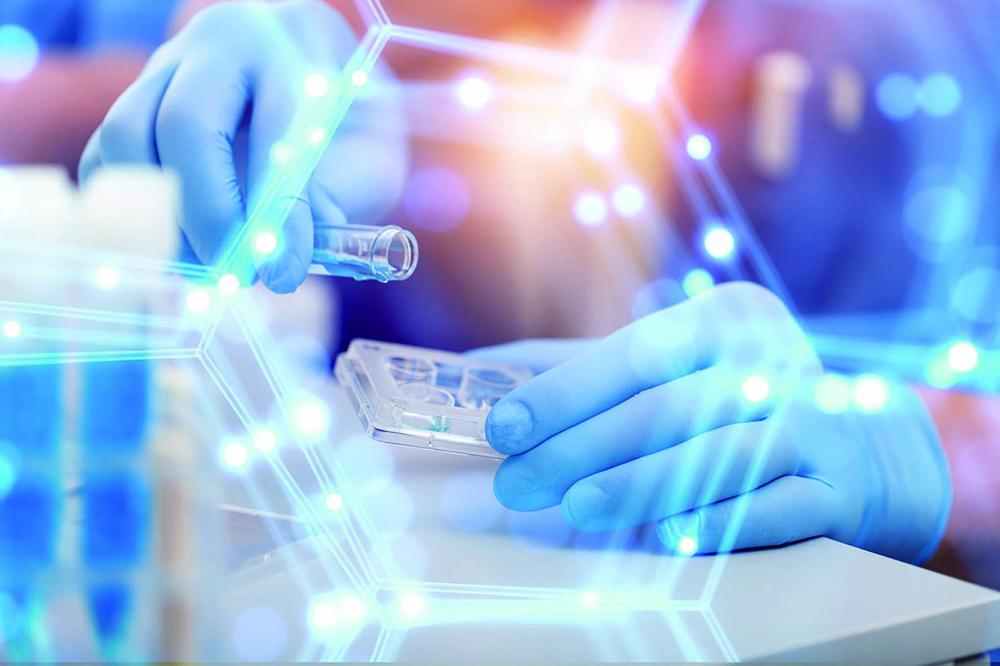
Core Insights - The pharmaceutical giants are investing heavily in AI infrastructure, with Roche and Eli Lilly leading the charge by deploying significant GPU resources to enhance their drug development processes [1][2][3] - AI is transitioning from a supplementary tool to a fundamental infrastructure that supports the entire value chain in drug development, manufacturing, and commercialization [2][4] Investment and Infrastructure - Roche has deployed 2,176 high-performance GPUs, bringing its total GPU capacity to over 3,500 Blackwell GPUs, claiming the largest GPU scale available among pharmaceutical companies [1][3] - Eli Lilly has launched its AI factory "LillyPod," equipped with 1,016 NVIDIA Blackwell Ultra GPUs, achieving a computing power of 9,000 Petaflops [1][3] - The competition among top pharmaceutical companies is intensifying as they build proprietary AI infrastructures to create high data barriers and optimize their drug development processes [4][17] Market Dynamics - The AI pharmaceutical sector is experiencing a paradox of rapid expansion and a return to rational capital investment, with over 350 AI pharmaceutical companies globally, including more than 100 in China [2][6] - The funding landscape is shifting, with a notable trend of companies transitioning from high-risk "gold diggers" to more stable "water sellers" (CRO/technical service models) [20][21] Commercialization Challenges - Despite the increasing efficiency of AI in preclinical research, significant bottlenecks remain in transitioning from preclinical to late-stage clinical trials, with no AI-designed drugs yet approved [21][22] - Investors are becoming more cautious, focusing on companies that can demonstrate cash flow within two to three years, indicating a shift in funding strategies towards firms with tangible deliverables [21][22] Future Directions - Key breakthroughs in AI pharmaceutical development are expected to focus on creating closed-loop systems that integrate algorithm design, automated experiments, and data feedback [22][24] - The industry is predicted to undergo a valuation restructuring by 2026, with leading companies like Crystal Technology and Tempus AI expected to achieve positive EBITDA for the first time [24][25]


AI制药打响算力竞赛:罗氏布局AI工厂 行业痛点仍存
2 1 Shi Ji Jing Ji Bao Dao· 2026-03-18 23:10
Core Insights - The pharmaceutical industry is increasingly adopting AI technologies, with major companies like Roche and Eli Lilly investing heavily in AI infrastructure to enhance drug development processes [2][3] - Roche has deployed the largest GPU scale in the pharmaceutical sector, with over 3,500 Blackwell GPUs, indicating a shift towards in-house AI capabilities [3][5] - The AI pharmaceutical sector is experiencing a paradox of rapid expansion and cautious capital investment, as companies seek to integrate AI across the entire value chain [3][6] Investment and Infrastructure - Roche's AI factory represents a high-performance supercomputing platform that integrates AI into research, manufacturing, and diagnostics [5] - Eli Lilly's AI factory, "LillyPod," features 1,016 GPUs and aims to enhance drug discovery efficiency, reflecting a broader trend among pharmaceutical giants to build proprietary AI capabilities [3][5] - The global AI pharmaceutical landscape includes over 350 companies, with significant growth in China, where more than 100 AI pharmaceutical firms are emerging [4][7] Market Dynamics - The investment landscape is shifting from broad-based funding to a focus on companies with clear deliverables and measurable outcomes in AI drug development [8][9] - Despite significant funding in the AI pharmaceutical sector, many companies are transitioning from high-risk ventures to more stable service-oriented models [7][9] - The industry is witnessing a consolidation trend, with larger firms acquiring smaller companies to enhance their AI capabilities and market position [12] Future Outlook - The key challenges for AI in pharmaceuticals include the transition from preclinical to clinical phases, with no AI-designed drugs yet approved for market [9][11] - Analysts predict that 2026 will be a critical year for AI pharmaceuticals, as the success of AI-driven drugs in clinical trials will determine the future viability of AI in drug development [11][12] - The industry is expected to see a bifurcation in capital allocation, with early-stage investments focusing on disruptive technologies and later-stage investments favoring companies with proven clinical data [12]
英伟达CEO黄仁勋:未来一切将通过虚拟孪生体来表现
Sou Hu Cai Jing· 2026-02-04 15:12
Core Insights - The collaboration between NVIDIA and Dassault Systèmes aims to create a blueprint for industrial AI based on physical "world models," enabling simulation before the construction of products, factories, and biological systems [2][3] - NVIDIA's CEO Jensen Huang emphasized that AI will become a fundamental infrastructure, akin to water, electricity, and the internet, enhancing engineers' capabilities significantly [2][5] - The partnership combines NVIDIA's accelerated computing and AI libraries with Dassault's virtual twin platform, transitioning more engineering work to real-time digital workflows supported by AI [2][4] Group 1: Collaboration Overview - The partnership marks the largest collaboration in over 25 years between NVIDIA and Dassault Systèmes, aiming to enhance engineering work by a factor of 100 to 1 million times [2][3] - Dassault's 3DEXPERIENCE platform serves over 45 million users and 400,000 customers, leading in virtual twin technology that allows engineers to simulate products and processes before physical construction [3][4] - The integration of NVIDIA's Omniverse physical AI library with Dassault's DELMIA virtual twin will create autonomous software-defined production systems [4] Group 2: Impact on Engineering - The collaboration is designed to enhance, not replace, engineers' capabilities, allowing them to leverage AI partners for exploratory and repetitive tasks [5][6] - Engineers will have a "partner team" that expands their creativity and leverage, rather than automating past processes [5][6] - The goal is to eliminate costly mistakes before they occur and to create entirely new product categories through the use of virtual twins and 3D universes [5][6] Group 3: Role of World Models - World models are scientifically validated AI systems based on physics, serving as critical platforms in biology, materials science, engineering, and manufacturing [6][7] - These models can learn the underlying "language" of complex systems, generating new options for evaluation and validation in simulations [6][7]

AI医疗:暴力破解创新药,人类突破长寿极限
泽平宏观· 2026-02-01 16:05
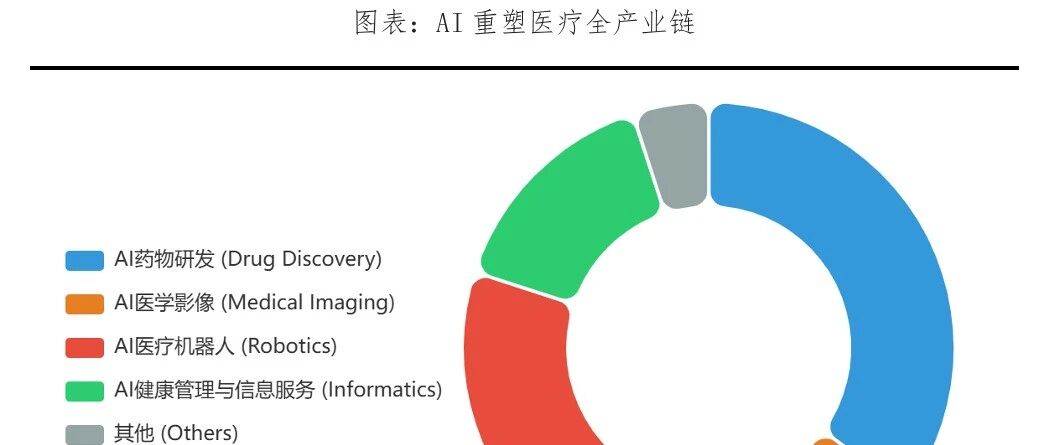
Core Viewpoint - AI is revolutionizing the life sciences and pharmaceutical research, significantly improving efficiency and reducing costs associated with drug development [3][4][7]. Group 1: Global AI Medical Market Expansion - The global AI medical market is rapidly expanding, characterized by the entry of major tech companies like NVIDIA, Google, and Microsoft, which are restructuring medical infrastructure [3][4]. - AI technology is deeply integrating with biotechnology, leading to unprecedented levels of financing and mergers in the AI medical sector, with projections indicating a record high in 2025 [4][5]. - Major pharmaceutical companies are investing billions in partnerships with AI startups, exemplified by Sanofi's $2.5 billion collaboration with Earendil and other significant deals with Atomwise and Dren Bio [5][6]. Group 2: AI Drug Development and Applications - AI is transforming drug development by addressing various diseases, including cancer, neurodegenerative diseases, metabolic disorders, autoimmune diseases, infectious diseases, and rare diseases, significantly lowering trial costs and improving success rates [7][8][9]. - The efficiency of AI in drug development is highlighted by its ability to reduce the traditional 10-year, $1 billion timeline with only a 10% success rate, enhancing the overall drug discovery process [8][9]. - AI's role in drug discovery is expanding from initial target identification to clinical trial design and patient recruitment, covering the entire industry spectrum [8][9]. Group 3: Policy Support for AI in Healthcare - National strategies are being implemented to support AI applications in healthcare, including the 2025 guidelines promoting AI in drug development to reduce costs and time [9][10]. - Local governments are providing financial incentives for AI drug development, with subsidies for computational costs and support for companies achieving regulatory approvals [11][12]. - Policies are encouraging the internationalization of innovative drugs, with significant support for local companies conducting global clinical trials [11][12]. Group 4: Future Opportunities in AI Healthcare - The first major opportunity lies in AI-assisted drug discovery, which is expected to have a trillion-dollar market potential, particularly in treating diseases like cancer and Alzheimer's [25][26]. - AI is set to enhance diagnostic accuracy in medical imaging, addressing resource distribution issues and integrating diagnostic capabilities into imaging devices [28][29]. - AI will drive advancements in clinical decision support and healthcare information systems, improving data utilization and patient care efficiency [30][31]. - AI-powered surgical robots are expected to redefine surgical precision and enable remote medical procedures, breaking geographical barriers in healthcare delivery [32][33].

10亿美元押注!英伟达、礼来剑指AI制药 药物研发变革加速
2 1 Shi Ji Jing Ji Bao Dao· 2026-01-15 09:24
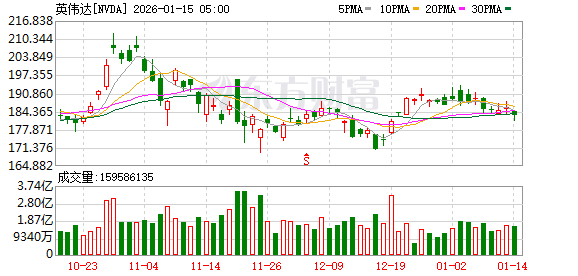
Group 1 - Nvidia and Eli Lilly announced a collaboration to establish an AI joint innovation lab aimed at addressing challenges in the pharmaceutical industry using AI technology [2][3] - The lab will integrate Eli Lilly's expertise in drug discovery and development with Nvidia's strengths in AI and accelerated computing, with a joint investment of up to $1 billion over the next five years [2][4] - This partnership is expected to revolutionize existing drug development paradigms by combining large-scale data and scientific knowledge with advanced computational capabilities [2][4] Group 2 - The AI joint innovation lab will be located in the San Francisco Bay Area and will promote close collaboration between Eli Lilly's pharmaceutical experts and Nvidia's AI model engineers [3][4] - Initial focus will be on building a continuous learning system that connects Eli Lilly's smart wet lab with Nvidia's computational dry lab, enabling AI-assisted experiments [4] - Beyond drug discovery, the collaboration will explore AI applications in clinical development, manufacturing, and commercial operations [4] Group 3 - Eli Lilly has been actively pursuing partnerships in the AI pharmaceutical sector, including collaborations with Chinese AI companies and other major pharmaceutical firms [5][6] - The global AI pharmaceutical market is projected to reach between $28 billion and $53 billion, with significant growth expected in China's smart pharmaceutical industry [6][7] - The strategic shift towards AI in drug development is leading to increased capital interest and a transformation in how pharmaceutical companies approach AI solutions [7][8]
JPM2026|英伟达与礼来宣布共建AI联合创新实验室,加速重塑药物研发范式
GLP1减重宝典· 2026-01-14 15:14
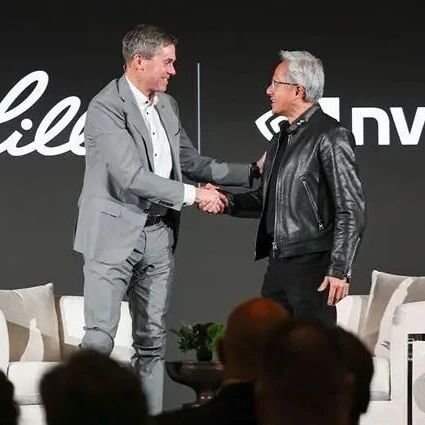
Core Viewpoint - The collaboration between Nvidia and Eli Lilly aims to establish an AI joint innovation lab to address long-standing bottlenecks in drug discovery, development, and manufacturing within the pharmaceutical industry, with a potential investment of up to $1 billion over five years [4][6][7]. Group 1: Collaboration Details - The lab will be located in the San Francisco Bay Area, integrating Eli Lilly's expertise in drug development with Nvidia's strengths in AI and computational infrastructure [6]. - The collaboration will focus on creating a continuous learning system that connects experimental and computational labs, enabling AI-assisted experiments and iterative hypothesis adjustments [8]. - The lab will utilize Nvidia's BioNeMo platform and the next-generation Vera Rubin architecture to build advanced AI infrastructure for life sciences [6][8]. Group 2: Technological Advancements - The partnership aims to develop next-generation foundational and specialized models for life sciences, enhancing efficiency from early discovery to late-stage optimization [8]. - Nvidia's Omniverse platform and RTX PRO servers will be employed to create digital twin models for production lines and supply chains, allowing for simulations and optimizations before real-world implementation [9]. - The collaboration will also explore the application of AI in clinical development, manufacturing, and commercial operations, including the use of multimodal models and robotics [9]. Group 3: Broader Impact - The joint innovation lab is expected to serve as a significant support point for the innovation ecosystem, providing extensive computational resources and professional support to researchers and startups [10]. - Eli Lilly's Lilly TuneLab platform will integrate with Nvidia's Clara open-source models to enhance drug discovery workflows [10]. - The initiative is anticipated to fundamentally change the pace and methods of traditional drug development by combining proprietary data and scientific insights with advanced computational capabilities [7].
豪赌AI医疗,全球第一药企与全球第一科技巨头达成合作
Tai Mei Ti A P P· 2026-01-13 11:20
Core Viewpoint - The strategic partnership between Eli Lilly, a leading pharmaceutical company, and Nvidia, a top technology giant, marks a significant shift in the pharmaceutical industry, focusing on AI-driven drug development and manufacturing processes [1][14]. Group 1: Partnership Details - Eli Lilly and Nvidia will invest $1 billion over five years to establish a joint innovation lab in the San Francisco Bay Area [1]. - The lab will not only serve as a computing center but will also aim to completely restructure the drug development process using AI [2]. - The partnership will utilize Nvidia's latest AI chip architecture, Vera Rubin, which is designed for high-precision scientific calculations essential for drug development [2][3]. Group 2: Technological Integration - The collaboration will integrate hardware and software, with Nvidia's BioNeMo platform and Eli Lilly's TuneLab platform combining to enhance drug discovery [3][4]. - BioNeMo will function as a generative AI platform for biology, capable of generating new protein structures, while Eli Lilly will contribute its extensive historical experimental data [3][4]. - The partnership aims to address the data and model gap in AI healthcare, leveraging federated learning technology [4]. Group 3: Manufacturing Innovations - The collaboration extends to manufacturing, with plans to create a "digital twin" of Eli Lilly's production line using Nvidia's Omniverse platform [5]. - This digital twin will simulate production processes to optimize supply chain efficiency, potentially leading to significant revenue increases for high-demand products [5]. Group 4: Industry Context and Implications - Eli Lilly's decision to partner with Nvidia reflects a strategic move to overcome the challenges of traditional drug development, which is often time-consuming and costly [6][7]. - The partnership signifies a shift from a "Discovery" to a "Design" paradigm in drug development, allowing for targeted molecular design rather than random screening [7][8]. - The collaboration is expected to accelerate industry changes, prompting other major pharmaceutical companies to seek similar technological partnerships [16][18]. Group 5: Future Outlook - The partnership is seen as a potential turning point in AI-driven pharmaceutical development, creating a new model of collaboration between top pharmaceutical and technology companies [15][16]. - The competition in the pharmaceutical industry is likely to intensify as companies race to secure technological alliances, with AI becoming a critical component of drug development [19][20].
天量回调!商业航天今日熄火!这个板块午后却突然爆发,千亿龙头十分钟爆拉12%,直冲涨停!
雪球· 2026-01-13 08:14
Market Overview - The A-share market experienced a collective pullback, with the Shanghai Composite Index ending a 17-day winning streak, closing down 0.64% at 4138.76 points. The Shenzhen Component fell 1.37% to 14169.40 points, and the ChiNext Index dropped 1.96% to 3321.89 points. The total trading volume in Shanghai, Shenzhen, and Beijing reached 36.991 billion, an increase of 54.1 billion from the previous day, setting a new historical high [2]. Sector Performance - Most industry sectors saw declines, with precious metals, medical services, mining, and biopharmaceuticals leading in gains. In contrast, aerospace, communication equipment, computer devices, shipbuilding, semiconductors, and electronic chemicals faced significant losses [2]. - The AI application concept stocks rose against the trend, with over ten component stocks hitting the daily limit. The AI medical concept remained active, with stocks like Meinian Health and Hongbo Pharmaceutical achieving consecutive limit-ups [2][8]. Electric Power Sector - The electric power sector saw a sudden surge in the afternoon, with stocks like Tebian Electric Apparatus and Sanbian Technology hitting the daily limit. Other companies in the transformer industry also experienced significant gains [3][5]. AI and Energy Demand - The explosion of AI has led to a surge in electricity consumption in data centers, causing increased electricity costs for residents in some areas of the U.S. Former President Trump stated that tech giants must bear the costs of building AI data centers to avoid raising electricity bills for Americans. Elon Musk emphasized that energy (watts) will become the essence of currency in the AI and robotics era [6]. - TrendForce analysts noted that North America is experiencing strong demand for transformer markets due to aging grid updates and the massive energy needs of AI data centers. The supply gap for power transformers and distribution transformers in North America is estimated at 30% and 6%, respectively [6]. AI Medical Sector - The AI medical industry is entering a golden development period, with innovations in medical imaging AI-assisted diagnosis, intelligent surgical robots, and AI platforms for drug development accelerating. The ecosystem is forming from algorithm development to product application [12]. - Recent collaborations, such as the one between NVIDIA and Eli Lilly, aim to enhance drug development through advanced computational capabilities [11]. Commercial Aerospace Sector - The commercial aerospace sector, which had been a star performer, saw a significant pullback, with the theme index dropping 5.83%. Over 40 stocks in this sector hit the daily limit down, indicating a market correction after a strong rally [14][17]. - Despite being recognized as a new economic growth engine, the commercial aerospace sector faces risks due to its reliance on government and enterprise clients, and the sustainability of profit models in the consumer market remains uncertain [17].

黄仁勋的Agentic AI,闯入全球市值最高药厂
Sou Hu Cai Jing· 2026-01-13 08:03
Core Insights - Nvidia plans to collaborate with Eli Lilly to invest $1 billion in a joint AI lab aimed at transforming the healthcare sector through advanced AI technologies [3][25] - The focus of the collaboration is to address the global shortage of healthcare professionals by deploying AI agents in the medical field, with a significant emphasis on the rapid adoption of AI in healthcare compared to other industries [5][12] - Nvidia's CEO highlighted the importance of physical AI and its impact on the pharmaceutical industry, with advancements in AI models and robotics enhancing laboratory automation and drug development processes [6][10] Group 1: Collaboration and Investment - Nvidia and Eli Lilly will establish a joint AI lab with a $1 billion investment to integrate top scientists and AI researchers [3][25] - The partnership aims to accelerate drug discovery and laboratory automation, shifting the current model from 90% wet lab work to a more balanced approach with increased computational methods [25][29] Group 2: AI in Healthcare - The healthcare sector is experiencing unprecedented speed in the deployment of technology, with AI expected to play a crucial role in addressing the projected shortage of millions of healthcare workers by 2030 [12][11] - Nvidia's AI models and tools are being utilized to enhance clinical workflows, allowing healthcare professionals to save significant time and improve patient care [13][31] Group 3: Technological Advancements - Nvidia's advancements in AI, such as the Cosmos model and Isaac robotics platform, are designed to improve laboratory efficiency and quality control in drug manufacturing [6][19] - The company is also focusing on open-source models and tools to democratize access to AI technologies, enabling a wider range of companies to innovate in the healthcare space [9][22] Group 4: Future Outlook - The emergence of AI scientists and agents is expected to revolutionize the pharmaceutical industry, with a projected $300 billion market for drug development being reshaped by these technologies [18][25] - Nvidia's collaboration with Eli Lilly is seen as a pivotal moment in the integration of AI into scientific research, potentially leading to breakthroughs in drug discovery and development [25][28]
医药生物-医药行业行业研究:从数据、算力、模型切入的3类龙头,看全球AI
Sou Hu Cai Jing· 2025-08-31 03:08
Core Insights - The report highlights the transition of AI in drug development from concept to reality, with significant advancements expected in 2024, marked by the Nobel Prize awarded for AlphaFold2, indicating a new era in AI-driven pharmaceuticals [1][4][13] - Multi-omics AI applications are projected to achieve a 1000-fold reduction in costs and efficiency in the pharmaceutical sector, with the first AI-driven blockbuster drug nearing approval [1][4][16] - The industry is witnessing a paradigm shift as major tech companies and pharmaceutical giants invest heavily in AI, with over $50 billion in AI drug development-related transactions in the past five years [1][5][6] Group 1: Industry Dynamics - AI drug development is moving towards practical applications, with significant breakthroughs in model transparency and regulatory frameworks, such as the EU's AI Act promoting explainability [1][4][31] - Key elements driving the industry include computational power, data integration, and advanced modeling techniques, with major cloud providers like Amazon, Google, and Microsoft offering robust resources [1][4][36] - The emergence of federated learning technologies is breaking down data silos, enabling cross-industry collaborations to enhance drug discovery [1][4][36] Group 2: Major Players and Investments - Tech giants like NVIDIA and Google are actively entering the AI pharmaceutical space, with NVIDIA investing in 13 AI drug companies and Google restructuring its AI divisions for clinical trials [1][5][6] - Leading pharmaceutical companies, including Merck and Pfizer, are committing hundreds of millions to AI-related initiatives, reflecting a strategic shift towards AI in drug development [1][5][6] - The report emphasizes the importance of companies with rich pipelines and proven capabilities in AI drug development, suggesting a focus on firms like Insilico Medicine and CrystalGenomics [1][6][19] Group 3: Future Outlook - The report anticipates that AI will revolutionize drug development, diagnostics, and treatment methodologies, with significant economic returns expected from AI-enabled innovations [1][19][20] - By 2030, the entire pharmaceutical industry is projected to experience exponential growth driven by AI, with substantial improvements in efficiency and cost-effectiveness [1][19][20] - The integration of AI in drug development is expected to enhance the speed and accuracy of clinical trials, ultimately leading to faster market entry for new therapies [1][39]