DramaBox

Search documents
第一批拍短剧的网文公司,已经亏惨了
投中网· 2026-03-19 06:47
Core Viewpoint - The short drama industry in China is experiencing rapid growth in scale, with significant viewership, yet profitability remains elusive for many companies involved in this sector [5][9][11]. Group 1: Industry Growth and Challenges - The short drama market is projected to exceed 100 billion yuan in annual revenue by 2025, surpassing the total box office of films during the same period [5]. - Despite the increasing scale, many companies are struggling to turn a profit, with some reporting substantial losses. For instance, Chinese Online anticipates a net loss of 580 million to 700 million yuan for the year, a significant increase from the previous year's loss of 243 million yuan [8][12]. - The industry is facing a paradox where viewership is at an all-time high, yet fewer companies are making money, indicating a shift in the market dynamics [9][11]. Group 2: Company Strategies and Financial Performance - Chinese Online has pivoted towards international markets, launching several applications to expand its short drama business globally, but this has not yet translated into profitability [13][14]. - iReader Technology has also seen rapid growth in its short drama segment, with revenues reaching 780 million yuan in 2024, but it reported its first annual loss since going public [16][18]. - Point Crowd Technology entered the market early and has seen significant user engagement, yet its profitability remains low, with a reported gross margin of only 10% [21][22]. Group 3: Profitability Issues and Cost Structures - The profitability challenges stem from a heavy reliance on advertising spending, with companies like Chinese Online and iReader allocating a large portion of their revenues to marketing and customer acquisition [26][29]. - For instance, Chinese Online's sales expenses reached 660 million yuan in the first three quarters of 2025, accounting for over 65% of its revenue [27]. - The industry's cost structure is heavily skewed towards acquiring traffic, with platforms like Douyin and Kuaishou dominating the distribution landscape, making it difficult for content creators to maintain profitability [33][34]. Group 4: The Role of AI and Future Outlook - AI is seen as a potential solution to reduce production costs, but it may not address the underlying issues of customer acquisition costs that dominate the financial landscape of short dramas [46][48]. - The traditional business model of IP development is clashing with the fast-paced nature of short dramas, which require high-frequency production and immediate monetization [49][50]. - Companies need to rethink their strategies to ensure that short dramas serve as a long-term asset rather than a short-term cash grab, focusing on how to leverage IP for sustained growth [51].



微短剧国际传播的现状考察、特征识别与优化策略——基于ReelShort平台的实证分析
Jing Ji Guan Cha Wang· 2026-02-14 12:52
Core Insights - The article emphasizes the leading position of China in the international communication of short-form dramas, highlighting the successful global dissemination and transformation effects of these dramas, particularly through the ReelShort platform [3][4][5]. Group 1: Current Status and Characteristics of International Communication - China's short-form dramas dominate the international market, accounting for approximately 80% of the total number of short-form dramas available overseas, with those containing Chinese cultural elements making up about 30% [6]. - The international communication of short-form dramas exhibits characteristics such as aggregation of subjects, content, channels, and audiences, as well as precision in effects and industrialization of the chain [3][4]. - The success of short-form dramas in international markets is attributed to their ability to resonate emotionally with global audiences, particularly through themes of romance and relationships, which constitute about 80% of the content [19][20]. Group 2: Platforms and Distribution Channels - The ReelShort platform has emerged as a significant player in the international dissemination of short-form dramas, achieving a peak download rate that surpassed TikTok in the U.S. App Store in November 2023 [5]. - The international communication strategy involves both proprietary platforms and mainstream media platforms like YouTube and TikTok, allowing for a comprehensive approach to audience engagement [24][25]. - The average pricing for short-form dramas ranges from $0.20 to $0.70 per episode, indicating a premium positioning in the market compared to other streaming services [26]. Group 3: Audience and Engagement - The primary audience for short-form dramas in international markets is predominantly female, with women making up about 70% of the user base on the ReelShort platform in the U.S. [27]. - The content is tailored to appeal to the emotional needs of viewers, particularly focusing on strong female characters and relatable life experiences, which resonate well with the target demographic [28]. - Engagement metrics indicate that short-form dramas have achieved significant viewership, with average views per episode around 1.068 million, showcasing their popularity and effectiveness in international markets [29]. Group 4: Future Opportunities and Strategies - The article suggests that there is a need to enhance the international communication of short-form dramas by leveraging generative artificial intelligence to support the production process and improve content quality [3][4]. - It highlights the importance of localizing content to meet the cultural preferences of international audiences, which is crucial for the continued success of short-form dramas abroad [12][13]. - The industry is encouraged to explore further research into the international dissemination of short-form dramas to maximize their cultural export potential and enhance communication effectiveness [7][8].

海外短剧进入调整期:新APP扎堆入场却变现乏力,头部玩家投放加码
3 6 Ke· 2026-02-12 11:43
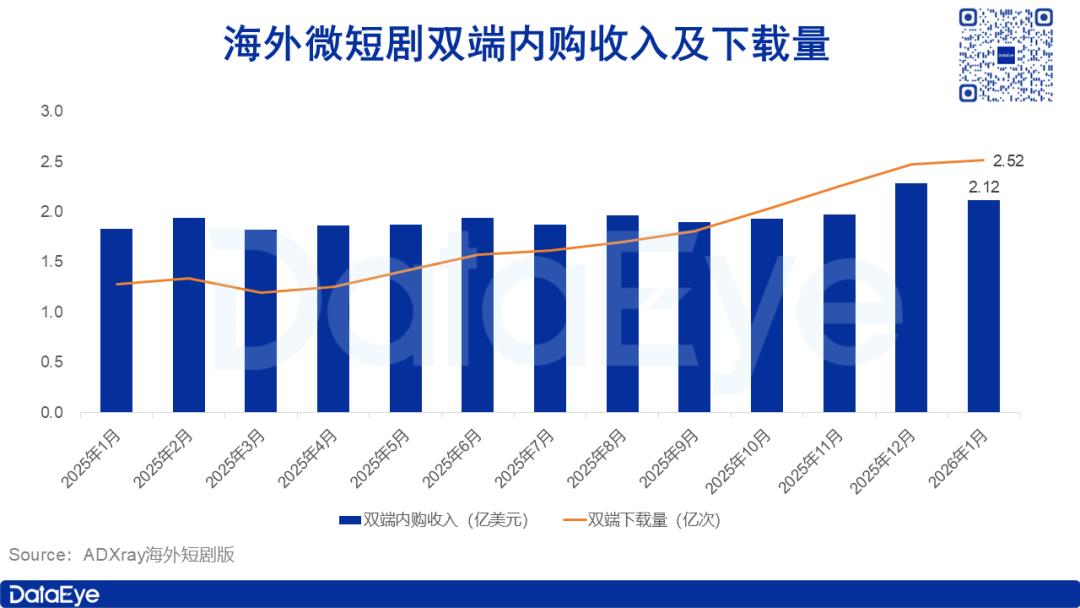
Group 1: Market Overview - In January 2026, the overseas micro-short drama app market saw a total download of approximately 252 million, a slight month-on-month increase of about 2% compared to December 2025. However, the estimated in-app purchase revenue was around $212 million, reflecting a month-on-month decline of about 8%, indicating a slowdown in market growth [1][3]. - The top 20 overseas micro-short drama apps in January 2026 were led by FreeReels, which achieved over 38 million downloads, marking a significant month-on-month increase of 98%. DramaBox and ReelShort followed, each exceeding 24 million downloads with over 10% growth [4][6]. - The revenue rankings among the top players remained stable, with DramaBox surpassing ReelShort to take the top spot, while NetShort climbed to third place. DramaBox's in-app purchase revenue was approximately $34.02 million, a 4% increase month-on-month [7][9]. Group 2: Regional Insights - The United States led the overseas micro-short drama market with over $68 million in revenue, accounting for 37% of the market share, although this represented a 4 percentage point decrease from December. Japan, the UK, South Korea, and Brazil followed, each contributing around 3% [10][13]. - In terms of download volume, India dominated with over 54 million downloads, followed by Indonesia with over 35 million and Brazil with over 26 million. The combined contribution of these three markets accounted for nearly 50% of total downloads [10][15]. Group 3: Advertising and Investment Trends - In January 2026, the overseas micro-short drama market saw an advertising material deployment of approximately 2.879 million sets, a slight increase of 2% month-on-month, marking a record for monthly material deployment [17]. - The number of active micro-short drama apps decreased to 905, reflecting an 18% month-on-month decline, indicating a potential market consolidation phase [18][20]. - The investment in IAP, IAA, and IAAP models showed a downward trend, with IAA products experiencing the largest decline, suggesting a shift towards free and hybrid monetization models as the core development direction in the overseas micro-short drama industry [24]. Group 4: Content Trends - In January 2026, female-oriented content accounted for 61% of the material deployment in the overseas micro-short drama market, while male-oriented content accounted for 39%. Emotional themes led the deployment with a 36% share, followed by urban themes at 16% and revenge themes at 14% [25][27]. - The top apps in terms of advertising material deployment included DramaWave and FreeReels, with DramaWave leading with over 500,000 sets deployed [28][29].
财经观察:好莱坞为何向中国短剧找“灵感”?
Huan Qiu Shi Bao· 2026-02-04 22:46
Core Insights - Hollywood is experiencing a structural decline due to cost overruns, strikes, changing consumer habits, and global competition, while Chinese short dramas are gaining traction in the North American market as a potential lifeline for some Hollywood professionals [1] - The rise of short dramas is attributed to a systematic industrial capability that captures fragmented demand, shifting production from "inspiration-driven" to "data-driven" [1] Industry Challenges - Traditional film industry faces significant challenges, with Disney reporting a 7% year-over-year decline in adjusted earnings per share, driven by soaring production costs and a struggling traditional television business [2] - The number of television script orders has decreased by about 25% since 2022, and employment for television writers has dropped by 42% from peak levels [6] Emergence of Short Dramas - Short dramas, characterized by rapid production cycles and low budgets, are becoming a crucial employment pillar for Hollywood professionals facing layoffs due to industry cutbacks [3][6] - Chinese platforms like ReelShort and DramaBox are expanding in the U.S., with ReelShort projected to generate approximately $1.2 billion in revenue by 2025, reflecting a 119% year-over-year growth [3] Changing Consumer Behavior - American audiences are increasingly favoring social media as their primary source of news and entertainment, surpassing traditional television for the first time [7] - Short dramas cater to modern viewing habits, providing quick emotional satisfaction and aligning with the attention spans of mobile device users [7] Production Methodology - The production of short dramas is driven by data analytics, allowing creators to quickly replicate successful elements and adapt to viewer preferences [8][11] - The flexibility and data-driven approach of Chinese short drama production contrasts with Hollywood's traditional, slower production methods [11] Market Potential - The success of short dramas highlights a long-ignored market demand for low-cost, immediate, and fragmented entertainment, which traditional media has struggled to address [10] - Analysts suggest that traditional entertainment companies could leverage short dramas to develop independent series or promotional content to drive viewers to longer formats [8] Industry Adaptation - Hollywood is recognizing the potential of short dramas, with many actors and writers transitioning to this format in search of new opportunities [6] - The industry is urged to learn from the systematic and market-responsive production methods of Chinese counterparts to remain competitive [8][10]

中国短剧掀起“出海”浪潮
Huan Qiu Wang· 2026-02-02 07:30
Core Insights - The rise of short video formats, particularly "short dramas," is significantly impacting traditional media landscapes, especially in Latin America, where this new entertainment form is experiencing explosive growth [1][2] Group 1: Market Trends - Sensor Tower reports that global downloads of short drama platforms surged by 186% year-on-year in Q4 2025, reaching 733 million, surpassing the combined downloads of Netflix and Disney+ at 658 million [2] - Latin America is identified as the fastest-growing market for short dramas, with downloads of the top 20 short drama apps increasing by approximately 402% in 2025, following a staggering 4300% growth in 2024 [2][4] Group 2: Consumer Behavior - The appeal of short dramas lies in their ability to provide immediate emotional stimulation with low barriers to entry, making them particularly suitable for consumers accustomed to fast-paced content on platforms like TikTok and Instagram Reels [1][4] - The traditional narrative style of short dramas aligns well with the popular "telenovelas" in Latin America, facilitating easier acceptance among local audiences [4] Group 3: Economic Factors - The economic environment in Latin America supports the growth of short dramas, with an estimated revenue increase of 9.1% from 2024 to 2025, significantly outpacing the U.S. growth rate [4] - The expanding middle class and the digitalization of services like retail and ride-hailing are driving demand for short video streaming [4] Group 4: Competitive Landscape - Netflix has also seen rapid growth in Latin America, with its revenue from the region increasing the fastest among its global markets [5] - Experts believe that short dramas do not pose a direct threat to established players like Netflix, as they target different audiences and have distinct revenue models, primarily relying on advertising and pay-per-episode [5] - Omdia estimates that total revenue for all non-Chinese short drama streaming platforms will reach $3 billion by 2026, which is significantly lower than Netflix's quarterly revenue of $12 billion [5]


2026短剧出海:淘汰赛加速,谁主沉浮?
3 6 Ke· 2026-01-27 10:22
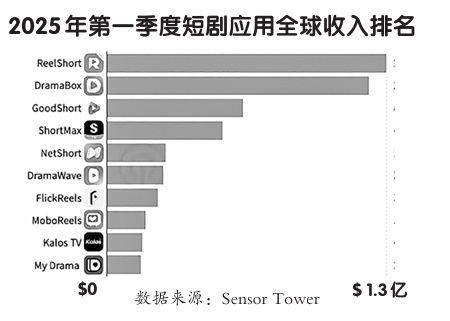
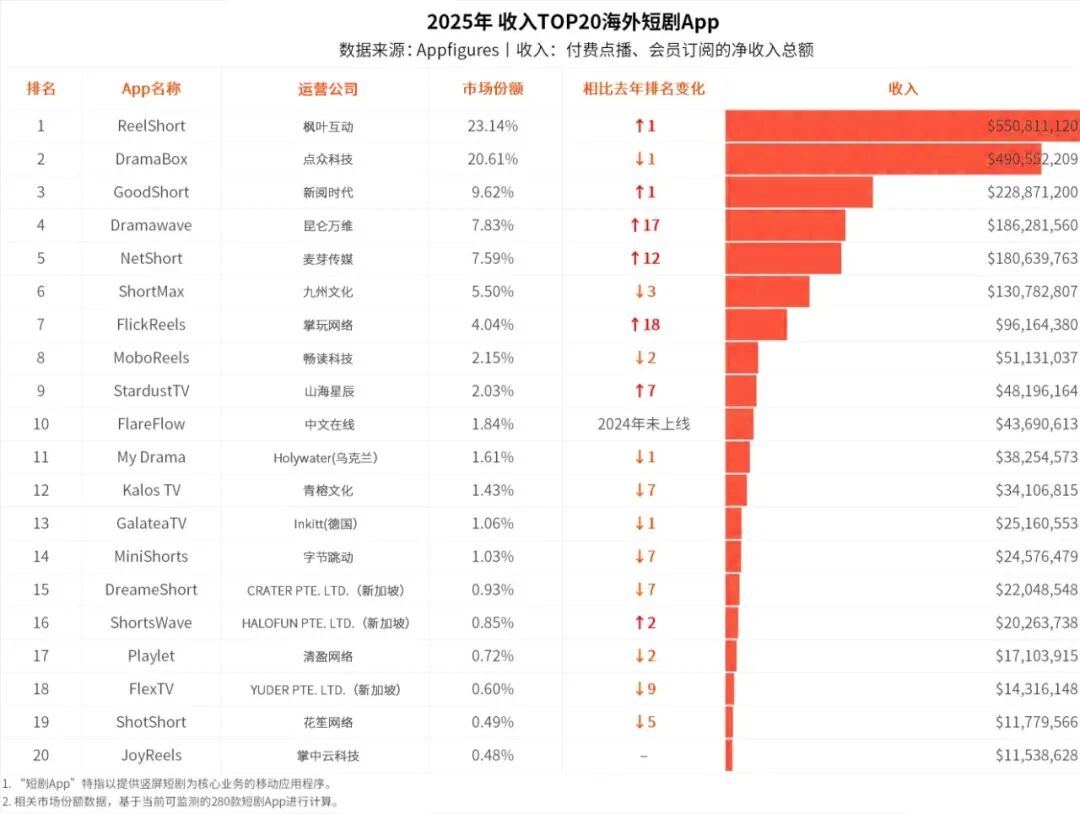
Core Insights - The short drama industry is experiencing explosive growth in overseas markets, with significant revenue potential, but faces challenges such as high project failure rates and reliance on translated content [1][2][3] Market Overview - The global content market has immense potential, with 90% of it located overseas, and the short drama sector is projected to reach $3.6 billion in 2025, a 126% increase year-on-year [1][2] - The overseas short drama market is significantly smaller than the domestic market, with revenues estimated at $2-2.5 billion compared to approximately $100 billion in China [2][3] Competitive Landscape - Major players like ReelShort, DramaBox, and GoodShort dominate the revenue rankings, while new entrants like PineDrama and PikoShow are emerging [2][7] - The competitive landscape is shifting as local and international players enter the market, reducing the dominance of Chinese companies [7][8] Revenue and User Engagement - In 2025, the top overseas short drama apps generated substantial revenues, with ReelShort leading at approximately $550 million [4] - The user engagement metrics show that the majority of revenue is concentrated in the U.S., with emerging markets like Southeast Asia and Latin America showing low penetration rates [3][25] Supply and Demand Discrepancy - There is a significant supply-demand gap in the overseas market, with only about 300 new short dramas produced annually, while demand is estimated to be in the thousands [5][6] - The reliance on imported content is high, with 80-90% of overseas short dramas being adaptations of Chinese works [5][6] Business Model and Profitability - The industry is characterized by a mix of monetization strategies, including IAA (In-App Advertising) and IAP (In-App Purchases), but many platforms are struggling with profitability [5][11] - A significant portion of short drama projects (80-90%) fail to break even, leading to a situation where revenue growth does not translate into profits [11][12] Cultural Adaptation Challenges - The industry faces challenges in cultural adaptation, with many platforms relying on formulaic adaptations that do not resonate with local audiences [13][14] - Successful local players, such as MyDrama, are emerging by creating content that aligns with local cultural preferences, avoiding the pitfalls of cultural discount [14] AI and Future Trends - AI is expected to play a crucial role in transforming content production, with the market for AI-driven short dramas projected to grow significantly [16][17] - The cost of producing AI content is decreasing, which may lead to increased competition and innovation in the sector [18] Regional Growth Opportunities - The Middle East is identified as a rapidly growing market for short dramas, with significant increases in downloads and revenue [21][23] - Cultural and market dynamics in regions like the Middle East present both opportunities and challenges for content creators [26][27]
字节短剧再出海,能复制红果逆袭奇迹吗?
3 6 Ke· 2026-01-23 10:46
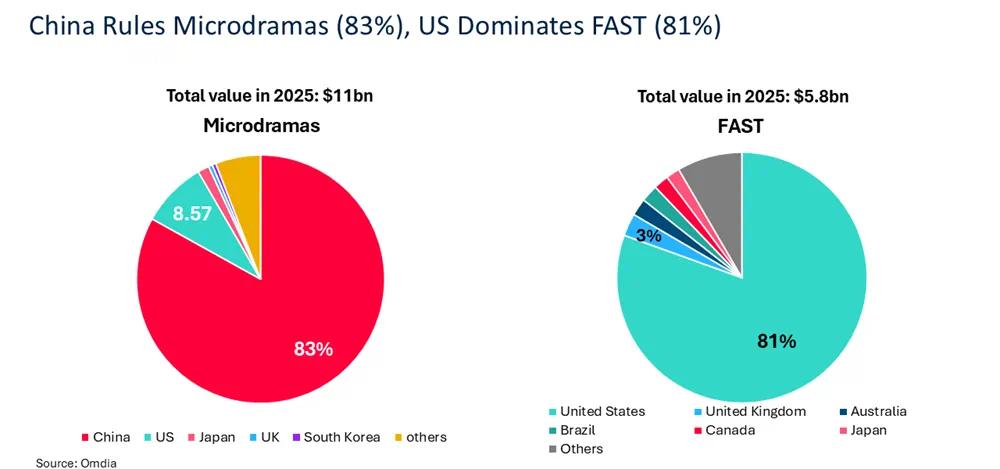
Core Insights - TikTok has launched a new short drama app called PineDrama, currently in testing phases in the US and Brazil, aiming to capture a share of the rapidly growing global short drama market, which is valued at over $10 billion annually [1][2] - The app features a user-friendly interface similar to TikTok, offering free, ad-free content, and focuses on engaging narratives primarily targeting female audiences [2][3] Market Opportunity - The global short drama market is projected to exceed $11 billion by 2025, with a double-digit growth rate, making it an attractive opportunity for platforms seeking expansion [2][9] - The US market is identified as a prime target due to its high user willingness to pay and established subscription models, alongside a mature production environment conducive to short drama content [12] Competitive Landscape - PineDrama enters a competitive arena dominated by ReelShort and DramaBox, which together hold nearly 46% of the overseas short drama market revenue as of early 2025 [14] - These competitors have established strong content creation and distribution networks, leveraging insights into audience preferences and emotional engagement to create compelling narratives [15][16] Strategic Importance - The introduction of PineDrama is seen as a strategic move to enhance TikTok's content ecosystem, providing a deeper narrative experience that can increase user engagement and retention [3][4] - By launching an independent app, TikTok aims to attract core users interested in short dramas, setting the stage for future monetization opportunities [6] Previous Attempts - TikTok's parent company, ByteDance, has previously attempted to penetrate the short drama market in Japan and Southeast Asia with mixed results, highlighting the challenges of local content adaptation [7][8] - Past failures, such as the PikoShow in Japan, were attributed to a lack of cultural resonance and competitive content offerings [7] Future Outlook - The success of PineDrama will depend on its ability to navigate a mature market with established players, focusing on localized content and user engagement strategies [16] - The competition will not solely revolve around user acquisition but will also hinge on content localization and operational efficiency [16]
数娱工场 | 产值已达40亿美元、“AI制片”入局,2026海外短剧或迎“剧”变时刻?
Xin Hua Cai Jing· 2026-01-21 11:13
Core Insights - The overseas micro-short drama market is experiencing significant growth, with a projected market size of $4 billion by 2025, expected to exceed $5 billion by 2026 [2][3] - Monthly active users have surpassed 100 million, indicating a strong potential for future growth in user acquisition [2][3] - Major platforms like TikTok are accelerating their presence in the market, with the launch of dedicated short drama applications [1][2] Market Performance - The estimated download volume for overseas micro-short drama apps is projected to reach 1.855 billion by 2025, representing a year-on-year increase of over 300% [3] - The revenue composition shows that Chinese micro-short drama applications dominate, with in-app purchase revenue expected to be approximately $2.163 billion, accounting for 94.93% of the global market [3] - The top 20 platforms are expected to generate over $1.897 billion in in-app purchase revenue, indicating a highly concentrated market [4] Competitive Landscape - The market is witnessing a significant increase in advertising spending, with a total of 13.957 million ad materials projected for 2025 [5] - The number of overseas micro-short drama applications has surged from around 200 at the beginning of the year to approximately 1,100 by year-end, reflecting a rapid expansion of participants [5] - The competition is intensifying as both local and international players, including traditional media giants, enter the market [5][6] Challenges and Opportunities - The production and operational costs for short dramas are rising significantly, with overseas production costs potentially increasing up to seven times compared to domestic costs [6] - The industry is transitioning towards a more mature phase, with a focus on high-quality content production and localization to meet diverse cultural demands [7][8] - Innovations in AI technology are seen as a potential solution to address production capacity and cost challenges, with expectations for breakthroughs in the "AI+" era [9]

“短剧出海”下半场,迎来效率和生态的较量
3 6 Ke· 2026-01-20 02:40
Core Insights - The short drama segment in China's entertainment market is experiencing significant growth, with a market value exceeding 100 billion yuan, nearly double the domestic box office revenue of 51.83 billion yuan in 2025 [1] - The industry is transitioning from a focus on quantity to quality, with an emphasis on high production values and innovative content [1] - The competition is intensifying, leading to a "winner-takes-all" effect, where resources are increasingly concentrated among leading players [1] Industry Growth and Market Dynamics - In 2025, China's overseas short drama market revenue surged to $2.38 billion, with downloads exceeding 1.21 billion, reflecting year-on-year growth rates of 263% and 135% respectively [2] - The top three platforms, ReelShort, DramaBox, and GoodShort, collectively hold over 53% of the market share, indicating a high market concentration [2] Regional Market Insights - North America remains the core profit region, contributing over 60% of overseas revenue, while Southeast Asia holds the highest market share at approximately 35% [4] - The appeal of Chinese short dramas is growing globally, with successful penetration into markets like the U.S., which has strong user payment capabilities [4] Challenges and Competition - Despite rapid growth, challenges such as content homogenization, high costs, and insufficient localization are becoming more pronounced [6][8] - The number of companies competing in the overseas market has decreased significantly, indicating a shift towards oligopolistic competition [6] AI's Role in Industry Transformation - AI is becoming a crucial driver for efficiency in the short drama export sector, significantly reducing translation costs and production timelines [9][11] - Platforms are increasingly relying on AI for translation, with some reporting that AI can reduce translation time from two days to three hours [11] Future Trends and Strategic Shifts - The industry is expected to evolve from a focus on standalone hits to nurturing long-term IPs and brand-driven content [16] - The competition landscape is shifting towards public platforms like TikTok and YouTube, which are enhancing their short drama distribution incentives [18]

Sensor Tower:2025年全球短剧内购收入突破28亿美元
Bei Jing Shang Bao· 2026-01-14 04:46
Group 1 - The core viewpoint of the articles highlights the strong performance of non-gaming mobile applications in Q4 2025, driven by seasonal demand and the success of cross-border e-commerce, short videos, and AI applications [1][2] - ByteDance's TikTok and CapCut dominated the revenue charts, showcasing the effectiveness of overseas applications in capitalizing on seasonal traffic [1] - Global in-app purchase revenue for short video applications exceeded $2.8 billion, marking a year-on-year increase of 116%, with short video apps accounting for a significant portion of the top 20 non-gaming applications by overseas revenue [1] Group 2 - Kunlun Wanwei's FreeReels saw a remarkable download increase of approximately 580%, ranking 7th in downloads, while ShortMax's downloads surged over 130% [2] - ByteDance's AI applications, including Dola (Cici, the overseas version of Doubao), experienced a download growth of 98%, and Gauth's downloads increased by 218% [2] - Xiaomi's system-level tool applications captured nearly one-third of the active user rankings, with Temu surpassing 760 million global monthly active users, and AliExpress experiencing a 5.5% increase in active users in Q4 [2]