iX3

Search documents
宝马2025年全球销量微增0.5%,中国市场连续两年下滑成最大挑战
Xin Lang Cai Jing· 2026-01-14 09:22
Core Insights - BMW Group reported a slight increase in global sales for 2025, delivering 2,463,715 vehicles, marking a 0.5% year-on-year growth, halting the decline seen in 2024 [2] - However, the Chinese market, BMW's largest single market, experienced a significant decline for the second consecutive year, with sales dropping 12.5% to 625,527 vehicles [2][5] - The contrasting performance across regions highlights the challenges faced by traditional luxury brands in adapting to the rapidly evolving automotive landscape, particularly in China [2][7] Global Performance Overview - BMW's global performance in 2025 can be summarized as "overall stabilization with regional differentiation," with a total of 668,000 vehicles delivered in Q4, a 4.1% decline year-on-year, but still achieving a 0.5% growth for the year [3] - The European market was a key driver, with sales reaching 1,016,360 vehicles, a significant increase of 7.3%, and electric vehicle sales in Europe surged by 28.2%, accounting for about 25% of total sales in the region [3][4] Regional Sales Breakdown - In the Americas, BMW's sales totaled 508,200 vehicles, reflecting a 5.7% increase, with the U.S. market contributing 417,638 vehicles, up 5% [4] - In contrast, the Asian market, particularly China, saw a decline, with total sales in Asia at 871,000 vehicles, down 9.3%, and the Chinese market's performance dragging down overall results [5][6] Electric Vehicle Transition - BMW's global electric vehicle sales reached 642,000 units in 2025, a growth of 8.3%, representing 26% of total sales, with pure electric vehicle sales at 442,000 units, up 3.6% [5] - The electric vehicle penetration rate in China was approximately 26%, lower than the average for luxury vehicles in the Chinese market, indicating challenges in competitiveness [5][7] Challenges in the Chinese Market - The decline in sales in China is attributed to increased competition from local brands like NIO and BYD, which are rapidly gaining market share in the high-end segment [7][8] - BMW's electric vehicle offerings in China, based on traditional fuel platforms, are perceived as less competitive compared to local brands, which are more aligned with consumer expectations for technology and performance [7][8] Strategic Responses - In response to the challenges, BMW plans to launch around 20 new models in China by 2026, including the new generation BMW iX3, designed specifically for the Chinese market [8][9] - Additionally, BMW has significantly reduced the official prices of 31 models in early 2026, with reductions exceeding 10% for many models, aiming to enhance market penetration and consumer appeal [9]


Automakers Replace Drivers With Software at CES
PYMNTS.com· 2026-01-07 22:16
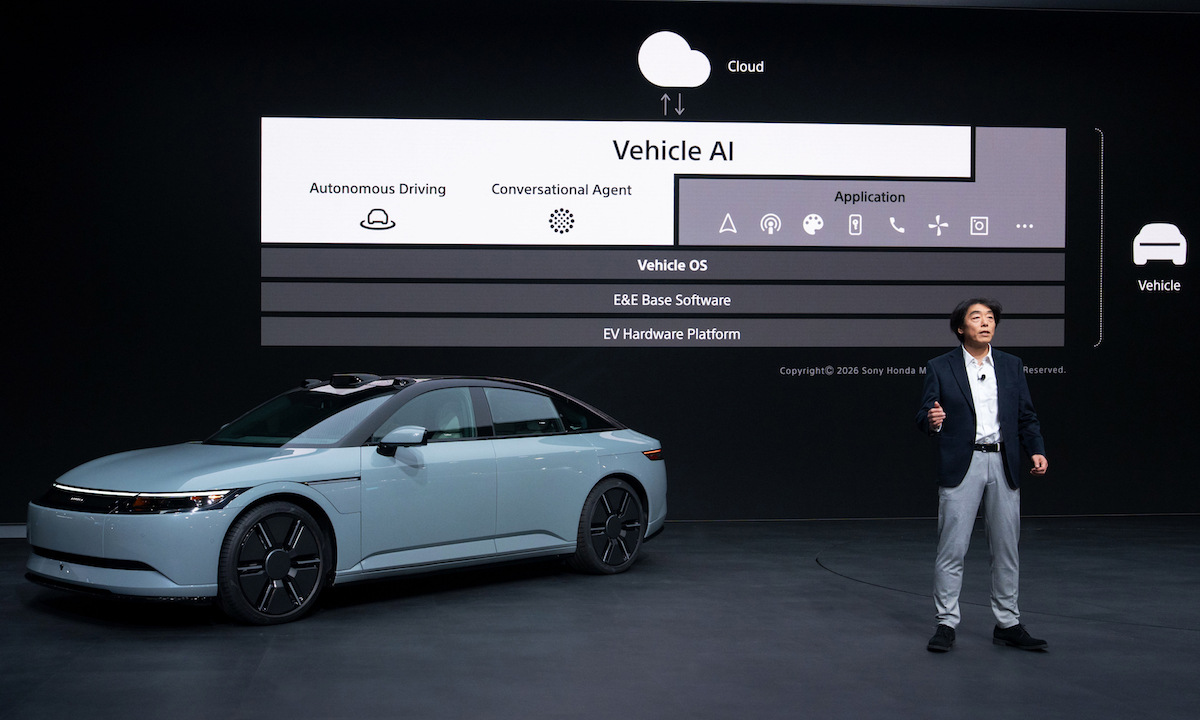
Core Insights - The automotive industry is shifting focus from driver-assist features to software that manages vehicle control, anticipating a future where humans may not always drive [1][5]. Group 1: Software and Control Systems - Nvidia introduced Alpamayo, a system designed to handle ambiguous driving situations by evaluating context and making decisions autonomously, moving beyond traditional driver-assistance systems [3][4]. - Alpamayo will be implemented in production vehicles, with Mercedes-Benz as an early adopter, indicating a shift towards software that resolves edge cases independently [5]. - Mercedes-Benz showcased its MBUX platform, which integrates navigation, driver assistance, and vehicle controls into a single system, reducing the need for manual driver input [6][7]. Group 2: Voice Interaction and User Experience - BMW presented its iX3 with an expanded conversational interface integrated with Amazon Alexa+, allowing drivers to use natural language commands for various functions [8][9]. - BMW's approach emphasizes voice interaction as the primary control method, reflecting a design that accommodates fluctuating driver attention [9]. Group 3: New Vehicle Designs - Sony Honda Mobility unveiled a new electric SUV prototype, the Afeela 1, which features a full-width digital display and is designed as a mobility and entertainment space [11][12]. - The Afeela 1 is expected to have a range of approximately 300 miles and aims to create an environment where occupants interact with screens rather than actively driving [12][13]. - Sony Honda's design integrates the assumption of reduced driver engagement directly into the vehicle's architecture, contrasting with other companies that layer software onto existing designs [14].


CES 2026前瞻:英伟达或重塑物理AI,中美韩机器人齐“秀肌肉”
美股研究社· 2026-01-04 11:22
Core Viewpoint - The 2026 Consumer Electronics Show (CES) is anticipated to showcase significant advancements in technology, particularly in AI, robotics, and consumer electronics, with a focus on cost reduction and efficiency improvements [7][10]. Group 1: Chip Industry Strategies - NVIDIA is shifting its focus away from traditional consumer graphics cards, emphasizing "Physical AI" to extend AI computing capabilities into robotics and industrial applications, with potential delays in the RTX 50 Super series due to high GDDR7 memory prices [8][14]. - AMD is adopting a steady upgrade strategy, planning to launch the Ryzen 9000 series for desktops and Ryzen AI 400 series for mobile devices, targeting workstation users with advanced features [14]. - Intel is set to release the Core Ultra Series 3, which includes approximately 14 SKUs, with the flagship model featuring 16 cores and a maximum frequency of 5.1GHz, aiming to regain market confidence in its advanced manufacturing capabilities [14]. Group 2: Robotics and AI Developments - 2026 is seen as a pivotal year for humanoid robots, with a focus on practical applications and real-world testing [10]. - The competition among countries in robotics is intensifying, with China focusing on cost control and mass production, while the U.S. showcases technological benchmarks through companies like Boston Dynamics [15]. - South Korea is forming alliances to enhance its robotics capabilities, exemplified by the "K-Humanoid" alliance led by Rainbow Robotics, showcasing industrial-grade humanoid robots [15]. Group 3: XR and Consumer Electronics - The XR market is currently in a digestion phase following the release of Apple Vision Pro, with CES 2026 expected to mark the beginning of a counterattack from the Android camp [12]. - Samsung is debuting the Galaxy XR glasses, which integrate advanced AI features and aim to compete with Apple's ecosystem [16]. - Chinese companies are leading the trend of lightweight AI glasses, with products like the Quark AI Glasses S1 and Rokid Glasses focusing on practical applications such as real-time translation and AR navigation [16]. Group 4: Automotive Industry Innovations - The automotive sector is transitioning from "software-defined" to "AI-defined," with a competitive arms race in chip technology [13][21]. - Companies like Geely and Great Wall are showcasing innovations in vehicle architecture, while BMW is presenting its iX3 based on the Neue Klasse architecture, integrating advanced technologies [21]. Group 5: Display and Hardware Innovations - Lenovo is introducing innovative hardware solutions, including AI-driven automatic rotating screens and rollable laptops, addressing the balance between large displays and portability [22]. - Display technology advancements are highlighted by TCL and Hisense, focusing on Mini-LED technology and AI image processing capabilities to enhance picture quality [22].

12款新车展望2026:中国汽车市场开启“耐力赛” | 界面预言家⑧
Xin Lang Cai Jing· 2025-12-31 09:15
Group 1 - The automotive market is transitioning from a high-intensity "sprint" to a "marathon" mode by 2026, with electric vehicle (EV) growth slowing and consumers becoming more cautious about value and reliability [1] - Consumers are increasingly embracing hybrid and plug-in hybrid vehicles as a "bridge solution" to reduce range anxiety and stabilize purchasing decisions [1] - The supply side is experiencing compressed model development cycles, with a shift towards rapid iteration similar to the Chinese model, making "annual updates" and "mid-cycle facelifts" essential [1] Group 2 - The focus for 2026 is shifting towards addressing "problems" rather than just introducing "new cars," including questions about brand coherence and the ability to maintain consumer trust [2] - The success of the SU7 indicates that a clear product positioning and ongoing conversation can mitigate the disadvantages of late market entry, but the YU9 faces a crowded high-end SUV segment [3][7] Group 3 - The YU9 is expected to target the family flagship market with a three-row layout and reduced range anxiety, but it must adapt its sporty narrative to emphasize comfort and long-distance experience [7] - The Z model from Tengshi aims to rebrand the company by packaging its technological capabilities into a more appealing product narrative, enhancing its market presence [35] Group 4 - The iX3 from BMW is positioned to address how joint venture electric vehicles can differentiate themselves in the Chinese market, focusing on comfort and local adaptations while retaining driving characteristics [47][49] - The second-generation Roadster from Tesla, delayed for nearly nine years, needs to redefine its narrative to maintain its market allure amidst increasing competition in the high-performance electric vehicle segment [51][54] Group 5 - The introduction of large GT and convertible models by Genesis is seen as a brand investment rather than a sales strategy, aiming to elevate brand perception and value in the luxury market [56][59]




宝马集团董事会成员尼古拉·马丁:依然坚持中国市场的核心地位
Xin Hua Cai Jing· 2025-12-15 01:05
Group 1 - BMW Group emphasizes that despite external challenges, the Chinese market and customer demand remain central to its global strategy, driven by the market's size and China's irreplaceable value in BMW's global supply chain [1] - The automotive industry has a complex global division of labor, with BMW sourcing over 36 million components daily from thousands of suppliers worldwide, highlighting the deep interconnection of its global supply chain [1] - BMW is optimizing logistics to mitigate the impact of tariffs and potential disruptions, including pausing some logistics during negotiations and flexibly reallocating resources within its global production network [1] Group 2 - In 2025, the global automotive industry is expected to enter a deep adjustment period, and while BMW maintains resilience in overall sales, it faces challenges in the competitive Chinese market [2] - BMW is committed to the Chinese market and plans to deepen localization efforts to counteract downward trends, recognizing China as not only its largest single market but also a source of global innovation [2] - The efficiency of Chinese partners in the new energy sector is aiding BMW in accelerating its global carbon reduction goals, with the supply chain carbon emissions of the iX3 model reduced by approximately 42% compared to its predecessor [2] Group 3 - BMW is actively promoting the construction of open data ecosystems like Catena-X, leveraging AI technology for quality and carbon footprint management across the entire industry chain [3] - Strategic partnerships with companies like Baidu, Tencent, and Huawei are enhancing BMW's global digital governance, capitalizing on China's advantages in digital infrastructure and AI application scenarios [3] - BMW aims to retain its "pure driving pleasure" by collaborating deeply with China in supply chain, green initiatives, and digitalization, while rejecting simple external vehicle architecture purchases for rebranding [3]
中产特供「大车」挤满广州车展,接下来还能卷什么?
Xin Lang Cai Jing· 2025-11-23 13:25
Core Insights - The Guangzhou Auto Show showcases the latest products and technologies from various automakers, marking the end of the year and setting trends for the next year [1] - The event featured 1,085 vehicles, with 93 new car launches, and 58% of the vehicles being new energy cars, indicating a significant shift towards electrification [1] - Traditional luxury brands are adapting to market trends by introducing electric models, while the demand for larger vehicles, particularly SUVs, is on the rise [2][4] Industry Trends - The market for new energy passenger vehicles in China saw a 24% year-on-year increase in sales for the first ten months of 2025, with a market penetration rate exceeding 52.9% [1] - The SUV market share reached 50.7% in October 2025, surpassing that of sedans, with a 9.1% year-on-year increase in retail sales for SUVs [4] - The demand for larger vehicles is driven by changing family structures and consumer preferences for space and comfort, particularly among families with multiple children [6][7] Company Strategies - Automakers are increasingly focusing on producing larger vehicles, as evidenced by the significant presence of large SUVs and MPVs at the auto show [4][5] - Companies like BYD and GAC Group are showcasing their ambitions with dedicated exhibition spaces, highlighting their commitment to innovation and market presence [1] - The profitability of larger vehicles is appealing to manufacturers, as they can accommodate more optional features, leading to higher profit margins [8][9] Consumer Behavior - The shift towards larger vehicles is influenced by a change in consumer mindset, where buyers prioritize space and comfort over basic transportation needs [6][7] - The age demographic of consumers purchasing larger vehicles is primarily between 35 and 45 years old, reflecting a trend towards family-oriented purchases [6] - The market is experiencing a "K-shaped" differentiation, where high-net-worth individuals are seeking premium vehicles, while average consumers focus on practicality [7] Future Outlook - The auto industry is facing challenges as the tax exemption for new energy vehicles is set to expire, potentially dampening demand for larger vehicles [11] - Companies must differentiate themselves in an increasingly homogeneous market, with a focus on unique features and technology to attract consumers [10] - The success of larger vehicles is contingent on brand strength, as weaker brands may struggle to gain consumer trust in producing high-quality larger models [11]
奔驰CEO:竞争高强度,我们在中国可不“天真”
Guan Cha Zhe Wang· 2025-11-21 00:51
Group 1 - The core viewpoint is that German automakers, particularly Mercedes-Benz, face significant challenges in the Chinese market due to intense competition from over 100 local manufacturers, and they are not naive about the difficulties ahead [1][3] - Mercedes-Benz's sales in China dropped by 27% in the third quarter, contrasting with a slight increase in European sales, highlighting the tough competition and external pressures such as increased import tariffs from the U.S. [3] - The automotive industry is a key area of investment for Germany in China, with manufacturers expected to invest approximately 4.2 billion euros from 2023 to 2024, marking a 69% increase [6][7] Group 2 - BMW has invested around 3.8 billion euros in a battery project in Shenyang, making China its largest R&D hub outside Germany, and is exporting electric SUVs produced in China back to Europe [7] - The Chinese passenger car market saw sales of 10.9 million units in the first half of the year, significantly outpacing Europe's 6.8 million units, with new energy vehicles in China reaching 5.524 million, more than three times that of Europe [7] - The German automotive industry is adapting to a competitive landscape in China, with companies like Mercedes-Benz and BMW focusing on cost reduction and strategic partnerships to maintain their market positions [4][5]
Bayerische Motoren Werke Aktiengesellschaft (BMW) Financial Performance Analysis
Financial Modeling Prep· 2025-11-05 17:05
Core Insights - BMW reported earnings per share (EPS) of $3.22, exceeding the estimated $3.17, while revenue was $37.9 billion, falling short of the expected $44.3 billion [1][5]. Financial Performance - The company anticipates strong demand for its new iX3 model in 2026, which is expected to drive future growth despite the current revenue miss [2]. - BMW's profit margin in its core car business during the third quarter was higher than expected, contributing to optimism about meeting full-year targets due to reduced costs [2]. Market Challenges - BMW faces challenges such as import tariffs in the U.S. and EU, as well as intense competition in the Chinese market, but is navigating these hurdles effectively [3]. - The company's financial metrics include a price-to-earnings (P/E) ratio of 8.46 and a price-to-sales ratio of 0.35, indicating reasonable valuations for its earnings and sales [3]. Financial Health - The enterprise value to sales ratio stands at 0.22, reflecting the company's valuation in relation to its sales [3]. - An enterprise value to operating cash flow ratio of 3.19 suggests healthy cash flow generation relative to its enterprise value [4]. - The earnings yield of 11.83% indicates a strong return on investment for shareholders, while a current ratio of 1.15 shows a positive indicator of short-term financial stability [4].
BMW Expects Strong Demand in 2026 After Earnings Boosted by Lower Costs
WSJ· 2025-11-05 07:08
Core Viewpoint - The carmaker is on track to meet its full-year targets, driven by strong demand for the new iX3 model, which is expected to contribute to growth next year [1] Group 1 - The company anticipates strong demand for the new iX3 model [1] - The growth from the iX3 model is expected to positively impact the company's performance next year [1]
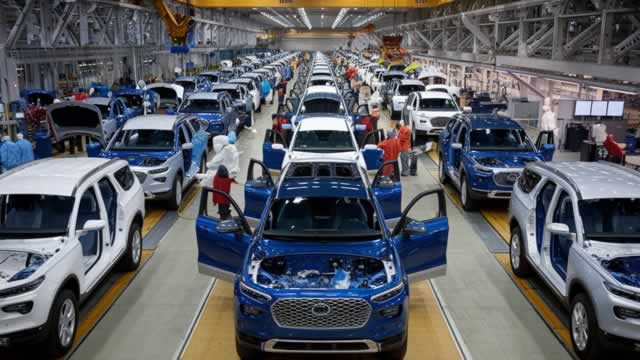
BMW to start iX3 production at plant in Hungary's Debrecen from next month
Reuters· 2025-09-17 05:38
Group 1 - The core point of the article is that BMW will commence series production of its iX3 electric model at a new facility in Debrecen, Hungary, starting at the end of next month [1] Group 2 - The new plant in Hungary represents BMW's commitment to expanding its electric vehicle lineup and production capabilities [1] - The iX3 is part of BMW's strategy to enhance its presence in the electric vehicle market [1] - This move aligns with the broader industry trend towards electrification and sustainability in automotive manufacturing [1]