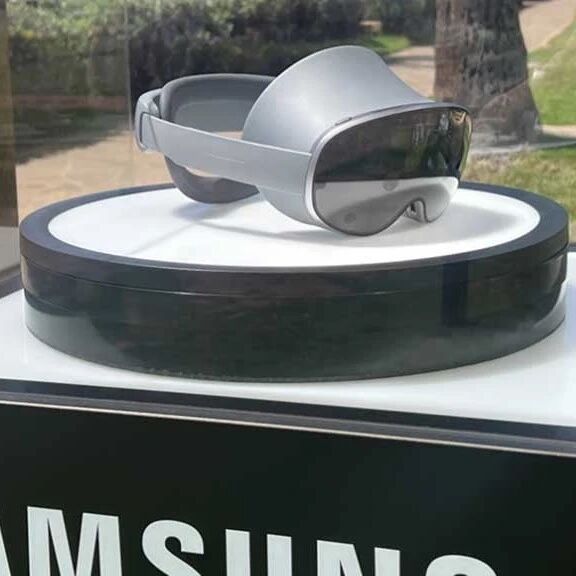
Galaxy XR头显

Search documents
伊朗再次发动袭击,金正恩正式将韩国定义为头号敌国,影石回应大疆侵权起诉
新财富· 2026-03-24 08:10
Major Events Observation - Iran launched a new round of missile attacks on Israel on March 24, using multiple types of precision-guided weapons that reportedly breached several of Israel's missile defense systems. The Israeli Defense Forces are currently conducting search and rescue operations in the affected southern areas, with no casualties reported yet [1] North Korea's Position - On March 23, North Korean leader Kim Jong-un officially designated South Korea as the number one enemy of North Korea, emphasizing that the relationship is now one of hostility rather than kinship. This marks a further escalation in the already tense situation on the Korean Peninsula, with North Korea taking measures to cut off communication and cooperation with South Korea [2] U.S. Military Deployment - The Pentagon is considering a military deployment plan that involves sending a rapid response force of approximately 3,000 troops from the 82nd Airborne Division, potentially to seize Iran's oil export hub on Khark Island. This unit is capable of being deployed globally within 18 hours, although the plan is still under consideration and details have not been finalized [3] U.S.-Iran Negotiations - The White House stated on March 23 that it would not confirm whether U.S. officials would engage in further talks with Iran or intermediaries this week, citing the sensitivity of the diplomatic discussions and the ongoing changes in the situation [4] U.S. Business Delegation to China - On March 23, a delegation of 14 U.S. business executives met with China's Minister of Commerce, expressing support for China's 14th Five-Year Plan. Nearly 60% of the U.S. companies represented focus on advanced manufacturing and modern services, aligning closely with China's key development areas [5] DJI vs. YingShi Legal Dispute - YingShi Innovation responded to a lawsuit from DJI regarding six patent ownership claims. DJI alleges that patents filed by former employees should belong to them, while YingShi asserts that the patents were developed during the employees' tenure at YingShi and are legitimate innovations [6] AI Industry Developments - OpenAI requested that Google list ChatGPT as a default search engine option on Android devices and web browsers, arguing that its capabilities in information retrieval warrant inclusion in the competitive landscape of search products. This request follows regulatory changes in the UK aimed at increasing search engine choice for users [8] Apple Developer Conference Announcement - Apple announced that its 37th Worldwide Developers Conference (WWDC 2026) will take place from June 9 to June 13, 2026, focusing on AI technology breakthroughs. The event will feature updates to iOS and macOS, with a significant emphasis on an upgraded Siri and cross-device interaction improvements [9] OpenAI's Dependency on Microsoft - OpenAI disclosed in investor documents that its close relationship with Microsoft, which has invested over $13 billion, poses a potential business risk. The company noted that any changes in this partnership could adversely affect its business outlook and financial performance [10][11] Samsung's AR Glasses Launch - Samsung plans to launch its first AR smart glasses, Galaxy Glasses, later this year, which will complement the Galaxy XR headset. The glasses will feature two models, standard and Ultra, with capabilities for dynamic information overlay and integration with Android applications [12]


谷歌:明年发布首款搭载Gemini的智能眼镜
财富FORTUNE· 2025-12-12 13:02
Core Viewpoint - Google is re-entering the smart glasses market with a focus on integrating its AI model, Gemini, into user experiences rather than merely replicating smartphone functionalities [2] Product Overview - Google introduced two types of smart glasses: a "screenless assistant" model that features a lightweight frame with built-in speakers, microphones, and cameras, allowing users to interact with Gemini for information about their surroundings [3] - The second model, "display AI glasses," incorporates a display within the lenses to provide augmented reality features, enabling users to see digital information in real-world contexts, such as navigation prompts or translation subtitles [3] Integration with XR Ecosystem - Google emphasized the importance of seamless hardware integration into daily life, aiming for a balance between weight, style, and immersion for users [4] - Updates to the broader Android XR ecosystem were announced, including a "PC Connect" feature that allows users to connect headsets to Windows computers, similar to Apple's Vision Pro capabilities [4] - A "travel mode" was introduced for business travelers to stabilize visual experiences during flights, along with a "Likeness" feature that generates realistic digital avatars for video calls [4] Future Developments - Google previewed "Project Aura," a wired XR headset developed in collaboration with startup XREAL, designed for practical daily use cases, such as viewing recipe videos while cooking or accessing step-by-step visual guides during repairs [5]

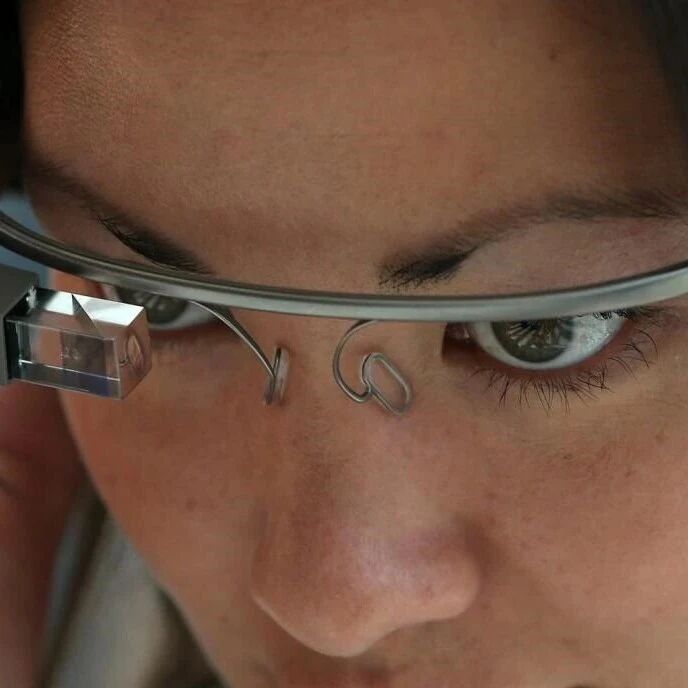
AI眼镜大战升温!谷歌(GOOGL.US)首款产品搭载Gemini明年硬撼Meta(META.US)、苹果(AAPL.US)
智通财经网· 2025-12-08 23:51
Core Insights - Google is developing two types of AI glasses to compete with Meta's existing models, one with a screen and another focused on audio features, with a launch planned for 2026 [1] - The new products and the Android XR operating system represent a more refined strategy compared to the previous Google Glass [2] - The glasses will connect wirelessly to smartphones, allowing them to handle most processing tasks, making the glasses lightweight and resembling regular eyewear [2] Group 1 - Google aims to balance weight, style, and immersion in its AI glasses, ensuring software experiences perform well across both formats [3] - The glasses will support augmented reality overlays for applications like Google Maps and Google Meet, with the dual-lens design offering a larger virtual display [2][3] - The Aura project glasses, developed in collaboration with Xreal, will run on the Android XR system and require an external battery pack, featuring a 70-degree field of view [3] Group 2 - Google and Samsung are responding to early feedback on the $1,800 Galaxy XR headset by introducing a "travel mode" for easier use while in motion [4] - A new PC Connect application will allow Windows PCs to connect to the Galaxy XR, enabling users to mirror their laptop screens in a virtual environment, expanding the headset's appeal [4] - Google is also launching a new realistic virtual avatar style for Galaxy XR users, allowing them to scan their faces for accurate representation in video calls [5]

外媒:阿里巴巴发布搭载千问的夸克AI眼镜,进军全球可穿戴设备市场
Huan Qiu Wang· 2025-11-27 12:12
Core Insights - Alibaba has officially entered the AI wearable device market with the launch of its first AI glasses, Quark AI Glasses, priced at 1899 yuan, marking a significant move in a sector dominated by Meta [1][2] Group 1: Product Launch - The Quark AI Glasses integrate deeply with Alibaba's ecosystem products such as Taobao, Alipay, and Gaode, allowing users to perform functions like real-time translation and product comparison [2][3] - Unlike other head-mounted devices from companies like Meta, the Quark AI Glasses resemble ordinary glasses, which may appeal to a broader consumer base [1][2] Group 2: Market Context - The global competition in the AI wearable device market is intensifying, with major tech companies like Meta holding an 80% market share in the VR headset segment [2][3] - Other competitors include Apple's Apple Vision Pro headset and Samsung's Galaxy XR headset, which was released in October and integrates Google's Gemini technology [2]


路透社:阿里巴巴发布搭载千问的夸克AI眼镜,进军全球可穿戴设备市场
Ge Long Hui· 2025-11-27 11:10
Core Insights - Alibaba has officially entered the AI wearable device market with the launch of its first AI glasses, Quark AI Glasses, marking a significant move in a sector dominated by Meta [1] - The starting price for the Quark AI Glasses is 1,899 yuan, and they resemble ordinary glasses, differentiating them from other head-mounted devices [1] - The Quark AI Glasses are deeply integrated with Alibaba's ecosystem products such as Taobao, Alipay, and Gaode, allowing users to perform tasks like real-time translation and product comparison [1] - In early November, Alibaba upgraded its Qianwen AI assistant and launched the Qianwen app, indicating a more aggressive strategy in the consumer AI market [1] - The competition in the AI wearable device sector is intensifying, with major tech companies like Meta, Apple, and Samsung actively participating [1] Company Developments - The Quark AI Glasses represent Alibaba's first foray into the AI wearable device market, showcasing its commitment to innovation in this space [1] - The integration of the glasses with Alibaba's existing services enhances their functionality and user experience, positioning them as a competitive product [1] - The recent upgrade of the Qianwen AI assistant and the launch of the Qianwen app reflect Alibaba's strategic focus on consumer-level AI solutions [1] Industry Context - The AI wearable device market is currently dominated by Meta, which holds approximately 80% market share in the VR headset segment [1] - Other competitors include Apple, which has introduced the Apple Vision Pro headset, and Samsung, which launched the Galaxy XR headset in October, indicating a rapidly evolving competitive landscape [1]
路透社:阿里巴巴正瞄准Meta主导的AI可穿戴设备市场
Zhong Guo Jing Ji Wang· 2025-11-27 11:04
Core Insights - Alibaba has officially entered the AI wearable device market with the launch of its first AI glasses, Quark AI Glasses, marking a significant move in a sector dominated by Meta [1] - The starting price for the Quark AI Glasses is 1,899 yuan, and they resemble ordinary glasses, differentiating them from other head-mounted devices [1] - The Quark AI Glasses are deeply integrated with Alibaba's ecosystem products such as Taobao, Alipay, and Gaode, allowing users to perform tasks like real-time translation and product comparison [1] - In early November, Alibaba upgraded its Qianwen AI assistant and launched the Qianwen app, indicating a more aggressive strategy in the consumer AI market [1] - The competition in the AI wearable device sector is intensifying, with major tech companies like Meta, Apple, and Samsung actively participating [1] Company Developments - The Quark AI Glasses are part of Alibaba's strategy to enhance its presence in the consumer AI market [1] - The integration of the glasses with Alibaba's existing services aims to provide users with enhanced functionalities [1] - The launch follows a significant upgrade to Alibaba's AI assistant, showcasing the company's commitment to advancing its AI capabilities [1] Industry Context - The AI wearable device market is currently dominated by Meta, which holds approximately 80% market share in the VR headset segment [1] - Other competitors include Apple with its Apple Vision Pro headset and Samsung, which recently released the Galaxy XR headset integrated with Google's Gemini [1] - The competitive landscape is characterized by rapid advancements and innovations from various global tech companies [1]
【数字经济周报】TI低功耗Bluetooth? 6.0无线MCU通过Bluetooth SIG认证:数字经济动态事件速览第36期(2025.10.18-2025.10.24)-20251026
GUOTAI HAITONG SECURITIES· 2025-10-26 12:22
Semiconductor Sector Dynamics - TI's low-power Bluetooth® 6.0 wireless MCU has received Bluetooth SIG certification, marking it as the industry's first automotive-grade product series to achieve this milestone[5] - Jiangbolong has launched the industry's first integrated packaging mSSD, enhancing SSD application flexibility and user experience[7] - United Microelectronics Corporation (UMC) has introduced a 55nm BCD platform aimed at improving power efficiency and system integration for next-generation mobile devices and automotive applications[11] Automotive Electronics Sector Dynamics - LoBot has partnered with Swiss PostBus to launch the autonomous driving service "AmiGo" in Switzerland, with initial fleet testing planned for December 2025[14] - Pony.ai and BAIC New Energy have rolled out the 300th unit of the Alpha T5 Robotaxi, showcasing significant advancements in autonomous driving technology[16] - General Motors plans to introduce a "hands-free" autonomous driving system in the Cadillac Escalade IQ by 2028, utilizing a multi-sensor approach for enhanced safety[19] AI Sector Dynamics - Baichuan has released the M2 Plus medical model, significantly reducing the hallucination rate compared to general models, achieving a credibility level comparable to experienced clinicians[21] - RoboSense and ASENSING have formed a strategic partnership to develop multi-modal sensor fusion solutions for robotics, enhancing performance in complex environments[24] - Shengshu Technology has announced the open access of the Vidu Q2 API, enabling high-quality video content creation with emotional expressiveness for advertising and e-commerce[28] Metaverse Sector Dynamics - Samsung has officially launched the Galaxy XR headset, optimized for multi-modal AI, marking a significant step in its XR strategy[32] - Amazon is developing AI smart glasses for delivery drivers to enhance route planning and risk identification, improving service quality[35] - Unity has announced full support for Android XR development in Unity 6, facilitating the creation of immersive applications for the Galaxy XR headset[37] Risk Warnings - There are risks related to market competition in semiconductor, automotive electronics, AI, and metaverse sectors due to rapid growth and increased investment[38] - Potential technological advancements may not meet expectations, impacting overall sector development[39] - Market demand growth may fall short of expectations, affecting the expansion of emerging sectors[40]


行业周报:科技立国,把握算力、存力、AI终端投资机会-20251026
KAIYUAN SECURITIES· 2025-10-26 12:12
Investment Rating - The industry investment rating is "Overweight" [1] Core Insights - The technology sector has rebounded significantly, with the electronic industry index rising by 9.1% during the week of October 20-24, 2025. Notably, consumer electronics increased by 10.0%, and semiconductors rose by 8.5% [4] - The report highlights the focus on domestic technology self-sufficiency as a key goal, which is expected to drive growth in the domestic computing sector and innovation cycles in consumer electronics [7] Market Review - The report notes that major companies such as Micron and Samsung are adjusting their pricing strategies, with Micron halting server chip supplies to China and expected price increases of up to 30% for DRAM and NAND flash memory products in Q4 2025 [6] - The introduction of new AI products by major players like Apple and Samsung is expected to enhance market dynamics, with Apple Intelligence set to enter the Chinese market by the end of 2025 [5] Key Beneficiaries - The report identifies key beneficiaries in the sector, including companies like SMIC, Huahong Semiconductor, Cambricon, Tongfu Microelectronics, Demingli, Jiangbolong, Industrial Fulian, Shenghong Technology, and Luxshare Precision [7]
英伟达拟向OpenAI投资至多1000亿美元:新材料产业周报-20250928
Guohai Securities· 2025-09-28 14:44
Investment Rating - The report maintains a "Recommended" rating for the new materials industry [1]. Core Views - The new materials sector is a crucial direction for the future development of the chemical industry, currently experiencing rapid growth in downstream demand. With policy support and technological breakthroughs, domestic new materials are expected to accelerate their long-term growth. The report emphasizes that "one generation of materials leads to one generation of industries," highlighting the foundational nature of the new materials industry as the material basis for other industries. The report identifies key areas supporting human societal development, including electronic information, new energy, biotechnology, and energy conservation and environmental protection, and aims to continuously explore and track new materials companies with strong upstream supply chains, robust R&D capabilities, and excellent management [5][16]. Summary by Sections 1. Electronic Information Sector - Focus on semiconductor materials, display materials, and 5G materials [6]. - Recent data indicates that global AI IT investment is projected to reach $315.9 billion in 2024, growing to $1,261.9 billion by 2029, with a CAGR of 31.9%. The generative AI market is expected to grow at a CAGR of 56.3%, reaching $607.1 billion by 2029, accounting for 48.1% of total AI market investment [7][24]. 2. Aerospace Sector - Focus on PI films, precision ceramics, and carbon fiber [8]. 3. New Energy Sector - Focus on photovoltaics, lithium-ion batteries, proton exchange membranes, and hydrogen storage materials [10]. 4. Biotechnology Sector - Focus on synthetic biology and scientific services [12]. 5. Energy Conservation and Environmental Protection Sector - Focus on adsorption resins, membrane materials, and biodegradable plastics [14]. Key Companies and Earnings Forecast - The report highlights several key companies with their respective stock prices and earnings per share (EPS) forecasts for 2024, 2025E, and 2026E, along with their price-to-earnings (PE) ratios and investment ratings. For example, Ruihua Tai (688323.SH) has a stock price of 15.73 with an EPS forecast of 0.01 for 2025E and a PE ratio of 1,573.00, rated as "Increase" [17].




三星首款Galaxy XR头显有望配索尼OLEDoS屏
WitsView睿智显示· 2025-09-25 09:53
Core Viewpoint - Qualcomm's Snapdragon Summit showcased Samsung's first Galaxy XR headset, internally codenamed "Infinity," which will utilize the Snapdragon XR2+ Gen 2 platform and features multiple external and internal cameras for eye-tracking capabilities [2][4]. Group 1: Product Details - The Galaxy XR headset is equipped with eight external cameras and two internal cameras for enhanced eye-tracking [2]. - It will feature Sony-supplied OLEDoS panels with a pixel density of 3800 PPI, chosen over Samsung's own display technology to diversify the supply chain and improve risk management and bargaining power [4]. - OLEDoS technology allows for high pixel density and resolution, making it suitable for AR/VR applications due to its low power consumption and high integration [4]. Group 2: Future Developments - Samsung is reportedly developing another XR device in glasses form, codenamed "Wisdom Eye," which is expected to use LCoS (Liquid Crystal on Silicon) display technology [5].