Looki L1

Search documents
龙虾之后,为什么说「主动式智能」才是Agent的终极形态?
机器之心· 2026-03-24 01:31
Group 1 - The core idea of the article revolves around the evolution of AI from being reactive to proactive, highlighting the limitations of current digital agents that only operate within the confines of screens and text-based interactions [2][3][32] - OpenClaw is noted for its ability to automate tasks but lacks the capability to engage with the real world beyond digital interactions, which is a structural limitation of all digital agents [3][4] - Looki's Proactive Intelligence Engine (Looki PIE) aims to bridge this gap by creating a wearable device that can understand and interact with the real world, moving beyond mere automation to proactive engagement [4][32] Group 2 - Looki L1, launched in August last year, initially operated in a reactive mode, responding to user queries rather than initiating interactions [6][8] - The latest version of Looki introduces a dynamic decision-making model that allows the AI to autonomously determine when to record or provide feedback, marking a significant advancement in its capabilities [9][11] - The proactive features of Looki PIE include personalized suggestions based on real-time context and historical data, demonstrating a shift from passive recording to active engagement [12][15] Group 3 - Looki PIE allows users to define conditions for the AI's actions using natural language, creating a more intuitive interaction model compared to traditional reminders [18][20] - The triggering logic of Looki PIE is based on semantic context rather than fixed time or location, enabling more relevant and timely interactions [22][23] - The challenge of determining the right moment to engage is highlighted as a critical aspect of proactive AI, emphasizing the importance of timing in user experience [24][25] Group 4 - Looki PIE's engineering approach is compared to autonomous driving, focusing on real-time data collection and decision-making in complex environments [26][27] - The device employs lightweight decision models to optimize when to activate its sensors, balancing privacy concerns with functionality [30][31] - The article concludes that as AI begins to understand and engage with the real world, it will redefine the relationship between users and technology, moving towards a more intuitive and context-aware interaction model [33]


种子轮融近3亿!小米89号员工,给耳机装上了摄像头
创业邦· 2026-03-05 00:09
Core Viewpoint - The article discusses the emergence of AI hardware, particularly focusing on the innovative approach of Guangfan Technology, which aims to redefine user interaction through a multi-device AI ecosystem that includes AI headphones, smartwatches, and charging cases [2][11][38]. Group 1: Company Overview - Guangfan Technology completed a significant financing round, raising nearly 300 million RMB in seed funding, led by Lenovo Capital and Starry Sky Capital, with participation from various notable investors [2]. - The founder, Dong Hongguang, previously worked at Xiaomi and has extensive experience in operating systems and hardware integration, which positions him uniquely in the AI hardware landscape [9][10]. Group 2: Product Innovation - Guangfan's flagship product, Lightwear, is a combination of AI headphones, a smartwatch, and a charging case, designed to enhance user interaction by integrating AI capabilities into everyday tasks [11][13]. - The headphones feature a lightweight design with a dual-camera system for AI visual perception, while the smartwatch provides display and interaction capabilities, creating a distributed interaction model [13][14]. Group 3: Market Context - The AI hardware sector is experiencing a significant boom, with various companies exploring different approaches, such as Alibaba's AI glasses and Looki's recording devices, indicating a competitive landscape [24][27][29]. - The article highlights the importance of user experience and the need for devices that can seamlessly integrate into daily life, addressing the limitations of traditional smartphones [22][24]. Group 4: Future Outlook - Guangfan Technology aims to create a universal AI assistant platform that can adapt to various user needs, moving beyond specialized hardware to a more integrated solution [37][38]. - The company is preparing for the launch of its products in early 2026, with a focus on user acceptance and gradual market penetration, similar to the early days of the iPhone [41].

国泰海通|轻工:CES 2026新品百花齐放,产业趋势明确
国泰海通证券研究· 2026-01-13 13:20
Core Viewpoint - The smart glasses industry is expected to enter a rapid growth phase, with related companies poised to benefit from an upward cycle in market conditions [2]. Group 1: Industry Trends - CES 2026 showcased a variety of new smart glasses from leading Chinese brands such as Thunderbird Innovation, XREAL, Rokid, and others, highlighting a clear industry trend [2]. - Key product highlights include differentiated designs for competitive advantage, innovative multi-core solutions for better performance and power balance, and a focus on niche markets to meet specific needs [2]. - The integration of AI technology is deepening, with products like Looki L1 claiming to automatically record life events and store data locally [2]. Group 2: Future Product Launches - Google plans to launch Project Aura in December 2025 in collaboration with Xreal and is reviving its independent AI glasses project, aiming for a 2026 release [3]. - Apple is concentrating resources on the development of Apple Glasses, expected to be announced at WWDC 2026, which will rely on the iPhone and focus on AI and audio [3]. - Meta is delaying the release of its mixed reality glasses, code-named "Phoenix," to optimize product experience after significant losses in its Reality Labs division [3]. - ByteDance is set to release its first AI glasses in Q1 2026 [3]. Group 3: Market Projections - Global smart glasses sales are projected to reach 1.52 million units in 2024, with a significant increase to 3.5 million units in 2025, representing a 230% year-on-year growth [4]. - The growth is primarily driven by the continued sales of RayBan Meta and the introduction of multiple new AI smart glasses from major manufacturers [4]. - By 2029, global sales are expected to reach 60 million units, with a CAGR of 109% from 2025 to 2029, indicating a substantial market share for China [4].

豆包AI眼镜被曝将出货,官方否认/黄仁勋宣布最强「核弹」芯片全面生产/雷军回应小米 YU7「丢轮保车」
Sou Hu Cai Jing· 2026-01-06 01:36
Group 1 - Nvidia's next-generation AI chip, named "Rubin," has entered full production and is expected to launch later this year, offering AI computing performance five times that of its predecessor [3] - The Rubin platform consists of six independent Nvidia chips, with the flagship device featuring 72 GPUs and 36 CPUs, capable of connecting over 1,000 Rubin chips in clusters [3] - Key innovations include Context Memory Storage for faster responses in long conversations and Co-packaged Optics for enhanced networking capabilities [3] Group 2 - Nvidia announced a broader release of its "Alpamayo" software for autonomous vehicles, which aids in path decision-making and provides engineers with decision-making data [4] - The company remains a leader in AI model training but faces increasing competition in the inference segment from traditional rivals like AMD and Google [4] Group 3 - AI hardware startup Looki has completed over $20 million in Series A funding, led by Ant Group, with plans to focus on talent development, model iteration, product R&D, and supply chain integration [6] - Looki's first product, the Looki L1 wearable AI hardware, has seen rapid sales, with global sales nearing 10,000 units [6][7] Group 4 - Looki L1 features proactive AI capabilities that provide real-time suggestions based on user behavior, set to be showcased at CES [7] Group 5 - Xiaomi's CEO Lei Jun responded to discussions about the safety design of the YU7 vehicle, emphasizing the maturity of the "wheel detachment" safety concept, which has been used since 1959 [11][12] Group 6 - The CEO of Raybird announced plans to launch the first dual-eye AR glasses with eSIM technology, indicating a shift towards independent AR devices [16] - The company aims to implement a "charge phone bill, get glasses" model, similar to the smartphone adoption phase [16] Group 7 - Boston Dynamics showcased its next-generation Atlas robot, which has transitioned to an all-electric system and is now performing real manufacturing tasks [23] - The new Atlas robot features significant upgrades in structure, materials, and intelligence, allowing it to perform complex tasks in a factory environment [23][24] Group 8 - LG introduced its CLOiD home robot at CES, designed to assist with household chores, demonstrating basic capabilities such as placing items in a washing machine [26] Group 9 - WeChat launched an AI application growth plan, offering developers free access to cloud resources, AI computing power, and monetization support, aiming to make 2026 the "year of AI applications" [41][42] Group 10 - The collaboration between GAC Group and Huawei aims to enhance smart cockpit and AI technology, focusing on the integration of the HarmonyOS ecosystem and AI innovations [49][50]


蚂蚁、美团加码AI硬件,Looki完成超2000万美元A轮融资
Sou Hu Cai Jing· 2026-01-05 09:00
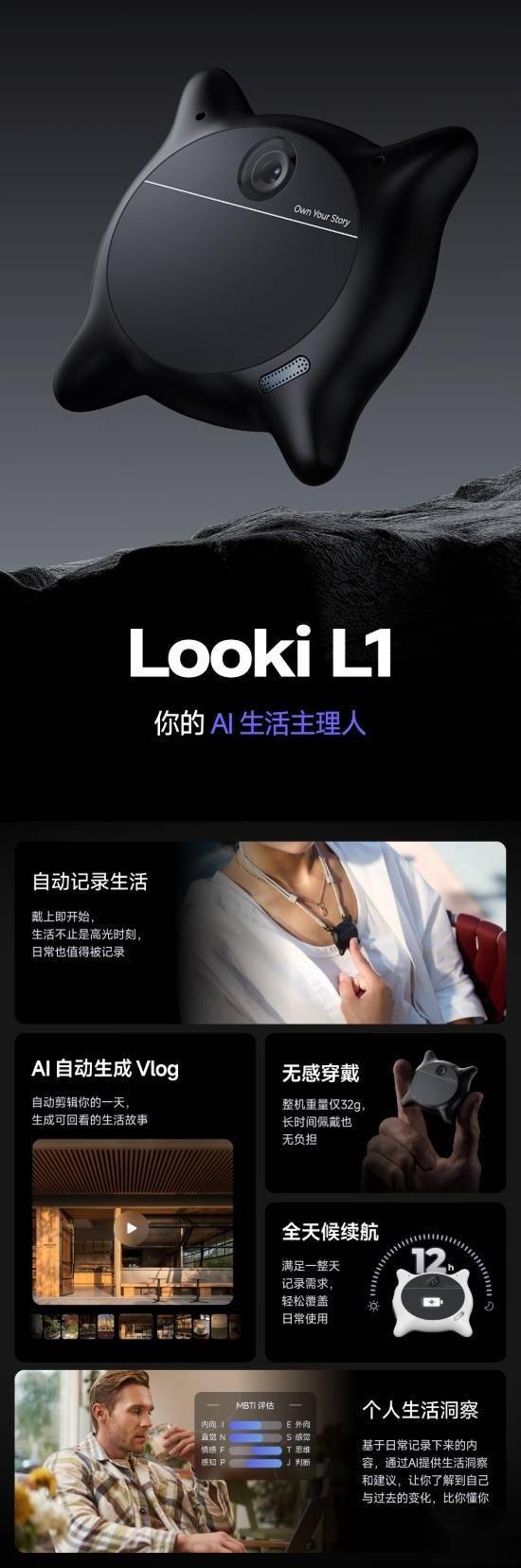
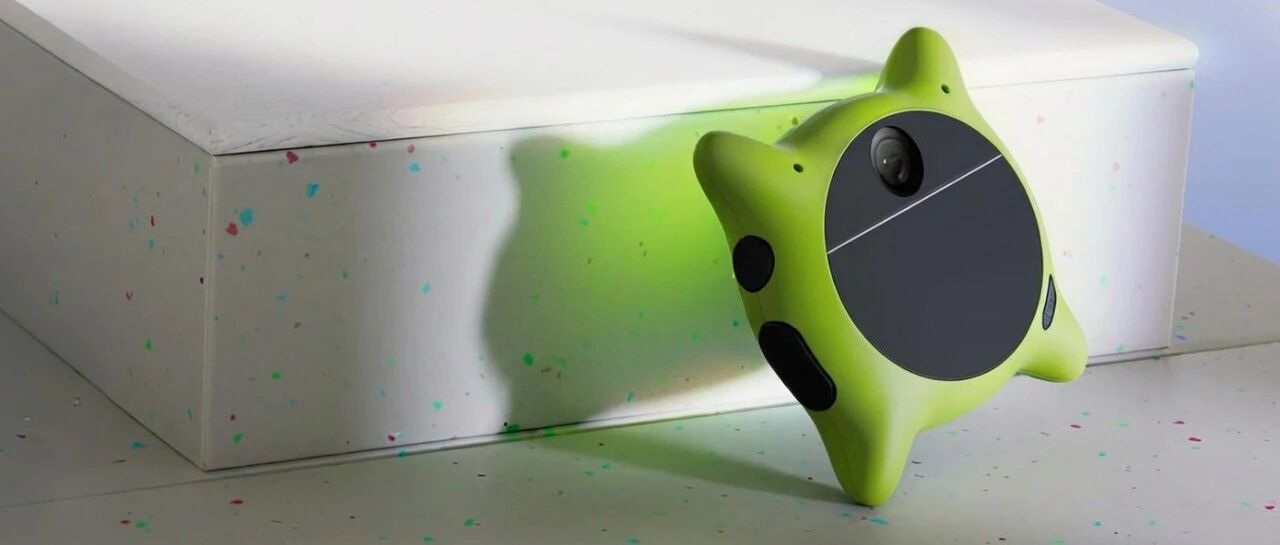
Group 1 - Looki, an AI hardware startup, has completed over $20 million (approximately 140 million RMB) in Series A financing, led by Ant Group, with participation from Meituan Longzhu, Huaden, Zhongguancun Capital, and existing investor BAI Capital [1] - The company recently launched a product called Looki L1, marketed as an "AI life manager," priced at 1499 RMB, which claims to automatically record life events and supports local data storage with user consent for cloud uploads [1] - Looki L1 features AI capabilities for automatic Vlog generation and intelligent search, providing users with insights into their personal life changes [1] Group 2 - The Looki L1 device specifications include a 16mm equivalent lens, capable of recording 1080P video at 30FPS and taking 4K photos, with 32GB of internal storage and a 375mAh battery providing up to 12 hours of battery life [4][8] - The device is available in black, white, and green, with dimensions of 50.53 × 16.84 × 48.02 mm and a weight of 32 grams, featuring an IP67 protection rating [7] - The camera supports features such as electronic image stabilization (EIS), high dynamic range (HDR), and an ISO range of 100-4800, with a field of view of 109° [8]

独家|蚂蚁、美团入局 AI 硬件, Looki 完成超 2000 万美元 A 轮融资
Founder Park· 2026-01-05 00:33
Core Insights - Looki, an AI hardware startup, has successfully completed a Series A funding round exceeding $20 million, led by Ant Group, with participation from Meituan Longzhu, Huaden, and others [2][3] - The company aims to enhance organizational talent, model iteration, product development, and supply chain integration to accelerate its technological accumulation in the AI native hardware sector [2] Company Overview - Founded in May 2024 by two Carnegie Mellon University alumni, Looki has completed four funding rounds in just over a year [4] - The CEO, Sun Yang, has a background in smart hardware at Meituan and was a founding member of Google Assistant, while the CTO, Liu Bo Cong, has experience in autonomous driving algorithms [4] Product Launch and Market Reception - Looki's first product, the Looki L1 international version, was launched in August 2025 and quickly sold out, with nearly 10,000 units sold globally [5] - The product has gained significant attention on social media platforms, being referred to as a "life review device" due to its unique features that provide insights into users' daily lives [8] User Engagement and Features - Initial user engagement metrics showed an average usage time of 6.2 hours, which increased to 7.9 hours over a few weeks, indicating strong user interest and engagement [11] - Looki L1 offers innovative features such as daily summary vlogs and emotional insights, which have become popular among users [8][11] Upcoming Innovations - Looki plans to introduce a new feature called Proactive AI at CES, which will allow the device to provide real-time insights and reminders based on user behavior [12][13] - This feature aims to transition from reactive responses to proactive assistance, enhancing user experience by understanding context and habits [13][17] Future Directions - Looki is committed to a "human-centered" product philosophy and aims to continue evolving its offerings in the rapidly advancing AI landscape [17]
这场对话凑齐了2025最火爆的AI创投要素|2025T-EDGE全球对话
Tai Mei Ti A P P· 2025-12-25 04:22
Core Insights - The article discusses the vibrant atmosphere in the AI venture capital scene, particularly among Chinese entrepreneurs and companies, highlighting the interconnectedness of various AI-related tags such as embodied AI, AI hardware, and AI agents [2]. Group 1: Company Highlights - Noitom Robotics, founded by Dai Ruoli, has completed a Pre-A+ round financing of several hundred million RMB, led by Qiming Venture Partners, with a focus on motion capture and robotics [3]. - Wujie Power, founded by Zhang Yufeng, has raised over 500 million RMB in angel financing, focusing on building a "general brain" for robots and achieving breakthroughs in industrial manufacturing and commercial services [4]. - Looki, founded by Sun Yang, has launched its first product, L1, which has received positive sales and user feedback, and has completed multiple rounds of financing totaling over ten million USD [5]. - Yuanli Intelligence, founded by Zhang Fan, focuses on commercial reinforcement learning and has recently completed a seed round financing of nearly ten million USD [6]. - Aha, founded by Kay Feng, has developed a unique "AI employee-style" marketing platform and has served over 300 clients, receiving significant investment from various venture capital firms [7]. Group 2: Industry Trends and Insights - The Chinese AI hardware industry is seen as having advantages in the supply chain, with a focus on integrating AI into daily life, although the direction remains exploratory [11]. - The differences in market logic between Chinese and Western companies are highlighted, with Chinese firms often focusing on B2C growth while Western firms emphasize B2B specialization [12]. - The article notes that the Chinese market is characterized by a higher tolerance for new technologies and products, which can lead to rapid product development through collaboration with B2B clients [10]. - The emergence of reinforcement learning is viewed as a significant advancement, allowing for the transition from human-labeled data to self-optimizing models [15]. - The article emphasizes the importance of real-world data and the collaboration between real and synthetic data in developing effective AI models [26]. Group 3: Future Expectations - The participants express excitement about the potential breakthroughs in AI, particularly in reinforcement learning and the application of agentic AI in real business scenarios [16][17]. - There is a consensus that 2026 could be a pivotal year for AI, with expectations for significant advancements in the integration of AI into physical environments and the realization of commercial reinforcement learning [43][44].

独家对话 Looki 创始人孙洋:摸着自己过河
Founder Park· 2025-12-16 12:43
Core Insights - Looki L1, a new wearable AI device, has gained significant popularity in China since its global launch in August, with viral marketing leading to millions of views on social media [2][3][4] - The device, described as a "lifelogging camera," allows users to capture their daily experiences through photos, videos, and audio recordings [6][11] - User engagement has exceeded expectations, with average daily usage increasing from 6.2 hours to 7.9 hours over a few months, indicating a strong product-market fit [8][34] Product Development and Market Strategy - Looki's initial marketing strategy was conservative, focusing on the "lifelogging" aspect rather than emphasizing its AI capabilities, which later proved to be a misstep [12][25] - The company adjusted its marketing approach to highlight the AI features, resulting in a significant increase in product visibility and sales [27][28] - Looki faced challenges with inventory management, initially underestimating demand and selling out quickly after the marketing push [27][28] User Experience and Feedback - Users have reported high engagement with the device, using it not just for specific activities but as a daily companion, which is a departure from traditional action cameras [9][33] - The device's privacy features, which store data locally and require user consent for uploads, have alleviated initial concerns about data security [38] - The community aspect of Looki is emphasized, with users actively sharing experiences and feedback, contributing to product improvements [35][37] Future Directions and Business Model - Looki aims to evolve its business model beyond hardware sales to a value-based approach, focusing on providing meaningful insights and recommendations to users [70][72] - The company is exploring subscription models for additional features, testing user willingness to pay for enhanced functionalities [70][72] - Long-term, Looki seeks to establish a trust-based relationship with users, positioning itself as a valuable partner in their daily lives [72][75]

告别「手搓Prompt」,前美团高管创业,要让物理世界直接成为AI提示词
机器之心· 2025-12-16 02:31
Core Viewpoint - The article discusses the emergence of Looki, an AI hardware aiming to enhance human-machine interaction by transforming real-world scenarios into contextual data, moving from passive responses to proactive engagement [1][2]. Group 1: Looki's Purpose and Technology - Looki aims to fill the gap in large models' "sensory intelligence" by converting real-time visual and auditory signals into contextual data, thus driving AI to think and serve users more effectively [4][28]. - The Looki L1 device, weighing only 30g, is designed to operate as a multi-modal perception system, capturing the physical world continuously and efficiently [6][8]. - The founders of Looki, with backgrounds in autonomous driving and smart hardware, leverage their expertise to adapt perception algorithms from driving to everyday life [9][10]. Group 2: Data Management and User Context - Looki employs a "data flywheel" approach to create a personalized context for users, transforming raw data into structured memories that the AI can efficiently access [12][15]. - The system addresses two major challenges in multi-modal models: understanding long-sequence data and managing context explosion, ensuring privacy and security in data handling [14]. Group 3: Transition to Proactive AI - The article highlights a shift from manual prompts to proactive AI, where enriched context allows for anticipatory actions by the AI, marking a transition from chatbots to agentic AI [17][18]. - Looki's capabilities include automatic video editing, identifying significant moments in users' lives, and providing insights based on accumulated data, thus evolving into a second brain for users [20][24][30]. Group 4: Future Vision - Looki envisions its hardware as a data interface that evolves beyond its current form, aiming to address the data hunger of the physical world and help users accumulate valuable personal data assets [29]. - The ultimate goal is for AI to possess a sense of presence, transforming it from a mere tool into an integral part of users' daily lives [30][31].

这个 30 克的挂件,是 AI 的眼睛丨100 个 AI 创业者
晚点LatePost· 2025-12-10 07:37
Core Insights - The article discusses the launch of Looki, an AI hardware device designed to record daily experiences and provide insights, which is set to officially release in China on December 16, 2023 [4][10]. - The founder, Sun Yang, emphasizes the importance of data collection from the physical world for AI development, positioning Looki as a tool to gather "atomic data" that large companies have not yet captured [5][9]. - Looki aims to evolve from a simple recording device to a sophisticated AI assistant that understands user context and preferences, potentially transforming how users interact with digital services [15][16]. Product Overview - Looki is a wearable device that captures video and generates summaries in the form of comics, described as a "life review device" [4][10]. - The device's design is intentionally non-intrusive, resembling a large brooch, and it operates continuously to gather data without requiring high-resolution imagery [10][11]. - The first batch of Looki devices sold out quickly, indicating strong initial demand, including interest from high-profile users [10][11]. Market Positioning - Sun Yang believes that the future of AI hardware lies in the ability to connect physical experiences with digital services, allowing for more personalized recommendations and interactions [15][16]. - The company aims to leverage user data to create a network effect, enhancing the value of its services over time [15][16]. - Looki's business model is expected to evolve from hardware sales to information distribution and generative advertising, positioning it as a key player in the AI landscape [15][16]. Challenges and Opportunities - The company faces challenges related to privacy and user trust, particularly in the Chinese market, where data security is a significant concern [15][16]. - Competition is anticipated from larger tech companies, which may enter the market by 2027, but Looki currently benefits from a time advantage in establishing its user base [15][16]. - Sun Yang expresses a belief that 2025 could be a pivotal year for AI, suggesting that the current value of foundational AI technologies is underestimated [16].