Melolo

Search documents
字节海外短剧布局又多一个,无广无付费,想用“本土剧+内置小程序”叩开美国、拉美市场大门?
3 6 Ke· 2026-01-26 02:29
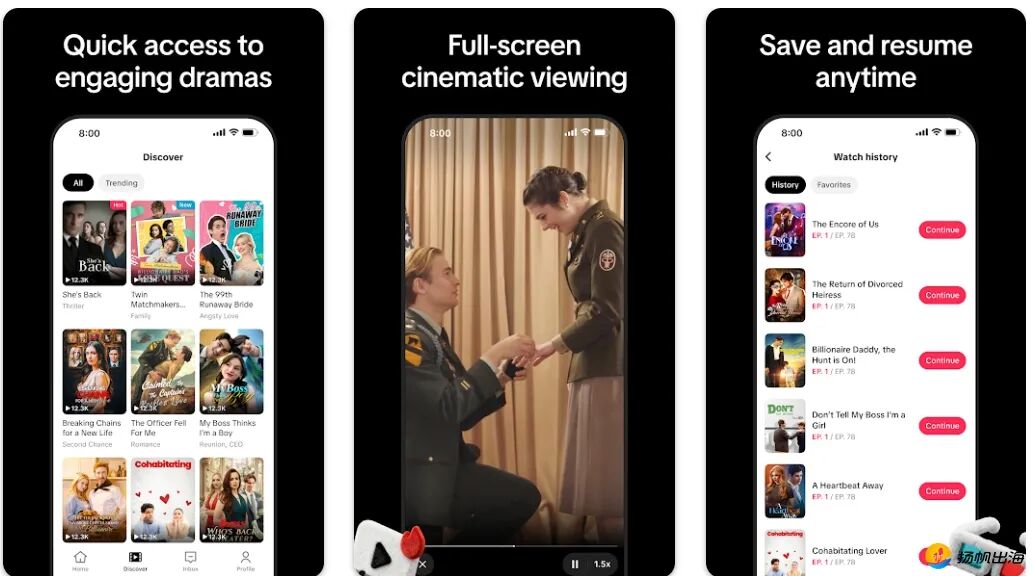
Core Viewpoint - ByteDance has launched a new short drama app named PineDrama in the US and Brazil, which is free to use and does not include IAA ads or IAP payment options, focusing on local overseas dramas [1][2]. Group 1: Product Strategy - PineDrama is designed to be completely free, which means ByteDance will not generate any revenue initially, making it difficult to assess the app's revenue potential [2]. - The app features mainly original local dramas and popular themes such as romance and vampire stories, which are expected to aid in user acquisition and data collection [2]. - The product structure of PineDrama is similar to TikTok, allowing users to log in with their TikTok accounts and track viewing habits for personalized recommendations [4]. Group 2: Market Positioning - The global short drama market is projected to grow significantly, with downloads expected to exceed 1.21 billion and revenues reaching $2.38 billion by 2025 [17]. - The US market leads the short drama sector, accounting for 46.58% of the global market share, with revenues surpassing $1.1 billion [17]. - ByteDance's strategy involves targeting different markets with tailored products, starting from emerging markets to mature ones, as seen with the launches of Melolo and PikoShow [17]. Group 3: Competitive Landscape - TikTok Minis, a built-in feature for short dramas, operates on a more traditional model of "free trial + paid unlock + subscription," contrasting with PineDrama's completely free approach [12][14]. - The competitive landscape shows that other short drama apps like Melolo have gained traction, with a market share of 3.55% and over 46 million downloads by 2025 [18]. - The success of PineDrama will depend on its ability to replicate successful strategies from the domestic market while navigating the challenges of high production costs for original content [16][22].

字节短剧再出海,能复制红果逆袭奇迹吗?
3 6 Ke· 2026-01-23 10:46
Core Insights - TikTok has launched a new short drama app called PineDrama, currently in testing phases in the US and Brazil, aiming to capture a share of the rapidly growing global short drama market, which is valued at over $10 billion annually [1][2] - The app features a user-friendly interface similar to TikTok, offering free, ad-free content, and focuses on engaging narratives primarily targeting female audiences [2][3] Market Opportunity - The global short drama market is projected to exceed $11 billion by 2025, with a double-digit growth rate, making it an attractive opportunity for platforms seeking expansion [2][9] - The US market is identified as a prime target due to its high user willingness to pay and established subscription models, alongside a mature production environment conducive to short drama content [12] Competitive Landscape - PineDrama enters a competitive arena dominated by ReelShort and DramaBox, which together hold nearly 46% of the overseas short drama market revenue as of early 2025 [14] - These competitors have established strong content creation and distribution networks, leveraging insights into audience preferences and emotional engagement to create compelling narratives [15][16] Strategic Importance - The introduction of PineDrama is seen as a strategic move to enhance TikTok's content ecosystem, providing a deeper narrative experience that can increase user engagement and retention [3][4] - By launching an independent app, TikTok aims to attract core users interested in short dramas, setting the stage for future monetization opportunities [6] Previous Attempts - TikTok's parent company, ByteDance, has previously attempted to penetrate the short drama market in Japan and Southeast Asia with mixed results, highlighting the challenges of local content adaptation [7][8] - Past failures, such as the PikoShow in Japan, were attributed to a lack of cultural resonance and competitive content offerings [7] Future Outlook - The success of PineDrama will depend on its ability to navigate a mature market with established players, focusing on localized content and user engagement strategies [16] - The competition will not solely revolve around user acquisition but will also hinge on content localization and operational efficiency [16]
漫剧霸权争夺战:字节与阅文的200亿赛道对决
3 6 Ke· 2026-01-16 03:23
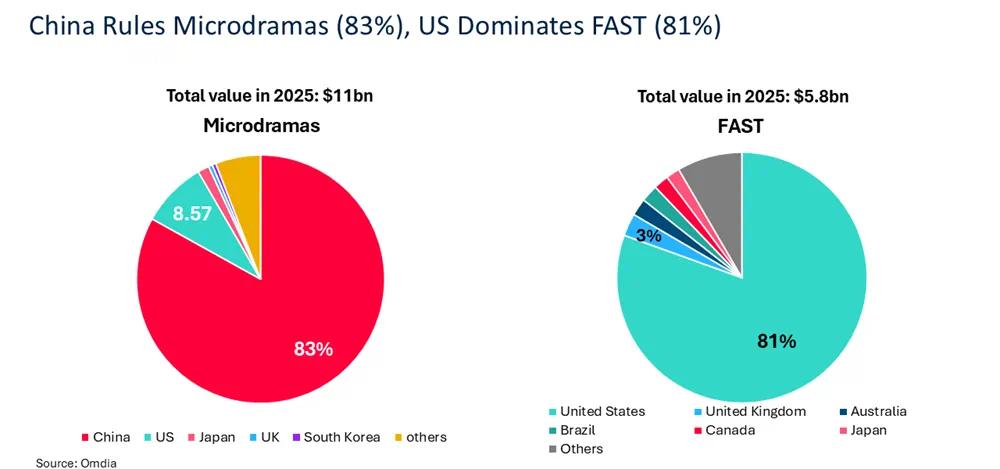
Core Insights - The competition between ByteDance and Reading Group in the manga drama sector is not just a business rivalry but a battle for dominance in a 20 billion market [1] - The emergence of AI-generated manga dramas addresses production pain points in traditional short dramas, significantly reducing production time and team size [1] IP Competition - Reading Group holds a substantial IP library with over 14 million works and 9.4 million creators, creating a nearly insurmountable resource barrier [2] - 70% of Reading Group's manga dramas with over 10 million views in the first half of 2025 are adaptations of top IPs, leveraging a stable fan base to reduce promotional costs [2] Free Strategy by ByteDance - ByteDance adopts a free strategy with over 60,000 original IPs, focusing on high-emotion, fast-paced content that is well-suited for short video distribution [3] - ByteDance offers a 90% revenue share to copyright holders and production subsidies of 5,000 to 20,000 yuan per episode to attract production teams [3] Collaboration Models - Reading Group invests in top production companies like Soy Sauce Animation, securing quality production capacity through capital binding [5] - ByteDance employs an open platform strategy, signing numerous framework agreements to attract large-scale teams and challenge Reading Group's IP monopoly [5] Differing IP Strategies - Reading Group focuses on long-term value development of its IPs, while ByteDance treats its free web novel IPs as fast-moving consumer goods [6] Flow Battle - ByteDance leverages its platforms like Douyin and Hongguo to create a massive user flow, with over 5 billion users on Hongguo, targeting the core audience of manga dramas [8] - ByteDance's algorithmic capabilities enhance content exposure conversion rates by over 300%, significantly outperforming industry averages [8] Monetization Strategies - ByteDance's monetization model is straightforward, focusing on "free viewing + ads + cash withdrawal," aiming for rapid returns and large-scale profitability [10] - Reading Group's approach is more strategic, using manga dramas to test IP market potential and drive revenue across multiple business lines [13] AI Competition - The competition has evolved into an AI-driven race, with ByteDance focusing on industrial efficiency and rapid content production [16] - Reading Group's AI strategy emphasizes IP value extraction and quality content development, ensuring that adaptations remain true to original works [17] Ecosystem Positioning - ByteDance aims to create a "content production-distribution-profit" loop, while Reading Group seeks to establish manga dramas as the core of its IP ecosystem [20] - Both companies face challenges: ByteDance struggles with sustainable content quality, while Reading Group needs to enhance its flow operations and monetization efficiency [21] Future Outlook - The competition will intensify in three areas: AI application, IP and flow integration, and overseas market expansion [24] - The ongoing rivalry is reshaping the industry landscape, with both companies influencing the future of the manga drama sector [26]
Sensor Tower:2025年四季度TikTok与CapCut包揽非游戏出海收入榜、下载榜与MAU榜的冠亚军席位
Zhi Tong Cai Jing· 2026-01-14 03:12
Core Insights - The global non-gaming mobile applications market experienced strong performance in Q4 2025, driven by seasonal consumption peaks and the success of ByteDance's TikTok and CapCut, which dominated revenue, downloads, and MAU rankings [1][9] Group 1: Revenue Performance - The short video sector and AI imaging tools emerged as the two major winners in Q4, with global in-app purchases for short video applications surpassing $2.8 billion, reflecting a 116% year-on-year increase [2] - ReelShort and DramaBox topped the revenue and download charts for short video applications, with DramaBox's revenue increasing by 75% to $530 million and downloads surging by 112% [2] - Dramawave, under Kunlun Wanwei, saw a 20% quarter-on-quarter revenue growth and an impressive 28-fold annual revenue increase, ranking among the top five [3] Group 2: Download Performance - The download rankings highlighted significant growth driven by year-end promotions and holiday entertainment demand, with AliExpress experiencing a 12% quarter-on-quarter increase in downloads [4] - AI search application Seekee maintained a strong position in the download rankings, while Kunlun Wanwei's FreeReels saw a remarkable 580% increase in downloads, ranking seventh [4] - ShortMax also demonstrated significant growth with over a 130% increase in downloads, indicating a shift towards multi-platform development in the short video sector [4] Group 3: Active User Metrics - Xiaomi's ecosystem solidified its global user base, with system-level tools occupying nearly one-third of the active user rankings, supported by hardware shipments in South Asia, Southeast Asia, and Russia [7] - Temu, along with SHEIN and AliExpress, maintained a strong position in the active user rankings, with Temu's global monthly active users exceeding 760 million [7] - WPS Office experienced a 2.8% increase in active users, bolstered by the integration of AI office assistants, enhancing its competitiveness in the overseas mobile office market [8] Group 4: Industry Trends - The seasonal benefits are being systematically leveraged by Chinese developers, with key consumption and holiday periods becoming significant growth engines for both cross-border e-commerce and content applications [9] - AI is accelerating the commercialization of tool applications, significantly enhancing product value and user willingness to pay, leading to dual growth in revenue and usage for multiple applications in Q4 [9] - The hardware ecosystem remains a solid long-term moat, with companies like Xiaomi establishing high-frequency, essential usage scenarios in overseas markets, providing a stable user base for Chinese applications [9]

短剧出海3年变天:80%亏损,玩家赔钱赚吆喝?
凤凰网财经· 2025-11-11 14:20
Core Insights - The article discusses the rapid growth and challenges of the Chinese short drama industry, particularly in overseas markets, highlighting significant revenue figures and the financial struggles of leading platforms [3][4][5]. Group 1: Market Growth - The overseas short drama market is experiencing rapid growth, with 2024 revenues exceeding $1.8 billion (approximately 127.6 billion RMB), marking a 34.9% increase year-on-year [3]. - In 2025, the overseas short drama market generated $1.088 billion in revenue in the first half, a staggering 249% increase compared to the previous year [3][11]. - The domestic micro-short drama market reached 504.4 billion RMB in 2024, surpassing the total box office revenue of approximately 470 billion RMB [3]. Group 2: Financial Performance of Leading Platforms - Leading platforms in the overseas short drama market, such as ReelShort and DramaBox, reported significant revenues but are facing substantial losses. ReelShort's revenue for the first half of 2025 was $384 million, a 270% increase, yet it incurred a net loss of 46.51 million RMB [4][5]. - Chinese Online, an early player in the overseas short drama space, reported a net loss of 520 million RMB in the first nine months of the year, with a 176.64% increase in losses year-on-year [7][8]. - Kunlun Wanwei's DramaWave platform achieved an annualized revenue of $240 million, but the company still reported a net loss of 665 million RMB in the first nine months of 2025 [10]. Group 3: Challenges and Market Dynamics - Approximately 80%-90% of overseas short dramas fail to break even, with high production costs and the need for cultural adaptation posing significant challenges [11][12]. - The entry barriers for overseas short dramas have increased, with a focus on localized content requiring higher production budgets and skilled personnel [12][14]. - The market is witnessing a shift towards exclusive content, with platforms preferring to release unique titles rather than sharing them across multiple platforms [14][16]. Group 4: Industry Restructuring - The overseas short drama market is undergoing a reshuffle, with many new players entering while others exit or pivot to focus on translation projects [19][20]. - The cost of producing overseas short dramas has risen, with production costs now ranging from $150,000 to $180,000 per project [16][19]. - Companies are increasingly focusing on return on investment (ROI) metrics, with many setting higher ROI thresholds to ensure survival in a competitive landscape [17][19].



短剧出海3年变天:80%亏损,玩家赔钱赚吆喝?
3 6 Ke· 2025-11-11 00:43
Core Insights - The overseas short drama market is experiencing rapid growth, with 2024 revenues exceeding $1.8 billion (approximately 127.6 billion RMB), marking a 34.9% increase year-on-year [1][2] - Despite the growth, major players in the overseas short drama sector are facing significant losses, with 80%-90% of productions failing to break even [1][6] Market Overview - The Chinese micro-short drama market reached 504.4 billion RMB in 2024, surpassing the total box office revenue of films (approximately 470 billion RMB) for the first time [1] - The overseas short drama market generated $10.88 billion in revenue in the first half of 2025, a staggering 249% increase year-on-year [1][2] Key Players - Leading platforms in the overseas short drama market include ReelShort and DramaBox, which together account for over 70% of the market share [2] - ReelShort reported a revenue of $384 million in the first half of 2025, a 270% increase, but also faced a net loss of 46.51 million RMB [2][3] Financial Performance - Chinese Online reported a revenue of 4.55 billion RMB in Q3 2025, with a net loss of 294 million RMB, and a total loss of 520 million RMB for the first nine months of the year [3][4] - Kunlun Wanwei's DramaWave platform achieved an annualized revenue of $240 million, but the company still reported a net loss of 665 million RMB for the first nine months of 2025 [5] Production Challenges - The cost of producing overseas short dramas has increased significantly, with production costs rising from approximately $120,000 to $150,000 per project [10] - The market is becoming more competitive, with a higher emphasis on localized content and the need for overseas talent, leading to increased production costs [7][10] Market Dynamics - The market is witnessing a shift towards exclusive content, with many mid-tier companies preferring to focus on unique releases rather than joint launches [8][10] - The overall market is undergoing a reshuffle, with some companies exiting while others focus on survival strategies amid rising costs and competition [12] Investment and ROI - Companies are now focusing on long-term user value and setting higher ROI thresholds to ensure sustainability [11] - The pricing for joint release dramas has halved, reflecting the changing dynamics in the market [11]
Sensor Tower:短剧、AI、电商齐发力 Q3中国非游戏移动应用全球增长强劲
智通财经网· 2025-10-24 03:00
Core Insights - The article highlights the strong growth momentum of non-gaming mobile applications from China in the global market during Q3 2025, particularly in content entertainment, AI tools, and cross-border e-commerce platforms [1] Group 1: Content Entertainment Applications - Short drama applications have significantly benefited from summer content strategies and social sharing tactics, with leading apps like DramaBox and ReelShort maintaining high download and revenue levels [10] - New emerging short drama apps, such as Melolo from ByteDance, saw a remarkable 101% increase in downloads, particularly in Southeast Asia, leveraging ultra-short video formats and social sharing rewards [10] - FlareFlow emerged as a standout performer with a 269% increase in mobile revenue in Q3, marking its entry into the overseas revenue rankings [10] Group 2: AI Tools - AI tools showed active performance in Q3, with Seekee and Cici experiencing download increases of 114% and 60% respectively, expanding their user bases in emerging markets [11] - The rise of theme beautification tools, exemplified by Themepack with a 159% increase in downloads, highlights the demand for personalized aesthetic solutions among younger users [11] - WPS Office and Meitu continued to grow steadily, with WPS benefiting from global mobile office demands and Meitu leveraging AI technology for high-quality growth in emerging markets [11] Group 3: E-commerce and Content Platforms - TikTok maintained its leadership in global downloads and active users, supported by its strong algorithm and creator ecosystem, while its video editing tool CapCut also saw stable revenue growth [12] - The international version of Xiaohongshu, renamed rednote, reported a 55% increase in overseas revenue, indicating the successful integration of content community and e-commerce [12] - Cross-border e-commerce platforms like Temu and SHEIN are expanding their user penetration in North America, Europe, and the Middle East through supply chain optimization and localized marketing [12] Group 4: Long Video Platforms - iQIYI's revenue growth is attributed to its continued investment in overseas content and multilingual adaptation strategies, solidifying its market share in the global long video sector [13] Group 5: Emerging Market Insights - New applications entering the Q3 rankings are primarily from emerging markets, particularly in Latin America and Southeast Asia, indicating a strong interest in AI technology [14] - Xiaomi's ecosystem advantages are evident as its system-level tool applications maintain multiple positions in the active user rankings, benefiting from substantial smartphone shipments in South Asia and Southeast Asia [14]
字节日本短剧APP暂停投放,下载量大幅下滑
3 6 Ke· 2025-09-29 08:57
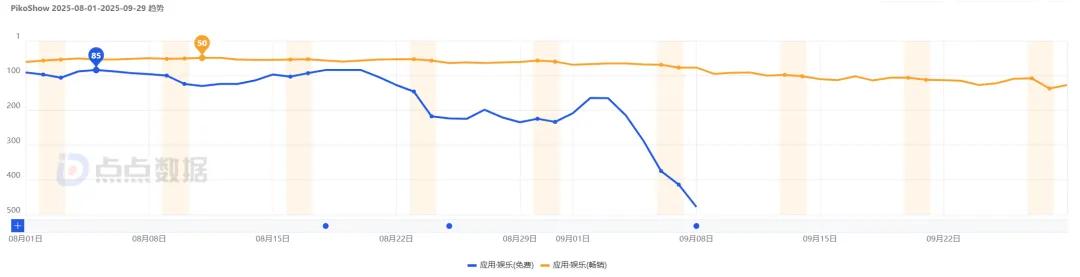
Core Insights - PikoShow, a short video app by ByteDance targeting the Japanese market, has significantly reduced its content investment and downloads have plummeted since early September [1][4]. Group 1: Market Performance - PikoShow's daily content investment dropped from approximately 400 pieces to just 15 since September 5, indicating a near halt in investment [1]. - The app's estimated download volume in Japan has shown a downward trend, with downloads falling to just a few dozen after September 5 [1]. - PikoShow's ranking in the App Store for free entertainment applications in Japan fell from 85th to 478th by September 8, eventually dropping out of the top 500 [3]. Group 2: Market Maturity - The Japanese short video market is still in its early stages, with local companies not fully adapting to the short video model, leading to higher production costs [4]. - A decline in demand for short video content from Chinese companies is expected starting May 2025, primarily due to a lack of new hit works to support market confidence [4]. Group 3: Product Fit - PikoShow's content primarily consists of dubbed domestic short videos, with no new short films introduced since mid-2024, potentially causing viewer fatigue [5]. - In contrast, competing apps like NetShort, DramaBox, and DramaWave focus on popular themes such as "comeback" and "family emotions," while PikoShow has mainly offered "urban emotional" content, which may not align with Japanese user preferences [5]. Group 4: Competitive Landscape - Another ByteDance app, Melolo, has maintained a strong performance with consistent content investment and stable download rates, indicating a more favorable market reception [6]. - Melolo has introduced a high proportion of new short films, with 48.9% of its 636 short films launched in the last 30 days being new [6]. Group 5: Industry Outlook - The cessation of PikoShow's investment reflects a broader trend in the overseas short video market entering a phase of elimination, necessitating companies to adapt strategies in response to market dynamics [6]. - Despite challenges, the overseas short video market still holds significant growth potential, although entry barriers are increasing [6].
又一款中国互联网产品,炸场美国
凤凰网财经· 2025-07-29 15:32
Core Viewpoint - The article discusses the rapid rise of Chinese short drama companies, particularly ReelShort, which has become a dominant player in the global short drama market, especially in the U.S. The success is attributed to a combination of strong content, targeted marketing, and innovative monetization strategies. Group 1: Market Overview - Short dramas have surpassed the film market in China and are creating a global entertainment wave, particularly in Europe and the U.S. [5] - In the global short drama market, Chinese companies dominate, with 40 out of the top 50 apps by in-app revenue being developed by Chinese firms, capturing 68.75% of overseas short drama in-app revenue [6][62]. - ReelShort has achieved significant milestones, including leading the U.S. Google Play entertainment app free chart for 38 consecutive days and reaching 14.486 million downloads globally in May 2025 [9][10]. Group 2: Company Success - ReelShort generated $130 million in in-app revenue in Q1 2025, holding a 24.21% share of the overseas market [11][12]. - The series "The Double Life of My Billionaire Husband" has garnered over 470 million views, outperforming Netflix's "Squid Game" [14][45]. - The success of ReelShort is attributed to its understanding of the target audience, particularly female viewers, and its flexible monetization model [27][28]. Group 3: Strategic Insights - The failure of Quibi highlighted the importance of targeting core users and creating compelling content, which ReelShort has successfully addressed [25][22]. - ReelShort's strategy includes low-cost production, rapid content creation, and aggressive marketing through social media platforms [37][38]. - The company leverages its existing IP from platforms like Kiss and Chapters to ensure high-quality scripts and storylines [41][42]. Group 4: Future Prospects - The overseas short drama market is projected to grow significantly, with estimates ranging from $14.4 billion to $64.8 billion, indicating a substantial opportunity for Chinese companies [58][60]. - Chinese companies are expanding their reach with new platforms like Sereal+ and UniReel, focusing on localized content and AI-driven script generation [55][56]. - The competition in the overseas market is intensifying, with various business models emerging, including paid, free, and hybrid approaches [67][68].

微短剧观察:国内饱和,出海盈利?
3 6 Ke· 2025-06-06 10:49
Core Insights - The micro-short drama industry in China has developed a comprehensive and nearly saturated production chain, with opportunities for growth in overseas markets as domestic growth slows [1][3] - The global in-app revenue for short drama applications reached nearly $700 million in Q1 2025, nearly four times that of Q1 2024, indicating significant growth potential [1] - The Chinese micro-short drama market is projected to exceed 100 billion yuan by 2027, reflecting an upward trend [3] Industry Trends - The overseas market for micro-short dramas is seen as a major opportunity, with many countries having higher mobile usage times than China, thus expanding the viewing time for short dramas [3] - From August 2022 to June 2024, overseas short drama applications generated a total in-app revenue of $252 million and accumulated 148 million downloads, showing a consistent growth trend [3] - The production cost for short dramas has increased significantly, with current costs ranging from $200,000 to $300,000, making the previous claims of low-cost production unrealistic [9][19] Market Dynamics - The competition in the overseas short drama market is intensifying, with major players like ByteDance entering the fray, leading to a surge in user engagement and downloads [16] - The production of micro-short dramas has reached an annual output of 10,000 in China, indicating a saturated domestic market [12] - The overseas audience preferences vary significantly, requiring tailored content for different regions, which complicates the production process [8][13] Financial Considerations - High marketing costs are a significant challenge for companies entering the overseas market, as seen in the case of Mega Matrix, which reported a net loss despite substantial revenue [20] - The profitability of overseas ventures remains uncertain, with only leading companies managing to achieve substantial returns [18][19] - The industry is still in a phase of large-scale investment without a clear revenue-sharing model for creators, which hampers sustainable growth [20]