MicroLED

Search documents
OFC 2026 展望:从可插拔光器件与光子引擎(PO)到 CPU 及其他终端设备的 AI 数据中心光互连趋势-OFC 2026 Outlook_ AI Data Center Optical Interconnect Trends from Pluggable Optics and LPO to CPO and MicroLED
2026-03-12 09:08
Summary of Key Points from OFC 2026 Outlook on AI Data Center Optical Interconnect Trends Industry Overview - The document discusses the optical communications ecosystem, particularly focusing on trends in AI data centers and the transition from traditional copper interconnects to optical solutions [7][10]. Core Themes and Insights 1. **Shift in Data Center Bottlenecks**: As generative AI models scale, the primary bottleneck is moving from transistor performance to interconnect bandwidth and latency, highlighting the importance of optical interconnects [4][8]. 2. **Optical Interconnects as Critical Components**: With AI clusters expanding to hundreds of thousands of GPUs, optical interconnects are becoming essential for overcoming bandwidth limitations and latency issues in AI infrastructure [8][10]. 3. **Technological Evolution**: The document outlines the evolution from pluggable optics to Linear Pluggable Optics (LPO) and Co-Packaged Optics (CPO), emphasizing the need for higher bandwidth and lower power consumption [14][19][100]. Key Technologies and Developments 1. **Pluggable Optics**: Currently the mainstream solution, integrating Digital Signal Processing (DSP) for interoperability but with higher power and thermal density [17]. 2. **Linear Pluggable Optics (LPO)**: Aimed at reducing power and latency by removing DSP, relying on high-quality SerDes [18][77]. 3. **Co-Packaged Optics (CPO)**: Places optical engines near the switch ASIC package, significantly reducing power consumption (approximately 5.5 W per 800G port for CPO compared to 15 W for pluggables) [19][79]. Market Dynamics - The demand for 800G optics is transitioning to mainstream production, with 1.6T optics expected to ramp up in the second half of 2026 [12][100]. - The IEEE's 802.3dj standards for 200G/lane to 1.6T are projected to be completed by late 2026, which will catalyze broader adoption of 1.6T optics [13]. Supply Chain and Manufacturing Challenges 1. **Laser Supply Constraints**: The demand surge from AI data centers has created bottlenecks in laser light sources, particularly Electro-Absorption Modulated Lasers (EMLs), leading to extended lead times [29][33]. 2. **Alternative Solutions**: The industry is exploring external continuous-wave (CW) lasers and silicon photonics modulators as alternatives to EMLs to broaden the supplier base [31][32]. Reliability and Testing - CPO technology is approaching production readiness, with reported reliability improvements, but it introduces new challenges in testing and operational models [20][37][42]. - The testing process for CPO is more complex than for pluggable optics, necessitating earlier defect screening and comprehensive testing protocols [46][48]. Future Outlook - The document concludes that while pluggable optics will remain dominant in the near term, CPO and Optical I/O (OIO) technologies will become increasingly attractive as bandwidth demands grow and copper's limitations become more pronounced [100]. - The integration of optical technologies into chiplet architectures is expected to drive further advancements in AI data center infrastructure [93][100]. Additional Insights - The emergence of microLED technology as a potential alternative for ultra-short reach optical interconnects is noted, with advantages in energy efficiency and bandwidth scaling [58][70]. - Companies like NVIDIA, Broadcom, and Marvell are leading the charge in developing high-capacity switch silicon to support the expanding AI infrastructure [72][74]. This summary encapsulates the critical developments and trends in the optical interconnect landscape as discussed in the OFC 2026 Outlook, providing insights into the future of AI data center connectivity.

【公告全知道】MicroLED+CPO+芯片+第三代半导体!公司设备可应用于部分光模块的器件组装工序
财联社· 2026-03-05 15:15
Core Viewpoint - The article highlights significant announcements in the stock market, including various corporate actions such as suspensions, investments, acquisitions, and performance updates, aimed at helping investors identify potential opportunities and risks in a timely manner [1] Group 1: Technology and Equipment - The company is involved in the production of MicroLED and CPO technologies, with its self-developed chip mounter being a key equipment for the production of Micro LED micro-displays [1] - The company has received a small number of orders for MiniLED-related equipment, indicating a growing presence in the market for storage chips and robotics, particularly in collaboration with Huawei [1] Group 2: Marine and High-end Equipment - A subsidiary of the company has signed a significant shipbuilding contract valued between 400 million to 600 million USD, showcasing its capabilities in marine equipment and high-end manufacturing [1]


超4000只个股上涨
第一财经· 2026-03-05 07:26
Market Overview - On March 5, A-shares saw all three major indices rise, with the Shanghai Composite Index increasing by 0.64% to 4108.57, the Shenzhen Component Index rising by 1.23% to 14088.84, and the ChiNext Index up by 1.66% to 3216.94 [1][2]. Sector Performance - The optical electronics, power grid equipment, education, and MicroLED sectors led the gains, while the oil, gas, and precious metals sectors experienced declines [2]. - MicroLED concept stocks saw a surge, with several stocks hitting the daily limit, including Jucan Optoelectronics (+20.04%), Huacan Microelectronics (+20.02%), and Aibisen (+20.00%) [3][4]. Stock Movements - The oil sector faced significant losses, with stocks like Beiken Energy (-9.66%), Keli Co. (-9.22%), and Blue Flame Holdings (-9.08%) dropping over 9% [6]. - The total trading volume in the Shanghai and Shenzhen markets reached 2.39 trillion yuan, an increase of 242 billion yuan from the previous trading day, with over 4000 stocks rising [6]. Capital Flow - Major capital inflows were observed in the power equipment, electronics, and machinery sectors, while outflows were noted in non-ferrous metals, oil and petrochemicals, and agriculture [9]. - Specific stocks such as Xinyi Sheng and Shanghai Electric saw net inflows of 4.496 billion yuan and 2.45 billion yuan, respectively [10]. Institutional Insights - CITIC Securities highlighted that the US-Iran situation has become a new source of volatility, suggesting short-term speculation on oil and gold [12]. - Everbright Securities emphasized the importance of resource allocation opportunities in the short term [13]. - Tianfeng Securities noted the ongoing advancement in the AI sector and the potential for valuation recovery in gaming and media leading companies [14].





芯联集成20260303
2026-03-04 14:17
芯联集成 20260303 摘要 MOSFET 供需紧缺驱动涨价:2025 年末已发涨价函,2026 年 1 月执 行。8 英寸产能停止扩充叠加 AI 服务器与储能需求爆发,景气度有望延 续至 2026 年。 AI 服务器电源业务爆发:实施 UMTInside 战略,覆盖 70% 的 BOM 成本。2026 年 AI 业务收入占比预计从 6% 提升至 10% 以上,成为核 心增长引擎。 BCD 工艺平台高速增长:深度绑定汽车国产化与 AI 算力,55nm BCD 已获定点。预计 2026 年 BCD 业务收入将较 2025 年实现 3 倍增长。 SiC 业务量价齐升:2025 年收入超 15 亿元,在手订单超 150 亿元。 预计 2026 年 SiC 收入将翻倍至 30 亿元,8 英寸 SiC MOSFET 已送 样海外 AI 巨头。 盈利拐点明确:2026 年营收目标 100 亿以上(2025 年约 82 亿)。 随涨价落地、折旧压力缓解及高附加值产品占比提升,公司有望加速扭 亏并实现有厚度的盈利。 技术前瞻布局:2026 年正式切入 MicroLED 领域,联合星宇股份开发 车载照明;氮化镓研发加速,重 ...

利亚德:截至2025年上半年Micro LED新签订单已超6亿元
Zheng Quan Ri Bao· 2026-02-26 12:40
证券日报网2月26日讯 ,利亚德在接受调研者提问时表示,2022年至2024年公司MicroLED收入实现了 连续翻番,截至2025年上半年MicroLED新签订单已超6亿元,同比增长40%以上。随着市场对于 MicroLED认可度的提升,规模逐步起量后成本也将继续下降,那么MicroLED将进入到更多应用场景, 尤其是对于分辨率要求更高的专业显示市场以及小间距未渗透进去的市场,比如家用电视,电竞屏等。 (文章来源:证券日报) ...

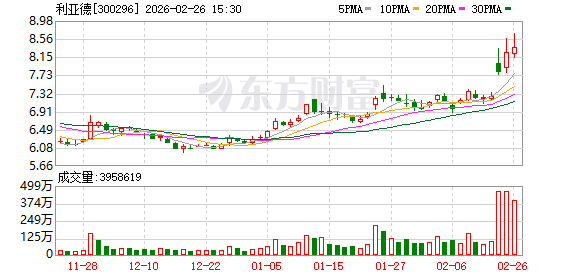
利亚德:2025年业绩扭亏为盈,核心得益于经营策略转型、出海战略深化及MicroLED订单增长
2 1 Shi Ji Jing Ji Bao Dao· 2026-02-26 10:45
南财智讯2月26日电,利亚德在投资者关系活动中表示,公司2025年业绩扭亏为盈,主要原因包括:一 是及时改革经营策略,从"规模扩张"转向"价值创造",全面贯彻以盈利为目标的高质量发展理念,项目 质量明显提升;二是强化"出海"战略执行力度,2025年底海外显示业务较去年同期实现逆势增长;三是 持续推动MicroLED在国内外市场尤其是北美市场的推广,MicroLED订单实现较好增长;四是集团全流 程数字化管理变革深入推进,覆盖生产、销售、供应链、服务及内部管理等核心环节,经营效率持续提 升,成本优化价值凸显。 ...
利亚德:MicroLED新签订单超6亿元,同比增长40%以上
2 1 Shi Ji Jing Ji Bao Dao· 2026-02-26 10:32
南财智讯2月26日电,利亚德在投资者关系活动中表示,2022年至2024年公司MicroLED收入连续翻番; 截至2025年上半年,MicroLED新签订单已超6亿元,同比增长40%以上;随着市场认可度提升与规模起 量,MicroLED成本将持续下降,将加速进入分辨率要求更高的专业显示市场及小间距未渗透市场,如 家用电视、电竞屏等。 ...
Daktronics: MicroLED Mass-Transfer Indicates Massive Margin Expansion
Seeking Alpha· 2026-02-24 15:17
Core Insights - The article does not provide specific insights or analysis regarding any companies or industries, focusing instead on disclaimers and disclosures [1][2] Group 1 - There is no stock, option, or similar derivative position in any of the companies mentioned [1] - The article expresses personal opinions and is not receiving compensation beyond Seeking Alpha [1] - The authors are not licensed or certified by any institute or regulatory body [2]


化合物半导体,最新预测
半导体行业观察· 2026-02-24 01:23
Core Viewpoint - The compound semiconductor industry is experiencing strong growth driven by performance advantages in power, RF, and photonics applications, with significant long-term market potential for n-type SiC and InP despite short-term price pressures and application timing adjustments [2][3][6]. Group 1: Market Growth Projections - The CS substrate market is projected to grow from $1.29 billion in 2025 to $2.79 billion by 2031, reflecting a compound annual growth rate (CAGR) of 14% [2]. - The open epitaxial wafer market is expected to increase from $1 billion to $2.39 billion during the same period, also with a CAGR of 14% [2]. Group 2: Power Applications - Power applications dominate the market, with n-type SiC growth driven by the electrification of electric vehicles, 800V architectures, and the accelerated adoption of 8-inch wafers, although short-term price pressures may arise from overcapacity and slowing automotive industry growth [2][6]. - Power GaN applications have expanded from consumer fast charging to automotive and data centers, but its epitaxial wafer market remains smaller than that of SiC [2]. Group 3: RF and Photonics Markets - The RF market remains stable, primarily led by GaAs in mobile applications and GaN in telecommunications and defense, with limited short-term growth potential as the industry transitions towards 6G [3][6]. - The photonics market is experiencing the strongest growth, driven by AI data centers and bandwidth upgrades, accelerating the adoption of InP, 6-inch platforms, and high-speed lasers [3][6]. Group 4: Technology and Supply Chain Developments - The compound semiconductor supply chain is being reshaped by significant investments in power SiC and recent strategic moves in power GaN, with a focus on scalable platforms and applications [6][10]. - The transition from 6-inch to 8-inch wafers in SiC is enhancing cost competitiveness, while new Chinese suppliers are entering the market to meet demand [6][10]. - GaN is evolving towards a hybrid IDM and foundry model, with some foundries exiting the market while new entrants leverage internal epitaxial technology [6][10]. Group 5: LED and MicroLED Technologies - LED technology is mature and of lower value, while the adoption of MicroLED is expected to resume later in the century, initially targeting wearable devices and AR applications [3][7]. - Vertical integration is crucial for MicroLED as it enters high-end wearable markets, intensifying competition between pure compound semiconductor manufacturers and silicon wafer producers [7].

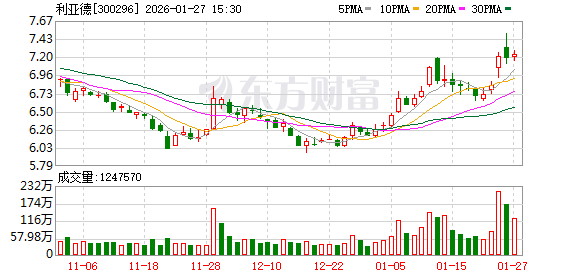
利亚德:Micro LED作为行业公认的“下一代显示技术”,进入民用市场是大势所趋
Zheng Quan Ri Bao· 2026-01-27 09:10
(文章来源:证券日报) 证券日报网讯 1月27日,利亚德在互动平台回答投资者提问时表示,MicroLED作为行业公认的"下一代 显示技术",进入民用市场是大势所趋。公司自2020年底落地MicroLED的量产基地以来,始终将 MicroLED作为重点研发项目,以持续降本和规模化应用为目标,不断投入研发,提高生产良率及效 率,优化工艺流程和产品结构,并积极推动其应用市场的拓展。未来产品售价需综合考虑市场需求、供 应链成本及行业竞争格局等多方面因素,届时将根据实际情况进行合理制定。 ...