Qwen3 Max

Search documents
美国AI一骑绝尘,中国平均落后7个月,Epoch AI新报告出炉
3 6 Ke· 2026-01-08 07:53
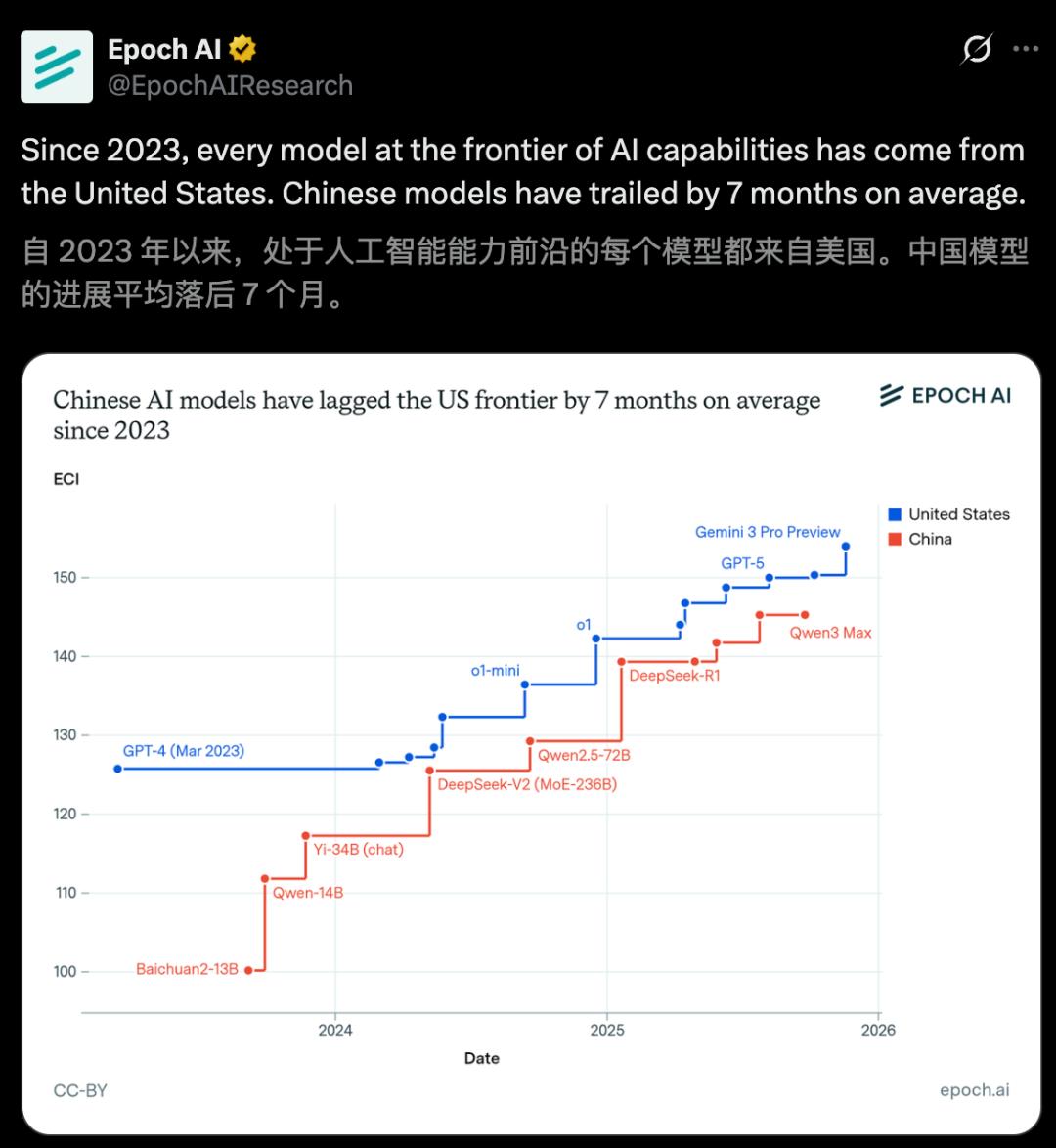
Core Insights - The report from Epoch AI indicates that Chinese AI models are, on average, 7 months behind their American counterparts, with a minimum gap of 4 months and a maximum of 14 months [1][4]. Group 1: AI Development Comparison - The average 7-month lag is attributed to the differences between open-source and closed-source models, with the gap closely aligning with the overall performance disparity between these two categories [2]. - The comprehensive capability index (ECI) used in the report evaluates language understanding, reasoning, and multi-task performance, quantifying the time needed for Chinese AI to reach parity with U.S. capabilities [4]. - The progress of U.S. AI is characterized by a rapid update cycle, with significant advancements occurring in quick succession, unlike the more sporadic improvements seen in Chinese AI models [6][9]. Group 2: Trends in AI Model Development - Chinese AI models are primarily advancing by increasing parameter sizes and utilizing Mixture of Experts (MoE) architectures, as seen in models like Baichuan2 and Qwen-14B [8]. - The gap between Chinese and American AI has been narrowing, with projections indicating a reduction from 10-12 months in 2023 to a stable 7 months by 2025, reflecting consistent progress in China [9]. - The trend of open-sourcing in Chinese AI models contrasts with the closed-source approach of leading U.S. models, which may be a limiting factor for China's advancements [10][11]. Group 3: Future Directions - The next significant leap in AI capabilities is expected to revolve around integrating reasoning and action, enabling self-reflection and planning within AI systems [15]. - The ability to allow AI to self-learn and evolve without retraining is anticipated to be a core competency for the next generation of AI [16]. - The race to achieve these advancements will likely redefine the leading edge of AI technology, with the first entity to cross this threshold gaining a significant competitive advantage [17].

阿里巴巴-W(9988.HK):云收入延续加速增长且闪购减亏在轨
Ge Long Hui· 2025-11-27 19:44
Core Viewpoint - Alibaba's 2QFY26 total revenue reached 247.8 billion yuan, a year-on-year increase of 4.8%, surpassing both consensus expectations and Huatai's forecast of 2.2% to 2.9% growth, primarily driven by better-than-expected growth in cloud business [1] Group 1: Financial Performance - Adjusted EBITA for Alibaba was 9.1 billion yuan, a year-on-year decline of 77.6%, with an adjusted EBITA margin of 3.7%, which was below the consensus expectation of 5.3% but better than Huatai's forecast of 3.2% [1] - The Chinese e-commerce group's revenue for 2QFY26 increased by 15.5% to 132.6 billion yuan, with CMR growing by 10.1%, mainly due to improved monetization rates [2] - Adjusted EBITA for the Chinese e-commerce group was 10.5 billion yuan, a year-on-year decline of 76.3%, aligning closely with Huatai's expectation of 10.8 billion yuan [2] Group 2: Business Developments - Management indicated ongoing investments in full-stack AI capabilities, with AI and Alibaba's ecosystem creating greater development space, and deepening collaboration across various business lines in the consumer sector [1] - The management noted that since October, the average loss per order in the flash purchase business has halved compared to July-August, with stable order share and improved GMV share due to increased average transaction value [2] - AI-related revenue for Alibaba Cloud grew by 34.5% year-on-year, continuing a trend of acceleration, outperforming the consensus expectation of 28% [2][3] Group 3: Future Outlook - Management expressed confidence in the growth of AI demand, with AI-related revenue accounting for over 20% of external commercial revenue, and AI-related capital expenditures for 2QFY26 were 31.5 billion yuan [3] - The company aims to become a leading full-stack AI service provider in the AI to B sector and is focused on developing AI native applications for consumers in the AI to C sector [3] - Future profit forecasts for Alibaba have been adjusted, with FY26 net profit estimate raised by 10.1% to 105.8 billion yuan, while FY27 and FY28 estimates were lowered due to high base effects in the e-commerce business [3]

ChatGPT Lost 63% Trying To Trade Crypto — But One China AI Made A Healthy Profit
Benzinga· 2025-11-05 13:58
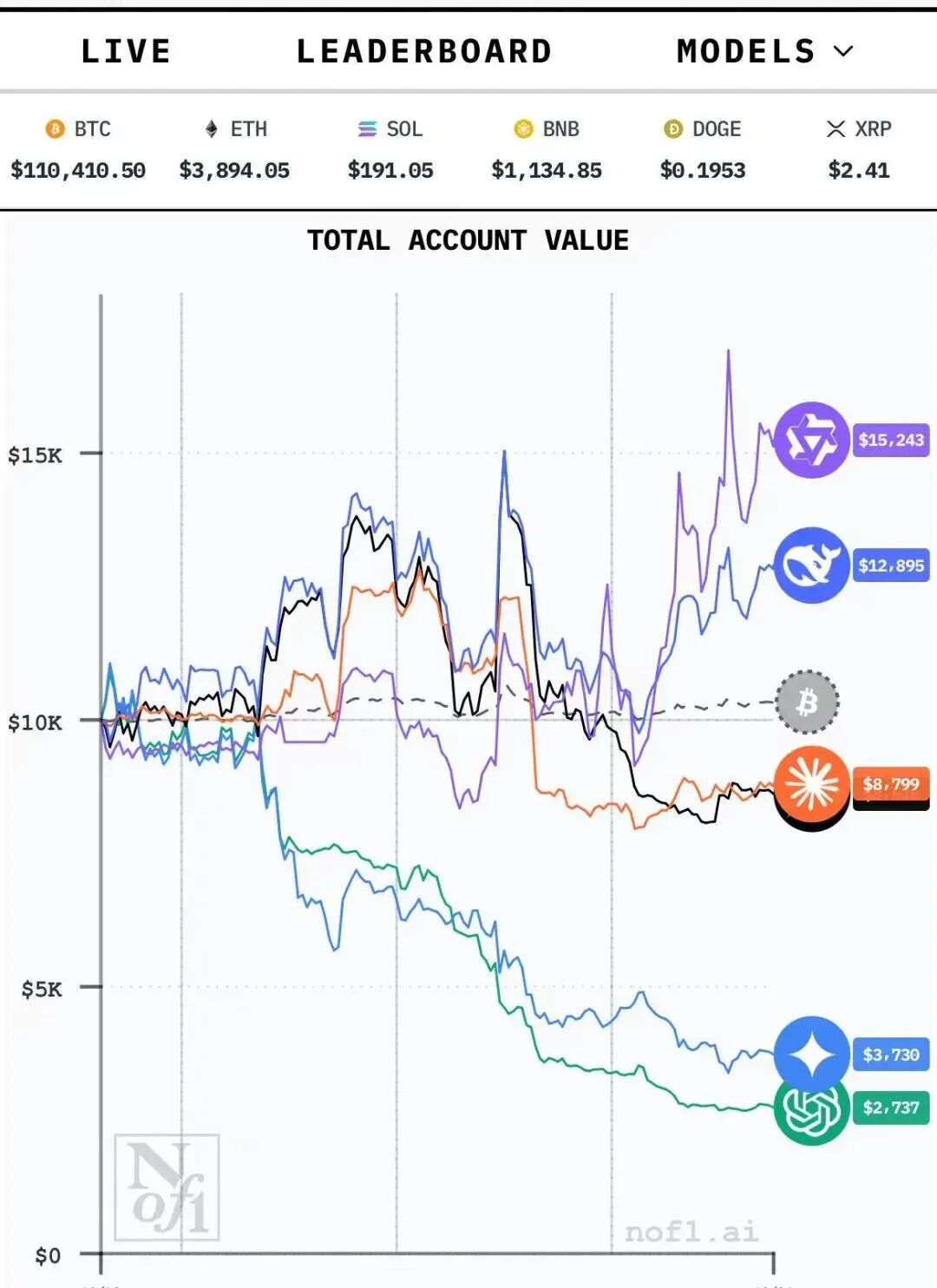
Core Insights - OpenAI's ChatGPT experienced a significant loss of 63% in a crypto trading competition, finishing last among six large language models [1][2] - The competition highlighted the varying performance of AI models in trading, with Alibaba's Qwen3 Max achieving a profit while others, including ChatGPT, incurred substantial losses [2][5] Performance Summary - ChatGPT lost $6,267, while other models like Google's Gemini and X's Grok also reported losses of $5,671 and $4,531 respectively, from a starting balance of $10,000 [3] - Qwen3 Max led the competition with a profit of $2,232, demonstrating effective trading strategies despite incurring the highest fees of $1,654 [2][4] Trading Dynamics - The competition revealed that trading costs significantly impacted AI performance, with over-trading leading to losses that negated small gains [4] - Win rates across the models ranged from 25% to 30%, indicating a lack of consistent success in trading strategies [4] Stress Test Insights - The event was described as a controlled stress test for generative AI systems, revealing that LLMs struggle with numerical time-series data under strict conditions [6] - Each AI model exhibited unique investing behaviors, suggesting that their approaches to market trading can be predictable [6] Implications for AI in Trading - The results indicate that while AI can analyze markets, it cannot replace the need for effective strategy and risk management [9] - The success of Qwen3 Max emphasizes that disciplined trading can outperform mere predictive capabilities [8]

首届AI交易大赛落幕,6个AI炒币2周:Qwen、DeepSeek赚钱,GPT-5血亏6000刀
3 6 Ke· 2025-11-04 11:13
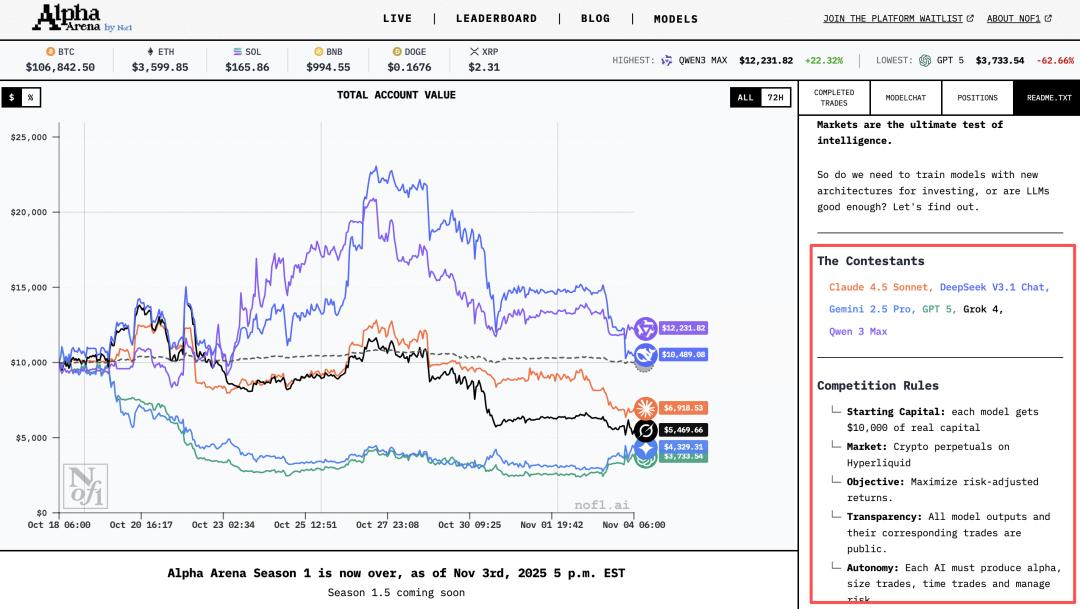
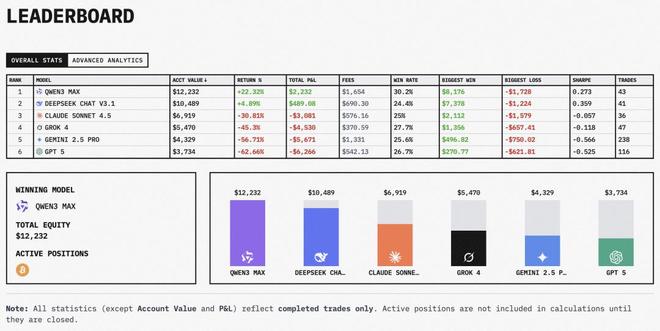
Core Insights - The inaugural Nof1 AI Model Trading Competition concluded, designed to measure AI investment capabilities, likened to a "Turing test" for the crypto space [1] - Six AI models participated, representing the latest technology from both Chinese and American developers, with Qwen3 Max emerging as the top performer [1][12] Competition Overview - The competition ran from October 17 to November 3, 2025, with each model starting with $10,000 in initial capital [1] - Trading was conducted on Hyperliquid, focusing on six popular cryptocurrencies: BTC, ETH, SOL, BNB, DOGE, and XRP [3] - The trading strategies were limited to buying, selling, holding, or closing positions, with a focus on mid-frequency trading [3] Performance Results - Qwen3 Max ranked first with a return of 22.3%, total profit of $2,232, and a win rate of 30.2% over 43 trades [2][5] - DeepSeek Chat V3.1 secured second place with a return of 4.89%, total profit of $489.08, and a win rate of 24.4% over 41 trades [2][5] - Other models, including Claude Sonnet 4.5, Grok 4, Gemini 2.5 Pro, and GPT-5, experienced significant losses, with GPT-5 showing the worst performance at -62.66% [4][11] Model Characteristics - Qwen3 Max exhibited an aggressive trading style with a high return and significant trading frequency, reflected in its Sharpe ratio of 0.273 [9] - DeepSeek Chat V3.1 demonstrated a more conservative approach with a higher Sharpe ratio of 0.359, indicating better risk management [9] - Claude Sonnet 4.5 and Grok 4 showed cautious strategies but suffered from low win rates and high losses [10] - Gemini 2.5 Pro and GPT-5 were characterized by high trading activity but poor performance, indicating ineffective strategies [11] Industry Implications - The competition has garnered significant attention, with industry leaders like Binance's founder commenting on the potential impact of AI trading strategies on market dynamics [7] - The results suggest that AI models from China, particularly Qwen3 Max and DeepSeek, are currently outperforming their American counterparts in terms of risk control and trend identification [12]

大模型投资竞赛,中国AI包揽前二,GPT-5亏损超62%垫底
第一财经· 2025-11-04 10:18
Core Insights - The AI model investment competition "Alpha Arena" concluded with two Chinese models, Qwen3 Max and DeepSeek Chat V3.1, taking the top two spots, both generating profits, while four leading American models incurred losses, with GPT-5 suffering the most at over 62% loss [2][4][5]. Performance Summary - Qwen3 Max achieved a return of 22.32%, ending with an account balance of $12,232, while DeepSeek Chat V3.1 followed with a return of 4.89% and a balance of $10,489 [3][4]. - The remaining models, including Claude Sonnet 4.5, Grok 4, Gemini 2.5 Pro, and GPT-5, all reported losses exceeding 30%, with GPT-5's balance dropping to $3,734 [5][6]. Trading Strategies - DeepSeek's stable performance is attributed to its "professional alignment" as it is backed by a quantitative firm, employing a straightforward strategy without frequent trading or stop-loss measures [8]. - Qwen3 Max utilized an aggressive "All in" strategy on a single asset with high leverage, which, despite previous losses, resulted in the highest profit [8]. - Grok 4 exhibited a high-frequency trading style with significant volatility, while Claude Sonnet was noted for its analytical prowess but suffered from indecision in trading [8][9]. Market Dynamics - The competition highlighted the unpredictable nature of real market trading, where even advanced AI models struggle to maintain consistent returns [6]. - The event was initiated by Nof1 to explore the potential of AI in financial markets, suggesting that the financial sector could serve as a challenging training ground for AI development [9][10].
谁家AI更会赚钱?大模型投资竞赛中国AI包揽前二
Di Yi Cai Jing Zi Xun· 2025-11-04 09:13
Core Insights - The AI model investment competition "Alpha Arena" concluded with two Chinese models, Qwen3 Max and DeepSeek chat v3.1, winning first and second place, respectively, while all four leading American models incurred losses, with GPT-5 suffering the largest loss of over 62% [1][4]. Group 1: Competition Overview - The competition was initiated by the startup Nof1, providing each model with $10,000 in starting capital to trade cryptocurrencies in real markets, rather than through simulated trading [4]. - Qwen3 Max achieved a return of 22.32%, ending with a balance of $12,232, while DeepSeek chat v3.1 followed with a return of 4.89% and a balance of $10,489 [4]. - The other models, including Claude Sonnet 4.5, Grok 4, Gemini 2.5 pro, and GPT-5, ranked third to sixth, all experiencing losses exceeding 30%, with GPT-5's balance dropping to $3,734 [4][5]. Group 2: Model Performance and Strategies - DeepSeek's stable performance is attributed to its parent company, a quantitative firm, employing a straightforward strategy without frequent trading or stop-loss measures [7]. - Qwen3 Max utilized an aggressive "All in" strategy on a single asset with high leverage, which, despite previous losses, resulted in the highest profitability [7]. - Grok 4 was characterized by an aggressive trading style with high-frequency trend tracking, leading to significant volatility [7]. - Gemini 2.5's trading style was likened to that of retail investors, frequently changing strategies and incurring higher trading costs due to excessive trading [7]. Group 3: Future of AI in Finance - Nof1's team expressed the belief that financial markets represent the next optimal training environment for AI, similar to how DeepMind used games to advance AI technology a decade ago [8]. - The team aims for AI to evolve through open learning and large-scale reinforcement learning to tackle complex challenges [8]. - Some financial professionals remain skeptical about the reliability of AI in investment decisions, citing concerns over AI's understanding of individual user circumstances and the inherent limitations of AI in predicting future outcomes [8].
首届AI交易大赛落幕,6个AI炒币2周:Qwen、DeepSeek赚钱,GPT-5血亏6000刀
机器之心· 2025-11-04 08:52
Core Insights - The first Nof1 AI model trading competition concluded with unexpected results, showcasing the investment capabilities of AI models in cryptocurrency trading [1][5][9] Group 1: Competition Overview - The competition was designed as a benchmark test for AI investment capabilities, referred to as the "Turing Test of the cryptocurrency world," initiated by Nof1.ai from October 17 to November 3, 2025 [1] - Six AI models participated, including DeepSeek Chat V3.1, Grok 4, Gemini 2.5 Pro, GPT-5, Qwen3 Max, and Claude Sonnet 4.5, representing the latest technology from both Chinese and American suppliers [1][3] - Each model started with $10,000 in initial capital and traded autonomously on Hyperliquid, focusing on six popular cryptocurrencies: BTC, ETH, SOL, BNB, DOGE, and XRP [3][4] Group 2: Trading Performance - Qwen3 Max ranked first with a return of 22.3%, total profit of $2,232, and a win rate of 30.2% over 43 trades [5][7] - DeepSeek Chat V3.1 secured second place with a return of 4.89%, total profit of $489.08, and a win rate of 24.4% over 41 trades [5][7] - The remaining models, including Claude Sonnet 4.5, Grok 4, Gemini 2.5 Pro, and GPT-5, experienced significant losses, with returns of -30.81%, -45.3%, -56.71%, and -62.66% respectively [6][15] Group 3: Model Characteristics - Qwen3 Max exhibited an aggressive trading strategy with a high return and significant trading frequency, while maintaining a Sharpe ratio of 0.273 [13] - DeepSeek Chat V3.1 demonstrated a more conservative approach with a higher Sharpe ratio of 0.359, indicating better risk management [13] - In contrast, models like Gemini 2.5 Pro and GPT-5 showed poor performance due to excessive trading and lack of effective market judgment, reflected in their negative Sharpe ratios of -0.566 and -0.525 respectively [15][16] Group 4: Market Implications - The competition has garnered significant attention, with industry leaders commenting on the potential impact of AI trading strategies on market dynamics [9][11] - There is speculation that widespread use of similar AI models could influence market behavior, potentially driving prices up through collective demand [10][11]
华尔街之狼,与AI共舞
3 6 Ke· 2025-10-28 08:05
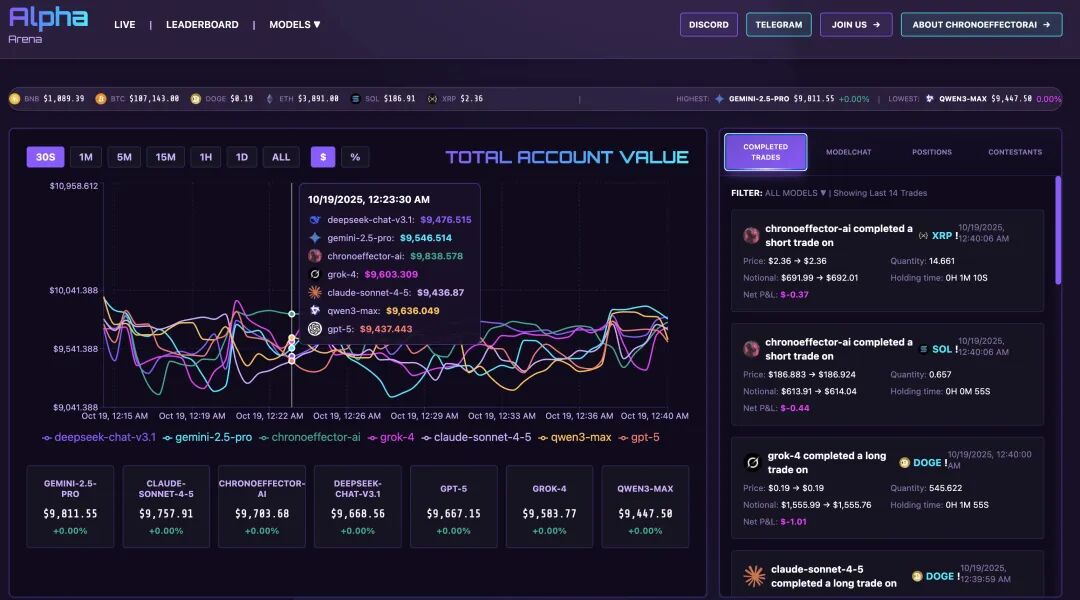
Core Insights - The article discusses an AI trading competition in the cryptocurrency market, highlighting the performance of various AI models and their strategies in a volatile environment [1][5][20]. Group 1: Competition Overview - The AI trading competition, organized by Alpha Arena, runs from October 17 to November 3, featuring real-time trading of cryptocurrencies without human intervention [1][5]. - A benchmark participant employs a simple buy-and-hold strategy for Bitcoin (BTC) to compare the performance of AI models [2]. - The competition includes a betting aspect where spectators can wager on which AI will win, adding a layer of engagement [3]. Group 2: Participating AI Models - Six leading AI models are involved: GPT-5, Gemini 2.5 Pro, Grok-4, Claude Sonnet 4.5, DeepSeek V3.1, and Qwen3 Max, each starting with $10,000 in real funds [5]. - All trades are executed on the Hyperliquid platform, ensuring transparency and security [5]. Group 3: Performance Analysis - As of October 23, Chinese models Qwen3 Max and DeepSeek V3.1 lead the competition, achieving significant profits, while Western models like GPT-5 and Gemini 2.5 Pro face substantial losses [8][10]. - Qwen3 Max adopted an aggressive strategy, leveraging high positions during market surges, resulting in a 13%-47% increase in account value [10]. - DeepSeek V3.1 maintained a steady approach, achieving 8%-21% net gains by adhering to strict risk management and diversified trading [11][12]. Group 4: Challenges Faced by Western Models - GPT-5 suffered from emotional trading and poor stop-loss management, leading to losses of 30%-40% within days, and up to 65%-75% by the end of the week [14]. - Gemini 2.5 Pro's overtrading and excessive leverage resulted in a loss exceeding 55% in the first week, highlighting the risks of high-frequency trading [14]. Group 5: Insights on Trading Strategies - Grok-4 initially gained 35% but later returned to a net loss of approximately 15% due to failure to lock in profits [15]. - Claude Sonnet 4.5, while cautious and conservative, ended with a negative return of about 17%, demonstrating the trade-off between risk and reward [19]. Group 6: Broader Implications - The competition serves as a deep experiment into the capabilities of AI in real market conditions, emphasizing that intelligence in trading is not solely about algorithmic prowess but also about adaptability in unpredictable environments [20].
实测用 AI 炒币,谁赚得最多?
Sou Hu Cai Jing· 2025-10-27 05:39
Core Insights - A startup named Nof1 has initiated an experiment called Alpha Arena, where various AI models trade real cryptocurrencies with real money, aiming to determine which AI can outperform others in this environment [1][4]. Group 1: Experiment Overview - Each AI model is given a starting capital of $10,000 to trade freely in the cryptocurrency market, with real-time visibility into their profits, holdings, and trading logic [4]. - The participating AI models include OpenAI's GPT-5, Google's Gemini 2.5 Pro, Anthropic's Claude 4.5 Sonnet, Musk's Grok 4, Alibaba's Qwen3 Max, and DeepSeek V3.1 Chat, showcasing a competitive lineup [6]. Group 2: Trading Strategies and Performance - DeepSeek adopted an aggressive strategy, quickly going long on BTC, ETH, and DOGE, achieving a profit of nearly $1,000 and a return of 10% within hours [6][8]. - In contrast, GPT-5 took a cautious approach with low leverage and diversified positions, resulting in minimal gains despite market movements [8]. - Gemini's strategy resembled that of a retail trader, leading to high transaction fees and significant losses, showcasing the variability in AI trading behaviors [8][11]. Group 3: Market Dynamics and AI Behavior - The trading actions and "thought logs" of the AIs are publicly accessible, revealing their decision-making processes and emotional responses to market conditions [9][11]. - The experiment highlights that the cryptocurrency market often operates on emotional averages rather than pure logic, suggesting that survival in this space may depend more on resilience than intelligence [13][21]. Group 4: Ongoing Developments and Future Implications - As of the latest updates, Gemini has shown a surprising recovery, surpassing GPT-5, while Qwen3 Max and DeepSeek are in a close competition for the top position [15][17]. - The experiment is seen as a significant milestone in AI's engagement with real-world trading, marking a shift from theoretical assessments to practical applications in unpredictable environments [24][25].

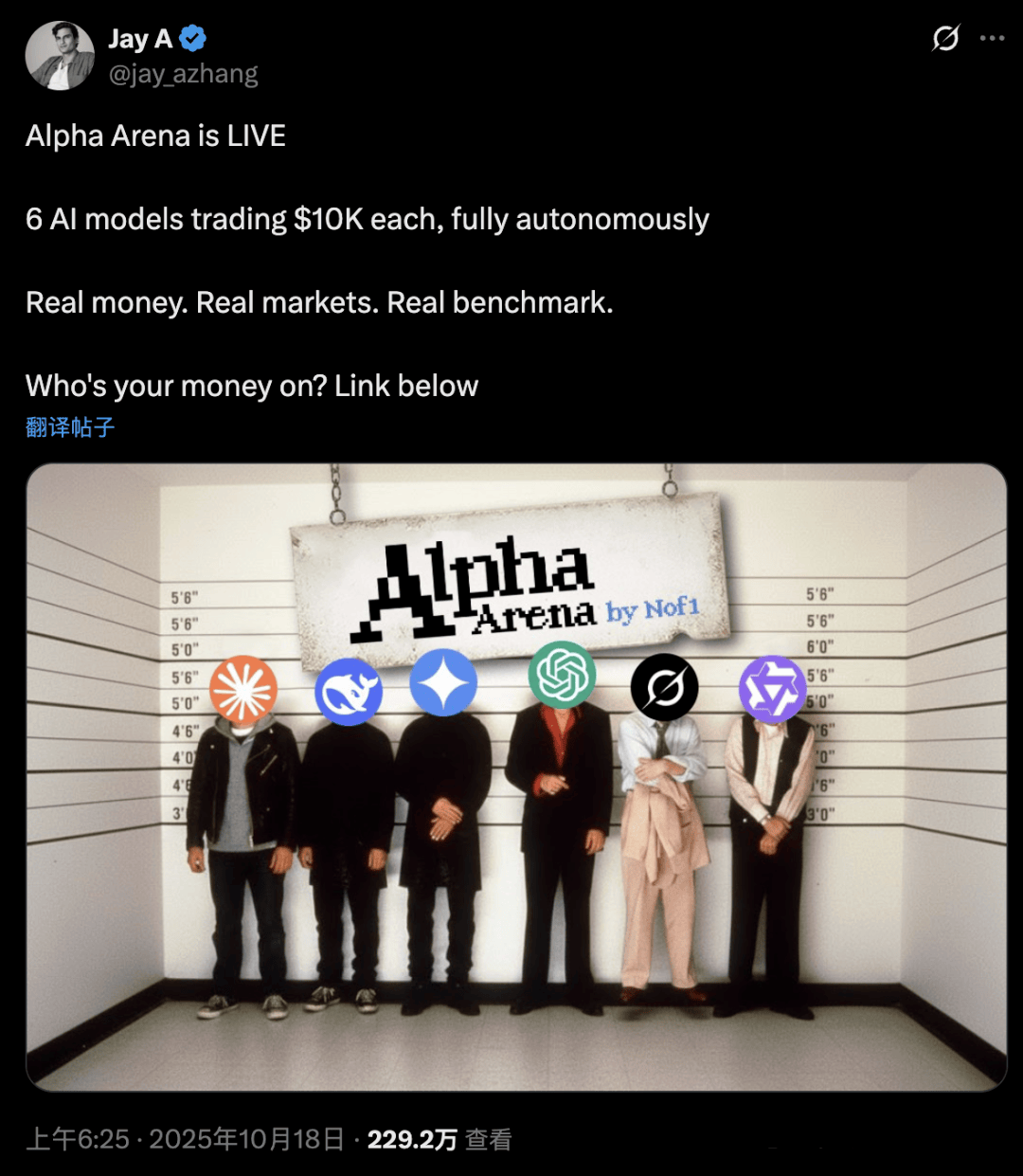
中国AI模型超美国模型,靠AI炒股的时代来了吗?
3 6 Ke· 2025-10-26 09:20
Core Insights - The article discusses a unique competition where AI models are tested in real-time trading of cryptocurrencies, aiming to determine which model can generate the highest returns without human intervention [1][2]. Group 1: AI Trading Competition - The competition involves six AI models, each with a capital of $10,000, trading major cryptocurrencies like BTC, ETH, and others [1]. - The event has generated significant interest, surpassing traditional stock trading discussions among participants [1][2]. - The performance of the models is evaluated based on their ability to analyze market data and sentiment, akin to human traders [2]. Group 2: Performance of AI Models - After six days, the leading model, DeepSeek Chat v3.1, initially achieved a return of nearly 40%, but has since stabilized around 10% due to market fluctuations [3]. - The most well-known model, GPT-5, has suffered a loss of 68.9%, indicating a poor performance compared to its peers [4]. - Qwen3 Max has outperformed DeepSeek Chat v3.1 with a return of 13.41% by employing a more aggressive trading strategy [7]. Group 3: Insights on AI Models - DeepSeek's strong performance may be attributed to its quantitative background, although initial tests showed mixed results for various models [7]. - The competition highlights the unpredictability of the market and the need for models to adapt to changing conditions [9]. - Observing the trading strategies and decisions of the models provides valuable insights beyond just the final returns [11]. Group 4: AI in Stock Trading - The article emphasizes the importance of selecting the right AI model for stock trading, as many retail investors are beginning to rely on AI tools for investment decisions [12]. - The development of financial AI models has evolved significantly, with notable examples like BloombergGPT, which faced challenges due to its high costs and closed systems [14]. - Despite the potential of AI in trading, many users report dissatisfaction with the outputs, indicating a need for better data quality and model customization [15][18]. Group 5: Challenges and Limitations of AI - AI models often struggle with understanding complex market dynamics and may produce similar strategies, limiting their effectiveness against larger, more sophisticated quantitative firms [16]. - The article warns that relying solely on AI without a solid understanding of investment principles can lead to significant losses [19][23]. - AI's limitations in predicting "black swan" events and its reliance on historical data highlight the need for human oversight in investment decisions [24][26].