
SLC NAND

Search documents
兆易创新:存储周期上行带动业绩高增-20260401
HTSC· 2026-04-01 04:35
证券研究报告 兆易创新 (603986 CH) 存储周期上行带动业绩高增 2026 年 3 月 31 日│中国内地 半导体 2025 年公司实现营收 92.03 亿元(yoy:+25.12%),归母净利润 16.48 亿元 (yoy:+49.47%),符合公司此前披露业绩预告(92.03/16.1 亿元)。其中, 4Q25 单季实现营收 23.72 亿元(yoy:+39.00%,qoq:-11.54%),归母净 利润 5.65 亿元(yoy:+108.85%,qoq:+11.23%),扣非归母净利润 4.27 亿元(yoy:+68.79%,qoq:-14.19%)。四季度为消费电子传统淡季,4Q25 公司营收环比有所下滑,但得益于存储价格持续上涨,公司毛利率达 44.91% (yoy:+11.74pct,qoq:+4.19pct);公司费用管控继续显效,叠加公允 价值增加(环比+1.4 亿),归母净利润环比增长 11.23%至 5.65 亿元。展 望 2026 年,存储行业周期持续上行,公司利基型 DRAM/NOR Flash/SLC NAND 业务均实现量价齐升,驱动业绩保持高速增长,维持"买入"评级。 | ...

存储周期持续-模组先行-利基跟进
2026-03-30 05:15
短期来看,该算法不会对需求构成实质性影响。当前各存储原厂的产能,包括 2027 年的产能在内,均已被预订满,许多 CSP(云服务提供商)的订单甚至 无法得到 100%的满足,消费电子领域的客户获取货源则更为困难。因此,短 期的需求担忧并不存在。 从长期视角分析,该算法的出现可能引发"杰文斯悖 论"。尽管单个 GPU 对内存的需求可能因算法优化而减少,但这会促进服务器 采购和数据中心建设的流畅性,从而加速 AI 应用的落地和 Token 的释放。最 终,整个市场的规模将被做大,反而会触发对内存总需求的增长。这一逻辑之 所以成立,关键在于当前内存的极度短缺。产业链中已出现服务器渠道商将采 购到的服务器拆除内存后,单独销售"去内存版"服务器的现象,内存则被拿 到现货市场高价出售。这表明,即使是对价格不敏感的 AI 终端用户也难以获得 满配的服务器,凸显了内存的稀缺性。 此前的 DeepSeek 模型也提供了类似 案例。其最初被认为会因优化参数、减少算力消耗而导致需求通缩,但最终其 落地反而推动了大模型的普及,使得 Token 总量不减反增,呈指数级增长。因 此,新的压缩算法长期来看并非利空,而是可能对整个 AI 产 ...


美光:未来汽车将需要300GB的内存
芯世相· 2026-03-23 06:34
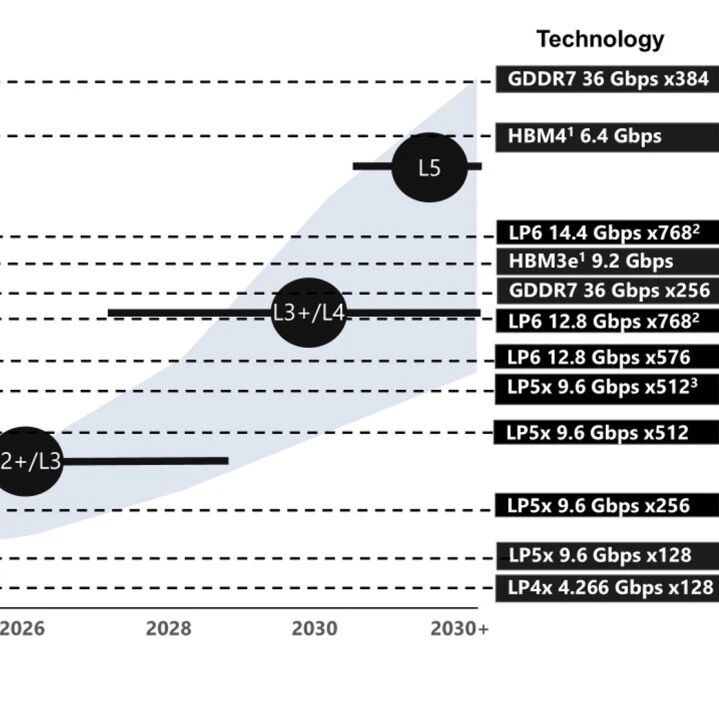
Core Insights - Micron's CEO Sanjay Mehrotra highlighted that with the introduction of L4 autonomous vehicles, the demand for RAM will exceed 300GB, driven by the strong demand for high-end HBM chips from AI cloud providers [3] - Micron reported a significant revenue increase of 200%, reaching $23.86 billion in Q2 2023, primarily due to AI infrastructure and structural supply constraints [3] - The company plans to build multiple fabs in Japan, Singapore, and New York, aiming for a 20% capacity increase by 2026 to alleviate supply-side pressures [3] Group 1: Automotive Memory and Processing Needs - The surge in data from advanced driver-assistance systems (ADAS) and autonomous driving sensors is creating unprecedented demands on automotive memory and storage systems [5] - As vehicles become more electronic and intelligent, the challenges faced in automotive systems are increasingly similar to those in large data centers [6] - The integration of high-priority data functions necessitates faster data transmission speeds between processing units and memory [6] Group 2: System Architecture and Design - The shift towards software-defined vehicles allows for modular design, enabling better bandwidth and memory capacity management [10] - Centralized architectures are being favored over distributed ECUs to handle the large volumes of real-time data from multiple sensors [10] - The design of vehicles is evolving to incorporate various processing units and memory types, focusing on performance where it is most needed [8] Group 3: Memory Technology Trends - LPDDR memory is gaining traction due to its higher bandwidth and lower power consumption, with LPDDR6 achieving 14.4Gb/s [12] - The automotive sector is increasingly utilizing DRAM for computation and NAND for data storage, with a focus on balancing performance and cost [14] - Emerging memory types like MRAM and RRAM are being explored for their low power and high-density storage capabilities [18] Group 4: Future Directions and Challenges - The complexity of future vehicles will require a layered memory and storage architecture to ensure performance and safety [11] - As the industry moves towards L4 and L5 autonomous driving, the need for higher memory capacity and bandwidth will become critical [13] - The automotive memory market is highly concentrated, with a few leading manufacturers dominating, making it essential for OEMs to understand the storage industry dynamics [14]


券商调研名单出炉!风电、光伏、存储芯片热度高
券商中国· 2026-03-21 08:18
Core Viewpoint - The article highlights the increasing interest of brokerage firms in various sectors, particularly in wind power, photovoltaics, and storage chips, indicating potential investment opportunities in these areas [1][5][8]. Group 1: Brokerage Research Trends - Over 940 A-share listed companies have been researched by brokerages this year, with a focus on sectors such as electronics, machinery, electrical equipment, and chemicals [1]. - Notably, 25 companies have attracted attention from at least 30 brokerages, indicating a high level of interest [1]. Group 2: Key Companies and Their Performance - Daikin Heavy Industries has been the most researched company, with over 90 brokerages conducting investigations, and it has seen a stock price increase of 35.45% this year [2][4]. - Other notable companies include: - TianShun Wind Energy: 63.27% increase, researched by 58 brokerages [4]. - JinkoSolar: 28.01% increase, researched by 52 brokerages [4]. - Huajin Technology: -4.17% decrease, researched by 52 brokerages [4]. - Nepean Mining: -2.27% decrease, researched by 50 brokerages [4]. Group 3: Sector Focus - The wind power and photovoltaic sectors are highlighted as key areas of interest, with significant research activity driven by government policies promoting renewable energy [5][6]. - The storage chip sector is also gaining traction, with a notable price increase in storage products, leading to heightened research interest from brokerages [8]. Group 4: Future Market Outlook - Brokerages maintain an optimistic outlook for the market, with strategies focusing on undervalued sectors and the potential for a broader market revaluation [9]. - Key investment themes include renewable energy, traditional industries, and consumer goods, indicating a diversified approach to future investments [9].



汽车芯片,新变革
半导体行业观察· 2026-03-07 03:07
Core Viewpoint - The automotive industry is undergoing a significant transformation driven by the exponential growth of data generated by advanced driver-assistance systems (ADAS) and the increasing complexity of vehicle functionalities, necessitating a reevaluation of memory and processing requirements [3][4][5]. Group 1: Data Processing and System Architecture - The data generated by sensors in autonomous and assisted driving is growing explosively, creating unprecedented demands on memory and storage subsystems within vehicles [3]. - The shift towards software-defined vehicles (SDVs) allows for better identification of where advanced processors and memory are needed, optimizing performance and cost [4][5]. - Traditional concerns about data transmission delays are diminishing as high-speed data transfer technologies, such as 10Gbps automotive Ethernet, become more prevalent [4][5]. Group 2: Memory and Storage Technologies - The choice of memory types in electric vehicles (EVs) is critical, with LPDDR6 emerging as a suitable option due to its balance of capacity and bandwidth, essential for ADAS and AI applications [9][11]. - High-bandwidth memory solutions are increasingly important as the demand for real-time processing in vehicles rises, with DRAM and NAND flash being commonly used for various applications [12][16]. - The integration of different memory types, such as DRAM and flash, into hybrid memory architectures is expected to enhance flexibility and performance in future vehicle designs [15][17]. Group 3: Industry Trends and Challenges - The automotive sector is transitioning from distributed electronic control units (ECUs) to more centralized architectures, enabling better data management and real-time decision-making [7][8]. - The increasing complexity of vehicle systems necessitates a focus on optimizing bandwidth, latency, and memory capacity to ensure safety and user experience [8][9]. - The semiconductor industry is experiencing shifts in memory pricing and availability due to rising demand from AI applications, impacting automotive manufacturers' strategies [11][18].
未知机构:中信电子2026年1月存储行业简报主流利基存储涨幅全面超预期-20260210
未知机构· 2026-02-10 02:00
Summary of the Conference Call on the Storage Industry Industry Overview - The report focuses on the storage industry, specifically DRAM and NAND Flash markets, highlighting significant price increases in January 2026 [1][2]. Key Points and Arguments Price Review for January 1. **DRAM Prices**: - Mainstream DRAM spot prices increased by 16% to 33% month-over-month in January 2026. - Contract prices for DDR5-8Gb and DDR4-8Gb surged by 119% and 63% respectively [1]. 2. **NAND Flash Prices**: - Mainstream NAND Flash spot prices rose by 24% to 34% month-over-month. - Contract prices increased by 37% to 67% [1]. 3. **Module Prices**: - DDR4/5 memory module prices increased by 13% to 50%. - SSD prices rose by 39% to 62%, while mobile storage prices increased by 22% to 43% [1]. Price Outlook 1. **DRAM Forecast**: - It is expected that traditional DRAM contract prices will rise by 90% to 95% in Q1 2026, up from a previous estimate of 50% to 60%. - The supply-demand gap for DRAM continues to widen, with North American CSP manufacturers securing supplies, forcing other customers to accept higher prices. Server DRAM is projected to increase by 88% to 93% in a single quarter [1]. 2. **NAND Flash Forecast**: - Strong demand from AI servers is anticipated to drive overall contract prices up by 55% to 60% in Q1 2026, compared to an earlier forecast of 33% to 38% [2]. 3. **Niche Storage**: - NOR Flash prices are expected to maintain an upward trend in H1 2026, with overall increases exceeding 20% in Q1, and even larger increases for smaller capacity NOR products [2]. Company Insights 1. **SK Hynix**: - The company forecasts a year-over-year growth of over 20% in DRAM demand and 15% to 20% in NAND demand for 2026, driven primarily by AI server and data center needs [3]. 2. **Samsung Electronics**: - Strong demand from AI servers is noted, while smartphone and PC shipments are negatively impacted by storage supply and pricing issues [3]. 3. **SanDisk**: - The company anticipates that data center bit demand will grow by over 60% in 2026 [3]. Investment Recommendations - The report recommends focusing on four key areas: 1. Beneficiaries of storage price increases, with specific recommendations for companies like Zhaoyi Innovation, Puran, and Beijing Junzheng. 2. CPU chain/memory upgrades, recommending AI interconnect chip leader Lanke Technology. 3. Companies benefiting from Changxin's investment in production expansion, including domestic equipment firms like Zhongwei, Huahai Qingke, Kema Technology, and Jingzhida. 4. Logic chip foundries for storage, with recommendations for Huahong Semiconductor and Yandong Micro [3].


力积电卖铜锣厂原因曝光 售厂后换取毛利升及纳入美光后段HBM合作名单
Jing Ji Ri Bao· 2026-02-05 23:38
Core Viewpoint - The company, Powerchip Semiconductor Manufacturing Corporation (力积电), reported its Q4 financial results and discussed the sale of its Cuozhuo plant to Micron, citing heavy depreciation burdens as the reason for the sale. This transaction is expected to improve gross margins and establish a partnership with Micron for high-bandwidth memory (HBM) production. Group 1: Financial Performance - In Q4, the company's revenue reached NT$12.5 billion, benefiting from an increase in average selling prices of DRAM and the appreciation of the US dollar, with a gross margin turning positive at 6%. Excluding the Cuozhuo plant, the gross margin would have been 17%, indicating that low capacity utilization and depreciation costs from the Cuozhuo plant were significant operational burdens [1]. - The company reported a net loss of NT$650 million for the quarter, a significant improvement from a loss of NT$2.73 billion in Q3 of the previous year [1]. Group 2: Market Dynamics - The memory market is experiencing structural supply-demand imbalances, with expectations that supply shortages will persist until the second half of 2026. This has led to rising wafer foundry prices [1]. - High-end AI servers are occupying the production capacity of major memory manufacturers for high-end DRAM, which is pushing up market prices for niche DRAM products, including DDR3 and DDR4 [1]. - The contract and spot prices for SLC NAND have also seen significant increases due to reduced supply from major Korean manufacturers [1]. Group 3: Strategic Moves - Following the sale of the Cuozhuo plant to Micron, the company plans to raise 12-inch foundry prices starting in January and will also increase 8-inch wafer foundry prices from March due to strong demand from AI servers and edge computing [2]. - The company aims to maintain its workforce and operational continuity while transitioning back to its Hsinchu facility. Micron has pre-paid for HBM backend wafer manufacturing capacity, integrating the company into its advanced packaging supply chain [2]. - The company has accumulated US$143 million in technical service fees without any delays and is progressing well in its collaboration with Tata Electronics for overseas factory projects, which will not be affected by the Cuozhuo plant sale [2].
东方证券:利基存储紧缺持续 AI需求打开增量空间
智通财经网· 2026-01-29 04:11
Group 1 - The core viewpoint is that niche storage, particularly in the context of AI demand, is expected to open up new growth opportunities beyond the existing market, with price adjustments for products like MCU and NOR Flash ranging from 15% to 50% [1] - AI demand is anticipated to drive incremental growth in niche storage, with increasing requirements for NOR Flash capacity due to the growth of AI terminal BIOS programs and code volume [1] - The supply of niche storage products is being significantly reduced as major international suppliers focus on mainstream storage products, leading to a tightening market for products like MLC NAND Flash, which is projected to see a 41.7% reduction in global capacity by 2026 [2] Group 2 - Domestic manufacturers are positioned strongly in the niche storage market, with companies like Zhaoyi Innovation and Puran achieving significant market shares in NOR Flash and SLC NAND, indicating a competitive advantage as global suppliers exit the niche storage sector [3] - The market share of domestic firms in niche storage is expected to benefit from the ongoing supply constraints caused by the withdrawal of overseas manufacturers, enhancing their competitive position [3] - Investment opportunities are identified in various domestic storage chip design firms and semiconductor equipment companies, highlighting a broad range of potential beneficiaries from the niche storage market dynamics [4]


利基存储紧缺持续,AI需求打开增量空间
Orient Securities· 2026-01-29 01:45
Investment Rating - The report maintains a "Positive" investment rating for the electronic industry [5] Core Insights - The ongoing shortage of niche storage is expected to continue, with AI demand opening up incremental growth opportunities [2][8] - AI demand is anticipated to drive the need for niche storage, particularly in applications such as automotive, industrial, and security [7] - Domestic manufacturers are positioned competitively in the niche storage market and are likely to benefit from the supply constraints caused by international suppliers exiting this segment [7] Summary by Sections Investment Recommendations and Targets - Key investment targets include domestic storage chip design companies such as Zhaoyi Innovation, Puran, Jucheng, Dongxin, Beijing Junzheng, and Hengshuo [3][8] - Other relevant companies include domestic storage module manufacturers like Jiangbolong, Demingli, and Baiwei Storage, as well as semiconductor equipment firms such as Zhongwei, Jingzhida, and Beifang Huachuang [3][8] - Companies benefiting from storage technology iterations include Lanke Technology, Lianyun Technology, and Aojie Technology [3][8] Market Dynamics - The supply of niche storage products is being significantly reduced as major international suppliers focus on mainstream storage products, leading to a substantial contraction in supply [7] - For instance, the global MLC NAND Flash capacity is projected to decrease by 41.7% in 2026 due to supply shrinkage, which is expected to drive prices significantly higher [7] - Domestic firms are gaining market share in niche storage, with Zhaoyi Innovation holding approximately 18.5% of the NOR Flash market in 2024, ranking second globally [7]


兆易创新:2026 年上半年利润率持续扩张
2026-01-23 15:35
Summary of GigaDevice Semiconductor Beijing Inc Conference Call Company Overview - **Company**: GigaDevice Semiconductor Beijing Inc - **Industry**: Technology Semiconductors - **Market Cap**: Rmb201,221 million - **Stock Rating**: Overweight - **Price Target**: Rmb288.00 - **Current Price**: Rmb301.47 (as of January 22, 2026) - **52-Week Range**: Rmb314.80 - 98.87 Key Financial Metrics - **4Q25 Revenue**: Rmb2.4 billion, down 12% Q/Q, up 39% Y/Y, 30% below estimate, and 12% below consensus [6] - **4Q25 Net Profit**: Rmb527 million, up 4% Q/Q, up 95% Y/Y, 29% below estimate, and 1% above consensus [6] - **2025 Actual Expenses**: Rmb1,182 million, in line with budget of Rmb1,161 million [6] - **1H26 Budget**: Rmb1,547 million, 31% higher than full-year 2025 budget due to higher DRAM wafer costs [6] - **EPS Forecast**: - 2025: Rmb2.65 - 2026: Rmb6.69 - 2027: Rmb8.69 [4] Margin Expansion - **1H26 Margin Outlook**: Expected to improve due to lower cost hikes compared to DDR4 pricing increases (50% to 100%) [6] - **Key Drivers**: Continued price hikes in DDR4/3, NOR Flash, and SLC NAND, along with a strong MCU business aiming to gain market share in China [6] Valuation and Risks - **Valuation Methodology**: Price target derived from a residual income model with key assumptions including a cost of equity of 8.9% and a medium-term growth rate of 18.5% [7] - **Risks to Upside**: - NOR up-cycle driven by stronger demand - Superior chip design leading to increased exposure to low-density NOR - Faster-than-expected DRAM development [9] - **Risks to Downside**: - NOR down-cycle driven by weaker demand - Inferior chip design leading to increased exposure to mid/high-density NOR - Slower-than-expected DRAM development [9] Analyst Sentiment - **Overall Sentiment**: Analysts remain optimistic about GigaDevice's potential to benefit from industry trends and its strong market position [2] - **Industry View**: Attractive, indicating positive expectations for the semiconductor sector in Greater China [4] Additional Insights - **Related Party Transactions**: Mentioned in the context of earnings miss, indicating potential complexities in financial reporting [1] - **Long-term Potential**: Emphasis on customized DRAM as a growth area, suggesting strategic focus on innovation and market needs [6] This summary encapsulates the key points from the conference call, highlighting GigaDevice's financial performance, market outlook, and strategic positioning within the semiconductor industry.