
TileLang

Search documents
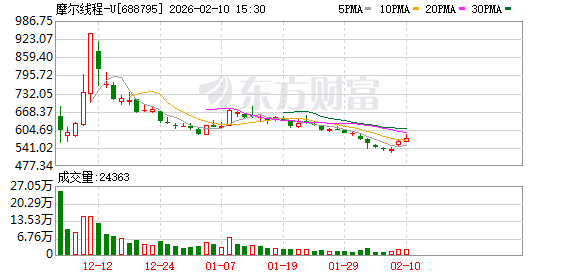
摩尔线程开源TileLang-MUSA 释放全功能GPU潜力!比手写代码量减少约90%
Guang Zhou Ri Bao· 2026-02-10 15:41
Core Insights - Moore Threads has officially open-sourced the TileLang-MUSA project, providing complete support for the TileLang programming language, aimed at lowering development barriers and enhancing AI and high-performance computing experiences on domestic computing platforms [2][4] Group 1: TileLang Overview - TileLang is a high-performance AI operator programming language based on tensor tiling abstraction, designed as a domain-specific language (DSL) with a declarative syntax similar to Python, allowing developers to describe computational intentions close to mathematical formulas [3] - The language significantly improves GPU computing development efficiency by abstracting complexities, enabling cross-platform capabilities, and automating complex tasks such as layout inference and memory optimization [3] Group 2: Practical Applications - The development of DeepSeek-V3 has utilized TileLang for rapid prototyping and performance validation, demonstrating its practical value in large-scale model training [4] - TileLang-MUSA serves as a bridge between advanced syntax and domestic computing, effectively unlocking the performance potential of full-featured GPUs [5] Group 3: Technical Features - TileLang-MUSA has been functionally validated on multiple generations of Moore Threads' full-featured GPUs, including the MTT S5000 and MTT S4000, showcasing good hardware compatibility [5] - The project has achieved over 80% unit test coverage for native TileLang operators based on the MUSA architecture, providing reliable assurance for large-scale applications [5] Group 4: Development Efficiency - Using TileLang-MUSA, the code volume has been reduced by approximately 90% compared to C++ code, resulting in clearer logic and significantly lower development and maintenance costs [6] Group 5: Future Outlook - The open-sourcing of TileLang-MUSA is a crucial step for Moore Threads in building a domestic computing ecosystem, with plans to create a unified acceleration platform covering everything from single operators to complete large models [7] - Future initiatives include performance optimization, integration with mainstream AI frameworks, and the development of debugging and performance analysis tools to support developers throughout the process [7]

拆解CANN:当华为决定打开算力的「黑盒」
机器之心· 2025-12-19 06:38
Core Viewpoint - The article discusses Huawei's recent announcement regarding the open-source of its Ascend CANN software, which aims to lower the barriers for AI tool development and foster a new AI computing ecosystem [2][30]. Group 1: CANN Open Source and Developer Empowerment - CANN, which stands for Compute Architecture for Neural Networks, serves as a bridge between AI training frameworks and underlying AI chips, allowing developers to utilize computing power without needing to understand chip details [2][5]. - The open-source nature of CANN has garnered significant attention in the industry, as it empowers developers to define computing capabilities and customize their AI models [2][6]. - CANN supports seamless integration with major AI frameworks such as PyTorch, TensorFlow, MindSpore, and PaddlePaddle, enhancing developer flexibility [5][6]. Group 2: Development Paths Offered by CANN - CANN provides three development paths for different types of developers: 1. For those familiar with Python, CANN integrates with the Triton ecosystem, allowing easy migration of existing code [9]. 2. For system-level programmers seeking high performance, Ascend C offers low-level resource management capabilities [10]. 3. For developers looking for ease of use, the CATLASS operator template library simplifies the creation of matrix multiplication operators [11][13]. - The MLAPO fusion operator, part of the CATLASS library, significantly reduces computation time and enhances performance in large models [15]. Group 3: Architectural Innovations - CANN's architecture features a layered decoupling approach, allowing independent evolution of components, which reduces integration complexity for developers [21][22]. - The decoupling enables developers to selectively upgrade specific components based on their needs, facilitating easier customization and integration [23][29]. - CANN has transitioned from a monolithic software structure to a modular one, with independent components for various functionalities, enhancing flexibility and performance [24][26]. Group 4: Open Source Community and Growth - The open-source initiative of CANN is actively progressing, with over 27 sub-projects and a total of more than 3,700 stars on its repositories [35]. - The community-driven approach invites developers to contribute, thereby expanding the ecosystem and enhancing the technology's value through collaborative efforts [31][32]. - CANN's repositories include a variety of core libraries and tools, providing developers with ready-to-use resources for AI application development [16][36].

西部证券晨会纪要-20251016
Western Securities· 2025-10-16 02:49
Group 1: Company Overview - The report on China Resources Beverage (02460.HK) indicates that the company is expected to achieve revenues of 11.2 billion, 12.5 billion, and 13.4 billion CNY for the years 2025 to 2027, with corresponding net profits of 1.3 billion, 1.6 billion, and 1.8 billion CNY, respectively, leading to a PE ratio of 19, 15, and 14 times [1][6][8] - The packaging drinking water market in 2023 is projected to reach 215 billion CNY, growing at a CAGR of 7.1% from 2018 to 2023, indicating a strong demand for essential products [6][7] - China Resources Beverage holds a market share of 32.7% in the packaging water sector, positioning it as a leading player in a highly competitive market [6][7] Group 2: Financial Performance - In the first half of 2025, the company's revenue from packaged drinking water and beverage products was 5.25 billion and 955 million CNY, accounting for 85% and 15% of total revenue, respectively, with expectations for margin growth due to increased self-production and capacity utilization [7][8] - The report forecasts that the company will maintain a strong growth trajectory, with revenues projected to grow by 23.2%, 19.7%, and 21.0% from 2025 to 2027, and net profits expected to increase by 21.9%, 24.8%, and 22.7% during the same period [4][19] Group 3: Market Strategy - The company is focusing on national expansion and channel refinement, with significant growth potential outside its home region [8] - The report highlights the company's strong association with sports branding and its efforts to diversify marketing strategies [8] - The transition towards a platform-based business model is expected to enhance long-term revenue growth potential in the beverage sector [8][19] Group 4: Industry Insights - The macroeconomic analysis indicates that the financial environment is supportive, with social financing growth and government bond issuance providing a backdrop for stable growth in the beverage industry [2][11] - Inflation data shows a narrowing decline in CPI and a stabilization in PPI, suggesting a favorable economic climate for consumer goods, including beverages [3][14]
瑞银:中国算力加速发展推动AI进程 看好阿里巴巴 及百度
Zhi Tong Cai Jing· 2025-10-15 13:33
Core Viewpoint - China is accelerating its investment in the artificial intelligence (AI) sector, supported by national policies and R&D investments from major tech companies and local suppliers, which is expected to drive the development of domestic computing power and AI models [1][2]. Group 1: Investment and Development - UBS highlights that despite uncertainties in imported AI chips, domestic computing power is continuously developing due to government support and investments from major tech firms [1]. - Alibaba and Baidu are favored by UBS for their ongoing progress in self-developed chips, which will strengthen their positions in the AI value chain [1]. Group 2: Technological Advancements - Recent technological advantages include improvements in domestic GPU performance through internal R&D and local suppliers, as well as system-level enhancements via supernode scaling [2]. - The design of supernodes, such as Alibaba's Panjiu 128 and Huawei's Ascend 384, significantly increases GPU quantities per cabinet, compensating for performance gaps in individual domestic GPUs [2]. Group 3: AI Model Development - AI model developers are optimizing algorithms for domestic GPUs, with DeepSeek's latest v3.2 model utilizing the TileLang programming language to better fit the local algorithm ecosystem [2]. - Most internet companies are accelerating the development of ASICs to optimize workloads and improve cost-effectiveness [2]. Group 4: Hardware and Software Ecosystem - A recent survey of AI chip experts revealed that domestic GPUs are now comparable to NVIDIA's Ampere in performance, although they still lag behind the Blackwell series [3]. - Some domestic chip manufacturers have established their own software stacks or added CUDA compatibility, enhancing engineer migration efficiency, though fragmentation limits scalability [3]. Group 5: Supply Chain and Market Position - China's capabilities in advanced process technology and high-bandwidth memory production are still in early stages, impacting supply chain strength [3]. - Besides Alibaba and Baidu, UBS also sees potential in iFlytek for its advancements in integrating domestic hardware with large model development, and prefers Horizon Robotics, Northern Huachuang, and Zhongwei Company [3].


人工智能系列报告(九)、算力系列报告(二):TileLang:中国的CUDA和Triton
Western Securities· 2025-10-15 06:09
Investment Rating - The industry investment rating is "Overweight" [7] Core Insights - CUDA has developed a significant competitive advantage for NVIDIA in high-performance computing and AI applications over nearly two decades, with enhancements like NVLink and mixed-precision training [12][18] - Triton, introduced by Philippe Tillet, automates low-level optimizations for GPU programming, significantly reducing the development burden for AI applications [19][23] - TileLang, developed by Peking University, aims to bridge the compatibility gap between domestic AI chips and established platforms like CUDA and Triton, potentially lowering development costs and accelerating commercialization [29][36] Summary by Sections Section 1: High-Performance Computing as the Foundation for Generative AI - CUDA has been pivotal in establishing NVIDIA's moat by enabling GPUs to handle parallel computing tasks essential for AI [12][18] - The introduction of Tensor Cores and mixed-precision training has drastically improved matrix computation speeds [14][18] Section 2: TileLang as a Potential Solution for Domestic AI Chips - Domestic AI chip manufacturers face challenges in software compatibility and toolchain maturity compared to NVIDIA's CUDA platform [28] - TileLang, set to be open-sourced in January 2025, utilizes tiling techniques to optimize memory and scheduling, potentially enhancing the performance of AI operators [29][32] - TileLang could effectively address the compatibility issues between leading AI chip companies and domestic platforms, facilitating broader adoption [36] Section 3: Investment Opportunities - Recommended companies to watch include AI inference chip manufacturers like Cambricon and Haiguang Information [37] - Notable server companies include Inspur Information, Zhongke Shuguang, Huqin Technology, and Digital China [37]
人工智能专题:后R1时代,DeepSeek发展的三大阶段
Zhongyuan Securities· 2025-10-14 08:40
Investment Rating - The report maintains an "Outperform" rating for the computer industry, indicating an expected increase of over 10% relative to the CSI 300 index in the next six months [41]. Core Insights - DeepSeek has gained significant attention since the release of its R1 model earlier this year, and it has since focused on incremental updates rather than launching a more advanced R2 model. The development is categorized into three main stages: performance enhancement, hybrid reasoning architecture implementation, and cost reduction with accelerated domestic adaptation [7][10]. - The introduction of the V3.2-Exp model has led to a substantial reduction in API calling prices, with input cache hit prices dropping to 20% of R1's cost and output prices to 19%, enhancing the model's cost-effectiveness and market competitiveness [33][34]. Summary by Sections Stage One: Performance Enhancement - In March, DeepSeek launched V3-0324 and in May, R1-0528, which improved model capabilities through post-training, bridging the gap with leading models [11][12]. Stage Two: Hybrid Reasoning Architecture and Agent Capability Enhancement - From August onwards, DeepSeek aligned with global trends by releasing V3.1 and V3.1-Terminus, significantly enhancing agent capabilities and reasoning efficiency through extensive training on the DeepSeek-V3.1-Base model [12][18]. Stage Three: Efficiency Improvement and Domestic Adaptation Acceleration - The V3.2-Exp model, released in September, introduced a new attention mechanism (DSA) that improved training and reasoning efficiency while significantly lowering costs. This model also marked a milestone in the domestic AI industry, achieving zero-day adaptation with domestic chips from Huawei and Cambrian [31][34].
全球科技(计算机)行业周报:DeepSeek-V3.2-Exp发布,训练推理提效,API同步降价-20251012
Huaan Securities· 2025-10-12 12:02
Investment Rating - Industry investment rating: Overweight [1] Core Insights - The DeepSeek-V3.2-Exp model was officially released on September 29, 2025, introducing the DeepSeek Spare Attention (DSA) mechanism, which significantly enhances training and inference efficiency for long texts [3][12] - The API pricing has been reduced, leading to a cost decrease of over 50% for developers using the DeepSeek API, with new prices set at 0.2 CNY per million tokens for input (cache hit), 2 CNY per million tokens for input (cache miss), and 3 CNY per million tokens for output [5][14] - The release of DeepSeek-V3.2-Exp is expected to drive collaborative innovation in China's computing power ecosystem, with companies like Huawei and Cambricon quickly announcing compatibility [5][14] Summary by Sections 1. Computer Industry Insights - The DeepSeek-V3.2-Exp model introduces a sparse attention mechanism that maintains output quality while improving efficiency [12][13] - The model's performance is comparable to its predecessor, V3.1-Terminus, across various public evaluation datasets [4][13] 2. Market Review - The computer industry index decreased by 1.83% during the week of October 9-10, 2025, underperforming the Shanghai Composite Index by 2.20 percentage points [16][19] - Year-to-date, the computer industry index has increased by 25.69% [16][19] 3. Technology Software Industry News - Nvidia has signed an agreement with OpenAI to invest up to 100 billion USD for the development of AI infrastructure, including a 10 GW data center [25] - The low-altitude economy is being promoted as a new growth engine for regional economic transformation [26] - New standards for autonomous driving have been released, focusing on testing and safety [28] 4. Company Dynamics - Notable companies in the industry include Digital China, Cambricon, and others that are adapting to the new model and API pricing [5][14]

信创ETF(159537)涨近6%,DeepSeek-V3.2-Ex发布,国产云厂商day0适配
Mei Ri Jing Ji Xin Wen· 2025-10-09 03:28
Group 1 - DeepSeek officially released the DeepSeek-V3.2-Exp model on September 29, which is an experimental version aimed at optimizing training and inference efficiency for long texts [1] - The new model introduces DeepSeek Sparse Attention, a sparse attention mechanism, building on the previous V3.1-Terminus version [1] - The development of the new model utilized TileLang, an open-source AI operator programming language developed by a team led by Associate Professor Yang Zhi from Peking University [1] Group 2 - The 信创 ETF (159537) tracks the 国证信创指数 (CN5075), which selects listed companies in the semiconductor, software development, and computer equipment sectors from the Shanghai and Shenzhen markets [2] - The index focuses on reflecting the overall performance of the information technology innovation theme, with a significant emphasis on semiconductor and software development industries [2] - The average market capitalization of the index constituents is large, showcasing a diversified development pattern within the 信创 industry [2]


DeepSeek与国产芯片的“双向奔赴”
2 1 Shi Ji Jing Ji Bao Dao· 2025-09-30 23:14
Core Viewpoint - The release of DeepSeek-V3.2-Exp model by DeepSeek Company marks a significant advancement in the domestic AI chip ecosystem, introducing a sparse attention mechanism that reduces computational resource consumption and enhances inference efficiency [1][7]. Group 1: Model Release and Features - DeepSeek-V3.2-Exp model incorporates DeepSeek Sparse Attention, leading to a reduction in API prices by 50% to 75% across its official app, web, and mini-programs [1]. - The new model has received immediate recognition and adaptation from several domestic chip manufacturers, including Cambricon, Huawei, and Haiguang, indicating a collaborative ecosystem [2][6]. Group 2: Industry Impact and Ecosystem Development - The rapid adaptation of DeepSeek-V3.2-Exp by various companies suggests a growing consensus within the domestic AI industry regarding the model's significance, positioning DeepSeek as a benchmark for domestic open-source models [2][5]. - The domestic chip industry, primarily operating under a "Fabless" model, is expected to progress quickly as it aligns with standards defined by DeepSeek, which is seen as a key player in shaping the future of the industry [4][5]. Group 3: Comparison with Global Standards - DeepSeek's swift establishment of an ecosystem contrasts with NVIDIA's two-decade-long development of its CUDA platform, highlighting the rapid evolution of the domestic AI landscape [3][8]. - The collaboration among major internet companies like Tencent and Alibaba in adapting to domestic chips further emphasizes the expanding synergy within the AI hardware and software ecosystem [8].
DeepSeek 与国产芯片开启“双向奔赴”
2 1 Shi Ji Jing Ji Bao Dao· 2025-09-30 12:13
Core Insights - DeepSeek company has released the DeepSeek-V3.2-Exp model, introducing a sparse attention mechanism that significantly reduces computational resource consumption and enhances inference efficiency [1] - The new model has led to a price reduction of API services by 50% to 75% [1] - The release has prompted immediate recognition and adaptation from several domestic chip manufacturers, indicating a growing synergy within the domestic AI hardware and software ecosystem [1][2] Group 1: Model Release and Features - The DeepSeek-V3.2-Exp model incorporates the DeepSeek Sparse Attention mechanism, optimizing training and inference efficiency for long texts [5] - The model is compatible with CUDA and utilizes TileLang for rapid prototyping, aiming for higher efficiency through lower-level language implementations [5][6] - The release of V3.2-Exp marks a significant shift from the previous version, V3.1, which did not receive any proactive recognition from companies regarding the "UE8M0 floating-point format" [4][5] Group 2: Industry Response and Ecosystem Development - Within four minutes of the model's release, Cambricon announced its adaptation of the DeepSeek-V3.2-Exp model and open-sourced its large model inference engine [2] - Huawei and Haiguang also quickly followed suit, demonstrating the rapid response from the domestic chip industry to the new model [2] - The consensus within the domestic AI industry regarding the DeepSeek model has empowered the company to take the lead in defining standards for domestic chips [3][4] Group 3: Competitive Landscape - The rapid development of the domestic chip ecosystem is highlighted by the swift adaptation of major players like Tencent and Alibaba, who are actively integrating domestic chips into their cloud computing services [6] - Experts believe that the emergence of DeepSeek has accelerated the pace of domestic chip development, with expectations for significant advancements by 2025 [3]