
Trainium 3

Search documents
传自研芯片不如预期,AWS扫货GPU
半导体行业观察· 2026-03-20 00:56
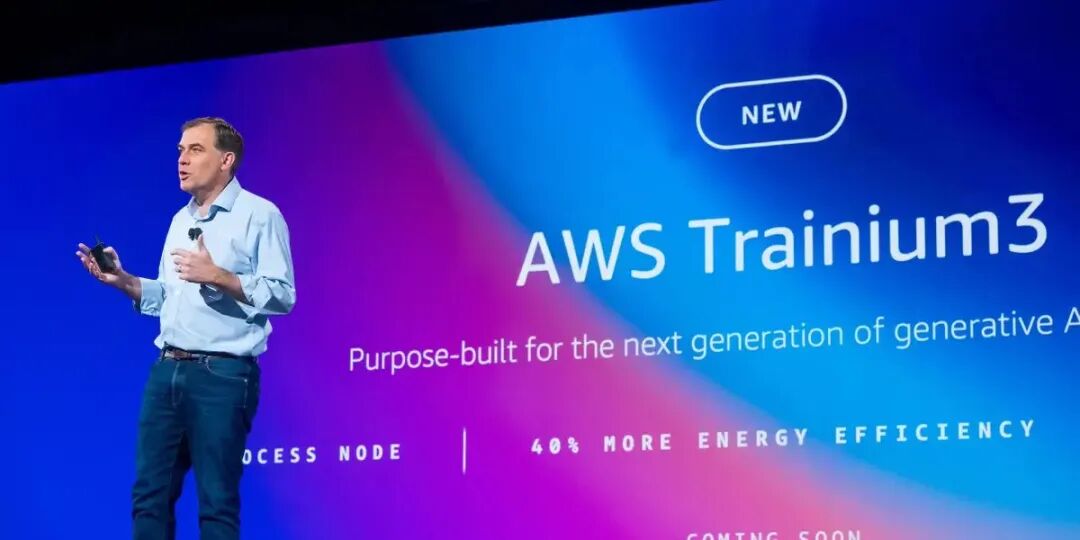
Core Viewpoint - There are rumors that Amazon may reduce the shipment volume of its upcoming Trainium 3 AI chip due to underwhelming performance in internal tests, but suppliers have not received any such notifications and are preparing for a significant ramp-up starting in Q2 2026 [2][3]. Group 1: Market Dynamics - Custom AI chips, specifically Application-Specific Integrated Circuits (ASICs), are expected to drive growth in the AI server market this year, with Amazon's Trainium 3 seen as a key product in this trend [2]. - The cost of generating AI tokens with Trainium 3 may be higher than competing chips, leading Amazon to potentially reduce Trainium 3 shipments while increasing demand for the transitional Trainium 2.5 and accelerating the development of Trainium 4 [2]. Group 2: Supply Chain Insights - Companies involved in the Amazon ASIC server supply chain include Wiwynn, Accton Technology, Asia Vital, Cooler Master, Microloops, King Slide Works, Delta Electronics, and BizLink Holding, all of whom are preparing for a significant increase in production starting in Q2 2026 [3]. - Supply chain executives have not received any plans to cut Trainium 3 shipments or increase Trainium 2.5 orders, indicating a strong expectation for growth in AI server shipments in the latter half of 2026 [3]. Group 3: Revenue Projections - Auras Technology anticipates that servers using ASIC accelerators will account for 20% to 30% of its revenue in 2025, with significant growth expected starting in the second half of 2026 [4]. - Amazon's CEO Andy Jassy expressed confidence in Trainium 3, stating it will offer a 40% improvement in cost-performance over Trainium 2, with strong customer demand expected to lead to full booking of available supply by mid-2026 [4]. Group 4: Market Trends - According to DIGITIMES Research, shipments of high-end AI ASIC accelerators are projected to reach 5.13 million units in 2025 and 7.23 million units in 2026, with a growth rate exceeding 40% annually, significantly outpacing GPU accelerators [5]. - Despite the dominance of GPU-based servers, their growth rate is slowing, with projections dropping from 29.6% in 2025 to 22.6% in 2026, while the faster growth of AI ASIC shipments is expected to drive the next phase of expansion in the global AI server supply chain [5]. Group 5: Investment and Development - AWS plans to deploy over 1 million NVIDIA GPUs in the next 12 months, including the Blackwell and Rubin architectures, while continuing to invest in its internal AI accelerator project, Trainium [5][6]. - OpenAI has committed $2 billion to Trainium computing and AWS GPU resources, following Amazon's previous investment of $50 billion [6].


Marvell upgraded, Trade Desk downgraded: Wall Street's top analyst calls
Yahoo Finance· 2026-03-06 14:31
Core Viewpoint - The article summarizes significant research calls from Wall Street, highlighting upgrades for various companies based on market trends and growth potential. Group 1: Company Upgrades - Piper Sandler upgraded Karman (KRMN) to Overweight from Neutral with a price target of $127, increased from $110, citing a potential munitions "super cycle" driven by U.S. and allies' efforts to replenish stockpiles and enhance production capabilities [2] - BMO Capital upgraded Okta (OKTA) to Outperform from Market Perform with a price target of $97, up from $83, reflecting increased confidence in the company's revenue growth sustainability [2] - Benchmark upgraded Marvell (MRVL) to Buy from Hold with a price target of $130, while BofA also upgraded Marvell to Buy from Neutral with a price target of $110, up from $90, indicating strong growth drivers beyond its collaboration with Amazon [2] - BofA upgraded Ciena (CIEN) to Buy from Neutral with a price target of $355, raised from $260, after reassessing the data center buildout and spending outlook from major cloud players [2] - Northcoast upgraded Intuit (INTU) to Buy from Neutral with a price target of $575, attributing the upgrade to valuation considerations as shares have declined nearly 30% in 2026 [2]


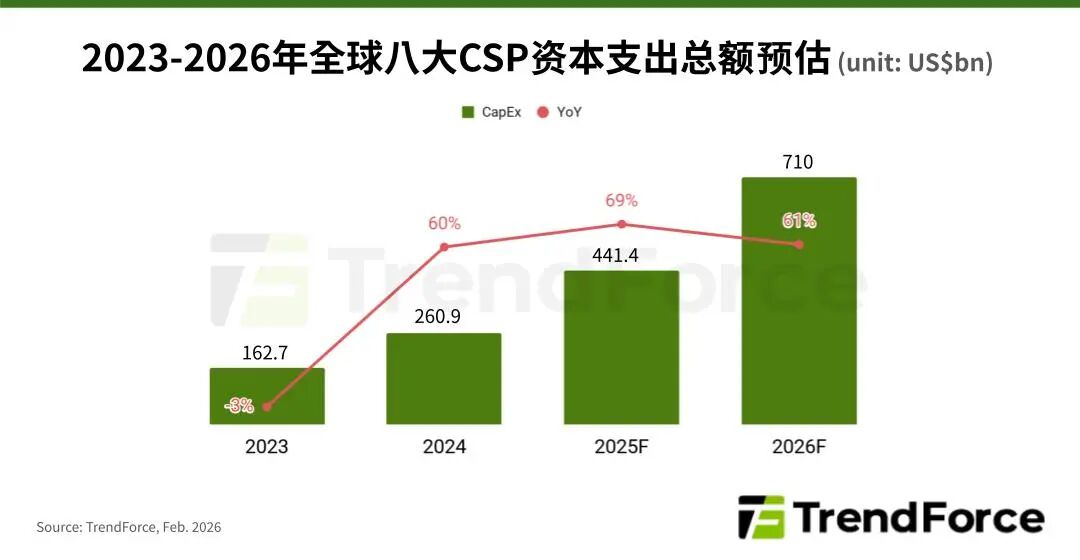
TrendForce:预计2026年八大主要CSP的合计资本支出将超7100亿美元 年增率约61%
智通财经网· 2026-02-25 09:14
Group 1: Industry Overview - Global cloud service providers (CSPs) are significantly increasing investments in AI servers and related infrastructure, with total capital expenditure expected to exceed $710 billion by 2026, reflecting a year-on-year growth rate of approximately 61% [1] - The eight major CSPs include Google, AWS, Meta, Microsoft, Oracle, Tencent, Alibaba, and Baidu [4] Group 2: Company-Specific Insights - Alphabet (Google) is projected to have capital expenditures surpassing $178.3 billion by 2026, with a year-on-year increase of 95%. Google has a significant advantage in self-developed ASICs, with expectations that TPU shipments will account for nearly 78% of its AI server output by 2026 [4] - Amazon is increasing its procurement of NVIDIA GPU systems, with expectations that GPU models will comprise nearly 60% of its AI servers by 2026. The new generation of Trainium ASIC is expected to be launched in the second quarter of 2026 [5] - Meta's capital expenditure is expected to exceed $124.5 billion by 2026, with GPU models expected to account for over 80% of its AI servers. Meta is also working on self-developed ASICs to reduce costs and dependency on single suppliers [5] - Microsoft is focusing on long-term demand for large model training and inference, primarily purchasing NVIDIA solutions for its AI servers. The company has released its self-developed chip, Maia 200, targeting efficient AI inference applications [6] - ByteDance is expected to allocate over half of its capital expenditure towards AI chip procurement, with NVIDIA's H200 being a key solution, contingent on regulatory reviews [6] - Tencent is acquiring NVIDIA GPU solutions to support cloud and generative AI demands while also collaborating with local firms to develop its own ASIC solutions [6] - Alibaba and Baidu are both actively developing their own ASIC AI chips, with Alibaba providing AI application infrastructure and Baidu planning to introduce its Kunlun solutions for large-scale AI training and inference applications [7]




股价暴跌超21%!华尔街聚焦Astera Labs与亚马逊合作及盈利结构
美股IPO· 2026-02-11 23:46
Core Viewpoint - Astera Labs has become a focal point on Wall Street due to its latest earnings report, guidance, and collaboration with Amazon, leading to a stock price drop of over 21% due to related uncertainties [1]. Group 1: Earnings Performance - Morgan Stanley analyst Joseph Moore noted that Astera's revenue growth is strong but is partially offset by aggressive expansion plans; the first half of the year is seen as a transition period, with expectations for Scorpio X related to Amazon's Trainium 3 [3]. - Morgan Chase analyst Harlan Sur highlighted that the latest quarterly performance was strong, with continued growth in Scorpio "P" series, PCIe Gen6 retimers, and Taurus networking products, along with better-than-expected guidance [3]. Group 2: Future Outlook and Risks - Harlan Sur pointed out potential risks to future gross margins due to Amazon's acquisition of warrants, unfavorable SKU structure, and an increase in hardware sales proportion; he maintained an "Overweight" rating but lowered the target price to $205 [3]. - Needham analyst N. Quinn Bolton mentioned that the Amazon warrant transaction could bring up to $6.5 billion in potential new revenue; despite high valuations, Astera's focus on cloud and AI infrastructure connectivity shows significant growth potential, maintaining a "Buy" rating with a target price of $220 [3].


亚马逊_25 年第四季度回顾_围绕 AI 与电商的长期战略布局,投资聚焦平台复利增长
2026-02-10 03:24
Summary of Amazon.com Inc. (AMZN) Q4'25 Earnings Call Company Overview - **Company**: Amazon.com Inc. (AMZN) - **Market Cap**: $2.4 trillion - **Current Price**: $222.69 - **12-Month Price Target**: $280.00 (Upside: 25.7%) [1] Key Themes and Financial Performance 1. **Capital Expenditures**: - FY26 capex guidance set at approximately $200 billion, indicating a significant investment cycle in both cloud computing and eCommerce operations globally [1][2] 2. **AWS Growth**: - AWS revenue backlog increased by 22% quarter-over-quarter and 38% year-over-year, with growth driven by both AI and non-AI workloads [1] - AWS operating margins reached 35%, outperforming expectations despite rising depreciation expenses [1] 3. **Commerce and Advertising Segments**: - Demand trends in commerce and advertising slightly exceeded forecasts, showing consistent compounded growth compared to previous periods [1] - The shift towards local and quick commerce is expected to enhance shopper frequency and improve Prime membership value [2] 4. **Operating Income and Guidance**: - Q4'25 GAAP operating income included one-time impacts, leading to adjustments in reported numbers [1] - Q1'26 revenue guidance aligns with expectations, but operating income guidance fell short by approximately 17% due to one-time costs related to scaling initiatives [19] 5. **Revenue Performance**: - Q4 consolidated revenue was $213.4 billion, a 14% year-over-year increase, driven by AWS (+24% YoY) and advertising (+23% YoY) [18] - Q1'26 revenue is projected at $177.2 billion, unchanged from previous estimates [20] Financial Estimates and Adjustments - **Revenue Estimates**: - 2026 revenue forecast adjusted to $796.8 billion from $798.6 billion [20] - 2027 revenue forecast adjusted to $885.0 billion from $891.1 billion [20] - **Earnings Per Share (EPS)**: - Q1'26 GAAP EPS guidance revised down to $1.51 from $1.70 [20] - 2026 GAAP EPS forecast increased to $7.89 from $7.78 [20] Investment Thesis - **Long-Term Outlook**: - AMZN is positioned for strong compounded revenue growth and operating margin expansion over the multi-year horizon, supported by critical investments in long-term growth initiatives [3][30] - The company is expected to benefit from expanding eCommerce margins, scaling advertising business, and AWS's growth driven by the adoption of Gen AI workloads [30] Risks and Considerations - Potential risks include competition impacting eCommerce and cloud growth, challenges in scaling high-margin businesses, and macroeconomic volatility affecting investor sentiment towards growth stocks [29] Conclusion - The overall sentiment remains constructive on AMZN shares, with a reiteration of the Buy rating and a revised price target of $280, reflecting a compelling risk/reward profile in the current market environment [17][24]
裁员、卖股、押注“2nm”,挽救58岁英特尔,陈立武还有子弹吗?
虎嗅APP· 2026-01-07 10:11
Core Viewpoint - Intel is undergoing significant restructuring under CEO Pat Gelsinger, focusing on cost-cutting, strategic partnerships, and technological advancements to regain competitiveness in the semiconductor industry, particularly in the AI sector [5][6][7]. Group 1: Cost-Cutting and Restructuring - Since taking office, CEO Pat Gelsinger has implemented aggressive cost-cutting measures, including laying off approximately 20,000 employees, which is over 200 per day, to streamline operations and improve efficiency [10][11]. - By the end of September 2025, Intel's workforce was reduced to 88,400 from 124,100 in December 2024, reflecting a significant downsizing effort [10]. - The company recorded over $1 billion in restructuring and severance costs in Q2 2025, with ongoing costs impacting financials [11]. - Intel's operational expenses decreased to $4.4 billion in Q3 2025, down from $5.4 billion in the same period the previous year, indicating improved financial discipline [13]. Group 2: Strategic Partnerships and Investments - Intel secured $8.9 billion in government investment, becoming a strategic asset for the U.S., which enhances its market position and access to resources [16][17]. - Notable investments include $5 billion from NVIDIA for collaboration on integrated GPU technology and $2 billion from SoftBank, which may leverage Intel's foundry services for AI infrastructure [18][19]. - As of Q3 2025, Intel's cash and short-term investments totaled $30.9 billion, providing substantial operational flexibility [19]. Group 3: Technological Advancements - Intel is focusing on the 18A process technology, which is critical for its future competitiveness, marking a significant step towards closing the gap with competitors like TSMC and Samsung [27][30]. - The 18A process is expected to support two key products: Panther Lake for consumer PCs and Clearwater Forest for data centers, both aimed at enhancing AI capabilities [35][38]. - Initial production yields for the 18A process are estimated between 55% and 65%, which is sufficient for internal use but not competitive for external orders, highlighting a critical challenge for Intel's foundry business [32][34]. Group 4: Ongoing Challenges - Despite restructuring and investment, Intel's foundry services continue to face significant losses, with Q3 2025 revenues of $4.2 billion but operating losses of $2.3 billion, indicating ongoing operational difficulties [20][23]. - The company has yet to secure major external clients for its foundry services, which is essential for achieving profitability by 2027 [23][24]. - The dual role of CEO Gelsinger as an investor raises potential conflicts of interest, complicating governance and strategic decision-making [40][41].

群狼围上来了,黄仁勋最大的竞争对手来了
3 6 Ke· 2025-12-12 02:16
Core Insights - The U.S. government has approved NVIDIA to sell high-end H200 GPU chips to China and other approved customers, requiring a 25% sales commission, marking a significant lobbying success for CEO Jensen Huang [1] - NVIDIA's stock price rose following this news, as the company had lost a substantial share of the Chinese market due to previous export restrictions [1] - NVIDIA's data center revenue from China has sharply declined, dropping from 25% to nearly zero due to these restrictions [2] Group 1: NVIDIA's Market Position - NVIDIA has dominated the AI GPU market, holding over 80% market share, but has seen its share in the Chinese market plummet due to U.S. sanctions [2][3] - The company reported $130 billion in data center revenue in the most recent fiscal year, but faces risks from high customer concentration, with the top two customers accounting for 39% of revenue [2] - Huang's optimism about NVIDIA's competitive edge is challenged by the increasing self-sufficiency of major clients like Google, Amazon, and Microsoft, who are developing their own AI chips [10][15] Group 2: Competitors' Developments - Amazon's AWS has introduced the Trainium 3 AI chip, which claims to reduce training costs by 50% compared to NVIDIA's offerings, positioning it as a direct competitor [5][6] - Google's TPU v7 Ironwood chip has shown a tenfold performance increase over its predecessor and is optimized for high throughput and low latency, further intensifying competition [9][10] - Microsoft is facing delays in its self-developed Maia chip, which is intended to reduce reliance on NVIDIA, with significant cost advantages projected [11][14] Group 3: Market Dynamics - The AI chip market is expected to see a "performance vs. cost" showdown in 2026, with NVIDIA maintaining a performance edge while competitors emphasize cost savings [15][16] - Amazon aims to increase its self-developed chip share to 50%, while Google's TPU market share has reached 8%, indicating a shift towards diversified chip usage among AI companies [17][18] - Analysts predict that self-developed chips from major tech companies could capture 20-25% of the market share in the next five years, posing a significant threat to NVIDIA's dominance [20]


群狼围上来了!黄仁勋最大的竞争对手来了
Xin Lang Ke Ji· 2025-12-12 00:24
Core Insights - The U.S. government has approved NVIDIA to sell high-end H200 GPU chips to China and other approved customers, requiring a 25% sales commission, marking a significant lobbying success for CEO Jensen Huang [1][2] - NVIDIA's stock price rose following this news, as the company had lost a substantial share of the Chinese market due to previous export restrictions [1] - Despite this approval, NVIDIA's latest Blackwell and future Rubin series GPUs remain banned for export [1] Group 1: Market Dynamics - NVIDIA's market share in the AI GPU sector had dropped from 95% to nearly zero in China due to restrictions, with revenue from the Chinese market for its data center business falling from 25% to a much lower percentage [1][2] - The AI GPU market in China is estimated to be worth between $20 billion and $30 billion this year, making the re-entry significant for NVIDIA's revenue [2] - Major cloud service providers like Google, Amazon, and Microsoft are developing their own chips, posing a competitive threat to NVIDIA [2][3] Group 2: Competitive Landscape - Amazon's new AI chip, Trainium 3, is designed to be a low-cost alternative to NVIDIA's GPUs, claiming to reduce training costs by 50% compared to previous generations [6][19] - Google has released its seventh-generation TPU, Ironwood, which boasts a tenfold performance increase over its predecessor and is optimized for high throughput and low latency [10][11] - Google’s TPU is expected to capture an 8% market share in the AI chip market by 2025, with Meta planning to adopt Google's TPU, further intensifying competition for NVIDIA [12][22] Group 3: Client Concentration Risks - NVIDIA's revenue is highly concentrated, with its top two customers accounting for 39% of its revenue and the top three for 53% [2] - The shift of major clients like Google and Amazon towards self-developed chips could significantly impact NVIDIA's order volume and market position [3][12] - Microsoft is facing delays in its self-developed Maia chip, which could hinder its ability to reduce reliance on NVIDIA chips [13][16] Group 4: Future Projections - The competition between performance and cost will intensify in 2026, as major players release their latest self-developed chips [17][18] - NVIDIA's Blackwell architecture is expected to maintain a performance edge, but competitors are focusing on cost advantages [19][20] - Analysts predict that self-developed chips from major tech companies could capture 20-25% of the market share in the next five years, indicating a significant shift in the competitive landscape [26]
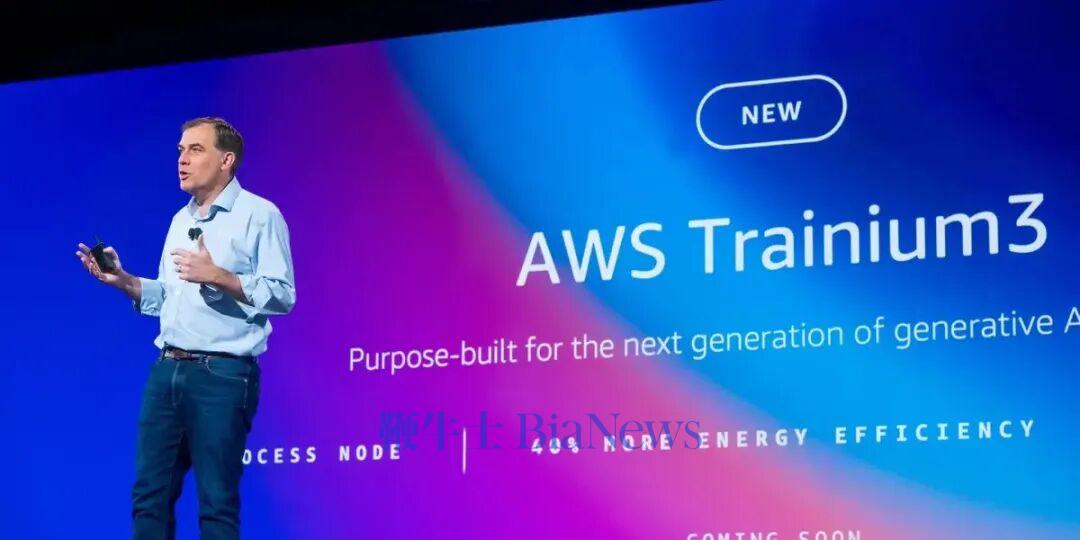
群狼围上来了!黄仁勋最大的竞争对手来了|硅谷观察
Xin Lang Cai Jing· 2025-12-11 23:28
Core Insights - The U.S. government has officially approved NVIDIA to sell high-end H200 GPU chips to China and other "approved customers," requiring a 25% sales commission to the U.S. government, which also applies to other U.S. chip giants like AMD and Intel [2][24] - This approval marks a significant victory for NVIDIA CEO Jensen Huang, who has lobbied for months to lift the export ban, which had severely impacted NVIDIA's market share in China [2][24] - NVIDIA's stock price rose following this news, as the company had lost a substantial portion of its market share in the AI GPU market, dropping from 95% to nearly zero in the past two years due to U.S. export restrictions [2][24] Group 1: NVIDIA's Market Position - NVIDIA is a leading company in the generative AI era, dominating the AI chip market with over 80% market share due to its performance advantages and the CUDA platform [3][25] - The company's data center business generated $130 billion in revenue in the most recent fiscal year, but it faces risks due to high customer concentration, with the top two customers accounting for 39% of revenue [3][25] - Huang has expressed concerns about losing the Chinese market, which is estimated to be worth $20 billion to $30 billion in AI GPUs this year [3][24] Group 2: Competition from Major Tech Giants - Major cloud service providers like Google, Amazon, and Microsoft are accelerating the development of their own chips, posing a significant threat to NVIDIA's market position [3][24] - Amazon's new AI chip, Trainium 3, is designed to be a low-cost alternative to NVIDIA's GPUs, claiming to reduce training costs by 50% compared to similar GPU systems [6][27] - Google has released its seventh-generation TPU, Ironwood, which boasts a performance increase of 10 times over its predecessor and is optimized for high-throughput, low-latency inference tasks [10][31] Group 3: Future Market Dynamics - The competition is expected to intensify in 2026, with a focus on a "performance vs. cost" showdown as Google, Amazon, and Microsoft release their latest self-developed chips [38] - Amazon aims to increase its self-developed chip share to 50% and grow its AI cloud market share from 31% to 35% [40] - Google's TPU market share has reportedly climbed to 8%, with plans to sell its previously internal-use TPUs to external customers, further diversifying the chip supply landscape [41][40]

Amazon’s (AMZN) AWS Momentum Strengthens as Evercore Keeps $335 Price Target
Yahoo Finance· 2025-12-09 22:07
Core Viewpoint - Amazon.com, Inc. (NASDAQ:AMZN) is gaining attention as a significant player in the AI market, with Evercore ISI maintaining an "Outperform" rating and a price target of $335.00 following insights from the AWS re:Invent conference, indicating strong growth potential for AWS [1]. Group 1: AWS Growth Potential - The AWS Unlock has shown sustainability, with an expected growth inflection of up to 20%, which is considered a genuine trend rather than a temporary spike [1]. - Channel checks suggest that AWS is projected to grow by 20% or more by 2026, reflecting robust demand in the cloud sector [1]. Group 2: Supply Constraints and Technology Advancements - Previous supply constraints that limited AWS growth have been largely resolved, allowing for improved scalability [2]. - The introduction of Trainium 3, which is now generally available, is expected to enhance technology capabilities and meet the accelerating demand in the cloud industry [2]. Group 3: Investment Considerations - While Amazon is recognized for its potential as an investment, there are other AI stocks that may present greater upside potential with lower downside risk [3].