
Vibe Coding

Search documents
X @𝘁𝗮𝗿𝗲𝘀𝗸𝘆
𝘁𝗮𝗿𝗲𝘀𝗸𝘆· 2026-03-20 18:04
#产品经理我想到以前做产品的时候,提出一个功能和需求,我会去想它背后如何实现。有些时候开发给出的方案,会存在很多边界情况,需要去额外做判断。 比较糟糕的情况是,这些边界情况越来越多,最后导致这个实现方法必须完全推翻。不过有时候我可以想到一种实现方法,一个简洁的描述,竟然包含了所有的边界情况。后来我知道这种能力叫抽象能力。我不知道它具体应该如何培养,这种能力被我评价为产品经理第二重要的能力。(最重要的能力是业务理解,最不重要的能力是原型设计😂)𝘁𝗮𝗿𝗲𝘀𝗸𝘆 (@taresky):#AI现在 Vibe Coding 过程最痛苦的是 AI 根据我的需求设计框架,他就算解释给我听,很多名词我都完全不明白...不过很爽的是一个点是,以前我脑子里抽象出来的,那些非常简洁、兼容性非常强的逻辑。我自己不知道数学和代码上如何实现,但 AI 果然知道,这些东西在软件工程早就有标准答案和解法。 ...
VibeCoding:打造一人量化团队
Guolian Minsheng Securities· 2026-03-20 05:34
量化专题报告 Vibe Coding:打造一人量化团队 glmszqdatemark 2026 年 03 月 20 日 执业证书: S0590525110059 邮箱: yeerle@glms.com.cn 相关研究 本公司具备证券投资咨询业务资格,请务必阅读最后一页免责声明 证券研究报告 1 [Table_Author] 分析师 叶尔乐 Vibe Coding 正在系统性消解投资研究的核心矛盾,将开发者的精力从"如何写 代码"转向"如何定义需求与验证结果"。传统量化策略开发中,想法验证长期受 制于编程实现的门槛与技术摩擦。基于 Claude Code 与 OpenClaw 的 Agent- first 开发范式,使分析师能够以自然语言描述意图,由 AI 自主完成编码、调试与 验证,实现"You fully give in to the vibes, forget that the code even exists" 的开发体验。这种转变并未降低认知要求,反而凸显了逻辑清晰度与需求表达能 力的价值,技术贬值而认知升值成为 Agent 时代的核心特征。 OpenClaw 作为"有手的 AI"将 Vibe Cod ...
让你的 ClaudeCode 秒变 Openclaw(龙虾),连接飞书、Discord 远程控制
歸藏的AI工具箱· 2026-03-05 14:14
Core Insights - The article discusses the development and features of Vibe Coding's Agent client Codepilot, highlighting its efficiency and capabilities in creating a desktop version of Claude Code integrated with various IM tools [1][2]. Group 1: Project Overview - The initial project aimed to create a desktop version of Claude Code, which has now expanded to include various Agent functionalities, making it suitable for beginners and more secure than alternatives like OpenClaw [2]. - The project has seen significant activity, with 40 versions released and 220 commits over a span of 16 days, indicating high development efficiency [1]. Group 2: Features and Functionalities - The project supports remote connections to IM tools such as Feishu, offers visual configuration for all Code plan packages, and includes features like concurrent multi-Agent split screens and token usage monitoring dashboards [3]. - It allows for easy installation of Claude Code across MacOS and Windows platforms, enhancing accessibility for users [3]. Group 3: Open Source Initiatives - The author decided to open-source two projects, Claude-to-IM and Claude-to-IM-skill, to alleviate development pressure and assist users wanting to connect Claude Code with IM tools [4]. - Claude-to-IM-skill enables users to connect their Claude Code conversations to IM platforms like Feishu and Discord without needing to write code, simplifying the setup process [7][9]. Group 4: Interactive Configuration and Security - The interactive configuration feature guides users through the setup process, making it user-friendly and accessible [9]. - Security measures include token storage with strict permissions, real-time output previews, and session persistence, ensuring a secure and reliable user experience [8][15]. Group 5: Developer-Focused Features - Claude-to-IM is tailored for developers looking to integrate multiple IM remote controls into their products, providing a library for quick access [11]. - Key features include multi-platform adapters, real-time response previews, and comprehensive permission management through interactive buttons [15].


月入9万,已经有大学生用Vibe Coding捞到第一桶金了
36氪· 2026-02-11 13:35
Core Viewpoint - The article discusses the rise of "Vibe Coding," a concept that democratizes programming by allowing individuals with little to no coding experience to create applications using AI tools, thus reshaping the landscape of technology and entrepreneurship [4][5]. Group 1: Vibe Coding and Its Impact - Vibe Coding, introduced by Andrej Karpathy, allows users to develop applications without deep coding knowledge, making it accessible to a broader audience, including children and non-technical individuals [4][5]. - The popularity of Vibe Coding has led to a surge in AI programming tools, with companies like Baidu and Tencent reporting significant portions of their code being generated or assisted by AI [11][12]. - The article highlights various success stories of individuals using Vibe Coding, such as a student who earns substantial income by leveraging AI tools for development and sharing accounts on platforms like Xianyu [19][22]. Group 2: Entrepreneurial Opportunities - The rise of Vibe Coding is seen as beneficial for "one-person companies," enabling individuals to start businesses with minimal resources and technical skills [36][39]. - Success stories include a programmer who founded a Vibe Coding company and was later acquired for a significant sum, illustrating the potential for high returns in this new landscape [37]. - However, the article also notes the challenges faced by solo entrepreneurs, such as customer service demands and the need for unique value propositions to stand out in a crowded market [40][39]. Group 3: Demographics and Perspectives - The article features a diverse range of users, from young students to middle-aged professionals, all finding value in Vibe Coding for personal and professional development [32][43]. - It emphasizes that while technical skills are becoming less critical, creativity, business insight, and resource integration remain essential for success in the AI-driven economy [45]. - The fast-paced nature of the AI industry requires continuous learning and adaptation, as many individuals are actively engaged in sharing knowledge and experiences late into the night [46].

给公司全员送了iPhone 17 Pro Max,也分享下我在AI时代创业的10条感悟。
数字生命卡兹克· 2026-02-07 11:45
Core Viewpoint - The article reflects on the journey of a young company, emphasizing the importance of curiosity, adaptability, and the evolving nature of work in the AI era. It highlights the significance of asking good questions, the rise of individual contributors, and the need for a flexible approach to roles and responsibilities in a rapidly changing environment. Group 1: Company Growth and Culture - The company has grown to nearly 30 employees without any external financing, maintaining healthy cash flow while prioritizing risk control alongside aggressive expansion [7][10][11] - The team consists mostly of young individuals, with about two-thirds being post-2000s generation, contributing to a vibrant company culture [2][3] - Despite not making significant profits this year, the company rewarded employees with bonuses and gifts, fostering a positive atmosphere [10][12][14] Group 2: Insights on Curiosity and AI - Curiosity is deemed more important than intelligence in the AI era, as individuals who are eager to explore new tools can significantly enhance productivity [19][20][26] - The ability to ask good questions is becoming more valuable than providing answers, as organizations need individuals who can identify key issues and understand constraints [27][30][31] Group 3: Changing Nature of Work - The rise of AI has empowered individuals who prefer to work independently, allowing them to accomplish tasks that previously required teamwork [33][41][43] - Job roles are evolving from traditional task-based responsibilities to a focus on judgment and decision-making, necessitating a shift in how companies structure their teams [45][56][58] Group 4: Embracing AI and Technology - The concept of "Vibe Coding" allows non-programmers to generate code by clearly describing their needs, democratizing coding skills [61][72] - The company encourages all employees, regardless of their technical background, to utilize AI tools to enhance their productivity [72][73] Group 5: Accountability and Risk Management - AI tools are valuable but come with limitations; the company emphasizes that responsibility for AI-generated outputs lies with the users [74][80][84] - A culture of trial and error is encouraged, allowing employees to learn from mistakes while maintaining a balance between innovation and risk [87][90] Group 6: Work Environment and Flexibility - The company advocates for in-person work, believing that face-to-face interactions foster creativity and problem-solving that remote work cannot replicate [85][91] - There is no formal attendance policy; instead, the focus is on business results and contributions that can be reused by others, reflecting a shift in how productivity is measured [94][98] Group 7: Financial Sustainability - From the outset, the company has prioritized establishing a viable business model to ensure cash flow and sustainability, recognizing that financial health is crucial for long-term success [94][97][100]

又一次踩踏式崩盘。。黄仁勋、但斌发声!
Xin Lang Cai Jing· 2026-02-05 09:43
Group 1 - The core issue in the market is the fear surrounding AI, leading to a significant sell-off in software stocks, with a 15% drop over two days and a total market value loss of $1 trillion this year [1][3][4] - The catalyst for this panic appears to be the introduction of a new AI automation tool by Anthropic, which has raised concerns about AI directly replacing software rather than merely enhancing it [5][6] - Analysts are now questioning the future growth paths of software companies, suggesting that the traditional subscription model of SaaS may be disrupted as AI tools take over tasks previously requiring multiple software solutions [6][8] Group 2 - The semiconductor and storage chip sectors, which had previously seen significant gains, are now experiencing sharp declines, with companies like SanDisk and AMD seeing drops of 16% and 17% respectively [1][7] - NVIDIA's CEO Jensen Huang has publicly refuted the notion that AI will replace software tools, arguing that AI will instead utilize existing software to enhance productivity [8][9] - The Hang Seng Tech Index has shown volatility, entering a technical bear market but also demonstrating resilience with a 0.7% increase after a series of declines [12][14] Group 3 - Despite the downturn, there has been a notable inflow of capital into the Hang Seng Tech Index, with a net inflow of 66.73 billion yuan during a period of five consecutive declines [17][24] - The market is witnessing a shift in investment strategies, with funds increasingly buying into technology indices despite the recent sell-off, indicating a potential long-term confidence in the sector [20][26] - The overall sentiment in the market reflects a complex interplay between fear of AI disruption and the recognition of potential opportunities within the tech sector [6][12][18]


GitHub 都没用明白,怎么用 AI 编程从零开发应用
3 6 Ke· 2026-01-24 04:26
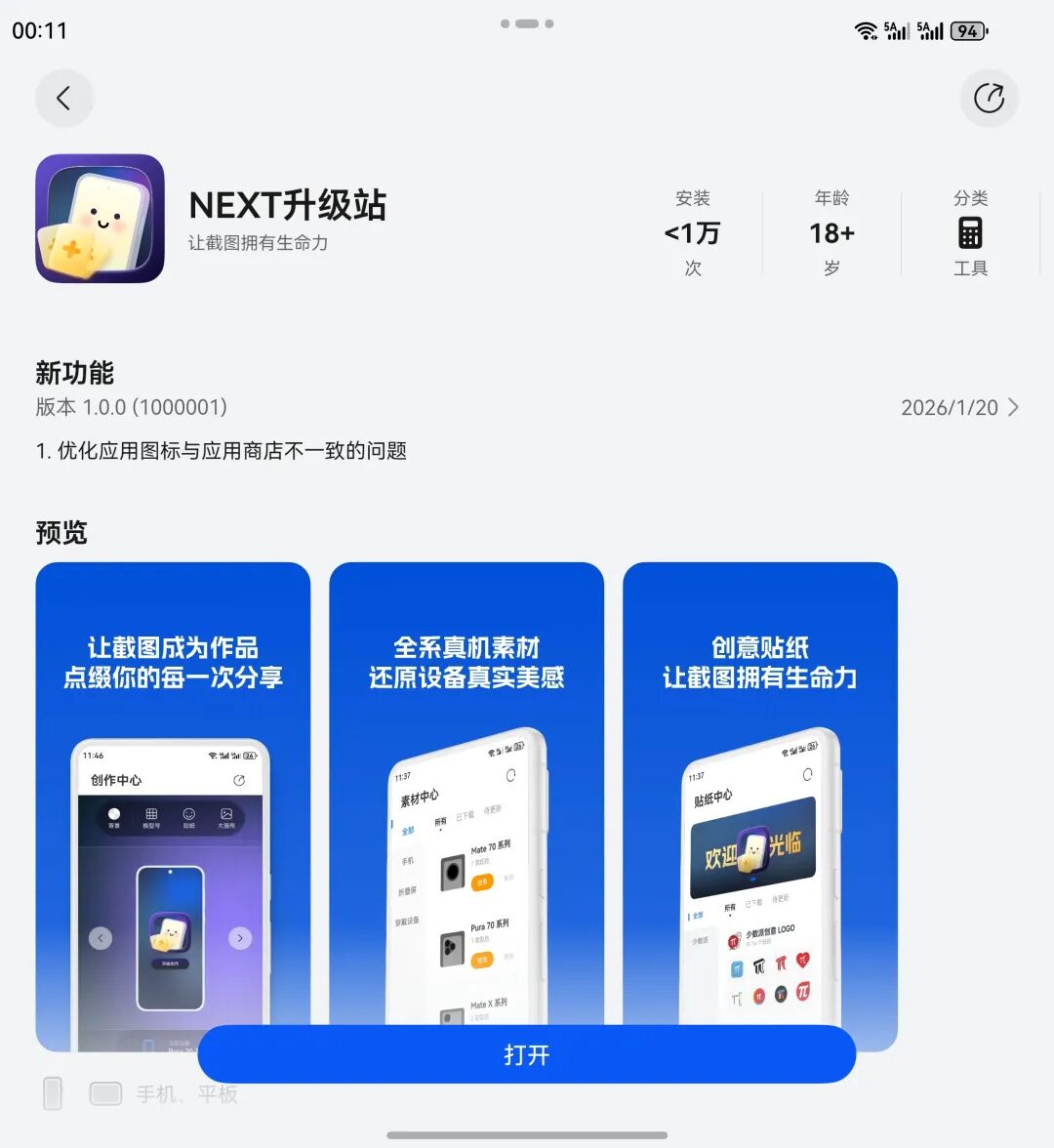
Core Insights - The article documents the journey of an individual who independently developed and launched their first app, focusing on the challenges and learning experiences encountered during the process [1][6][59] Development Journey - The development process began with the individual transitioning from a job loss to creating a WeChat mini-program for unemployment benefits, which marked their first experience in coding [6][12] - The individual faced initial self-doubt regarding their coding abilities but overcame this by successfully configuring a development environment and submitting an app for review within a week [8][16] - The app, named NEXT Upgrade Station, focuses on screenshot editing and creative functionalities, allowing users to add stickers and switch device forms [31][35] Technical Challenges - The development process highlighted various technical challenges, including the need for a stable internet connection and the complexities of using AI programming tools, which often require a certain level of technical expertise [12][13] - The individual encountered issues with AI-generated code, which sometimes led to complications in project management and required careful oversight to ensure functionality [23][25] Application Features - NEXT Upgrade Station includes features such as cloud-based updates for device materials and stickers, enhancing user engagement and operational control [31][35] - The app's architecture allows for easy updates and modifications, reflecting the individual's background in operations and marketing [31][54] Development Costs - The total estimated development costs for the app included monthly cloud service fees, server costs, and domain registration, amounting to approximately 340.8 RMB annually [57][58] Conclusion - The article concludes with a reflection on the satisfaction derived from the independent development process, emphasizing the personal growth and empowerment experienced through the journey [59]
字节跳动:“扣子”官宣2.0品牌升级,推出全新功能Agent Skills、Agent Plan
Xin Lang Cai Jing· 2026-01-19 10:27
Core Insights - ByteDance's AI Agent platform "Kouzi" has announced a brand upgrade to version 2.0, integrating capabilities such as Agent Skill, Agent Plan, Agent Coding, and Agent Office, positioning AI as a true "work partner" for users [1][3] Group 1: Agent Skills - The new Agent Skills feature encapsulates domain knowledge and standardizes operational processes, combining general AI cognitive abilities with specific task requirements to meet diverse and high-standard application scenarios, ensuring output stability [1][3] - Agent Skills are essentially a combination of "best practices for scenarios + required tools," aimed at helping users leverage professional skills to enhance their ability to solve complex professional problems [1][3] Group 2: Agent Plan - The introduction of Agent Plan allows AI to evolve from an "instant Q&A tool" to a "sustainable operating agent," where users can set goals and specify how to achieve them, enabling continuous execution and proactive reporting until task completion [2][4] - This long-term planning feature facilitates closed-loop management of complex goals, breaking down tasks that may take hours or days into manageable steps while tracking progress and managing intermediate states [2][4] Group 3: Agent Office - Agent Office is designed to deeply understand workplace scenarios, allowing users to delegate tasks such as writing strategic reports in Word, creating analysis presentations in PPT, and organizing data in Excel to the AI [2][4] Group 4: Vibe Coding Platform - The Vibe Coding platform offers a one-stop cloud-based solution, enabling users to easily build agents, workflows, websites, and mobile applications through continuous dialogue, with core functionalities available out of the box [5] - The platform provides Vibe Infra infrastructure for one-click deployment, allowing agents to write prompts, integrate knowledge bases, and develop tools, with the capability for self-iteration during multi-turn conversations [5]

大模型最难的AI Infra,用Vibe Coding搞定
机器之心· 2026-01-07 05:16
Core Insights - The article discusses the challenges and potential of Vibe Coding in AI infrastructure development, highlighting its limitations in complex systems and proposing a document-driven approach to enhance its effectiveness [3][5][20]. Group 1: Challenges of Vibe Coding - Vibe Coding faces three main issues: context loss, decision deviation, and quality instability, primarily due to the lack of a structured decision management mechanism [4][5]. - The complexity of AI infrastructure, characterized by thousands of lines of code and numerous interrelated decision points, exacerbates these challenges [4][5]. Group 2: Document-Driven Vibe Coding Methodology - The document-driven approach aims to systematize key decisions during the design phase, significantly reducing complexity and improving code quality [6][20]. - By focusing on high-level design decisions, developers can leverage AI for detailed code implementation, achieving complex functionalities with minimal coding [7][20]. Group 3: Implementation in Agentic RL - The article presents a case study on optimizing GPU utilization in Agentic Reinforcement Learning (RL) systems, which face significant resource scheduling challenges [11][12]. - A proposed time-sharing reuse scheme dynamically allocates GPU resources, addressing the inefficiencies of existing solutions and improving overall system performance [14][15]. Group 4: Performance Validation - Experiments on a large-scale GPU cluster demonstrated that the time-sharing reuse scheme increased rollout throughput by 3.5 times compared to traditional methods, significantly enhancing task completion rates and reducing timeout occurrences [46][50]. - The analysis indicates that the additional system overhead introduced by the new scheme is minimal, validating its practical value in large-scale Agentic RL training [53][55]. Group 5: Team and Future Directions - The article concludes with an introduction to the ROCK & ROLL team, which focuses on advancing RL technologies and enhancing the practical application of large language models [57]. - The team emphasizes collaboration and open-source contributions to foster innovation in the RL community [58].


2025AI盘点:10大“暴论”
3 6 Ke· 2025-12-26 00:52
Group 1 - The concept of "Vibe Coding" has emerged, suggesting a new programming approach that emphasizes feeling and embracing exponential growth, leading to a broader trend of "Vibe Everything" in AI [2] - There is a divide in perception regarding "Vibe," with some viewing it as a refreshing product philosophy while others criticize it as a superficial trend that obscures the true essence of AI products [2] - The term "Vibe" reflects a strong narrative appeal, resonating with the desire for transformative change in the AI landscape, indicating its continued relevance in the future [2] Group 2 - The humanoid robot sector is experiencing a valuation surge despite discussions about a potential bubble, with significant capital inflow and a shift towards more conservative funding strategies among companies [6] - The focus on "scene" applications for humanoid robots has intensified, with education and performance being the most viable commercial scenarios, while the pursuit of commercial viability may not be the primary goal for the sector [6] Group 3 - The phrase "Prompt Engineering is Dead" has gained traction, suggesting a shift towards "Context Engineering," which encompasses a broader range of information and tools necessary for AI tasks [8][9] - Context Engineering is seen as a significant advancement, attracting investment and fostering the development of various AI tools, indicating a potential shift in the industry narrative [9] Group 4 - Huang Renxun's assertion that "China will win the AI race" highlights the competitive landscape between China and the U.S., emphasizing China's advantages in developer scale, market size, and infrastructure [12][13] - Huang's comments may also serve as a strategic move to influence U.S. policy regarding AI, aiming to maintain Nvidia's leadership position in the global market [12] Group 5 - Elon Musk and Satya Nadella predict the disappearance of traditional smartphones and apps, suggesting a transition to intelligent agents that could replace conventional software applications [15][16] - The emergence of new devices like the "Doubao phone" indicates a shift in how technology is being approached, with a focus on user interface and system control [16] Group 6 - Sam Altman's response to skepticism about OpenAI reflects a broader divide in opinions regarding the AI bubble, with concerns about the company's ability to deliver on its ambitious revenue projections [19][20] - OpenAI's projected revenue growth and the potential economic implications of AI's impact on employment and inflation are critical factors in assessing the sustainability of the AI market [21] Group 7 - The U.S. faces a potential electricity shortage that could impact AI infrastructure, with projections indicating a significant power gap by 2028 if supply does not keep pace with demand [23][24] - Major tech companies are exploring nuclear energy as a solution to their power needs, highlighting the intersection of AI development and energy infrastructure challenges [24] Group 8 - The debate surrounding the limitations of large language models (LLMs) continues, with experts arguing that scaling may not yield significant advancements and calling for a return to foundational research [27][28] - Despite criticisms, the push for larger models persists, indicating ongoing investment and interest in scaling within the AI community [28] Group 9 - The term "Slop" has been designated as the word of the year, representing the proliferation of low-quality AI-generated content, which poses challenges for content ecosystems [31][32] - The rise of AI-generated adult content is projected to grow significantly, raising questions about the implications for traditional content creation and quality standards [32]
