
Jing Ji Ri Bao

Search documents
“眼睛向下”优化普惠金融发展
Jing Ji Ri Bao· 2025-12-30 22:08
Core Viewpoint - The recent Central Economic Work Conference emphasizes the importance of inclusive finance in supporting small and micro enterprises, technological innovation, and expanding domestic demand, which are crucial for economic development and public welfare. Group 1: Inclusive Finance Development - By the end of Q3 2025, the balance of inclusive loans for small and micro enterprises reached 36.5 trillion yuan, a year-on-year increase of 12.1% [1] - The balance of inclusive agricultural loans was 14.1 trillion yuan, with an increase of 1.2 trillion yuan since the beginning of the year [1] Group 2: Service Innovation - Financial institutions are encouraged to address financing needs in remote and rural areas, enhancing the depth and breadth of inclusive finance services [2] - The Industrial and Commercial Bank of China has established service teams to engage directly with small enterprises, promoting easy-to-access financial products [2] - Small and micro enterprises are identified as key to connecting macro policies with microeconomic vitality, necessitating a shift in financial institutions' focus from collateral to creditworthiness [2] Group 3: Support for Small and Micro Technology Enterprises - China Construction Bank is focusing on providing services to small technology enterprises, with a 41.3% year-on-year increase in loans to these businesses, supporting over 130,000 firms [3] - Minsheng Bank has launched an electronic guarantee service to streamline the process for small enterprises, significantly reducing the time required to obtain guarantees [3] Group 4: Coordination Mechanisms - A new financing coordination mechanism has been established to facilitate direct access to credit for small enterprises, enhancing collaboration between central and local authorities [4] - The mechanism has led to significant loan disbursements, with over 590 billion yuan in credit loans processed through coordinated efforts [6] Group 5: Technological Empowerment - The application of artificial intelligence in finance is enhancing the efficiency of inclusive financial services, improving decision-making and resource allocation [7] - Mobile banking has drastically reduced service costs, with mobile transactions costing about 1/5 of face-to-face interactions [8] - The integration of digital technologies is leading to faster loan approval processes and the development of customized financial products [9]
数字人民币迎来2.0版
Jing Ji Ri Bao· 2025-12-30 22:07
Core Insights - The People's Bank of China will officially implement a new digital RMB measurement framework, management system, operational mechanism, and ecosystem starting January 1, 2026, marking a significant transition from digital cash to digital deposit currency [1][2] Group 1: Digital RMB Development - The new action plan allows banks to pay interest on customer-held digital RMB wallet balances, enhancing the appeal of digital RMB for users [1][2] - As of November 2025, digital RMB has processed 3.48 billion transactions, amounting to 16.7 trillion yuan, with 230 million personal wallets opened [1] Group 2: Institutional Changes - The digital RMB will transition from a cash-based model to a deposit currency model, with wallets classified as bank liabilities, thus incentivizing banks to promote digital RMB [2][3] - The action plan integrates digital RMB into the reserve requirement framework, ensuring its safety and stability, which is expected to encourage more merchants to accept digital RMB [2][3] Group 3: Ecosystem and Market Impact - The new framework is designed to create a win-win situation for users, banks, and non-bank payment institutions, promoting deeper integration of digital RMB into the existing payment system [4] - The establishment of a standardized operational framework for digital RMB is expected to provide clarity for banks and payment institutions, facilitating commercial implementation [4]

有色金属行业加快数智化转型
Jing Ji Ri Bao· 2025-12-30 22:01
Core Insights - The "Kunan" model 2.0 and its applications were jointly released by the China Nonferrous Metals Industry Association and Chalco, highlighting the industry's shift towards digital transformation driven by policy and market demand [1][2] - The integration of digital intelligence is essential for the nonferrous metals industry to achieve high-quality development and transformation [1] - Chalco is focusing on accelerating artificial intelligence development as a key strategy for enhancing productivity and industry transformation, establishing a command center for digital transformation and AI applications [2] Industry Developments - The "Kunan" model is the first AI model in the nonferrous metals industry to be registered with national service and algorithm standards, with Chalco recognized as a leading unit for high-quality data sets [2] - Chalco plans to implement over 100 application scenarios in the industry by 2025, with 52 scenarios officially released and 8 high-quality data sets established [2] - The establishment of the high-quality data set alliance aims to enhance collaboration among key enterprises, research institutions, and universities in the nonferrous metals sector [3] Challenges and Future Directions - Despite rapid digital development, the industry faces challenges such as complex resource types, intricate processes, and issues related to technology adaptation, data governance, and talent shortages [3] - Chalco aims to increase R&D investment focusing on cognitive intelligence, cross-modal analysis, and autonomous decision-making to strengthen the "Kunan" model's technical foundation [3] - The industry association has released a comprehensive safety governance framework to support the new industrialization and high-quality development of the nonferrous metals sector [3]

经济日报:数字人民币可计息意味着什么?丨头条热评
Jing Ji Ri Bao· 2025-12-30 13:03
Core Insights - The People's Bank of China has introduced a significant adjustment to the digital yuan management service system, allowing banks to pay interest on customer real-name digital yuan wallet balances, marking a transition from a digital cash era to a digital deposit currency era [1][2] Group 1: Digital Yuan Management and Interest - The new policy is expected to enhance the willingness of individuals and businesses to use digital yuan, as starting in 2026, funds in digital yuan wallets will earn interest similar to demand deposits [1] - Digital yuan deposits will be covered by the deposit insurance system, and non-bank payment institutions will implement 100% digital yuan margin requirements, ensuring the safety of funds [1] Group 2: Impact on Banking Sector - The upgrade in the core positioning of digital yuan is likely to activate commercial banks' intrinsic motivation to participate in the digital yuan ecosystem, reversing the previous situation where banks only invested without returns [1] - Under the new regulations, digital yuan deposits will become a usable source of funds for banks, enhancing their motivation to promote digital yuan and allowing for the development of more deposit, wealth management, and credit products [1] Group 3: Expansion of Usage Scenarios - The adjustment is expected to encourage more merchants to adopt digital yuan, further enriching its usage scenarios, with 230 million personal wallets and 18.84 million corporate wallets reported by November 2025, totaling 3.48 billion transactions worth 16.7 trillion yuan [2] - The ability to earn interest on digital yuan will benefit users, banks, and non-bank payment institutions, promoting deeper integration of digital yuan with existing payment systems and supporting the sustainable development of the digital yuan ecosystem [2]

由黑到白、由粗到细!昔日“卖炭翁”用了啥“魔法”?
Jing Ji Ri Bao· 2025-12-30 07:17
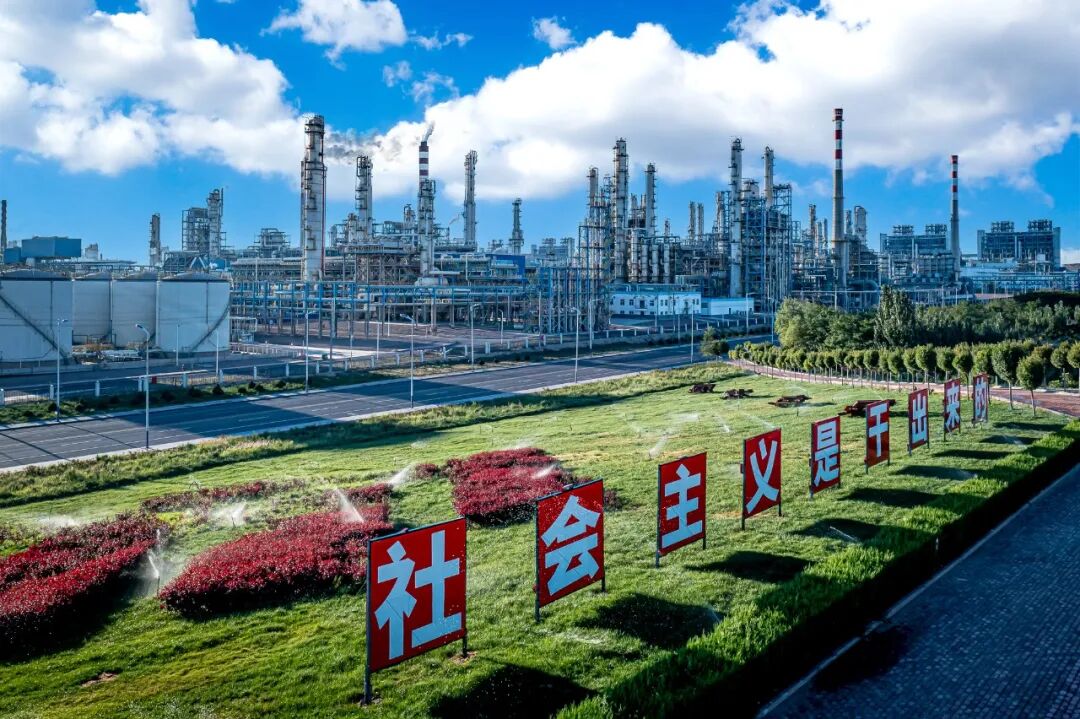
黄河东岸、毛乌素沙地西缘,一片规模宏大的现代化工业新城拔地而起,与远方的贺兰山遥遥相望。 走进宁东能源化工基地,巨型装置高耸林立、粗壮管道纵横交织,宛如钢铁森林。入夜时分,当璀璨灯光接连亮起,座座工厂流光溢彩,一幅立体的经济 热力图呈现眼前。 在这里,习近平总书记发出"社会主义是干出来的"伟大号召。这一振聋发聩的时代强音,激励亿万中国人民向着伟大复兴中国梦奋勇前进,更在宁东人耳 边时时回响,给宁东的发展增添了无穷动力。 国家能源集团宁夏煤业公司400万吨/年煤制油项目俯瞰图。(资料图片) 宁东人牢记总书记嘱托,立足中国式现代化新时代新征程,干字当头、踔厉奋进,紧抓新一轮科技革命和产业变革的历史机遇,因地制宜发展新质生产 力,加快构筑以先进煤化工为骨干的现代化产业体系,向新而行、向绿拓展、向优发展、向改革要效益,在高质量发展的道路上阔步前行。 实干筑基 因煤而建,因煤而兴。 走进宁东基地"科创宁东"展厅,一块黝黑发亮的"太西煤"跃入眼帘,十分醒目。这是宁东煤田的主力品种,也是一块"历史化石",在不同时期、以不同形 态见证着宁东基地的发展。 煤炭是我国能源消费中占比过半的当家品种,储量主要集中在中西部地区,其中又 ...
金观平:增强居民和企业的获得感
Jing Ji Ri Bao· 2025-12-30 01:51
Group 1 - The central economic work conference emphasizes the need for a pragmatic approach to enhance the sense of gain for residents and enterprises, focusing on solving existing difficulties and achieving breakthroughs in quality improvement [1] - During the "14th Five-Year Plan" period, significant achievements have been made in improving people's livelihoods, including the establishment of the world's largest education, social security, healthcare, and urban housing systems, as well as the formation of the largest middle-income group globally [1] - Employment support policies during the "14th Five-Year Plan" have resulted in over 470 billion yuan in employment subsidies and 138.9 billion yuan in stable job retention funds, contributing to the overall sense of happiness and gain among the population [1] Group 2 - To enhance the sense of gain for residents and enterprises, efforts are needed to address the issue of overdue payments to small and medium-sized enterprises (SMEs), which have seen an increase in accounts receivable and extended payment periods [2] - The revised "Regulations on Ensuring Payment to Small and Medium-sized Enterprises" clarifies payment deadlines, particularly requiring large enterprises to pay within 60 days of delivery, thus aiming to alleviate the "chain debt" phenomenon [2] - Local governments are encouraged to utilize new special bonds to promote state-owned enterprises in resolving overdue payments and establishing a long-term mechanism to prevent such issues [2] Group 3 - Investment in human capital is essential for promoting high-quality population development and comprehensive human development, which includes investments in childcare, elderly care, health, and skills training [3] - There is a need to improve the income distribution system and ensure that various factors are evaluated by the market, with remuneration based on contribution, while also promoting equal access to basic public services [3] - Policies across finance, monetary, industry, and pricing sectors should work in coordination to enhance both the quality and reasonable growth of employment, with a focus on key employment groups such as recent graduates and migrant workers [3] Group 4 - The realization of people's aspirations for a better life is the starting point and goal of Chinese-style modernization, with the enhancement of residents' and enterprises' sense of gain being an ongoing process [4] - The implementation of various benefit policies for the public and enterprises is not merely a one-way expenditure but contains new economic growth points and potential for expanding domestic demand and promoting consumption [4] - There is a promising outlook for high-quality population development and comprehensive human development in the new era [4]
瞿晓琳:推动人工智能发展与民生紧密融合
Jing Ji Ri Bao· 2025-12-30 00:32
Core Viewpoint - The integration of artificial intelligence (AI) with the improvement of people's livelihoods is emphasized, aiming to enhance daily work, learning, and living through AI applications, particularly in healthcare, education, and elderly care [1][2]. Group 1: AI and Social Needs - The development of AI should respond to real social needs, transitioning from laboratory innovations to practical applications in areas like education, healthcare, and elderly care [2]. - AI can enhance social governance and public service efficiency by utilizing comprehensive data, intelligent algorithms, and powerful computing capabilities, shifting service models from passive to proactive [2]. - A people-centered approach is essential to ensure AI development aligns with human welfare, preventing issues like algorithm bias and privacy violations [2]. Group 2: Current Challenges - Despite advancements, AI faces challenges in technical adaptability, group suitability, and institutional compatibility, with issues such as digital divides and inadequate ethical safeguards [3]. - There is a need to focus on key areas and demographics to balance the technological enthusiasm of AI with its service temperature, ensuring stable and beneficial applications in improving livelihoods [3]. Group 3: Targeted Solutions - In education, AI can facilitate personalized learning and resource sharing to promote equity and innovation [3]. - In healthcare, AI can assist in diagnostics and enhance health management throughout the patient lifecycle [3]. - In elderly care, AI can improve service systems through technology adaptation and resource integration [3]. Group 4: Inclusivity and Long-term Development - AI should aim for inclusivity by addressing the digital divide and providing tailored solutions for various demographics, such as the elderly and disabled [4]. - Long-term development requires a robust institutional framework, including top-level design, incentive mechanisms, and collaborative governance to ensure AI benefits reach all citizens [4].
云南保山中咖打造全产业链 锚定精品咖啡
Jing Ji Ri Bao· 2025-12-30 00:32
云南保山中咖打造全产业链——锚定精品咖啡规模化生产 本报记者 管培利 又到咖啡成熟时,在云南省保山市各个咖啡种植基地内,村民采摘着红红的咖啡果,保山中咖食品 有限公司也迎来咖啡豆采摘和收购的忙碌期。 "云南咖啡曾经被当作原料出口,价格上没有话语权。近年来,在政策引导下,云南咖啡产业开始 向精品化和精深加工方向发展。"保山中咖董事长杨竹说,公司紧跟市场方向,大力发展精深加工,结 合电商销售,打造自己的品牌,近几年得到了快速发展。 2009年,还在读大学的杨竹开起网店,通过网络销售咖啡和家乡特色农产品。怀揣"做中国自己的 好咖啡"梦想,2013年,杨竹成立保山中咖食品有限公司,很快形成了专注精品小粒咖啡种植、生产、 加工和线上销售、线下体验融合的全产业链条。 在杨竹看来,"企业能走到今天,源于对产品品质的坚持。起初,保山中咖只做电商销售,但是很 难把控产品质量,没有品牌,我们的产品很容易陷入价格战"。 从种子到杯子,保山中咖坚持"精品化"全链条发展理念,并将科技创新贯穿其中:种植端,企业与 云南省农科院合作,培育拥有自主知识产权的精品小粒咖啡品种"云咖一号",目前已推广种植1500余 亩;精深加工端,企业引进国际 ...
舒勇:智能革命带来统筹发展和治理新课题
Jing Ji Ri Bao· 2025-12-30 00:32
Core Insights - The article emphasizes that artificial intelligence (AI) is a disruptive general-purpose technology that will significantly impact human societal development, akin to the steam and electrical revolutions [1] Group 1: AI Technology and Economic Transformation - AI technology is being widely applied, lowering the technical barriers for enterprises, especially small and medium-sized enterprises (SMEs), allowing them to access advanced AI services through cloud platforms like Alibaba Cloud, Baidu Smart Cloud, and Huawei Cloud [1] - The value of data as a key asset is becoming more pronounced in the AI era, facilitating data circulation and transaction systems, and leading to the emergence of a data factor market that enhances resource allocation efficiency [2] - Personalized production methods are gaining traction in manufacturing, transforming consumers from passive recipients to active creators, thereby reducing resource waste and altering traditional supply-demand relationships [2] Group 2: Changes in Economic Logic and Labor Market - AI technology is fundamentally altering economic development logic by enhancing human cognitive abilities and significantly improving total factor productivity, positioning countries that quickly adopt AI for competitive advantage [3] - The widespread application of AI is reshaping labor market dynamics, with routine jobs at risk of automation while new roles such as prompt engineers and AI trainers are emerging, necessitating lifelong learning for workers [3] - Data and algorithms are becoming critical to corporate competitiveness, reinforcing the advantages of platform-based companies and intensifying market competition, leading to more flexible organizational structures [3] Group 3: Risks and Challenges of the AI Revolution - The AI revolution presents risks such as digital divides, algorithmic biases, and security threats from autonomous systems, which require systemic innovation across various levels to address [4] - It is essential to maintain a human-centered approach in technological development to enhance quality of life while recognizing that challenges posed by the AI revolution cannot be solved by individual nations alone, necessitating international cooperation and the establishment of common technical standards and ethical norms [4]
特色产业组团出海
Jing Ji Ri Bao· 2025-12-30 00:32
Core Insights - The city of Qinyang in Henan Province has seen a significant increase in foreign trade, with a total import and export value of 536 million yuan, representing a year-on-year growth of 22.5% in the first eleven months of the year [3] Group 1: Foreign Trade Growth - Qinyang has introduced 302 projects from outside the province and signed 66 projects worth over 100 million yuan during the 14th Five-Year Plan period, indicating a continuous expansion of its openness to foreign trade [1] - The city has cultivated 34 new foreign trade entities, including Tuo Chi Ao Yuan Automotive Service Co., which became the first foreign trade company in Jiaozuo with qualifications for exporting used cars [1] Group 2: Automotive Industry Export Initiatives - Tuo Chi Ao Yuan successfully completed the entire process from qualification application to its first export of used pickup trucks to Sierra Leone in just two months, aided by local government support [1] - Qinyang has facilitated the export of 300 used engines to Pakistan by Hongli Recycling Resources Company and assisted Zhengxiao New Energy Company in securing a booth at the 138th Canton Fair, resulting in an intention order of 4.2 million USD [2] - The automotive and parts sector in Qinyang achieved exports of 70.44 million yuan, reflecting a year-on-year increase of 5.3% [2] Group 3: Construction Materials Sector - The construction materials sector, represented by Henan Debeite Trading Co., has also seen success, with exports reaching 68.9 million yuan, a remarkable growth of 76.8% [2] - The company plans to invest 50 million yuan in Saudi Arabia to establish a manufacturing plant for plastic steel doors and windows, benefiting from policy incentives and embedding its foreign trade projects within national cooperation frameworks [2]