
Ke Ji Ri Bao

Search documents
科技创新世界潮 | 天基太阳能开启清洁能源新赛道
Ke Ji Ri Bao· 2025-11-03 15:19
Core Insights - The increasing electrification of human life and rapid advancements in big data and AI technologies are driving unprecedented growth in global energy demand. Space-based solar power (SBSP) may offer a new path toward a truly clean and abundant energy future [1][3]. Technological and Economic Feasibility - With decreasing launch costs and advancements in large-scale manufacturing technologies, SBSP has become technically and economically feasible. However, key technical challenges remain, such as further reducing launch costs and improving the efficiency of power transmission to Earth [3][8]. Advantages of Space-Based Solar Power - SBSP can provide stable and reliable baseload power, which was previously only achievable through fossil fuels or nuclear energy. The intensity of sunlight in space is 5-10 times greater than on Earth, allowing for higher energy generation efficiency and significant land resource savings [4][5]. - A recent NASA study predicts that a model of SBSP could generate power 99% of the time in a year. This high energy density could also reduce material consumption, enhancing sustainability and alleviating resource pressure [5]. Global Competition and Developments - A "space race" for sustainable energy is underway, with countries and private enterprises increasing investments in SBSP. In August 2023, Caltech's SBSP prototype successfully demonstrated wireless energy transmission in space [6]. - China is advancing its kilometer-scale array construction, aiming for breakthroughs by 2028, with ongoing projects in Chongqing and Xi'an [6]. - The European Space Agency launched the SOLARIS pre-research program in January 2023, planning to invest €60 million over three years to tackle core technologies [6]. - The UK has adopted the CASSIOPeiA concept for SBSP demonstration projects, with plans to deliver commercial systems within six years [6]. - Japan is focusing on SBSP as a key development direction, successfully conducting long-distance microwave transmission experiments [7]. Technical Challenges - Despite the promising outlook for SBSP, several key technical hurdles must be overcome. The challenge of launch costs remains significant, as constructing larger SBSP stations will require numerous launches [8]. - Current wireless power transmission has achieved distances of several kilometers, but efficiently and stably transmitting gigawatt-level power back to Earth presents major technical bottlenecks [8]. - The need for autonomous robots to accurately assemble and maintain large space structures in orbit is another critical technical challenge that needs to be addressed [8].



科技日报:武汉地铁12号线双线同步穿越汉江
Ke Ji Ri Bao· 2025-11-03 11:10
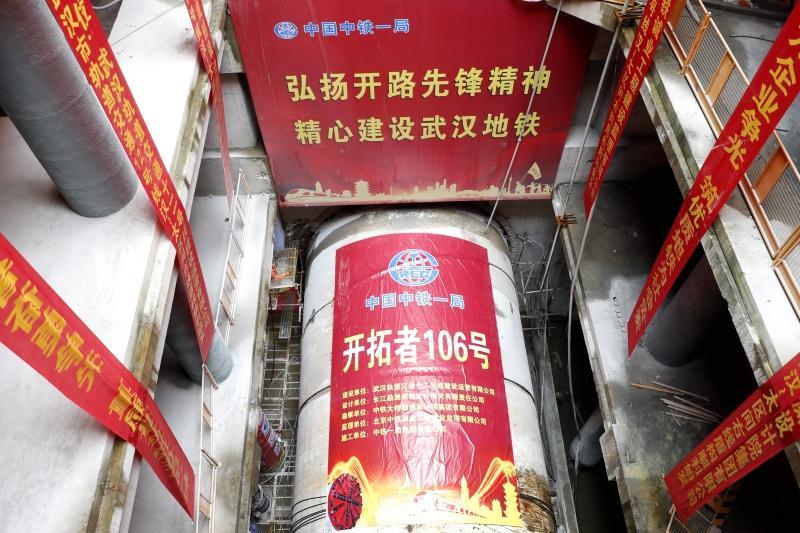
Core Points - The Wuhan Metro Line 12 has reached a critical milestone with the successful launch of the right-line tunnel boring machine, entering the dual-line synchronous excavation phase between Hangang Station and Hanxi Road South Station [1][3] - Once completed, the metro will allow passengers to cross the Han River in approximately 2 minutes, enhancing the efficiency of cross-river transportation in Wuhan [1] Construction Details - The tunnel section is a key control project, constructed by China Railway's subsidiary, China Railway Construction Investment, with China Railway First Group as the contractor [3] - The left tunnel is 1,372 meters long, and the right tunnel is 1,379 meters long, requiring the boring machine to operate approximately 30 meters underground through a clay layer and under 10 significant structures, including the Han River and Metro Line 1 [3] - To minimize ground disturbance during the dual-line excavation, a staggered launch plan was implemented, with the left line starting on October 20 and the right line on October 31 [3] Geological Challenges - The construction site presents complex geological conditions, including thick mud layers, loose sand layers, hard bedrock, and fractured zones, particularly under the Han River [3] - The underwater segment of the tunnel spans 347 meters, accounting for over 25% of the total length, with challenges such as a maximum cover depth of 41.2 meters and a maximum water pressure of 0.4 MPa [3] Safety and Quality Control - The construction team employs real-time monitoring of river surface dynamics, optimized boring tools, and a composite reinforcement technique to ensure safety and precision during excavation [3][4] - The project manager, a young professional with ten years of experience, emphasizes a "five no" quality standard: no pollution, no misalignment, no damage, no leakage, and no exceedance, which is integrated throughout the construction process [4][5]

全球聚力,为可持续发展谋破局之道——海内外嘉宾齐聚二〇二五年世界科技与发展论坛
Ke Ji Ri Bao· 2025-11-03 09:22
Core Insights - The 2025 World Forum on Science and Development, held in Beijing from October 27 to 29, emphasizes the urgent need for global cooperation, particularly in the field of artificial intelligence [1][2] - The forum aims to address global challenges and promote sustainable development in alignment with the United Nations' 2030 Agenda [1][2] Group 1: Forum Overview - The forum gathered over 120 international guests from 33 countries and regions, showcasing a collaborative spirit essential for addressing contemporary challenges [1] - The theme "Artificial Intelligence Promoting Science and Development" reflects the dual role of AI as a tool for societal progress and a mirror of global challenges [1] Group 2: Key Initiatives and Outcomes - Three key initiatives were proposed by the chairman of the China Association for Science and Technology: fostering innovation, promoting cross-disciplinary integration, and enhancing open scientific cooperation [2] - Significant reports and findings were released during the forum, including the "Top Ten Emerging Technologies in Global Chemistry for 2025" and the "Global Sustainable Development Scientific Monitoring Report (2025)" [2]
一图速览!“十五五”规划建议科技要点
Ke Ji Ri Bao· 2025-11-03 09:22
Core Insights - The article discusses the recent trends and developments in the investment banking sector, highlighting key performance indicators and market dynamics [1] Group 1: Industry Overview - The investment banking industry has seen a significant increase in M&A activity, with a reported growth of 25% year-over-year in deal volume [1] - Regulatory changes are impacting the operational landscape, with new compliance requirements expected to increase operational costs by approximately 15% [1] - The rise of technology-driven solutions is reshaping traditional investment banking practices, leading to a projected 20% reduction in transaction times [1] Group 2: Company Performance - Major investment banks reported a collective revenue increase of 10 billion in the last quarter, driven by strong advisory fees and trading revenues [1] - The profitability margins for leading firms have improved, with an average increase of 5% in net profit margins compared to the previous year [1] - Investment banks are focusing on expanding their digital capabilities, with an estimated investment of 2 billion in technology upgrades planned for the next fiscal year [1]
龙江智造“空中重卡”成功首航,中国低空经济正式迈入吨级时代
Ke Ji Ri Bao· 2025-11-03 09:22
Core Insights - The successful maiden flight of the T1400 unmanned helicopter, developed by Harbin United Aircraft Technology Co., marks a significant advancement in industrial-grade drone capabilities, particularly in the low-altitude economy of China [1][2] Group 1: Product Features - The T1400 has a maximum takeoff weight of 1400 kg and a maximum payload of 650 kg, with a flight endurance exceeding 8 hours, enabling it to perform cross-regional material delivery and extensive inspection tasks [1] - Designed for extreme environments, the T1400 can operate in temperatures ranging from -40°C to 55°C and has a service ceiling of 6500 meters, making it suitable for high-altitude operations [1] - The helicopter features a 130 kW engine that allows for continued operation even if one engine fails, along with a redundant flight control system and intelligent obstacle avoidance technology for enhanced safety [1] Group 2: Market Applications - The T1400 has demonstrated high efficiency in various sectors, achieving a crop protection work rate of 2000 acres per hour, which is nearly a thousand times more efficient than traditional methods [2] - In logistics, it can transport 3 tons of goods within a 5 km radius per hour, effectively serving remote areas such as highland pastoral regions and isolated villages [2] - The helicopter can also be utilized in emergency rescue operations, capable of extinguishing fires over an area exceeding 1000 square meters and equipped to assist in medical emergencies during disasters [2] Group 3: Cost Efficiency and Orders - The T1400's production costs are significantly lower than similar products due to advanced manufacturing processes and collaborative design optimization with suppliers, enhancing production efficiency [2] - At the "2025 Global Investment Conference" held concurrently, the T1400 secured a total of 500 million yuan in orders, with 1300 units ordered at the 2025 World Drone Conference [2]
3800万粒重量仅1克——“高性能空心玻璃微珠”国产化纪实
Ke Ji Ri Bao· 2025-11-03 09:22
Core Viewpoint - The article highlights the successful development and industrialization of high-performance hollow glass microspheres by Shanxi Haino Technology Co., Ltd., breaking the monopoly of foreign companies and achieving domestic production capabilities [1][2][3]. Group 1: Product Characteristics - Hollow glass microspheres, referred to as "magic powder," are lightweight, high-strength materials with a maximum compressive strength exceeding 180 MPa, making them suitable for various applications [1][2]. - The microspheres have unique properties such as low density, low thermal conductivity, high compressive strength, and resistance to high temperatures, corrosion, and radiation [2][3]. Group 2: Research and Development Journey - The company spent over 10 years developing the industrial production process for microspheres, overcoming challenges related to existing foreign production technologies [1][4]. - The research team conducted thousands of experiments to refine the production process, leading to a patented method that is energy-efficient and suitable for large-scale production [5][6]. Group 3: Industrialization and Production Capacity - In 2015, Shanxi Haino established the first domestic industrial production line for high-performance hollow glass microspheres, achieving a significant milestone in production capabilities [6][9]. - The company has become the largest producer of microspheres in China, with an annual capacity of 15,000 tons, and has been recognized as a national-level "specialized, refined, and innovative" enterprise [9]. Group 4: Market Impact and Applications - The products have been widely adopted in various industries, including oilfield cementing, modified plastics, adhesives, coatings, and electronics, significantly reducing reliance on imported materials [9]. - The China National Offshore Oil Corporation has used over 15,000 tons of these microspheres, saving approximately 600 million yuan in oil extraction costs [9].
我国首座单索面矮塔曲面菱形塔身斜拉桥主塔封顶
Ke Ji Ri Bao· 2025-11-03 09:22
Core Insights - The completion of the main tower for the Pengjiazai Township interconnectivity project marks a significant milestone, transitioning the project from foundational work to the upper structure phase, which is crucial for the subsequent construction activities [1][2] - The bridge, designed as a single-cable-stayed structure with a diamond-shaped main tower, symbolizes urban vitality and represents a pioneering achievement in structural design and construction technology in China [1] Group 1: Project Details - The bridge is located in the Fuxing District of Handan City and spans the busy Beijing-Guangzhou Railway, featuring a main bridge design of (68+68) meters with a single-tower prestressed concrete cable-stayed configuration [1] - The main tower stands at a height of 32 meters, with a hexagonal solid concrete cross-section that tapers from the base to the top, showcasing innovative engineering techniques [1] Group 2: Construction Techniques - The construction team employed an "one-time molding" technique and utilized tower cranes for material handling, which allowed for the early relocation of equipment such as contact network supports and power lines [1] - A third-party monitoring system was implemented to ensure real-time tracking of railway bed settlement and line safety, ensuring that railway operations remain unaffected during construction [1] Group 3: Infrastructure Impact - Upon completion, the project will enhance the functionality of the North Warehouse Road, addressing the travel needs of surrounding communities and contributing to the overall improvement of urban infrastructure quality and sustainability in Handan City [2]
黑龙江近三年累计转化重大科技成果1763项
Ke Ji Ri Bao· 2025-11-03 07:16
Core Insights - Heilongjiang Province has achieved significant advancements in the industrialization of scientific and technological achievements, with a total of 1,763 major technological achievements converted over the past three years [1][2] - The province's R&D expenditure is projected to reach 24.96 billion yuan in 2024, marking a 44.1% increase compared to the end of the 13th Five-Year Plan [1] - The number of national-level technology innovation platforms in Heilongjiang has reached 69, enhancing the province's capability for technological innovation [1] R&D Investment - R&D investment intensity in Heilongjiang has increased to 1.51%, up by 0.27 percentage points from the end of the 13th Five-Year Plan [1] - The budget for basic research has nearly doubled, increasing from 6.1 million yuan to 12 million yuan [1] Innovation Platforms - The total number of provincial-level technology innovation platforms has reached 1,046, indicating a significant enhancement in innovation capabilities [1] - The establishment of seven ecological circles around Harbin Institute of Technology has led to the accumulation of 2,234 technology-based enterprises [1] High-Tech Achievements - Heilongjiang has seen the successful application of high-tech achievements, such as a low-cost Hall thruster propulsion system developed by Harbin StarNet Power Technology Co., which has reduced manufacturing costs by 40% compared to the first generation [2] - The province has also made advancements in the food industry, with improvements in the key indicator of immunoglobulin activity retention by Anmuji (Heilongjiang) Food Co., Ltd. [2]
科技助文物从展柜走向舞台
Ke Ji Ri Bao· 2025-11-03 07:13
IP再造,让文物真正"活"起来 "文物不应是沉默的展品,而应成为会讲故事的文化使者。"《古色·国宝辽宁》总导演,辽宁歌舞 团党委书记、副团长马玉丽在接受采访时介绍,"我们的创作核心就是打破博物馆的玻璃展柜,让国宝 真正'活'起来。"这种"活化"首先始于对文物IP的创新再造。 主创团队从辽宁省博物馆近12万件馆藏中精心遴选了17件国宝,时间从新石器时代跨越至元明清时 期,涵盖书画、器物、壁画等多个类别,其中不乏禁止出境的珍品。 近日,大连大剧院内座无虚席。当舞台灯光渐亮,红山文化玉猪龙的形象在光影中浮现,情境剧 《古色·国宝辽宁》正式拉开帷幕。随着剧情推进,《簪花仕女图》中的仕女款款而行,辽三彩的釉色 在舞台流转,17件辽宁省博物馆馆藏国宝借助科技力量跨越时空,让现场观众真切触摸到历史的温度。 这场由辽宁省公共文化服务中心统筹策划,辽宁歌舞团(辽宁民族乐团)与辽宁省博物馆联合出品 的演出,作为年度国家艺术基金资助项目,以"文艺+文学+文博+文创"的融合模式,书写了科技赋能传 统文化传播的新篇章。 当"翰墨沉香"篇章开启,景片组合成的"宣纸"背景缓缓展开,配合多媒体视觉的意象化表达,让观 众仿佛置身书法创作的现场 ...

搭建桥梁,促科技成果与产业需求无缝对接
Ke Ji Ri Bao· 2025-11-03 06:49
Core Insights - The series of technology achievement roadshows in Shanxi Province aims to facilitate the transformation of scientific research into practical applications, enhancing collaboration between universities, enterprises, and government [1][3] - A total of 8 technology achievements with market potential were successfully signed, amounting to 5.7 million yuan [1] - The focus is on key areas such as low-carbon energy transition, advanced manufacturing upgrades, cutting-edge technology applications, and modern agricultural development [2] Group 1: Technology Achievement Roadshows - The roadshows serve as a practical measure to promote the conversion of technology from laboratories to production lines, aiming to turn "paper" into "money" and "wisdom" into "value" [1][3] - The Shanxi Provincial Department of Science and Technology is actively organizing these events to create a new pattern of technology achievement transformation that integrates industry, academia, research, and finance [2][3] - The roadshows have successfully facilitated partnerships and collaborations, showcasing high-precision technologies and innovative solutions in various fields [2][4] Group 2: Collaboration and Ecosystem Building - The roadshows have brought together multiple stakeholders, including government departments, universities, research institutions, and financial organizations, to foster an innovation ecosystem [2][3] - The collaboration model emphasizes the integration of innovation chains, industry chains, capital chains, and talent chains to enhance the effectiveness of technology transfer [3] - The introduction of a "pay after use" model during the roadshows aims to reduce risks associated with technology transformation and boost confidence among enterprises [5][6] Group 3: Focus on Market Needs - The roadshows are designed to address key issues and weaknesses in technology achievement transformation, ensuring that the showcased technologies meet market demands [4] - Specific events have successfully matched research teams with relevant enterprises and financial institutions, leading to preliminary cooperation intentions and discussions on commercialization [4][6] - The Shanxi Provincial Department of Science and Technology is committed to creating a supportive environment for innovation and technology transfer, aiming for high-quality sustainable development [6]