
Hua Xia Shi Bao

Search documents
吉林农商银行再吸收合并56家机构|快讯
Hua Xia Shi Bao· 2025-12-26 12:36
据悉,此次第二批吸收合并落地后,吉林农商银行在全省的架构布局基本完成,在资源配置、经营管 理、品牌建设和服务实体经济等方面实现全面提升。 编辑:冯樱子 文/张萌 12月26日,吉林农商银行完成对省内8家农商银行及48家村镇银行的吸收合并,并于同日在延吉市、吉 林市分别挂牌设立延边中心支行和吉林中心支行。 此前,吉林农商银行已于8月28日正式成立,成为全国第五家省级统一法人农商银行。该行由长春农商 银行、四平城区联社、宁江区联社等13家法人机构新设合并组建而成,后续逐步吸收合并其他农商银行 及省内发起设立的村镇银行,最终实现全省统一法人。 ...


迈向“而立之年”的腾讯“向善”!窦瑞刚:AI是爱与善的放大器|聚焦2025(第五届)华夏公益论坛
Hua Xia Shi Bao· 2025-12-26 12:34
Core Viewpoint - The essence of technology for good lies in the human heart, and AI should amplify love and kindness, making the world a better place [2][5]. Group 1: Tencent's Commitment to Philanthropy - Tencent's philanthropic journey began in 2003 with donations of refurbished computers to rural schools, marking its first step into public welfare [2]. - In 2006, Tencent committed to donating 1% of its profits annually to charity and established the Tencent Charity Foundation, institutionalizing corporate social responsibility [2]. - The company's mission evolved in 2019 to "user-centric, technology for good," emphasizing the use of technology to enhance societal well-being [3]. Group 2: Strategic Developments - Tencent's fourth strategic upgrade in 2021 established "promoting sustainable social value innovation" as a core strategy, alongside consumer and industrial internet initiatives [3]. - The "CBS (User, Industry, Society)" model proposed by founder Ma Huateng integrates social value deeply into the company's operations, ensuring that business and user values are interconnected [3]. Group 3: AI and Social Impact - Tencent's Sustainable Social Value (SSV) department utilizes its core capabilities to create scalable solutions in key social areas, leveraging AI to address societal concerns [4][5]. - The Tencent Charity Platform has mobilized over 1.8 billion users and raised over 36.9 billion yuan for more than 130,000 charity projects, making philanthropy engaging and accessible [4]. - AI applications in education, cultural heritage preservation, and support for the elderly and disabled demonstrate Tencent's commitment to using technology for social good [5]. Group 4: Future Vision - The core of philanthropy is humanity, and technology's warmth comes from the kindness it embodies [6]. - The vision for "AI for good" is a clear, actionable path for sustainable social value innovation, aiming to empower individual acts of kindness through technology [6]. - Tencent envisions a future where AI amplifies love and kindness, contributing to a fairer and warmer global community [6].


联想马铁风:智能向善照乡村,联想三大公益项目搭建儿童数字成长桥|聚焦2025(第五届)华夏公益论坛
Hua Xia Shi Bao· 2025-12-26 12:16
Core Viewpoint - The 2025 Huaxia Public Welfare Forum emphasizes the integration of artificial intelligence (AI) technology with public welfare initiatives, aiming to drive high-quality development in the sector through innovative paths and technological empowerment [2]. Group 1: AI and Public Welfare Initiatives - Lenovo Group established the "Responsible AI Committee" in 2022 and launched the "Human-Centered AI Development and Governance Initiative" in November 2024, with 50 organizations joining by November 2025 to create a "human-centered, benevolent AI" ecosystem [2]. - The "Human-Centered AI" concept focuses on ensuring AI is safe, human-centric, inclusive, and benevolent, driving economic growth while supporting vulnerable groups and sustainable development [2]. Group 2: Specific Programs for Rural Education - The "Recycled Computer Classroom" project aims to address the issue of outdated technology in rural schools by refurbishing and deploying old computers, providing necessary hardware and software support for digital education [4][5]. - The "Small Seedling Plan," initiated in 2024, focuses on enhancing digital literacy among rural children through innovative educational practices, with 503 proposals received and 60 projects funded, benefiting over 20,000 rural children [6][7]. - The "Qingmei Plan," launched in 2022, empowers rural teachers by providing AI resources and training, impacting over 15,000 rural children and establishing AI-themed classrooms tailored to local educational needs [8][9]. Group 3: Impact and Future Directions - The initiatives have successfully created a bridge to the intelligent era for rural children, fostering confidence and critical thinking through digital tools and AI education [10]. - The focus will continue to shift towards AI literacy, particularly in areas such as identifying misinformation and ensuring online safety, with plans for further funding and project replication in 2026 [7][10].

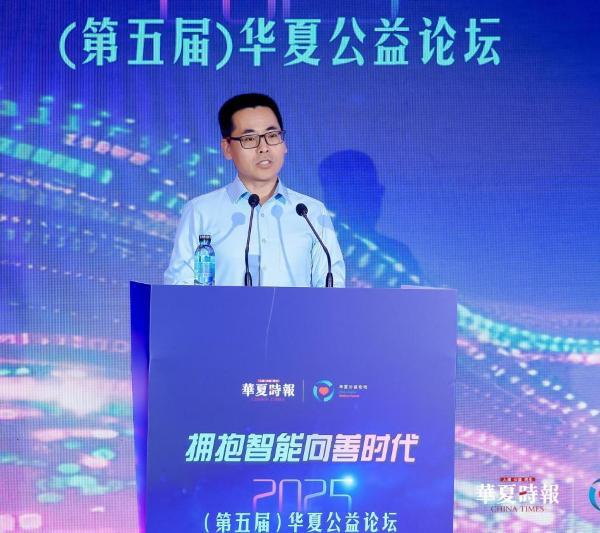
虎鲸文娱集团优酷产品中心雷祎舲:让视障听障用户平等享受文娱内容|聚焦2025(第五届)华夏公益论坛
Hua Xia Shi Bao· 2025-12-26 11:54
Core Viewpoint - The article discusses the integration of AI technology in the entertainment sector to enhance accessibility for visually and hearing-impaired individuals, showcasing the efforts of the company in promoting inclusivity through innovative solutions [2][6]. Group 1: AI Innovations in Accessibility - The company has developed an "Accessible Theater" that utilizes AI technology to adapt film content for visually and hearing-impaired audiences, including features like audio descriptions and AI-generated subtitles [2][3]. - A notable innovation is the use of celebrity AI voice synthesis, allowing users to choose their preferred voice for narration, enhancing their connection to the content [3][4]. - The "Hearing Impaired AI Subtitle Assistance" feature was launched to help hearing-impaired users by automatically generating supplementary subtitles for key sounds and dialogues, improving their understanding of the narrative [4][5]. Group 2: Expanding Audience Reach - The company has produced over 9,200 accessible film works, expanding its services from visually impaired users to include hearing-impaired and elderly audiences [4][5]. - The "Silver Hair Theater" initiative focuses on elderly users, incorporating large fonts, special sound effects, and AI restoration of classic films to enhance their viewing experience [4][5]. Group 3: User Engagement and Community Involvement - The company emphasizes user participation in product development by involving "Accessible Theater Experience Officers" who provide feedback to improve offerings [5][6]. - Various online and offline activities are organized to engage the community, including national competitions for visually impaired musicians and outreach programs to rural areas [5][6]. Group 4: Philosophical Perspective on Technology - The company believes that the essence of technology lies in promoting equality and human dignity, rather than merely achieving efficiency [6][7]. - The integration of entertainment and public welfare serves as a powerful medium to connect with audiences emotionally and culturally, highlighting the role of technology in fostering inclusivity [6][7].

2025资本市场持续“新陈代谢”:110余家IPO融资超1200亿元,近200家公司遭“戴帽”|2025中国经济年报
Hua Xia Shi Bao· 2025-12-26 10:52
Core Insights - The capital market in 2025 demonstrated strong self-renewal vitality amidst complex internal and external environments, with a significant increase in IPO activities and a rigorous regulatory environment leading to the exit of underperforming companies [2] Group 1: IPO Market Performance - A total of 111 companies successfully went public in the A-share market in 2025, raising 125.32 billion yuan, marking a substantial increase from 100 companies and over 67 billion yuan in 2024, indicating a dual breakthrough in quantity and scale [3] - The IPO landscape showed a clear pattern with the main board being stable, the innovation sectors active, and the Beijing Stock Exchange filling in, with the Shanghai main board leading in fundraising with 23 companies raising 43.23 billion yuan [3][4] - The two innovation boards contributed nearly half of the total fundraising, with 18 companies on the Sci-Tech Innovation Board raising 35.30 billion yuan and 32 companies on the Growth Enterprise Market raising 24.51 billion yuan, showcasing the capital market's support for technology innovation [4] Group 2: Regulatory Environment and Market Cleanup - In 2025, nearly 200 listed companies were subjected to ST or *ST treatment, reflecting a significant regulatory effort to purify the market and address operational issues within companies [5] - The reasons for companies being flagged varied widely, including procedural issues like court restructuring and substantive risks such as financial misreporting, with over 40 companies flagged for financial fraud [5][6] - The regulatory framework has been strengthened, with a focus on early detection and warning of risks, enhancing the overall market integrity and preparing for subsequent delisting processes [6] Group 3: Delisting and Market Dynamics - By December 26, 2025, 28 companies had completed delisting, indicating a normalization of the delisting process in conjunction with the significant number of companies flagged [7] - Many delisted companies were forced out due to failing financial metrics or major violations, aligning with the regulatory push for stricter enforcement of delisting rules [7] - The increase in voluntary delisting cases reflects a more rational understanding of delisting among market participants, viewing it as a means to optimize resource allocation rather than a purely negative outcome [7][8]

深圳市恒晖公益基金创始人陈行甲:AI是管道和助推器,疏通、引导“爱”的活水|聚焦2025(第五届)华夏公益论坛
Hua Xia Shi Bao· 2025-12-26 10:37
12月26日,由华夏时报社主办的2025(第五届)华夏公益论坛在京举行。本届论坛以"拥抱智能向善时 代"为主题,汇聚公益界、企业界、学界及政府相关部门代表共话行业发展,深入探讨人工智能技术与 公益事业深度融合的创新路径,为推动公益事业高质量发展注入科技动能。 深圳市恒晖公益基金会创始人陈行甲带来题为《让AI为心理健康赋能》的主题分享,详细介绍了其联 合发起的"智能向善社会创新网络"及"齐家AI家庭心理教练"项目,引发了现场各界人士的广泛关注与热 烈讨论。该项目以公益为底色、以技术为支撑,试图填补我国心理健康服务供需鸿沟,为家庭心理健康 赋能,开辟AI时代公益创新的新路径。 当前,全球心理健康问题日益严峻。世界卫生组织数据显示,全球精神疾病患者已超10亿,需求端呈 现"汪洋大海"之势。而在供给端,我国心理健康服务资源极度匮乏,每10万人仅有4名精神科医生,不 足高收入国家平均水平的1/3;心理咨询师比例更是低至1:数万,远低于美国1:1000—1500的水平。 正是在这样的背景下,AI大模型的爆发为填补供需鸿沟带来了希望。2024年3月,陈行甲在杭州发起"智 能向善社会创新网络",集结了来自北京大学、清华大学、 ...

北京京东公益基金会曾晨:用商业和技术的思维赋能公益|聚焦2025(第五届)华夏公益论坛
Hua Xia Shi Bao· 2025-12-26 10:17
本报(chinatimes.net.cn)记者卢梦雪 北京报道 二是产品化打造,让公益服务可复制、可推广。互联网行业的产品思维,被京东巧妙运用到公益项目的 设计中。曾晨指出,产品思维的核心是用户导向,需精准把握用户需求与痛点,将公益服务转化为标准 化产品,同时通过后台数据反馈持续迭代优化。 12月26日,由华夏时报社主办的2025(第五届)华夏公益论坛在京举行,论坛以"拥抱智能向善时代"为 主题。会上,北京京东公益基金会秘书长曾晨发表了题为《微光成炬 共创美好——京东公益的创新实 践与思考》的演讲,系统阐述了京东如何将商业逻辑与技术能力注入公益事业,使其变得更高效、可持 续。 从一家仅有38名员工时便开始践行公益的公司,到如今将公益精神深植于庞大的商业体系,京东的实践 始终带有鲜明的"商业向善"烙印。基于平台化、产品化、场景化与内生化四大核心思考,京东正在探索 一条用商业方法解决社会问题的创新路径,让善意的微光通过技术与模式创新,汇聚成炬。 以商业技术思维重塑公益模式的四大核心思考 互联网的基因决定了京东思考公益的逻辑。面对公益项目可持续性、效率、参与门槛等普遍难题,京东 尝试从商业世界中寻找答案。 "互联网 ...

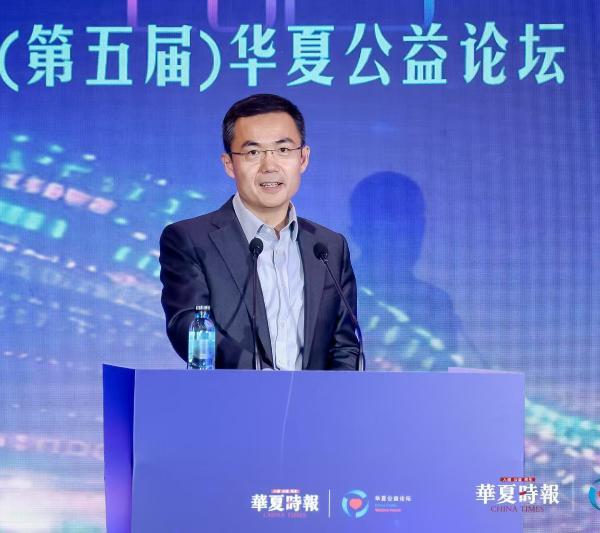
刘玮:从“孤岛”到“星河”,多特瑞与孤独症间的幸福星途|聚焦2025(第五届)华夏公益论坛
Hua Xia Shi Bao· 2025-12-26 10:17
Core Viewpoint - The article highlights the integration of artificial intelligence technology with public welfare initiatives, emphasizing the importance of compassion and human connection in the era of technology [2][8]. Group 1: Company Overview - Established in 2008, doTERRA is a leading global company in aromatherapy and essential oils, entering the Chinese market in 2014 and becoming the second-largest market outside the U.S. [3] - doTERRA has consistently ranked among the top 100 taxpayers in Shanghai's Jing'an District and was recognized as a regional headquarters for multinational companies in 2018 [3]. Group 2: Philanthropic Initiatives - doTERRA has established the "doTERRA Caring Fund" in collaboration with the China Women's Development Foundation and the Shanghai Charity Foundation, contributing over 150 million RMB to public welfare by October 2025 [3][5]. - The company has received numerous accolades for its charitable efforts, including the "Shanghai Charity Star" and the "Shanghai Charity Award" [3]. Group 3: Focus on Autism - doTERRA's "Protecting Stars" initiative addresses autism, with 1 in 100 individuals affected and over 2 million children diagnosed in China [4]. - The initiative, launched in 2018, employs a model of early screening, rehabilitation support, and social integration, collaborating with 35 autism rehabilitation institutions, hospitals, and universities [5][7]. Group 4: Employment and Social Integration - The "do·Happiness Café," opened in 2022, serves as a social integration platform for individuals with autism, providing them with job opportunities and training [6]. - The café has successfully employed five individuals with autism, helping them develop essential skills for customer interaction and coffee preparation [6]. Group 5: Future Plans - doTERRA plans to launch the "Happiness Star Path" project in 2025, aiming to develop 10 social adaptation courses and establish 100 vocational training bases over three years, benefiting over 1,000 individuals with autism [6]. Group 6: Technology and Compassion - The forum emphasized that while technology can enhance the efficiency and scale of public welfare, the essence of charity remains rooted in human warmth and compassion [8][9]. - doTERRA's approach illustrates the balance between leveraging technology and maintaining a focus on human connection in charitable efforts [8].

供需博弈加剧!碳酸锂期货突破12万元/吨,广期所发布风控措施,机构提示回调风险
Hua Xia Shi Bao· 2025-12-26 10:13
Core Viewpoint - The recent surge in lithium carbonate futures prices is driven by supply-side disruptions, particularly the proposed cancellation of mining rights in Yichun, which has raised concerns about supply constraints, despite a stable increase in lithium production [1][2][3]. Supply and Demand Dynamics - On December 24, the main contract for lithium carbonate opened at 113,900 yuan/ton and closed at 120,360 yuan/ton, marking a daily increase of 5.23% [1]. - As of December 25, the price settled at 119,840 yuan/ton, indicating ongoing volatility in the market [1]. - The Yichun Natural Resources Bureau announced the potential cancellation of 27 mining licenses, which has contributed to market concerns about supply reduction [2]. - Despite these concerns, domestic lithium carbonate production is expected to increase by approximately 3% month-on-month in December, indicating no substantial supply-demand imbalance [1][3]. Production and Inventory Trends - The total lithium carbonate production for the week was reported at 22,045 tons, with a slight increase from the previous week [6]. - The overall inventory of lithium carbonate decreased to 110,425 tons, down 1,044 tons from the previous week, suggesting a continued trend of inventory reduction [6][7]. - The comprehensive operating rate of lithium salt plants in December was around 68%, showing a slight increase, with no signs of production cuts anticipated [7]. Market Sentiment and Future Outlook - The demand for lithium carbonate remains strong, with downstream material manufacturers actively signing contracts and preparing for the upcoming Spring Festival [6][9]. - However, there is a cautious sentiment among downstream manufacturers regarding current spot prices, with procurement primarily focused on essential needs rather than speculative buying [9]. - The market is currently experiencing a divergence between futures and spot prices, with potential over-speculation noted [10]. - Future price movements will depend on supply-side developments, including the status of major mining projects and the import volume of lithium concentrate [10].

“抢出口”抢出上扬线,中国以开放突围赋能全球经济
Hua Xia Shi Bao· 2025-12-26 10:11
Core Viewpoint - In 2025, despite global trade protectionism, China's foreign trade demonstrated resilience with export growth and an optimized trade structure, showcasing the strength of China's supply chain [3][4]. Group 1: Trade Performance - In 2025, China's exports experienced a surge, with a notable increase in non-U.S. market exports effectively offsetting declines in exports to the U.S. [5][6]. - China's goods trade maintained a year-on-year growth for 10 consecutive months since February 2025, with a record-breaking import and export scale exceeding 41 trillion yuan [6]. - The export share of China in global markets reached a historical high of 14.2% in the first half of 2025, with a steady increase in export growth rates throughout the year [6]. Group 2: Policy Support and Economic Outlook - The Chinese government is enhancing policy support for foreign trade enterprises, aiming for sustained growth and structural optimization in foreign trade [7][8]. - The release of policy dividends from the Hainan Free Trade Port and the reduction of the negative list for market access are expected to further bolster foreign trade [8]. - The 2025 version of the Market Access Negative List has been optimized, reducing the number of items from 117 to 106, which is anticipated to strengthen foreign investment [10]. Group 3: Foreign Investment Confidence - Multinational companies are increasingly confident in investing in China, shifting their focus from mere expansion to profitability through local innovation and digital investment [9]. - A significant 94% of surveyed multinational companies continue to invest in China, with 75% planning to maintain or increase their investments in 2025 [9].
