
Zhong Guo Min Hang Wang

Search documents
2026春运|大兴机场“一站式”服务暖新春
Zhong Guo Min Hang Wang· 2026-02-12 13:49
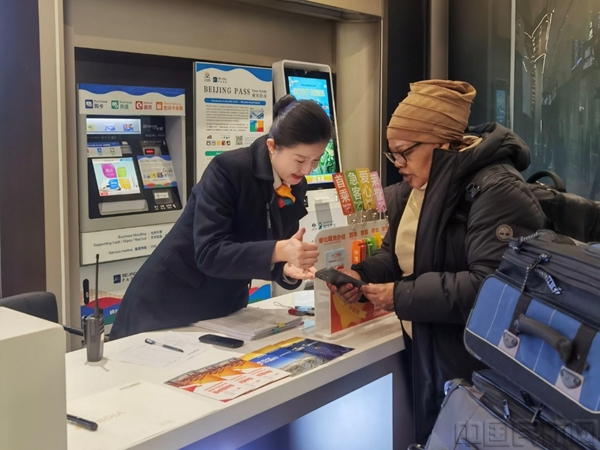
《中国民航报》、中国民航网 记者张丰蘩 通讯员来靖晗、魏来 报道:"太棒了!她帮助我在北京顺利 开启新年,中国的服务真是一流!"来自美国的商务女士竖起大拇指,激动地录制视频称赞道,背景 是"北京服务"(机场服务点)工作人员邵美华的真诚微笑。 这暖心一幕,正是大兴机场倾力打造外籍旅客"一站式"服务、持续优化入境游体验的生动缩影。为破解 外籍旅客"初来乍到"的常见难题,大兴机场"北京服务"(机场服务点)围绕吃穿住行游玩核心需求,设 置支付、通讯、文旅、交通、行李、综合资讯六大服务坐席,提供一站式咨询引导与高频事项办理。旅 客可在此快速办理本地手机SIM卡(仅需3至5分钟)、下载注册常用APP,并通过配备的AI可视化翻译 器实现无障碍沟通——该设备支持口型与声音识别技术,即使在嘈杂环境中也能保障翻译质量。针对行 李查询、物品遗失等突发状况,服务点还与机场各单位建立联动机制,确保高效协同、迅速响应。 除基础服务外,大兴机场更将便利延伸至"第一程"之后的深度体验。通过联合战略合作伙伴携程集团, 大兴机场整合优质旅游资源,启动一站式入境游咨询中心,通过多语言专业团队为国际旅客提供旅游景 点规划、酒店住宿预订等十余项高频需 ...

2026春运|首都机场安保公司全力护航春运“大考”
Zhong Guo Min Hang Wang· 2026-02-12 11:36
中国民航网 通讯员张丽、杨苗苗 报道:2026年"春运"正式启幕,首都机场安保公司(简称:安保公 司)为全力应对这份春运"考卷",坚持"早规划、早部署、早行动"原则,全面升级各项工作举措,全力 打造"平安春运、便捷春运、温馨春运"出行环境,全心全意为每位旅客提供更优质、更暖心的服务。 "点面结合"举措暖心 举措是暖心的发力点。安保公司科学优化排班模式,合理安排人员调整,确保高峰时段安检现场高效运 转;与航司建立常态化沟通联动机制,实时共享客流数据、航班动态,凝聚保障合力,同步升级"爱心 传递""安检优排""航安暖程"等特色服务品牌,让便民举措更精准、更暖心。同时,针对春运期间老年 旅客、儿童及家庭旅客较多的出行特点,专门开设爱心通道,配备宝宝椅、一次性座椅套、一次性鞋套 等便民设施,用细节服务解决旅客出行难题,让春运保障更有温度。 "内外兼修"压实安全 下一步,首都机场安保公司将全力答好2026年春运保障"考卷",圆满实现"平安春运、便捷春运、温馨 春运"目标,为旅客平安顺畅返乡保驾护航!(编辑:张薇,校对:张彤,审核:程凌) 安全是民航的生命线。安保公司坚持"生命第一、安全至上"理念,常态化依托科例会、班前 ...
湖北空管分局开展新春走访慰问老党员活动
Zhong Guo Min Hang Wang· 2026-02-12 11:30
尊老敬老是中华民族的传统美德,也是党内关怀的重要体现。此次新春走访慰问,不仅是一次暖心之 行,更是一次精神传递,让老党员们感受到组织的惦念与尊重,同时也激励着全体在岗职工继承和发扬 老一辈艰苦奋斗、爱岗敬业的优良作风,为推动湖北空管分局的高质量发展接续奋斗、贡献力量。(编 辑:李佳洹 校对:陈虹莹 审核:程凌) 当日下午,湖北空管分局相关负责人一行先后来到三位老党员家中,与老同志们促膝交谈,关切地询问 他们的身体状况、生活情况和实际需求,认真倾听他们的心声与建议。慰问中,还向老同志们简要介绍 了分局过去一年的发展成绩与未来规划,衷心感谢他们为分局发展打下的坚实基础和作出的贡献。老同 志们虽已离开工作岗位,却始终心系分局发展。交谈中,他们深情回忆起往昔奋斗岁月,也对分局今日 的发展成就感到由衷欣慰和自豪。最后,为老同志们送上精心准备的鲜花和慰问品,也带去了全体干部 职工的敬意与祝福。这份"娘家"的牵挂,让老同志们在寒冬中倍感温暖。 《中国民航报》、中国民航网 记者冯智君 通讯员孙芳 报道:2月10日,湖北空管分局组织开展新春走 访慰问老党员活动,向他们致以诚挚问候与新春祝福。 ...
2026春运|今年春运前10天 郑州机场12万份航空餐供应旅客空中享美食
Zhong Guo Min Hang Wang· 2026-02-12 11:30
Group 1 - The "Welcome to Shenzhen for the New Year" theme reception activity was launched by the Shenzhen Municipal Bureau of Culture, Radio, Television, Tourism and Sports, Shenzhen Airlines, and Shenzhen Airport to convey warmth and New Year blessings to travelers arriving in Shenzhen from various regions, including Henan [2] - Over 180 passengers on a Shenzhen Airlines flight from Zhengzhou to Shenzhen received a specially customized "Fortune Cake" as a surprise before boarding, enhancing their travel experience with a festive touch [1][2] - The cake, made by Henan Civil Aviation Food Company, features a red velvet mousse base and chocolate decorations with auspicious phrases, reflecting the cultural significance of the New Year [2] Group 2 - Henan Civil Aviation Food Company has been focused on aviation catering for 28 years and is recognized as the first domestic supplier of organic in-flight meals, receiving multiple awards for excellence in catering services [4] - The company initiated the "New Year Flavor in the Sky" catering action during the Spring Festival travel season, successfully extending the festive service from the air to the ground boarding process, showcasing a collaborative effort with airlines and airports [3] - The company has innovated new in-flight meals that incorporate traditional New Year symbols, enhancing passenger satisfaction and the overall dining experience during flights [3]
2026春运|717架次 湖北空管单日计划保障武汉天河机场起降架次创新高
Zhong Guo Min Hang Wang· 2026-02-12 11:30
Core Viewpoint - The Wuhan Tianhe International Airport is experiencing a peak in flight operations during the Spring Festival travel season, with a record of 717 flights expected on February 12, 2026, surpassing previous forecasts by 5.4% [1][3]. Group 1: Flight Operations - The airport has recorded a total of 6,798 flights in the first ten days of the Spring Festival, averaging 680 flights per day [1]. - The Hubei Air Traffic Control Bureau has entered a "high-pressure offensive period" for Spring Festival operations, with a total of 20,453 flights supported in the Hubei region [1]. Group 2: Operational Strategies - The Hubei Air Traffic Control Bureau is focusing on a "safe, convenient, and warm Spring Festival" theme, utilizing a three-runway operational model and three key systems: refined control, collaborative meteorology, and zero-failure equipment [2]. - To manage the high-density operation pressure of 717 flights, the bureau has dynamically optimized sector resource allocation and increased runway capacity during peak hours by opening additional control sectors [3]. Group 3: Weather Management - The airport is facing significant weather challenges, including low clouds, fog, and frost, prompting the air traffic control bureau to collaborate with the Hubei Meteorological Bureau for timely weather alerts [4]. - The bureau's meteorological team provides detailed forecasts, allowing seamless transitions between low visibility operations and runway de-icing, minimizing weather impacts on flight operations [4]. Group 4: Equipment Reliability - The technical support team has ensured the reliability of critical equipment, achieving zero-failure operation of navigation and monitoring devices since the start of the Spring Festival [6]. - Preparations included thorough inspections and the installation of insulation for outdoor radar and navigation systems, ensuring robust technical support for air traffic control [6]. - The peak flight operations are expected to continue for four more days, with daily averages projected to remain above 700 flights [6].

民航局召开2月安委会全体(扩大)会议
Zhong Guo Min Hang Wang· 2026-02-12 10:55
宋志勇要求,要切实增强风险意识,始终对安全形势保持清醒头脑。重点关注春节和春运特点对安全管 理提出的更高要求,认真防范安全管理能力不足可能带来的风险,扎实做好春运生产组织。 《中国民航报》、中国民航网 记者方笑 报道:2月10日,民航局召开2月安委会全体(扩大)会议,进 一步传达学习近期中央领导对全国安全生产以及对民航安全的重要指示批示精神,落实党中央、国务院 关于做好春节前后安全生产工作的重要部署,回顾1月以来重点工作,分析近期安全运行形势,明确春 运期间安全工作要求。民航局局长宋志勇出席会议并讲话,民航局副局长胡振江、韩钧、梁楠出席会 议。 宋志勇指出,要认真学习领会、坚决贯彻落实党中央、国务院部署要求,切实抓好安全生产工作。要统 筹好安全和发展、安全与其他各项工作的关系,有效防范化解各类风险,以高水平安全推动高质量发 展。要进一步强化安全生产责任落实,持续深入开展治本攻坚三年行动,精准防范化解安全风险,坚决 防范遏制事故发生。 宋志勇最后强调,要统筹兼顾做好空防安全等工作。全面加强对空防安全领域风险点的梳理分析,强化 安全防范,筑牢地面、空中全方位安保防线。要落实国务院安委会统一部署,做好消防安全、施工 ...
一图读懂|《关于推动低空保险高质量发展的实施意见》
Zhong Guo Min Hang Wang· 2026-02-12 10:48
图 图 关于推动低空保险 高质量发展的实施意见 近年来,我国以无人驾驶航空器为代表的新型低空航 空器技术创新和产业升级深入推进,农林作业、巡查巡 检、城市治理、应急救援、物流配送等场景有序拓展,低 空飞行活动日益增多,亟需建立完善低空保险政策制度、 产品服务和监督管理体系,保障人民群众生命财产安全。 为落实《中华人民共和国民用航空法》《无人驾驶航空器 飞行管理暂行条例》有关规定,加快建立健全低空保险政 策体系,近日,国家发展改革委、金融监管总局、中国民 航局印发《关于推动低空保险高质量发展的实施意见》 (以下简称《实施意见》)。 、总体要求和发展目标 总体要求: 以习近平新时代中国特色社会主义思想为指导, 全面贯彻党的二十大和二十届历次全会精神,坚持系 统谋划、重点突破、协同推进、稳步实施,加快形成 覆盖广泛、保障有力、服务专业、市场规范的低空保 险体系,更好服务低空经济安全健康发展。 发展目标: 到2027年,无人驾驶航空器责任保险强制投保制 度初步建立,低空保险产品不断丰富,更好满足 各类应用场景保障需求。 到2030年,低空保险政策框架基本形成,对低空 经济安全健康发展的保障作用持续增强。 SNA ST ...

解读|健全低空保险体系 筑牢安全发展基石
Zhong Guo Min Hang Wang· 2026-02-12 10:35
《关于推动低空保险高质量发展的实施意见》的出台,恰逢我国低空经济从技术验证与局部试点迈向规 模化、商业化发展的关键跃升期。面对航空器数量激增、运行环境日益复杂的现实背景,该文件以系统 化工作部署,精准回应新兴产业对系统性风险解决方案的迫切需求,为低空经济行稳致远筑牢市场化、 制度化的安全基石。 低空风险具有高度的飞行动态性、场景依赖性和技术关联性。当前,低空法律体系尚在构建过程中,责 任认定、损失评估与协同监管方式亟待创新。低空经济运营主体与保险业之间存在一定认知与业务隔 阂,传统航空保险的经验数据与风控模型在此面临"失灵",导致保险公司"不敢保、不会保、不愿保"。 同时,低空运营主体大多规模较小、分布分散、风险承受能力弱,运用金融工具管理风险的门槛较高, 风险量化与保险产品设计难度大。为此,文件从加快健全政策体系、推进强制投保制度、强化服务保障 体系、提升保险可持续经营能力四个方面,系统构建覆盖全链条、兼顾强制与创新、平衡安全与发展的 现代低空保险生态。 该文件的主要亮点体现在两大方面:一是强化保险服务保障体系,实现低空经济全场景全链条全覆盖。 根据文件要求,保险服务需贯穿低空经济"研发—制造—运营—基建" ...
解读|系统性保障护航低空经济高质量发展
Zhong Guo Min Hang Wang· 2026-02-12 10:35
Core Viewpoint - The development of the low-altitude economy is at a critical stage of transitioning from technological exploration to large-scale commercialization, with safety and risk assurance being essential for sustainable growth. The recent implementation of the "Implementation Opinions on Promoting High-Quality Development of Low-Altitude Insurance" by the National Development and Reform Commission, along with other regulatory bodies, aims to establish a comprehensive low-altitude insurance service system, which is crucial for the high-quality development of the low-altitude economy [1]. Group 1: Policy Framework - The primary task of the "Implementation Opinions" is to enhance the low-altitude insurance policy framework, creating a conducive institutional environment for standardized development through planning guidance, regulatory integration, and mechanism encouragement [2]. - The Opinions emphasize the inclusion of insurance in the overall planning and institutional construction of low-altitude economic development, encouraging local governments to formulate supportive policies tailored to their specific conditions [2]. - It mandates the integration of insurance mechanisms into the low-altitude safety regulatory system, using insurance as a tool to strengthen operational safety oversight and improve accident handling procedures [2]. Group 2: Mandatory Insurance System - A key highlight of the Opinions is the acceleration of establishing a mandatory liability insurance system to safeguard public safety in low-altitude operations, particularly for unmanned aerial vehicles [3]. - The Opinions propose strengthening management across the entire chain by incorporating mandatory insurance requirements into flight activity approval processes and developing related regulations for liability recognition and handling procedures [3]. - The establishment of this mandatory insurance system aims to effectively protect public safety and compel operators to enhance their safety management practices [3]. Group 3: Service Assurance - The Opinions focus on strengthening the service assurance system by optimizing insurance coverage across the entire industry chain and enhancing service applications, transitioning insurance from a "product supply" model to a "service empowerment" model [4]. - It calls for insurance companies to develop a comprehensive protection system covering research and development, manufacturing, flight operations, and infrastructure support, while also exploring innovative insurance products and services for new low-altitude risks [4]. - The Opinions advocate for targeted insurance coverage based on various application scenarios such as agricultural operations, low-altitude inspections, logistics, urban governance, and emergency management, ensuring precise alignment between service needs and insurance offerings [4]. Group 4: Sustainable Operational Capacity - The low-altitude economy presents complex risks and demands higher data and professional capabilities from insurance institutions, as outlined in the Opinions [5]. - It emphasizes the need to accelerate the construction of a low-altitude insurance information platform and develop a risk information-sharing database, utilizing big data and AI for precise risk pricing and monitoring [5]. - The Opinions also encourage insurance institutions to collaborate with manufacturers and operators of low-altitude aircraft to enhance their ability to identify and assess new risks, thereby improving the overall risk management quality [5]. Group 5: Organizational Support - To ensure the effective implementation of the Opinions, organizational support is reinforced through coordination, risk prevention, and promotional efforts, fostering a collaborative work environment [7]. - The Opinions specify that the National Development and Reform Commission will lead the establishment of a regular communication mechanism to guide local implementation and address challenges in advancing low-altitude insurance [7]. - It also encourages insurance institutions to enhance their risk control systems and consumer protection measures while promoting public awareness and understanding of low-altitude insurance [7].
国家发展改革委 金融监管总局 中国民航局印发《关于推动低空保险高质量发展的实施意见》
Zhong Guo Min Hang Wang· 2026-02-12 10:28
Core Viewpoint - The implementation of the "Implementation Opinions" aims to establish a comprehensive low-altitude insurance policy system to ensure the safety of life and property as low-altitude flight activities increase in various sectors such as agriculture, logistics, and emergency rescue [1][2]. Group 1: Overall Requirements - The overall requirements emphasize the guidance of Xi Jinping's thought and the need to meet the safety and development demands of the low-altitude economy through systematic planning and collaborative implementation [2]. Group 2: Policy System - The policy system aims to strengthen support for low-altitude insurance through development planning and to encourage various operators in the low-altitude economy to effectively utilize insurance mechanisms [2]. Group 3: Mandatory Insurance - A mandatory insurance system for unmanned aerial vehicles (UAVs) will be established, including verification of insurance compliance and the development of implementation measures and model clauses [2]. Group 4: Service Guarantee System - The establishment of a comprehensive insurance product system covering the entire low-altitude industry chain is planned, enhancing the supply and service capabilities for both UAVs and traditional manned aircraft [2]. Group 5: Sustainable Operations - Efforts will be made to build a low-altitude insurance information platform and to strengthen the professional capabilities of insurance institutions and intermediaries [2]. Group 6: Organizational Assurance - The implementation will involve clarifying departmental responsibilities, enhancing risk prevention, and promoting awareness of low-altitude insurance [2][3].