Zhong Guo Min Hang Wang

Search documents
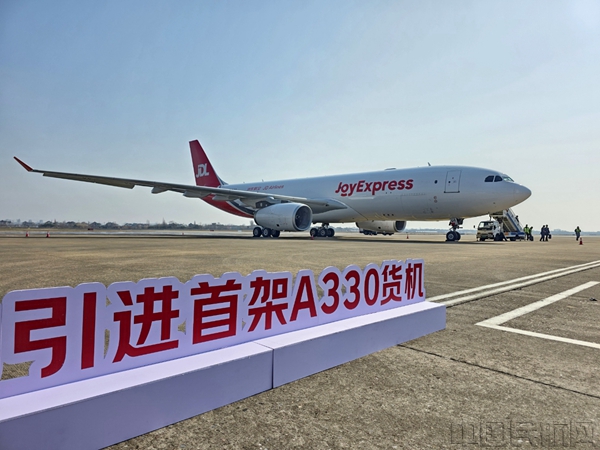
京东航空首架A330宽体货机抵达南通机场
Zhong Guo Min Hang Wang· 2026-01-08 05:48
Group 1 - The core point of the article is the arrival of JD Logistics' first Airbus A330 freighter at Nantong Airport, marking an upgrade in its fleet structure and enhancing the airport's air cargo capabilities [1][2] Group 2 - The newly introduced Airbus A330 freighter has a maximum takeoff weight of 233 tons, a payload capacity of 61 tons, and a total cargo hold volume of 453 cubic meters [2] - The main cargo hold is equipped with an all-electric cargo loading system, which significantly improves cargo handling efficiency and transportation reliability [2] - The introduction of the A330 freighter will help JD Logistics enter a new development phase and further expand its international business layout in the Asia-Pacific, Middle East, and Europe [2] Group 3 - Nantong Airport is actively deepening its cooperation with JD Airlines to expand international cargo routes in the Asia-Pacific, Middle East, and Europe, contributing to regional economic integration and global trade [2]


东航武汉地面运行控制中心实现“一盘棋”响应
Zhong Guo Min Hang Wang· 2026-01-08 05:48
东航武汉GOC以"全流程、动态化"监管为核心,承担地面运行与服务保障的集中指挥、协调及监控职 责,覆盖飞机进港挡轮档至撤轮档推出的全链条保障环节,确保各环节高效衔接、步调一致。中心设置 服保经理、航班主控、运行协调、中转决策、集中派工、运行监察六大核心席位,各席位各司其职、协 同联动。统计显示,新的模式启动以来,航班加油、装卸、清洁、配餐等关键环节的平均保障时长缩短 2分钟以上,为航班正常运行奠定了坚实基础。 东航武汉GOC成立后,地面运行模式从"分散操作"向"中枢管控"的深度转变,能显著提升极端天气、大 面积航延、特殊突发事件等复杂场景下的特情处置与恢复能力,实现保障资源最优配置。特别是在有效 缩短快速过站航班保障时间、高质量完成地面保障任务、重点航班重点监控、过站时间不足航班保障、 提升中转旅客效率等关键指标方面,提供了强有力的运行与保障支持。 《中国民航报》、中国民航网 记者钱擘 报道:1月1日,东航武汉地面运行控制中心(武汉GOC)正式 进驻运行大厅。标志着东航武汉GOC自去年7月启动筹建以来,正式进入了地面运行管控资源集中、响 应一体化的新阶段,实现了从"分散管理"到"统合联动"的新跨越。 以往,当 ...

丝路空中走廊再升级 南航西安—阿拉木图航线加密
Zhong Guo Min Hang Wang· 2026-01-08 05:48
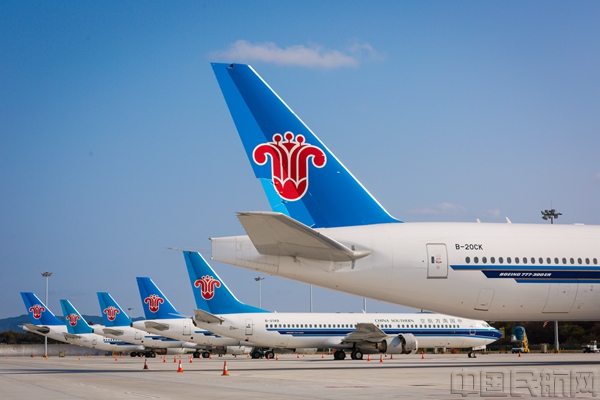
值得关注的是,此次航班加密恰逢2026年春运出行高峰,叠加中哈30天免签政策持续释放的红利,将有 效缓解春运期间两地跨境出行的运力压力。数据显示,2024年中国赴哈游客达65.5万人次,同比增长 78%,中国已跃居哈萨克斯坦第二大客源国,而西安作为丝路文化核心城市,始终是中亚游客入境中国 的重要目的地之一。与此同时,随着中哈经贸合作的持续深化,西安与阿拉木图在机械设备、电商快 件、特色农产品等领域的跨境物流需求日益旺盛,加密后的航线将为跨境货物运输提供更便捷的航空通 道,助力"中国制造"高效出海和中亚特色产品快速进入中国市场。 为更好地服务跨境旅客,南航西安分公司依托西安枢纽优势,推出覆盖国内主要城市的"全程免提"行李 直挂服务,进一步提升中转出行效率,让西安真正成为中亚旅客进入中国的"便捷中转枢纽"。南航西安 —阿拉木图航线加密,是南航践行央企责任、服务国家"一带一路"倡议的具体行动。南航西安分公司将 西安作为古丝绸之路的起点,是中国向西开放的重要门户;阿拉木图则是中亚地区的交通枢纽与经贸文 化中心,两地的空中联通始终是中哈互联互通的关键纽带。航线加密是南航落实中国—中亚峰会成果、 深化中亚航线战略布局的重 ...

评论员文章|真抓实干 开拓进取 齐心协力推动“十五五”良好开局
Zhong Guo Min Hang Wang· 2026-01-08 03:14
Core Viewpoint - The 2026 National Civil Aviation Work Conference has outlined a grand blueprint for the development of the civil aviation industry during the "14th Five-Year Plan" period, emphasizing the importance of a strong start and the need for collective efforts to ensure high-quality growth in the sector [2][7]. Group 1: Industry Development Strategy - The civil aviation industry is positioned to leverage China's strong economic fundamentals, resilience, and potential for long-term growth, supported by proactive fiscal and monetary policies [2][3]. - The industry must focus on enhancing aviation safety as a priority to ensure stable and sustainable development [3][4]. - A comprehensive approach is required to integrate domestic and international markets, expanding demand and enhancing service offerings to meet diverse passenger needs [4][5]. Group 2: Operational Efficiency and Reform - The industry aims to improve core competitiveness by enhancing operational efficiency and service quality, addressing issues of "involution" in competition [5][6]. - Reforms in regulatory frameworks and the implementation of the revised Civil Aviation Law are essential to improve governance and operational effectiveness [5][6]. - Continuous improvement in flight operation quality and passenger service, especially for irregular flights, is a key focus area [5]. Group 3: Leadership and Governance - The comprehensive leadership of the Party is identified as a fundamental reason for the historical achievements in civil aviation, which must be maintained to ensure ongoing progress [6][7]. - High-quality party building is essential to guide high-quality development in the civil aviation sector [6][7].
图解2025年民航航班运行情况
Zhong Guo Min Hang Wang· 2026-01-07 09:03
Core Insights - In 2025, a total of 6.474 million flights were guaranteed nationwide, with an average of 17,737 flights per day, representing a year-on-year increase of 4.7% [1] - The domestic passenger flight normality rate for the year was 91.09%, maintaining above 80% for eight consecutive years [1][5] - The Civil Aviation Administration of China (CAAC) monitored flight operations based on pre-flight plans and actual operations, focusing on traffic volume, flight normality, flight guarantee processes, and airport bridge rates [1] Flight Operations Summary - The proportion of flight types in 2025 included 75.62% domestic passenger flights, 11.15% international passenger flights, 7.15% overflight flights, 2.52% international cargo flights, 2.10% passenger flights to Hong Kong, Macau, and Taiwan, 1.31% domestic cargo flights, and 0.15% cargo flights to Hong Kong, Macau, and Taiwan [3] - The top ten airlines by passenger flight numbers in 2025 included Eastern Airlines, Southern Airlines, Air China, Hainan Airlines, and Spring Airlines, among others [5] Flight Normality and Delays - The domestic passenger flight normality rate in 2025 was 91.09%, an increase of 3.99 percentage points compared to 2024 [6] - The main reasons for flight irregularities included weather (56.00%), military activities (25.38%), and airline issues (17.04%) [6][8] - The average delay time for domestic passenger flights in 2025 was 6.31 minutes, with 25.41% of flights delayed by less than 30 minutes and 18.07% delayed by more than 2 hours [9] Airport Operations Summary - The national airport release normality rate in 2025 was 91.77%, an increase of 2.56 percentage points from 2024 [7] - The reasons for airport release irregularities included military activities (30.49%), airline issues (12.65%), and other factors (1.80%) [8] - The bridge rate for major airports in 2025 was 85.80%, with a starting flight bridge rate of 66.80% and an overnight flight bridge rate of 67.47% [10]

上饶机场2025年旅客吞吐量首次突破八十万人次
Zhong Guo Min Hang Wang· 2026-01-07 08:56
Core Insights - The article highlights the significant growth of Shangrao Airport, which achieved a passenger throughput of 834,070 in 2025, marking a year-on-year increase of over 36% compared to the previous year [1] - The transformation of Shangrao Airport from a "regional small airport" to a "regional aviation hub in Northeast Jiangxi" is underscored by its rapid growth in passenger numbers [1] Group 1: Growth and Development - The airport's passenger throughput has increased from 500,000 in 2019 to 610,000 in 2024, and then to 830,000 in 2025, demonstrating a remarkable upward trajectory [1] - The collaborative efforts between the government and market stakeholders have been pivotal in this growth, with the city embracing the airport as a key component of its development strategy [2] Group 2: Collaborative Model - The "Shangrao Model" emphasizes the synergy between the city and the airport, where the airport is viewed as a partner in urban development rather than just a transportation facility [2] - The airport's development is closely aligned with the city's ambitions to become a "world cultural tourism destination," showcasing a strategic shift in its role [2] Group 3: Operational Excellence - Safety remains a cornerstone of the airport's operations, with rigorous standards maintained during every flight operation, ensuring reliability even as passenger numbers surge [4] - The commitment to safety is reflected in the meticulous attention to detail by the airport staff, who treat each flight as a critical operation [4] Group 4: Customer Experience - The airport focuses on providing a warm and welcoming service experience, with staff actively engaging with passengers to enhance their travel experience [5] - Small gestures of assistance from staff contribute to creating memorable experiences for travelers, transforming routine travel into meaningful memories [5] Group 5: Future Prospects - The second phase of the airport's expansion is underway, aiming to enhance its capacity, service quality, and hub effectiveness [6] - Shangrao Airport is positioned to support the city's aspirations of becoming a "modern regional center" and a "world-class tourism destination," driving regional economic growth [6]
2025年大兴机场城市航站楼累计服务旅客72.5万人次
Zhong Guo Min Hang Wang· 2026-01-07 06:49
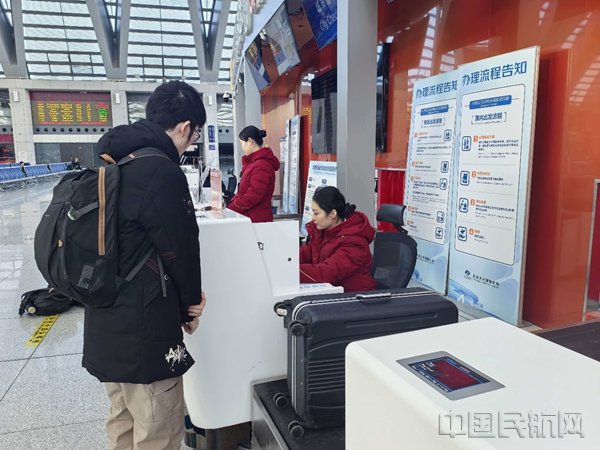
Core Insights - Beijing Daxing International Airport's urban terminal is projected to serve 725,000 passengers and handle 175,000 pieces of checked luggage in 2025 [1] Group 1: Urban Terminal Management - Daxing Airport has developed a "Urban Terminal Brand Management Manual" to enhance the quality and efficiency of urban terminal management [2] - The Langfang urban terminal has optimized resource allocation to reduce passenger waiting times during peak hours and has established a green channel for passengers traveling to Beijing [2] - The Xiong'an urban terminal has received IATA approval for its three-letter code, indicating improved operational standards and industry recognition, which supports future service upgrades and brand expansion [2] Group 2: Collaboration and Services - The Tianjin West Station urban terminal is the first in the Beijing-Tianjin-Hebei region to be built around a railway hub, utilizing an innovative cooperation model involving government leadership, airport coordination, and national railway collaboration [2] - The Tianjin West Station urban terminal currently offers luggage check-in services for six train services, including G8842, enhancing travel convenience for passengers [2]
长春机场2025年客货运量双创历史新高
Zhong Guo Min Hang Wang· 2026-01-07 06:42
Core Insights - Changchun Airport is projected to achieve significant milestones in 2025, with a total of 119,000 flight takeoffs and landings, transporting 17.759 million passengers and handling 107,000 tons of cargo, marking record highs for both passenger and cargo volumes with year-on-year growth of 0.9% and 8.0% respectively [1] Group 1: Operational Performance - The airport's performance reflects a high-quality development trend, contributing robustly to the revitalization of Jilin Province amidst a challenging external environment and intense market competition [1] - Changchun Airport has successfully navigated challenges such as high-speed rail competition by enhancing airline collaboration, optimizing route networks, and conducting precise market assessments, leading to a counter-cyclical growth in passenger and cargo throughput [1] Group 2: Route Network Optimization - The optimization of the route network is identified as a core engine for growth, with the airport increasing flight frequencies to major domestic cities such as Beijing, Shanghai, Guangzhou, and others, while also enhancing direct flight ratios to long-distance destinations [2] - The airport has expanded its international and regional routes, restoring and launching 13 new international passenger routes, surpassing the number of international routes compared to the same period in 2019 by 14% [2] - During the suspension of operations at Yanji Airport, Changchun Airport coordinated with industry authorities to facilitate the transfer of capacity to maintain service on routes to South Korea, resulting in a 144% year-on-year increase in available seats on these routes [2] Group 3: Future Development Goals - Changchun Airport aims to leverage development opportunities to establish itself as a regional aviation hub, focusing on building a modern route network that is extensive, well-connected, and robustly supported, thereby enhancing its strategic role in regional economic and social development [3]
海南航空数据共享实践推动智慧民航服务升级
Zhong Guo Min Hang Wang· 2026-01-07 03:13
Core Insights - The article highlights a significant transformation in civil aviation services driven by data sharing, with Hainan Airlines leading the initiative to improve flight delay information accessibility for passengers [1][4]. Group 1: Data Sharing Initiative - Hainan Airlines has launched the first national flight delay information sharing pilot project in collaboration with the Civil Aviation Administration and Hohhot Airport, aiming to address the issue of asymmetric and unsynchronized flight information for travelers [1][5]. - The project includes a new data item for "flight delay reasons" and establishes a closed-loop system for data sharing among airlines, service platforms, and airports, enhancing operational efficiency and passenger experience [5]. Group 2: Operational Efficiency - By actively participating in the civil aviation data sharing system, Hainan Airlines has improved its operational efficiency, allowing real-time access to airport parking information and enabling pilots to receive accurate parking spot details before landing [5][7]. - The implementation of a dynamic update mechanism for delay status every 30 minutes ensures that passengers receive timely updates through multiple channels, significantly enhancing service quality and reducing coordination costs [5][6]. Group 3: Data Quality Assurance - Hainan Airlines prioritizes data quality by establishing internal verification mechanisms to ensure that shared data is accurate, complete, timely, and standardized, which supports the overall health of the civil aviation data sharing system [7]. - The company's commitment to data quality not only enhances its operational efficiency but also lays a solid foundation for the sustainable development of the data sharing ecosystem in the aviation industry [7]. Group 4: Future Plans - Looking ahead, Hainan Airlines plans to expand its data sharing network and deepen collaboration with airports and air traffic control units, aiming to create a more intelligent, transparent, and efficient civil aviation service ecosystem [7].


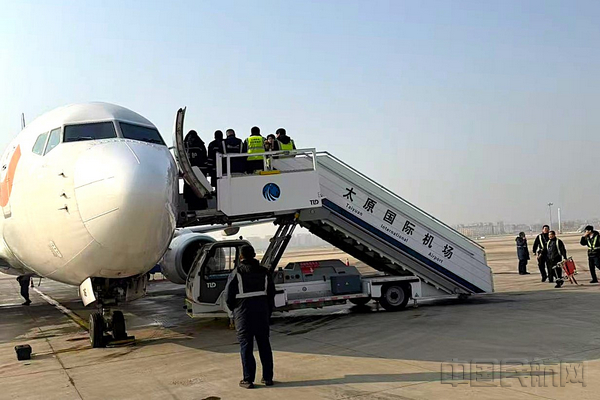
山航SC8721航班紧急备降太原 救助突发疾病旅客
Zhong Guo Min Hang Wang· 2026-01-07 03:06
Core Viewpoint - The incident highlights the effective emergency response mechanism of Shandong Airlines, ensuring passenger safety and timely medical assistance during a medical emergency on flight SC8721 [1][4]. Group 1: Incident Overview - On January 5, flight SC8721 from Jinan to Yinchuan experienced a medical emergency when a male passenger suffered from heart discomfort approximately 25 minutes after takeoff [3]. - The flight crew promptly responded by assessing the passenger's condition, administering oxygen, and providing nitroglycerin, but the passenger's symptoms did not improve significantly [3]. Group 2: Emergency Response - Upon receiving the report from the flight crew, Shandong Airlines' AOC activated a joint consultation mechanism to support the decision to divert the flight to Taiyuan Airport [3]. - The marketing department at Taiyuan promptly initiated an emergency response, coordinating with relevant ground support units, including the airport command center and emergency medical services [4]. Group 3: Medical Assistance - The flight safely landed at Taiyuan Airport at 10:55 AM, where emergency personnel boarded the aircraft to assess the unconscious passenger [4]. - The passenger was transferred to a stretcher and quickly transported to a hospital for further treatment, with the airline staff assisting throughout the process [4]. Group 4: Follow-up and Acknowledgment - After the incident, the Taiyuan office of Shandong Airlines contacted the hospital to check on the passenger's recovery, who reported significant improvement but required further observation [4]. - The passenger expressed gratitude for the timely and professional assistance provided by Shandong Airlines during the emergency [4].