
Zhong Guo Neng Yuan Wang

Search documents
平庄煤业蒙东矿业获评内蒙古自治区安全文化建设一级企业
Zhong Guo Neng Yuan Wang· 2026-02-12 07:28
Group 1 - The Inner Mongolia Safety Production Occupational Health Association has recognized 11 coal mining companies as Level 1 enterprises for safety culture construction in 2025, with Pingzhuang Coal Industry's Mengdong Mining being among them [1] - Mengdong Mining has also been awarded as an excellent organization for safety construction in the third session of the Autonomous Region, with several teams and team leaders recognized for their outstanding performance [1] Group 2 - In recent years, Pingzhuang Coal Industry has placed significant emphasis on enhancing safety culture and team safety construction, utilizing self-assessment guidelines to improve employee safety awareness [2] - The company has implemented a "1755" safety strategy to establish a comprehensive safety management system, focusing on safety culture and team safety, while regularly conducting safety training and skill drills [2] - These efforts have led to substantial progress in safety management, providing a solid foundation for the company's transition to a green, low-carbon, safe, efficient, and sustainable energy enterprise [2]
风电自残式“内卷”蔓延到海外
Zhong Guo Neng Yuan Wang· 2026-02-12 07:14
Core Viewpoint - The Chinese renewable energy industry is experiencing rapid growth but faces significant challenges due to aggressive price competition and potential risks associated with "involution" in international markets [1] Group 1: Industry Challenges - The phenomenon of "involution" is leading to unsustainable low pricing strategies, where domestic subsidies are indirectly funding price reductions in overseas markets, potentially harming national interests and industry ecology [1] - In the wind energy sector, similar "involution" trends are emerging, raising concerns about performance risks and damage to the "Made in China" brand [1] Group 2: Pricing and Competition - In Saudi Arabia's competitive wind energy market, bids for projects have seen Chinese manufacturers offering prices significantly lower than international standards, with one bid being approximately 300,000 RMB lower than the next competitor [2] - The pricing strategy includes aggressive commercial terms, such as comprehensive service packages and high performance guarantees, which may lead to severe financial and quality-related disputes if issues arise [2] Group 3: Systemic Risks - The replication of "involution" in international markets introduces multiple systemic risks, including the erosion of brand trust, financial viability due to low margins, stagnation in technological advancement, and increased geopolitical barriers [3][4] - The risk of brand and trust degradation is significant, as frequent quality disputes could label Chinese wind turbines as "cheap and low quality," undermining years of reputation building [3] Group 4: Strategic Recommendations - To counteract these trends, the industry must shift from a focus on low-cost product exports to high-quality value exports, emphasizing lifecycle risk coverage and compliance costs in pricing strategies [5][6] - Companies should enhance their capabilities to provide comprehensive solutions, including financing, localized construction, and long-term operations, rather than merely selling equipment [6] - The future of China's wind energy global strategy hinges on technological innovation, quality assurance, and collaborative value creation, moving away from the outdated "involution" model [6]
厦门金圆产业链创新基金登记成立,出资额10亿
Zhong Guo Neng Yuan Wang· 2026-02-12 06:51
Group 1 - Xiamen Jinyuan Industrial Chain Innovation Fund Partnership (Limited Partnership) has been established with a capital contribution of 1 billion RMB [1] - The fund's managing partner is Xiamen Venture Capital Co., Ltd., and its business scope includes private equity investment, investment management, and asset management [1] - The fund is jointly funded by Xiamen Jinyuan Investment Group Co., Ltd., Xiamen Venture Capital Co., Ltd., Xiamen Industrial Investment Co., Ltd., and Xiamen Chuantou Xinyuan Technology Investment Co., Ltd. [1]
内蒙古大数据产业发展集团增资至11亿,增幅37.5%
Zhong Guo Neng Yuan Wang· 2026-02-12 06:51
Group 1 - The core point of the article is that Inner Mongolia Big Data Industry Development Group Co., Ltd. has increased its registered capital from 800 million RMB to 1.1 billion RMB, representing a growth of 37.5% [1] Group 2 - The company was established in January 2017 and is legally represented by Wang Gang [1] - Its business scope includes safety evaluation services, first-class value-added telecommunications services, second-class value-added telecommunications services, and big data services [1] - The company is wholly owned by the State-owned Assets Supervision and Administration Commission of Hohhot City [1]
小米旗下武汉企业管理公司增资至53亿,增幅约39%
Zhong Guo Neng Yuan Wang· 2026-02-12 06:45
Group 1 - The core point of the article is that Wuhan Yibaiyi Enterprise Management Co., Ltd. has increased its registered capital from 3.8 billion RMB to 5.3 billion RMB, representing an increase of approximately 39% [1] - Wuhan Yibaiyi Enterprise Management Co., Ltd. was established in November 2021 and is wholly owned by Xiaomi Technology Co., Ltd. [1] - The company's business scope includes enterprise management, enterprise management consulting, and information consulting services [1]
东土科技、福瑞医科等成立科创创业投资合伙企业,出资额6.2亿
Zhong Guo Neng Yuan Wang· 2026-02-12 06:44
Group 1 - Sichuan Chengde High-tech Innovation Venture Capital Partnership (Limited Partnership) has been established with a total investment of 620 million RMB [1] - The executive partner is Beijing Yamei Hezhong Investment Management Co., Ltd. [1] - The investment scope includes venture capital, with contributions from Chengdu High-tech Strategy Source Qihang Equity Investment Fund Partnership (Limited Partnership), Dongtu Technology (300353), and Furuimei Medical (300049) [1]


海辰储能徐晓卓:储能与AI双向赋能,长时储能破解AIDC绿色转型痛点
Zhong Guo Neng Yuan Wang· 2026-02-12 06:06
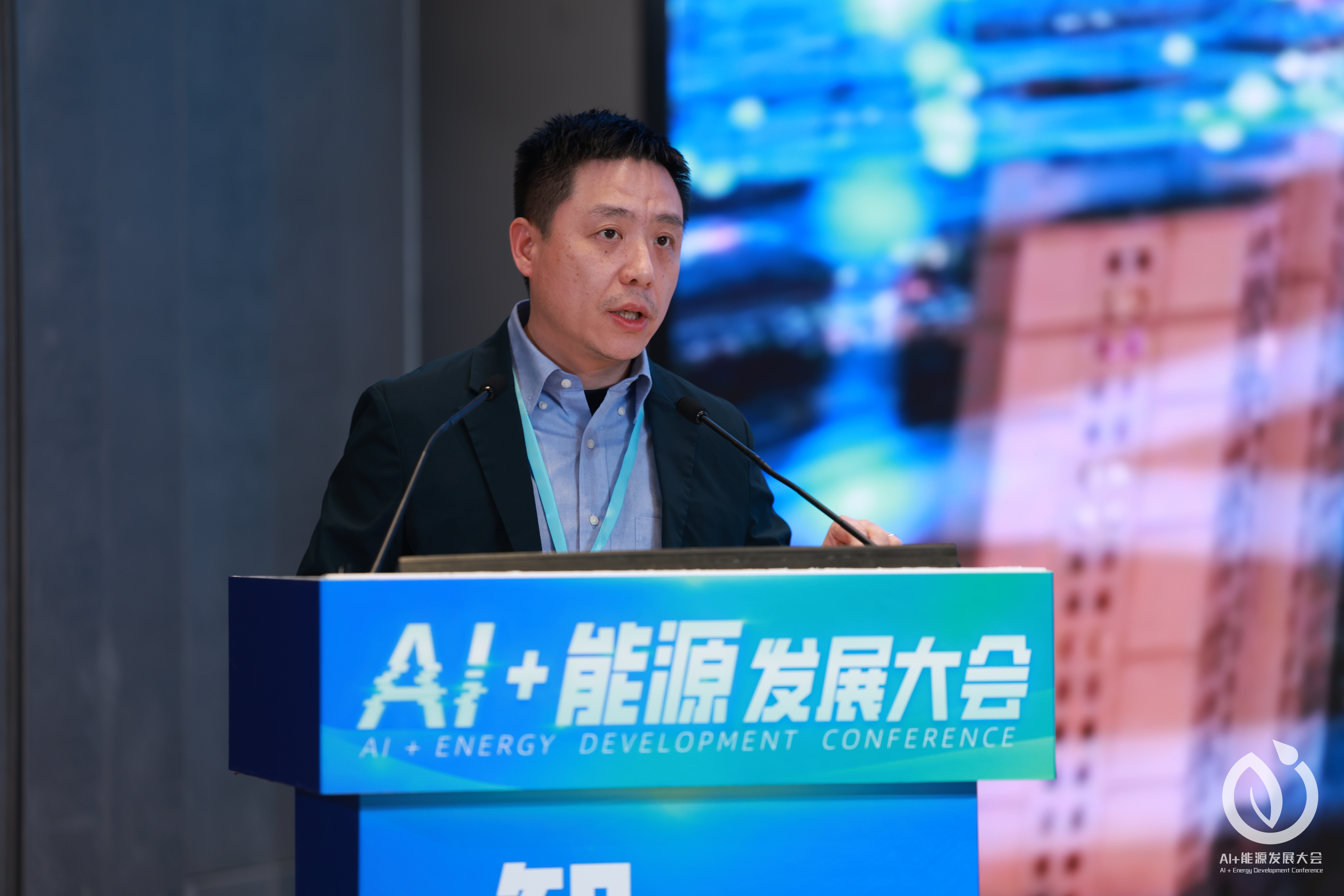
Core Insights - The conference focused on the integration of AI and the energy sector, emphasizing the mutual empowerment between energy storage and AI technologies [1][4] - Xu Xiaozhuo highlighted the critical challenges faced by Artificial Intelligence Data Centers (AIDC) regarding energy supply and demand mismatches [4][5] Energy Storage and AI Integration - The concept of "dual empowerment" was introduced, where quality energy storage solutions enhance AI development, while AI technologies improve energy storage efficiency [4][6] - AIDC faces five major electricity pain points: significant load fluctuations, high reliability requirements, exorbitant electricity costs, massive energy consumption, and pressure for carbon reduction [4][5] Long-duration Energy Storage Solutions - Long-duration energy storage (8 hours or more) is identified as a key strategy for AIDC's green transition, enabling 24/7 green electricity supply and cost reduction [5][6] - The combination of green energy sources like solar power with long-duration energy storage can effectively address the energy supply challenges faced by AIDC [5][6] Technological Advancements in Energy Storage - The company has made significant advancements in long-duration energy storage technology, including the launch of the world's first 1000Ah lithium iron phosphate battery and an 8-hour energy storage system [5][6] - The deployment of these systems has been recognized globally, with the first batch set to be exported to Europe by October 2025 [5][6] AI Applications in Energy Storage - The company has implemented AI across four key areas: manufacturing, assistance, science, and service, enhancing operational efficiency and product quality [6][7] - In manufacturing, AI technologies have been integrated into over 40 digital solutions, improving production processes and quality control [7][8] Conclusion on AI and Energy Synergy - The synergy between energy storage and AI is seen as a pathway to high-quality development in both sectors, with energy storage providing stable, green, and low-cost energy for AI, while AI drives innovation and efficiency in energy storage [8]

北汽新能源成立元境智能科技公司,注册资本500万
Zhong Guo Neng Yuan Wang· 2026-02-12 02:52
Group 1 - The establishment of Beijing Yuanzheng Intelligent Technology Co., Ltd. has been officially registered, with a legal representative named Liu Guanquiao and a registered capital of 5 million RMB [1] - The company's business scope includes engineering and technology research and experimental development, IoT application services, AI basic software development, software development, and automotive parts research and development [1] - Beijing New Energy Automobile Co., Ltd. holds 100% ownership of the newly established company [1]

算力市场供不应求,电子布涨价趋势确立 | 投研报告
Zhong Guo Neng Yuan Wang· 2026-02-12 02:52
Core Viewpoint - The report highlights a significant acceleration in capital expenditures driven by AI among major US cloud service providers, which is expected to benefit the computing materials market substantially [1][2]. Group 1: Capital Expenditure Trends - Major US cloud service providers are increasing their capital expenditures significantly, with Meta projecting a capital expenditure of $115 to $135 billion for 2026, representing a year-over-year increase of 73%, focusing on superintelligent labs and AI infrastructure [1][2]. - Alphabet (Google's parent company) anticipates capital expenditures of $175 to $185 billion for 2026, with a year-over-year increase of 97%, primarily for AI functionality optimization and cloud infrastructure expansion [2]. - Amazon expects capital expenditures of approximately $200 billion for 2026, reflecting a year-over-year increase of 52% [2]. - Microsoft indicates that short-term assets (CPU and GPU servers) will constitute about two-thirds of its capital expenditures [2]. - All four major US cloud service providers expect to face supply constraints for critical computing resources in 2026, necessitating accelerated investments and optimized capacity configurations to meet rising demand [2]. Group 2: Transition in Electronic Fabric Production - Traditional electronic fabric production is shifting towards low-dielectric electronic fabric production, with companies like Taiyo stopping the production of certain E-glass electronic fabric series due to market structure changes and special product demand adjustments [3]. - The demand for Low-Dk electronic fabric is increasing, leading to a gradual reduction in the production of traditional E-glass products, with plans to cease production of specific series by 2026 [3]. Group 3: Price Trends in Electronic Fabrics - Prices for traditional electronic fabrics and low-dielectric electronic fabrics are expected to rise, with Showa Denko announcing price increases of over 30% for CCL and PCB due to tight supply and demand for raw materials [3]. - E-glass prices have already seen a 15% increase in January, with an expected further rise of 10-15% in February, while new price negotiations for Low-Dk fabrics aim for a 20% increase [3]. - The supply-demand mismatch, driven by high demand for high-end low-dielectric electronic fabrics, is leading to a contraction in traditional electronic fabric production and subsequent price increases [3]. Group 4: Investment Recommendations - The company remains optimistic about the continued growth in capital expenditures in the computing market, which is expected to drive technological iterations and demand growth, benefiting the computing materials market [4]. - The transition from traditional electronic fabric production to low-dielectric electronic fabric production is seen as a critical juncture, with anticipated price increases for both types of fabrics [4]. - Companies to watch include Zhongcai Technology, International Composites, Honghe Technology, and Feilihua [4].




美国汽车巨头爆雷
Zhong Guo Neng Yuan Wang· 2026-02-12 02:45
Core Viewpoint - Ford Motor Company reported significant losses for the fiscal year 2025, marking a shift from profit to loss despite record revenue, primarily due to challenges in its electric vehicle segment and external factors impacting production costs [1][2]. Financial Performance - In 2025, Ford's revenue reached $187.3 billion, a year-on-year increase of 1.23%, setting a historical record [1]. - The company experienced a net loss of $8.182 billion in 2025, a dramatic decline of 239.17% from a profit of $5.879 billion in 2024, marking the lowest profit in nearly five years [1]. - Ford's global vehicle sales fell by approximately 2% in 2025, totaling 4.395 million units, resulting in a drop to seventh place in the global automotive sales rankings, behind Chinese automaker BYD [1]. Quarterly Analysis - The fourth quarter of 2025 was particularly detrimental, with revenue of $45.9 billion, a decrease of 5% year-on-year, and a net loss of $11.1 billion, the largest quarterly loss since the 2008 financial crisis [1]. Causes of Loss - The significant fourth-quarter loss was attributed to losses and impairments in the electric vehicle sector, fire incidents at key suppliers, and increased tariffs [1][2]. - Ford announced a substantial reduction in its electric vehicle plans in December 2025, incurring approximately $19.5 billion in special project costs, with about $5.5 billion affecting cash flow [1]. - Cumulative losses in Ford's electric vehicle and software division exceeded $10 billion, with 2025 losses around $4.8 billion and projected losses for 2026 estimated between $4 billion and $4.5 billion [2]. - Fires at a key aluminum supplier's plant impacted the production of the F-150 series, forcing Ford to source aluminum from abroad, incurring higher tariffs and production costs [2]. - Ford's tariff costs in 2025 amounted to approximately $2 billion, including a $900 million unexpected tariff bill due to late communication from the previous administration [2]. Future Outlook - CEO Jim Farley stated that Ford will continue to cut costs and focus on producing globally competitive models, with plans to increase production of high-margin SUVs and trucks [3]. - For 2026, Ford anticipates adjusted EBIT between $8 billion and $10 billion, with adjusted free cash flow expected to be between $5 billion and $6 billion, including capital expenditures of approximately $9.5 billion to $10.5 billion [3].
